filmbriefs
Fiction

Comedy

294
briefs
13:00
average
3822 min
in total
212
people
All briefs294
13:00

A Confucian Confusion

Edward Yang · 1994

Edward Yang’s 1994 satirical comedy follows a web of young professionals in 1994 Taipei whose relationships, careers, and self-presentation are governed by unspoken codes of duty, face, and transactional loyalty. Over three days, misunderstandings accrue not from malice but from systemic pressure to perform coherence — whether in love, work, or art. With muted performances, flat lighting, and procedural pacing, it maps the quiet corrosion of authenticity under late-capitalist professionalism.
13:00

A Hard Day's Night

Richard Lester · 1964

Richard Lester’s 1964 musical comedy captures the Beatles during Beatlemania’s peak, using a fictional 36-hour sprint to concert performance as scaffolding for their music, wit, and chemistry. Shot in black-and-white with vérité energy, it prioritises rhythm over narrative, performance over psychology, and spontaneity over polish. Though thin on character depth and social critique, its influence on music video and ensemble comedy remains profound. It remains watchable not as nostalgia, but as a masterclass in tonal discipline.

13:00

A Lesson in Love

Ingmar Bergman · 1954

A Lesson in Love (1954) is Ingmar Bergman’s gently ironic study of a Stockholm marriage tested by professional pride, quiet restlessness, and a charming patient. Starring Eva Dahlbeck and Gunnar Björnstrand, it trades existential gravity for domestic nuance, using light comedy and unhurried observation to explore love as daily practice rather than grand declaration. Shot by Martin Bodin and scored by Dag Wirén, it remains a subtle, underseen pivot in Bergman’s career — modest in scope, exact in execution.

13:00

À Nous la Liberté

René Clair · 1931

René Clair’s 1931 À Nous la Liberté follows two convicts — one who becomes a tramp, the other a phonograph magnate — and their reunion in a factory whose assembly line echoes the prison they fled. With Georges Auric’s music supplying much of the diegetic sound, and Georges Périnal’s cinematography framing both institutions as variations on the same geometry, the film stages a precise, unsentimental satire of mechanisation, class and the illusion of upward mobility. It is formally inventive, politically light-footed, and built on recurrence rather than revelation.

13:00

A Wedding Suit

Abbas Kiarostami · 1976

A Wedding Suit (1976) is Abbas Kiarostami’s 54-minute comedy made for Iran’s Institute for the Intellectual Development of Children and Young Adults. A woman orders a suit for her son to wear to a wedding; her tailor’s apprentice and two friends secretly try it on overnight. Structured around quiet observation and precise, unhurried staging, the film finds humour and humanity in small-scale decisions, material detail, and the unspoken rhythms of adolescent collaboration. It contains no score, minimal dialogue, and no overt commentary — its concerns are procedural, spatial, and tactile.

13:00

A Woman Is a Woman

Jean-Luc Godard · 1961

Jean-Luc Godard’s 1961 colour debut is a self-aware, formally restless romantic comedy starring Anna Karina as Angéla, an exotic dancer determined to have a child. Shot in Paris by Raoul Coutard and scored by Michel Legrand, it uses musical interludes, abrupt edits, and stylised dialogue to interrogate genre conventions, gender roles, and the language of desire — all without relinquishing its wit or warmth.

13:00

After Hours

Martin Scorsese · 1985

Martin Scorsese’s 1985 black comedy follows office worker Paul Hackett through a single, increasingly surreal night in SoHo. Stranded without money, misunderstood at every turn, and hunted by neighbours, he careens from one absurd crisis to the next — until the plaster hardens, the van doors fly open, and he crashes, barefoot and broken, into his office at dawn. Michael Ballhaus’s tight cinematography, Thelma Schoonmaker’s razor-sharp editing, and Howard Shore’s nervy score sustain a tone of escalating, inescapable farce.

13:00

All These Women

Ingmar Bergman · 1964

Ingmar Bergman’s 1964 comedy All These Women is a stylised, colour-saturated parody of artistic biography and authorial myth-making. Set over four days at a summer villa, it follows a biographer unable to meet his subject — a cellist surrounded by lovers, each performing a version of devotion. With Sven Nykvist’s precise cinematography and Erik Nordgren’s waltz-and-dissonance score, the film sustains a tone of elegant, unrelenting artifice. It is among Bergman’s few comedies, and his first in colour — a formal departure that underscores its thematic preoccupation with surface, performance, and the unreliability of memory.

13:00

And the Ship Sails On

Federico Fellini · 1983

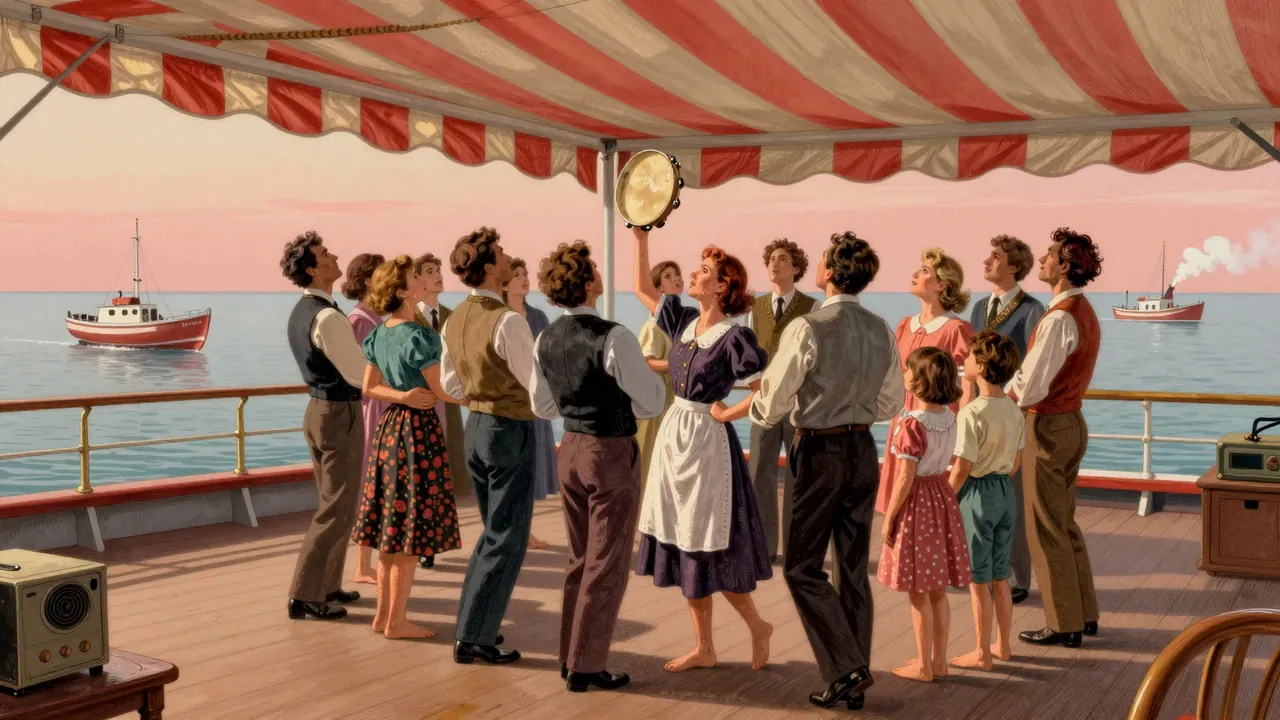
Set aboard the luxury liner Gloria N. in July 1914, Federico Fellini’s And the Ship Sails On follows a funeral voyage to scatter the ashes of a legendary opera singer. Through journalist Orlando’s wry narration, the film assembles a gallery of caricatured aristocrats, artists, and dignitaries — all performing grief, status, and obsession aboard a vessel that doubles as a stage, museum, and mausoleum. Giuseppe Rotunno’s cinematography and Dante Ferretti’s sets sustain a lush, theatrical artifice, while Gianfranco Plenizio’s score underscores the film’s blend of grandeur and gentle absurdity. The voyage ends not with resolution but with sinking — literal and metaphorical — as the ship founders amid cannon fire and butterflies.

13:00

Androcles and the Lion

Chester Erskine, Nicholas Ray · 1952

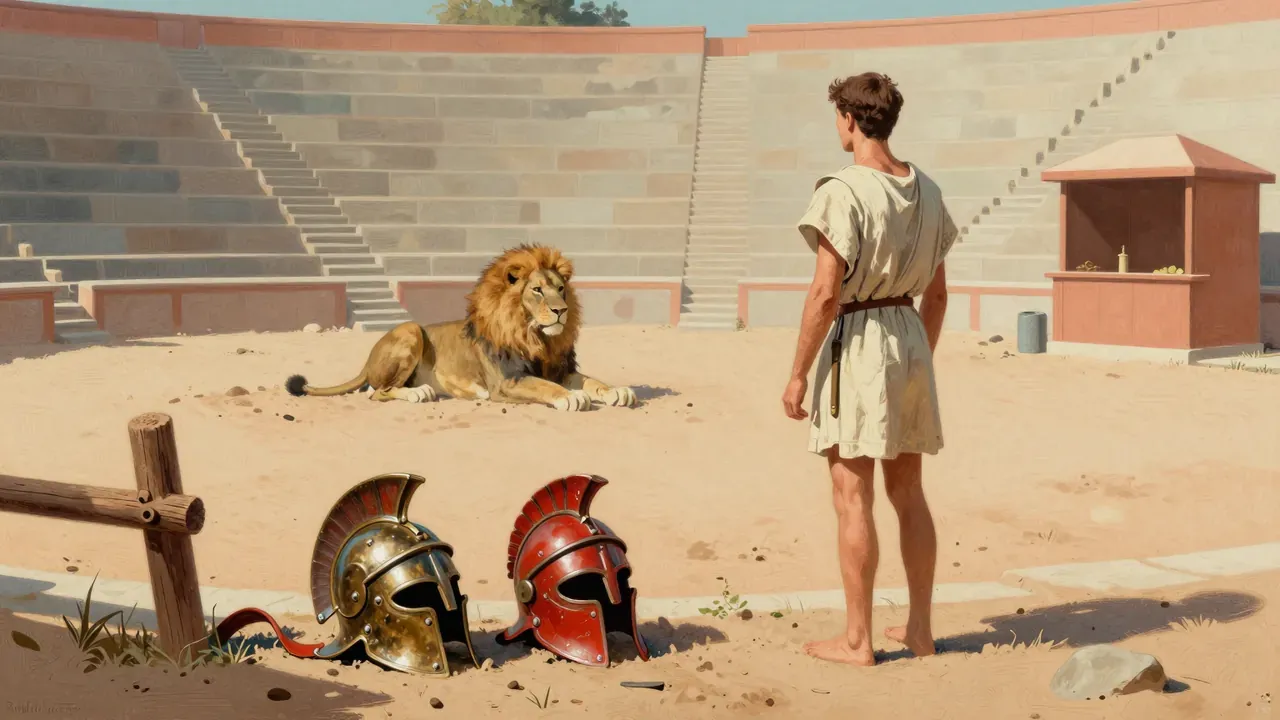
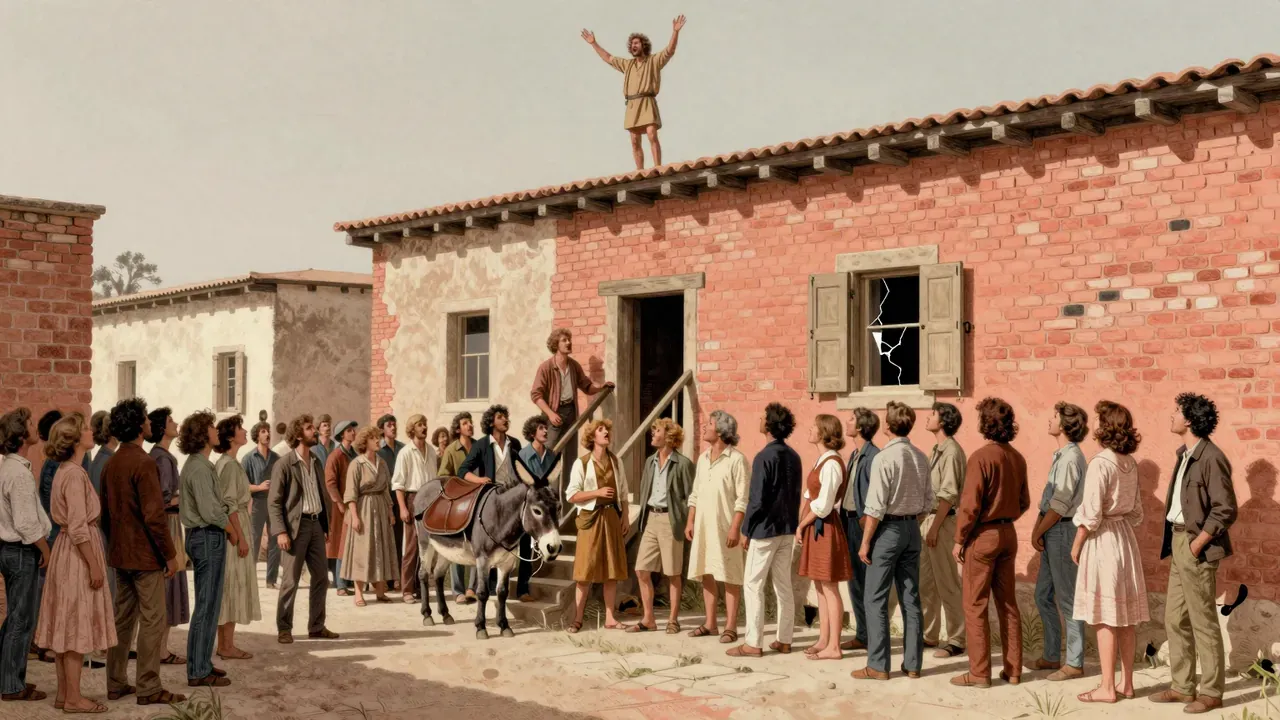
RKO’s 1952 Androcles and the Lion adapts George Bernard Shaw’s 1912 play with strict fidelity to his text, casting Alan Young as a gentle Christian tailor who befriends a lion in the Roman wilderness. Directed by Chester Erskine and Nicholas Ray, it foregrounds verbal wit over visual spectacle, staging philosophical debate in studio-bound sets. Though reshoots added arena theatrics, the film’s strength remains its unflinching commitment to Shaw’s irony, pacifism, and bureaucratic satire—making it a rare, talkative anomaly in the sword-and-sandal cycle.

13:00

Anora

Sean Baker · 2024

Sean Baker’s Anora follows Mikey Madison as Ani Mikheeva, a Russian-American lap dancer in Brooklyn who impulsively marries the son of a Russian oligarch in Las Vegas — then faces the consequences when his family intervenes. Shot on 35 mm anamorphic film, the film grounds its high-stakes premise in precise, unsentimental observation of language, labour, and class. It won the Palme d'Or and five Academy Awards, including Best Picture and Best Actress.

13:00

Arsenic and Old Lace

Frank Capra · 1944

Frank Capra’s 1944 adaptation of Joseph Kesselring’s play is a tightly wound black comedy set over one Halloween day in a Brooklyn house where two elderly sisters poison lonely bachelors, their delusional nephew buries the bodies, and their theatre-critic nephew tries to contain the chaos. Starring Cary Grant, Josephine Hull and Raymond Massey, it prioritises rhythmic precision over emotional depth, using studio-era craft to sustain a high-wire act of escalating absurdity.

13:00

As Long as You've Got Your Health

Pierre Étaix · 1966

Pierre Étaix’s 1966 anthology comedy As Long as You’ve Got Your Health presents four self-contained sketches—on insomnia, cinema queues, psychiatric consultation, and forest visits—unified by deadpan timing, restrained performances, and Jean Boffety’s unobtrusive cinematography. Written by Jean-Claude Carrière and edited with surgical calm, it observes urban alienation and bureaucratic fatigue not through satire but through repetition and pause. Its humour is physical, its themes implicit, its pace deliberate.

13:00

Babo 73

Robert Downey Sr. · 1964

Babo 73 is a 1964 American underground comedy directed by Robert Downey Sr., presenting a surreal, non-narrative campaign for a fictional presidential candidate named Babo. Shot on 16mm in black and white, it uses repetition, deadpan delivery, and jagged editing to dissect the performative emptiness of political theatre. With no score, minimal dialogue, and no character development, it operates as a formal experiment in anti-rhetoric—less satire than structural diagnosis.

13:00

Bamboozled

Spike Lee · 2000

Spike Lee’s 2000 film Bamboozled follows a Black television writer who creates a modern minstrel show as a cynical ploy to get fired—only to see it become a hit. Shot partly on Mini DV and partly on Super 16, it blends satire, drama and documentary-style montage to confront the persistence of racist imagery in American media. Though critically divisive on release, it has since been reappraised for its prescience and added to the National Film Registry.

13:00

Being John Malkovich

Spike Jonze · 1999

Being John Malkovich (1999) is a surrealist comedy-drama written by Charlie Kaufman and directed by Spike Jonze. A down-on-his-luck puppeteer discovers a portal into actor John Malkovich’s mind, sparking a chain of ethical and existential complications among his wife, co-worker, and employer. With precise writing, restrained performances, and a singular conceptual rigour, it explores identity, desire, and control without resorting to explanation or sentiment.

13:00

Being There

Hal Ashby · 1979

Hal Ashby’s 1979 adaptation of Jerzy Kosiński’s novel follows Chauncey Gardiner, a sheltered gardener mistaken for a sage after stepping into Washington society. Peter Sellers delivers a performance of radical stillness, while the film’s craft — cinematography, editing, score — enforces a tone of calm, unblinking observation. It is satire without ridicule, comedy without punchlines, and a portrait of meaning-making as collective fiction.

13:00

Beyond the Valley of the Dolls

Russ Meyer · 1970

Beyond the Valley of the Dolls (1970) is a Russ Meyer–Roger Ebert collaboration: a knowingly excessive, tonally unstable parody of Valley of the Dolls and Hollywood itself. Made quickly on the Fox lot, it blends teen melodrama, rock musical, exploitation thriller and moral fable — all delivered with poker-faced solemnity. Its cult status rests on its deliberate incoherence, not despite it.

13:00

Big Deal on Madonna Street

Mario Monicelli · 1958

Big Deal on Madonna Street (1958) is an Italian heist comedy directed by Mario Monicelli, following a group of Rome-based petty criminals attempting—unsuccessfully—to burgle a pawn shop through a shared wall. Shot on location with harsh, naturalistic lighting by Gianni Di Venanzo and scored with restrained jazz by Piero Umiliani, it parodies both neorealist gravity and crime-thriller solemnity by applying their formal rigour to characters who lack the means to succeed. The film’s humour arises from procedural fidelity, not absurdity: every setback follows logically from material constraint, linguistic mismatch or spatial miscalculation. Though nominated for an Academy Award and listed among Italy’s 100 essential films, its appeal lies in its precision, not its polish.

13:00

Billy Liar

John Schlesinger · 1963

A 1963 British tragicomedy starring Tom Courtenay as Billy Fisher, a young undertaker’s clerk in Yorkshire whose elaborate fantasies of ruling the imaginary nation of Ambrosia mask his inability to act on real desire. Directed by John Schlesinger and adapted by Willis Hall from Keith Waterhouse’s novel, it uses real locations in Bradford and Denys Coop’s CinemaScope photography to anchor its surrealism in social reality. The film ends not with escape but with Billy stepping off a train to London—and walking home alone.

13:00

Blithe Spirit

David Lean · 1945

David Lean’s 1945 Blithe Spirit adapts Noël Coward’s stage comedy with formal care and muted energy. Shot in Technicolor by Ronald Neame, it preserves the play’s wit and structure while adding exterior scenes and a controversial new ending. Margaret Rutherford’s Madame Arcati anchors the film, but Rex Harrison and Kay Hammond struggle to translate their stage roles to screen. The film’s strength lies in its textures — domestic detail, vocal rhythm, restrained visual effects — not in narrative drive or emotional revelation. Though commercially disappointing in 1945, it endures as a document of mid-century British craft and constraint.

13:00

Bottle Rocket

Wes Anderson · 1996

Wes Anderson’s 1996 debut follows three Texas friends attempting increasingly ill-conceived robberies, not for money or thrills but to inhabit roles — planner, accomplice, driver — that confer identity and connection. Shot with flat, frontal precision by Robert Yeoman and scored with wry minimalism by Mark Mothersbaugh, it treats ambition, failure, and affection with equal, unblinking calm.

13:00

Boudu Saved from Drowning

Jean Renoir · 1932

Jean Renoir’s 1932 Boudu Saved from Drowning follows a Paris bookseller who rescues a suicidal tramp and tries to assimilate him into middle-class life. Starring Michel Simon, the film uses precise staging, behavioural realism and dry wit to dissect the contradictions of respectability — not by arguing against it, but by letting its rituals collapse under the weight of an unassimilable presence.

13:00

Bringing Up Baby

Howard Hawks · 1938

Bringing Up Baby (1938), directed by Howard Hawks, pairs Katharine Hepburn and Cary Grant in a relentless romantic comedy about a paleontologist undone by a scatterbrained heiress and her leopard. Written by Dudley Nichols and Hagar Wilde, it trades emotional exposition for escalating absurdity, using precise performance, tight editing and rhythmic dialogue to sustain a world where logic collapses on cue. Though commercially modest on release, it is now regarded as a pinnacle of screwball form.

13:00

Bull Durham

Ron Shelton · 1988

Ron Shelton’s 1988 romantic comedy follows a veteran catcher, a rookie pitcher, and a baseball-obsessed teacher in the Durham Bulls minor-league team. Grounded in precise detail and unhurried pacing, it explores mentorship, obsolescence, and the rituals that give shape to transient lives — all without resorting to sentiment or spectacle.

13:00

Caesar and Cleopatra

Gabriel Pascal · 1945

Gabriel Pascal’s 1945 Technicolor film adapts George Bernard Shaw’s 1901 play with near-verbatim fidelity. Starring Vivien Leigh and Claude Rains, it follows Cleopatra’s tutelage under Caesar during the Siege of Alexandria. Lavish in scale but restrained in execution, it privileges dialogue, idea and historical procedure over spectacle or sentiment. Though a financial failure on release, it endures as a rare example of British studio craft applying philosophical seriousness to ancient subject matter.

13:00

Capricious Summer

Jiří Menzel · 1968

Jiří Menzel’s 1968 Czechoslovak comedy follows three middle-aged men — a bathhouse owner, a retired artillery major and a local canon — over three rainy summer days at an abandoned resort. Their routines are disrupted by the arrival of a touring tightrope walker and his assistant, prompting a series of small, overlapping seductions, humiliations and quiet reconciliations. Shot in soft colour by Jaromír Šofr and performed with understated precision, the film treats desire, ageing and social ritual as weather systems — persistent, unpredictable, ultimately indifferent to individual will.

13:00

Celine and Julie Go Boating

Jacques Rivette · 1974

Jacques Rivette’s 1974 film follows two women who enter a looping, magical-realist narrative housed in a Paris mansion, gradually learning its rhythms and rewriting its ending. Built on repetition, collaboration and patient observation, it models fiction as a space to inhabit rather than interpret.

13:00

Chafed Elbows

Robert Downey Sr. · 1966

Robert Downey Sr.’s 1966 underground comedy Chafed Elbows uses still photography, post-dubbed dialogue, and radical role doubling to dismantle narrative cinema from within. Shot for $12,000, mostly on 35mm stills developed at Walgreens, it follows Walter Dinsmore’s hallucinatory day at the 1964 World’s Fair — a sequence of grotesque, satirical episodes held together by rhythm and repetition rather than logic. Though technically crude and structurally fractured, it remains a pivotal work of American experimental film: abrasive, intelligent, and deliberately unsustainable as entertainment.

13:00

Chan Is Missing

Wayne Wang · 1982

Wayne Wang’s 1982 debut is a black-and-white arthouse comedy-drama structured as a search for a missing Chinatown taxi broker. As two men interview locals, each offers a contradictory portrait of him — revealing not Chan, but the fractured, polyglot reality of Chinese American life. Shot on location with non-professionals, it privileges ambiguity over exposition, sound over subtitle, and absence over answer.

13:00

Charade

Stanley Donen · 1963

Stanley Donen’s 1963 Charade pairs Cary Grant and Audrey Hepburn in a Paris-set romantic thriller about stolen wartime gold, shifting identities and a widow who inherits confusion. Written by Peter Stone and shot by Charles Lang, it balances suspense, banter and visual clarity without overreaching. Its strengths lie in structure, performance and tone; its limits in psychological depth and thematic ambition. It remains a masterclass in mid-century studio craft.

13:00

Chasing Amy

Kevin Smith · 1997

Kevin Smith’s third feature follows comic artist Holden McNeil as he falls for lesbian writer Alyssa Jones, fracturing his lifelong friendship with Banky Edwards. Shot on a $250,000 budget in New York, the film uses talk, not spectacle, to explore jealousy, sexual history, and the limits of empathy. It won Independent Spirit Awards for Best Screenplay and Best Supporting Male (Jason Lee), and remains a defining — if contested — entry in 90s American indie cinema.

13:00

Cluny Brown

Ernst Lubitsch · 1946

Ernst Lubitsch’s 1946 Cluny Brown follows a gifted London plumber’s niece who disrupts British high society with her practicality, honesty, and uncanny knack for fixing pipes — and people. Set in 1938, it pairs Jennifer Jones and Charles Boyer in a gently barbed satire of class, exile, and the politics of domestic competence, anchored by Joseph LaShelle’s restrained cinematography and Samuel Hoffenstein’s economical script.

13:00

Crossing Delancey

Joan Micklin Silver · 1988

Crossing Delancey (1988), directed by Joan Micklin Silver and adapted by Susan Sandler from her play, follows Isabelle Grossman — a New York bookseller torn between literary aspiration and familial expectation — as she navigates a matchmaker’s introduction to Sam Posner, a pickle merchant. Set against the Lower East Side’s Orthodox Jewish community, the film charts quiet emotional recalibrations rather than grand transformations, anchored by Amy Irving’s restrained performance and Reizl Bozyk’s luminous final screen role.

13:00

Dazed and Confused

Richard Linklater · 1993

Richard Linklater’s 1993 ensemble comedy follows a group of Texas teenagers on the last day of school in 1976. With no central plot or protagonist, it builds meaning through accumulation: hazing rituals, car cruises, pool-hall loitering, and overlapping conversations. Shot on location in Austin with an ensemble of then-unknown actors, it prioritises texture over narrative, using Lee Daniel’s naturalistic cinematography, Alan Silvestri’s diegetic-heavy score, and improvised performances to evoke adolescent stasis rather than growth. Though commercially muted on release, it has since become a defining cult film of the 1990s.

13:00

Design for Living

Ernst Lubitsch, Ben Hecht · 1933

Ernst Lubitsch and Ben Hecht’s 1933 romantic comedy adapts Noël Coward’s play into a buoyant, Depression-era farce about a woman living with two men who love her. Starring Fredric March, Gary Cooper and Miriam Hopkins, it trades Coward’s epigrams for physical charm and situational humour, using swift editing, uncluttered cinematography and effortless performances to sustain its risqué premise without scandal. Though structurally loose and verbally thin, it remains a rare, coherent vision of non-monogamy as joyful improvisation — not transgression.

13:00

Désiré

Sacha Guitry · 1937

Sacha Guitry’s 1937 Désiré is a tightly wound Parisian comedy in which an actress’s growing fixation on her valet destabilises her relationship with a government minister. Set almost entirely in three interior spaces, it relies on precise dialogue, restrained performances — especially by Arletty and Jacqueline Delubac — and a still, observational camera. It explores class, service, and the erotic charge of being truly seen, without recourse to plot twists or moralising.

13:00

Desperate Living

John Waters · 1977

John Waters’ 1977 Desperate Living is the third and most formally controlled entry in his Trash Trilogy: a black comedy set in Mortville, a shantytown exile colony ruled by a fascist queen. Made without Divine and shot on scavenged sets in rural Maryland, it trades shock for sustained tone — using deadpan performances, flimsy production design, and bureaucratic absurdity to dissect power, gender, and class. Its cult status rests not on laughter, but on its unwavering commitment to a world where cruelty wears a clipboard and revolution smells of roasting pork.

13:00

Destry Rides Again

George Marshall · 1939

Destry Rides Again (1939) is a Universal Pictures Western comedy directed by George Marshall, starring James Stewart and Marlene Dietrich. It follows a gunless sheriff who restores order in the corrupt town of Bottleneck not through force but through patience, wit, and carefully orchestrated social pressure. Written by Henry Myers and Gertrude Purcell, it subverts genre expectations with dry humour, deliberate pacing, and character-driven irony—most notably in Dietrich’s iconic turn as the saloon singer Frenchy. Though loosely based on Max Brand’s novel, the film bears little resemblance to earlier adaptations and stands as a singular blend of Western structure and comedic timing.

13:00

Divorce, Italian Style

Pietro Germi, Renzo Marignano · 1961

Divorce, Italian Style (1961) is a Sicilian black comedy in which an impoverished nobleman plots to murder his wife in order to claim leniency under Italy’s honour-killing statutes. Directed by Pietro Germi and written by Germi, Ennio de Concini, Alfredo Giannetti and Agenore Incrocci, it stars Marcello Mastroianni as Ferdinando Cefalù, whose elaborate scheme exposes the contradictions between law, religion and social expectation in pre-divorce Italy. The film won the Academy Award for Best Original Screenplay and remains a benchmark of satirical precision.

13:00

Dollar

Gustaf Molander · 1938

Dollar is a tightly constructed 1938 Swedish comedy directed by Gustaf Molander, starring Ingrid Bergman as Julia Balzar. When compulsive gambler Louis Brenner incurs a large debt, a cheque is written to cover it — but its true origin sparks misunderstandings among three affluent couples holidaying at a ski resort. Misattributed generosity, psychosomatic paralysis, and a high-stakes psychoanalytic wager unfold with quiet precision, culminating in a late revelation about whose money was really spent. Shot by Åke Dahlqvist and edited by Oscar Rosander, it prioritises structural clarity over emotional exposition.

13:00

Don't Play Us Cheap

Melvin Van Peebles · 1973

Melvin Van Peebles’ 1973 musical film adapts his stage work into a vibrant, low-budget allegory: two demons infiltrate a Harlem birthday party to break it up, only to be undone by song, solidarity, and the unassailable groove of everyday Black life. Shot on location with a cast of stage veterans and non-professionals, it treats gospel, soul, and doo-wop as tools of social analysis — not backdrop. Its themes of communal resilience, class critique, and joy-as-resistance remain urgent, its form deliberately anti-spectacle.

13:00

Down by Law

Jim Jarmusch · 1986

Jim Jarmusch’s 1986 black-and-white arthouse film follows three mismatched convicts — a radio DJ, a pimp, and an Italian immigrant — who escape from a New Orleans prison into the Louisiana bayou. With minimal plot, deliberate pacing, and Robby Müller’s stark cinematography, it foregrounds texture, silence, and the quiet evolution of trust over conventional narrative drive. Starring Tom Waits, John Lurie, and Roberto Benigni, it is a study in tonal precision, linguistic friction, and the unforced poetry of ordinary endurance.

13:00

Eating Raoul

Paul Bartel · 1982

Eating Raoul (1982) is a low-budget black comedy about a prudish Los Angeles couple who kill affluent swingers to fund their dream restaurant. Directed by Paul Bartel and written with Richard Blackburn, it sustains a flat, deadpan tone throughout, treating homicide as routine logistics. Gary Thieltges’ unshowy cinematography and the cast’s understated performances reinforce its central irony: evil, here, is bureaucratic, not theatrical. Though its final act veers into broader farce, the film remains a precise, unsentimental study of aspiration, class, and the quiet erosion of principle.

13:00

Election

Alexander Payne · 1999

Alexander Payne’s 1999 black comedy follows a high school teacher’s attempt to sabotage an overachieving student’s bid for class president. Told through four intersecting voiceovers and shot on location in Omaha, it uses the mechanics of a student election to dissect ambition, resentment, and institutional failure — with Reese Witherspoon and Matthew Broderick delivering performances of unnerving clarity.

13:00

Elena and Her Men

Jean Renoir · 1956

Jean Renoir’s 1956 film follows a Polish princess in fin de siècle Paris whose romantic entanglements intersect with a general’s wavering ambition and a shoe magnate’s calculations. Shot in Paris studios and locations, with design by Jean André and music by Joseph Kosma, it treats politics as theatre and desire as strategy — light in tone, precise in execution, and deliberately unmoored from psychological realism.
13:00

Equinox Flower

Yasujirō Ozu · 1958

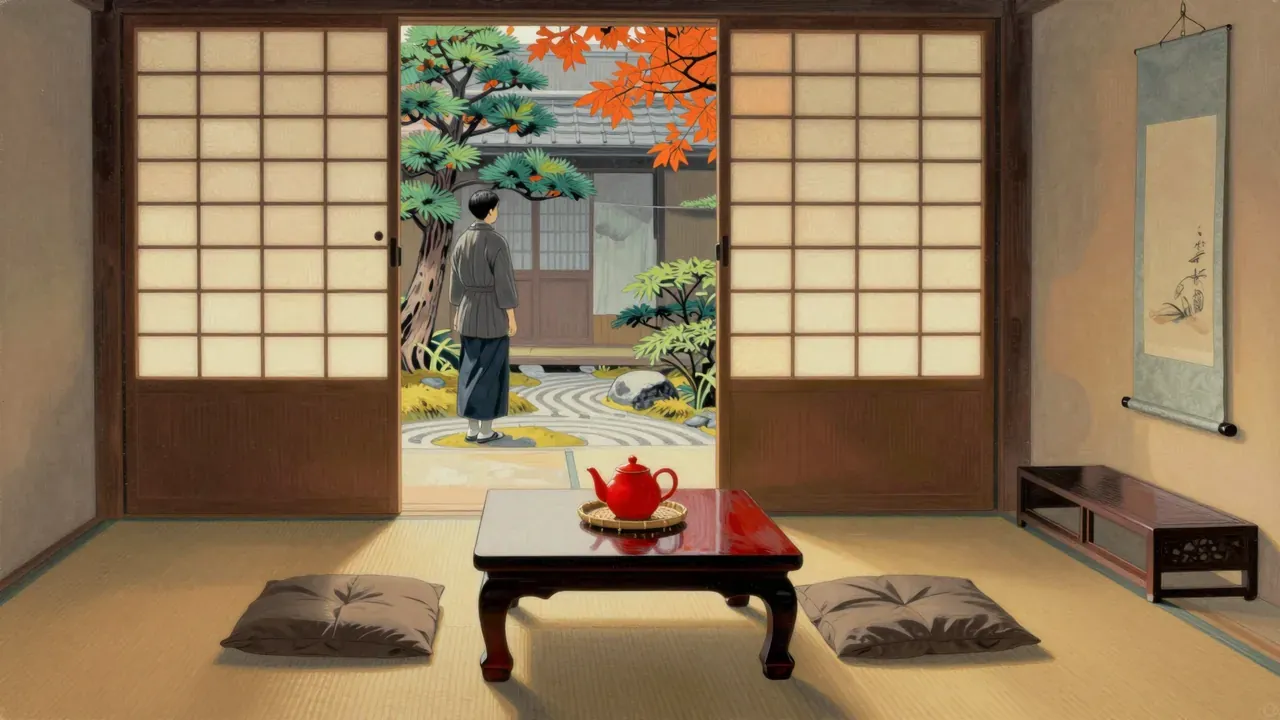
Equinox Flower (1958) is Yasujirō Ozu’s first colour feature—a domestic comedy tracing a Tokyo businessman’s reluctant acceptance of his daughter’s self-chosen marriage. Shot in Agfa colour, it observes generational friction through stillness, repetition, and muted reds, trusting the viewer to register change in posture, silence, and the movement of a teapot. Fujiko Yamamoto’s standout performance anchors a structure built on evasion and quiet reversal, not crisis or catharsis.

13:00

Fanfan la Tulipe

Christian-Jaque · 1952

Fanfan la Tulipe (1952) is a French black-and-white comedy-adventure starring Gérard Philipe as a charming rogue who joins the army on false pretences during the Seven Years’ War. Directed by Christian-Jaque, it balances swordplay, romance and gentle irony without moralising or historicising. Its strengths lie in physical performance, rhythmic editing and Christian Matras’s lucid cinematography — not in plot complexity or thematic weight.

13:00

Fast Times at Ridgemont High

Amy Heckerling · 1982

Fast Times at Ridgemont High (1982) is Amy Heckerling’s feature debut, adapted by Cameron Crowe from his immersive non-fiction study of Clairemont High. Set over one school year in the San Fernando Valley, it tracks Stacy Hamilton’s freshman year, Brad’s senior drift, Spicoli’s stoner defiance, and Rat’s nervous courtship — all without narrative hierarchy or moral framing. Shot with documentary restraint by Matthew F. Leonetti and edited for rhythm not revelation, it treats adolescence as a series of low-stakes rehearsals, not a crucible. Its authenticity lies in patience, not accuracy.

13:00

Fearless Hyena Part II

Lo Wei · 1983

Fearless Hyena Part II (1983) is a fractured Hong Kong martial arts film directed by Lo Wei, written by Jackie Chan, and released after Chan broke his contract to join Golden Harvest. With Chan absent for much of the shoot, the film relies on doubles, reused material, and disjointed editing. Its plot — two cousins avenging their slain fathers — is undercut by narrative incoherence, tonal whiplash, and visible production strain. Yet its absurdity and historical significance as a case study in studio power make it more revealing than entertaining.

13:00

Female Trouble

John Waters · 1974

John Waters’ 1974 comedy Female Trouble follows Divine as Dawn Davenport, a Baltimore delinquent whose life escalates from expulsion and teen pregnancy to criminal stardom and execution — all staged with deadpan precision, handmade production design, and zero psychological compromise. Shot on 16mm in Baltimore for $25,000, it treats celebrity, punishment, and beauty as interchangeable currencies in a world governed by spectacle, not sense.

13:00

Flunky, Work Hard

Mikio Naruse · 1931

A 29-minute Japanese silent film from 1931, Mikio Naruse’s Flunky, Work Hard follows an insurance salesman’s desperate attempts to secure income and respect amid rent arrears, neighbourly friction, and parental failure. Shot in Shochiku’s Kamata studio, it blends nansensu comedy, tendency-film concern, and shoshimin-eiga realism—with abrupt tonal shifts, economical editing, and a structure built around irony and collapse. Its survival makes it a key artefact of early Naruse and interwar Japanese cinema.

13:00

Frances Ha

Noah Baumbach · 2012

Frances Ha (2012) follows Frances, a 27-year-old dancer in New York, as her career stalls and her closest friendship frays. Shot in black-and-white on consumer-grade equipment, it favours observational detail over plot, using Gerwig’s performance and Baumbach’s direction to chart emotional shifts across apartments, cities and roles — from Brooklyn to Sacramento to Paris to Washington Heights. Its themes centre on friendship as infrastructure, class as daily friction, and identity as something folded, not fixed.

13:00

Ghost World

Terry Zwigoff · 2001

Ghost World (2001), directed by Terry Zwigoff and co-written with Daniel Clowes, follows Enid and Rebecca through the hollow summer after high school. Shot by Affonso Beato with deliberate oversaturation and lingering takes, it renders adolescent disaffection as structural fact rather than passing mood. Thora Birch’s performance anchors a film that values silence over exposition, texture over plot, and ambiguity over resolution.

13:00

Good Morning

Yasujirō Ozu · 1959

Yasujirō Ozu’s 1959 colour comedy follows two brothers who stop speaking to protest their parents’ refusal to buy a television. Set in a Tokyo suburb, the film traces how their silence ripples through the neighbourhood, exposing the fragility of gossip, the labour of politeness, and the quiet absurdity of adult consensus — all observed with Ozu’s characteristic stillness and dry precision.

13:00

Hairspray

John Waters · 1988

John Waters’s 1988 romantic comedy reimagines 1962 Baltimore as a stage for joyful, noisy resistance. Tracy Turnblad, a plus-size teen, fights to integrate a local TV dance show — and in doing so, exposes segregation as farcical, fragile, and beatable. With Ricki Lake, Divine, Ruth Brown, and Debbie Harry, it balances satire and sincerity, using music, dance, and outrageous costume to argue that liberation is loud, embodied, and unapologetically fun.

13:00

Half a Loaf of Kung Fu

Chi-Hwa Chen · 1978

Half a Loaf of Kung Fu (1978) is Jackie Chan’s early experiment in kung fu slapstick: a bumbling acrobat named Jiang stumbles through a series of misadventures — spying on a witch, collecting bounties on corpses, apprenticing to a beggar — all while trying, and mostly failing, to learn kung fu. Directed by Chi-Hwa Chen and written by Chan, it parodies the genre’s gravitas with physical comedy, episodic plotting, and a refusal to treat mastery as earned rather than stumbled upon.

13:00

Heaven Can Wait

Ernst Lubitsch · 1943

Ernst Lubitsch’s 1943 Heaven Can Wait follows Henry Van Cleve, a New York heir who, upon arriving at the reception area of Hell, recounts his life to prove he belongs there. Framed as a wry, non-chronological character study, the film uses fantasy not for spectacle but for structure—tracing seventy years of privilege, marriage, and quiet moral drift with precision, irony, and deep affection for its characters’ limitations.

13:00

Here Comes Mr. Jordan

Alexander Hall · 1941

Here Comes Mr. Jordan (1941) follows boxer Joe Pendleton, mistakenly taken to Heaven before his time, who must inhabit a new body on Earth to complete his life. Directed by Alexander Hall and written by Sidney Buchman and Seton I. Miller, the film balances fantasy, romance, and comedy with precise structure and restrained performances. Its strength lies in treating the afterlife as bureaucratic infrastructure and grounding ethical choices in tangible action — restitution, not revelation. Though its final act softens its earlier rigour, the film remains a masterclass in economical, character-led storytelling.

13:00

His Girl Friday

Howard Hawks · 1940

Howard Hawks’s 1940 comedy His Girl Friday recasts The Front Page as a battle of wits between ex-spouses Walter Burns and Hildy Johnson, a newspaper editor and reporter whose professional rivalry reignites as a romantic one. Shot at breakneck speed with overlapping dialogue, it privileges competence over sentiment and friction over harmony. Though formally dazzling and historically influential, it sidesteps the racial and ethical weight of its source material, treating injustice as backdrop rather than subject.

13:00

Hobson's Choice

David Lean · 1954

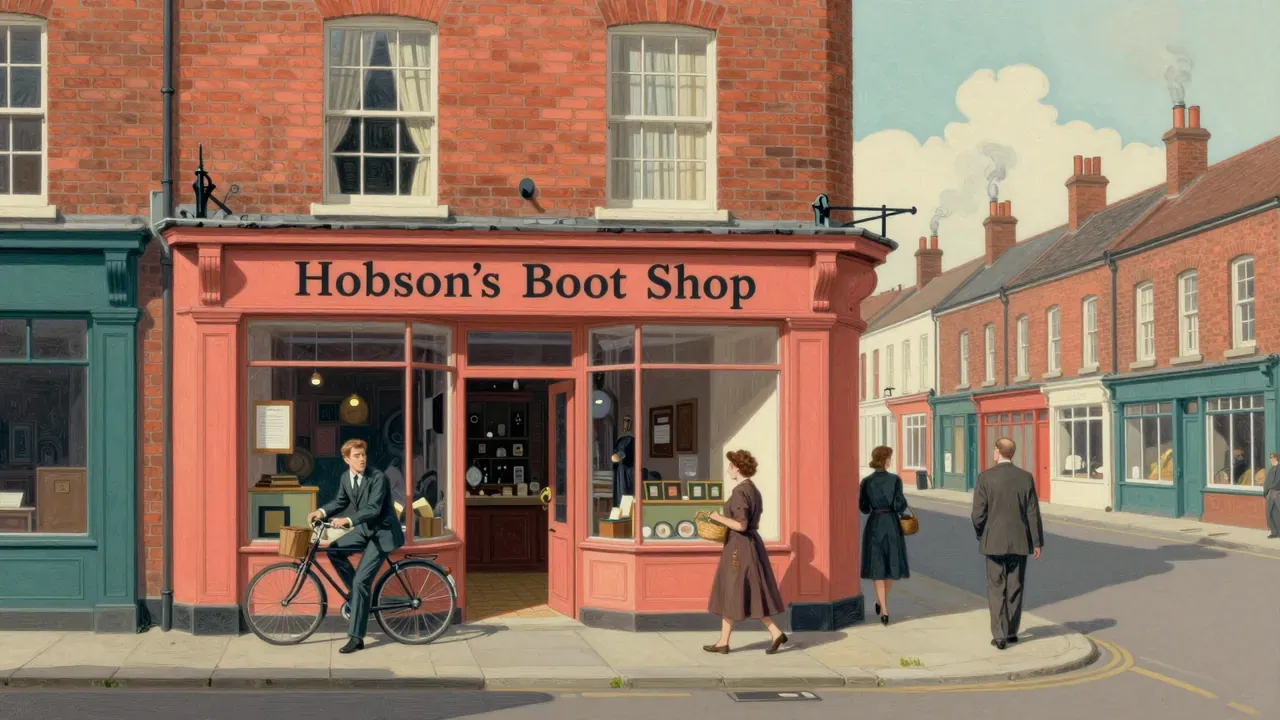
David Lean’s 1954 adaptation of Harold Brighouse’s play follows Maggie Hobson as she marries bootmaker Will Mossop to escape her tyrannical father’s household, then builds a rival business with him in 1880 Salford. Grounded in precise performance and restrained craft, it treats class, literacy, and domestic labour as material forces — not metaphors — and locates dignity in incremental, negotiated change.

13:00

Holiday

George Cukor · 1938

George Cukor’s 1938 Holiday adapts Philip Barry’s play into a precise, unhurried romantic comedy about Johnny Case, a self-made banker who plans to retire at thirty, and Linda Seton, the restless daughter of a banking dynasty. Set in a gilded Park Avenue mansion, it tests whether personal integrity can survive assimilation into inherited privilege. Katharine Hepburn and Cary Grant anchor a literate, understated performance style; Franz Planer’s cinematography and Otto Meyer’s editing sustain quiet rhythm over speed. Though rooted in the stage, it resists theatrical artifice, trusting dialogue and gesture over exposition. Nominated for Best Art Direction, it holds a 100% Tomatometer score but was not a box-office success — a film that rewards attention, not immersion.

13:00

Hollywood Shuffle

Robert Townsend · 1987

Hollywood Shuffle is a 1987 semi-autobiographical satire directed by Robert Townsend, following Bobby Taylor as he navigates Hollywood’s demand for stereotypical Black roles. Shot on a $100,000 budget over two and a half years, it uses vignettes, parodies, and daydreams to expose how race is commodified in casting, writing, and performance. Though praised for its sharp humour and technical ingenuity, it draws criticism for reproducing sexist and homophobic stereotypes it otherwise critiques. The film ends not with success but with quiet recalibration — Bobby filming a US Postal Service PSA.

13:00

Hopscotch

Ronald Neame · 1980

Hopscotch (1980) is a low-key, Mozart-scored spy comedy starring Walter Matthau as Miles Kendig, a CIA veteran who retaliates against forced retirement by writing and publishing an explosive memoir — mailing chapters to rival intelligence agencies across Europe and the US. Directed by Ronald Neame and adapted by Bryan Forbes and Brian Garfield, it trades thrills for procedural wit, treating espionage as bureaucratic farce rather than mortal peril. Its pleasures lie in Matthau’s dry authority, Arthur Ibbetson’s unshowy camerawork, and Ian Fraser’s precisely deployed classical score.

13:00

House

Nobuhiko Obayashi · 1977

Nobuhiko Obayashi’s 1977 House is a Japanese comedy horror film about seven schoolgirls devoured one by one in a sentient, surreal country house. Made with handmade effects, a rock soundtrack by Godiego, and non-professional actors, it rejects narrative logic in favour of associative, childlike imagery rooted in Obayashi’s daughter’s fears and his own Hiroshima memories. Though dismissed on release, it has since gained cult status for its audacious form and emotional precision.

13:00

House Party

Reginald Hudlin · 1990

House Party (1990) is a low-budget teen comedy directed by Reginald Hudlin, following Kid and Play as they throw a house party in South Central Los Angeles. Built around a single chaotic night, it uses hip hop aesthetics — scratching, freestyling, dance-offs — as structural devices rather than decoration. With naturalistic cinematography by Peter Deming and a jazz-funk-hip hop score by Lenny White, it prioritises physicality, vernacular rhythm and communal joy over plot mechanics. Though some subplots falter and caricature occasionally intrudes, its consistency, specificity and warmth have secured its status as a culturally significant cult classic.

13:00

How to Get Ahead in Advertising

Bruce Robinson · 1989

Bruce Robinson’s 1989 black comedy follows an ad executive whose nervous breakdown produces a sentient boil — his conscience made manifest. Starring Richard E. Grant, Rachel Ward and Richard Wilson, it is a strident, visually restrained assault on Thatcher-era consumerism, built on repetition, rhetorical fury and practical-effects grotesquerie. Its power lies in its refusal to soften its argument — or its imagery.

13:00

I Know Where I'm Going!

Michael Powell, Emeric Pressburger · 1945

Made in 1945 by Powell and Pressburger, I Know Where I'm Going! follows Joan Webster, a determined Englishwoman whose plans to marry a wealthy industrialist on a Hebridean island are stalled by gales and community. Stuck on Mull, she meets Torquil MacNeil and begins to question the life she assumed was fixed. Shot on location and at Denham Studios, with Erwin Hillier’s restrained cinematography and Allan Gray’s folk-inflected score, the film is a precisely engineered argument against instrumental thinking — where place, time and tradition act not as scenery but as quiet, persistent agents of change.

13:00

I Married a Witch

René Clair · 1942

René Clair’s 1942 I Married a Witch is a tightly wound romantic fantasy starring Veronica Lake as a resurrected witch who disrupts the engagement of politician Wallace Wooley (Fredric March). Adapted from Thorne Smith’s unfinished novel, it uses magic not for wonder but as a scalpel to dissect marriage, politics, and gender. Ted Tetzlaff’s cinematography, Roy Webb’s score, and Clair’s economical staging sustain a tone of wry, unhurried absurdity — one that rewards attention to rhythm and restraint over plot or sentiment.

13:00

I Wanna Hold Your Hand

Robert Zemeckis · 1978

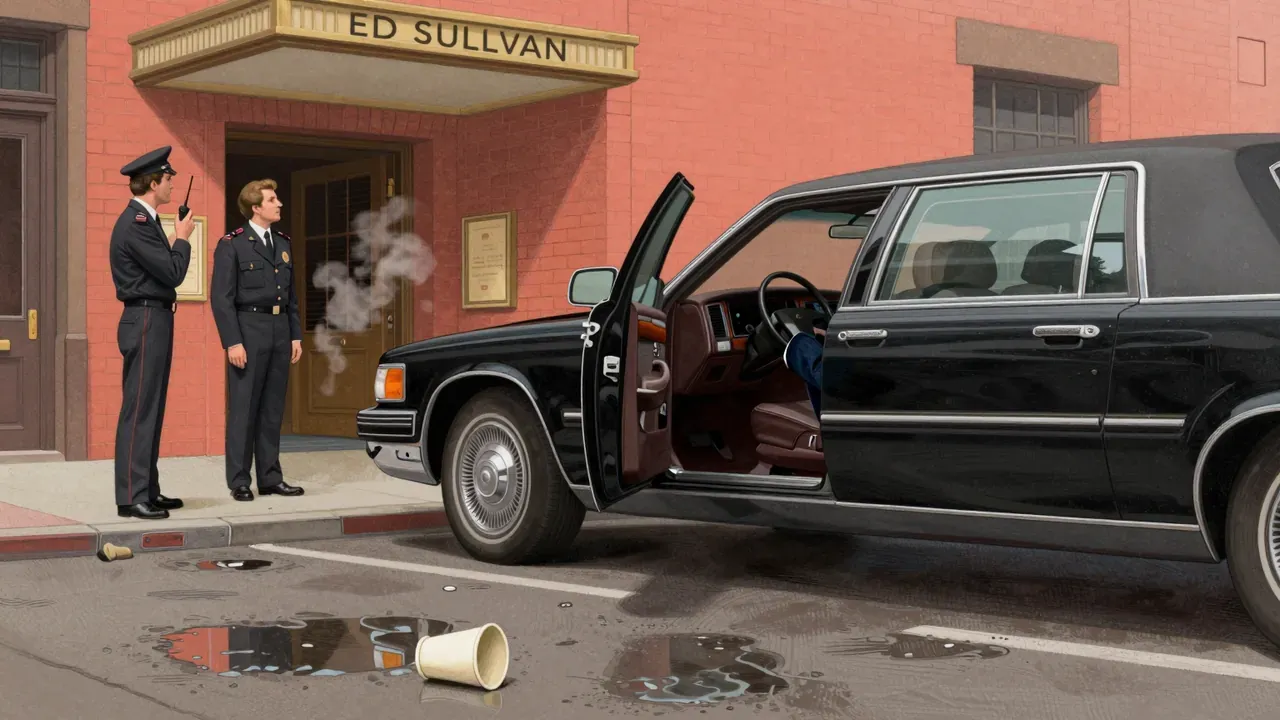
Set over one day in February 1964, I Wanna Hold Your Hand follows six New Jersey teenagers converging on New York City to witness the Beatles’ Ed Sullivan Show debut — without ever showing the band. Directed by Robert Zemeckis in his feature debut, it uses tight plotting, period-accurate detail, and ensemble performances to map fandom as a system of access, exclusion, and improvised agency. Though commercially unsuccessful on release, it has endured as a cult object for its structural rigour and humane farce.

13:00

I Was Born, But...

Yasujirō Ozu · 1932

Yasujirō Ozu’s 1932 silent comedy follows two brothers whose faith in their father collapses when they see him humiliate himself before his boss on home film. With still camerawork, sparse intertitles, and performances rooted in physical truth, the film traces the quiet transmission of social submission across generations — not as satire or tragedy, but as observed fact.

13:00

Il sorpasso

Dino Risi · 1962

Set over Ferragosto 1962, Il sorpasso follows Bruno Cortona — a charismatic, reckless Roman — as he sweeps timid law student Roberto Mariani into a spontaneous coastal drive. Over two days, Roberto sheds inhibition under Bruno’s influence, adopting his mannerisms, his risks, and ultimately his fate. Directed by Dino Risi and shot by Alfio Contini, the film uses real-time pacing, sparse editing, and Riz Ortolani’s brassy score to trace the slow, irreversible transfer of worldview — not as lesson, but as contagion.

13:00

Irma Vep

Olivier Assayas · 1996

Irma Vep (1996) follows Hong Kong actress Maggie Cheung as she joins a chaotic French production attempting to remake Louis Feuillade’s silent serial Les Vampires. Directed by Olivier Assayas, it observes the collapse of creative consensus through Cheung’s quiet, outsider perspective — less a satire of cinema than a forensic account of its daily attrition. Shot in thirty days with no retakes, it privileges texture over exposition, procedural realism over plot, and ambiguity over resolution.

13:00

It's a Mad, Mad, Mad, Mad World

Stanley Kramer · 1963

Stanley Kramer’s 1963 epic comedy deploys Ultra Panavision 70 and an all-star cast to stage a non-stop, 161-minute chase for buried cash across Southern California. Built on stunts, not story, it privileges physical precision and wide-screen choreography over character or theme — succeeding as industrial spectacle, not narrative comedy.

13:00

Jabberwocky

Terry Gilliam · 1977

Terry Gilliam’s 1977 solo debut is a medieval comedy built on systemic absurdity: a cooper’s apprentice stumbles into legend not through courage but incompetence, while merchants profit, priests shrug, and kings repeat rituals they no longer understand. Shot in Welsh castles and Shepperton Studios, it trades spectacle for texture — visible wires, muddy light, mumbled proclamations — and finds comedy not in jokes but in the slow collapse of meaning.

13:00

Jour de Fête

Jacques Tati · 1949

Jacques Tati’s 1949 debut follows François, a bumbling rural postman inspired by a spoof US postal documentary to overhaul his delivery round. Shot in Sainte-Sévère-sur-Indre with villagers as extras, the film uses minimal dialogue, precise sound design, and unhurried visuals to explore the friction between embodied, local time and imported, mechanised efficiency. Three versions exist — original black-and-white (1949), re-edited (1964), and colour-restored (1995) — each offering a different relationship to the film’s central tension: how people move when no one is timing them.

13:00

Kicking and Screaming

Noah Baumbach · 1995

Noah Baumbach’s 1995 debut follows five college graduates who refuse to leave campus life behind, orbiting one another in the fictional town of Munton. With dry wit and precise dialogue, it renders intellectualised inertia as both comic and poignant—less a story of growth than a study in suspension.

13:00

Kill!

Kihachi Okamoto · 1968

Kihachi Okamoto’s 1968 Kill! is a formally precise, darkly comic chambara that follows a disillusioned ex-samurai and an ambitious farmer caught in the fallout of a clan’s internal purge. Adapted from Shūgorō Yamamoto and scored by Masaru Sato, it uses deadpan timing, anti-climactic editing, and grounded performances to dissect the performativity of honour, loyalty and status in Edo-period Japan.

13:00

Kind Hearts and Coronets

Robert Hamer · 1949

Kind Hearts and Coronets (1949), directed by Robert Hamer for Ealing Studios, follows Louis Mazzini’s calm, calculated elimination of eight aristocratic relatives to claim a dukedom. Dennis Price narrates with detached elegance; Alec Guinness plays all eight victims with subtle, precise differentiation. Douglas Slocombe’s cinematography and Ernest Irving’s Mozart-infused score sustain a tone of immaculate, unsettling decorum. Loosely adapted from Roy Horniman’s Israel Rank, the film sharpens its source into a satire of class, legitimacy, and performative Englishness — dry, controlled, and morally unmoored.

13:00

La Cage aux Folles

Édouard Molinaro · 1978

La Cage aux Folles (1978) is a French-Italian comedy directed by Édouard Molinaro, adapted from Jean Poiret’s play. Ugo Tognazzi and Michel Serrault star as Renato and Albin, a gay couple running a Saint-Tropez drag club, who must impersonate straight respectability when their son brings home ultraconservative in-laws. Shot on location and in Rome studios, with music by Ennio Morricone, it balances farcical escalation with quiet emotional precision. Though some gags and politics feel dated, its performances, timing and commitment to its own logic remain compelling.

13:00

La Poison

Sacha Guitry · 1951

Sacha Guitry’s 1951 French film follows a married couple in provincial France who independently decide to kill each other. Using black-and-white cinematography on colour-built sets, tight framing and uninflected performances — especially from Michel Simon and Germaine Reuver — the film treats homicide as a procedural puzzle, not a moral crisis. Written and directed by Guitry, with music by Louiguy and editing by Raymond Lamy, it unfolds with clockwork symmetry, offering irony without sentiment and structure without spectacle.

13:00

Last Holiday

Henry Cass · 1950

Last Holiday (1950), directed by Henry Cass and written by J. B. Priestley, follows George Bird, a salesman misdiagnosed with a fatal illness, who spends his supposed final days posing as an aristocrat at a seaside hotel. Alec Guinness anchors a restrained, observant comedy-drama about identity, class performance, and the dignity of ordinary life — though its abrupt, fatalist ending remains contested.

13:00

Le mariage de Chiffon

Claude Autant-Lara · 1942

Le mariage de Chiffon (1942), directed by Claude Autant-Lara and adapted by Jean Aurenche from Sibylle Riqueti de Mirabeau’s 1894 novel, is a restrained historical comedy set in the Bourbon Restoration. Odette Joyeux stars as Chiffon, a young woman navigating an arranged marriage to the ageing Duc d’Aubières (André Luguet) while drawn to the more compatible Marc de Bray (Jacques Dumesnil). Shot in occupied Paris, the film avoids overt politics, instead focusing on social nuance, verbal precision, and the quiet assertion of self within rigid convention. Jacques Krauss designed the deliberately theatrical sets. With no credited score and a measured 103-minute runtime, it relies on performance, timing, and textual fidelity rather than spectacle or sentiment.

13:00

Le Million

René Clair · 1931

René Clair’s 1931 French musical comedy Le Million follows an artist racing to recover a lottery ticket sewn into a jacket that has passed through criminals, opera singers and dancers. With Georges Périnal’s crisp cinematography, Armand Bernard’s recurring score and René Le Hénaff’s precise editing, it treats sound, movement and narrative as interlocking rhythms — not as storytelling tools, but as the film’s governing logic.

13:00

Leningrad Cowboys Go America

Aki Kaurismäki · 1989

Leningrad Cowboys Go America (1989) is a 78-minute Finnish comedy directed by Aki Kaurismäki, following a fictional Soviet band’s deadpan journey from the tundra to a Mexican wedding via New York and the American South. Starring Matti Pellonpää and Kari Väänänen, with cameos by Jim Jarmusch and Duke Robillard, it deploys rigid framing, monotone delivery and metronomic editing to sustain a tone of bureaucratic absurdity. There are no arcs, no explanations, no emotional payoffs — only forward motion, repeated gestures, and the quiet insistence that this is all perfectly reasonable.

13:00

Leningrad Cowboys Meet Moses

Aki Kaurismäki · 1994

Leningrad Cowboys Meet Moses follows the Finnish rock band’s absurd trek from Mexico to Siberia, guided by a rebranded ex-manager who calls himself Moses and carries the Statue of Liberty’s nose. Along the way, a CIA agent becomes a convert, borders are crossed via distraction, and scripture and the Communist Manifesto are quoted with equal solemnity and vacancy. Directed by Aki Kaurismäki, the film sustains a rigorously flat tone — no exposition, no emotion, no explanation — treating pilgrimage, espionage, and faith as interchangeable administrative tasks.

13:00

Les Vacances de Monsieur Hulot

Jacques Tati · 1953

Jacques Tati’s 1953 comedy observes a French seaside resort through the quiet chaos introduced by Monsieur Hulot — a tall, pipe-smoking man whose well-meaning clumsiness exposes the fragility of middle-class ritual. Shot in black and white in Saint-Marc-sur-Mer, it builds humour from choreographed movement, layered sound, and precise framing rather than dialogue or plot. With minimal spoken words and a jazz score by Alain Romans, the film treats human behaviour as pattern, not psychology — finding comedy in repetition, timing, and the gap between intention and outcome.

13:00

Life Is Sweet

Mike Leigh · 1990

Mike Leigh’s 1990 domestic tragi-comedy follows a North London family over a summer: chef Andy buys a broken fast-food van; his wife Wendy holds things together; their daughters Natalie and Nicola navigate adulthood in opposite directions; and their friend Aubrey opens a doomed Parisian restaurant. Shot on location in Enfield with a cast developed through improvisation, it treats working-class life with unsentimental warmth, finding emotional weight in small gestures, quiet failures, and unspoken care.

13:00

Limelight

Charlie Chaplin · 1952

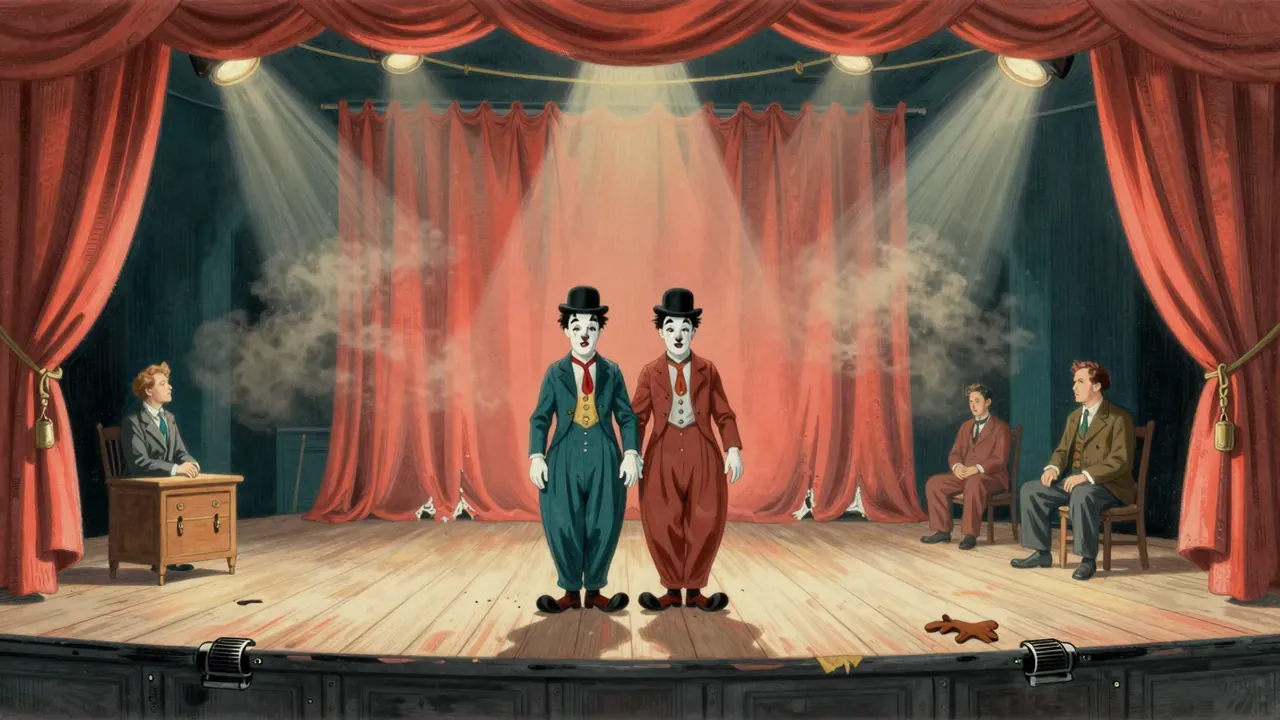
Limelight (1952), written, directed, and starring Charlie Chaplin, follows a faded music-hall comedian who saves a suicidal dancer and helps her rebuild her career — while confronting his own obsolescence. Shot in Hollywood but set in Edwardian London, it blends pathos and physical comedy, features Buster Keaton in their only joint screen appearance, and won Chaplin an Oscar for its score two decades after release. Though commercially stymied in the US by political boycott, it has since been reassessed as Chaplin’s most personal and introspective work.

13:00

Lions Love

Agnès Varda · 1969

Lions Love (1969), directed by Agnès Varda, is an English-language French arthouse comedy filmed in Los Angeles. It follows a fictional throuple — played by Viva, Gerome Ragni, and James Rado — hosting filmmaker Shirley Clarke in their Beverly Hills home. Blending scripted scenes, documentary insertions, and meta-cinematic interventions, the film interrogates authorship, countercultural commodification, and the gendered labour of collaboration. With a score by Joseph Byrd and editing by Robert Dalva, it sustains a deliberate tonal ambiguity, refusing satire or nostalgia in favour of structural scrutiny. Though demanding and referential, it rewards attentive viewing as a precise, unsentimental portrait of a pivotal cultural moment.

13:00

Local Hero

Bill Forsyth · 1983

Local Hero (1983), written and directed by Bill Forsyth, follows an American oil executive sent to buy a remote Scottish village for a refinery. As he spends time in Ferness, his assumptions about progress, ownership and value quietly erode. With performances from Peter Riegert and Burt Lancaster, Chris Menges’ naturalistic cinematography and Mark Knopfler’s evocative score, the film traces a subtle transformation — not through drama or debate, but through stillness, repetition and quiet observation.

13:00

Lost in America

Albert Brooks · 1985

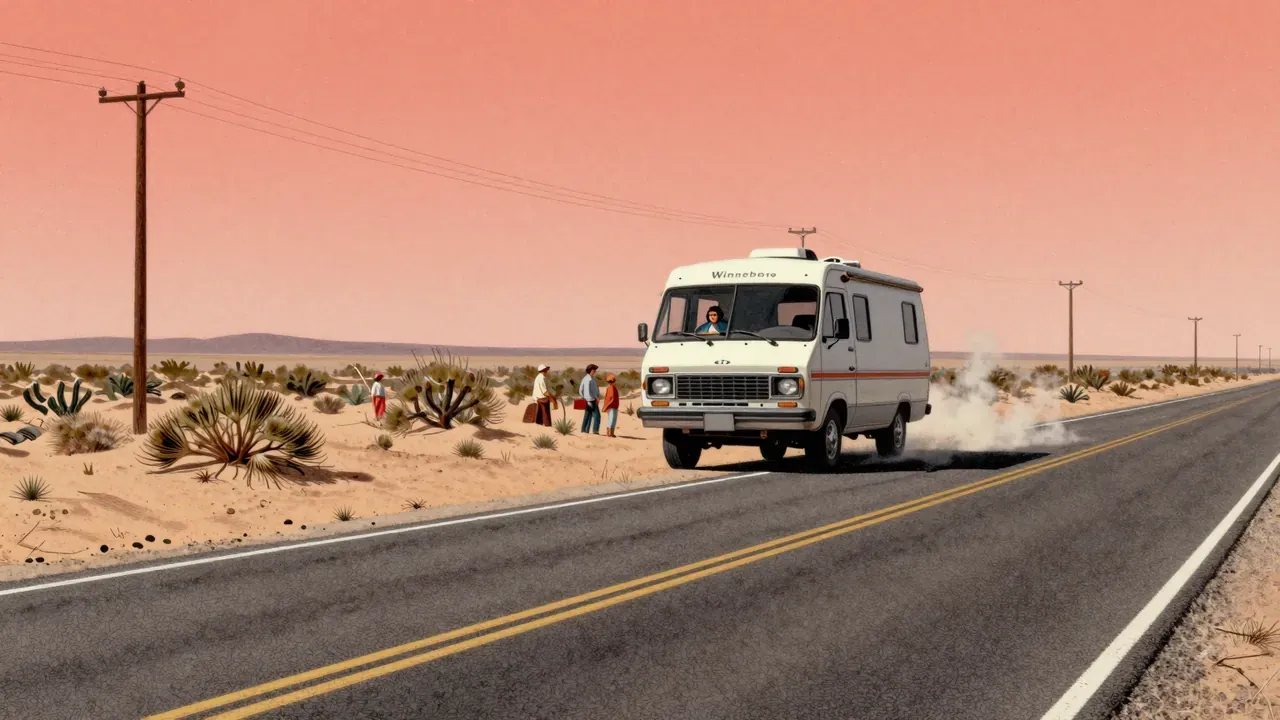
Albert Brooks’s 1985 road comedy follows a Los Angeles couple who quit their jobs, sell their house, and set off in a Winnebago to 'drop out' — only to lose their savings in Las Vegas and end up working dead-end jobs in rural Arizona. With dry precision, the film charts the collapse of their countercultural fantasy under the weight of real-world logistics, language, and class structure. It is a satire of self-deception disguised as liberation, built on understated performances, unshowy craft, and a script that treats ideology as infrastructure.

13:00

Love Letters

Claude Autant-Lara · 1942

Made in occupied Paris in 1942, Love Letters is a comedy-drama set in Napoleon III’s France, centring on romantic confusion caused by intercepted correspondence. Directed by Claude Autant-Lara and scripted by Jean Aurenche, it features Odette Joyeux, François Périer, and Julien Carette in performances calibrated to polite farce. Shot at Boulogne Studios, its art direction (Robert Dumesnil, Jacques Krauss) and costumes (Christian Dior) reinforce its theatrical, surface-conscious world. The film avoids historical engagement or emotional extremity, sustaining instead a steady, wry tone rooted in manners and miscommunication.

13:00

Mahjong

Edward Yang · 1996

Edward Yang’s 1996 Mahjong is a Taipei-set ensemble comedy about a drifting youth gang, a French woman searching for an interior designer, and a soothsayer whose predictions come true only because others act on them. Conducted almost entirely in English, it treats crime, romance, and superstition as interchangeable social scripts — less a satire of greed than a demonstration of how greed, once ambient, ceases to be legible as motive.

13:00

Major Barbara

Gabriel Pascal · 1941

Gabriel Pascal’s 1941 adaptation of George Bernard Shaw’s Major Barbara is a rigorously faithful, studio-bound rendering of the 1905 play. Starring Wendy Hiller and Robert Morley, it stages a moral contest between Salvation Army idealism and industrial pragmatism, filmed in London during The Blitz. Ronald Neame’s cinematography and William Walton’s score serve the text, not the image. It is talk-driven, structurally intact, and intellectually uncompromising — a rare case where fidelity is both method and meaning.

13:00

Metropolitan

Whit Stillman · 1990

Whit Stillman’s 1990 debut follows a Princeton student who stumbles into Manhattan’s debutante circuit and joins a tight-knit group of Upper East Side socialites. Set against the backdrop of late-night conversations in a borrowed apartment, the film traces shifting allegiances, unspoken tensions, and quiet reckonings with privilege, inheritance, and the uncertain future of a fading elite. Shot on a $210,000 budget, it relies on precise dialogue, understated performances, and a muted visual palette to evoke a world suspended between eras — neither nostalgic nor dismissive, but attentively, tenderly aware.

13:00

Midnight

Mitchell Leisen · 1939

Midnight (1939), directed by Mitchell Leisen and written by Charles Brackett and Billy Wilder, follows American showgirl Eve Peabody as she impersonates a baroness in Paris to escape poverty — only to become entangled in a wealthy couple’s marital crisis. Anchored by Claudette Colbert’s precise physical comedy and Charles Lang’s softly lit cinematography, the film balances screwball energy with studio-era sophistication. Though its final act retreats from its sharpest ideas into convention, its craftsmanship, timing, and thematic clarity make it a durable, pleasurable artefact of Golden Age Hollywood.

13:00

Miracle in Milan

Vittorio De Sica · 1951

Vittorio De Sica’s 1951 Miracle in Milan blends post-war Italian neo-realism with gentle fantasy. Set on a Milanese wasteland, it follows Totò — raised by a woman who finds him in a cabbage patch — as he helps build a self-governing shantytown, only to confront eviction by industrialists. When magic intervenes, it does so not to erase hardship but to affirm the dignity already present in mutual aid, shared labour and unguarded joy.

13:00

Moment to Moment

Robert Downey Sr. · 1975

Robert Downey Sr.’s 1975 comedy Moment to Moment is an 85-minute exercise in narrative abstinence: deadpan performances, uninflected dialogue, and Jack Nitzsche’s sparse score coalesce into a dry, unblinking portrait of routine and disconnection. It offers no plot, no punchlines, no character arcs — only sustained tonal restraint. Its value lies in its consistency, not its insight.

13:00

Mon Oncle

Jacques Tati · 1958

Jacques Tati’s Mon Oncle (1958) is a colour comedy set in postwar France, contrasting the sterile geometry of a modernist villa with the worn textures of an old Paris neighbourhood. Starring Tati as the amiable, unmoored Monsieur Hulot, the film uses choreographed movement, precise sound design and architectural detail — not dialogue — to explore how design, automation and consumerism reshape human behaviour and relationships.

13:00

Monsoon Wedding

Mira Nair · 2001

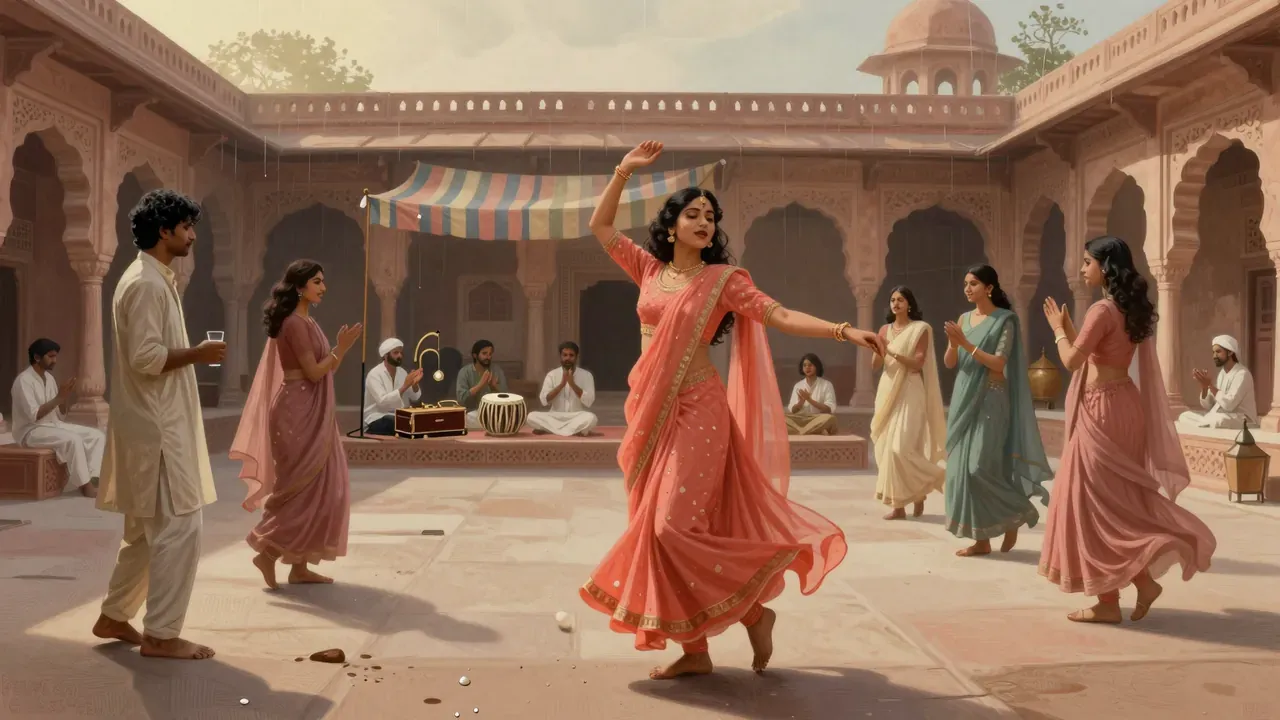
Set over four days in Delhi, Monsoon Wedding follows the Verma family as they prepare for their daughter Aditi’s arranged marriage. Amidst the chaos of planning, buried tensions surface — financial strain, generational rifts, unspoken abuse, and quiet acts of love. Directed by Mira Nair and written by Sabrina Dhawan, the film balances Bollywood energy with arthouse restraint, using ensemble storytelling, naturalistic performances, and layered sound design to explore how family, tradition, and healing operate in real time.

13:00

Monte Carlo

Ernst Lubitsch · 1930

Ernst Lubitsch’s 1930 Monte Carlo stars Jeanette MacDonald and Jack Buchanan in a romantic musical comedy set in the French Riviera. A countess flees her arranged marriage and checks into a luxury hotel with little money; a count disguises himself as a hairdresser to win her affection. Built around the hit song 'Beyond the Blue Horizon' and a self-referential opera sequence, the film prioritises tonal control, musical integration, and elegant artifice over psychological realism or social critique.

13:00

Monty Python’s Life of Brian

Terry Jones · 1979

Monty Python’s Life of Brian (1979) is a British comedy directed by Terry Jones, written by the full Python troupe, and produced by HandMade Films after EMI withdrew funding. Set in Roman Judea, it follows Brian Cohen, mistaken for the Messiah despite having no interest in prophecy or power. The film targets institutional rigidity, sectarian infighting, and the absurdity of uncritical belief — not faith itself. Shot in Tunisia, edited tightly by Julian Doyle, and scored with solemn restraint by Geoffrey Burgon, it remains a benchmark of structural satire: dry, disciplined, and deeply unsentimental.

13:00

Moonstruck

Norman Jewison · 1987

A Brooklyn widow engaged to a man who leaves for Sicily accepts his estranged brother’s invitation to the opera — and finds herself drawn into a love that upends family loyalties, generational habits, and her own understanding of mourning. Directed by Norman Jewison from John Patrick Shanley’s Oscar-winning script, it treats romance as a force as elemental as gravity, staged with operatic precision and performed with unwavering sincerity.

13:00

Mr. Freedom

William Klein · 1969

William Klein’s 1969 Mr. Freedom is a French-made English-language satirical comedy starring Albert Augier as a US vigilante sent to France to combat communism — and to enforce a ‘white wall of freedom’. With Delphine Seyrig, Donald Pleasence, and Daniel Cohn-Bendit, it deploys inflatable villains, supermarket embassies, and nuclear brinkmanship to dissect Cold War rhetoric, white nationalism, and the theatricality of power. Pierre Lhomme shot it; Michel Colombier scored it. It is abrasive, uncompromising, and deliberately exhausting — less a story than a sustained political provocation.

13:00

Multiple Maniacs

John Waters · 1970

Multiple Maniacs (1970), written and directed by John Waters, is a black-and-white 16mm comedy starring Divine and the Dreamland troupe. Set in Baltimore, it follows a perverse carnival’s descent into violence and surreal retribution. Shot, edited, and scored by Waters himself, it rejects narrative logic and technical polish in favour of sustained provocation. Its themes include the performativity of morality, the politics of disgust, and the aesthetics of marginality. Though rated 100% on Rotten Tomatoes, its value lies not in consensus but in its uncompromising coherence as a polemic in film form.

13:00

Murmur of the Heart

Louis Malle · 1971

Louis Malle’s 1971 coming-of-age film follows 14-year-old Laurent Chevalier in 1954 Dijon, navigating adolescence, jazz, and a complex bond with his Italian-born mother Clara. Set against bourgeois domesticity and post-war France, it centres on a single ambiguous night between them—not as climax, but as a quiet, unexplained convergence of affection and vulnerability. Shot by Ricardo Aronovich and edited by Suzanne Baron, it favours naturalism over exposition, humour over judgement, and atmosphere over argument.

13:00

My Lucky Stars

Sammo Hung · 1985

My Lucky Stars (1985) is a Hong Kong action comedy directed by Sammo Hung, starring Hung, Jackie Chan, Yuen Biao, Eric Tsang, Stanley Fung, Richard Ng, Charlie Chin, and Sibelle Hu. Built around the 'Five Lucky Stars' troupe, it follows their reluctant deployment to Tokyo to rescue a kidnapped officer from a yakuza group operating beneath an amusement park. Though Jackie Chan’s role is brief, the film showcases tightly coordinated group choreography, broad but precise comic timing, and inventive use of Fuji-Q Highland’s architecture. It prioritises physical logic over narrative coherence and communal rhythm over individual arc.

13:00

My Man Godfrey

Gregory La Cava · 1936

My Man Godfrey (1936), directed by Gregory La Cava, follows a homeless man hired as butler by a Manhattan socialite during the Great Depression. William Powell and Carole Lombard anchor a sharp, fast-paced romantic comedy that skewers wealth while relying on inherited status to resolve its tensions. Ted Tetzlaff’s cinematography and tight editing sustain its screwball energy, though the finale retreats from its earlier bite. Critically lauded then and now, it remains a masterclass in studio-era comic construction — elegant, economical, and knowingly incomplete.

13:00

Mystery Train

Jim Jarmusch · 1989

Mystery Train is Jim Jarmusch’s 1989 triptych set over one night in Memphis, following a Japanese couple, an Italian widow, and a disoriented Englishman as they navigate the city’s margins. Shot in controlled colour by Robby Müller and scored sparsely by John Lurie, it treats narrative as variation rather than progression. Though critically acclaimed and formally assured, its third segment falters under schematic weight. It rewards patient attention with cumulative texture, not plot resolution.

13:00

Night on Earth

Jim Jarmusch · 1991

Night on Earth (1991) is Jim Jarmusch’s anthology film following five taxi rides across Los Angeles, New York, Paris, Rome, and Helsinki, all occurring over the same night. Each vignette centres on a temporary, often fraught, bond between driver and passenger. Shot on location with minimal intervention, it prioritises quiet observation over plot, using natural light, sparse music by Tom Waits, and unhurried performances to explore miscommunication, class, mortality, and fleeting kinship. Though uneven in impact—its Paris and Rome segments falter linguistically and tonally—the film’s cumulative power lies in its restraint and specificity.

13:00

Not on Your Life

Luis García Berlanga · 1963

The Executioner (1963), directed by Luis García Berlanga, follows an undertaker who marries the daughter of a state executioner, then reluctantly assumes the role himself to secure housing. Shot in black and white, it uses deadpan comedy and precise, unadorned craft to examine moral compromise under Francoist bureaucracy — not as ideology, but as paperwork, pension rules, and quiet family negotiations.

13:00

One Hour with You

Ernst Lubitsch, George Cukor · 1932

One Hour with You (1932) is a Paramount romantic musical comedy directed by Ernst Lubitsch with George Cukor, starring Maurice Chevalier and Jeanette MacDonald. Adapted from Lothar Schmidt’s play and Lubitsch’s own 1924 film, it follows a Parisian doctor whose marital calm is gently disrupted by his wife’s flirtatious friend. With Oscar Straus’s score and Samson Raphaelson’s script, it prioritises wit, timing, and surface elegance over psychological depth — a polished, pre-Code exercise in controlled charm.

13:00

One Hundred and One Nights

Agnès Varda · 1995

Agnès Varda’s One Hundred and One Nights (1995) is a French comedy essay-film set over 101 nights at a château belonging to Simon Cinéma, a centenarian film veteran whose fading memory blurs reality and reel. Starring Michel Piccoli and featuring cameos from Marcello Mastroianni, Anouk Aimée, Alain Delon, and others, it weaves scripted scenes with archival clips and playful allusion to celebrate cinema’s first hundred years — not as chronicle, but as collective, tactile memory.

13:00

Paper Moon

Peter Bogdanovich · 1973

Paper Moon (1973), directed by Peter Bogdanovich, follows Moses Pray and Addie Loggins — a grifter and a sharp-witted orphan — as they travel across Depression-era Kansas and Missouri, running small scams to survive. Shot in black-and-white by László Kovács, it stars Ryan and Tatum O'Neal in performances defined by restraint and reciprocity. Adapted by Alvin Sargent from Joe David Brown’s novel, it avoids moral framing in favour of behavioural accuracy, treating fraud as labour and kinship as negotiation. Tatum O'Neal won the Academy Award for Best Supporting Actress at age ten.

13:00

Parade

Jacques Tati · 1974

Made for Swedish television in 1974, Parade is Jacques Tati’s final film — a low-budget, studio-bound circus revue starring Tati as Monsieur Loyal. Filmed at Stockholm Cirkus using mixed video and film stocks, it abandons narrative for a sequence of gags, mime, juggling, music and audience interaction. Gunnar Fischer’s unshowy cinematography and Charles Dumont’s light score support Tati’s precise physical comedy. Though slender in scope compared to PlayTime or Trafic, it is a deliberate return to fundamentals: gesture, timing, shared attention.

13:00

Pearls of the Crown

Sacha Guitry, Christian-Jaque · 1937

Pearls of the Crown (1937) is a French historical comedy co-directed by Sacha Guitry and Christian-Jaque, tracing the fictional journey of seven pearls across four centuries and three languages. Guitry plays four roles, and much of the cast doubles or triples up, reinforcing the film’s theme of history as repetition. Shot at Billancourt Studios and on location—including Royaumont Abbey and the S.S. Normandie—it balances theatrical artifice with tangible settings. Jean Françaix’s score and Jules Kruger’s cinematography support a light, neoclassical tone. Though structurally inventive and intellectually agile, its pacing and linguistic layering may alienate some viewers. It is arthouse comedy with scholarly poise, not populist appeal.

13:00

Pearls of the Deep

Věra Chytilová, Jan Němec, Jiří Menzel, Jaromil Jireš · 1966

Pearls of the Deep (1966) is a Czechoslovak anthology film comprising five short segments, each directed by a different filmmaker — Věra Chytilová, Jan Němec, Jiří Menzel, Jaromil Jireš and Evald Schorm — and all adapted from short stories by Bohumil Hrabal. Shot in naturalistic style by Jaroslav Kučera, with sparse scores by Jan Klusák and Jiří Šust, the film resists thematic or tonal unity in favour of fidelity to Hrabal’s voice: his fascination with minor lives, unremarkable epiphanies, and the comic gravity of everyday speech. Though uneven in execution, its collective stance — against grand narrative, against didacticism, against the idea that meaning must be earned — makes it a defining work of the Czechoslovak New Wave.

13:00

Pink Flamingos

John Waters · 1972

John Waters’ 1972 cult landmark Pink Flamingos stars Divine as Babs Johnson, a self-proclaimed criminal who must defend her title as 'the filthiest person alive' against rivals. Filmed in Baltimore on a $10,000 budget, it uses deliberate crudeness — in performance, editing, sound, and subject matter — as both aesthetic and ethical stance. Though notorious for its extremity, its power lies in its unwavering consistency: every frame, line, and edit serves the same uncompromising logic.

13:00

Playtime

Jacques Tati · 1967

Jacques Tati’s 1967 film Playtime is a meticulously constructed satirical comedy set on a vast, purpose-built 70 mm stage. It follows Monsieur Hulot and an American tourist, Barbara, across six architecturally defined sequences — airport, offices, trade fair, apartments, restaurant, roundabout — using movement, sound and colour to explore how modern design conditions human behaviour. With minimal dialogue, no close-ups and a near-monochrome palette punctuated by deliberate accents of red and green, it privileges spatial logic over narrative. Though commercially disastrous on release, it is now regarded as a landmark of arthouse cinema.

13:00

Polyester

John Waters · 1981

John Waters’s 1981 satire Polyester mimics Douglas Sirk’s melodramas to lampoon suburban life, moral panic, and the ‘woman’s picture’ genre. Starring Divine as a crumbling housewife in Baltimore, it deploys Odorama — a scratch-and-sniff gimmick — as both narrative device and audience provocation. With precise lighting, deadpan performances, and a tightly wound plot, it sustains a tone of controlled absurdity. Its final act falters under cartoonish violence, but its formal rigour and thematic bite make it a singular, unsentimental portrait of consumption masquerading as care.

13:00

Putney Swope

Robert Downey Sr. · 1969

Putney Swope (1969), written and directed by Robert Downey Sr., follows Arnold Johnson as Putney Swope, the sole Black board member who accidentally becomes head of an ad agency. Renaming it Truth and Soul, Inc., he fires the white staff, bans harmful clients, and commissions surreal, colour-saturated commercials — all while being voiced by Downey himself. The film’s low-budget aesthetic, jagged editing, and deadpan absurdity target advertising, corporate liberalism, and racial tokenism. Though uneven in pacing and reliant on period-specific references, its structural rigour and thematic persistence earned it preservation in the US National Film Registry.

13:00

Pygmalion

Anthony Asquith, Leslie Howard · 1938

Pygmalion (1938) adapts George Bernard Shaw’s play with exacting fidelity, starring Wendy Hiller as Eliza Doolittle and Leslie Howard as Professor Higgins. Directed by Anthony Asquith and Howard, it charts Eliza’s linguistic transformation and its social consequences, preserving the play’s sharp class critique and ambiguous ending. Shot by Harry Stradling and edited by David Lean, it prioritises dialogue, diction, and moral precision over spectacle or sentiment. It won the Academy Award for Best Adapted Screenplay and remains a benchmark for literary adaptation.

13:00

Quadrille

Sacha Guitry · 1938

A 1938 French comedy written and directed by Sacha Guitry, Quadrille follows a Paris newspaper editor whose carefully balanced domestic life unravels when an American film star arrives at his hotel. Staged with clockwork timing and performed with understated wit, it treats romance and professional life as interchangeable roles in a refined, self-contained dance.

13:00

Real Life

Albert Brooks · 1979

Albert Brooks’ 1979 directorial debut is a dry, structural satire in which a filmmaker embeds himself with the Yeager family to document 'real life' for a year. Using helmet-mounted cameras and clinical oversight, the project unravels as intrusion replaces observation, ethics erode, and the family withdraws. The film’s strength lies in its precise, unblinking exposure of power imbalances in media — not its jokes.

13:00

Repo Man

Alex Cox · 1984

Alex Cox’s 1984 debut follows a disillusioned punk (Emilio Estevez) who joins a car repossession agency in Los Angeles, only to become entangled in a surreal chase for a radioactive Chevrolet Malibu linked to extraterrestrials. Shot on location by Robby Müller and scored by Tito Larriva and punk bands including Black Flag and Iggy Pop, the film uses deadpan absurdity to dissect Reagan-era consumerism, bureaucracy, and Cold War anxiety. It has endured as a cult object for its texture, not its plot.

13:00

Risky Business

Paul Brickman · 1983

Risky Business (1983), written and directed by Paul Brickman, follows Chicago high school senior Joel Goodson during a week alone in his affluent Glencoe home. What begins as hedonistic freedom spirals into a series of escalating transactions—sexual, financial, logistical—culminating in a brothel-party business venture. Tom Cruise and Rebecca De Mornay anchor a tightly constructed satire about class, performance, and deferred consequence, shot by Bruce Surtees and Reynaldo Villalobos, scored by Tangerine Dream. Though some supporting elements feel dated or underdeveloped, its structural rigour and thematic clarity sustain its reputation as a defining American comedy-drama of the 1980s.

13:00

Rushmore

Wes Anderson · 1998

A 1998 comedy-drama directed by Wes Anderson, Rushmore follows Max Fischer, a hyperactive scholarship student at a Houston prep school, and Herman Blume, a disillusioned industrialist, as they form an uneasy alliance over their shared affection for a teacher. Stylised and precise, it treats adolescence and middle age as parallel states of reinvention, anchored by Jason Schwartzman’s debut performance and Bill Murray’s career-redefining turn.

13:00

Safety Last!

Fred C. Newmeyer, Sam Taylor · 1923

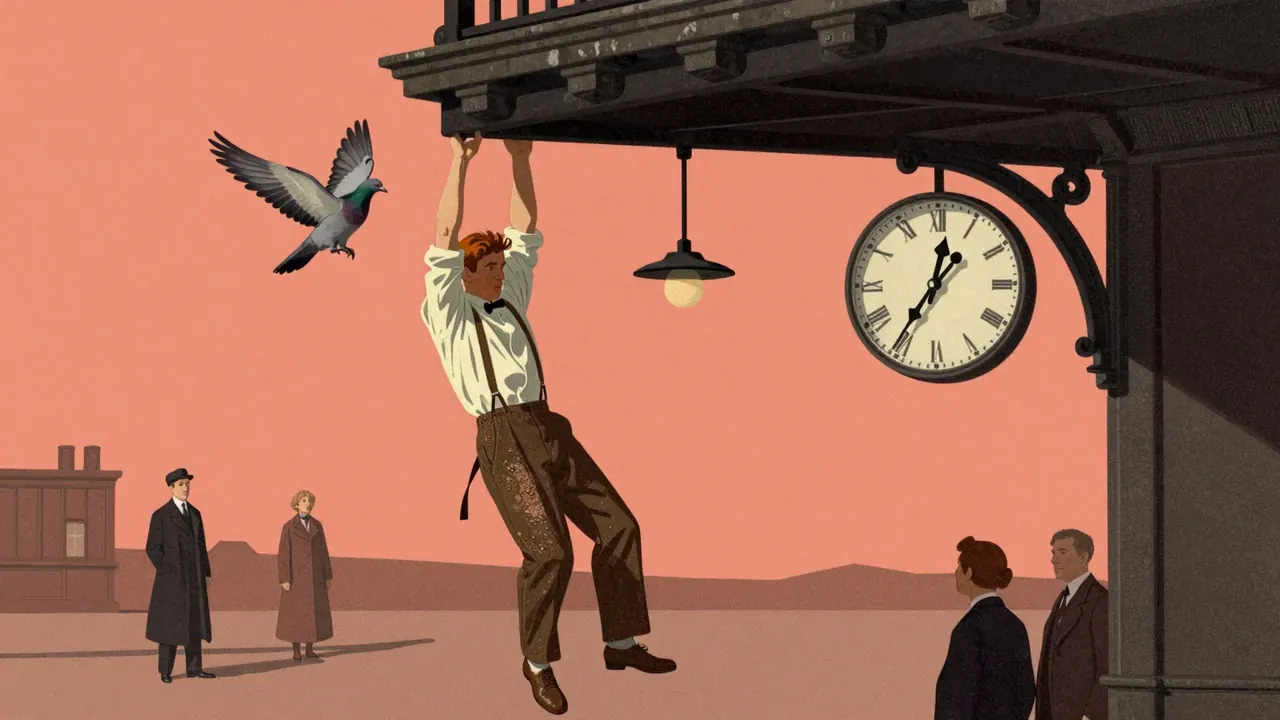
A 1923 silent romantic comedy starring Harold Lloyd, Safety Last! follows a young man’s desperate attempts to appear successful in 1920s Los Angeles so he can marry his girlfriend. When a publicity stunt goes awry, he must scale a skyscraper — culminating in the iconic clock-face sequence. Directed by Fred C. Newmeyer and Sam Taylor for Hal Roach Studios, it balances slapstick with narrative rigour, using physical comedy to explore ambition, class, and endurance.

13:00

Saving Face

Alice Wu · 2004

Alice Wu’s 2004 debut follows Wilhelmina Pang, a Chinese American surgeon in New York, as she navigates her closeted relationship with dancer Vivian Shing and her mother Hwei-Lan’s unexpected pregnancy. Filmed on location in Flushing, Queens, and performed in English and Mandarin, it treats intergenerational tension, queer identity, and cultural expectation with lightness and precision. Though criticised for underdeveloped professional detail and predictable structure, its strength lies in understated performances, authentic bilingualism, and a vision of change that accumulates in glances, pauses, and small, unheralded choices.

13:00

Schizopolis

Steven Soderbergh · 1996

Steven Soderbergh’s 1996 experimental comedy Schizopolis uses fractured narrative, invented speech, and role-swapping to dissect communication, identity, and social scripting. Shot in Baton Rouge on a $250,000 budget, it follows three overlapping perspectives — office worker Fletcher Munson, dentist Dr. Korchek, and exterminator Elmo Oxygen — all played by Soderbergh and his collaborators. With no traditional credits and a deliberately alienating style, it tests the limits of audience patience and narrative coherence.

13:00

Seduced and Abandoned

Pietro Germi · 1964

Pietro Germi’s 1964 film Seduced and Abandoned uses dark procedural satire to examine Sicilian customs around forced marriage, statutory rape and legal 'honour repair'. Set in Sciacca, it follows fifteen-year-old Agnese Ascalone as her family, the Califanos and the courts negotiate her future through staged kidnappings, legal loopholes and public shaming. With Stefania Sandrelli and Saro Urzì, and written by Germi, Incrocci, Scarpelli and Vincenzoni, it is formally rigorous, morally unsentimental and structurally relentless.

13:00

Shampoo

Hal Ashby · 1975

Shampoo (1975), directed by Hal Ashby and co-written by Warren Beatty and Robert Towne, follows a Beverly Hills hairdresser across Election Day 1968 as he navigates overlapping affairs, professional frustration, and the quiet hypocrisies of his social circle. Shot by László Kovács and scored with period-appropriate music by Paul Simon and others, it uses romantic comedy structure to dissect sexual politics, class, and the erosion of public attention. Though commercially successful and awarded an Oscar for Lee Grant’s supporting performance, its satire remains understated, its pacing deliberate, its conclusions ambiguous.

13:00

Simon of the Desert

Luis Buñuel · 1965

Luis Buñuel’s 1965 Simon of the Desert follows a sixth-century ascetic who lives atop a pillar in the Syrian desert — until Satan transports him to a 1960s New York nightclub. Shot by Gabriel Figueroa in the Samalayuca Dune Fields and edited with surgical restraint, the film uses Claudio Brook’s still, weary Simón to dissect the fragility of spiritual authority, the absurdity of purity, and the quiet violence of being watched. At 45 minutes, it is both complete and unresolved — a dry, precise, and deeply unsettling work of surrealist satire.

13:00

Slacker

Richard Linklater · 1991

Richard Linklater’s 1991 debut is a loose chain of vignettes following eccentric, under-30 Austinites over a single day. Shot on 16mm with a $23,000 budget, it moves from character to character without resolution, using muted cinematography by Lee Daniel and sparse scoring by Georges Delerue. It rejects traditional narrative in favour of observational density, capturing a mood of intellectual drift and quiet disaffection. Though divisive in pacing and structure, it became a landmark of American arthouse cinema and entered the National Film Registry in 2012.

13:00

Smiles of a Summer Night

Ingmar Bergman · 1955

Set over one Midsummer Night in early-twentieth-century Sweden, Ingmar Bergman’s Smiles of a Summer Night traces shifting affections among lawyers, actresses, counts and servants. Shot by Gunnar Fischer and scored by Erik Nordgren, it balances theatrical structure with emotional nuance, using wit and restraint rather than exposition or psychology to resolve its tangles. It is a film about how love negotiates time, class and habit — not revelation, but recalibration.

13:00

Sólo Con Tu Pareja

Alfonso Cuarón · 1991

Alfonso Cuarón’s 1991 debut Sólo Con Tu Pareja is a tightly wound Mexican romantic comedy about a womanising ad man falsely diagnosed with AIDS, whose ensuing suicide pact with a disillusioned flight attendant becomes an accidental path to emotional honesty. Shot by Emmanuel Lubezki and edited by him too, it balances farce, satire, and quiet realism across 94 minutes in Mexico City. Though it won Ariel Awards and international festival acclaim, it was delayed for domestic release until 1993. Its strength lies in formal control and moral unsentimentality — not in likable characters or tidy resolutions.

13:00

Some Like It Hot

Billy Wilder · 1959

Some Like It Hot is a 1959 Prohibition-era romantic comedy about two musicians who dress as women to escape gangsters, join an all-female band, and fall for its lead singer. Directed by Billy Wilder and starring Marilyn Monroe, Tony Curtis and Jack Lemmon, it uses disguise as both plot device and thematic lens, sustaining laughter through precise timing, physical performance and escalating absurdity. Shot in black and white after colour tests failed, it balances crime, romance and farce without resolving their tensions — and remains effective not as nostalgia, but as engineered comedy.

13:00

Speedy

Ted Wilde · 1928

Harold Lloyd’s 1928 silent comedy Speedy follows a quick-witted New Yorker who defends his girlfriend’s grandfather’s horse-drawn streetcar line from corporate takeover. Shot on location in New York City and Coney Island, it combines romantic comedy, civic satire, and elaborate stunts — including a cross-Manhattan chase — all anchored by Lloyd’s energetic, grounded performance. It was Lloyd’s last silent film and survives in both silent and sound-on-film versions.

13:00

Spiritual Kung Fu

Lo Wei · 1978

Spiritual Kung Fu (1978) is a Lo Wei-directed Hong Kong martial arts comedy starring Jackie Chan as Yi-lang, a quick-witted Shaolin student who learns the Five Style Fists from five spectral masters. Made early in 1978 but shelved due to budget constraints, it was released late that year after Chan’s breakout success in Snake in the Eagle’s Shadow. The film blends slapstick, modest special effects, and clear, varied fight choreography — with Yuen Biao uncredited as one of the ghostly instructors. Its strengths lie in Chan’s timing and the functional integration of animal-style kung fu; its weaknesses are thin motivation and underdeveloped lore. It is a transitional work — technically assured, thematically light, and structurally coherent.

13:00

Stranger Than Paradise

Jim Jarmusch · 1984

Jim Jarmusch’s 1984 debut is a black-and-white, three-act film built from fixed long takes and two-second blackouts. It follows Willie, his cousin Eva, and his friend Eddie across Brooklyn, Cleveland, and Florida — not as a journey of discovery, but as a study in duration, repetition, and the quiet absurdity of routine. With minimal dialogue, no score, and no conventional coverage, it asks the viewer to attend to stillness itself.

13:00

Sullivan's Travels

Preston Sturges · 1942

Preston Sturges’s 1942 comedy follows a Hollywood director who abandons frivolous hits to make a serious film about poverty — then tries, and fails, to live as a tramp to gather material. His journey leads him instead to a Southern chain gang, where he discovers laughter’s unvarnished power among the condemned. With Joel McCrea and Veronica Lake, and shot by John F. Seitz, it balances screwball pacing with sober observation — less a critique of Hollywood than a defence of comedy’s quiet seriousness.

13:00

Sweetie

Jane Campion · 1989

Jane Campion’s 1989 black comedy drama follows Kay, a superstitious factory worker, as her erratic sister Dawn returns home and unravels the fragile order of their dysfunctional Australian family. Shot in Sydney on a low budget, the film uses physical performance, jagged editing, and oppressive domestic spaces to explore inheritance, containment, and the violence of care — not as psychology but as atmosphere.

13:00

Sylvie et le fantôme

Claude Autant-Lara · 1946

Sylvie et le fantôme (1946), directed by Claude Autant-Lara, follows a sixteen-year-old girl in a decaying château who believes in the ghost of a long-dead lover concealed behind a portrait. When the painting is sold, the ghost emerges — played by Jacques Tati — and becomes entangled in a tender, comedic web of mistaken identities, amateur hauntings, and adolescent longing. Shot with optical ingenuity at Saint-Maurice Studios, the film balances fantasy and realism through understated performances, elegant set design, and a script that treats belief as a collaborative act rather than a metaphysical claim.

13:00

Tampopo

Jūzō Itami · 1985

Tampopo (1985), written and directed by Jūzō Itami, follows a widowed ramen-shop owner mentored by a trucker in her quest for culinary excellence. Framed as a 'noodle western', it interweaves this central story with vignettes exploring food, class, and desire across 1980s Tokyo. Shot on location with natural light by Masaki Tamura and edited by Akira Suzuki, it favours observation over exposition, craft over climax, and quiet resonance over narrative resolution.

13:00

The Awful Truth

Leo McCarey · 1937

Leo McCarey’s 1937 screwball comedy stars Cary Grant and Irene Dunne as a divorcing couple whose competitive courtship reveals they still love each other. Built on Viña Delmar and Sidney Buchman’s script, it replaces moralising with behavioural precision, using dog custody hearings, nightclub sabotage and society-party sabotage to expose the gap between social performance and private feeling. Joseph Walker’s cinematography and Al Clark’s editing sustain its tight, unhurried rhythm. Though some supporting elements feel thin and its class framework dated, its central performances and structural clarity remain benchmarks of studio-era comedy.

13:00

The Baker's Wife

Marcel Pagnol · 1938

Marcel Pagnol’s 1938 film follows a Provençal baker whose wife runs off with a shepherd, halting bread production and forcing feuding villagers to cooperate in her retrieval. Adapted from Jean Giono, it foregrounds communal pragmatism over individual psychology, using Raimu’s grounded performance and Vincent Scotto’s restrained music to explore forgiveness as daily practice, not spiritual breakthrough.

13:00

The Bank Dick

Edward F. Cline · 1940

Directed by Edward F. Cline and written by W. C. Fields under a pseudonym, The Bank Dick (1940) follows Egbert Sousé, a chronically intoxicated Lompoc resident who stumbles into bank security work after foiling a robbery by accident. Built around Fields’s signature blend of verbal evasion, physical timing and moral indifference, the film favours set-piece gags over narrative cohesion. Milton Krasner’s straightforward cinematography and Arthur Hilton’s clean editing serve the performance without embellishment. Though its plot contrivances and thin supporting roles show strain, its endurance lies in Fields’s unyielding command of comic causality — a masterclass in how to be funny without ever trying to be liked.

13:00

The Breakfast Club

John Hughes · 1985

John Hughes’ 1985 drama confines five high school students to a single library for a Saturday detention. With no subplots, no flashbacks, and minimal camera movement, it builds intimacy through duration, silence, and incremental confession. Thomas Del Ruth’s flat lighting and Dede Allen’s patient editing keep focus on performance and gesture. Its power lies in specificity — not universality — and its endurance rests on emotional precision, not narrative momentum.

13:00

The Cameraman

Edward Sedgwick, Buster Keaton · 1928

Buster Keaton’s 1928 MGM debut follows a tintype photographer who buys a film camera to impress a newsreel secretary, then stumbles into real danger filming a Tong War in Chinatown. With Elgin Lessley’s crisp cinematography and Hugh Wynn’s taut editing, it builds comedy from spatial logic and cumulative consequence — not quips or sentiment. Though made under tightening studio control, it remains one of Keaton’s most lucid, tightly constructed films.

13:00

The Canterbury Tales

Pier Paolo Pasolini · 1972

Pier Paolo Pasolini’s 1972 film adapts eight of Chaucer’s tales as a vibrant, painterly, and deliberately anachronistic re-creation of medieval England. Shot in England with English dialogue later dubbed into Italian, it features a mix of British actors and non-professionals, and draws visual inspiration from Bosch, Bruegel, and Antonello da Messina. The film foregrounds bodily experience, class conflict, and clerical hypocrisy, rejecting literary fidelity in favour of ideological and sensual immediacy.

13:00

The Circus

Charlie Chaplin · 1928

Charlie Chaplin’s 1928 silent comedy follows the Little Tramp’s accidental rise and quiet fall within a struggling circus. Hired for his unintentional chaos, he becomes indispensable — then obsolete — in a film that treats performance as labour, laughter as accident, and solitude as structural inevitability. Shot and edited by Chaplin, with music he composed, it is both a technical masterclass and a quiet self-portrait made at the dawn of sound.

13:00

The Count of the Old Town

Sigurd Wallén, Edvin Adolphson · 1935

The Count of the Old Town (1935) is a Swedish studio comedy directed by Sigurd Wallén and Edvin Adolphson, adapted by Arthur Natorp from his stage play. Starring Valdemar Dalquist as a penniless artist mistaken for nobility, it unfolds in Stockholm’s Gamla Stan with light farce, ensemble timing, and Jules Sylvain’s waltz-led score. Ingrid Bergman appears in her first speaking film role, though her part is brief and underdeveloped. The film prioritises rhythm and social observation over plot or psychology.

13:00

The Decameron

Pier Paolo Pasolini · 1971

Pier Paolo Pasolini’s 1971 film adapts Boccaccio’s Decameron into a dialect-rich, episodic satire shot across southern Italy and France. Rejecting historical fidelity, it transplants medieval tales to Naples and Caserta to critique regional inequality, clerical hypocrisy, and the commodification of desire. Tonino Delli Colli’s naturalistic cinematography, Ennio Morricone’s curated folk-and-liturgical score, and performances rooted in physical truth anchor its polemical energy. Though structurally loose and tonally relentless, it remains a rigorous, unsentimental assertion of vernacular culture as resistance.

13:00

The Devil's Eye

Ingmar Bergman · 1960

Ingmar Bergman’s 1960 fantasy comedy The Devil’s Eye follows Satan’s attempt to cure a metaphysical stye by sending Don Juan to seduce a Swedish vicar’s chaste daughter. Shot by Gunnar Fischer and scored by Erik Nordgren, it treats heaven, hell, and bourgeois domesticity as adjacent departments in the same administrative system — dry, precise, and quietly subversive.

13:00

The Fearless Hyena

Jackie Chan · 1979

Jackie Chan’s 1979 directorial debut is a Hong Kong action comedy built around his own body as instrument, prop, and punchline. It follows a reckless martial arts student whose flaws drive both plot and fight design — gambling, disobedience, and emotional volatility become narrative engines. Though its revenge arc feels tacked-on and its supporting characters thinly drawn, its slapstick-infused choreography (chopsticks duels, cross-dressing, ‘Emotional Kung-Fu’) remains inventive and influential. Shot with functional clarity by Jung-Shu Chen and scored with brassy levity by Frankie Chan, it is a pragmatic, performer-first film — uneven, urgent, and foundational.

13:00

The Freshman

Fred C. Newmeyer, Sam Taylor · 1925

Harold Lloyd stars in this 1925 Pathé silent comedy as a freshman who tries to win popularity by imitating a movie hero, only to become the campus joke. His journey from delusion to self-acceptance unfolds through tightly constructed set-pieces — a falling-apart suit, a disastrous dance, and a climactic football game shot on real stadium fields — all anchored by Lloyd’s precise physical performance and Walter Lundin’s unshowy cinematography.

13:00

The Funeral

Jūzō Itami · 1984

Jūzō Itami’s 1984 debut follows a Tokyo family preparing for a traditional Japanese funeral over three days. With Tsutomu Yamazaki and Nobuko Miyamoto, it observes ritual, grief and social performance with quiet precision — finding comedy not in mockery but in the stubborn persistence of form amid loss.

13:00

The Girl Can't Help It

Frank Tashlin · 1956

Frank Tashlin’s 1956 comedy stars Jayne Mansfield as a mobster’s girlfriend launched into stardom against her will. Built around performances by Little Richard, Fats Domino, Gene Vincent and others, it uses animation-derived timing and saturated DeLuxe Color to frame rock ’n’ roll as both commodity and spectacle. Though narratively thin and romantically inert, its visual confidence and musical density make it a singular artifact of mid-century media logic.

13:00

The Horse's Mouth

Ronald Neame · 1958

Ronald Neame’s 1958 adaptation of Joyce Cary’s novel stars Alec Guinness as Gulley Jimson, a chaotic, indomitable painter who treats London as his canvas and everyone in it as raw material. Written by Guinness, shot in Technicolor by Arthur Ibbetson, and edited with restless precision by Anne V. Coates, it is a performance-driven, physically urgent portrait of creation as compulsion — flawed in its simplifications, but unforgettable in its energy.

13:00

The Importance of Being Earnest

Anthony Asquith · 1952

Anthony Asquith’s 1952 adaptation of The Importance of Being Earnest is a faithful, studio-bound rendering of Wilde’s comedy, anchored by Edith Evans’s legendary Lady Bracknell and performed with linguistic rigour. It privileges dialogue, timing and textual fidelity over cinematic expansion, making it a benchmark for literary adaptation — austere, intelligent, and increasingly rewarding on repeat viewings.

13:00

The In-Laws

Arthur Hiller · 1979

The In-Laws (1979) pairs Alan Arkin and Peter Falk as fathers-in-law drawn into international intrigue when a mild-mannered dentist is swept up by his future son-in-law’s seemingly unhinged CIA operative father. Written by Andrew Bergman and directed by Arthur Hiller, it sustains a high-wire act of farcical escalation grounded entirely in character logic — not plot mechanics — and remains a benchmark for odd-couple comedy built on timing, contrast, and unwavering commitment to its central conceit.

13:00

The Innocent

Louis Garrel · 2022

Louis Garrel’s 2022 comedy follows Abel, a timid aquarium guide whose mother Sylvie marries an ex-con, Michel. Suspicious and guilt-ridden, Abel agrees to help Michel steal caviar — not out of greed, but as a way to re-enter his mother’s orbit. What begins as surveillance becomes participation, then genuine connection, then consequence. Shot in Lyon with quiet precision, the film avoids moralising, favouring rhythm and restraint over revelation.

13:00

The Kid

Charlie Chaplin · 1921

Charlie Chaplin’s 1921 feature The Kid pairs him with six-year-old Jackie Coogan in a comedy-drama about an abandoned infant raised by the Tramp. Built on tight physical performances, economical editing and unforced pathos, it balances street-level pragmatism with quiet tenderness — making care visible as routine, not revelation.

13:00

The Kid Brother

Harold Lloyd, Lewis Milestone, Ted Wilde · 1927

The Kid Brother (1927) is Harold Lloyd’s deliberate departure from urban thrills into rural character comedy. As Harold Hickory — the bookish, overlooked son of a respected sheriff — he must prove himself not through strength but wit, navigating a travelling medicine show, a stolen dam fund, and a beached ship full of thieves. Directed partly by Lewis Milestone and shot by Walter Lundin, it balances dense physical gags with emotional continuity and thematic weight. Restored in 4K for Criterion, it remains a masterclass in silent-era storytelling where every laugh serves the man behind the glasses.

13:00

The Lady Eve

Preston Sturges · 1941

Preston Sturges’ 1941 screwball comedy follows con artist Jean Harrington as she targets naive ale heir Charles Pike aboard an ocean liner, falls for him, is rejected, then returns disguised as English aristocrat ‘Lady Eve’ to exact revenge — only to fall again. With Barbara Stanwyck and Henry Fonda delivering career-defining performances, the film uses repetition, linguistic precision, and structural symmetry to explore identity, performance, and the porous line between deception and devotion.

13:00

The Love Parade

Ernst Lubitsch · 1929

Ernst Lubitsch’s 1929 debut sound film stars Maurice Chevalier and Jeanette MacDonald as a queen and her reluctant consort in the fictional kingdom of Sylvania. Built on a French stage farce, it uses operetta conventions, witty dialogue, and Victor Schertzinger’s songs to explore power, gender, and the performance of authority. Though technically inventive and tonally assured, its satire is limited by its hollow setting and reliance on archetype over depth. A landmark of early Hollywood musical craftsmanship — elegant, intelligent, and knowingly artificial.

13:00

The Mikado

Victor Schertzinger · 1939

The Mikado (1939) is a British Technicolor film adaptation of Gilbert and Sullivan’s 1885 comic opera, starring Martyn Green and members of the D’Oyly Carte Opera Company. Directed by Victor Schertzinger and produced by Geoffrey Toye, it preserves the original music and libretto with minimal alteration, using the London Symphony Orchestra and Marcel Vertès’s vivid art direction. Its strength lies in vocal precision and ensemble discipline; its limitation is its adherence to stage convention over cinematic language. It offers no cultural critique of its Japanese setting, treating it as decorative backdrop. A document of a performing tradition, not a reinterpretation.

13:00

The Model Couple

William Klein · 1977

William Klein’s 1977 film follows a 'model couple' subjected to relentless observation in a state-run experiment designed to engineer future society. With deadpan performances, sterile cinematography, and a score that veers between lounge jazz and electronic unease, it satirises surveillance capitalism, bureaucratic theatre, and media-driven reality before those terms existed — not through prophecy, but through forensic mimicry of their logic.

13:00

The Moon Has Risen

Kinuyo Tanaka · 1955

Kinuyo Tanaka’s 1955 film, scripted by Yasujirō Ozu and shot by Shigeyoshi Mine, follows Setsuko as she quietly engineers a romance between her older sister Ayako and a former suitor. Set in Nara, it unfolds across domestic spaces with restrained pacing, gentle performances, and a focus on unspoken feeling. Though structurally loose around some supporting characters, its strength lies in emotional precision and tonal consistency.

13:00

The Palm Beach Story

Preston Sturges · 1942

Preston Sturges’ 1942 romantic comedy follows a woman who leaves her broke husband to seek fortune, only to become entangled with a millionaire and his eccentric club. Written, directed, and produced under the studio system, it sustains a high-wire tone of social satire through rapid dialogue, precise editing, and unwavering commitment to its own absurd rules.

13:00

The Phantom of Liberty

Luis Buñuel · 1974

Luis Buñuel’s 1974 surrealist film stitches together unrelated episodes — a firing squad in Toledo, a Parisian dinner around toilets, a missing girl no one sees — linked only by chance and recurring motifs. With Edmond Richard’s unadorned cinematography and Hélène Plemiannikov’s elliptical editing, it dismantles narrative, decorum and causality to expose the arbitrariness of social order. A late-career distillation of Buñuel’s belief that liberty is illusory, governed not by will but by accident and impulse.

13:00

The Philadelphia Story

George Cukor · 1940

George Cukor’s 1940 romantic comedy adapts Philip Barry’s play with surgical fidelity, following Katharine Hepburn’s Tracy Lord as she navigates remarriage, journalism, and self-reckoning within Philadelphia high society. Written by Donald Ogden Stewart, shot by Joseph Ruttenberg, and performed with precise wit by Hepburn, Cary Grant, and James Stewart, it exemplifies the ‘comedy of remarriage’ genre — elegant, verbally dense, and emotionally contained. Though insulated from broader social forces, its focus on performance, privilege, and self-knowledge remains quietly radical in its restraint.

13:00

The Pornographers

Shohei Imamura · 1966

Shohei Imamura’s 1966 film follows Subuyan Ogata, a small-time pornographer in post-war Osaka, living in a crowded house with his landlady Haru, her daughter Keiko and others. Based on Akiyuki Nosaka’s novel, it uses deadpan observation and unvarnished detail to explore desire, exploitation and ritual as inseparable parts of daily life. Shinsaku Himeda’s restrained cinematography and Shoichi Ozawa’s understated performance anchor a film that refuses moral framing in favour of anthropological clarity.

13:00

The Princess Bride

Rob Reiner · 1987

Rob Reiner’s 1987 adaptation of William Goldman’s novel frames a swashbuckling romance as a grandfather’s bedtime story. With precise performances, Adrian Biddle’s understated cinematography, and Mark Knopfler’s acoustic score, it balances earnest adventure and gentle parody — landing its themes of fidelity and craft without irony or condescension.

13:00

The Private Life of Don Juan

Alexander Korda · 1934

Alexander Korda’s 1934 film stars Douglas Fairbanks, aged 51, as an ageing Don Juan returning to Seville only to discover his name has become a public fiction. Adapted from Henry Bataille’s play by Frederick Lonsdale, it uses irony, restraint, and studio-era craft to explore reputation, ageing, and the quiet persistence of self amid erasure. Georges Périnal’s cinematography and Ernst Toch’s music support a tone of wry melancholy, anchored by Fairbanks’s physically diminished but emotionally precise performance.

13:00

The Private Life of Henry VIII

Alexander Korda · 1933

The Private Life of Henry VIII (1933) is a British biographical drama directed by Alexander Korda and starring Charles Laughton as the ageing king. Structured as a series of vignettes covering five of his six marriages, it avoids religious and political context in favour of intimate, darkly comic portraiture. Shot by Georges Périnal and written by Arthur Wimperis and Lajos Bíró, it won Laughton the Academy Award for Best Actor — the first foreign winner in that category. Though historically selective and stylistically restrained, it endures as a masterclass in performance-led storytelling.

13:00

The Royal Tenenbaums

Wes Anderson · 2001

Wes Anderson’s 2001 black comedy-drama follows the Tenenbaum siblings — child prodigies now adrift — as their estranged father Royal (Gene Hackman) returns with a fabricated illness. Shot across 250 stylised sets in and around New York, it uses symmetrical framing, deliberate pacing, and a baroque score to explore stasis, inherited grief, and the quiet persistence of love beneath formal distance.

13:00

The Ruling Class

Peter Medak · 1972

Peter Medak’s 1972 adaptation of Peter Barnes’s play stars Peter O'Toole as Jack Gurney, a paranoid schizophrenic who inherits a peerage and cycles between believing he is Christ and Jack the Ripper. Set against the decaying grandeur of Harlaxton Manor, the film uses theatrical staging, sharp dialogue and O'Toole’s ferocious performance to dissect class, psychiatry and institutional power. Though divisive on release, it endures as a formally bold, morally uncompromising satire.

13:00

The Shop Around the Corner

Ernst Lubitsch · 1940

Ernst Lubitsch’s 1940 MGM film follows two Budapest shop clerks who feud at work while falling in love through anonymous letters. Shot in sequence with deliberate pacing, it trusts silence, gesture, and understated performance over plot mechanics. Though its reliance on coincidence weakens some turns, its fidelity to emotional realism and quiet dignity of ordinary life remains deeply affecting.

13:00

The Smiling Lieutenant

Ernst Lubitsch · 1931

Ernst Lubitsch’s 1931 musical comedy follows an Austrian lieutenant whose ill-timed wink sparks a royal marriage, a broken engagement, and a surprisingly tender act of sabotage. Built on Oscar Straus’s operetta and sharpened by Samson Raphaelson’s script, it balances Chevalier’s charm, Colbert’s poise, and Hopkins’s vulnerability within tightly controlled studio spaces. Technically assured for its time, it privileges tonal precision over psychological realism — and ends not with reconciliation, but with a satin-clad, cigarette-puffing princess and a wink that closes the door on easy answers.

13:00

The Suitor

Pierre Étaix · 1963

Pierre Étaix’s 1962 debut The Suitor is a meticulously timed comedy about a man racing to marry before a deadline, modelled on Buster Keaton’s Seven Chances but filtered through Gallic irony and silent-era physical logic. With minimal dialogue, clean framing, and relentless cause-and-effect plotting, it turns courtship into bureaucratic theatre. Though its final act falters and some gags rely on period-specific codes, its control of rhythm and commitment to form make it a distinctive, demanding, and rewarding work of mid-century French comedy.

13:00

The Three Musketeers

Richard Lester · 1973

Richard Lester’s 1973 adaptation of The Three Musketeers is a brisk, precisely timed adventure that prioritises rhythm and character-in-action over exposition or psychological depth. Shot in Spain by David Watkin, with fencing choreographed by William Hobbs and music by Michel Legrand, it stars Michael York, Oliver Reed, Frank Finlay and Richard Chamberlain as the titular quartet, alongside Raquel Welch, Faye Dunaway and Charlton Heston. Faithful to Dumas’s plot but distinct in tone, it balances wit and vigour without tipping into parody—or solemnity.

13:00

The Young Master

Jackie Chan · 1980

Jackie Chan’s 1980 directorial effort The Young Master marks his debut for Golden Harvest and refines his signature blend of martial arts, comedy, and stunt-driven storytelling. As Dragon, Chan navigates fraternal betrayal, mistaken identity, and a punishing final duel with criminal Kam — all staged with growing control over choreography, editing, and physical expression. Though some plot elements remain underdeveloped and tonal shifts occur, the film’s commitment to grounding action in consequence and character makes it a vital milestone in Hong Kong action cinema.

13:00

This Is Spinal Tap

Rob Reiner · 1984

This Is Spinal Tap (1984) is a mockumentary following the faltering US tour of a fictional British heavy metal band. Directed by Rob Reiner and improvised by Christopher Guest, Michael McKean and Harry Shearer, it satirises rock pretension, documentary hagiography and institutional incompetence — not through parody, but through sustained, deadpan observation. Shot on 16mm in vérité style, it builds comedy from logistical failure, miscommunication and unshaken self-belief. Its influence on the mockumentary form is foundational; its cultural longevity rests on its precision, not its punchlines.

13:00

Tie Me Up! Tie Me Down!

Pedro Almodóvar · 1989

Pedro Almodóvar’s 1989 film follows a recently released psychiatric patient who kidnaps an actress to force a marriage, treating the premise as a stylised romantic fairy tale rather than psychological realism. Shot in saturated colour by José Luis Alcaine Escaño, scored by Ennio Morricone, and anchored by Victoria Abril and Antonio Banderas, it sustains a precise, unsettling tone — neither endorsing nor condemning its central act, but exploring love as effort, repetition, and recalibration.
13:00

Time Bandits

Terry Gilliam · 1981

Time Bandits (1981) is a British science fiction fantasy co-written and directed by Terry Gilliam, starring Craig Warnock as Kevin, a boy who joins six dwarfs on a time-travelling heist. Shot in England, Morocco and Wales, it moves through historical and mythic settings — Castiglione, Sherwood Forest, Mycenae, the Titanic — guided by a stolen map of spacetime rifts. The film balances absurd comedy with metaphysical stakes, culminating in a confrontation with Evil and the Supreme Being. Its visual style is tactile and deliberately artificial; its themes centre on perception, inheritance, and the instability of systems. It was financed by George Harrison’s HandMade Films and remains the first in Gilliam’s ‘Trilogy of Imagination’.

13:00

Tiny Furniture

Lena Dunham · 2010

Lena Dunham’s 2010 debut follows Aura, a film-school graduate who moves back into her mother’s Tribeca loft after graduation, adrift between plans and expectations. Shot on the Canon EOS 7D in eleven days, the film renders a summer of small humiliations, tentative connections, and quiet reckonings — with family, with ambition, and with the slow work of becoming adult without a script.

13:00

To Be or Not to Be

Ernst Lubitsch · 1942

Ernst Lubitsch’s 1942 To Be or Not to Be follows a Warsaw theatre troupe who use disguise, timing, and theatrical cunning to deceive the Gestapo. Starring Carole Lombard and Jack Benny, it balances farce with peril, treating performance as both profession and resistance. Rudolph Maté’s cinematography and Dorothy Spencer’s editing sustain its breakneck logic, while its themes—identity as costume, authority as mimicry—remain sharply relevant. Though some tonal shifts now feel abrupt, its rigour and restraint make it a landmark of satirical craft.

13:00

To Die For

Gus Van Sant · 1995

Gus Van Sant’s 1995 black comedy follows Suzanne Stone, a New Hampshire woman who engineers her husband’s murder to advance her television career. Framed by direct-to-camera monologues and mockumentary interviews, the film dissects how media formats confer legitimacy, turning crime into content and ambition into algorithm. Nicole Kidman’s performance anchors its precise, unsentimental critique of fame’s infrastructure.

13:00

Tom Jones

Tony Richardson · 1963

Tony Richardson’s 1963 adaptation of Henry Fielding’s novel stars Albert Finney as the roguish, good-hearted Tom, whose journey from foundling to accepted heir unfolds through slapstick, satire and fourth-wall breaks. Written by John Osborne and shot by Walter Lassally, it balances period detail with formal audacity — intertitles, a wry narrator, and abrupt edits — to embody Fielding’s moral ambiguity. Though some emotional arcs falter and its satire occasionally overshadows character, its energy, performances and stylistic confidence remain distinctive. It won four Academy Awards, including Best Picture and Best Director.

13:00

Tootsie

Sydney Pollack · 1982

A struggling New York actor disguises himself as a woman to land a soap opera role, then finds his assumptions about gender, work, and relationships upended by the sheer effort of sustaining the performance. Directed by Sydney Pollack and starring Dustin Hoffman, Jessica Lange, and Teri Garr, it balances sharp social observation with grounded comic timing and emotional honesty.

13:00

Triangle of Sadness

Ruben Östlund · 2022

Ruben Östlund’s Triangle of Sadness is a three-act satirical drama following a male model, his influencer girlfriend, and a group of ultra-wealthy cruise passengers who survive a shipwreck only to confront a brutal inversion of social order on a remote island. Shot by Fredrik Wenzel and edited by Mikel Cee Karlsson and Östlund, it uses duration, repetition, and clinical observation to dissect capitalism’s reliance on invisible labour and arbitrary status. Winner of the 2022 Palme d’Or and eight European Film Awards, it asks what remains when beauty, money, and language all fail as currencies.

13:00

Trouble in Paradise

Ernst Lubitsch · 1932

Ernst Lubitsch’s 1932 romantic comedy follows a gentleman thief and a lady pickpocket who con a perfume magnate — only to find themselves entangled in genuine feeling. With Herbert Marshall, Miriam Hopkins, and Kay Francis, it sustains a tone of poised, knowing irony, using Art Deco design, precise editing, and understated performance to explore class, consent, and value as performance. Made before strict enforcement of the Production Code, it relies on implication over exposition and rewards attention to gesture, timing, and spatial relationships.

13:00

True Stories

David Byrne · 1986

David Byrne’s 1986 musical film True Stories unfolds in the fictional town of Virgil, Texas, as a nameless visitor observes residents preparing for a sesquicentennial ‘Celebration of Specialness’. Built from vignettes rather than plot, it features John Goodman, Spalding Gray, Swoosie Kurtz and others performing stylised, sincere portraits of small-town life, scored largely by Talking Heads. Edward Lachman’s flat, frontal cinematography and Byrne’s deliberate pacing create a tone both surreal and tender — less mockery than meticulous documentation of how people build meaning from thin air.

13:00

Two Girls on the Street

André de Toth · 1939

Two Girls on the Street (1939) follows two young women — a violinist and a bricklayer — as they navigate work, friendship, and love in Budapest after leaving their village. Directed by André de Toth in his first feature, it adapts a stage play with unshowy craft, grounding its comedy in occupational detail and urban texture. Restored by Cinémathèque de Bologne and released by Criterion in 2022, it rewards attention to the ordinary: how people move, speak, build, and play in a city on the cusp of change.

13:00

Unfaithfully Yours

Preston Sturges · 1948

Preston Sturges’ 1948 comedy follows Sir Alfred de Carter, a world-renowned conductor who, suspecting his wife of infidelity, imagines three elaborate responses — murder, magnanimous forgiveness, and Russian roulette — each triggered by a piece of classical music he conducts in concert. Back home, his attempts to enact any of them unravel in farcical detail. With Rex Harrison, Linda Darnell and Alfred Newman, it is a formally inventive, musically anchored satire of ego, creativity and self-deception.

13:00

Watermelon Man

Melvin Van Peebles · 1970

A 1970 Columbia Pictures satire directed by Melvin Van Peebles, in which a bigoted white insurance salesman wakes up black and confronts the immediate, unvarnished consequences of racialised systems — housing, work, medicine, marriage. Written by Herman Raucher and starring Godfrey Cambridge, it uses allegory, not realism, to dissect liberal complicity and structural exclusion. Its power lies in its restraint, its refusal to explain, and its unwavering focus on consequence over cause.

13:00

Way of the Dragon

Bruce Lee · 1972

Bruce Lee’s 1972 directorial debut Way of the Dragon is a Hong Kong–produced action film set in Rome, built around extended, uncut fight sequences — most famously the Colosseum duel with Chuck Norris. Written and co-produced by Lee, it follows a martial artist who defends a Chinese restaurant from local gangsters. Economical in plot and restrained in performance, it prioritises physical clarity over psychological exposition. Though its emotional scaffolding is thin and its character arcs minimal, its formal control and choreographic authority remain unmatched in Lee’s filmography.

13:00

Who Are You, Polly Maggoo?

William Klein · 1966

William Klein’s 1966 French film is a satirical mockumentary following Polly Maggoo, an American model pursued by a television crew in Paris. Using fragmented editing, stylised photography, and deadpan performance, it dissects how media constructs identity through repetition, framing, and erasure — never resolving who Polly is, because the system it critiques has no use for her answer.

13:00

Withnail and I

Bruce Robinson · 1987

Withnail and I (1987) is a British black comedy written and directed by Bruce Robinson, following two unemployed actors — Withnail (Richard E. Grant) and Marwood (Paul McGann) — as they spend a disastrous weekend in a remote Lake District cottage owned by Withnail’s eccentric uncle Monty (Richard Griffiths). Shot on location in Cumbria and Hertfordshire, it uses precise dialogue, naturalistic cinematography and period-accurate music to chart a mood of late-1960s drift, addiction and fragile male friendship. Though now regarded as a cult classic, it resists easy classification: it is neither farce nor tragedy, but a tightly observed, linguistically rich study of stasis.

13:00

Woman of the Year

George Stevens · 1942

Woman of the Year (1942), directed by George Stevens, pairs Spencer Tracy and Katharine Hepburn for the first time in a romantic comedy about a globe-trotting political columnist and a down-to-earth sportswriter whose marriage strains under mismatched expectations. Written by Ring Lardner Jr. and Michael Kanin, with uncredited revisions by John Lee Mahin, the film balances sparkling dialogue and precise performances against a structurally compromised ending. It won the Academy Award for Best Original Screenplay and was added to the National Film Registry in 1999.

13:00

Women on the Verge of a Nervous Breakdown

Pedro Almodóvar · 1988

Pedro Almodóvar’s 1988 black comedy follows Pepa, a voice actress abandoned by her lover, as she navigates a day of escalating chaos in her Madrid apartment. With Carmen Maura at its centre, the film uses saturated colour, rapid editing, and tightly coiled farce to explore female agency, communication failure, and emotional extremity as rational response — not breakdown.

13:00

Xala

Ousmane Sembène · 1975

Ousmane Sembène’s 1975 satire follows El Hadji, a Senegalese businessman whose sudden impotence coincides with his appointment to the Chamber of Commerce and his third marriage. As his business unravels and his authority crumbles, the affliction proves allegorical: a diagnosis of moral and political failure in post-independence Senegal. Stylised, unsentimental and precisely constructed, the film uses folk logic and social ritual to indict elite complicity, not individual weakness.

13:00

Yoyo

Pierre Étaix · 1965

Pierre Étaix’s 1965 comedy Yoyo follows a French millionaire’s fall from wealth into circus life, and his son’s parallel rise from clown to film star. Structured as a series of precisely timed visual gags and period tableaux, it uses physical comedy to explore inheritance, class, and performance across the 1920s to the 1960s. Shot by Jean Boffety with restrained elegance, it favours rhythm over exposition and texture over psychology.

13:00

Zazie in the Metro

Louis Malle · 1960

Louis Malle’s 1960 adaptation of Raymond Queneau’s novel is a tightly controlled explosion of comedic logic: ten-year-old Zazie wanders a Métro-strike Paris, exposing the absurdity of adult institutions through deadpan inquiry and visual non-sequitur. Shot with only two lenses, edited for rhythmic disjunction, and scored with deliberate silence, it privileges construction over character, pattern over plot. Its themes — language as performance, authority as costume, childhood as unmediated perception — emerge not through exposition but through relentless formal consistency.

13:00

Zero for Conduct

Jean Vigo · 1933

Jean Vigo’s Zero for Conduct (1933) is a 44-minute French featurette depicting revolt by four boys against the rigid authority of a boarding school. Shot on a modest budget with non-professional actors, it draws on Vigo’s own childhood experiences and anarchist convictions. Boris Kaufman’s cinematography and Vigo’s editing emphasise physicality and rhythm over exposition, while Maurice Jaubert’s score underscores its insurgent pulse. Banned in France until 1945, it has since influenced Truffaut and Anderson. It is arthouse comedy rooted in pedagogy, surrealism, and resistance.

13:00

Three Colours: White

Krzysztof Kieślowski · 1994

Krzysztof Kieślowski’s 1994 film Three Colours: White follows Polish barber Karol Karol’s fall from Parisian marriage into destitution, then his meticulous, ironic climb back to power in Warsaw — all to restore a sense of equality with the wife who discarded him. Shot by Edward Klosinski, scored by Zbigniew Preisner, and edited by Urszula Lesiak, it uses farce, restraint, and structural repetition to explore how balance is manufactured, not discovered. It is the second film in the Three Colours trilogy, themed on the French Revolutionary ideal of equality.

13:00

City Lights

Charlie Chaplin · 1931

A 1931 silent romantic comedy-drama written, directed by and starring Charlie Chaplin. Though released after the arrival of sound cinema, it uses no spoken dialogue, relying instead on physical performance, intertitles, and a composed musical score. The Tramp falls for a blind flower seller and forms a volatile bond with a drunken millionaire. Its final scene — the flower girl’s first sighted meeting with the Tramp — is widely regarded as one of cinema’s most accomplished moments of wordless emotional storytelling.

13:00

Daisies

Věra Chytilová, Rudolf Jaroš · 1966

A 1966 Czechoslovak avant-garde landmark, Daisies follows two young women named Marie as they enact escalating acts of sabotage — against men, meals, manners, and meaning. Co-directed by Věra Chytilová and Rudolf Jaroš, it deploys rapid-fire editing, shifting colour palettes, and deliberately artificial performances to dismantle patriarchal and socialist realist conventions. Banned upon release for its 'nihilism', it remains a fiercely intelligent, formally audacious assault on well-mannered spectatorship — less a film to follow than one to withstand and reassemble.

13:00

Drunken Master

Yuen Woo-ping · 1978

Drunken Master (1978) is a Hong Kong action comedy directed by Yuen Woo-ping and starring Jackie Chan as the young Wong Fei-hung. Forced into brutal tutelage under the eccentric Beggar So (Yuen Siu-tien), Wong endures punishing training in a fictionalised 'Drunken Boxing' style before facing a lethal rival. The film’s enduring power lies in its choreographic intelligence, its commitment to physical cause-and-effect, and its depiction of skill as something metabolised through repetition, failure, and synthesis — not bestowed or discovered.

13:00

Hunt for the Wilderpeople

Taika Waititi · 2016

Taika Waititi’s 2016 film follows Ricky Baker, a defiant foster child, and Hector, the taciturn man reluctantly tasked with caring for him. After Bella — Hector’s wife and Ricky’s first real anchor — dies, Ricky flees into the bush, and Hector follows. What begins as a simple search becomes a nationwide manhunt, reframing their bond as both tender and subversive. Shot across New Zealand’s Central Plateau and Waitākere Ranges, the film balances deadpan comedy, adolescent anxiety, and quiet grief without recourse to sentiment or spectacle.

13:00

It Happened One Night

Frank Capra · 1934

A 1934 romantic comedy starring Claudette Colbert and Clark Gable, directed by Frank Capra. A runaway heiress and a jobless reporter share a cross-country bus journey, negotiating class, gender and growing affection under tight comic constraints. Adapted from a short story, it won the Academy Award 'Big Five' and remains a benchmark of economical, actor-led storytelling.

13:00

O Brother, Where Art Thou?

Joel Coen, Ethan Coen · 2000

O Brother, Where Art Thou? (2000) transplants the Odyssey’s structure to Depression-era Mississippi, following three escaped convicts on a rambling quest. Directed by Joel and Ethan Coen, it features George Clooney, John Turturro, and Tim Blake Nelson, with cinematography by Roger Deakins and music curated by T Bone Burnett. Its sepia-toned digital look was pioneering; its soundtrack, rooted in period folk and gospel, won a Grammy. Though loosely plotted and deliberately arch, the film sustains a unified tone — dry, musical, mythic — that rewards attentive viewing.

13:00

Shakespeare in Love

John Madden · 1998

Shakespeare in Love (1998) imagines a love affair between a blocked William Shakespeare and the noblewoman Viola de Lesseps, whose secret presence in his company inspires Romeo and Juliet. Directed by John Madden and written by Marc Norman and Tom Stoppard, it blends period detail with theatrical wit, winning seven Academy Awards including Best Picture and Best Actress. Its strength lies in craft and chemistry; its limitation, in narrative convenience that softens moral and emotional stakes.

13:00

Singin' in the Rain

Gene Kelly, Stanley Donen · 1952

Singin’ in the Rain (1952) is a Metro-Goldwyn-Mayer musical directed by Gene Kelly and Stanley Donen, set during Hollywood’s transition from silent films to sound. With a script by Betty Comden and Adolph Green, it follows a leading man, his vaudevillian friend and a rising actress as they salvage a failing production by turning it into a musical. Built around pre-existing songs by Nacio Herb Brown and Arthur Freed, the film treats song-and-dance as narrative logic, not decoration. Its enduring reputation rests on choreographic precision, structural wit and an unironic belief in collective skill — not nostalgia.

13:00

The Fireman's Ball

Miloš Forman · 1967

Miloš Forman’s 1967 Czechoslovak comedy follows a provincial fire brigade’s annual ball as it slowly derails under the weight of its own good intentions, indifference and procedural inertia. Shot at Barrandov Studios by Miroslav Ondříček and scored by Karel Mareš, it observes without judging, repeats without explaining, and ends without resolving — making its case for the quiet absurdity of communal life through restraint, not rhetoric.

13:00

The Graduate

Mike Nichols · 1967

Mike Nichols’ 1967 comedy-drama follows Benjamin Braddock, a recent graduate adrift in his parents’ Pasadena home, as he navigates seduction by Mrs. Robinson and infatuation with her daughter Elaine. Built on Dustin Hoffman’s restrained performance, Robert L. Surtees’ unadorned cinematography, and a Simon & Garfunkel–scored soundscape, it treats transition not as progress but as suspension — holding still long enough to see how social scripts smother agency.

13:00

The White Balloon

Jafar Panahi · 1994

Set on the eve of the Iranian New Year, Jafar Panahi’s 1994 debut follows seven-year-old Razieh as she tries to buy a goldfish with her mother’s last banknote. When the money slips through a street grate, she and her brother enlist the help of a young Afghan balloon seller to retrieve it. Filmed in natural light, with no score and minimal dialogue, the film observes childhood not as innocence but as embodied negotiation — with space, time, language, and adult indifference.

13:00

The White Sheik

Federico Fellini · 1952

Federico Fellini’s 1952 debut as sole director follows a nervous groom whose bride vanishes in Rome to meet the hero of her favourite photo-strip. Built around the mechanics of Italian fotoromanzi, the film uses crisp comic timing, stylised cinematography and Nino Rota’s light score to dissect how mass fantasy reshapes desire, class performance and marital expectation — without sentiment or resolution.

13:00

Working Girl

Mike Nichols · 1988

Working Girl (1988), directed by Mike Nichols, follows Tess McGill, a Staten Island secretary with a night-school business degree, as she navigates corporate Manhattan. After being fired from one brokerage, she lands a job with Katharine Parker at Petty Marsh — only to discover her boss intends to steal her idea for a radio-network acquisition. When Katharine breaks her leg, Tess steps in, borrows her wardrobe, and executes the deal herself. Melanie Griffith, Harrison Ford, and Sigourney Weaver anchor a tightly written, visually controlled film that treats ambition as procedural, not mythical — and success as earned, narrow, and reversible.

13:00

3 Idiots

Rajkumar Hirani · 2009

3 Idiots (2009) is a 164-minute Hindi-language comedy-drama directed by Rajkumar Hirani and produced by Vidhu Vinod Chopra. Starring Aamir Khan, R. Madhavan and Sharman Joshi as engineering students navigating pressure, friendship and self-definition, it uses parallel timelines to contrast institutional conformity with individual integrity. Adapted loosely from Chetan Bhagat’s Five Point Someone, it balances satire with sentiment, favouring emotional clarity over formal experiment. It won the Filmfare Award for Best Film and became a landmark commercial and cultural success across Asia.

13:00

Amarcord

Federico Fellini · 1973

Federico Fellini’s 1973 Amarcord is a semi-autobiographical art film set in a fictionalised 1930s Rimini, structured as a year-long seasonal cycle through the life of a coastal village under Fascism. Starring Bruno Zanin and featuring a large ensemble of professional and non-professional actors, it uses exaggerated, theatrical imagery and episodic storytelling to evoke memory as associative, contradictory, and deeply sensual. Giuseppe Rotunno’s cinematography, Nino Rota’s score, and Ruggero Mastroianni’s editing cohere around a central irony: that collective remembrance often obscures moral accountability. Winner of the 1975 Academy Award for Best International Feature Film, it remains a defining work of Italian arthouse cinema.
13:00

Beetlejuice

Tim Burton · 1988

Beetlejuice (1988) is Tim Burton’s gothic comedy horror about a recently deceased couple who hire a chaotic bio-exorcist to scare away their home’s new occupants. With Michael Keaton, Alec Baldwin, Geena Davis, and Winona Ryder, it builds its world from deliberate artifice — stop-motion, saturated colour, Elfman’s calypso-infused score — and treats the afterlife as a malfunctioning bureaucracy. Its strength lies in tonal consistency and visual wit, not psychological realism or causal clarity.

13:00

Bianca

Nanni Moretti · 1984

Nanni Moretti’s 1984 comedy Bianca follows Michele Apicella, a Rome-based maths teacher whose obsessive need for rationality collapses as neighbours die, relationships falter, and a new lover enters his life. Shot with clinical precision by Luciano Tovoli and scored with restrained repetition by Franco Piersanti, the film treats emotional breakdown as a slow arithmetic error — accumulating, irreversible, and quietly devastating.

13:00

Boy

Taika Waititi · 2010

Set in rural New Zealand in 1984, Boy follows eleven-year-old Alamein — known as Boy — as he navigates childhood with imagination as his primary tool. When his absent father Alamein returns, Boy’s carefully constructed myths about him begin to fray. Taika Waititi’s film balances gentle comedy and quiet pathos, anchored by James Rolleston’s understated performance and Adam Clark’s sun-bleached cinematography. It is a story about inheritance, storytelling as survival, and the slow, unceremonious work of growing up without models.

13:00

Charlie Chaplin

Sakthi Chidambaram · 2002

Charlie Chaplin (2002) is a Tamil-language comedy directed by Sakthi Chidambaram, starring Prabhu Ganesan and Prabhu Deva as a wealthy businessman and his loyal photographer assistant in Ooty. When the husband briefly hires a call girl to appease his suspicious wife, the assistant covers for him by pretending the woman is his own lover — triggering a chain of deceptions that tests loyalty, reputation, and truth itself. Shot by Siva with functional clarity and scored by Bharani, the film balances farcical escalation with grounded performances. Though commercially successful and widely remade, it avoids moral scrutiny of its central transaction, resolving instead through courtroom confession and collective forgiveness.

13:00

Chicago

Rob Marshall · 2002

Rob Marshall’s 2002 musical adapts the Broadway hit into a sleek, satirical portrait of fame and justice in 1920s Chicago. Framing songs as Roxie Hart’s internal fantasies, it contrasts vaudeville stylisation with gritty realism to expose how spectacle displaces truth. Starring Renée Zellweger, Catherine Zeta-Jones, and Richard Gere, it won six Oscars including Best Picture—the first musical to do so since 1968.

13:00

Fargo

Joel Coen, Ethan Coen · 1996

Fargo (1996) is a black comedy crime film written and directed by Joel and Ethan Coen. Set in Minnesota during a harsh winter, it follows a bungled kidnapping scheme orchestrated by car salesman Jerry Lundegaard, and the subsequent investigation led by pregnant police chief Marge Gunderson. Shot by Roger Deakins and scored by Carter Burwell, the film balances deadpan humour with sudden violence, sustained by precise dialogue, regional dialect coaching and an unblinking visual style. Though framed as 'based on a true story', it is entirely fictional — a fable about incompetence, complicity and quiet integrity.

13:00

Gigi

Vincente Minnelli, Charles Walters · 1958

Gigi (1958) is a Metro-Goldwyn-Mayer romantic musical set in Belle Époque Paris, adapted by Alan Jay Lerner from Colette’s novella. Leslie Caron stars as a young woman raised to be a courtesan who instead chooses love on her own terms. Directed by Vincente Minnelli and Charles Walters, it features music by Frederick Loewe, cinematography by Joseph Ruttenberg and Ray June, and costumes by Cecil Beaton. It won nine Academy Awards, including Best Picture and Best Director.

13:00

Grease

Randal Kleiser · 1978

A 1978 musical romantic comedy directed by Randal Kleiser, Grease adapts the stage show into a brightly lit, rhythm-driven portrait of high-school identity as performance. Starring John Travolta and Olivia Newton-John, it trades realism for theatrical consistency, using song and choreography to advance both plot and mood. Its enduring appeal lies in its unwavering commitment to surface — costume, cadence, charisma — rather than depth.

13:00

Gregory's Girl

Bill Forsyth · 1981

A 1981 Scottish romantic comedy written and directed by Bill Forsyth, set in a Cumbernauld secondary school. Gregory Underwood, a teenage footballer, develops a quiet crush on Dorothy, a new player who replaces him on the pitch. His attempts to connect with her unfold through miscommunications, interventions by friends and family, and small, unremarkable moments of connection. Shot on a £200,000 budget, it favours observational realism over plot mechanics, and remains notable for its gentle, unsentimental portrayal of teenage vulnerability.

13:00

Hail, Caesar!

Ethan Coen, Joel Coen · 2016

Hail, Caesar! (2016) is a Coen brothers comedy set in 1951 Hollywood, following studio fixer Eddie Mannix (Josh Brolin) as he manages crises across five concurrent film productions. Shot on film by Roger Deakins and costumed with meticulous period detail, it treats the studio system as a functioning bureaucracy — not a golden age to mourn, but a machine to map. Its strength lies in structural fidelity, not character depth.

13:00

Midnight in Paris

Woody Allen · 2011

Woody Allen’s 2011 romantic comedy follows a screenwriter who, while visiting Paris, begins nightly journeys to the 1920s — not to change history, but to confront his own dissatisfaction with the present. Shot on location with Darius Khondji’s amber-toned cinematography and anchored by Owen Wilson’s understated performance, it uses time travel as emotional shorthand rather than speculative premise. It won the Academy Award for Best Original Screenplay.

13:00

Modern Times

Charlie Chaplin · 1936

Charlie Chaplin’s 1936 Modern Times is his final silent film and last appearance as the Little Tramp. Set against the Great Depression, it follows the Tramp and a young woman, Ellen, through unemployment, mistaken arrests, factory work, and fleeting shelter — all rendered through tightly choreographed slapstick and sparse, stylised sound. Though episodic, its gags target automation, surveillance, and class with surgical precision. Composed and directed by Chaplin, it remains a landmark of cinematic satire and humanist comedy.

13:00

Pee-wee's Big Adventure

Tim Burton · 1985

Tim Burton’s 1985 debut, written by Paul Reubens and Phil Hartman, follows Pee-wee Herman’s cross-state quest to recover his beloved Schwinn bicycle. Shot in California and Texas, it merges Reubens’ stage persona with Burton’s emerging visual style, anchored by Danny Elfman’s first film score. Structured like a children’s fable but executed with adult precision, it treats American landmarks as literal stages and childhood logic as a valid operating system. Its cult status rests on consistency of tone, not thematic complexity.

13:00

Postcards from the Edge

Mike Nichols · 1990

Postcards from the Edge (1990), directed by Mike Nichols and adapted by Carrie Fisher from her semi-autobiographical novel, follows actress Suzanne Vale’s return to work after a drug overdose, contingent on living with her formidable mother Doris. Anchored by Meryl Streep and Shirley MacLaine, it uses Hollywood’s machinery — insurance riders, on-set critiques, studio politics — as the frame for a sharp, unsentimental study of intergenerational inheritance, performance as survival, and the quiet labour of staying sober without mythologising it.

13:00

Raising Arizona

Joel Coen, Ethan Coen · 1987

A 1987 Coen brothers comedy starring Nicolas Cage and Holly Hunter as an ex-con and ex-cop who kidnap a baby to start a family. Shot in Arizona with Barry Sonnenfeld’s vivid cinematography and Carter Burwell’s folk-inflected score, it balances surreal farce with emotional sincerity. Though divisive on release, it has since become a cult classic praised for its originality, dialogue, and tonal audacity.

13:00

Sherlock, Jr.

Buster Keaton, Roscoe Arbuckle · 1924

A 1924 silent comedy starring Buster Keaton as a projectionist who dreams himself into the film he is screening. Directed by Keaton and Roscoe Arbuckle (under pseudonym), it uses in-camera tricks, exact camera positioning, and structural repetition to explore cinema’s grammar — not as metaphor, but as physical system. Its dream sequence remains a landmark of formal invention, prioritising spatial logic and editorial precision over character or emotion.

13:00

Something Wild

Jonathan Demme · 1986

Jonathan Demme’s 1986 film follows an uptight investment banker drawn into the chaotic orbit of a woman who shifts identities as easily as she shifts lanes. What begins as flirtation becomes a road trip, then a reckoning — with class, masculinity, and the quiet violence built into everyday American life. Anchored by Melanie Griffith’s layered performance and Jeff Daniels’ tightly wound transformation, it balances quirky charm with genuine unease, using genre not as container but as provocation.

13:00

That Obscure Object of Desire

Luis Buñuel · 1977

Luis Buñuel’s 1977 swan song adapts Pierre Louÿs’s novel into a stark, absurdist study of erotic fixation. Fernando Rey plays Mathieu, a wealthy Frenchman obsessed with Conchita — portrayed interchangeably by Carole Bouquet and Ángela Molina. Framed as a train confession and punctuated by unexplained terrorist violence, the film refuses psychological coherence, using repetition, structural disjunction, and deadpan tone to embody desire as irrational, inescapable, and faintly ridiculous.

13:00

The Band Wagon

Vincente Minnelli · 1953

Tony Hunter, a fading musical star, joins a Broadway show written by friends — only for its director to recast it as a pretentious Faust adaptation. Clashing with ballerina Gabrielle Gerard, he walks out, then returns to reshape the show as light entertainment. Directed by Vincente Minnelli, with songs by Schwartz and Dietz and choreography by Michael Kidd, the film treats musical theatre as a living, negotiable form — not a vehicle for stardom, but a site of collective recalibration.

13:00

The Big Lebowski

Joel Coen, Ethan Coen · 1998

The Big Lebowski (1998) follows Jeffrey 'The Dude' Lebowski, a laid-back Los Angeles slacker drawn into a convoluted kidnapping plot after being mistaken for a millionaire with the same name. Directed by Joel and Ethan Coen, it leans into Raymond Chandler’s episodic structure while discarding his moral urgency. With Jeff Bridges, John Goodman, Julianne Moore, Steve Buscemi and John Turturro, and cinematography by Roger Deakins, it builds its world through precise dialogue, physical performance and sun-bleached Los Angeles atmospherics — less a crime story than a study in inertia, ritual and linguistic idiosyncrasy.

13:00

The Discreet Charm of the Bourgeoisie

Luis Buñuel · 1972

Luis Buñuel’s 1972 surrealist comedy follows a group of French bourgeois and a South American ambassador as they repeatedly fail to share a meal. Structured around five thwarted gatherings and four interwoven dreams, the film uses repetition, deadpan performance, and seamless shifts between reality and fantasy to dissect ritual, class, and the quiet violence of politeness. Shot by Edmond Richard and edited by Hélène Plemiannikov, it won the 1973 Academy Award for Best International Feature Film.

13:00

The General

Buster Keaton, Clyde Bruckman · 1926

Buster Keaton’s 1926 film The General is a romantic comedy-war film set during the American Civil War, co-directed with Clyde Bruckman. Starring Keaton as a Southern railroad engineer, it follows his pursuit of a stolen locomotive and his estranged sweetheart across Oregon landscapes shot with period-accurate trains and practical stunts. Though poorly received on release, it is now widely regarded as a landmark of cinematic craft — precise, physically coherent, and emotionally restrained.

13:00

The Gold Rush

Charlie Chaplin · 1925

Charlie Chaplin’s 1925 silent feature The Gold Rush transplants his Little Tramp into the Klondike Gold Rush, using starvation, cold, and isolation as structural principles rather than setting. Its most enduring sequences — shoe-eating, roll-dancing, cabin-on-a-cliff — succeed through unwavering tonal control and physical precision. While the romantic second half lacks the psychological density of the survival sections, the film remains a masterclass in expressive economy: every frame, gesture, and pause serves its dual commitment to laughter and pathos.

13:00

The Great Dictator

Charlie Chaplin · 1940

Charlie Chaplin’s 1940 The Great Dictator is his first full sound film and a bold, early condemnation of Hitler, Mussolini and fascism. Playing both a ruthless dictator and a persecuted Jewish barber, Chaplin uses physical comedy, musical irony and direct address to expose authoritarian spectacle and affirm human dignity. Though structurally uneven and limited by its era’s conventions, it remains historically vital and morally unflinching.
13:00

The Thin Man

W. S. Van Dyke, Lesley Selander · 1934

The Thin Man (1934) is a Metro-Goldwyn-Mayer comedy-mystery starring William Powell and Myrna Loy as Nick and Nora Charles, a witty, well-heeled couple who stumble into a murder investigation during a Christmas trip to New York. Based on Dashiell Hammett’s novel and directed by W.S. Van Dyke, the film prioritises their effortless rapport over plot intricacy, using the detective framework to sustain banter, charm, and domestic ease. James Wong Howe’s cinematography and Van Dyke’s spontaneous direction reinforce its light, confident tone.

13:00

The Wedding Banquet

Ang Lee · 1993

Ang Lee’s 1993 film follows a gay Taiwanese man in Manhattan who marries a mainland Chinese woman to satisfy his parents and secure her US residency. When his parents arrive for the wedding banquet, the deception deepens — and so do the bonds between the three adults. Shot on location in New York with bilingual dialogue and understated performances, it balances comedy and pathos without resorting to caricature or easy resolution.

13:00

Thor: Ragnarok

Taika Waititi · 2017

Thor: Ragnarok (2017), directed by Taika Waititi, is the third Thor film in the Marvel Cinematic Universe. It follows Thor’s exile to the alien planet Sakaar, his gladiatorial duel with the Hulk, and his return to Asgard to stop Hela’s conquest. With vibrant cinematography by Javier Aguirresarobe, a synth-driven score by Mark Mothersbaugh, and performances led by Chris Hemsworth, Cate Blanchett, and Tessa Thompson, the film prioritises wit, pace, and visual invention over mythic solemnity. It grossed $854 million worldwide and received praise for its direction and energy, though some critics found its themes underdeveloped and its finale visually overwhelming.

13:00

What We Do in the Shadows

Taika Waititi, Jemaine Clement · 2014

What We Do in the Shadows is a 2014 New Zealand mockumentary co-written and co-directed by Taika Waititi and Jemaine Clement. It follows four centuries-old vampires sharing a flat in Wellington, navigating mundane cohabitation — rent, chores, dating, tech support — while trying to maintain their supernatural identities. Shot on a $1.6m budget, it premiered at Sundance and earned $5.9m globally. Its comedy emerges from rigorous adherence to documentary realism and the quiet absurdity of immortal beings negotiating modern life.

13:00

8½

Federico Fellini · 1963

Federico Fellini's 1963 film follows Guido Anselmi, a film director retreating to a spa town while his crew waits for a script he cannot write, sliding between the demands of producers, mistresses, his wife and memories of his Catholic childhood without marking the boundary between what is happening and what he is imagining. Shot by Gianni Di Venanzo in high-contrast black and white, scored by Nino Rota, and led by Marcello Mastroianni, the film won two Oscars, for costume design and international feature, and has stood since as one of the most direct portraits of creative paralysis committed to film.
13:00

Aladdin

John Musker, Ron Clements · 1992

John Musker and Ron Clements's 1992 musical follows a street thief who finds a genie's lamp and poses as a prince to court Princess Jasmine while the vizier Jafar schemes to steal the lamp for himself. Rewritten entirely on a compressed schedule after a studio-mandated overhaul, it became the highest-grossing film of 1992 and the first animated feature to cross half a billion dollars worldwide.
13:00

Amélie

Jean-Pierre Jeunet · 2001

Audrey Tautou plays Amélie Poulain, a Paris waitress raised in near-isolation who discovers a box of childhood keepsakes hidden in her apartment and, after tracking down its owner, decides to spend her life secretly engineering happiness for the people around her while avoiding her own romantic chance with a man named Nino. Jean-Pierre Jeunet's 2001 film, shot with heavy digital colour grading and built almost entirely from small, invented rituals, became one of the highest-grossing French films ever released internationally.

13:00

Back to the Future

Robert Zemeckis · 1985

Robert Zemeckis's 1985 comedy sends Marty McFly thirty years into his parents' past, where undoing his own accidental sabotage of their romance becomes a race against his own existence. Recast five weeks into shooting, rewritten forty times before a studio would touch it, it turned into the biggest hit of its year on a modest budget, and the mechanics still hold.

13:00

Chicken Run

Peter Lord, Nick Park · 2000

Chicken Run reworks the World War Two escape film as a story about hens on a Yorkshire egg farm run like a prison camp, who pin their hopes of freedom on a crash-landed American rooster claiming he can fly. Aardman's first feature, directed by Peter Lord and Nick Park, was shot in stop-motion across thirty sets over eighteen months and became the highest-grossing stop-motion film ever made, taking $225 million against a $45 million budget.

13:00

Coco

Lee Unkrich, Adrian Molina · 2017

Twelve-year-old Miguel, banned from music by his shoemaking family, is pulled into the Land of the Dead on the Day of the Dead and has to win his deceased great-great-grandfather's blessing before sunrise or be trapped there. Lee Unkrich and Adrian Molina's Pixar feature, developed over years of research trips to Mexico and a cultural consultant group formed after a trademark controversy, builds its fantasy rules around a specific, sourced idea: that the dead persist only as long as someone living remembers them.
13:00

Dr. Strangelove
Stanley Kubrick · 1964

Stanley Kubrick's 1964 black comedy, adapted from Peter George's thriller novel Red Alert, follows a rogue American general's order for a nuclear strike on the Soviet Union and the frantic, mostly useless efforts of the President, his aides and a visiting RAF officer, all three played by Peter Sellers, to call it back. Shot entirely at Shepperton Studios on Ken Adam's cavernous War Room set for $1.8 million, it grossed $9.4 million, won three BAFTAs, and is now ranked among the American Film Institute's greatest and funniest American films.

13:00

Encanto

Jared Bush, Byron Howard, Charise Castro Smith · 2021

In a hidden Colombian valley, the Madrigal family's magic house grants every grandchild a power except Mirabel, who sets out to learn why the magic is failing. Directors Jared Bush and Byron Howard built the story from a research trip through Colombia, with Lin-Manuel Miranda's songs doing the work of introducing a dozen major characters.

13:00

Everything Everywhere All at Once

Dan Kwan, Daniel Scheinert · 2022

Michelle Yeoh plays a laundromat owner dragged into a battle across parallel universes while her actual life — a failing business, a strained daughter, a tax audit — keeps intruding on the spectacle. Written for Jackie Chan before Kwan and Scheinert rebuilt it around a mother and daughter, the film pairs handmade, in-house visual effects with a script that keeps returning to a marriage and a laundromat no matter how far the story wanders.

13:00

Fantastic Mr. Fox

Wes Anderson · 2009

George Clooney voices a fox whose one last heist against three farmers turns into a siege on his whole underground community. Wes Anderson's 2009 stop-motion adaptation of Roald Dahl keeps the plot but reshapes the tone into something drier and more personal.

13:00

Finding Nemo

Andrew Stanton, Lee Unkrich · 2003

Finding Nemo follows an overprotective clownfish, Marlin, across the ocean to rescue his son Nemo after a diver captures him, aided by Dory, a fish whose short-term memory resets constantly. Directed by Andrew Stanton for Pixar from a script written before serious animation began, the film grossed $969 million against a $94 million budget, became the best-selling DVD title ever, and won the first Academy Award for Best Animated Feature.

13:00

Inside Out

Pete Docter, Ronnie del Carmen · 2015

Riley Andersen's move from Minnesota to San Francisco throws her mental control room into crisis when Joy and Sadness are accidentally flung from headquarters, forcing them to find their way back through the wreckage of her long-term memory. Pete Docter and Ronnie del Carmen's Pixar feature spends five personified emotions and a five-and-a-half-year production trying to dramatise, rather than explain, why a child needs to be allowed to feel bad.

13:00

Isle of Dogs

Wes Anderson · 2018

A dictatorial mayor exiles every dog in the fictional Japanese city of Megasaki to Trash Island over a manufactured flu outbreak, and his own twelve-year-old ward hijacks a plane to find his banished bodyguard dog among them. Wes Anderson's second stop-motion feature, drawing openly on Akira Kurosawa and Hayao Miyazaki, pairs meticulous handcrafted puppetry with a plot about political corruption and canine loyalty, while drawing sustained criticism for how it handles the Japanese setting and characters within it.

13:00

Klaus

Sergio Pablos · 2019

A spoiled postal cadet exiled to a feuding Arctic town discovers that a reclusive toymaker's handmade gifts can be used to bribe warring children into good behaviour, and the scheme he runs to hit his delivery quota accidentally invents Christmas as it is now understood. Sergio Pablos, directing after years animating for Disney's hand-drawn era, built Klaus specifically to argue that traditional animation, sidelined industry-wide since the 1990s, still had a commercial future.

13:00

La Dolce Vita

Federico Fellini · 1960

Federico Fellini's 1960 portrait of a tabloid journalist drifting through Rome's high society over a week of nights gave the world the word paparazzi and became both a critical landmark and a box-office hit despite censors in several countries. Marcello Mastroianni anchors an episodic structure built around parties, a starlet's arrival, and a friend's unexplained despair, shot largely at Cinecittà on Piero Gherardi's elaborate sets.

13:00

Marcel the Shell with Shoes On

Dean Fleischer Camp · 2021

A documentary filmmaker moves into an Airbnb and finds Marcel, a talking, one-inch-tall shell living there with his grandmother Connie, and starts filming his daily routines. When the resulting videos make Marcel briefly famous, he has to decide whether that attention can actually help him find the family he lost years earlier.

13:00

Monsters, Inc.

Pete Docter, Lee Unkrich, David Silverman · 2001

Monsters, Inc. imagines child-scaring as an actual industry, converting screams into a city's power supply, until a small girl named Boo slips into the factory and forces two scarers to smuggle her home before anyone notices. Directed by Pete Docter for Pixar over a five-year production, the film cost $115 million, took $632 million worldwide, and won the Academy Award for Best Original Song.

13:00

Network

Sidney Lumet · 1976

Sidney Lumet's satire follows a failing network that builds a hit show around its anchor's on-air unravelling, with four Oscar-winning performances built almost entirely on monologue.

13:00

One Flew Over the Cuckoo's Nest

Miloš Forman · 1975

Miloš Forman's adaptation of Ken Kesey's novel puts Jack Nicholson's disruptive new patient against Louise Fletcher's controlled head nurse inside the Oregon State Hospital, an operating psychiatric facility used as the actual set. Made for $3 million after a development history stretching back to 1962, it became one of only three films to sweep the top five Academy Awards, and it still plays as a study of institutional control rather than a simple underdog story.

13:00

One Hundred and One Dalmatians

Clyde Geronimi, Hamilton Luske, Wolfgang Reitherman · 1961

Two London Dalmatians, Pongo and Perdita, cross the country to rescue their kidnapped puppies from the fur-obsessed socialite Cruella de Vil, picking up 84 more stolen Dalmatians along the way. Adapted from Dodie Smith's novel by Bill Peet, the only writer credited on the finished script, the film used a new Xerox transfer process to keep costs down after Sleeping Beauty's expensive failure had studio executives openly discussing whether animation was worth continuing at all — and the film's box-office success settled that question decisively.

13:00

Pulp Fiction

Quentin Tarantino · 1994

Quentin Tarantino's 1994 crime film interlaces three Los Angeles stories, a hitman duo, a boxer on the run, and a night that turns into a medical emergency, around a diner heist told from both ends. Built on scrambled chronology and extended, digressive dialogue, it became one of the most commercially and critically successful independent films ever made.

13:00

Puss in Boots: The Last Wish

Joel Crawford · 2022

Down to his last of nine lives, Puss in Boots teams up with Kitty Softpaws and an unflappably cheerful dog named Perrito to chase the Wishing Star's last wish, while a wolf who is actually Death hunts him across a string of fairy-tale locations. Director Joel Crawford borrowed the painterly, Spider-Verse-influenced visual style DreamWorks had just built for The Bad Guys.

13:00

Ratatouille

Brad Bird, Jan Pinkava · 2007

Remy, a rat with a chef's palate, teams up with a hapless kitchen boy to cook at a Paris restaurant neither of them is supposed to be running. Brad Bird's 2007 film pairs slapstick with unusually sincere arguments about taste, talent and where either one is allowed to come from.

13:00

Robin Hood

Wolfgang Reitherman · 1973

Wolfgang Reitherman's 1973 Robin Hood turns the English outlaw tale into a musical fox-and-wolf caper, the first Disney feature made without Walt Disney's guidance and the first built entirely around animal stand-ins for a human cast. Cheaply made and visibly recycled from earlier Disney films, it survived mixed reviews at release to become a durable cult favourite.

13:00

Shaun the Sheep Movie

Richard Starzak, Mark Burton · 2015

When a scheme to win the flock a day off sends their amnesiac farmer rolling into the city inside his own caravan, Shaun and Bitzer follow him into a world built for humans, disguised as people, while an animal control officer closes in. Richard Starzak and Mark Burton's stop-motion feature keeps the television series' silence intact across eighty-five minutes, betting the visual gag can hold a full plot rather than just a sketch.

13:00

Shrek

Andrew Adamson, Vicky Jenson · 2001

Shrek expands William Steig's picture book into a feature that spends most of its runtime mocking the Disney fairy-tale formula it also structurally depends on, following an ogre who strikes a deal to rescue a princess in exchange for getting his swamp back. Directed by Andrew Adamson and Vicky Jenson for DreamWorks, it grossed $484 million against a $60 million budget and became the first film to win the Academy Award for Best Animated Feature.

13:00

South Park: Bigger, Longer & Uncut

Trey Parker · 1999

Trey Parker and Matt Stone expand their Comedy Central series into a full musical: four boys learn a stream of profanity from an R-rated movie, a parental panic follows, and the United States ends up declaring war on Canada. Made for $21 million and released by Paramount, it took $83 million worldwide and became the highest-grossing R-rated animated film at the time, earning an Academy Award nomination for the song Blame Canada.

13:00

The Aristocats

Wolfgang Reitherman · 1970

A wealthy Parisian widow's pampered cats are set to inherit her fortune, which prompts her butler to abandon them in the countryside, where a streetwise tomcat helps guide them home. The project began in 1962 as a proposed live-action television episode, was rejected, revived, and eventually turned into an animated feature at Disney's own suggestion — the last one he personally approved before he died in 1971. Phil Harris, cast as the tomcat O'Malley, was given room to improvise much of his own dialogue, shaping the character the way his earlier work on The Jungle Book had shaped Baloo.

13:00

The Book of Life

Jorge R. Gutiérrez · 2014

A bullfighter who would rather play guitar navigates a love triangle, his family's expectations and a wager between two gods of the afterlife. Jorge R. Gutierrez's 2014 directorial debut renders its Day of the Dead setting as carved wooden folk art brought to motion.

13:00

The Grand Budapest Hotel

Wes Anderson · 2014

Ralph Fiennes plays a meticulous concierge framed for murder in Wes Anderson's 2014 comedy, built from Stefan Zweig's writing and won on the strength of its production design and score.

13:00

The Jungle Book

Wolfgang Reitherman · 1967

Mowgli, a boy raised by wolves in the Indian jungle, is walked toward the safety of a human village by the panther Bagheera and the bear Baloo while the tiger Shere Khan hunts him. Story artist Bill Peet developed an early, darker treatment closer to Rudyard Kipling's original stories before Walt Disney rejected it as unsuited to a family audience, replacing Peet with a new writing team who leaned into comedy and music instead. It became the last animated feature Disney oversaw personally before his death partway through production.

13:00

The Lego Movie

Christopher Miller, Phil Lord · 2014

An ordinary Lego minifigure is mistaken for the chosen one destined to stop a tyrant from gluing the universe into permanent order. Phil Lord and Christopher Miller's 2014 film uses digital animation built to mimic stop motion and turns a marketing premise into a genuine argument about creativity.

13:00

The Truman Show

Peter Weir · 1998

Jim Carrey plays a man raised from birth inside a soundstage as the unwitting star of a round-the-clock broadcast, gradually noticing the cracks in a world built entirely around him.

13:00

The Wolf of Wall Street

Martin Scorsese · 2013

The Wolf of Wall Street follows Jordan Belfort's rise from a junior broker to the head of Stratton Oakmont, a firm built on pump-and-dump stock schemes, told almost entirely through his own boastful narration. Martin Scorsese directs Leonardo DiCaprio, Jonah Hill and Margot Robbie in a three-hour account, adapted by Terence Winter from Belfort's memoir, that stages fraud as slapstick and addiction as spectacle without ever pulling back to show what any of it cost the people on the other end of the trades.

13:00

Toy Story

John Lasseter · 1995

Toy Story follows Woody, a cowboy doll who becomes territorial once space ranger toy Buzz Lightyear replaces him as a boy's favourite. John Lasseter directed the first entirely computer-animated feature and the first film produced by the newly founded Pixar, working from a script substantially rewritten after Disney rejected early story reels as too flat. Made on a $30 million budget under a deal that gave Disney full ownership of the characters, the film earned $373.6 million and became the first animated feature nominated for the Academy Award for Best Original Screenplay.

13:00

Toy Story 2

John Lasseter, Lee Unkrich, Ash Brannon · 1999

Toy Story 2 has Woody stolen by a toy collector who plans to sell him to a Tokyo museum, forcing Andy's other toys into a rescue mission while Woody weighs eternal preservation against a childhood that will end. Originally planned as a direct-to-video cash-in, it was rebuilt into a theatrical Pixar film on a compressed nine-month schedule, going on to gross $497 million against a $90 million budget and a 100% Rotten Tomatoes score.

13:00

Toy Story 3

Lee Unkrich · 2010

Andy leaves for college and his toys are accidentally donated to a daycare centre ruled by a resentful stuffed bear. Lee Unkrich's 2010 conclusion to the Toy Story trilogy pushes the franchise's premise, toys who fear abandonment, to its most literal extreme.

13:00

Toy Story 4

Josh Cooley, John Lasseter · 2019

Woody, no longer Bonnie's favourite toy, follows a homemade spork named Forky on a road trip and is reunited with the long-lost Bo Peep, who has built an independent life as a lost toy rather than an owned one. Josh Cooley, who replaced original director John Lasseter partway through a lengthy development process, uses that reunion to reopen a question Toy Story 3 seemed to have already settled: what a toy is actually for once being loved by a child stops being guaranteed.

13:00

Up

Pete Docter, Bob Peterson · 2009

A widower ties thousands of balloons to his house and flies to South America to fulfil a promise made decades earlier, only to find an uninvited child stowaway waiting on his porch. Pete Docter's 2009 film pairs one of animation's most quoted opening sequences with an adventure plot that keeps circling back to grief.

13:00

Wallace & Gromit: The Curse of the Were-Rabbit

Nick Park, Steve Box · 2005

Wallace & Gromit: The Curse of the Were-Rabbit expands the stop-motion duo into a monster-movie parody, following the pair's pest-control business as a mysterious Were-Rabbit starts terrorizing a town's giant-vegetable competition. Directed by Nick Park and Steve Box for Aardman and DreamWorks Animation on a $30 million budget, it grossed $194 million and became the first stop-motion film to win the Academy Award for Best Animated Feature.

13:00

Wallace & Gromit: Vengeance Most Fowl

Nick Park, Merlin Crossingham · 2024

Vengeance Most Fowl brings back Feathers McGraw, the silent penguin villain from The Wrong Trousers, who hijacks Wallace's new robotic garden gnome to rebuild his criminal operation and settle an old score. Nick Park and Merlin Crossingham direct from Mark Burton's screenplay, with Ben Whitehead voicing Wallace in his first feature appearance following Peter Sallis's death. Made by Aardman Animations, the film holds a 100% Tomatometer score, won the inaugural BAFTA for Best Children's and Family Film, and became the BBC's most-watched scripted broadcast since 2002 after its Christmas Day airing.

13:00

Who Framed Roger Rabbit

Robert Zemeckis · 1988

Robert Zemeckis's 1988 noir comedy places a toon-hating private eye in an alternate 1947 Hollywood where cartoon characters live alongside humans, tasking him with clearing Roger Rabbit of a murder. Produced by Disney and Amblin with animation supervised by Richard Williams, it required Disney to negotiate cameo rights with Warner Bros. and other studios, and became the second-highest-grossing film of 1988.

13:00

Zootopia

Byron Howard, Rich Moore, Jared Bush · 2016

Judy Hopps, the first rabbit on the Zootopia police force, partners against her will with Nick Wilde, a fox con artist, to solve a missing-mammal case that exposes prejudice baked into the city's design. Byron Howard and Rich Moore's Disney feature restructures a buddy-cop plot around predator-prey tension, using new fur-simulation software and years of zoo research to render a mammal metropolis that looks, and argues, like it was built for its inhabitants rather than around them.