The instruction to photograph it
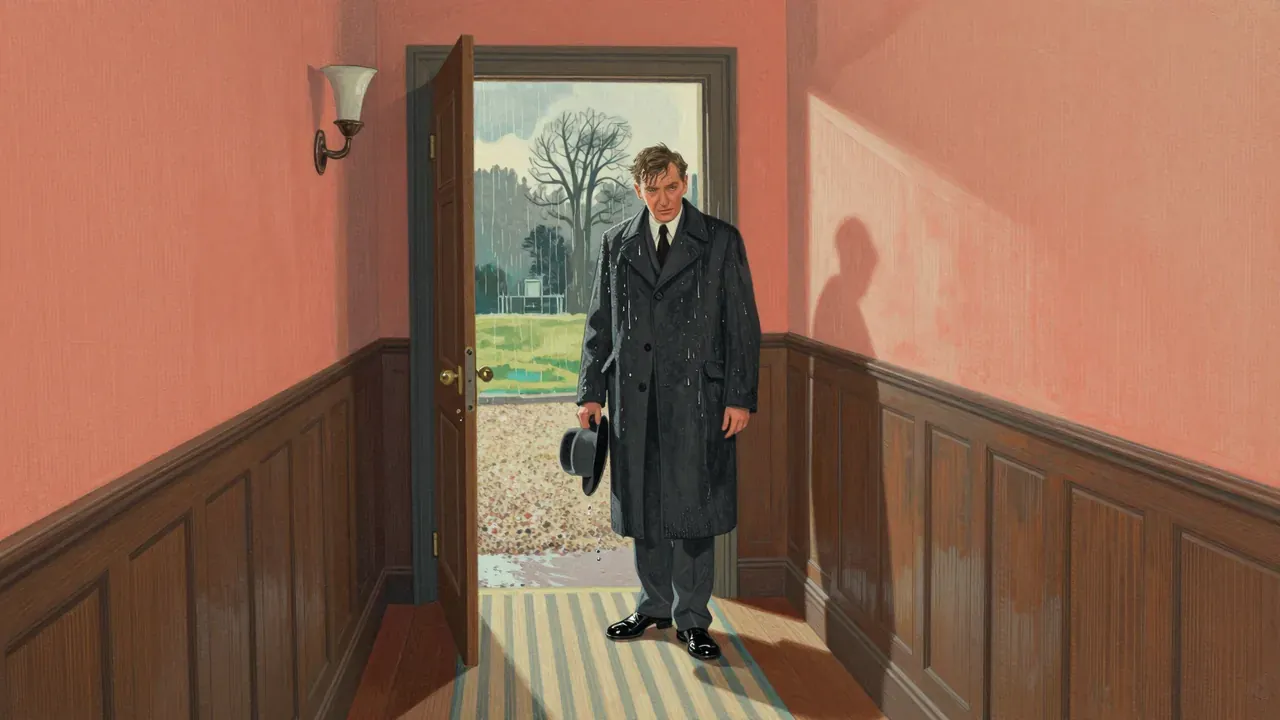
Blithe Spirit is a Technicolor adaptation of Noël Coward’s 1941 stage comedy, made in 1944 and released in January 1945. It attempts to translate a tightly wound, single-set drawing-room farce — built on verbal dexterity, tonal irony, and the precise timing of ghostly intrusion — into cinematic form. The film retains the play’s central conceit: a novelist’s séance accidentally summons his dead first wife, whose spectral reappearance destabilises his second marriage and exposes the brittle architecture of bourgeois domesticity. Unlike Coward’s earlier screen collaborations with David Lean — In Which We Serve and This Happy Breed — this is Lean’s first foray into comedy, and it proceeds under explicit instruction from Coward himself: ‘Just photograph it, dear boy.’ That directive sits uneasily beside Lean’s instinct to open up the material, adding exterior shots, car journeys, and a new ending not present in the stage version. The film is not trying to reinvent the genre but to preserve Coward’s wit while making it legible in colour, on film, and for audiences who had not seen the West End run. It is an act of stewardship that also contains quiet acts of authorial intervention. (158 words)
The look of it
The story follows Charles Condomine’s descent from sceptical host to haunted husband as Elvira’s ghost disrupts his marriage to Ruth. Structurally, it adheres closely to the play’s three-act rhythm, though Lean inserts location work — two Buckinghamshire houses stand in for Lympne — and expands Madame Arcati’s role beyond her stage counterpart. Ronald Neame’s cinematography uses Technicolor deliberately: saturated but controlled, with deep greens and warm ambers anchoring interiors, and cooler, flatter tones for exterior sequences. Richard Addinsell’s score is unobtrusive, functional, never underscoring jokes. Performances are uneven: Margaret Rutherford dominates as Arcati, physically commanding and rhythmically exact; Joyce Carey as Edith offers quiet, grounded realism. Rex Harrison, returning from wartime service, plays Charles with restraint but little mischief — his line readings lack the sardonic lilt Coward wrote. Kay Hammond’s Elvira, though faithful to her stage interpretation, registers as slow and visually indistinct on film. Constance Cummings’ Ruth is earnest but underwritten, her emotional arc flattened by the camera’s distance. Jack Harris’s editing maintains pace but rarely discovers new meaning in juxtaposition. (159 words)
The presence of Arcati
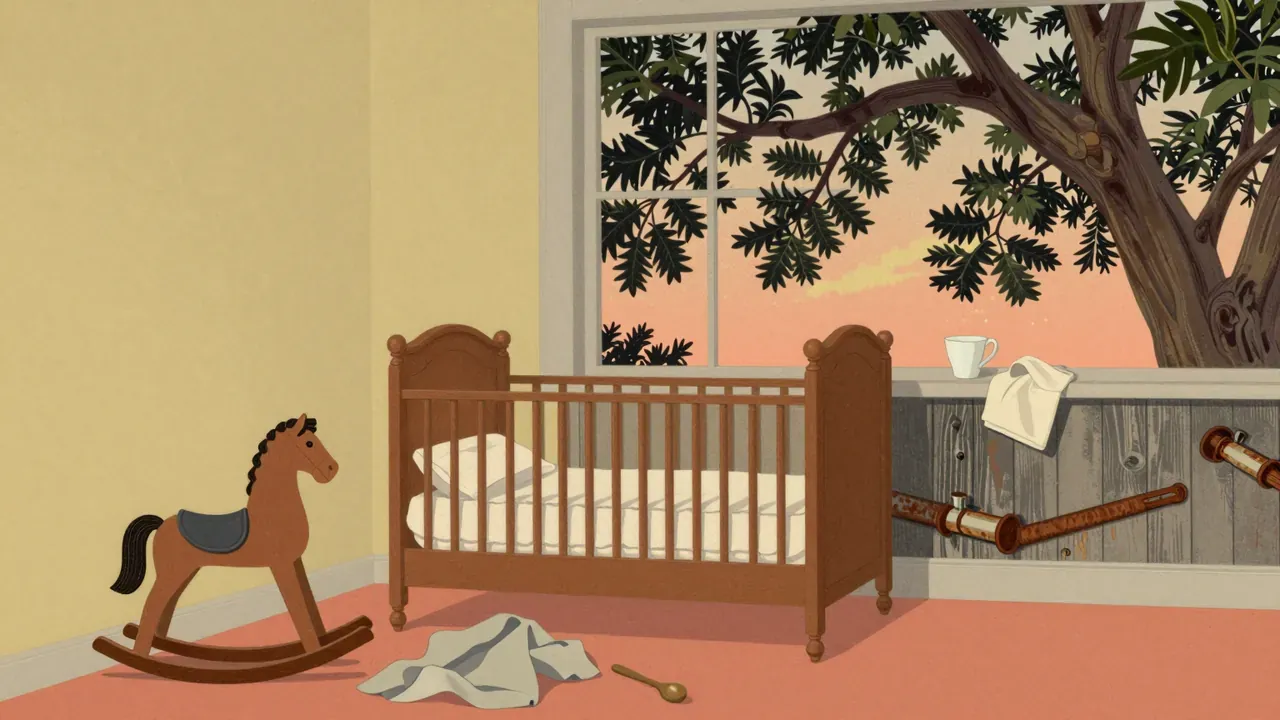
What lands is the texture of English middle-class life in 1944 — its starched propriety, its repressed eroticism, its reliance on ritual as bulwark against chaos. Madame Arcati’s séance, filmed with low angles and sudden shifts in focus, feels genuinely uncanny not because of spectacle but because of its tonal sincerity: Rutherford commits so fully that the absurd becomes plausible. The film’s visual effects — the Oscar-winning ‘spirit photography’ — remain persuasive: Elvira’s appearances are marked by subtle halation, soft focus, and careful matte work, never overplayed. These choices serve the script’s logic rather than distract from it. The domestic spaces feel lived-in: wallpaper patterns, ashtrays full of cigarette ends, the weight of a silver teapot on a tray — all suggest a world where manners are armour and silence is tactical. Even the film’s most dated elements — the clipped vowels, the gendered assumptions about widowhood and remarriage — land with historical precision. There is no winking at the audience; the film treats its characters’ anxieties as real, and that seriousness gives the comedy its bite. The final image — Charles’s empty chair at the dining table — works not as punchline but as quiet punctuation: a man erased by the very forces he summoned. (157 words)
The absence of Elvira
What does not land is the central relationship between Charles and Elvira. Their chemistry is inert: Harrison’s performance lacks the rakish charm or self-mocking vanity the role requires, and Hammond’s delivery is too measured, too stage-bound, to register as seductive or disruptive on screen. The film fails to make Elvira dangerous — she is merely present, not threatening — which undermines the stakes of Ruth’s growing desperation. The expanded exterior scenes dilute tension rather than deepen it; the Folkestone car journey adds duration without dimension. Lean’s direction feels cautious, even deferential: he films dialogue head-on, avoids cutting on reaction, and rarely uses space to reveal character. The new ending — Charles’s death and spectral reunion — contradicts the play’s closing irony and weakens its thematic core: the impossibility of escape, not the inevitability of punishment. Coward’s objection was justified. The film also misjudges tone in places, allowing moments of genuine pathos — Ruth’s grief, Edith’s confusion — to slip past without resonance. Without a stronger anchor in Charles’s subjectivity, the supernatural elements float free of emotional consequence. The result is a film that looks polished but breathes shallowly: technically accomplished, emotionally uncommitted. (159 words)
The weight of the past
The themes that matter are not the supernatural mechanics but the persistence of the past in domestic life: how memory, habit, and unresolved desire inhabit rooms, routines, and relationships long after people have left them. The film treats marriage as a contract constantly renegotiated — not just between spouses, but between the living and the dead versions of themselves. Elvira is less a ghost than a psychological revenant: the unexamined part of Charles’s identity he thought he’d buried. Ruth represents the present’s claim on him — not as rival but as witness — and her death does not resolve the conflict but literalises it. The film’s quietest theme is the failure of language: Charles cannot describe what he hears, Ruth cannot believe what she sees, Arcati cannot explain what she has done. Dialogue is both weapon and shield, and every witty exchange masks a refusal to name what is actually happening. Class matters too — the Condomines’ comfort is a fragile stage set, maintained by servants and silence. When Edith, the maid, is revealed as the true medium, it is not a twist but a quiet correction: the unseen labour that holds the household together is also what breaches its boundaries. The film’s enduring power lies in this understated sociology, not its spookiness. (158 words)
The terms of engagement
This film is for viewers who value verbal precision, mid-century British interior design, and the particular melancholy of post-war comedy — those who watch for how light falls on wallpaper, not for plot propulsion. It rewards patience with detail: the way a teacup trembles before a spirit appears, the shift in Rutherford’s posture when she enters trance, the deliberate flatness of the colour grading in moments of emotional collapse. It is not for viewers who require narrative momentum, physical comedy, or psychological realism — the pacing is stately, the character arcs minimal, the stakes symbolic rather than visceral. Those who dislike theatrical cadence or find Coward’s dialogue arch will find it alienating. Some modern audiences may bristle at its gender dynamics, though the film does not endorse them — it anatomises them. A viewer expecting Lean’s later epic scale or visual daring will be disappointed; this is lean Lean, stripped of grandeur. Those who know the play may find the changes frustrating, but the film stands independently as a study in containment — of emotion, of space, of time. Its pleasures are narrow but deep. (159 words)
The refusal to adapt
It is worth your evening if you approach it as a period artefact with formal intelligence, not as a ghost story or a romantic comedy in the contemporary sense. Its ninety minutes unfold with the unhurried gravity of a well-rehearsed recital: there are no surprises, only variations on a theme. It repays attention to craft — Neame’s colour timing, Rutherford’s physical timing, the way silence is used as punctuation — but offers little in the way of emotional release or narrative surprise. Those who prefer Lean’s later work, or Coward’s sharper short films like Brief Encounter, may find it undernourished. But its restoration by the BFI and Criterion ensures its textures remain legible: the grain, the saturation, the weight of a 1944 wardrobe. It is not a film to love, but one to respect — for its fidelity to a specific cultural moment, its technical rigour, and its quiet refusal to simplify. To dismiss it as ‘just a filmed play’ misses how deliberately it chooses stillness over motion, implication over exposition. (159 words)