What it is trying to do
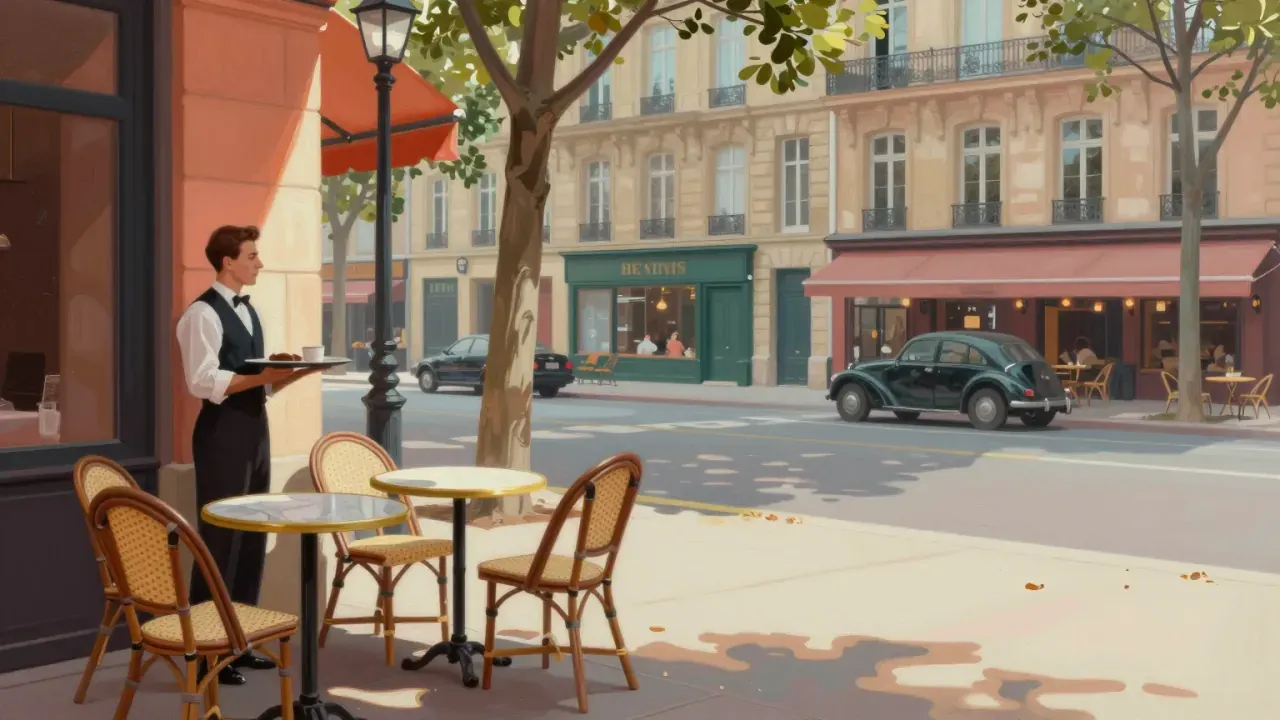
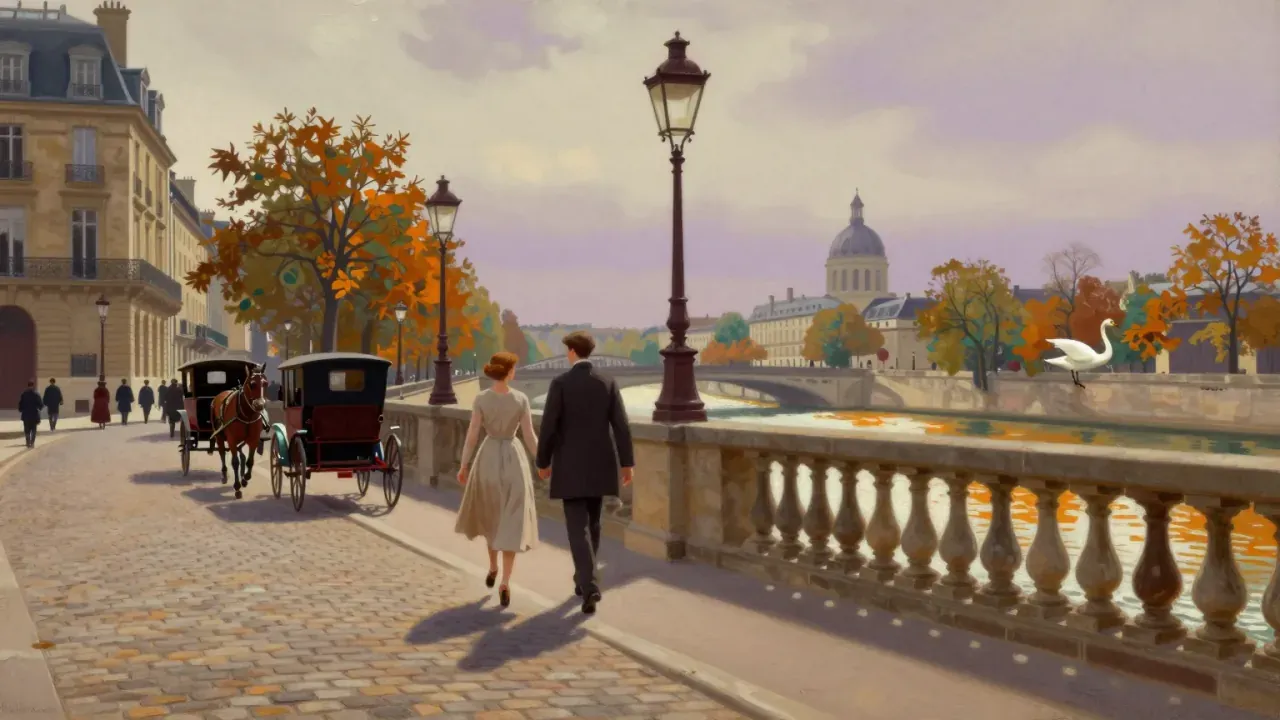
Gigi is a 1958 Metro-Goldwyn-Mayer musical romantic comedy, adapted by Alan Jay Lerner from Colette’s 1944 novella and set in Paris at the turn of the twentieth century. It attempts to translate Colette’s subtle, unsentimental portrait of a young woman’s social education — one that moves from grooming for courtesanship toward self-determined love — into the conventions of the Hollywood studio musical. The film retains the novella’s period setting and central triangle (Gigi, her suitor Gaston, and her mentor Honoré), but expands Honoré into a framing narrator and softens the novella’s irony with charm, song, and visual opulence. Its ambition is not subversion but refinement: to make a musical that feels light on its feet yet anchored in character, where romance emerges not from grand declarations but from shifts in posture, glance, and tone. It seeks to be both a period piece and a timeless confection — polished, precise, and gently persuasive in its belief that sincerity can coexist with artifice. It does not aim for realism, nor for satire; it aims for elegance as moral grammar.
How it works
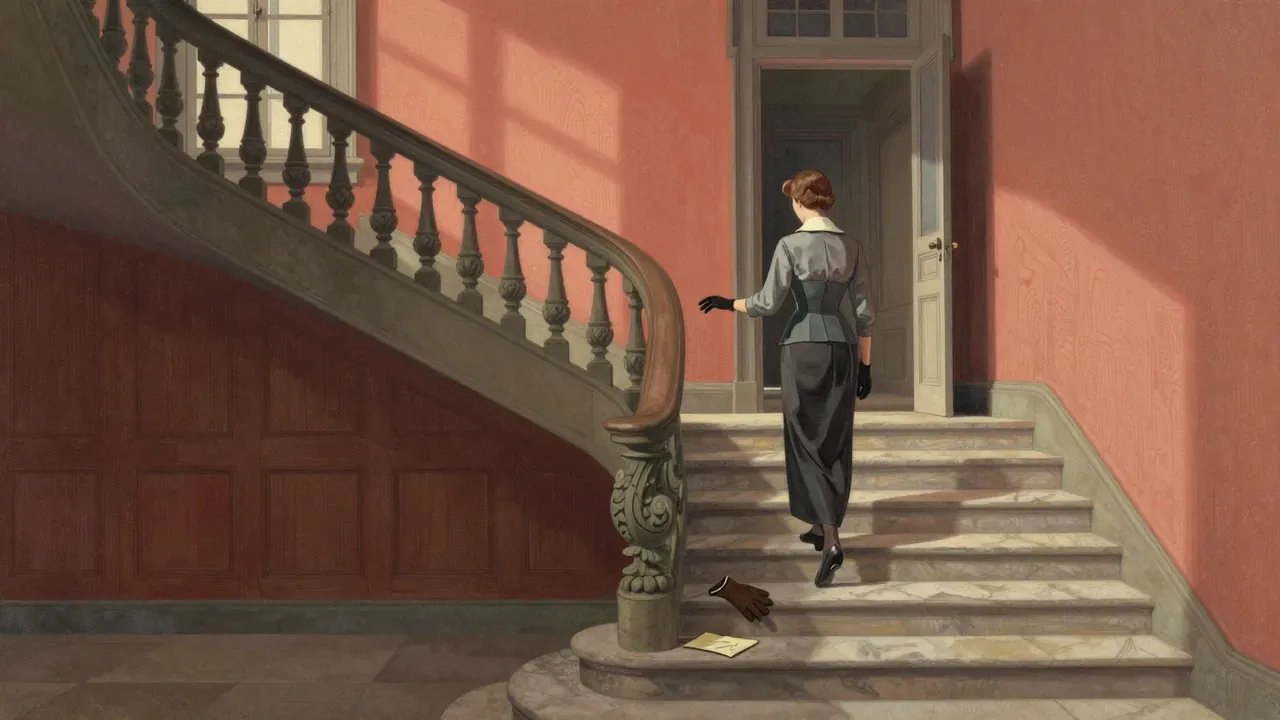
The story follows Gigi’s transition from a girl raised to be a kept woman to a woman who chooses marriage on her own terms — a pivot achieved less through plot than through accumulation of small gestures: a hesitation before a kiss, a change in how she holds her gloves, the way she stops mimicking her grandmother’s sighs. Leslie Caron performs Gigi with quiet watchfulness; her stillness reads as intelligence rather than passivity. Louis Jourdan gives Gaston a plausible weariness beneath his polish, and Maurice Chevalier, as Honoré, delivers warmth without sentimentality — his voice slightly frayed, his timing exact. Joseph Ruttenberg and Ray June photograph Paris in Eastmancolor with restrained saturation, favouring shallow depth and soft focus in interiors, letting mirrors and gilded frames hold the eye without overwhelming it. Adrienne Fazan’s editing sustains rhythm across musical numbers without rushing them; Conrad Salinger’s orchestrations give Loewe’s melodies weight and air in equal measure. The production design — by Cedric Gibbons and William A. Horning, with costumes by Cecil Beaton — treats Belle Époque as a lived-in world, not a museum display.
What lands
What lands is the film’s tonal consistency: its refusal to tip into either farce or melodrama. The songs function as psychological punctuation — ‘Thank Heaven for Little Girls’ establishes Honoré’s worldview without excusing it; ‘I’m Glad I’m Not Young Anymore’ articulates resignation as relief, not regret. The scene at Maxim’s works because the camera stays close, the lighting stays low, and the actors treat the mirrored walls not as spectacle but as furniture — part of the room’s logic. Chevalier and Hermione Gingold’s duet ‘I Remember It Well’ lands because their mutual misremembering feels affectionate, not evasive. Even the title song, introduced late, avoids grandeur: it arrives as a quiet affirmation, sung not to Gigi but about her, as if the city itself has noticed her change. The film’s restraint makes its emotional payoffs feel earned — not because they are large, but because they are precise. The final shot — Gigi and Gaston walking away, unaccompanied by music — lands precisely because it breaks the pattern: no flourish, no reprise, just two people moving forward in silence.
What does not
What does not land is the structural slack between Gigi’s internal shift and the narrative machinery required to deliver it. Her decision to reject courtesanship is never dramatised as conflict — there is no confrontation with her grandmother, no moment of reckoning with the system she was raised to serve. Instead, it arrives via implication: a look, a pause, a line delivered offhand. That subtlety suits Colette, but the film’s musical format demands clearer turning points, and it does not provide them. The subplot involving Gaston’s business dealings feels tacked on, serving only to delay the inevitable without deepening his character. Some musical numbers — particularly ‘The Gossips’ and ‘The Parisians’ — sit awkwardly, functioning more as filler than expression. The dubbing of Caron’s singing voice by Betty Wand is technically seamless, but it creates a disjunction between physical presence and vocal timbre that the film never acknowledges or integrates. These are not flaws in execution, but in alignment: the form occasionally outpaces the psychology it seeks to serve.
The themes that matter
The themes that matter are education, performance, and consent — not as abstractions, but as daily practices. Gigi’s upbringing is a curriculum: posture, pronunciation, the angle at which one accepts a flower. The film treats socialisation as choreography, and love as the first choice made outside its steps. Ageing appears not as decline but as recalibration — Honoré’s songs chart a life in which desire yields to observation, and observation becomes its own kind of pleasure. Class is present but muted: the characters move through wealth without interrogating its source, and the film’s refusal to name exploitation does not erase it — it simply places it off-screen, like Gigi’s mother’s voice. What matters most is the idea that maturity begins when one stops performing for others’ expectations and starts listening to one’s own tempo. That idea is never stated, but it pulses through every cut, every costume change, every time Chevalier looks directly at the camera and winks — not at the audience, but at the shared understanding that all roles, even the best ones, are temporary.
Who should watch it
This film is for viewers who value compositional calm over narrative urgency, who find pleasure in the weight of a well-placed pause or the texture of a silk cufflink. It rewards attention to gesture, to colour temperature, to how light falls on a cheekbone. It is not for those who require clear stakes, escalating tension, or psychological exposition — its emotional logic is cumulative, not causal. Anyone expecting the moral sharpness of Colette’s original will find the film too gentle; anyone seeking the kinetic energy of Singin’ in the Rain or the structural daring of The Band Wagon may find it too contained. Its pace assumes patience; its pleasures assume familiarity with mid-century studio craft. Those who dislike dubbed singing voices may resist Caron’s performance on principle, though the dubbing serves the film’s aesthetic of surface harmony. A viewer who values thematic clarity over tonal cohesion will likely leave unmoved — the film’s argument is made in brushstrokes, not bullet points.
Is it worth your evening
Yes, it is worth your evening — provided you watch it as a study in equilibrium, not as a story with a destination. Its 119 minutes unfold with the unhurried certainty of a well-rehearsed waltz: nothing is rushed, nothing overstated, nothing left unresolved in a way that feels dishonest. You will not leave startled or unsettled, but you may leave recalibrated — noticing how often you yourself perform, how much of daily life is choreographed, and how rare it is to see that truth treated with such tenderness and precision. It is not urgent, but it is durable. It does not shout its values, but it embodies them: craftsmanship as care, restraint as respect, beauty as discipline. Anyone who believes musicals must ‘move fast’ or ‘mean more’ will find it thin — but those who accept that meaning can reside in a glance, a chord change, or the way sunlight catches dust in a Parisian salon will find it quietly, lastingly rich.