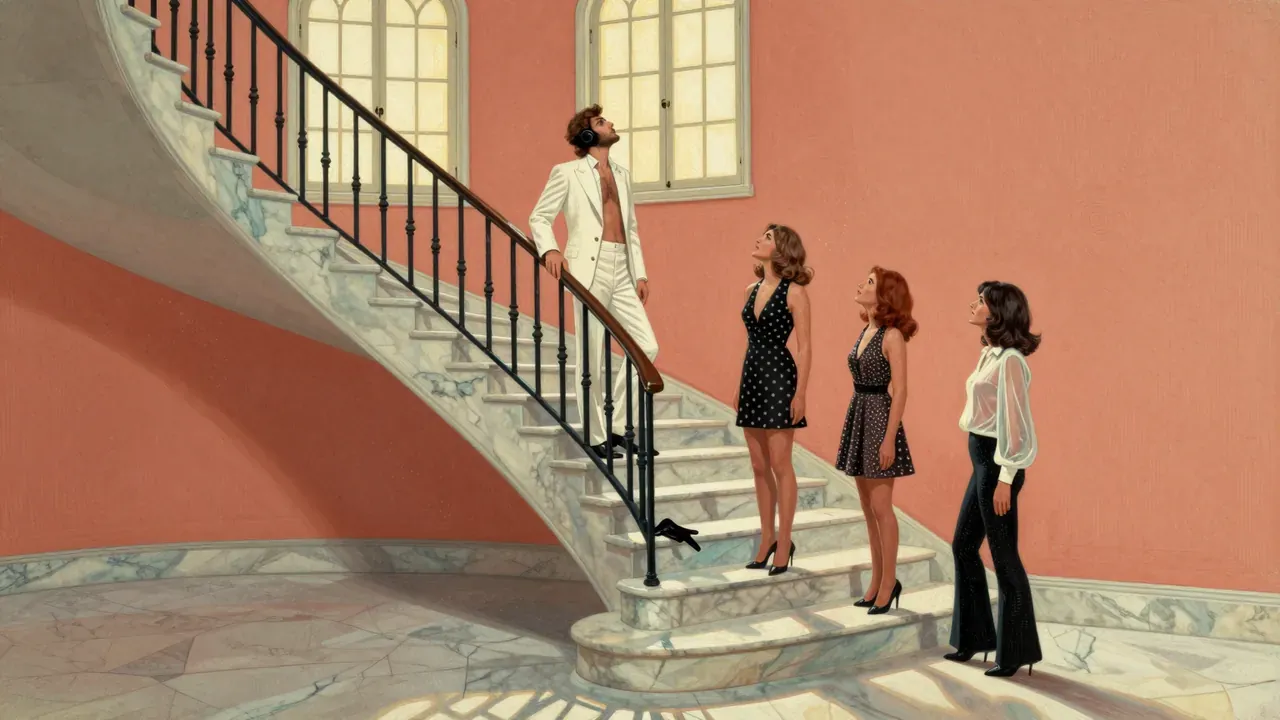
What it pretends to be
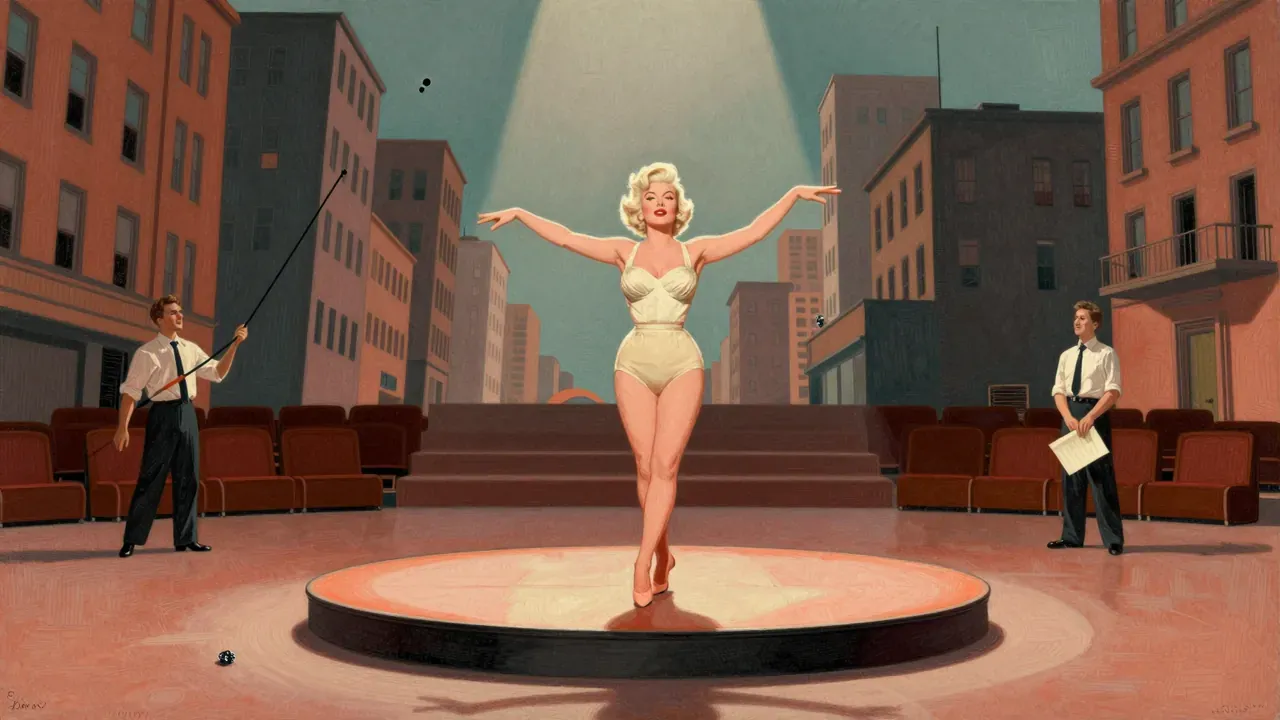
Beyond the Valley of the Dolls is a studio-financed, R-rated satirical melodrama conceived as a tonal and structural parody of 20th Century Fox’s own 1967 hit Valley of the Dolls. Directed by Russ Meyer and scripted in three weeks by Roger Ebert, it deliberately deploys the same narrative scaffold — three young women arrive in Los Angeles, pursue fame, confront sex, violence, drugs and moral collapse — but inflates each element to cartoonish, often grotesque, extremes. It is not a sequel in plot or continuity, nor a faithful adaptation of Jacqueline Susann’s work; instead, it treats Hollywood formulas as raw material for deliberate, systemic exaggeration. Meyer and Ebert aimed to make a film that could function simultaneously as rock musical, soap opera, exploitation picture, moral fable and camp comedy — all while operating within a tight budget and on existing Fox backlot sets. Its ambition is structural: to hold multiple genres in unstable suspension, letting their contradictions generate both laughter and unease. The film does not seek coherence so much as collision — between sincerity and irony, sincerity and absurdity, earnest performance and ludicrous script.
How it holds itself together
The story follows three Midwestern musicians who form the band The Carrie Nations after relocating to LA, then navigate a series of escalating crises involving predatory managers, lesbian entanglements, racial tokenism, celebrity murder, and a climactic orgy-turned-massacre. Performances are uniformly deadpan, delivered with unblinking seriousness despite dialogue that veers from stilted exposition to surreal non-sequitur. Meyer directed actors without signalling tone, leaving them uncertain whether lines were meant to land as satire or melodrama — a choice that yields an odd, flat affect throughout. Cinematography by Meyer and Fred Koenekamp favours wide shots, shallow focus, and saturated colour, particularly in interiors lit with theatrical intensity. Stu Phillips’ score alternates between brassy big-band pastiche and psychedelic rock interludes, often undercutting emotional cues. Editing, handled solely by Meyer, sustains a brisk, episodic rhythm, cutting away before scenes resolve. The craft is functional and economical: sets are repurposed, costumes are mod but generic, and continuity errors (like Z-Man’s sudden gender reveal) remain uncorrected — not from negligence, but from the film’s self-conscious embrace of provisional, almost improvisatory construction.
Where the friction lives
What lands is the film’s tonal dissonance — the persistent gap between how seriously it treats its own absurdity and how seriously its performers treat their roles. This produces a sustained, low-level cognitive friction that rewards attention without offering comfort. The satire of Hollywood’s recycling habits works precisely because the film itself is built from studio leftovers: recycled titles, repurposed sets, borrowed archetypes. Pam Grier’s brief appearance as an extra underscores the film’s awareness of its own marginalisation of Black characters — a point made more effectively by omission than inclusion. The climactic bloodbath, inspired by the Tate-LaBianca murders, gains power not from shock but from its abrupt, matter-of-fact insertion into a world otherwise governed by musical numbers and soap-opera plotting. Even the film’s technical limitations — the flat lighting, the stiff blocking, the dubiously synced vocals — become part of its argument: this is not polished entertainment, but a cracked funhouse mirror held up to the machinery of mass-produced desire.
Where it lets go
What does not land is the attempt at emotional investment in the central trio. Cynthia Myers, Marcia McBroom and Edy Williams are given little interiority beyond their assigned functions — the naive one, the ambitious one, the sexually awakened one — and their arcs dissolve into plot mechanics rather than character development. The film’s satire of homophobia and misogyny remains surface-level, relying on caricature rather than critique: lesbianism is treated as revelation, not identity; female agency is repeatedly undermined by narrative contrivance. Attempts at social commentary — on race, class, or the music industry — are gestural, never grounded in observation or consequence. The script’s reliance on real-world referents (Phil Spector, Muhammad Ali, Sharon Tate) feels opportunistic rather than incisive, borrowing gravity without earning it. And while the film’s self-awareness is genuine, its execution lacks the precision needed to sustain irony across 104 minutes: jokes grow repetitive, set-pieces blur, and the final moral summation arrives as dogma, not discovery.
What it really means
The themes that matter are not those announced in the opening crawl — ‘the oft-times nightmarish world of Show Business’ — but those revealed through contradiction: the tension between commercial complicity and artistic subversion, between studio control and outsider authorship, between moral panic and sexual liberation. The film interrogates how Hollywood packages trauma as entertainment, especially in the wake of real violence: the Manson murders hang over every party scene, every backstage confrontation, every whispered threat. It also examines the instability of genre itself — how quickly a teen musical can curdle into horror, how easily a love story becomes a cautionary tale. Underneath the camp and chaos lies a quiet preoccupation with authenticity: who gets to define it, who profits from its simulation, and what happens when the simulation becomes indistinguishable from the thing it mimics. These concerns are never stated outright, but they pulse beneath the film’s frantic surface — less thesis than tremor.
Who it speaks to
This film is for viewers who value formal provocation over narrative satisfaction, who find pleasure in watching systems break under their own weight, and who are comfortable sitting with unresolved tonal ambiguity for more than an hour and a half. It rewards patience with pattern recognition, not payoff. It is not for those seeking coherent character arcs, emotional catharsis, or satire with clear targets and consistent logic. Some critics have argued its energy compensates for its flaws; others insist its inconsistencies undermine its intelligence. A viewer who dislikes camp, distrusts irony, or expects genre fidelity will find it exhausting rather than exhilarating. What would change the verdict? A tighter edit — trimming the middle act’s repetitive party sequences — or a more committed tonal stance, either fully embracing farce or deepening its melodramatic stakes. As it stands, it demands a specific kind of attention: not passive consumption, but active triangulation.
Why it stays
Yes, it is worth your evening — but only if you approach it as a document of cinematic anomaly, not as conventional entertainment. Its value lies in its impossibility: a major studio releasing a film co-written by a film critic and directed by an X-rated maverick, made fast and cheap, yet somehow retaining conceptual density and historical resonance. It rewards rewatching, not for hidden clues, but to trace how its seams hold — or fail to hold — under scrutiny. Those who dismiss it as mere trash overlook its precise calibration of excess; those who hail it as genius ignore its frequent slackness and missed opportunities. It is neither wholly successful nor entirely failed, but something rarer: a film whose contradictions are its substance. To watch it is to witness Hollywood briefly losing its bearings — and in that stumble, revealing more about its machinery than any polished product ever could. That makes it worthwhile, provided you bring the right frame of mind.