filmbriefs
Fiction

War

104
briefs
13:00
average
1352 min
in total
88
people
All briefs104
13:00

49th Parallel

Michael Powell · 1941

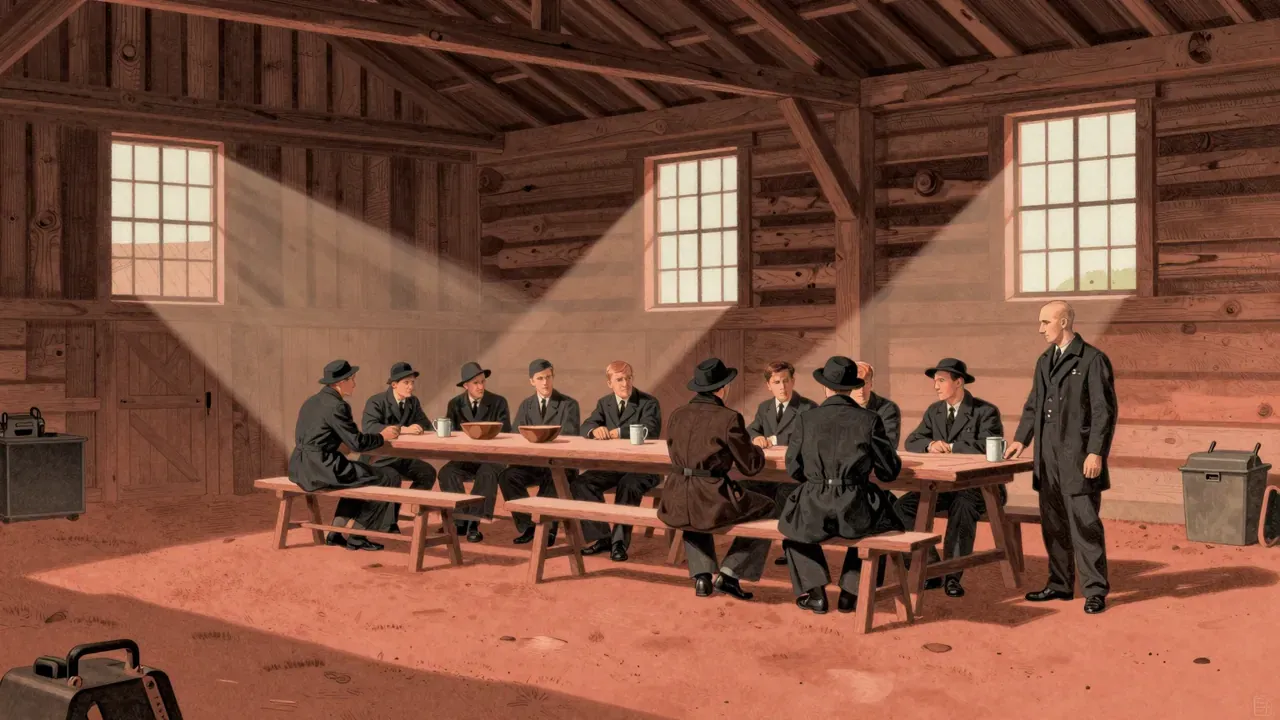
49th Parallel (1941), directed by Michael Powell and written by Emeric Pressburger, follows six German sailors stranded in Canada after their U-boat is destroyed. As they attempt to cross into neutral America, each encounter — with Inuit hunters, Hutterite farmers, a bohemian writer, and a disillusioned soldier — exposes the limits of Nazi ideology. Shot across Canada and at Denham Studios, with music by Ralph Vaughan Williams and editing by David Lean, it is a morally precise, formally restrained war drama that argues through confrontation, not combat.
13:00

A Generation

Andrzej Wajda · 1955

Andrzej Wajda’s 1955 debut A Generation follows two young men in Nazi-occupied Warsaw as they move from alienation to resistance within a communist underground cell. Shot on location in Wola with natural light and unvarnished performances, it grounds political commitment in workshop routines, shared silences, and the physical texture of daily survival. Though ideologically specific and formally austere, its power lies in its restraint — in what it shows, not what it tells.

13:00

Alexander Nevsky

Sergei Eisenstein, Dmitri Vasilyev · 1938

Alexander Nevsky (1938) is a Soviet historical drama directed by Sergei Eisenstein and Dmitri Vasilyev, depicting Prince Alexander’s defeat of the Teutonic Knights in 1242. Shot by Eduard Tisse and scored by Sergei Prokofiev, it uses stylised performances, rigorous montage, and a landmark battle sequence to advance a socialist realist vision of collective defence and principled leadership. Though shaped by Stalin-era constraints — including censorship and allegorical framing — its formal control and thematic cohesion remain potent. It is less a period piece than a functional artefact: history made operational.

13:00

Army

Keisuke Kinoshita · 1944

Keisuke Kinoshita’s 1944 Army follows three generations of a Japanese family as militarism seeps into domestic life. Chishū Ryū and Kinuyo Tanaka play parents shaping their son for service, culminating in a wordless, censored final scene where Tanaka’s character runs alongside her departing son — an act of love deemed unpatriotic. Made under strict wartime oversight at Shochiku, the film’s power lies in what it omits, delays, or shows without commentary.

13:00

Army of Shadows

Jean-Pierre Melville · 1969

Jean-Pierre Melville’s 1969 Army of Shadows is a stark, procedural drama about French Resistance operatives during Nazi occupation. Based on Joseph Kessel’s memoir, it follows Philippe Gerbier and his cell as they navigate safe houses, betrayals, failed rescues, and grim moral calculations — all rendered with clinical precision, minimal score, and unvarnished performances. Released to indifference in 1969, it was rediscovered and acclaimed after its 2006 restoration.

13:00

Ashes and Diamonds

Andrzej Wajda · 1958

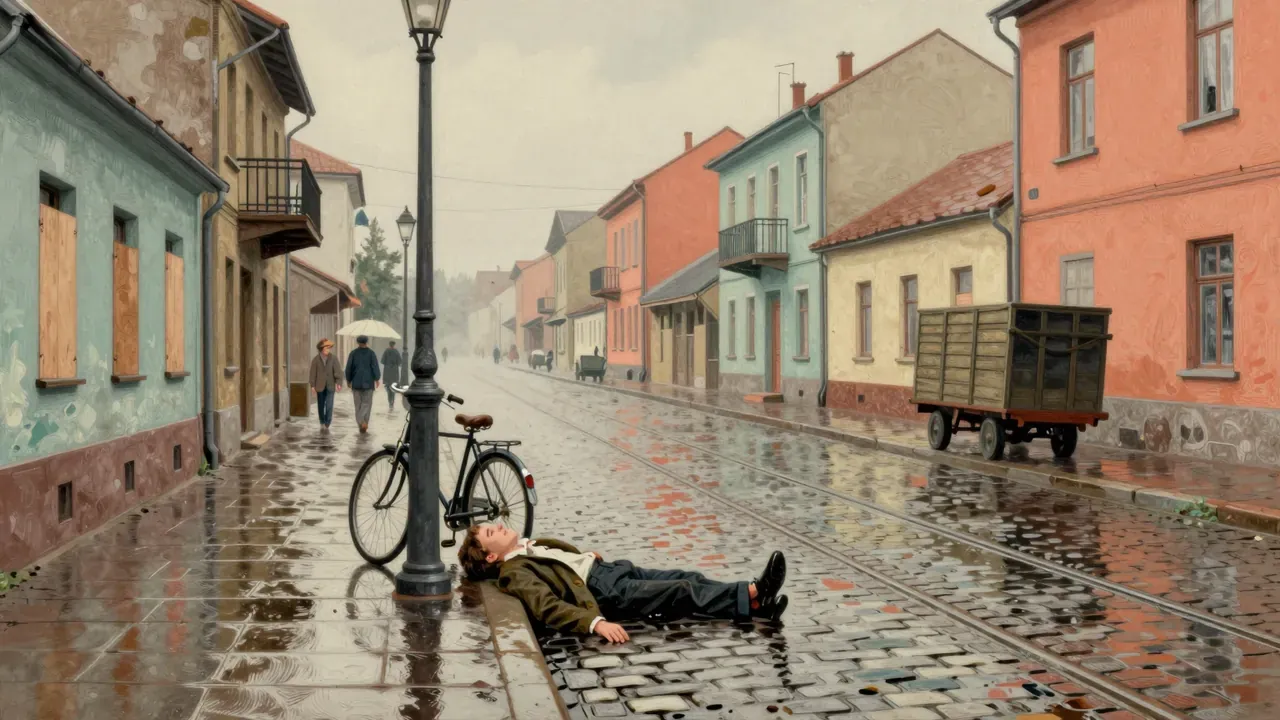
Andrzej Wajda’s 1958 drama Ashes and Diamonds compresses Poland’s postwar reckoning into a single rain-dampened day. Former Home Army soldier Maciek Chełmicki hesitates before carrying out an assassination order — not out of doubt about his cause, but from a growing awareness of time, mortality and connection. Shot in stark, intimate compositions by Jerzy Wójcik and anchored by Zbigniew Cybulski’s defining performance, it treats ideology as atmosphere rather than argument, and history as something felt in the body before it is understood in the mind.

13:00

Au revoir les enfants

Louis Malle · 1987

Louis Malle’s 1987 autobiographical drama follows eleven-year-old Julien at a Catholic boarding school in occupied France, where the arrival of three new pupils reveals a secret: one is Jewish, hidden under a false name. As Julien forms a fragile friendship with Jean Bonnet — real name Kippelstein — he witnesses the slow collapse of safety, culminating in a Gestapo raid that takes Jean, two other boys, and their protector, the headmaster Père Jean. Shot with quiet precision by Renato Berta and performed with unshowy authenticity, the film rests its power on accumulation, not climax: in glances, silences, and the unbearable ordinariness of betrayal.

13:00

Ballad of a Soldier

Grigori Chukhrai · 1959

Grigori Chukhrai’s 1959 drama follows a young Red Army soldier granted six days’ leave to repair his mother’s roof. En route, he meets soldiers and civilians, exchanges small gifts and confidences, and falls tentatively in love. Set during the Second World War but resolutely unconcerned with combat, the film locates heroism in endurance, love in gesture, and memory in quiet fidelity. Shot by Vladimir Nikolayev and Era Savelyeva, scored by Mikhail Ziv, and anchored by debut performances from Vladimir Ivashov and Zhanna Prokhorenko, it remains a benchmark of poetic restraint.

13:00

Beasts of No Nation

Cary Joji Fukunaga · 2015

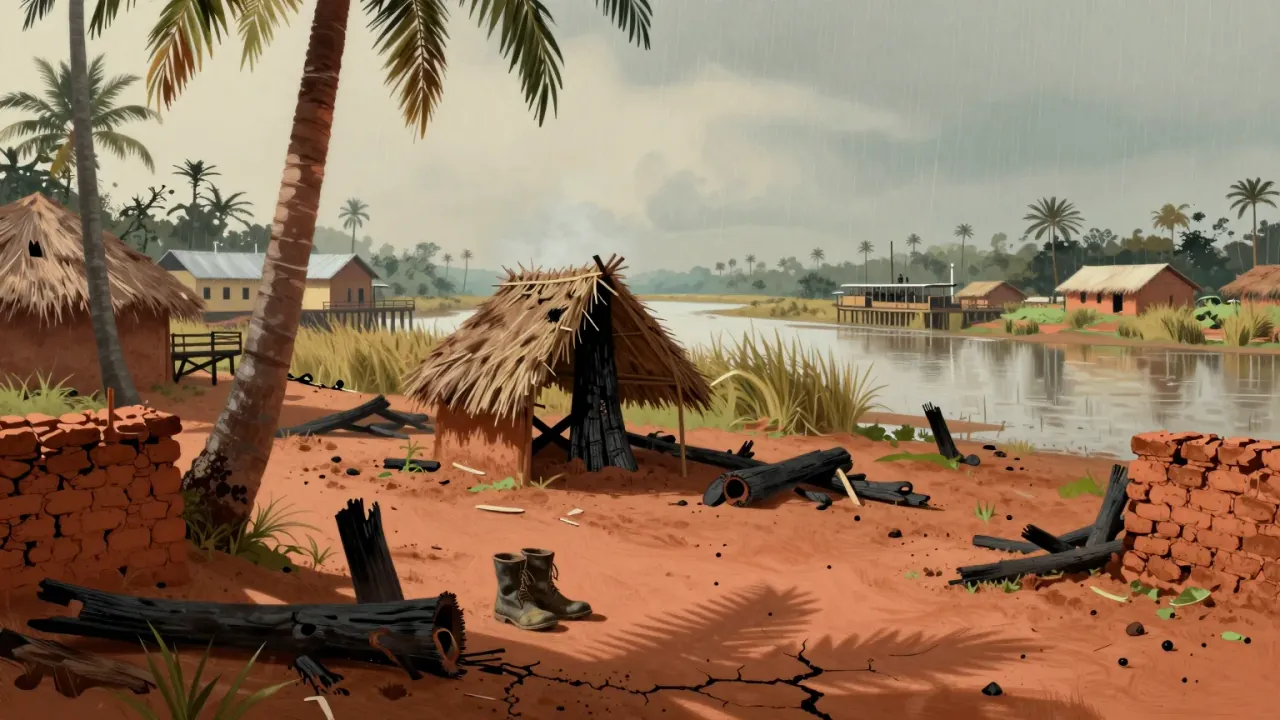
Beasts of No Nation (2015) follows Agu, a West African boy forced into a rebel militia during civil war. Directed and written by Cary Joji Fukunaga, it adapts Uzodinma Iweala’s novel with fidelity to its Krio-inflected voice and narrow psychological focus. Abraham Attah stars alongside Idris Elba as the charismatic, violent Commandant. Shot in Ghana, edited with deliberate duration, and scored with restrained unease, the film avoids spectacle in favour of sustained, intimate horror. It premiered at Venice, where Attah won the Marcello Mastroianni Award, and marked Netflix’s first global feature release.

13:00

Boat People

Ann Hui · 1982

Ann Hui’s 1982 docudrama, shot on Hainan Island with PRC permission, follows a Japanese photojournalist witnessing life in post-war Vietnam. Built from interviews with Vietnamese refugees, it renders systemic coercion through restrained performances, unvarnished cinematography, and a structure that contrasts staged propaganda with lived hardship. It won Best Film at the 1983 Hong Kong Film Awards and remains a landmark of Hong Kong New Wave realism.

13:00

Breaker Morant

Bruce Beresford · 1980

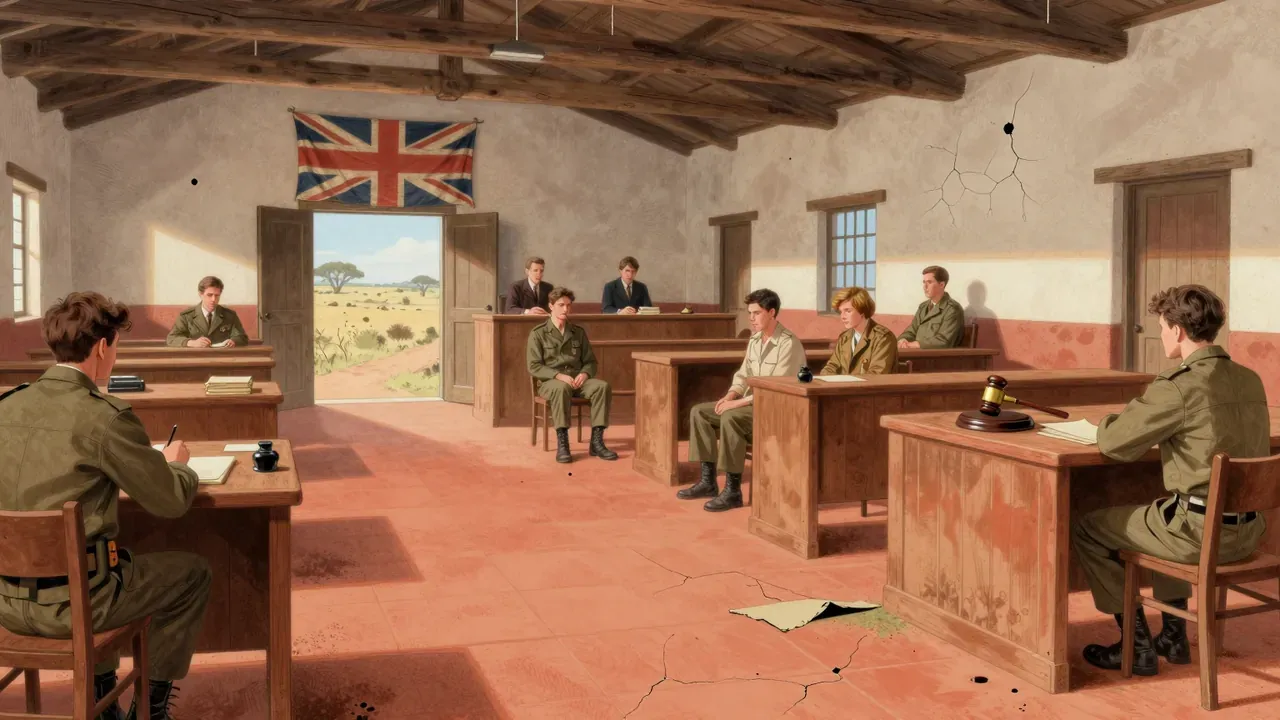
Breaker Morant (1980), directed by Bruce Beresford, dramatises the 1902 court martial of three Australian lieutenants accused of war crimes in the Boer War. Structured around courtroom testimony and fragmented flashbacks, it foregrounds procedural injustice over moral verdict, using restrained craft to expose how military justice serves political ends. Adapted from Kenneth G. Ross’s play, it won ten Australian Film Institute Awards and remains a benchmark of Australian cinema’s engagement with colonial accountability.

13:00

Canal

Andrzej Wajda · 1957

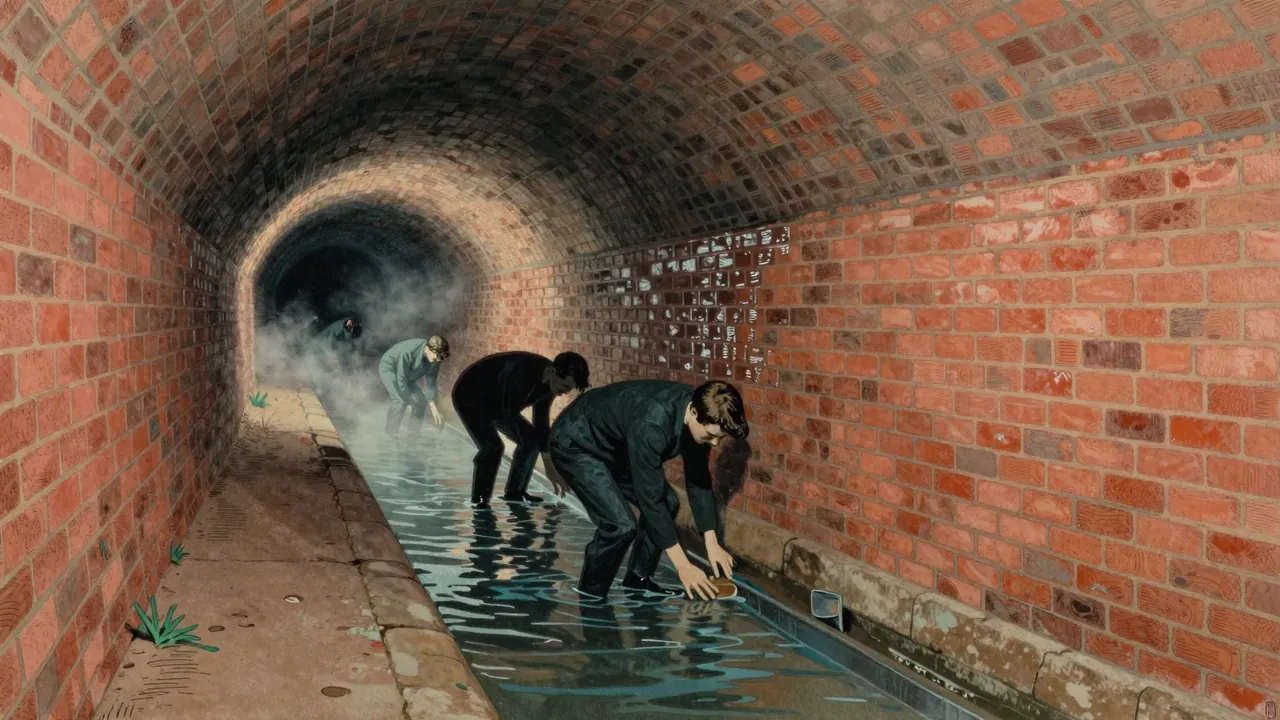
Andrzej Wajda’s 1957 film Canal follows a group of Polish Home Army fighters and civilians retreating through Warsaw’s sewers during the final days of the 1944 uprising. Adapted by veteran Jerzy Stefan Stawiński and shot by Jerzy Lipman, it uses tight framing, low light, and minimal music to render exhaustion, disorientation, and the erosion of command. There are no speeches, no flashbacks, no explanations — only movement, hesitation, and collapse. It is a war film without battle scenes, a drama without catharsis, and a landmark of Polish cinema for its unflinching formal rigour.

13:00

Che Part 2: Guerrilla

Steven Soderbergh · 2008

Che Part 2: Guerrilla follows Ernesto Guevara’s 1965–67 Bolivian campaign as a procedural collapse: dwindling supplies, failed communications, eroding morale, and mounting isolation. Directed by Steven Soderbergh and starring Benicio del Toro, it avoids mythmaking in favour of granular, unsentimental chronology — treating revolution as logistics, not legend.

13:00

Chronicle of the Years of Fire

Mohammed Lakhdar-Hamina · 1975

Chronicle of the Years of Fire (1975), directed by Mohammed Lakhdar-Hamina, follows Ahmed, an Algerian peasant, across seventeen years leading to the 1954 uprising against French rule. Structured in six chapters, it charts the slow, embodied formation of national consciousness under colonialism — through drought, conscription, broken promises and massacre. Shot by Marcello Gatti and scored by Philippe Arthuys, it favours duration over drama, collective experience over individual psychology. It won the Palme d’Or at Cannes and remains a landmark of postcolonial cinema.

13:00

Coup de Grâce

Volker Schlöndorff · 1976

Volker Schlöndorff’s 1976 Coup de Grâce, adapted from Marguerite Yourcenar’s novel and co-written by Margarethe von Trotta, relocates the story from Erich von Lhomond’s first-person account to Sophie von Reval’s silent, searching presence. Set in a Latvian chateau during the 1919 Freikorps campaign, it uses black-and-white cinematography, elliptical editing and muted performances to examine desire, trauma and ideological vacancy amid collapsing empires. Not a conventional war film, it holds violence at a distance and finds its force in omission, restraint and unresolved tension.

13:00

Dishonored

Josef von Sternberg · 1931

A 1931 Paramount drama directed by Josef von Sternberg, starring Marlene Dietrich as Marie Kolverer, a Viennese pianist turned secret agent whose loyalty, love, and eventual execution unfold with stark visual discipline and minimal exposition. Lee Garmes’ cinematography and Travis Banton’s costumes anchor a film less concerned with espionage mechanics than with dignity in extremis.

13:00

Eastern Condors

Sammo Hung · 1987

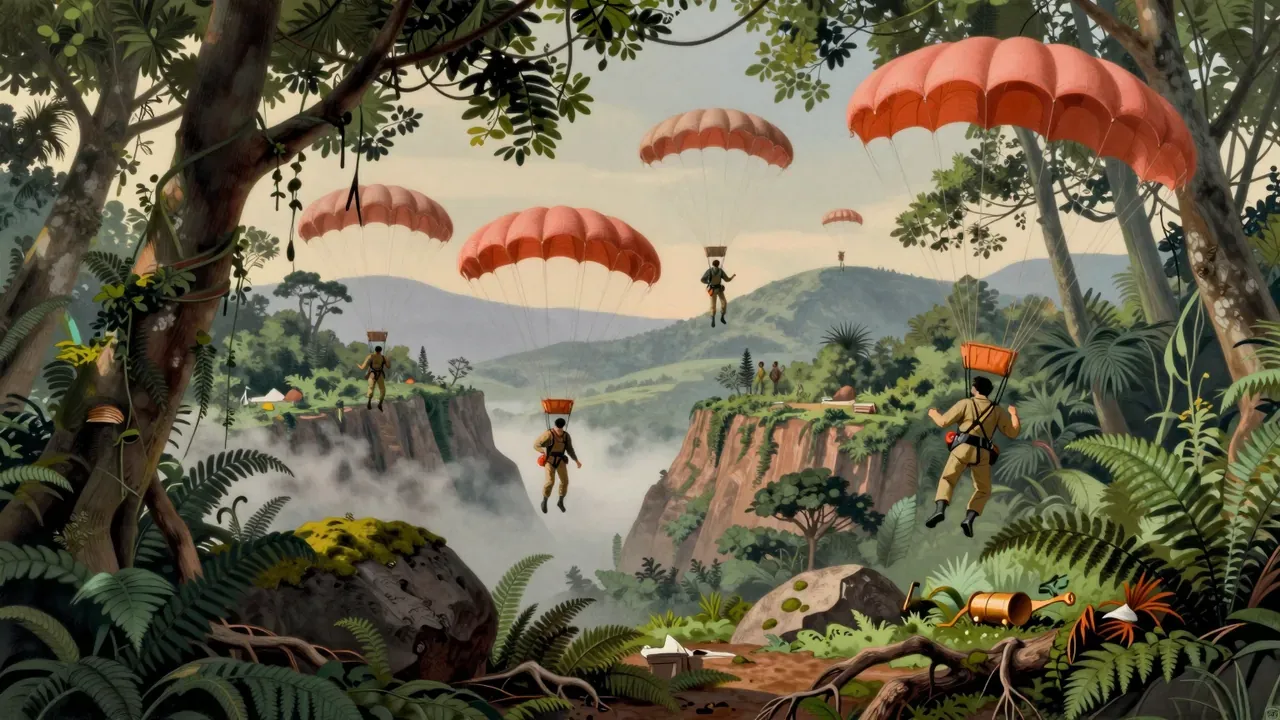
Sammo Hung’s 1987 Eastern Condors transplants the American commando-mission template into Hong Kong action cinema, following twelve convicts dropped into Vietnam to destroy a missile bunker. Directed by Hung and choreographed by him and Yuen Woo-ping, it prioritises physical storytelling over narrative nuance: stunts, timing, and ensemble coordination anchor the film, while its geopolitical framework remains functional, not interrogated. Shot in the Philippines, scored by Jonathan Lee, and released by Orange Sky Golden Harvest, it is a work of disciplined genre translation — earnest, unshowy, and built for the body before the mind.

13:00

Emitaï

Ousmane Sembène · 1971

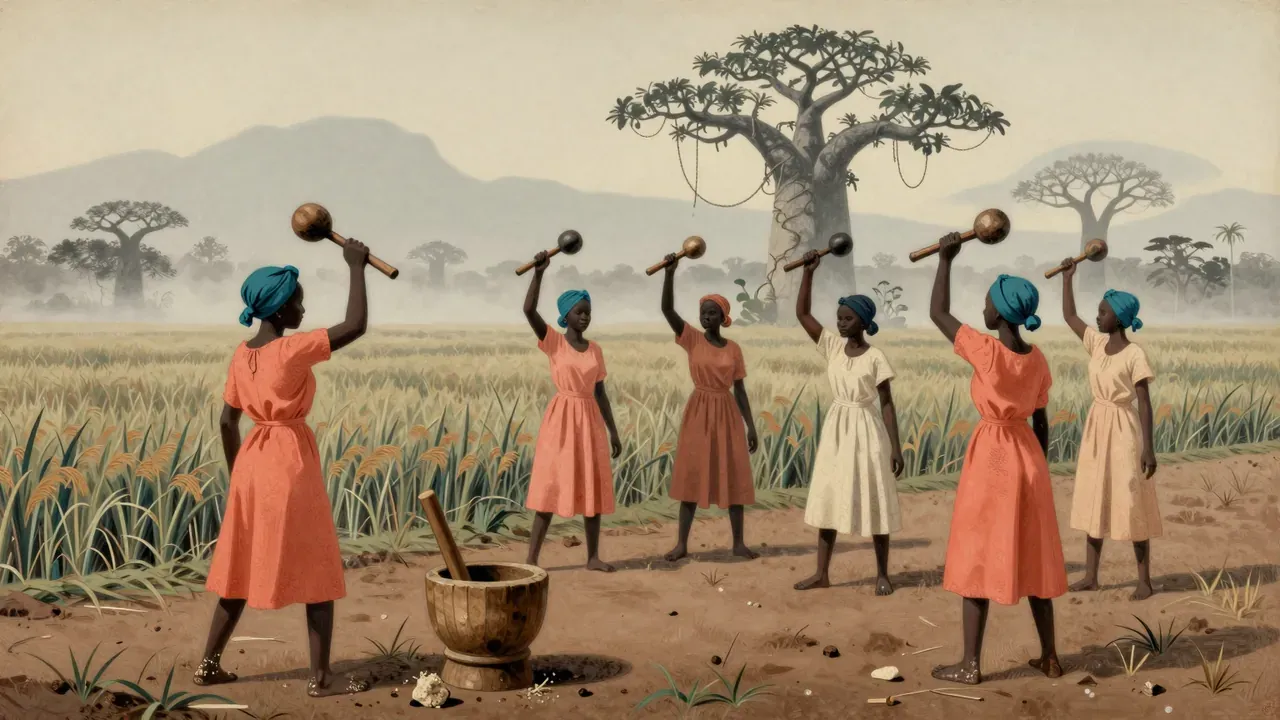
Ousmane Sembène’s 1971 drama Emitaï depicts a Diola village in Senegal resisting forced grain requisitions first by Vichy France, then by Free French forces during the Second World War. Shot in French with Diola-speaking non-professionals, it centres women’s labour, ancestral consultation, and the brutal continuity of colonial administration — culminating in a massacre that arrives without fanfare or framing. The film’s formal restraint, moral clarity, and anti-colonial urgency make it a landmark of African cinema.

13:00

Europa Europa

Agnieszka Holland · 1990

Europa Europa (1990), directed by Agnieszka Holland, adapts Solomon Perel’s memoir of surviving the Holocaust by posing as a German nationalist and joining the Hitler Youth. Shot in German by a French-Polish-German co-production, it follows Solek’s constant recalibration of identity across shifting front lines, languages, and ideologies — avoiding sentiment, exposition, or moral summation in favour of procedural tension and quiet precision.

13:00

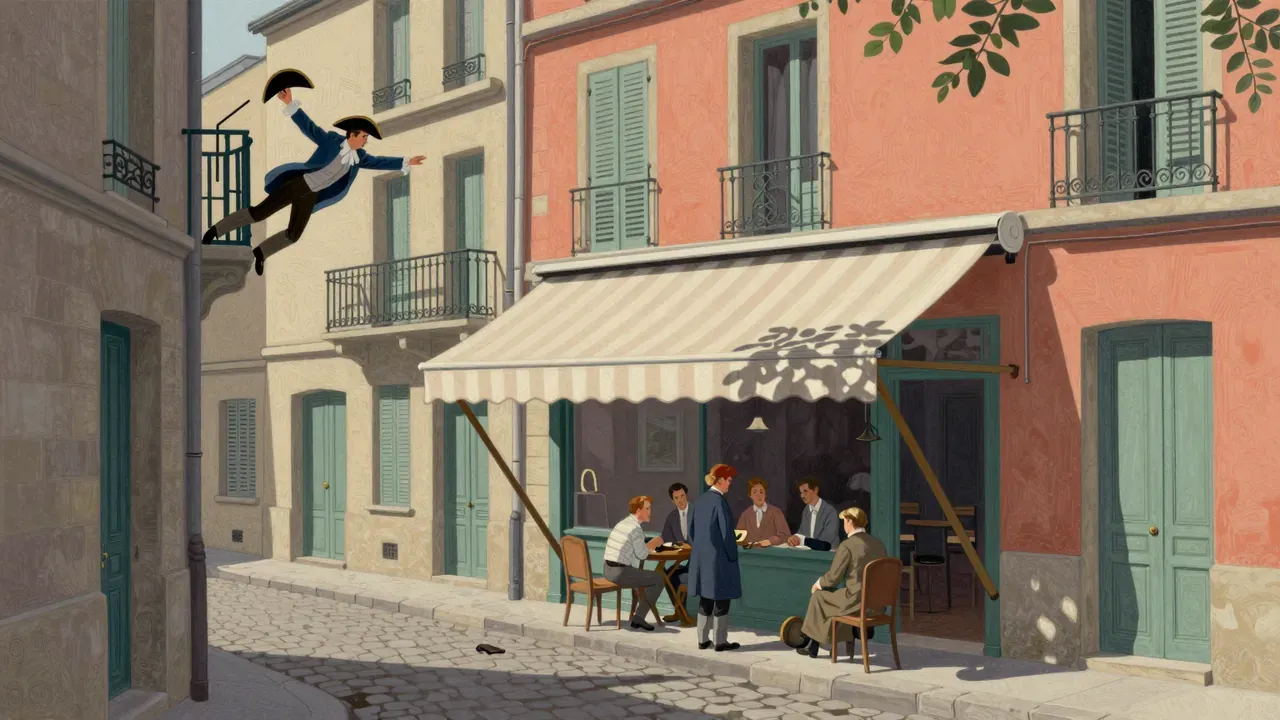
Fanfan la Tulipe

Christian-Jaque · 1952

Fanfan la Tulipe (1952) is a French black-and-white comedy-adventure starring Gérard Philipe as a charming rogue who joins the army on false pretences during the Seven Years’ War. Directed by Christian-Jaque, it balances swordplay, romance and gentle irony without moralising or historicising. Its strengths lie in physical performance, rhythmic editing and Christian Matras’s lucid cinematography — not in plot complexity or thematic weight.

13:00

Fires on the Plain

Kon Ichikawa · 1959

Kon Ichikawa’s 1959 adaptation of Shōhei Ōoka’s novel follows a tubercular Japanese private abandoned on Leyte in late 1944. Shot in stark black-and-white, it traces his physical and moral dissolution amid starvation, disease and escalating atrocity—not as drama, but as inexorable attrition. With minimal dialogue, sparse music and unflinching realism, it asks what remains of personhood when every boundary—bodily, ethical, linguistic—has been breached.

13:00

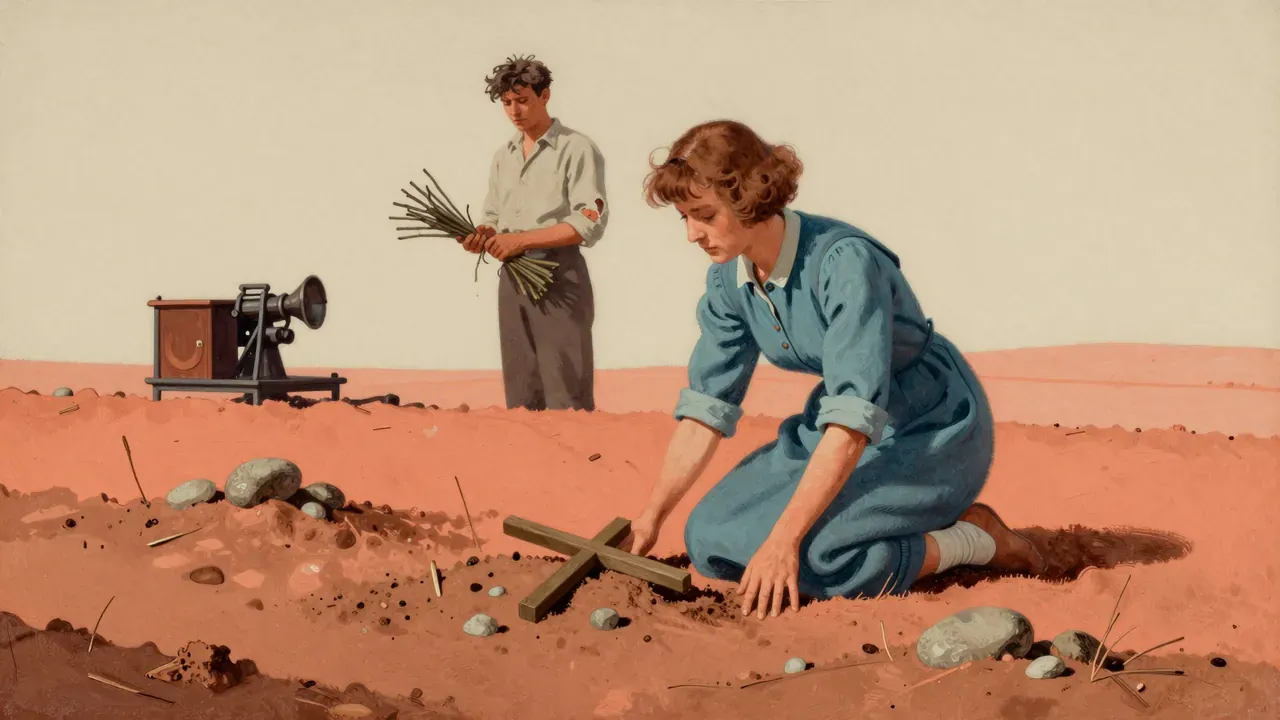
Forbidden Games

René Clément · 1952

Set in June 1940 during the fall of France, Forbidden Games follows orphaned five-year-old Paulette as she is taken in by a peasant family and forms a quiet bond with their son Michel. Together they build a secret cemetery for dead animals using stolen crosses, enacting grief through ritual rather than speech. Directed by René Clément with restrained precision, the film observes childhood trauma without sentimentality, relying on Brigitte Fossey’s extraordinary performance and Robert Juillard’s understated cinematography. It won the Golden Lion at Venice, a BAFTA, and an Academy Honorary Award.

13:00

Foreign Correspondent

Alfred Hitchcock · 1940

Alfred Hitchcock’s 1940 thriller follows an American reporter uncovering a fascist conspiracy in pre-war Europe. Made under urgent political conditions and reshaped mid-production to mirror real-world events, it prioritises procedural tension and moral clarity over psychological depth or historical fidelity. Its strengths lie in set-piece choreography, studio-crafted suspense, and a prescient final sequence set in a besieged radio station.

13:00

General Della Rovere

Roberto Rossellini · 1959

Roberto Rossellini’s 1959 drama follows a conman hired by Nazi occupiers to impersonate a dead Resistance general inside a Milan prison. As he inhabits the role among real prisoners, his performance hardens into conviction — not through revelation, but through repeated, quiet acts of solidarity. Shot in German by Italian filmmakers, with Vittorio De Sica in a career-defining turn, it is a restrained, morally exacting portrait of identity forged in extremity.

13:00

Hell's Angels

Howard Hughes, James Whale, Edmund Goulding · 1930

A 1930 American war film directed by Howard Hughes, James Whale, and Edmund Goulding, Hell’s Angels follows two British brothers in the Royal Flying Corps during the First World War. Originally shot silent, it was converted to sound mid-production, replacing lead actress Greta Nissen with Jean Harlow. Its aerial combat sequences — filmed with over 130 pilots, multiple fatalities, and Hughes’s own crash — remain landmark achievements in early sound and stunt coordination. Though narratively uneven and thematically thin, its technical ambition and material history make it a singular artifact of Hollywood’s transitional decade.

13:00

Henry V

Laurence Olivier · 1944

Laurence Olivier’s 1944 Henry V is a British government-backed film designed to bolster morale during the Second World War. Shot in Technicolor on location in Ireland and at Denham Studios, it blends miniature models, medieval manuscript aesthetics, and naturalistic battle scenes to recast Shakespeare’s play as a unifying national myth. Olivier stars, directs, and co-writes, omitting Henry’s harsher actions to foreground leadership, language, and legacy. Its craft — in cinematography, costume, editing and Walton’s score — is exacting and intentional. Though simplified in ethics, it remains a landmark of cinematic adaptation and wartime culture.

13:00

In Which We Serve

Noël Coward, David Lean · 1942

Made in 1942 with Ministry of Information backing, In Which We Serve tells the story of HMS Torrin through flashbacks from survivors adrift after its sinking off Crete. Directed by Noël Coward and David Lean, it traces the ship’s commissioning, service at Narvik and Dunkirk, and the private lives of its crew — from Captain Kinross to sailor Shorty Blake. Its power lies in restraint: understated performances, muted cinematography, and a structure that treats duty as continuity, not climax.

13:00

Ivan's Childhood

Andrei Tarkovsky · 1962

Andrei Tarkovsky’s 1962 debut follows twelve-year-old Ivan, an orphan turned reconnaissance scout on the Eastern Front. Shot by Vadim Yusov near the Dnieper River, it juxtaposes stark wartime realism with lyrical dream sequences, using landscape and silence to articulate loss. The film won the Golden Lion at Venice and established Tarkovsky’s signature preoccupation with time, memory and nature as witness. It is austere, unsentimental, and structurally rigorous—less a story of survival than a meditation on what survives after survival is no longer possible.

13:00

Jericho

Thornton Freeland · 1937

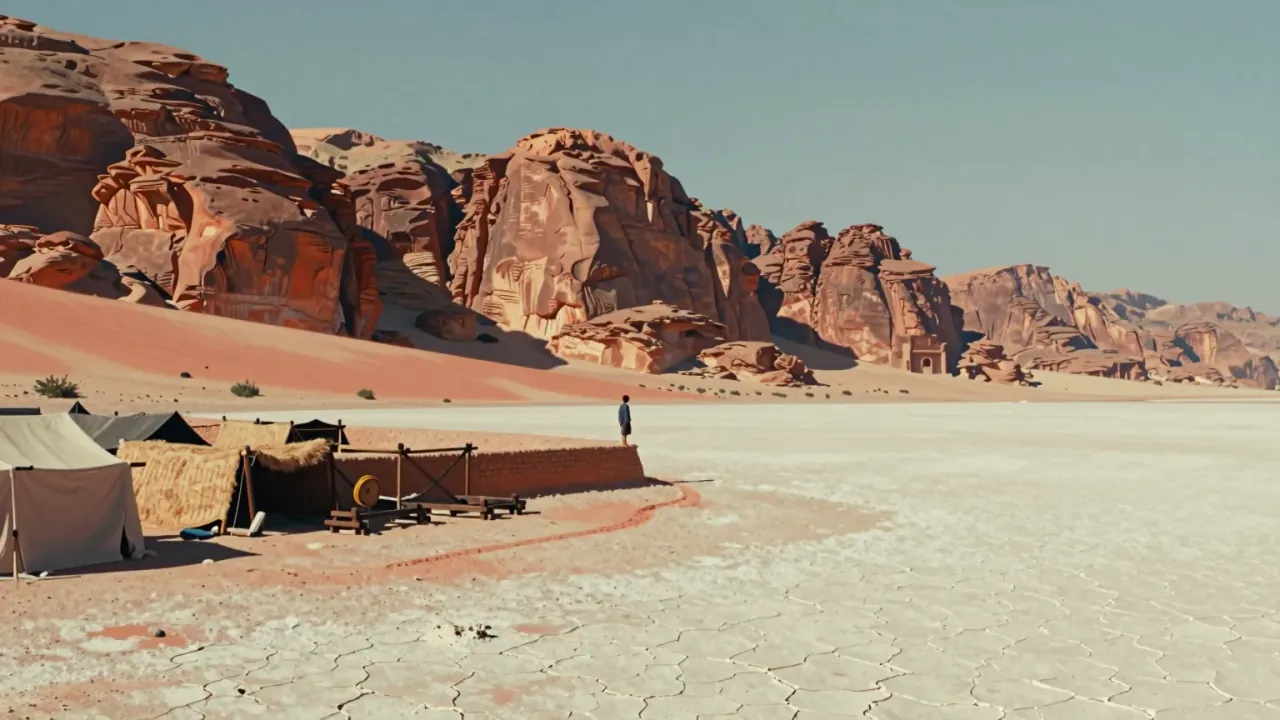
Jericho (1937), directed by Thornton Freeland, follows Paul Robeson as Jericho Jackson, a medical student court-martialed after saving trapped soldiers during World War I. Fleeing to North Africa, he earns acceptance among the Tuareg through healing and leadership, culminating in his guidance of their annual salt caravan. When a British officer recognises him in an anthropological film, he chooses not to reassert jurisdiction. Shot by John W. Boyle, the film balances courtroom tension with expansive desert realism — anchored by Robeson’s restrained, physically commanding performance.

13:00

Kapò

Gillo Pontecorvo · 1959

Gillo Pontecorvo’s 1960 war film Kapò follows a teenage Jewish girl’s descent into moral compromise as a kapo in a Nazi concentration camp. Shot in Yugoslavia with an Italian-French-Yugoslav co-production team, it was among the first narrative films to depict camp life with graphic realism. Though criticised for melodrama, miscasting, and aesthetic missteps, its ambition — to chart how survival reshapes conscience — remains ethically urgent. Susan Strasberg stars, with Emmanuelle Riva, Laurent Terzieff, and Didi Perego in supporting roles.

13:00

La Grande Illusion

Jean Renoir · 1937

La Grande Illusion (1937), directed by Jean Renoir, follows French officers imprisoned in German camps during the First World War. Through restrained performances, unadorned cinematography, and a structure built on observation rather than action, it explores how class, nationality, and personal dignity persist — and sometimes collapse — under pressure. Its enduring power lies not in grand statements but in quiet, specific moments: a shared meal, a sung anthem, a winter refuge, a final, reluctant shot.

13:00

Lacombe, Lucien

Louis Malle · 1974

Set in occupied France in June 1944, Lacombe, Lucien follows a disaffected 17-year-old farm boy who, after being rejected by the Resistance, is recruited by the Carlingue — French auxiliaries of the Gestapo. With no psychological exposition or moral framing, the film observes his gradual immersion in violence, his uneasy relationship with a Jewish family in hiding, and his eventual flight. Directed by Louis Malle and co-written with Patrick Modiano, it uses restrained performances, naturalistic cinematography, and deliberate pacing to explore how moral emptiness becomes operational in times of crisis.

13:00

Le Petit Soldat

Jean-Luc Godard · 1963

Made in 1960 but banned until 1963, Le Petit Soldat follows a French deserter in Geneva drawn into political violence on both sides of the Algerian War. Directed by Jean-Luc Godard and shot by Raoul Coutard, it is a formally restrained, morally ambiguous study of coercion, silence, and the instability of truth — both cinematic and political.

13:00

Lewat Djam Malam

Usmar Ismail · 1954

Lewat Djam Malam (1954), directed by Usmar Ismail and written by Asrul Sani, follows ex-soldier Iskandar’s rapid unraveling in post-independence Bandung. Haunted by wartime violence and alienated by peacetime hypocrisy, he moves through a landscape of compromised comrades — a contractor, a pimp, a former commander — before killing the man he once followed. Shot by Max Tera in restrained, atmospheric black-and-white, the film avoids spectacle in favour of psychological accumulation. Restored in 2012 after decades of deterioration, it remains a landmark of Indonesian arthouse realism.

13:00

Ministry of Fear

Fritz Lang · 1944

Fritz Lang’s 1944 Ministry of Fear adapts Graham Greene’s novel into a tightly paced spy thriller set in Blitz-era London. Ray Milland plays Stephen Neale, a man recently released from a mental asylum who stumbles into a Nazi espionage ring masquerading as a charitable organisation. The film prioritises procedural suspense and period texture over the novel’s deep psychological guilt, delivering a lean, atmospheric, studio-era noir anchored in tangible wartime detail.

13:00

Mudbound

Dee Rees · 2017

Mudbound is a 2017 historical drama directed by Dee Rees, adapted from Hillary Jordan’s novel. Set in post-war rural Mississippi, it follows two families — white landowners and Black tenant farmers — whose lives intersect amid poverty, racism and shared war trauma. With Rachel Morrison’s grounded cinematography and restrained performances, it renders systemic injustice as environmental fact rather than moral allegory.

13:00

Night Train to Munich

Carol Reed, Edward Black, Sidney Gilliat, Frank Launder · 1940

Night Train to Munich (1940) is a British spy thriller directed by Carol Reed, written by Sidney Gilliat and Frank Launder. It follows a British agent’s mission to rescue a Czech scientist and his daughter from Nazi custody, culminating in a tense train journey to Munich and a daring escape across the Alps. Starring Margaret Lockwood and Rex Harrison, it balances suspense with wry humour and prioritises plot logic over psychological depth or historical detail.

13:00

Overlord

Stuart Cooper · 1975

Overlord (1975) is a British black-and-white film written and directed by Stuart Cooper, blending newly shot drama with archival footage from the Imperial War Museum and German sources. It traces the brief life of Thomas Beddows, a conscripted soldier, from call-up to death on D-Day at Sword Beach. Shot on period lenses and edited to match the grain and rhythm of wartime film, it avoids heroism and exposition in favour of quiet accumulation — of gesture, texture, silence. Awarded the Silver Bear Grand Jury Prize at Berlin in 1975, it was later championed by Roger Ebert and added to the Criterion Collection.

13:00

Paisà

Roberto Rossellini · 1946

Roberto Rossellini’s 1946 neorealist film Paisà unfolds in six loosely connected episodes set during the Allied campaign in Italy, from Sicily to the Po delta. Using non-professional actors, real locations, and untranslated dialogue, it captures moments of miscommunication, fleeting connection, and quiet devastation — not as drama but as record. Its power lies in restraint: in what is withheld, misunderstood, or left unsaid.

13:00

Phoenix

Christian Petzold · 2014

Set in ruined Berlin in 1945, Phoenix follows Nelly Lenz, a Jewish Holocaust survivor with a reconstructed face, as she seeks out her husband Johnny — who fails to recognise her. When he asks her to impersonate his presumed-dead wife to claim her inheritance, she agrees, becoming ‘Esther’. Under his direction, she rehearses her old self: voice, mannerisms, songs. But as the charade deepens, so does the tension between resemblance and reality, memory and convenience, love and complicity. Christian Petzold’s tightly controlled drama rests on Nina Hoss’s physically precise performance and a script that treats identity as surface, history as burden, and recognition as moral choice.

13:00

Port of Flowers

Keisuke Kinoshita · 1943

Port of Flowers (1943), directed by Keisuke Kinoshita for Shochiku, is a restrained domestic drama set in a Japanese port town during wartime. Starring Eitarō Ozawa and Ken Uehara, it traces quiet exchanges between two men bound by memory, duty, and proximity rather than plot. With no credited score and minimal sound design, the film relies on duration, composition, and performance to evoke continuity amid uncertainty. Its themes — care as routine, loyalty as repetition, time as tide — emerge through accumulated detail, not exposition. It is neither propaganda nor protest, but a sustained act of attention to what endures when history narrows.

13:00

Ride with the Devil

Ang Lee · 1999

Ang Lee’s 1999 film Ride with the Devil follows young Missouri bushwhackers during the Civil War, adapting Daniel Woodrell’s novel with deliberate slowness and minimal exposition. Shot by Frederick Elmes and written by James Schamus, it foregrounds domestic endurance over battlefield drama, treating violence as rupture rather than climax. Its themes — loyalty, freedom, gendered labour, and the weight of time — emerge through gesture and silence, not speech. Though commercially overlooked and structurally demanding, it remains a singular, unhurried portrait of war’s human residue.

13:00

Rome, Open City

Roberto Rossellini · 1945

Rome, Open City (1945) is a foundational Italian neorealist war drama directed by Roberto Rossellini, shot in Rome months after Nazi withdrawal using salvaged film stock and largely non-professional performers. Set during the German occupation in 1944, it follows a Resistance fighter, a Catholic priest, and civilians navigating betrayal, sacrifice and moral compromise. Its raw aesthetic—uneven lighting, abrupt edits, sparse score—emerges from material constraint, not stylistic choice. Though structurally uneven and morally uncompromising, it remains essential for its unflinching portrayal of collective endurance under occupation.

13:00

Sambizanga

Sarah Maldoror · 1972

Sarah Maldoror’s 1972 Sambizanga follows Maria’s search for her arrested husband Domingos across Luanda’s colonial prisons, intercut with his silent detention and death. Shot in the Congo with non-professional actors linked to African liberation movements, it adapts José Luandino Vieira’s novella into a stark, unsentimental record of early Angolan resistance — where political force resides in persistence, not proclamation.

13:00

Sanshiro Sugata Part II

Akira Kurosawa · 1945

Made in early 1945 for Toho, Sanshiro Sugata Part II follows Sanshiro Sugata’s training under judo’s founder, culminating in a symbolic boxing match against an American sailor. Directed and edited by Akira Kurosawa, with cinematography by Takeo Itō and music by Seiichi Suzuki, the film departs from the spiritual focus of its predecessor to assert judo’s moral and physical supremacy amid Japan’s wartime collapse. Its fights are tightly structured, its ideology unambiguous, its landscape functional rather than lyrical. It is less a character study than a controlled rehearsal of triumph — historically revealing, aesthetically restrained.

13:00

Shame

Ingmar Bergman · 1968

Ingmar Bergman’s 1968 Shame follows violinist-turned-farmer couple Jan and Eva Rosenberg as civil war invades their isolated Swedish island life. With no named factions or ideologies, the film traces how violence corrodes language, intimacy, and moral coherence — not through spectacle, but through withheld gestures, miniature war effects, and Sven Nykvist’s bleached, claustrophobic cinematography. Liv Ullmann and Max von Sydow perform with devastating restraint, embodying shame not as emotion but as structural failure.

13:00

Spartacus

Stanley Kubrick · 1960

Stanley Kubrick’s 1960 Spartacus adapts Howard Fast’s novel via Dalton Trumbo’s blacklisted script, telling the story of a slave revolt not as myth but as moral architecture. Kirk Douglas stars as Spartacus, with Laurence Olivier, Peter Ustinov, and Jean Simmons in key roles. Shot across California locations including Hearst Castle and Wildwood Park, its Oscar-winning art direction and cinematography render Rome as a study in hierarchy — accent, space, and light all coded by class. Though structurally uneven and romantically thin, its enduring power lies in its deliberate, collective gaze and the historic courage of its authorship.

13:00

Story of a Prostitute

Seijun Suzuki · 1965

Seijun Suzuki’s 1965 Story of a Prostitute follows Harumi, a prostitute who moves to a Japanese military outpost in Manchuria during the Sino-Japanese War. There, she forms a forbidden bond with an officer’s aide while enduring the casual brutality of the chain of command. Shot with stark realism and deliberate restraint, the film rejects heroic mythmaking in favour of behavioural truth — exposing the absurdity, exhaustion and moral erosion embedded in imperial military life. Based on Taijiro Tamura’s story and informed by Suzuki’s own wartime service, it remains a singular, unsettling portrait of power, complicity and quiet defiance.

13:00

Testament

Lynne Littman · 1983

Testament (1983) follows Carol Wetherly and her family in a Northern California suburb after a nuclear attack. With no special effects, no named antagonists and no grand speeches, it charts the erosion of domestic life — from school plays to backyard burials — as infrastructure fails and radiation sickness takes hold. Made for PBS and released theatrically by Paramount, it relies on Jane Alexander’s restrained performance, Steven Poster’s naturalistic cinematography and James Horner’s sparse score to anchor nuclear dread in intimate, unremarkable detail.

13:00

That Hamilton Woman

Alexander Korda · 1941

That Hamilton Woman (1941) is a black-and-white historical drama directed by Alexander Korda, starring Vivien Leigh and Laurence Olivier as Emma Hamilton and Horatio Nelson. Made in Hollywood during British exile, it uses the Napoleonic Wars as allegory for Britain’s resistance to Nazi Germany. The film follows Emma’s rise from courtesan to national symbol and her tragic decline, framed by Nelson’s principled defiance and ultimate sacrifice at Trafalgar. Crafted with restraint and moral clarity, it prioritises thematic weight over psychological nuance or visual spectacle.

13:00

The Bridge

Bernhard Wicki · 1959

A 1959 West German war drama following seven teenage boys drafted into the Volkssturm during the final days of World War II. Assigned to defend a strategically irrelevant bridge near their hometown, they hold their position without orders, without support, and ultimately without survival. Directed by Bernhard Wicki from a novel by Gregor Dorfmeister, the film avoids rhetoric in favour of stark cause-and-effect, using restrained performances, muted cinematography, and deliberate pacing to convey the futility and horror of ideological surrender to youth.

13:00

The Burmese Harp

Kon Ichikawa · 1956

Kon Ichikawa’s 1956 drama follows Japanese soldiers in Burma at the end of World War II, narrowing to one man’s solitary mission to bury the dead and become a Buddhist monk. Adapted from Michio Takeyama’s novel by Natto Wada, it uses monochrome restraint, deliberate pacing and Akira Ifukube’s haunting score to explore grief, duty and spiritual transformation — not as transcendence, but as daily labour.

13:00

The Devil's Backbone

Guillermo del Toro · 2001

Set in a remote Spanish orphanage during the final months of the Civil War, The Devil's Backbone follows a newly arrived boy who encounters the ghost of a murdered peer. Directed by Guillermo del Toro and shot by Guillermo Navarro, the film uses gothic horror conventions to explore inheritance, trauma, and moral accountability. Its restrained performances, muted palette, and deliberate pacing build tension not through shocks but through accumulated silence and implication. Though some narrative devices feel functional rather than felt, its emotional and historical precision makes it a singular entry in both Spanish cinema and the ghost-story tradition.

13:00

The Drum

Zoltan Korda · 1938

The Drum (1938), directed by Zoltan Korda, is a British Technicolor adventure set on the North-West Frontier during the Raj. It follows Prince Azim’s flight after his uncle’s coup, his alliance with British officer Carruthers, and his climactic warning on the Sacred Drum. Filmed partly on location in Chitral and North Wales, it foregrounds military detail and imperial certainty — making it a revealing artefact of pre-war British cinema, not a neutral period piece.

13:00

The English Patient

Anthony Minghella · 1996

Anthony Minghella’s 1996 adaptation of Michael Ondaatje’s novel follows a severely burned man in postwar Italy whose fragmented memories reveal a pre-war love affair in the Sahara. Built on Walter Murch’s groundbreaking editing, John Seale’s restrained cinematography, and Gabriel Yared’s evocative score, it explores desire, guilt and the collapse of imperial certainties across three interwoven timelines. Though criticised for its length and narrative opacity, its formal unity and emotional precision have secured its place as a defining romance-war hybrid of the 1990s.

13:00

The Fall of Otrar

Ardak Amirkulov · 1991

The Fall of Otrar (1991) is a Kazakh historical war film directed by Ardak Amirkulov, depicting the political and military collapse of the Central Asian city-state of Otrar before Genghis Khan’s invasion. Shot on location in Kazakhstan over four turbulent years amid Soviet dissolution and chronic underfunding, it prioritises architectural and procedural realism over psychological drama. Restored in 4K in 2024, it offers a stark, unsentimental vision of empire as erosion — not conquest — and history as accumulated weight rather than turning points.

13:00

The Four Feathers

Zoltan Korda · 1939

Zoltan Korda’s 1939 Technicolor adaptation of A. E. W. Mason’s novel follows a disgraced British officer who journeys to Sudan to redeem himself through acts of courage during the Mahdist War. Shot on location with meticulous craft, it balances physical spectacle with psychological restraint — though its treatment of Sudanese characters remains strictly functional and its imperial framework unquestioned.

13:00

The Great Escape

John Sturges · 1963

John Sturges’ 1963 epic adapts the real 1944 Stalag Luft III escape with deliberate fictionalisation, centring invented American characters amid a meticulously rendered ensemble of POWs. Shot in Bavaria, it foregrounds collective craft — tunnelling, forging, scouting — over individual heroics, building tension through repetition and restraint. Though its motorcycle stunt and US framing depart from history, its commitment to procedural authenticity and moral clarity gives it enduring weight.

13:00

The Human Condition I: No Greater Love

Masaki Kobayashi · 1959

Masaki Kobayashi’s 1959 epic opens The Human Condition trilogy with Tatsuya Nakadai as Kaji, a Japanese idealist who moves to Manchuria to avoid conscription, only to confront the moral rot of colonial labour management. Shot by Yoshio Miyajima and edited by Keiichi Uraoka, it uses duration and restraint to show how systems degrade conscience — not through sudden violence, but through paperwork, silence, and incremental surrender.

13:00

The Last Metro

François Truffaut · 1980

François Truffaut’s 1980 drama The Last Metro follows a Paris theatre company in 1942, where Marion Steiner (Catherine Deneuve) runs performances while hiding her Jewish husband Lucas (Heinz Bennent) in the cellar. Young actor Bernard Granger (Gérard Depardieu) becomes entangled in both the production and the Resistance. Shot by Néstor Almendros and scored by Georges Delerue, the film treats occupation not as backdrop but as condition — shaping light, dialogue, timing and moral choice. It won ten César Awards, including Best Film, Director and Actor/Actress.

13:00

The Life and Death of Colonel Blimp

Michael Powell, Emeric Pressburger · 1943

A British Home Guard general is captured during a training exercise, triggering a decades-spanning flashback that charts his evolution from Boer War hero to wartime relic. Directed by Powell and Pressburger in 1943, it uses Technicolor, layered performance and deliberate pacing to examine honour, time and institutional inertia — not as abstractions, but as lived, embodied conditions.

13:00

The Most Beautiful

Akira Kurosawa · 1944

Akira Kurosawa’s 1944 film The Most Beautiful follows young women working at a Japanese optics factory during the Second World War. Shot on location with a semidocumentary approach, it depicts their collective effort to meet production targets, their dormitory life, and the personal costs of unwavering dedication. Though commissioned as propaganda, its austerity and focus on physical and emotional strain lend it an unexpected gravity — less a celebration of sacrifice than a quiet record of its weight.

13:00

The Shop on Main Street

Ján Kadár, Elmar Klos · 1965

Set in a Slovak town during WWII, The Shop on Main Street follows a carpenter assigned to take over a Jewish widow’s haberdashery under the Aryanization programme. His growing, ineffectual bond with her exposes the slow corrosion of conscience under bureaucratic antisemitism. Made in 1965 at Barrandov Studios, directed by Ján Kadár and Elmar Klos, it won the Academy Award for Best International Feature Film.

13:00

The Small Back Room

Michael Powell, Emeric Pressburger · 1949

Michael Powell and Emeric Pressburger’s 1949 adaptation of Nigel Balchin’s novel follows a disabled weapons scientist navigating bureaucratic inertia, chronic pain, and personal collapse during the Second World War. Shot in naturalistic style across London and Dorset, it trades spectacle for psychological texture, locating heroism in quiet mastery rather than action. David Farrar delivers a physically anchored performance, supported by Kathleen Byron and a tightly drawn ensemble. Though its middle stretches sag under procedural weight, the film’s final sequence — a harrowing, tactile disarming of a Nazi booby trap — affirms its core concern: dignity earned through endurance, not bestowed by victory.

13:00

The Steel Helmet

Samuel Fuller · 1951

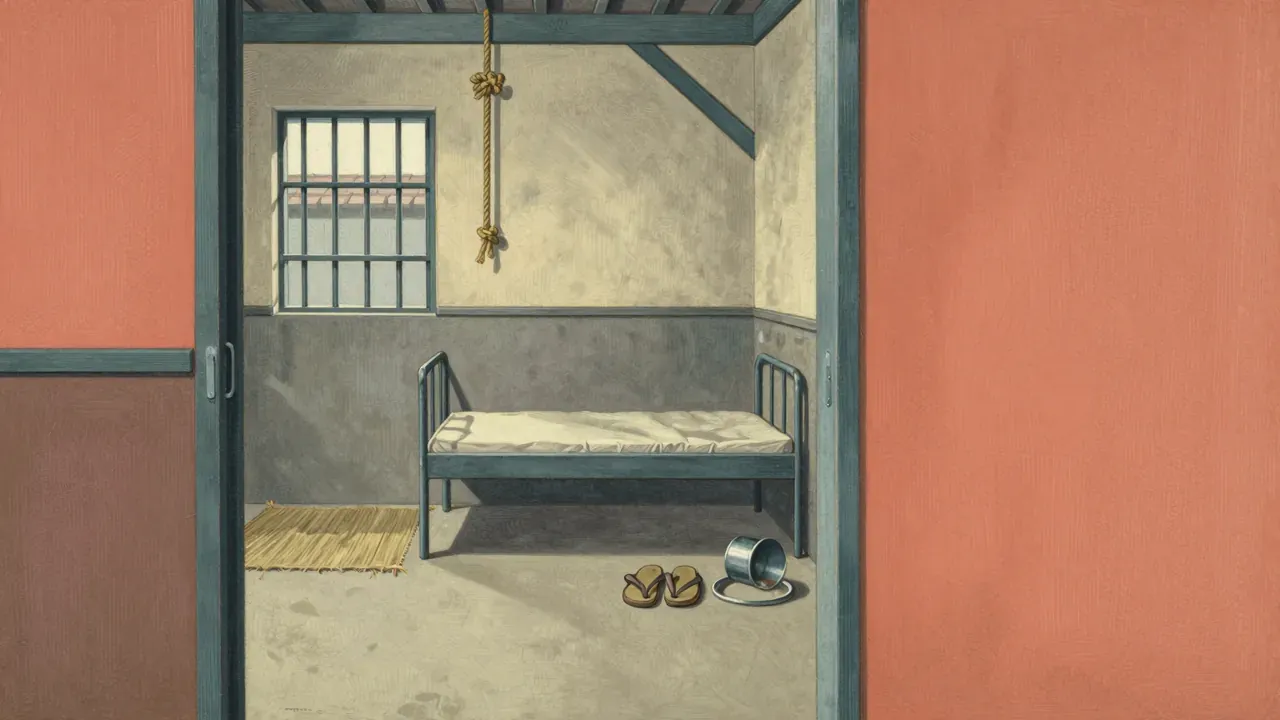
Samuel Fuller’s 1951 war film The Steel Helmet is the first American feature about the Korean War, made independently in ten days on a $104,000 budget. It follows a grizzled U.S. sergeant and a ragged patrol taking refuge in a Buddhist temple, confronting racism, command failure and moral compromise under fire. Ernest Miller’s cinematography and Fuller’s lean script prioritise psychological realism over spectacle. Though constrained by its production, the film remains a landmark for its immediacy, thematic rigour and refusal to flatter its subject — or its audience.

13:00

The Thick-Walled Room

Masaki Kobayashi · 1956

Masaki Kobayashi’s 1956 debut feature, completed in 1953 but delayed for three years due to its controversial subject, follows Japanese soldiers imprisoned in Sugamo Prison as Class B and C war criminals. Adapted by Kōbō Abe from real diaries, it avoids polemic in favour of quiet, cumulative scrutiny — of how coercion shapes action, how memory frays under confinement, and how justice functions when administered by the victor. With restrained performances, Kazuo Miyagawa’s unemphatic cinematography, and no musical score, it builds its argument through silence, repetition, and moral ambiguity.

13:00

The Thin Red Line

Terrence Malick · 1998

Terrence Malick’s 1998 return to filmmaking is a philosophical war film set during the Guadalcanal campaign. Eschewing narrative drive and military exposition, it lingers on interior states, natural imagery and fragmented voiceover to ask what war does to consciousness. Shot by John Toll in Queensland and the Solomon Islands, edited to a meditative rhythm and scored by Hans Zimmer, it features a large ensemble cast led by Jim Caviezel and Sean Penn. Though nominated for seven Academy Awards and awarded the Golden Bear, its resistance to convention divides viewers.

13:00

The Tin Drum

Volker Schlöndorff · 1979

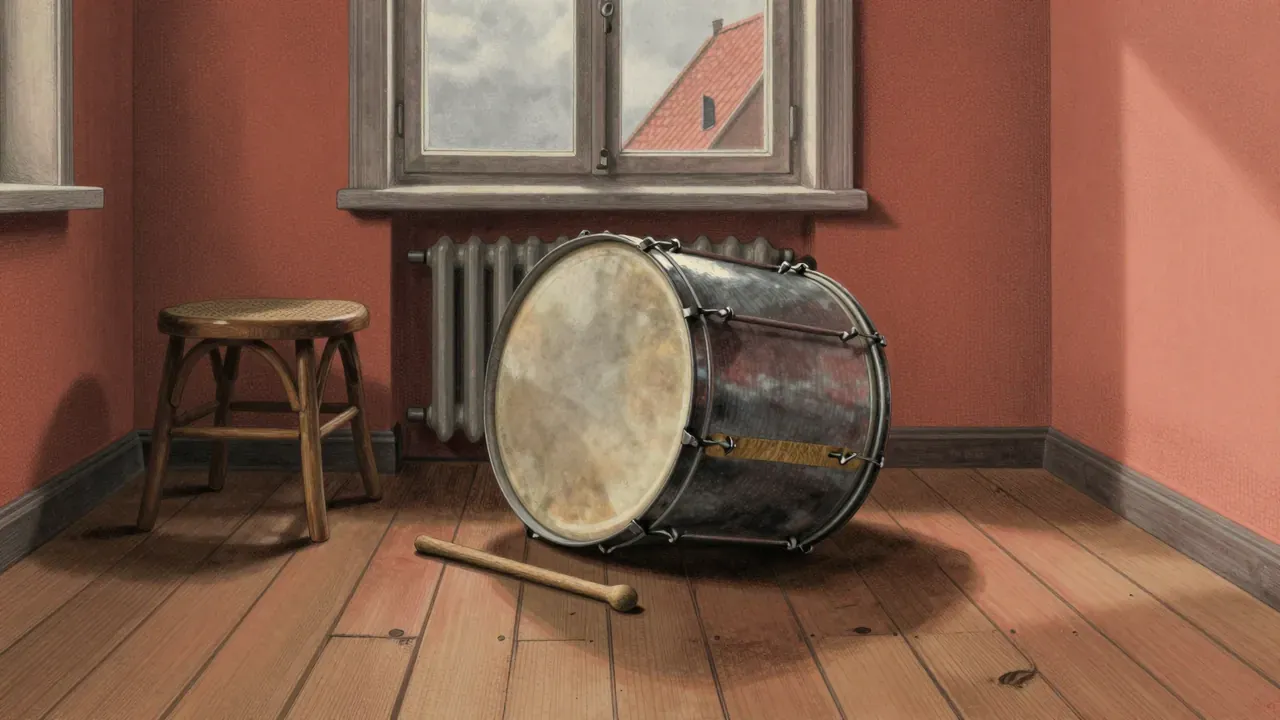
Volker Schlöndorff’s 1979 adaptation of Günter Grass’s novel follows Oskar Matzerath, a boy who stops growing at age three and uses his tin drum and glass-shattering scream to navigate Danzig through Nazism and war. Shot in Italian by Jadran Film, with cinematography by Igor Luther and music by Maurice Jarre, it won the Palme d’Or and the Academy Award for Best International Feature Film. Its power lies in sustained allegory, not exposition — a rigorous, unsentimental reckoning with complicity, memory and the body as historical archive.

13:00

This Happy Breed

David Lean · 1944

David Lean’s 1944 debut follows the Gibbons family across twenty years of peace and gathering storm in suburban London. Anchored by Robert Newton and Celia Johnson, it charts domestic life against national events — the General Strike, the rise of fascism, the abdication — not through speeches or spectacle, but through wallpaper, radio sets, and the weight of unspoken grief. Shot in muted Technicolor and edited with Lean’s signature temporal bleed, it is a film of accumulation: small details, repeated gestures, returning spaces. Its power lies in endurance, not revelation.

13:00

To Be or Not to Be

Ernst Lubitsch · 1942

Ernst Lubitsch’s 1942 To Be or Not to Be follows a Warsaw theatre troupe who use disguise, timing, and theatrical cunning to deceive the Gestapo. Starring Carole Lombard and Jack Benny, it balances farce with peril, treating performance as both profession and resistance. Rudolph Maté’s cinematography and Dorothy Spencer’s editing sustain its breakneck logic, while its themes—identity as costume, authority as mimicry—remain sharply relevant. Though some tonal shifts now feel abrupt, its rigour and restraint make it a landmark of satirical craft.

13:00

Twenty-Four Eyes

Keisuke Kinoshita · 1954

Keisuke Kinoshita’s Twenty-Four Eyes (1954) follows teacher Hisako Ōishi across twenty years on Shōdoshima island, from her arrival in 1928 to the postwar return to teaching in 1946. Using her twelve pupils as anchors, the film charts the erosion and renewal of communal life under militarism, poverty and loss. Hideko Takamine’s restrained performance, the unvarnished Shochiku photography and the episodic, season-bound structure build a portrait of endurance rooted in daily acts of care — not grand statements, but shared meals, remembered songs and a bicycle given back.

13:00

Walker

Alex Cox · 1987

Alex Cox’s 1987 film Walker tells the story of American mercenary William Walker’s 1855–57 invasion of Nicaragua—but reframes it through deliberate, jarring anachronisms (helicopters, Diet Coke, modern rifles) to draw direct parallels with US policy during the Contra War. Starring Ed Harris and scored by Joe Strummer, it was shot in Granada with Sandinista cooperation and edited in situ. Uncompromising in its politics and formal rigour, it rejects historical realism in favour of structural critique.

13:00

War and Peace

Sergei Bondarchuk · 1965

Sergei Bondarchuk’s War and Peace (1965–67) is a four-part, 432-minute adaptation of Tolstoy’s novel, produced by Mosfilm with unprecedented state support. Shot on Soviet 70mm stock, it deploys over ten thousand soldiers as extras, authentic period artefacts, and vast battlefield choreography to realise Tolstoy’s world—not his ideas. While lauded for its monumental realism and awarded the 1969 Oscar for Best International Feature, it streamlines the novel’s philosophical arguments and relies on physical presence over psychological nuance. Its value lies in endurance, not explication.

13:00

Westfront 1918

Georg Wilhelm Pabst · 1930

Georg Wilhelm Pabst’s 1930 German sound film Westfront 1918 follows four infantrymen on the Western Front in the final months of the First World War. Shot with documentary restraint and pioneering live trench audio, it depicts war as cumulative exhaustion rather than heroic action. Its power lies in physical detail — mud, collapsed trenches, field hospitals in ruined churches — not plot or character revelation. Banned by the Nazis as 'cowardly defeatism', it remains a key work of Weimar realism.

13:00

Wooden Crosses

Raymond Bernard · 1932

Wooden Crosses (1932), directed by Raymond Bernard, adapts Roland Dorgelès’s novel into a stark, unsentimental chronicle of French infantry life on the Western Front. Shot on location over real trenches, with veterans among its cast and meticulous sound design recreating battlefield acoustics, it follows a squad’s slow disintegration across rotations, patrols, and casualties. There are no heroes, no speeches, no score — only the weight of equipment, the texture of mud, and the quiet placement of wooden crosses. Its power lies in accumulation, not climax.

13:00

Ran

Akira Kurosawa · 1985

Akira Kurosawa’s 1985 epic reimagines King Lear as a Sengoku-period warlord’s collapse, grounded in Japanese history and his own artistic mortality. Shot across volcanic plains and ancient castles, it uses wide compositions, deliberate pacing, and Emi Wada’s award-winning costumes to build a world where chaos is not disorder but the inevitable residue of violence. With Tatsuya Nakadai’s monumental performance and Toru Takemitsu’s dissonant score, Ran sustains its 160-minute duration through material conviction rather than exposition — a film that trusts time, silence, and scale to carry meaning.

13:00

The Birth of a Nation

D. W. Griffith · 1915

D. W. Griffith’s 1915 silent epic pioneered cinematic grammar while propagating a violently racist revision of Reconstruction history. Adapted from Thomas Dixon Jr.’s The Clansman, it glorifies the Ku Klux Klan as saviours of white womanhood and Southern order. Though lauded for its editing, scale, and orchestral score, its depictions of Black Americans—many performed in blackface—are dehumanising fabrications that incited protest on release and continue to shape debates about film preservation, pedagogy, and responsibility.

13:00

The Skin

Liliana Cavani · 1981

Liliana Cavani’s 1981 adaptation of Curzio Malaparte’s novel *The Skin* depicts Naples in the immediate aftermath of Allied liberation, where survival depends on transaction, dignity is measured in kilos, and liberation feels indistinguishable from conquest. Starring Marcello Mastroianni and Burt Lancaster, it uses stark cinematography, dissonant music and unflinching vignettes to trace the corrosion of morality under occupation — not as breakdown but as system.

13:00

Top Gun

Tony Scott · 1986

A 1986 Paramount action film directed by Tony Scott, Top Gun follows naval aviator Pete ‘Maverick’ Mitchell through the Navy’s elite fighter weapons school. Built around real F-14 flight footage and a synth-heavy score, it prioritises kinetic clarity and visual rhythm over psychological depth or political nuance. Though critically mixed on release, its formal coherence and cultural resonance have secured its status as a defining artefact of 1980s studio filmmaking.

13:00

A Man Escaped

Robert Bresson · 1956

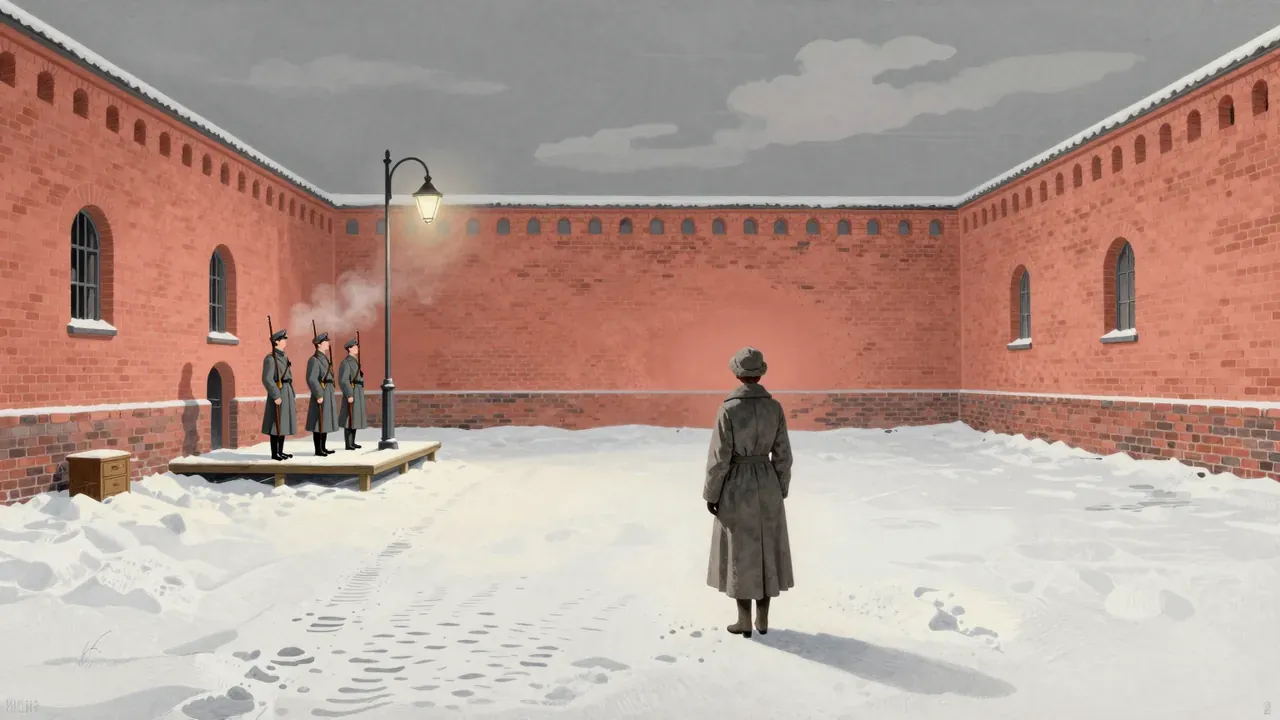
Robert Bresson’s 1956 docudrama follows a French Resistance fighter’s meticulous, solitary planning of an escape from Montluc prison in Lyon. Using non-professional actors, austere framing, and a rigorously controlled soundscape, it renders willpower as physical labour and time as accumulated effort — not as drama, but as form.

13:00

A Very Long Engagement

Jean-Pierre Jeunet · 2004

Jean-Pierre Jeunet’s 2004 film follows Mathilde, a young Breton woman who refuses to accept her fiancé’s death in the First World War. Using letters, archives, and dogged interviews, she reconstructs the fate of five soldiers condemned to no man’s land. Shot by Bruno Delbonnel and scored by Angelo Badalamenti, it balances tactile realism with poetic restraint, anchoring its wartime narrative in the quiet persistence of civilian life in 1920s France.

13:00

Arsenal

Oleksandr Dovzhenko · 1929

Oleksandr Dovzhenko’s 1929 silent film Arsenal reimagines the 1918 Kiev Arsenal Uprising as a mythic struggle, using expressionist imagery, non-linear editing, and stark physical performance. Shot by Danylo Demutskyi and edited by Dovzhenko himself, it privileges gesture over exposition and symbol over summary. Though demanding and historically dense, it remains a landmark of Ukrainian avant-garde cinema — less a history lesson than a visceral, rhythmic invocation of collective will.

13:00

Casablanca

Michael Curtiz · 1942

A 1942 Warner Bros. romantic drama set in Vichy-controlled Casablanca, where American expatriate Rick Blaine must choose between rekindling a wartime romance with Ilsa Lund and helping her husband, resistance leader Victor Laszlo, escape to continue fighting the Nazis. Directed by Michael Curtiz, written by Julius and Philip Epstein, Howard Koch and Casey Robinson, and starring Humphrey Bogart and Ingrid Bergman, it is a tightly constructed studio picture whose enduring power lies in its moral economy, disciplined craft and refusal to separate personal longing from political consequence.

13:00

Crimson Tide

Tony Scott · 1995

Crimson Tide is a 1995 action thriller directed by Tony Scott, starring Gene Hackman and Denzel Washington as rival officers aboard a U.S. nuclear submarine facing an ambiguous order to launch missiles. Set during a fictional Russian crisis, the film focuses on the ethical and procedural collision between experience and doctrine, played out in real time within the claustrophobic confines of the USS Alabama. With tight direction, restrained performances, and a score that pulses like a failing reactor, it sustains tension through dialogue, silence, and system failure — not spectacle.

13:00

Kagemusha

Akira Kurosawa · 1980

Akira Kurosawa’s 1980 epic follows a thief forced to impersonate the dying warlord Takeda Shingen to preserve clan stability. Shot in vivid colour and composed with rigorous symmetry, it traces the slow, fragile construction — and inevitable collapse — of political belief through gesture, silence, and shared illusion. Tatsuya Nakadai plays both men, distinguishing them not by voice or mannerism but by weight, stillness, and the space he occupies. The film ends at the Battle of Nagashino, where symbolism gives way to slaughter, and the kagemusha dies trying to retrieve a fallen banner.

13:00

Lawrence of Arabia

David Lean · 1962

David Lean’s 1962 epic follows T. E. Lawrence’s immersion in the Arab Revolt during the First World War. Peter O'Toole stars in a performance defined by restraint and volatility, supported by Freddie Young’s monumental Super Panavision 70 cinematography and Maurice Jarre’s evocative score. The film prioritises atmosphere over exposition, using vast, still landscapes to chart internal collapse and reinvention. Though rooted in history, it functions as a psychological portrait — of identity, allegiance and the cost of translation between worlds.

13:00

Red Cliff

John Woo · 2008

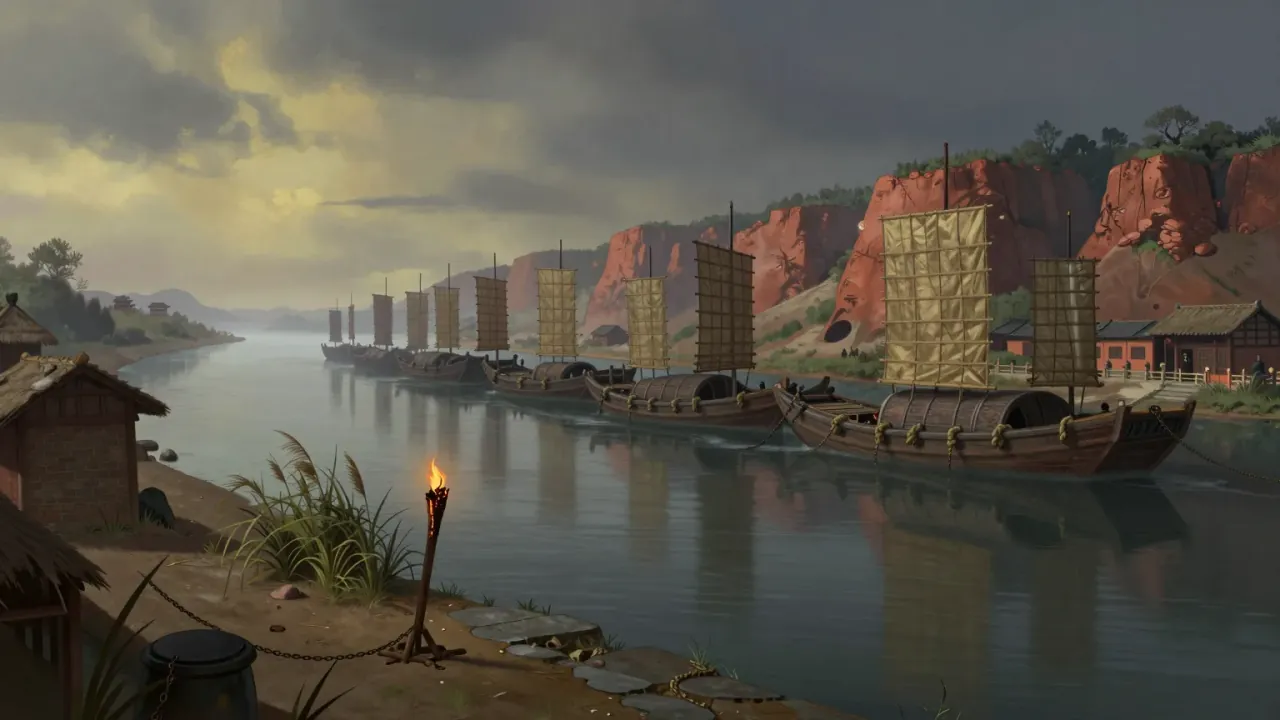
John Woo’s 2008–09 two-part epic Red Cliff adapts the Battle of Red Cliffs with deliberate historical latitude, prioritising psychological texture and tactical realism over strict fidelity. Shot across reservoirs and studios in China, it follows the fragile Sun–Liu alliance against Cao Cao’s imperial army, using wide compositions, restrained performances, and weather-driven strategy to ground myth in physical reality. The full 288-minute version demands—and rewards—attention to rhythm, gesture, and consequence.

13:00

Storm over Asia

Vsevolod Pudovkin · 1928

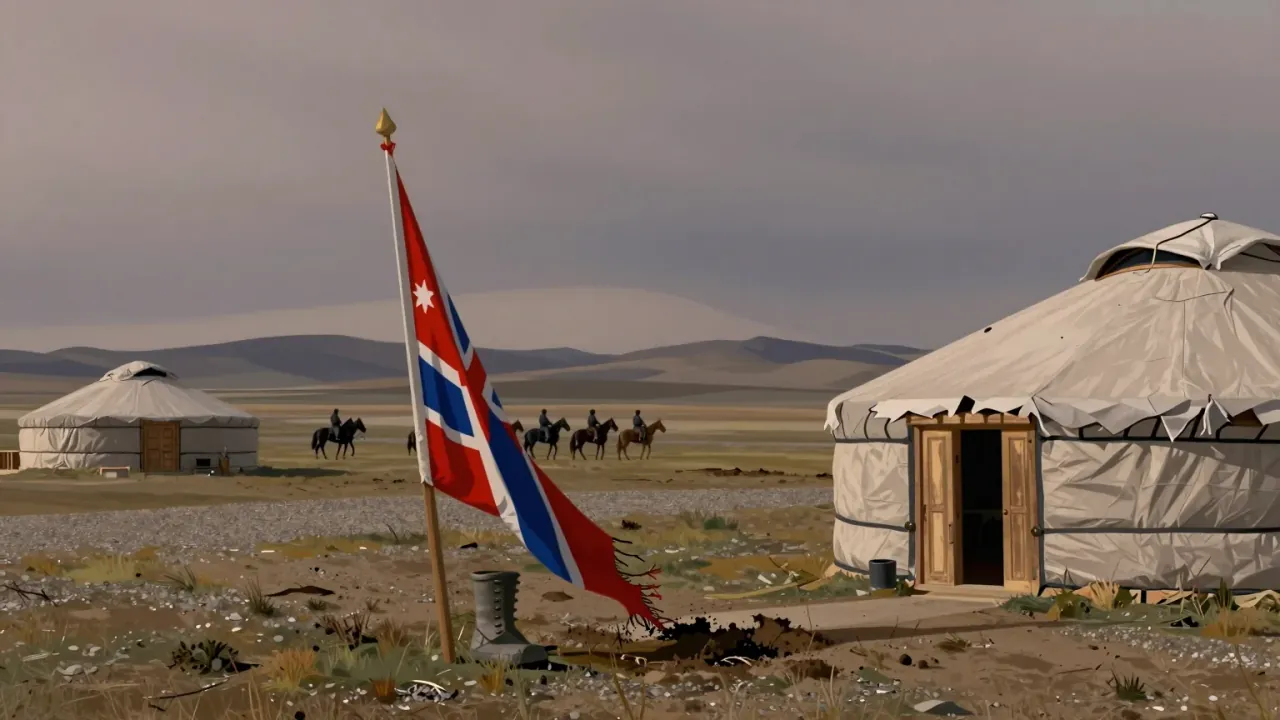
Storm over Asia (1928), directed by Vsevolod Pudovkin, is the final film of his revolutionary trilogy. Set in a fictionalised Mongolia under British occupation, it follows a Mongol trapper elevated to puppet ruler — then turned against his masters. Made by Mezhrabpom-Film with cinematography by Anatoli Golovnya, it uses real Cham dance footage and a tightly controlled visual style to argue that legitimacy is performative, and resistance begins when the performance is reclaimed.

13:00

The African Queen

John Huston · 1951

John Huston’s 1951 drama follows a Methodist missionary and a Canadian boat mechanic who convert a small steamboat into a torpedo vessel to attack a German gunboat in East Africa during the First World War. Shot partly on location in Uganda and the Belgian Congo, it stars Humphrey Bogart (who won Best Actor) and Katharine Hepburn. Its strength lies in restrained performances, Jack Cardiff’s unsentimental Technicolor, and a story that values incremental change over grand revelation — though its colonial framing remains structurally incomplete.

13:00

The Bridge on the River Kwai

David Lean · 1957

David Lean’s 1957 war drama follows British POWs forced to build a railway bridge for their Japanese captors in Thailand. At its centre is Colonel Nicholson, whose obsession with discipline and engineering excellence leads him to collaborate with the enemy — not out of weakness, but conviction. With Alec Guinness, William Holden and Sessue Hayakawa, it is a tightly wound study of pride, obedience and the porous line between order and complicity.

13:00

The Cranes Are Flying

Mikhail Kalatozov · 1957

Released in 1957 by Mosfilm, Mikhail Kalatozov’s The Cranes Are Flying follows Veronika, a young Moscow woman whose life fractures after the Nazi invasion. Her lover Boris goes to war, her parents die in an air raid, and she is pressured into marriage with his predatory cousin Mark. Through trauma, silence, and small acts of remembrance—the squirrel toy, Boris’s hidden note—the film charts her slow, unheroic return to life. It won the Palme d’Or in 1958 and remains a landmark of Soviet cinematic humanism.

13:00

The General

Buster Keaton, Clyde Bruckman · 1926

Buster Keaton’s 1926 film The General is a romantic comedy-war film set during the American Civil War, co-directed with Clyde Bruckman. Starring Keaton as a Southern railroad engineer, it follows his pursuit of a stolen locomotive and his estranged sweetheart across Oregon landscapes shot with period-accurate trains and practical stunts. Though poorly received on release, it is now widely regarded as a landmark of cinematic craft — precise, physically coherent, and emotionally restrained.

13:00

The Hurt Locker

Kathryn Bigelow · 2008

Kathryn Bigelow’s 2008 war thriller follows a U.S. Army bomb disposal team in Iraq, using procedural fidelity and sensory intensity to convey the physical and psychological toll of sustained combat. Written by Mark Boal from embedded experience, it prioritises immediacy over explanation, with Barry Ackroyd’s cinematography and Chris Innis’s editing sustaining relentless, close-quarters tension. Though acclaimed for its craft and awarded six Oscars including Best Picture and Best Director, its narrow focus has drawn criticism from veterans for omitting political and cultural dimensions of the conflict.
13:00

The Sound Barrier

David Lean · 1952

David Lean’s 1952 aviation drama follows a British aircraft magnate, his daughter, and two test pilots as they confront the physical and human limits of early jet flight. Written by Terence Rattigan and shot by Jack Hildyard, it balances procedural realism with restrained emotion, using sound, silence, and composition to convey the weight of progress. Though historically imprecise and structurally austere, its power lies in its unwavering focus on consequence over spectacle.
13:00

Top Gun: Maverick

Joseph Kosinski · 2022

Top Gun: Maverick is a 2022 action film directed by Joseph Kosinski, starring Tom Cruise as Pete 'Maverick' Mitchell, now a test pilot tasked with training a new generation of naval aviators for a high-risk mission. Built around real-flight cinematography, disciplined editing, and a tightly structured narrative, it prioritises physical storytelling and emotional legibility over thematic ambiguity. It earned widespread critical praise, five major awards including an Oscar for Best Sound, and $1.44bn at the global box office.

13:00

Zero Dark Thirty

Kathryn Bigelow · 2012

Zero Dark Thirty follows CIA analyst Maya across ten years of intelligence work leading to the 2011 raid on Osama bin Laden’s Abbottabad compound. Directed by Kathryn Bigelow and written by Mark Boal, it foregrounds process over personality, using chronology, repetition, and restraint to depict a hunt defined by uncertainty, attrition, and contested methods. Its strengths lie in its procedural fidelity and understated performances; its weaknesses stem from its refusal to contextualise torture or reckon with the broader consequences of the operation.

13:00

Apocalypse Now

Francis Ford Coppola · 1979

Francis Ford Coppola's 1979 film relocates Joseph Conrad's Heart of Darkness to the Vietnam War, sending Captain Willard up a river into Cambodia to assassinate Colonel Kurtz, a decorated officer who has gone rogue and established himself as a warlord among a private army. Shot by Vittorio Storaro on a production in the Philippines that ran a year over schedule, battered by a typhoon, a leading actor's heart attack and an unprepared, overweight Marlon Brando, it premiered unfinished at Cannes to win the Palme d'Or, and later took home Oscars for cinematography and sound on a budget of $31.5 million against an $83.5 million return.

13:00

Come and See

Elem Klimov · 1985

Elem Klimov's 1985 account of the Nazi destruction of Belarusian villages follows a teenage partisan recruit, played by Aleksei Kravchenko, through a descent that the director shot in sequence and largely with non-actors. Built from survivor testimony and a Belarusian novel, and delayed for years by Soviet censors who found the script too raw, it remains one of the starkest war films made anywhere.

13:00

Dr. Strangelove

Stanley Kubrick · 1964

Stanley Kubrick's 1964 black comedy, adapted from Peter George's thriller novel Red Alert, follows a rogue American general's order for a nuclear strike on the Soviet Union and the frantic, mostly useless efforts of the President, his aides and a visiting RAF officer, all three played by Peter Sellers, to call it back. Shot entirely at Shepperton Studios on Ken Adam's cavernous War Room set for $1.8 million, it grossed $9.4 million, won three BAFTAs, and is now ranked among the American Film Institute's greatest and funniest American films.

13:00

Full Metal Jacket

Stanley Kubrick · 1987

Stanley Kubrick's 1987 war film, shot entirely around London, splits into a Parris Island boot-camp section under a savage drill instructor and a Tet Offensive combat section in Hue. Built from Gustav Hasford's novel with Michael Herr, and carried by R. Lee Ermey's largely self-written performance, it argues that training, not combat, is where a soldier is actually made.

13:00

Grave of the Fireflies

Isao Takahata · 1988

Isao Takahata's 1988 adaptation of Akiyuki Nosaka's semi-autobiographical story follows siblings Seita and Setsuko trying to survive the final months of the Pacific War after the firebombing of Kobe and their mother's death. Takahata's first film for Studio Ghibli, it opens by revealing Seita is already dead and builds the rest of its account around a specific, unheroic failure rather than a rescue.

13:00

Paths of Glory

Stanley Kubrick · 1957

Stanley Kubrick's 1957 film, adapted from Humphrey Cobb's novel based on the real Souain corporals affair, follows Colonel Dax as he leads a suicidal attack demanded by his superiors and then defends three of his own men, chosen at random, against a court-martial for cowardice. Shot in Bavaria because its portrayal of the French military barred it from filming, or release, in France for fifteen years, the film starred Kirk Douglas, whose production company financed it on a budget reported near $935,000, and drew acclaim that only grew once France finally allowed it to screen in 1972.

13:00

The Battle of Algiers

Gillo Pontecorvo · 1966

Gillo Pontecorvo's 1966 film reconstructs the Algerian independence struggle against French rule between 1954 and 1957, following FLN fighter Ali La Pointe and the French colonel sent to break the resistance through mass arrest and torture. Cast almost entirely with non-professionals, many of whom had lived through the real events, and shot in a black-and-white newsreel style, the film won the Golden Lion at Venice and was banned in France for years for the discomfort of its subject.
13:00

The Deer Hunter

Michael Cimino · 1978

The Deer Hunter follows three steelworkers from a Russian-American mill town through a wedding, a hunting trip, the Vietnam War, and its long aftermath. Michael Cimino's film, shot partly in Thailand and built around Robert De Niro, Christopher Walken and John Savage, uses an unusually long, unhurried domestic opening to set up a war sequence built on captivity and Russian roulette, then spends its final third on men who came home changed in different, irreversible ways.