What it is
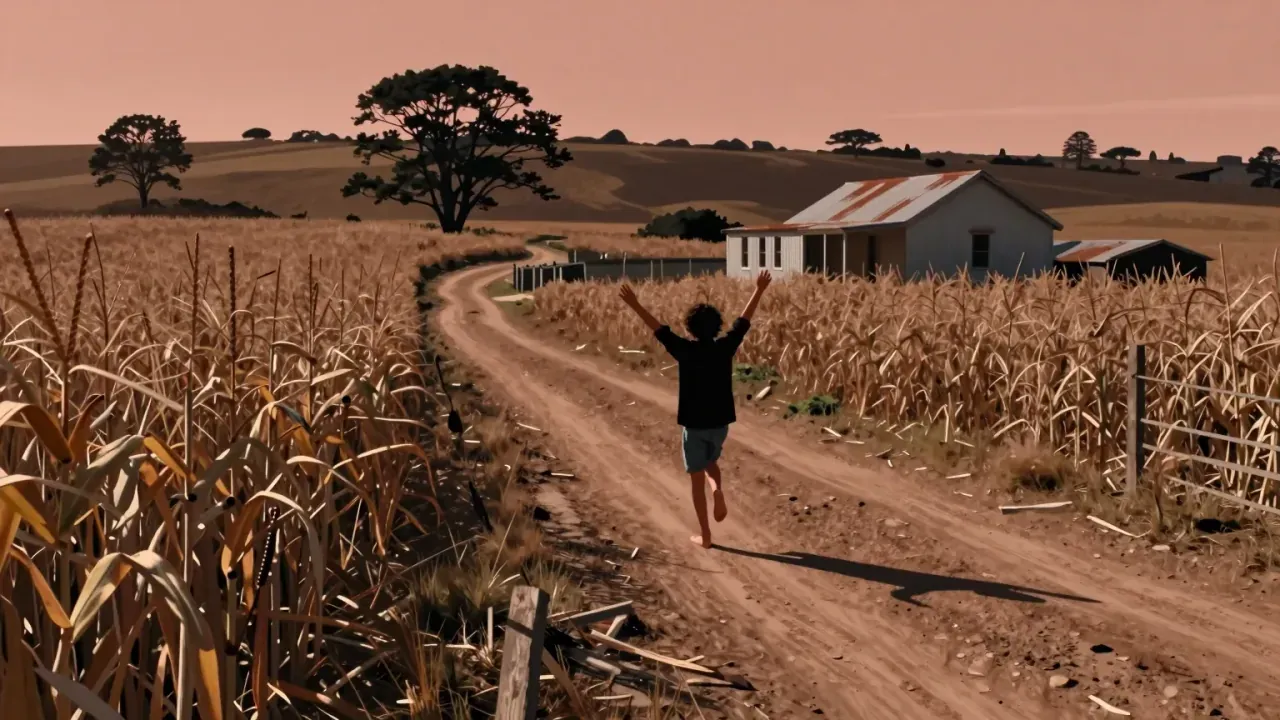
Hunt for the Wilderpeople is a New Zealand adventure film that sets out to balance juvenile rebellion with quiet grief, and bureaucratic absurdity with wilderness solitude. It adapts Barry Crump’s 1986 novel Wild Pork and Watercress but departs from its tone and structure, replacing Crump’s laconic, adult-centred bush yarn with a foster-child’s-eye view of belonging, authority, and makeshift family. Taika Waititi’s script frames the manhunt not as thriller mechanics but as escalating farce — a media-driven distortion of two people simply trying to stay together in terrain they barely understand. The film avoids moralising about state care, instead showing Ricky Baker’s repeated flight as reflex, not defiance; Hector’s gruffness as habit, not hostility. Its aim is not realism but emotional fidelity: to make the bush feel both threatening and tender, the law both ridiculous and inescapable, and the bond between a boy and an older man something earned in silence, shared meals, and unspoken fear. It treats adolescence and ageing not as stages but as parallel conditions of displacement.
How it works
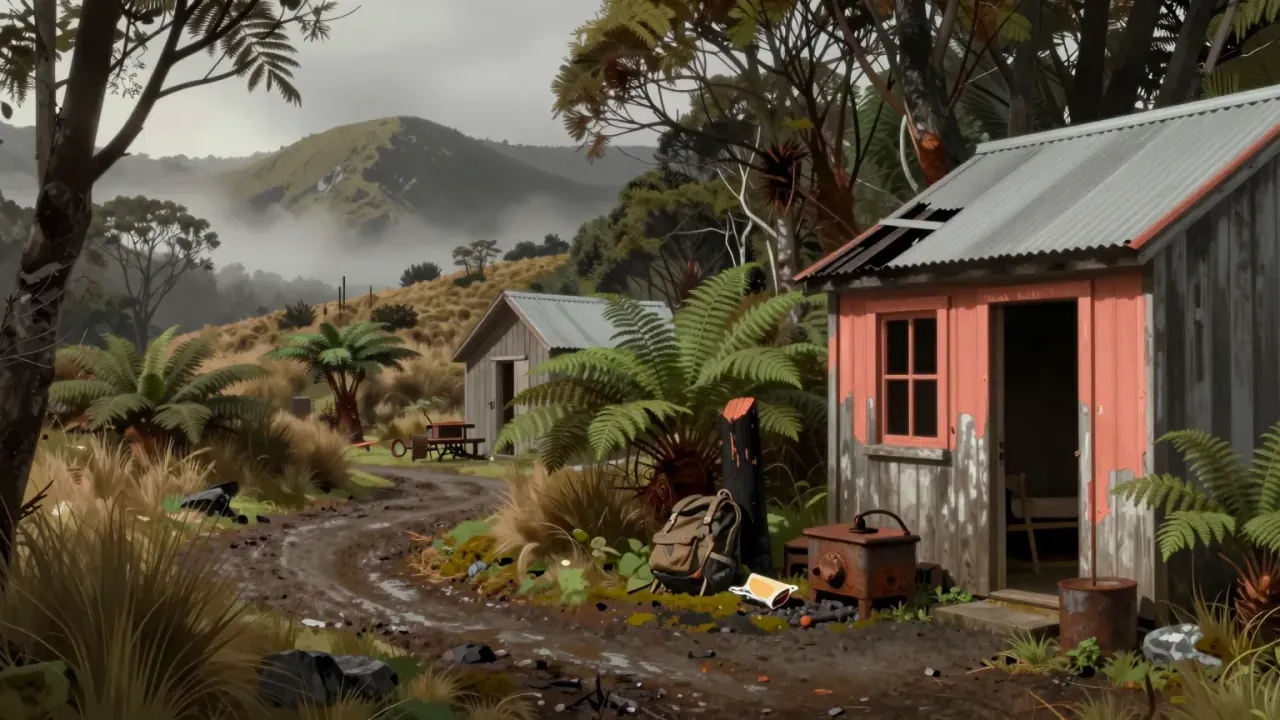
The story moves with deliberate, unhurried pacing, its plot turns driven less by incident than by Ricky’s misreadings and Hector’s weary recalibrations. Julian Dennison holds the film’s centre with physical specificity — his gait, his pauses, the way he grips a backpack strap — never overplaying Ricky’s vulnerability or wit. Sam Neill gives Hector minimal dialogue but maximum presence: a stillness that reads as reserve, then resilience, then reluctant love. Tom Eagles’ editing sustains this rhythm, favouring medium shots and long takes over cuts, letting scenes breathe even during chases or confrontations. The single-camera shoot across Central Plateau and Waitākere Ranges yields a landscape that feels lived-in, not picturesque — mist clings low, light stays flat, mud sticks. Moniker’s score blends acoustic guitar, choral fragments, and subtle synth pulses, underscoring mood without dictating it. Dialogue is sparse where it needs to be, dry where it lands, and never explanatory: exposition arrives through gesture, weather, or the weight of a pause.
What lands
What lands most firmly is the film’s tonal equilibrium — its ability to hold pathos and slapstick in the same frame without either cancelling the other. When Ricky scatters Bella’s ashes, the moment is solemn but not sentimental; when Hector shoots his dog Zag, the grief is real but not melodramatic. The supporting cast functions with precision: Rachel House’s Paula Hall is bureaucratically relentless but never cartoonish; Rima Te Wiata’s Bella lingers in memory precisely because she appears so briefly. The bush itself becomes a character with agency — indifferent, sometimes beautiful, often damp and inconvenient. Even the film’s visual grammar supports this: Gordon Willis is not involved, but the cinematography (by Lachlan Milne) keeps interiors dim and exteriors washed in cool, natural light, refusing to romanticise either domesticity or wilderness. The humour arises from mismatch — Ricky quoting rap lyrics in fern gullies, Hector reciting hunting lore while limping — never at the expense of dignity.
What does not
What does not land is the late introduction of Psycho Sam and the abrupt pivot into digital-age irony — his internet-enabled capture feels narratively convenient rather than earned, and undermines the film’s earlier commitment to analogue consequence. The final act’s escalation — the boar attack, the accidental shooting, Hector’s imprisonment — strains against the film’s established logic of small-scale cause and effect. Ricky’s sudden competence with firearms contradicts his earlier helplessness with basic survival tasks, and the resolution leans too heavily on external intervention rather than internal change. The satire of media cycles is sharp early on but blunts with repetition, especially in the newspaper montages that grow visually indistinguishable. Some performances falter under the weight of broad strokes: Rhys Darby’s cameo as a social worker, though brief, slips into caricature, and the hunters’ collective menace lacks texture. The film’s refusal to interrogate the foster system beyond Ricky’s personal experience leaves structural questions unanswered — not a flaw in itself, but a missed opportunity for deeper resonance.
The themes that matter
The themes that matter are those anchored in proximity: how care is built through repetition, not declaration; how safety is found in routine, not rescue; how identity forms in the space between what others call you and what you choose to carry. The film treats wilderness not as escape but as extension — a place where social scripts dissolve and new ones form slowly, through shared hunger, shared silence, shared exhaustion. Ageing and adolescence appear as mirrored states of adaptation: Ricky learns to read maps and track animals; Hector relearns patience and tenderness. Grief is handled as residue, not rupture — Bella’s absence is felt in empty chairs and half-packed bags, not monologues. The state appears not as villain but as inertia: well-meaning, poorly resourced, and utterly ill-equipped to recognise relational complexity. Even the film’s title — Hunt for the Wilderpeople — points to a collective misnaming, a failure of language that echoes wider failures of perception, particularly around children in care and men who do not perform emotion conventionally.
Who should watch it
This film is for viewers who value character over plot mechanics, quiet observation over exposition, and emotional honesty over catharsis. It suits those comfortable with understatement, with endings that settle rather than resolve, and with comedy that emerges from behaviour, not punchlines. It is not for viewers who require clear moral binaries, rapid narrative propulsion, or explicit thematic signposting. Those expecting a conventional coming-of-age arc or a critique of institutional failure may find its restraint frustrating. Fans of Waititi’s later, broader work — like Thor: Ragnarok — may miss the heightened stylisation. Parents seeking overt life lessons for children will find little didacticism here. The film assumes its audience can sit with ambiguity: that Ricky’s future with Kahu is hopeful but uncertain, that Hector’s return is tender but unremarkable, and that ‘family’ remains a verb, not a noun.
Is it worth your evening
Yes, it is worth your evening — not as escapism, but as recalibration. Its 101 minutes ask for attention, not distraction; its pleasures are cumulative, not immediate. You will not leave energised, but you may leave quieter, more attentive to the weight of small gestures. It rewards rewatching not for hidden clues but for shifts in emphasis — how a line spoken early gains meaning only after the ash-scattering scene, or how Hector’s limp changes the rhythm of a walk. Those who dislike slow-burn pacing or resist films where the stakes feel personal rather than global may find it slight. But its modesty is intentional, not impoverished. A viewer who values craft over spectacle, nuance over noise, and warmth over wit will find it generous. It does not demand belief — it invites recognition.