The time it pretends to be
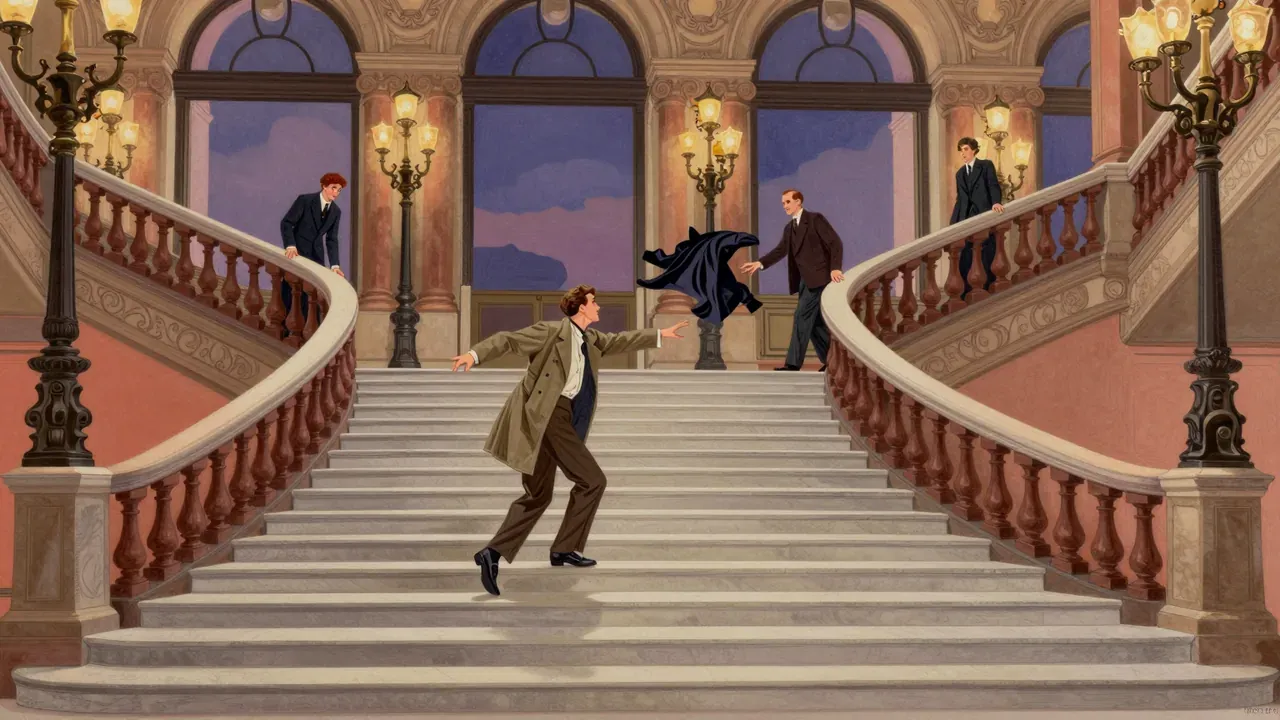
Le mariage de Chiffon is a French historical comedy made in occupied Paris during the winter of 1941–42, released on 1 January 1942. It adapts Sibylle Riqueti de Mirabeau’s 1894 novel — a light satire of provincial aristocratic manners and marital negotiation in the late Bourbon Restoration. Claude Autant-Lara directs with studied restraint: no slapstick, no caricatured villains, no political subtext overt enough to draw German scrutiny. The film tries to sustain charm through verbal precision, social observation, and the quiet friction between inherited privilege and emerging bourgeois pragmatism. Its tone is conversational, its pace deliberate, its stakes domestic rather than national. It does not aim to evade history — the war is absent only by omission, not denial — but to hold space for comedy as ritual continuity: courtship, inheritance, gossip, and the small triumphs of wit over protocol. The production itself was an act of persistence: shot at the Billancourt studios under Vichy oversight, with sets by Jacques Krauss evoking a softened, slightly faded 1820s — not a period recreation, but a stage-set memory of one.
The look of it
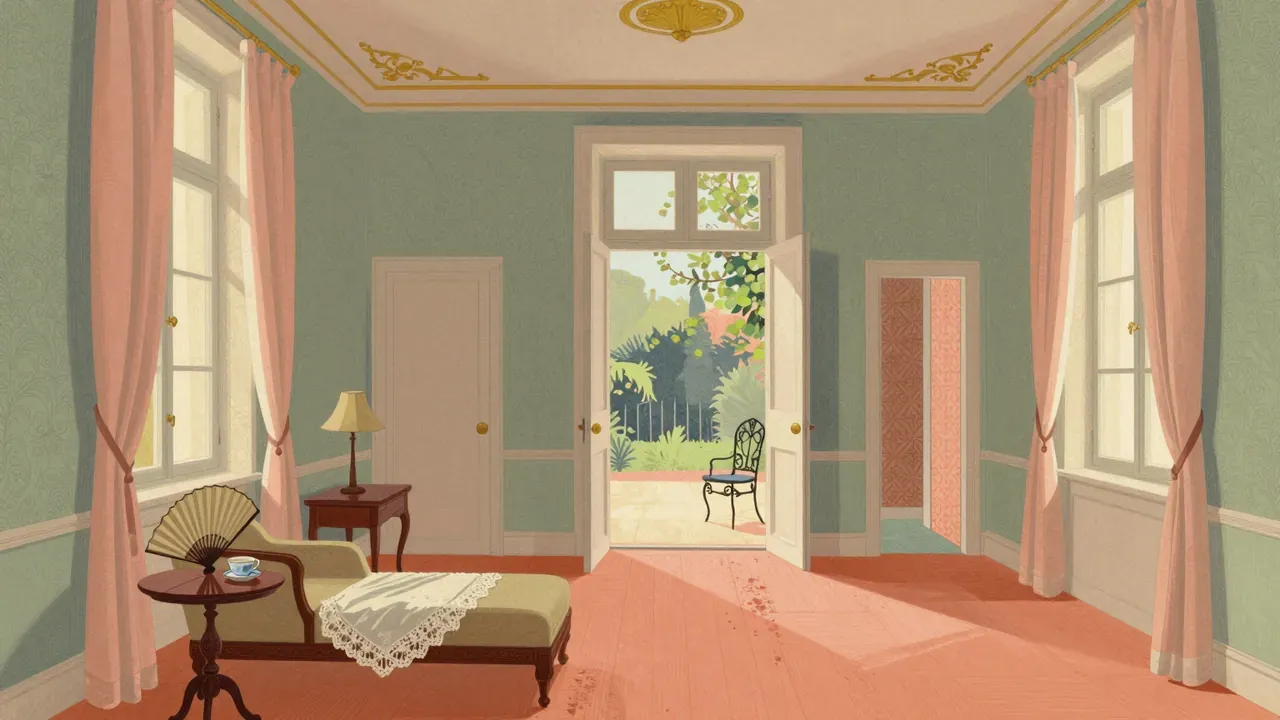
The story follows Corysande — called Chiffon — a spirited young woman whose father arranges her marriage to the aging, melancholic Duc d’Aubières, while she quietly favours Marc de Bray, a younger man of modest means but sharper sensibility. Odette Joyeux plays Chiffon with economical grace: her glances carry hesitation, amusement, and calculation in equal measure; she rarely raises her voice, yet dominates every scene she enters. André Luguet’s duc is physically still, his delivery measured, his dignity never mocked — a choice that deepens the film’s moral texture. Jacques Dumesnil’s Marc avoids romantic cliché: he is neither dashing nor defiant, but attentive and tactful. Jean Aurenche’s script keeps dialogue tight and class-inflected: servants speak in clipped phrases, nobles in circumlocutions that mask intention. Jacques Krauss’s sets are shallow, painted, deliberately theatrical — doorways frame characters like proscenium arches, and light falls evenly, avoiding chiaroscuro drama. There is no score credited; music appears only diegetically — a piano in a salon, distant street song — reinforcing the film’s refusal of emotional manipulation.
What sticks
What lands is the film’s tonal consistency: a sustained, low-key irony that treats social ritual as both absurd and necessary. Chiffon’s wedding is less a climax than a pivot — a moment where personal desire and familial duty negotiate terms without surrendering either. The minor characters function like calibrated instruments: Bernard Blier’s hotel boy delivers a single line with such weary exactness it lingers longer than any soliloquy; Émile Genevois’s officious clerk embodies bureaucracy as gentle farce, not menace. The film’s pacing — 103 minutes without a single cut faster than two seconds — works because it trusts the audience to register shifts in posture, pause, or inflection. Even the period detail feels earned: not ornamental, but functional — lace cuffs signal constraint, a half-unpacked trunk implies transience, a locked drawer hints at withheld information. There is no visual flourish, no ironic juxtaposition, no wink to the camera. What lands is the discipline of its own premise: that comedy need not accelerate to be sharp, nor simplify to be clear.
Where it holds back
What does not land is the film’s structural passivity. The plot advances only when others decide things for Chiffon: her father chooses the duc; her mother approves; the duc withdraws; Marc waits. Chiffon herself initiates nothing beyond polite resistance, and even that is muted — no outbursts, no letters, no flight. This restraint risks making her agency indistinguishable from acquiescence. The supporting romance between Sophie and Marcel Férez (Raymond Bussières) is introduced then dropped, its resolution implied off-screen, leaving emotional threads slack. Some performances falter under the weight of understatement: Georges Vitray’s Van Doren lacks definition, becoming merely decorative; Luce Fabiole’s brief appearance as a rival cousin registers no distinct motive or manner. The absence of musical scoring also exposes rhythmic thinness in transitional scenes — a carriage ride, a garden stroll — where silence becomes vacancy rather than atmosphere. These are not flaws of craft, but of conception: the film assumes a shared cultural fluency with Restoration-era social codes that modern viewers may lack, and offers no glossary, no irony, no corrective lens.
What it’s really about
The themes that matter are inheritance and consent — not just of property or title, but of voice, timing, and narrative authority. Chiffon inherits her name, her dowry, her chaperone, and her fiancé; what she negotiates is not whether to marry, but how to inhabit the role without erasure. The film treats marriage not as contract or sacrament, but as a social syntax — rules of address, precedence, gift-giving, and public demeanour — within which small acts of self-assertion become legible. Class is present not as conflict but as grammar: the duc speaks in subjunctives, Marc in conditionals, servants in imperatives — each register carrying unspoken power. There is also a quiet theme of temporal dislocation: the 1820s setting is a refuge, yes, but also a mirror — a time when France had recently reinstalled monarchy after revolution, much as 1942 France lived under a regime that styled itself as restorative. The film does not name this parallel, but sustains it through repetition: the same anxieties about legitimacy, succession, and surface decorum recur across decades, dressed in different waistcoats.
Who it’s for
This film is for viewers who value precision of tone over propulsion of plot — those comfortable with long takes, verbal economy, and comedy that accumulates in increments rather than detonates. It suits readers of early Stendhal or late Austen, or fans of Autant-Lara’s later, more politically edged work who want to trace his stylistic roots. It is not for viewers who require clear protagonists, escalating stakes, or emotional payoff within conventional arcs. Those expecting satire with bite — like Prévert’s scripts for Carné — will find Le mariage de Chiffon too deferential to its world; those seeking wartime allegory will find it too discreet. Someone who values physical performance above all — Chaplin, Keaton, Tati — may find Joyeux’s minimalism withholding. The verdict would shift if the film were shorter (by fifteen minutes), or if a subtle, period-appropriate score had been added to underscore rhythm without sentiment — but as it stands, its rigour is inseparable from its reserve.
Why it stays
Yes, it is worth your evening — provided you watch it as a chamber piece, not a narrative engine. Its 103 minutes unfold like a well-bound volume: each scene a paragraph, each pause a comma, each character a carefully chosen word. It rewards attention to gesture — the way Joyeux adjusts a glove before speaking, or Luguet folds a letter without reading it — not because these signify hidden meaning, but because they constitute the film’s language. You do not need fluency in French Restoration custom to follow it, but you do need patience with indirectness. Those who dislike films where characters talk around feeling rather than naming it will feel adrift. Others may find its calm a relief — a reminder that comedy need not shout to hold ground. It is not urgent, not revelatory, not technically innovative — but it is coherent, intelligent, and quietly insistent in its belief that civility, however fragile, is worth staging, even in hard times.