The shape of the day
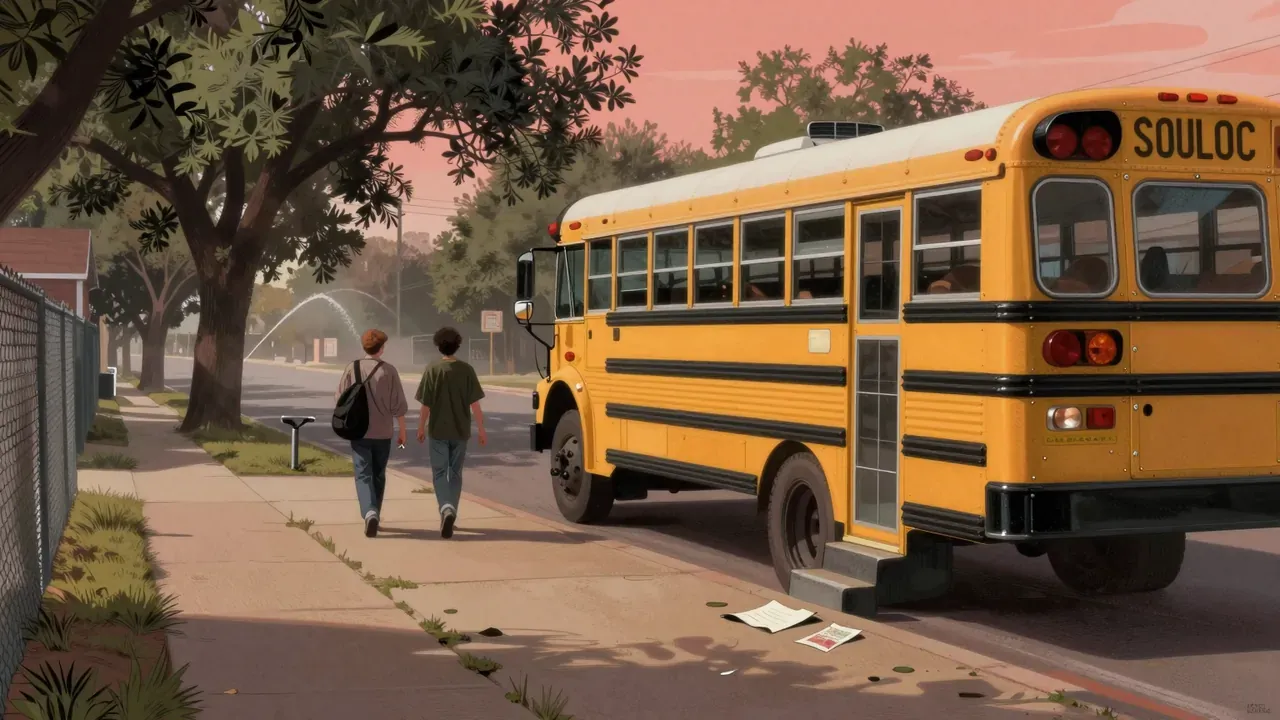
Dazed and Confused is a deliberately unstructured portrait of teenage life in a Texas town on the last day of school in 1976. It does not aim to tell a story with progression or resolution, but to evoke a mood, a rhythm, a set of social textures — the weight of expectation, the relief of release, the low-stakes intensity of being fifteen and unmoored. Richard Linklater builds it as a mosaic: no single protagonist anchors the film, and no plot thread dominates. Instead, he layers vignettes — hazing rituals, car cruises, pool-hall loitering, awkward flirtations — to suggest how time feels when you are waiting for something to begin, or for something to end. The film’s ambition is observational rather than narrative: to hold still long enough that the period details, the speech patterns, the hierarchies, and the silences all register as lived-in, not curated. It treats adolescence not as a phase to be overcome but as a condition with its own logic, duration, and dignity.
The look of it
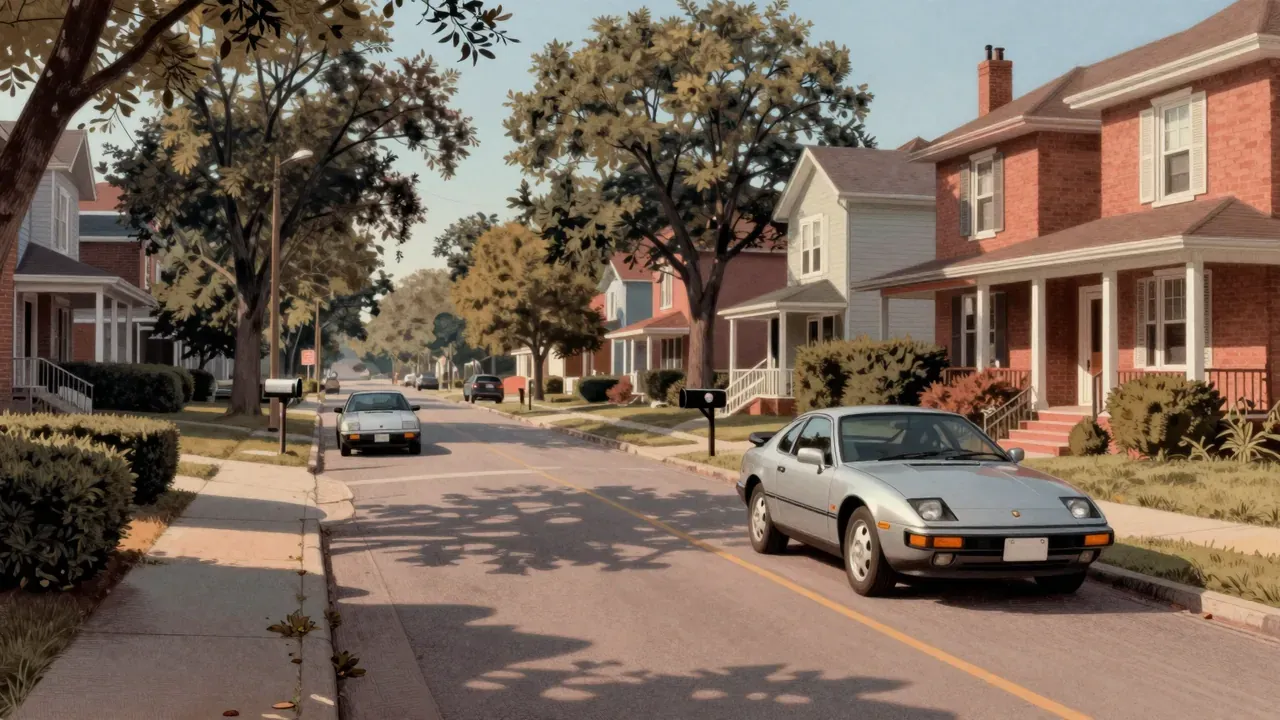
The film works through accumulation and consistency. Lee Daniel’s cinematography avoids Steadicam, favouring handheld and static setups that ground the action in physical space; interiors are lit with practical sources, exteriors bathed in flat, late-spring Texan light. Sandra Adair’s editing sustains a loose, breathing pace — scenes start mid-conversation, end before closure, and often overlap in sound. Performances are calibrated to feel unrehearsed: actors were encouraged to improvise, develop backstories, and rewrite lines, resulting in dialogue that lands with the uneven cadence of real speech. Jason London’s Pink carries quiet moral weight without sermonising; Matthew McConaughey’s Wooderson lingers like smoke — charming, vague, slightly dangerous. Parker Posey’s Darla exerts control through sheer presence, not volume. Alan Silvestri’s score is sparse; most of the music comes from diegetic sources — eight-tracks, car radios, jukeboxes — anchoring the film in its era without nostalgia’s gloss.
What sticks to the skin
What lands is the texture of the day: the sticky heat, the boredom that hums beneath every interaction, the way authority is both mocked and deferred to, the casual cruelty that passes for tradition. The hazing sequences do not shock because they are extreme, but because they are routine — administered with bureaucratic indifference by seniors who have just endured them themselves. The film captures how teenagers police each other more stringently than adults ever could. The cruising scenes work because they are never stylised; cars move at real speeds, conversations trail off, silences stretch. Even minor characters — the stoner trio at the Emporium, the football coach’s clean-living pledge, the girl who refuses to propose — register as fully inhabited, not functional. The soundtrack does not underscore emotion but locates it: ZZ Top, Aerosmith, and Foghat are heard as background noise, then as shared language, then as the only thing holding the evening together. This fidelity to atmosphere makes the film feel less like fiction and more like recovered footage.
Where the edges blur
What does not land is the attempt to imply thematic depth through repetition alone. Some plot threads — particularly those involving the intellectual trio — drift without consequence or development, their presence feeling structural rather than earned. A few performances remain undercooked: Ben Affleck’s O’Bannion lacks the menace his role requires, settling instead into caricature; Milla Jovovich’s character has little to do beyond looking detached, and her screen time feels like casting foresight rather than narrative necessity. The film’s refusal to resolve anything becomes, in its final third, indistinguishable from indecision: Mitch’s arc stalls after his paddling, and his tentative connection with Julie Simms dissolves into ambient noise rather than emotional payoff. There is no false climax, but neither is there a satisfying dispersal — the ending feels less like a conclusion and more like the tape running out. For viewers expecting cause-and-effect, the film’s patience reads as evasion.
What it says without speaking
The themes that matter are inertia, ritual, and the porous boundary between youth and adulthood. The film treats hazing not as aberration but as institutional memory — passed down, modified slightly, accepted without question. Wooderson embodies the failure of that boundary: he is old enough to drive, drink, and date high-schoolers, yet lives entirely within their orbit, his identity fused with theirs. Pink’s refusal to sign the pledge is not rebellion but exhaustion — he knows the promise is meaningless, not because he plans to break it, but because he knows no one will enforce it. The film also examines class as it operates informally: football players occupy one tier, intellectuals another, stoners a third — none speak the same language, yet all share the same parking lot, the same pool hall, the same sense of suspended time. There is no critique of this hierarchy, only its patient documentation.
Who it waits for
It is for viewers who value atmosphere over argument, who find pleasure in watching people exist without needing them to change, and who recognise adolescence not as preparation for adulthood but as a distinct, self-contained world. It rewards attention to gesture, to lighting, to the way a cigarette is lit or a cassette is flipped. It is not for those who require narrative propulsion, clear stakes, or character arcs — viewers who expect Mitch to ‘grow’ or Pink to ‘choose a side’ will leave frustrated. Those who associate 1970s teen films with satire or moral clarity — like Fast Times at Ridgemont High — may misread its restraint as indifference. Its cult status rests on specificity, not universality; if your adolescence bore no resemblance to suburban Texas in 1976 — in rhythm, in privilege, in soundtrack — the film may feel like overhearing a conversation in a dialect you never learned.
How it holds your time
Yes, it is worth your evening — provided you watch it without expectation of payoff and with willingness to sit inside its tempo. Its 98 minutes pass without hurry, but not without weight: the pacing is deliberate, not slack. It repays rewatching not for hidden clues but for new details — a shift in posture, a line delivered differently, the way light falls on a dashboard at 8.17 p.m. Those who find it dull are not wrong; they are simply outside its contract. The verdict would shift only if the film tried to be tighter, faster, or more conclusive — but that would break what makes it endure. Its value lies in its refusal to compress time, to explain, or to judge. It does not ask you to care about its characters as much as to remember what it felt like to be one — uncertain, unformed, and utterly certain of nothing except that the night is long and the radio is loud.