The look of it
The Shop Around the Corner is a 1940 Metro-Goldwyn-Mayer romantic comedy set in a Budapest leathergoods shop during the interwar years. It adapts Miklós László’s play Parfumerie, relocating its emotional architecture from stage to screen without altering its central conceit: two colleagues who bicker daily are unknowingly falling in love through anonymous letters. Ernst Lubitsch, both producer and director, treats the premise not as farce but as quiet social observation — a study in misrecognition, restraint, and the layered dignity of ordinary work lives. The film avoids caricature, even in its supporting roles, and declines to heighten conflict beyond what the characters’ own habits and silences permit. Its ambition is modest in scale but precise in aim: to render believable the slow, reversible turning of feeling between two people whose mutual irritation masks shared values, loneliness, and unspoken respect. It assumes viewers will attend to subtext over spectacle, and that emotional payoff resides not in revelation alone but in the recalibration of everyday gestures after knowledge arrives.
The rhythm of it
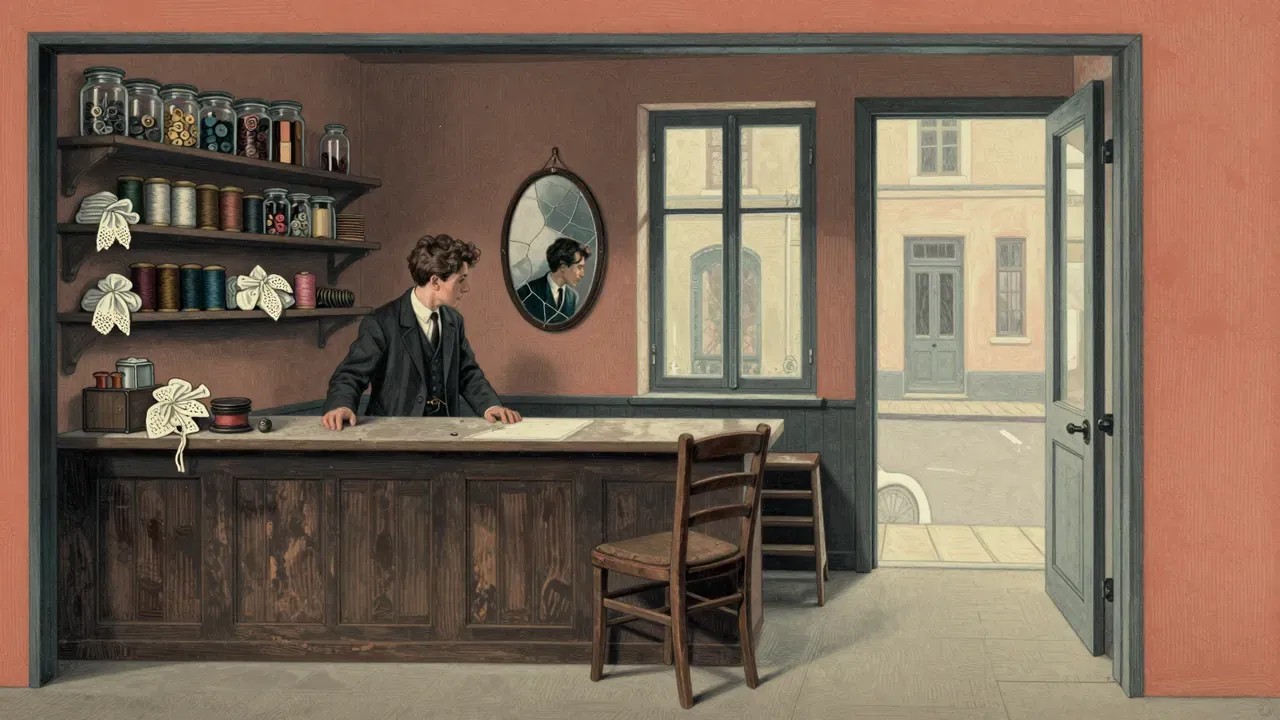
The story unfolds linearly, with scenes shot in sequence and anchored by William H. Daniels’s restrained cinematography — soft focus on faces, shallow depth in the shop interior, careful framing that keeps characters at conversational distance even when they argue. Margaret Sullavan and James Stewart underplay their antagonism so thoroughly that their early friction reads less as hostility than as nervous deflection; neither raises their voice, and both hold pauses like held breath. Frank Morgan’s Matuschek carries the film’s moral weight without melodrama, his breakdown conveyed in stillness and a single line about growing old. Samson Raphaelson’s script preserves the play’s dialogue-driven structure but tightens its rhythms, letting silence do work between sentences. Werner R. Heymann’s score is discreet, underscoring only where speech falters. Gene Ruggiero’s editing sustains tempo without urgency — cuts land on reactions, not actions. The production design, informed by Henry Nordlinger’s research, treats the shop as a character: cluttered but orderly, worn but cared for, its inventory a catalogue of middle-class aspiration and endurance.
The turn of it
What lands most firmly is the film’s fidelity to emotional logic. Kralik and Novak’s correspondence feels real because it is never idealised: their letters are tentative, self-conscious, slightly pedantic, and occasionally awkward — precisely how people write when trying to impress someone they’ve never met. Their eventual recognition is not climactic but cumulative, built across glances, corrections of tone, and small reversals of habit — Kralik offering Novak his coat, Novak hesitating before speaking her mind. The shop staff function as a coherent ensemble, each given a clear rhythm and moral position: Pirovitch’s kindness, Pepi’s ambition, Vadas’s duplicity, Flora’s quiet competence. Even the snow — thirty tons of shaved ice — serves narrative purpose: it marks time, signals Christmas as both deadline and threshold, and visually isolates the characters in moments of decision. Lubitsch’s direction refuses to underline meaning; instead, he trusts the audience to notice when a character stops adjusting their cufflinks, or when a letter is reread twice before being folded.
The strain of it
What does not land is the film’s structural reliance on coincidence as narrative engine. Matuschek’s mistaken firing of Kralik hinges entirely on his unfounded suspicion — plausible psychologically, but narratively thin, since no prior scene establishes why he would fixate on Kralik rather than any other male employee. The resolution of that plotline arrives abruptly, with the private investigator’s report delivered offhand, leaving little room for Matuschek’s grief or shame to settle. Similarly, Novak’s admission that she feigned irritation to attract Kralik feels retroactive, unsupported by earlier behaviour — her earlier barbs lack the performative edge that would foreshadow such strategy. The film’s resistance to exposition means some motivations remain opaque: why Kralik chooses anonymity, why Novak trusts a stranger enough to agree to meet, why Matuschek never questions Vadas despite his obvious charm and access. These gaps are not ambiguities but omissions — places where the script assumes emotional shorthand the viewer may not share.
The weight of it
The themes that matter are those embedded in routine: the dignity of clerical labour, the quiet violence of assumption, and the way class shapes both aspiration and self-concealment. The shop is not backdrop but microcosm — its hierarchy (owner, senior clerk, junior staff, delivery boy) mirrors wider social structures, yet its internal ethics operate independently of wealth or status. Kralik’s pride lies in his knowledge of leather grain and customer psychology, not promotion; Novak’s ambition is to be taken seriously, not to rise above her station. The film treats letter-writing as an act of class mobility — not economic, but cultural — where grammar, reference, and restraint become credentials. Loneliness is rendered not as isolation but as misalignment: Kralik and Novak are surrounded by people yet speak only to one person who listens without judgment. The Christmas setting is not sentimental but functional: it compresses time, raises stakes, and forces decisions that daily life permits to drift. There is no grand political statement, only the steady pressure of ordinary life under economic uncertainty and personal doubt.
The demand of it
This film rewards viewers who value patience, subtlety, and the accumulation of small truths over plot velocity or visual novelty. It suits those accustomed to pre-1950 studio craftsmanship, particularly fans of Lubitsch’s later work or of mid-century American romantic comedies that treat dialogue as action. It is not for viewers who require clear antagonists, escalating stakes, or rapid-fire comic timing — the humour is dry, situational, and often delayed, landing only after reflection. Those expecting the heightened physicality of Chaplin or the verbal dexterity of Hawks will find its rhythms too measured. Nor does it serve viewers seeking thematic clarity: its ideas about class, gender, and communication are implied, not argued. A viewer who dislikes long takes, static framing, or performances that withhold rather than project will feel distanced. The verdict shifts if the film were re-cut for modern pacing or if its dialogue were amplified with irony — but as it stands, its virtues are inseparable from its slowness.
The length of it
Yes, it is worth your evening — provided you watch it without distraction and without expectation of momentum. Its ninety-nine minutes pass with the weight and texture of real time, and its emotional resonance deepens with attention to gesture, pause, and inflection. It repays rewatches: the second viewing reveals how much is established in glances, how carefully Lubitsch blocks movement to signal shifting power, how every supporting performance reinforces the film’s thesis about collective dignity. It is not escapist, nor is it demanding in the way of experimental or avant-garde work — its accessibility lies in its humanity, not its simplicity. Those who dismiss it as ‘old-fashioned’ mistake form for content; its concerns — miscommunication, professional identity, the courage of vulnerability — remain current. The film asks only that you sit still, listen closely, and trust that something true can happen between two people in a shop, over weeks, in whispers and silences.