filmbriefs
Topic

Directing

The job that gets the credit, whatever the division of labour.

148
in film
13:00
average
1924 min
in total
168
across the network
Directing across the network →
All briefs148
13:00

A Colt Is My Passport

Takashi Nomura · 1967

Takashi Nomura’s 1967 yakuza noir follows contract killer Shuji Kamimura as he navigates a collapsing web of yakuza betrayals after a botched hit. With precise, unhurried direction and Joe Shishido’s stoic performance, the film treats survival as a series of calibrated actions — installing a second brake, digging a ditch, building a bomb — rather than a psychological journey. Its power lies in functional coherence, not thematic elaboration.
13:00

A Constant Forge

Charles Kiselyak · 2000

A two-hundred-minute documentary portrait of John Cassavetes, assembled from interviews and archival footage. It focuses on his working process — rehearsal, editing, directing — rather than biography or filmography. Featuring Ben Gazzara, Gena Rowlands, Peter Falk, Sean Penn and others, it treats filmmaking as embodied resistance, refusing summary or resolution.

13:00

A Story of Floating Weeds

Yasujirō Ozu · 1934

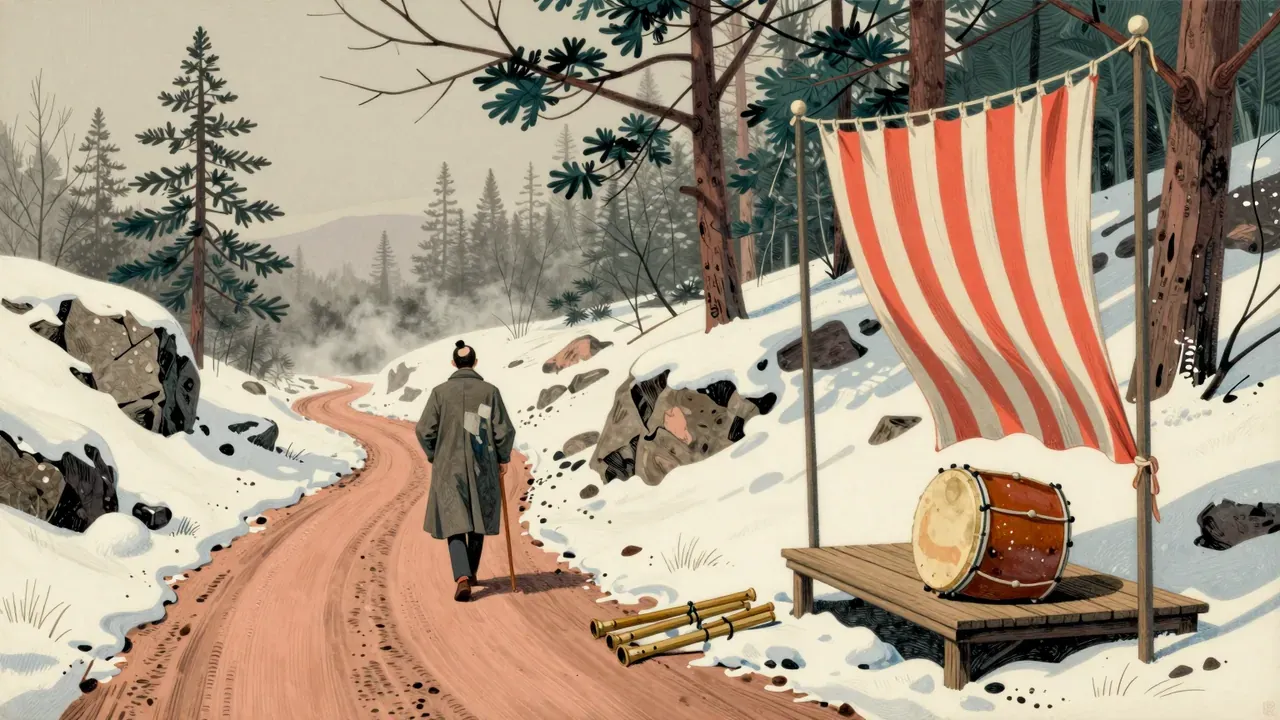
A Story of Floating Weeds (1934) is Yasujirō Ozu’s silent drama about an ageing kabuki actor who revisits a provincial town to see the son he abandoned years earlier. With minimal intertitles and a restrained visual style, the film traces quiet tensions between duty and desire, permanence and transience, across a travelling troupe and a rooted family. Shot by Hideo Shigehara and edited by him, it relies on composition, rhythm, and understated performance rather than exposition or climax.

13:00

Adventures of Zatoichi

Kimiyoshi Yasuda · 1964

The ninth Zatoichi film finds the blind masseur stepping into a town gripped by bureaucratic corruption and quiet desperation. He does not seek conflict but cannot avoid it — and when he draws his sword, it is never to win, but to weigh. With Shintarō Katsu at peak control and Kimiyoshi Yasuda framing each scene like a scroll painting, Adventures of Zatoichi is a study in restraint: in violence, in revelation, in what a man owes the world when no one is watching.

13:00

All These Women

Ingmar Bergman · 1964

Ingmar Bergman’s 1964 comedy All These Women is a stylised, colour-saturated parody of artistic biography and authorial myth-making. Set over four days at a summer villa, it follows a biographer unable to meet his subject — a cellist surrounded by lovers, each performing a version of devotion. With Sven Nykvist’s precise cinematography and Erik Nordgren’s waltz-and-dissonance score, the film sustains a tone of elegant, unrelenting artifice. It is among Bergman’s few comedies, and his first in colour — a formal departure that underscores its thematic preoccupation with surface, performance, and the unreliability of memory.

13:00

Badlands

Terrence Malick · 1973

Terrence Malick’s 1973 debut is a stylised, time-suspended retelling of the Starkweather–Fugate killings, starring Martin Sheen and Sissy Spacek. Shot on a $300,000 budget in Colorado, it uses sparse dialogue, hypnotic repetition, and Tak Fujimoto’s flat, wide compositions to construct a fairy-tale logic around murder and flight. Holly’s detached narration, Orff’s Gassenhauer, and the vast, indifferent landscape all serve a single vision: human action as pattern, not pathology.

13:00

Bob le flambeur

Jean-Pierre Melville · 1956

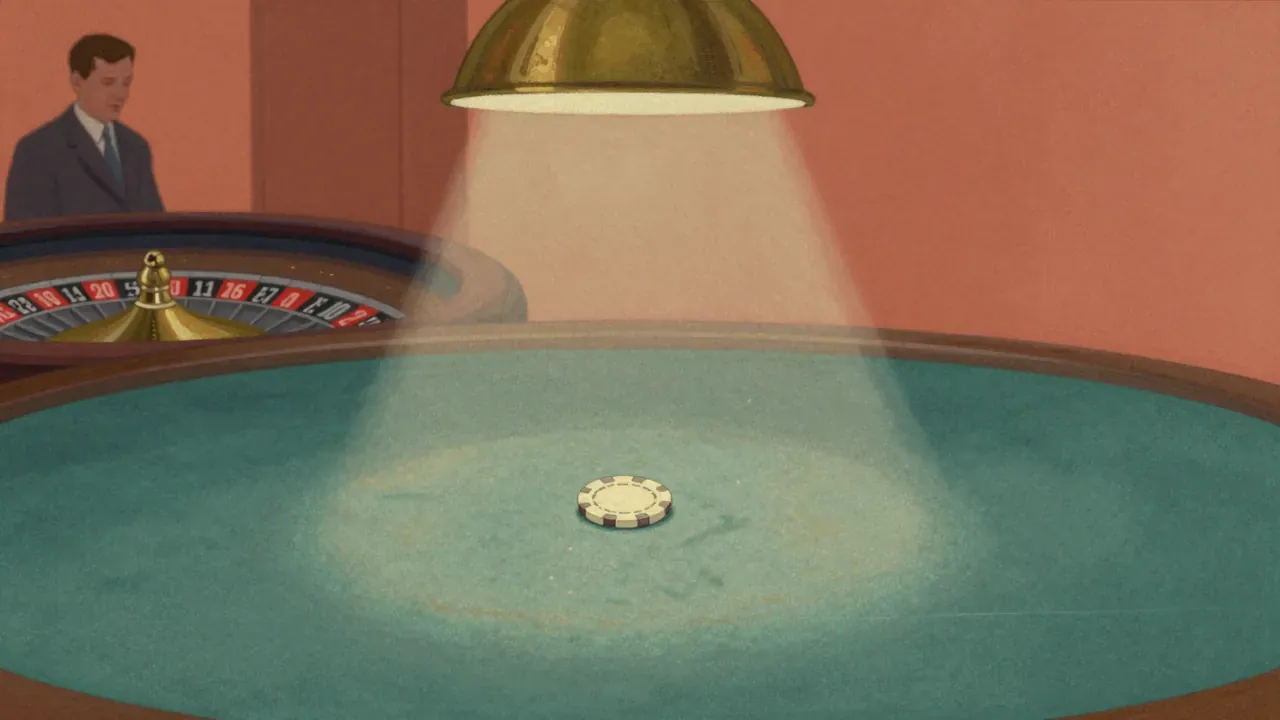
Jean-Pierre Melville’s 1956 heist film follows ageing gambler Bob as he plans a raid on a Deauville casino. Shot on location in Paris and Deauville by Henri Decaë, it moves with unhurried precision, treating criminality as habit rather than transgression. Its influence on the French New Wave stems less from innovation than from its disciplined use of space, silence, and repetition. Roger Duchesne anchors the film with quiet authority; the heist fails not through chaos but through Bob’s fatal, human lapse — losing track of time at the roulette table. A film of tone over twist, form over function.

13:00

Buchanan Rides Alone

Budd Boetticher, Harry Joe Brown · 1958

Buchanan Rides Alone (1958) is a tightly wound Western starring Randolph Scott as a lone drifter caught in a corrupt border town run by the Agry family. Directed by Budd Boetticher and Harry Joe Brown, written by Charles Lang, and shot by Lucien Ballard, it uses sparse dialogue, confined spaces, and deliberate pacing to explore jurisdiction, consent, and quiet resistance. At 78 minutes, it prioritises behavioural precision over plot escalation, anchoring its themes in posture, framing, and silence.

13:00

Carl Th. Dreyer: My Metier

Torben Skjødt Jensen · 1995

Torben Skjødt Jensen’s 1995 documentary examines Carl Theodor Dreyer’s filmmaking practice through interviews with collaborators, archival material, and voiceover readings of his notes. It focuses on method — rehearsal, lighting, editing, negotiation — rather than biography or interpretation, assuming prior knowledge of Dreyer’s major works.

13:00

Circus Angel

Albert Lamorisse · 1965

Albert Lamorisse’s 1965 Circus Angel follows a burglar who joins a travelling circus to evade arrest but continues stealing in his spare time, all while navigating its fragile community and tentative romance. Shot in France with a restrained, observational style, it uses fantasy not as spectacle but as a lens for ethical ambiguity and transient belonging. Though its loose structure and muted romance divide opinion, its visual cohesion and tonal discipline make it a distinctive, unhurried work of mid-century arthouse cinema.

13:00

Comanche Station

Budd Boetticher, Randolph Scott · 1960

A retired Texas Ranger tracks a Comanche raiding party to rescue a woman abducted years earlier. Joined by two morally divergent men, he crosses hostile terrain toward an uncertain settlement — all in 74 taut, unadorned minutes. Directed by Budd Boetticher and starring Randolph Scott, it is the penultimate film of the Ranown cycle: lean, taciturn, and resolutely uninterested in explaining itself.

13:00

Contempt

Jean-Luc Godard · 1963

Jean-Luc Godard’s 1963 Contempt adapts Moravia’s novel into a self-aware drama about a playwright whose marriage unravels during the fraught production of a film version of the Odyssey. Shot in Rome and Capri, it stars Brigitte Bardot and Michel Piccoli, with Fritz Lang playing himself. The film interrogates authorship, fidelity, and the commodification of art — using form, colour, and silence as its primary arguments.

13:00

Cruel Gun Story

Takumi Furukawa · 1964

Takumi Furukawa’s 1964 Cruel Gun Story follows ex-convict Joji Togawa as he leads a heist for a yakuza boss, only to be betrayed and drawn into escalating violence. Starring Joe Shishido and Chieko Matsubara, it is a tightly wound crime film grounded in moral exhaustion rather than glamour or catharsis — its power lies in its restraint, its downfall in its late departure from that discipline.

13:00

Day for Night

François Truffaut · 1973

François Truffaut’s 1973 film Day for Night chronicles the chaotic, tender, and stubbornly ordinary making of a forgettable melodrama. Shot in Nice on a repurposed Paris street set, it follows director Ferrand (Truffaut) and his international cast and crew through accidents, affairs, and technical hiccups. With Pierre-William Glenn’s unshowy cinematography and Georges Delerue’s restrained score, it privileges process over personality and collective resilience over individual revelation. It won the 1974 Academy Award for Best International Feature Film.

13:00

Double Suicide: Japanese Summer

Nagisa Ōshima · 1967

Double Suicide: Japanese Summer (1967), directed by Nagisa Ōshima, is a stark, symbol-laden drama in which a young woman named Nejiko is imprisoned by yakuza after witnessing them unearth buried weapons. Stylised rather than realistic, it uses theatrical roles (Televi, Oni, Omocha), flat lighting by Yasuhiro Yoshioka, and a dissonant score by Hikaru Hayashi to examine coercion, gendered control, and the banality of violence. With no exposition or psychological backstory, it relies on repetition, gesture, and spatial constraint to make ideology visible — not as idea, but as practice.

13:00

Dragon Gate Inn

King Hu · 1967

King Hu’s 1967 Dragon Gate Inn is a foundational wuxia film set in 15th-century Ming China, centred on a group of martial artists defending an exiled official’s family at a remote desert inn. Shot in Taiwan with Hua Hui-ying’s austere cinematography and edited by Chen Hung-min for rhythmic precision, it treats action as structural logic rather than flourish. Its themes—fidelity, jurisdiction, restraint—are enacted, not explained. Though lean in character depth and historical context, its formal control and spatial intelligence make it a benchmark of genre discipline.

13:00

Dressed to Kill

Brian De Palma · 1980

Brian De Palma’s 1980 neo-noir thriller follows a housewife’s murder and a call girl’s investigation, using Hitchcockian suspense to dissect gender, repression, and perception. Michael Caine, Angie Dickinson, and Nancy Allen anchor a tightly constructed plot shot by Ralf D. Bode and scored by Pino Donaggio. While lauded for its craft and box-office success, its portrayal of trans identity remains its most enduring point of contention.

13:00

Eastern Condors

Sammo Hung · 1987

Sammo Hung’s 1987 Eastern Condors transplants the American commando-mission template into Hong Kong action cinema, following twelve convicts dropped into Vietnam to destroy a missile bunker. Directed by Hung and choreographed by him and Yuen Woo-ping, it prioritises physical storytelling over narrative nuance: stunts, timing, and ensemble coordination anchor the film, while its geopolitical framework remains functional, not interrogated. Shot in the Philippines, scored by Jonathan Lee, and released by Orange Sky Golden Harvest, it is a work of disciplined genre translation — earnest, unshowy, and built for the body before the mind.

13:00

Empire of Passion

Nagisa Ōshima · 1978

Nagisa Ōshima’s 1978 French-Japanese co-production Empire of Passion adapts a novel by Itoko Nakamura into a stark, psychologically rigorous kaidan. Set in 1895 rural Japan, it follows Seki and Toyoji, whose affair leads to the murder of her husband — and the subsequent, inescapable haunting that follows. Shot by Yoshio Miyajima and scored by Tōru Takemitsu, the film rejects gothic ornament in favour of austere composition, deliberate pacing, and moral weight. It premiered at Cannes, where Ōshima won Best Director.

13:00

Fårö Document 1979

Ingmar Bergman · 1979

Ingmar Bergman’s 1979 documentary observes daily life on Sweden’s Fårö island with absolute restraint: no narration, no music, no interviews, no explanation. Shot by Arne Carlsson for Cinematograph, it records fishing, farming, schooling, and worship in unhurried, uninflected takes. Its power lies in duration and precision — not in what it reveals, but in how it trains attention on the ordinary.

13:00

Fearless Hyena Part II

Lo Wei · 1983

Fearless Hyena Part II (1983) is a fractured Hong Kong martial arts film directed by Lo Wei, written by Jackie Chan, and released after Chan broke his contract to join Golden Harvest. With Chan absent for much of the shoot, the film relies on doubles, reused material, and disjointed editing. Its plot — two cousins avenging their slain fathers — is undercut by narrative incoherence, tonal whiplash, and visible production strain. Yet its absurdity and historical significance as a case study in studio power make it more revealing than entertaining.

13:00

Forty Guns

Samuel Fuller · 1957

Samuel Fuller’s 1957 Forty Guns is a lean, black-and-white Western filmed in CinemaScope, starring Barbara Stanwyck as Jessica Drummond, a landowner who rules Tombstone with forty hired guns. Griff Bonnell (Barry Sullivan) arrives to enforce federal law, not settle scores — and finds himself negotiating not with outlaws but with systems: debt, inheritance, jurisdiction. Fuller’s direction is precise, Joseph F. Biroc’s cinematography exploits width for irony not spectacle, and the film’s moral architecture refuses easy binaries. It is less about taming the frontier than transferring authority — from family to state, from whip to warrant.

13:00

Funny Games

Michael Haneke · 1997

Michael Haneke’s 1997 Austrian drama Funny Games uses the skeleton of a home-invasion thriller to dissect how cinema conditions viewers to tolerate, anticipate and even desire violence. With clinical precision, static camerawork and metafictional interruptions, it implicates the spectator in its own brutality — not through gore, but through duration, expectation and refusal.

13:00

Game of Death

Bruce Lee, Robert Clouse, Sammo Hung · 1978

Game of Death (1978) is a re-edited, partially reshot version of Bruce Lee’s unfinished 1972 film, built around three surviving fight sequences he choreographed and filmed. Directed by Robert Clouse and Sammo Hung, it grafts a new revenge plot onto Lee’s original pagoda-ascent concept, using doubles and newly shot scenes to bridge gaps. Though commercially successful and culturally influential — especially for Lee’s yellow jumpsuit and the Abdul-Jabbar fight — it sacrifices narrative coherence and thematic depth for continuity. Its power resides entirely in Lee’s physical presence and choreographic intelligence, not in its story.

13:00

Gods of the Plague

Rainer Werner Fassbinder, Michael Fengler · 1969

Gods of the Plague is Rainer Werner Fassbinder’s 1970 black-and-white drama, co-directed with Michael Fengler and shot in Munich and Dingolfing. It follows ex-convict Franz Walsch as he re-enters Munich’s criminal underworld, navigating ambiguous relationships with two women and a friend implicated in his brother’s death. Stylised through static compositions, minimal dialogue, and high-contrast monochrome cinematography by Dietrich Lohmann, the film treats noir not as genre but as structure to be exposed and exhausted. Its themes centre on mediated identity, erotic ambiguity, and the futility of narrative resolution. Though critically respected for its formal control and ensemble discipline, its austerity makes it demanding — rewarding for those attuned to Fassbinder’s early methods, less so for viewers seeking emotional or narrative engagement.

13:00

Godzilla vs. Gigan

Jun Fukuda · 1972

Godzilla vs. Gigan (1972) is Jun Fukuda’s brisk, brightly coloured course correction for Toho’s flagship kaiju series after the experimental Godzilla vs. Hedorah. With Haruo Nakajima’s final performance as Godzilla, the introduction of Takayoshi Mizuki’s sharply designed Gigan, and heavy use of stock footage and Ifukube’s recycled themes, the film prioritises rhythm and recognisability over novelty or depth. Its Nebulan aliens operate through a theme-park front and monster-control tapes, delivering straightforward, physically emphatic battles — including Godzilla’s first on-screen bleeding. It is a work of genre maintenance, best appreciated by those fluent in Shōwa-era kaiju grammar.

13:00

Heaven's Gate

Michael Cimino · 1980

Michael Cimino’s 1980 Western Heaven’s Gate, starring Kris Kristofferson and Christopher Walken, is a visually sumptuous but narratively austere epic loosely based on the Johnson County War. Shot by Vilmos Zsigmond and scored by David Mansfield, it attempts to render class conflict as landscape and duration. Though reviled on release for its cost and length, later reappraisals treat it as a landmark of directorial conviction — flawed, forbidding, and formally uncompromising.

13:00

I Hate But Love

Koreyoshi Kurahara · 1962

I Hate But Love (1962), directed by Koreyoshi Kurahara, is a Japanese teen drama centred on two high-school students whose bickering masks mutual attraction. Shot with restraint and performed with understated nuance, it prioritises behavioural detail over exposition or narrative escalation. Set against early-1960s Tokyo middle-class life, it offers no grand statements — only a patient, tactile portrait of how young people learn to read, misread, and withhold feeling.

13:00

I Shot Jesse James

Samuel Fuller · 1949

Samuel Fuller’s 1949 directorial debut tells the story of Bob Ford, the man who murdered Jesse James—not as a folk villain but as a psychologically fraying opportunist. Shot cheaply and quickly, it uses stark black-and-white cinematography and tightly written scenes to trace Ford’s moral disintegration after the killing, his failed attempts at respectability, and his inevitable downfall. With John Ireland in a defining early role and Fuller’s signature moral directness, it remains a lean, unsentimental study of infamy, reputation, and the cost of self-deception.

13:00

Intermezzo

Gustaf Molander · 1936

A 1936 Swedish drama in which a concert violinist’s affair with his daughter’s piano teacher unsettles his marriage and household. Directed by Gustaf Molander, it stars Gösta Ekman and Ingrid Bergman in restrained, physically precise performances. Åke Dahlqvist’s understated cinematography and Heinz Provost’s sparing score support a narrative built on pauses, glances, and domestic routine rather than plot turns or exposition.

13:00

Intimidation

Koreyoshi Kurahara · 1960

Directed by Koreyoshi Kurahara in 1960, Intimidation is a Japanese film noir starring Kō Nishimura, Nobuo Kaneko and Mari Shiraki. Set in Tokyo’s bureaucratic landscape, it follows a clerk drawn into a blackmail scheme after witnessing a murder. With minimal music, high-contrast monochrome cinematography and restrained performances, the film builds tension through spatial confinement, procedural detail and moral ambiguity. It reflects post-war Japan’s institutional anxieties without explicit commentary, favouring tone and structure over exposition or catharsis.

13:00

Ivan the Terrible. Part I

Sergei Eisenstein · 1944

Sergei Eisenstein’s 1944 biographical drama Ivan the Terrible, Part I depicts the early reign of Ivan IV of Russia, using stylised imagery, ritualistic performance, and Sergei Prokofiev’s liturgical score to frame autocratic rule as historically necessary and morally grounded. Shot in stark black-and-white with deliberate, iconic compositions, it privileges ideological clarity over psychological realism — a work of Soviet statecraft as much as cinema.

13:00

Jubal

Delmer Daves · 1956

Delmer Daves’s 1956 Western Jubal transposes Othello’s jealousy plot onto a cattle ranch, using CinemaScope not for spectacle but containment. Glenn Ford plays Jubal, a drifter hired as foreman, whose quiet competence provokes Rod Steiger’s resentful Pinky and triggers Ernest Borgnine’s fatal misreading of his wife’s loyalty. With minimal score, naturalistic lighting and restrained performances, the film builds tension through gesture and silence — not action — culminating in a morally ambiguous resolution that refuses catharsis or clarity.

13:00

Jubilation Street

Keisuke Kinoshita · 1944

Jubilation Street (1944), directed by Keisuke Kinoshita and written by Kaoru Morimoto, is a Japanese drama set on a single Tokyo street during wartime. With a restrained ensemble cast including Ken Uehara and Mitsuko Mito, it observes civilian life under scarcity and conscription without moralising or dramatising. Its power lies in accumulation — of glances, silences, repeated rituals — rather than plot. Though historically elusive and formally modest, it offers a precise, humane study of endurance as habit.

13:00

Judex

Georges Franju · 1963

Georges Franju’s 1963 Judex is a neo-noir reimagining of Louis Feuillade’s silent serial, prioritising visual grammar over narrative fidelity. Set in a world of masked balls, black-leotarded cat burglars, and rooftop duels fought in near-silence, it disperses moral agency across women — Jacqueline, Diana, and Daisy — while reducing Judex himself to a handsome, enigmatic cipher. Marcel Fradetal’s high-contrast cinematography, Maurice Jarre’s restrained score, and Franju’s unhurried pacing build a film less about crime-solving than about how justice, power, and identity are performed.

13:00

Kill!

Kihachi Okamoto · 1968

Kihachi Okamoto’s 1968 Kill! is a formally precise, darkly comic chambara that follows a disillusioned ex-samurai and an ambitious farmer caught in the fallout of a clan’s internal purge. Adapted from Shūgorō Yamamoto and scored by Masaru Sato, it uses deadpan timing, anti-climactic editing, and grounded performances to dissect the performativity of honour, loyalty and status in Edo-period Japan.

13:00

Lady Snowblood

Toshiya Fujita · 1973

Lady Snowblood (1973), directed by Toshiya Fujita and starring Meiko Kaji, is a tightly constructed jidaigeki thriller adapted from Kazuo Kamimura’s manga. It follows Yuki, raised in prison and trained as an assassin to avenge her mother’s rape and her brother’s murder. Structured in fractured chronology, the film uses stark cinematography, minimal dialogue, and deliberate pacing to render vengeance as inherited obligation rather than personal release. Its influence on later works — notably Kill Bill — is undeniable, but its own power lies in austerity, not homage.

13:00

Last Hurrah for Chivalry

John Woo · 1979

Last Hurrah for Chivalry (1979), John Woo’s third feature and first solo-written film, is a morally austere wuxia set in a world where loyalty is priced, honour is negotiable, and vengeance is a contract. Starring Damian Lau and Fung Hak-On, it follows a fallen heir’s failed revenge, mediated by compromised allies and culminating in mutual annihilation. Shot in Cantonese for Golden Harvest, it bears Kurosawa’s formal influence and Chang Cheh’s fatalism, but charts its own path toward the ethical murk of Woo’s later heroic bloodshed films.

13:00

Le Cercle rouge

Jean-Pierre Melville · 1970

Jean-Pierre Melville’s 1970 heist film follows three men — a released convict, an escaped prisoner, and a disgraced marksman — whose paths converge to rob a Paris jeweller. Shot by Henri Decaë and scored sparsely by Éric Demarsan, it sustains tension through restraint: long takes, minimal dialogue, and a thirty-minute heist sequence that prioritises procedure over panic. Its themes — professionalism as ritual, silence as language, fate as convergence — are embedded in structure, not exposition.

13:00

Le deuxième souffle

Jean-Pierre Melville · 1966

Jean-Pierre Melville’s 1966 crime film follows Gustave Minda, a respected gangster who escapes prison only to find his code of silence and loyalty increasingly incompatible with a world that no longer observes the same rules. Adapted from José Giovanni’s novel, it charts Gu’s final days with austere precision — from a botched extortion to a platinum heist, a police trap, and a fatal confrontation in a Paris stairwell. Lino Ventura anchors the film with restrained physicality; Marcel Combes’ flat, naturalistic cinematography and Bernard Gérard’s sparse score reinforce its unblinking tone.

13:00

Le Doulos

Jean-Pierre Melville · 1962

Jean-Pierre Melville’s 1962 crime film Le Doulos follows Maurice Faugel and Silien through a web of murder, deception, and mistaken identity. Adapted from Pierre Lesou’s novel, it uses stark cinematography, elliptical editing, and functional dialogue to construct a closed system of cause and effect — where truth is assigned, not revealed, and loyalty is procedural, not emotional.

13:00

Lions Love

Agnès Varda · 1969

Lions Love (1969), directed by Agnès Varda, is an English-language French arthouse comedy filmed in Los Angeles. It follows a fictional throuple — played by Viva, Gerome Ragni, and James Rado — hosting filmmaker Shirley Clarke in their Beverly Hills home. Blending scripted scenes, documentary insertions, and meta-cinematic interventions, the film interrogates authorship, countercultural commodification, and the gendered labour of collaboration. With a score by Joseph Byrd and editing by Robert Dalva, it sustains a deliberate tonal ambiguity, refusing satire or nostalgia in favour of structural scrutiny. Though demanding and referential, it rewards attentive viewing as a precise, unsentimental portrait of a pivotal cultural moment.

13:00

Lola Montès

Max Ophüls · 1955

Max Ophüls’s 1955 film frames the life of courtesan Lola Montez as a circus spectacle, using CinemaScope, tri-lingual production, and systemic colour to examine how memory, gender, and power shape reputation. Martine Carol stars in a formally rigorous, emotionally restrained portrait that prioritises structure over psychology and spectacle over sentiment.

13:00

Lone Wolf and Cub: Baby Cart at the River Styx

Kenji Misumi · 1972

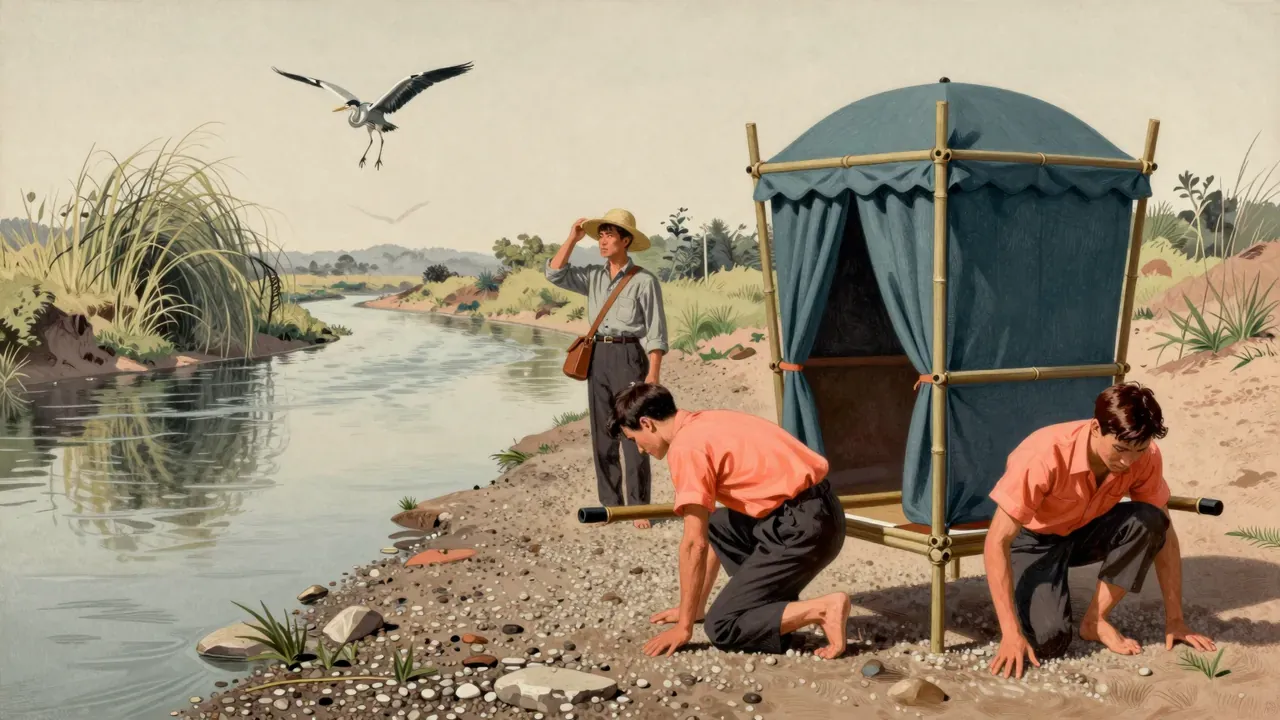
The second Lone Wolf and Cub film follows disgraced executioner Ogami Ittō and his young son Daigoro as they travel Japan in a weaponised baby cart, taking assassination contracts while evading rival clans. Directed by Kenji Misumi and adapted from Kazuo Koike’s manga, it prioritises formal rigour over exposition: violence is ritual, parenthood is discipline, and silence carries more weight than dialogue. Its eighty-one minutes unfold through stylised encounters — acrobats, river-washers, sand-dune duels — building a mythic logic rather than a psychological narrative.

13:00

Lone Wolf and Cub: Baby Cart in Peril

Buichi Saitō · 1972

The fourth of six 1970s samurai films adapting Kazuo Koike’s manga, Baby Cart in Peril follows disgraced executioner Ogami Ittō and his son Daigoro as they pursue a tattooed assassin while navigating renewed conflict with the Yagyū clan. Directed by Buichi Saitō and shot by Kazuo Miyagawa, it sustains the series’ stark visual language and moral economy — where violence is procedural, parenthood is tactical, and survival is measured in mud, tattoos, and the careful push of a baby cart.

13:00

Lone Wolf and Cub: Baby Cart in the Land of Demons

Kenji Misumi · 1973

The fifth Lone Wolf and Cub film follows Ogami Ittō as he completes five duels to uncover a conspiracy threatening a daimyō’s succession, while his son Daigoro endures a brief, brutal episode of his own. Directed by Kenji Misumi and starring Tomisaburō Wakayama, it sustains the series’ austere tone and procedural rigour, prioritising moral geometry over emotional exposition.

13:00

Lone Wolf and Cub: Baby Cart to Hades

Kenji Misumi · 1972

Lone Wolf and Cub: Baby Cart to Hades (1972), directed by Kenji Misumi, is the third in a six-film Japanese martial arts series following the wandering assassin Ogami Ittō and his infant son Daigoro. Set in Edo-period Japan, it weaves episodic encounters — ambushes, torture, duels, and siege — into a sustained meditation on duty, endurance, and the embodied logic of bushidō. Tomisaburō Wakayama’s restrained performance anchors a film defined by stillness, procedural violence, and moral austerity. Though formally rigorous and thematically rich, its treatment of women remains functional, and its pacing assumes fluency with chanbara conventions. It rewards patience, not passive viewing.

13:00

Lone Wolf and Cub: Sword of Vengeance

Kenji Misumi · 1972

Lone Wolf and Cub: Sword of Vengeance (1972), directed by Kenji Misumi, opens the six-film series with Tomisaburō Wakayama as Ogami Ittō, a disgraced executioner turned wandering assassin who pushes his infant son Daigoro in a baby cart while fulfilling contracts across Edo-period Japan. Built from Kazuo Koike and Goseki Kojima’s manga, it prioritises ritual, restraint and structural repetition over exposition or psychology — flashbacks clarify motive but not morality, action follows vow not impulse, and silence carries more weight than speech. Its 83-minute runtime sustains a tone of implacable resolve, using austere framing, percussive sound design and Wakayama’s physically precise performance to render vengeance as a system, not a feeling.

13:00

Love Letter

Kinuyo Tanaka · 1953

Kinuyo Tanaka’s 1953 directorial debut — adapted by Keisuke Kinoshita from Fumio Niwa’s novel — follows a returning veteran navigating family expectation, unspoken grief, and tentative reconnection in postwar Tokyo. Shot by Hiroshi Suzuki and scored by Ichirō Saitō, it trades plot for psychological texture, building meaning through restraint, repetition, and the weight of unsaid things.

13:00

Magnificent Obsession

Douglas Sirk · 1954

Douglas Sirk’s 1954 Magnificent Obsession follows a reckless playboy who, after inadvertently causing a doctor’s death, dedicates himself to healing and love as atonement. With Jane Wyman and Rock Hudson, it renders ethical transformation through gesture, silence, and recurring visual motifs — water, light, thresholds — rather than exposition or psychology. Its power lies in structural rigour, not realism.

13:00

Maidstone

Norman Mailer · 1970

Norman Mailer’s 1970 independent film Maidstone stars him as a narcissistic filmmaker-politician shooting a brothel drama on his East Hampton estate. Shot over five days with no script, handheld cameras, and improvised performances — including a real, bloody fight with Rip Torn — it attempts a radical critique of media, power and ego. Its ambition is structural: to make authority visible by dismantling control. But its execution exposes the limits of that vision — especially in its treatment of women and race. Though obscure for decades, it remains a singular, uncomfortable artefact of late-1960s American cultural crisis.

13:00

Moment to Moment

Robert Downey Sr. · 1975

Robert Downey Sr.’s 1975 comedy Moment to Moment is an 85-minute exercise in narrative abstinence: deadpan performances, uninflected dialogue, and Jack Nitzsche’s sparse score coalesce into a dry, unblinking portrait of routine and disconnection. It offers no plot, no punchlines, no character arcs — only sustained tonal restraint. Its value lies in its consistency, not its insight.

13:00

Morocco

Josef von Sternberg · 1930

Josef von Sternberg’s 1930 romantic drama stars Marlene Dietrich as a disillusioned cabaret singer who follows Gary Cooper’s legionnaire into the desert — not as a conclusion, but as a gesture. Filmed entirely in California, it uses light, costume, and composition to construct desire as defiance. Though stripped of its source novel’s grittier elements, it endures for its visual authority and psychological economy.

13:00

My Darling Clementine

John Ford · 1946

John Ford’s 1946 Western My Darling Clementine reshapes the O.K. Corral legend into a solemn, visually restrained parable about civic order. Henry Fonda’s Wyatt Earp is less a man than a principle — calm, enduring, taciturn — and the film’s power lies in its long takes, muted palette, and refusal to explain. Though heavily edited by the studio and loosely based on fact, it endures as a masterclass in cinematic gravitas: not a story about violence, but about what remains after it.

13:00

New Tale of Zatoichi

Tokuzō Tanaka · 1963

New Tale of Zatoichi (1963), directed by Tokuzō Tanaka, is the third and first colour entry in Daiei Film’s Zatoichi series. Shintarō Katsu returns as the blind masseur and swordsman Ichi, who attempts to live by a vow of non-violence — only to face moral collapse in his old village, where his former master has allied with criminals and his childhood friend’s family lives in poverty. Structured around restraint rather than action, the film uses muted colour, sparse dialogue, and deliberate pacing to explore fidelity, quiet corruption, and the asymmetry of mercy. It ends not with resolution but with solitary departure at dawn.

13:00

Notorious

Alfred Hitchcock · 1946

Alfred Hitchcock’s 1946 spy thriller follows an American agent who recruits the daughter of a Nazi sympathiser to infiltrate a German exile network in Rio. What unfolds is less a tale of espionage than a precise, emotionally restrained study of love under surveillance — where every glance is tactical, every touch conditional, and every silence charged with consequence. Shot on RKO soundstages with meticulous control, it relies on performance, composition, and pacing to build tension without action.

13:00

Nouvelle Vague

Richard Linklater · 2025

Richard Linklater’s Nouvelle Vague dramatises the 23-day production of Jean-Luc Godard’s Breathless in 1959, using black-and-white 35 mm film, the Academy ratio, and a script by Laetitia Masson. Starring Zoey Deutch as Jean Seberg and Guillaume Marbeck as Godard, it focuses on logistical friction, creative disagreement, and the material conditions of a film that would redefine cinema — not as myth, but as work.

13:00

One-Eyed Jacks

Marlon Brando · 1961

Marlon Brando’s 1961 Western One-Eyed Jacks follows Rio, a bandit seeking revenge on his former mentor Dad Longworth, now sheriff of Monterey. Shot in VistaVision across California and Mexico, it foregrounds psychological tension over action, with Brando starring and directing. Though critically mixed on release and commercially disappointing, its reputation has deepened over decades for its atmospheric realism, complex male relationships, and formal restraint. Restored in 4K in 2016, it remains Brando’s only film behind the camera.

13:00

Only Angels Have Wings

Howard Hawks · 1939

Howard Hawks’ 1939 drama follows Geoff Carter, manager of a perilous South American air freight operation, as he balances a government contract deadline against the lives of his pilots. Starring Cary Grant and Jean Arthur, it builds its world through procedural clarity, not psychology — valuing competence over confession, restraint over revelation. Joseph Walker’s cinematography, Dimitri Tiomkin’s score and Viola Lawrence’s editing sustain a single, unwavering tone: fatalism as honour, risk as routine.

13:00

Othello

Orson Welles · 1951

Orson Welles’s 1951 Othello is a self-financed, erratically shot adaptation of Shakespeare’s tragedy, filmed across Morocco, Venice and Rome between 1949 and 1951. Starring Welles as Othello and Micheál Mac Liammóir as Iago, it won the Palme d’Or in 1952 but reached US audiences only in 1955 — in a heavily altered version. A 1992 restoration, supervised by Welles’s daughter, became the default home-video release despite widespread criticism of its dubbing, re-recorded score and departures from Welles’s original cut. The film’s power lies in its stark, discontinuous style and unwavering focus on the mechanics of belief and betrayal.

13:00

Pat Garrett and Billy the Kid

Sam Peckinpah · 1973

Sam Peckinpah’s 1973 revisionist Western follows Pat Garrett’s reluctant pursuit of Billy the Kid, framed by Garrett’s own assassination. Shot in Durango with John Coquillon, scored by Bob Dylan, and written by Rudy Wurlitzer, it rejects heroic narrative in favour of cyclical fatalism—where lawmen are hired hands, outlaws are inconveniences, and violence serves capital, not justice.

13:00

Point Blank

John Boorman · 1967

Point Blank (1967), directed by John Boorman and starring Lee Marvin, is a formally radical crime film adapted from Donald E. Westlake’s novel The Hunter. It follows Walker’s relentless, non-linear quest to reclaim $93,000 after being betrayed and left for dead on Alcatraz. Rejecting exposition and psychology, it builds tension through spatial rigour, elliptical editing, and Marvin’s physically commanding stillness. Shot in stark black-and-white with Johnny Mandel’s atonal score, it privileges structure over sentiment — a cold, coherent system of cause and effect. Preserved in the US National Film Registry, it remains a benchmark of arthouse crime cinema.

13:00

Port of Flowers

Keisuke Kinoshita · 1943

Port of Flowers (1943), directed by Keisuke Kinoshita for Shochiku, is a restrained domestic drama set in a Japanese port town during wartime. Starring Eitarō Ozawa and Ken Uehara, it traces quiet exchanges between two men bound by memory, duty, and proximity rather than plot. With no credited score and minimal sound design, the film relies on duration, composition, and performance to evoke continuity amid uncertainty. Its themes — care as routine, loyalty as repetition, time as tide — emerge through accumulated detail, not exposition. It is neither propaganda nor protest, but a sustained act of attention to what endures when history narrows.

13:00

Real Life

Albert Brooks · 1979

Albert Brooks’ 1979 directorial debut is a dry, structural satire in which a filmmaker embeds himself with the Yeager family to document 'real life' for a year. Using helmet-mounted cameras and clinical oversight, the project unravels as intrusion replaces observation, ethics erode, and the family withdraws. The film’s strength lies in its precise, unblinking exposure of power imbalances in media — not its jokes.

13:00

Ride Lonesome

Budd Boetticher · 1959

Ride Lonesome (1959), directed by Budd Boetticher and starring Randolph Scott, is the fourth of the Ranown Westerns — a tightly constructed, Eastmancolor CinemaScope film shot on location in Lone Pine. Bounty hunter Ben Brigade captures a wanted man, then becomes entangled with outlaws and a widow at a besieged swing station, all while drawing closer to a confrontation with the killer of his wife. With a lean script by Burt Kennedy and disciplined craft from cinematographer Charles Lawton Jr. and editor Jerome Thoms, it sustains tension through restraint, silence, and unblinking moral arithmetic.

13:00

Ride the Pink Horse

Robert Montgomery · 1947

Robert Montgomery’s 1947 adaptation of Dorothy B. Hughes’ novel relocates film noir from urban decay to the fiesta-drenched towns of northern New Mexico. A wounded veteran named Gagin arrives to blackmail a mobster for his friend’s death, but finds himself dependent on local people — Pancho, Pila, and others — whose loyalties and languages he does not share. Shot by Russell Metty and anchored by Thomas Gomez’s restrained performance, the film treats place as moral terrain and refuses easy resolution.

13:00

Room 666

Wim Wenders · 1982

Room 666 is a 1982 documentary by Wim Wenders, filmed in a single hotel room during the Cannes Film Festival. Fourteen directors — including Godard, Fassbinder, Spielberg, and Antonioni — each answer the same question about cinema’s future, recorded in uninterrupted takes. Shot by Agnès Godard on 16 mm, with music by Bernard Herrmann, the film offers no commentary, only testimony.

13:00

Room 999

Lubna Playoust · 2023

Room 999 (2023) is a French documentary directed by Lubna Playoust, filmed in a single hotel room with thirteen international filmmakers — including Cronenberg, Wenders, Farhadi and Ramsay — speaking freely over one day. Shot by Marine Atlan and scored by Pierre Rousseau, it offers no narration, no subtitles for overlapping dialogue, no biographical context. Its rigour lies in restraint: fixed framing, natural light, unedited duration. It captures conversation not as argument but as collective thinking-in-motion — hesitant, contradictory, embodied. A film about presence, not position.

13:00

Rushmore

Wes Anderson · 1998

A 1998 comedy-drama directed by Wes Anderson, Rushmore follows Max Fischer, a hyperactive scholarship student at a Houston prep school, and Herman Blume, a disillusioned industrialist, as they form an uneasy alliance over their shared affection for a teacher. Stylised and precise, it treats adolescence and middle age as parallel states of reinvention, anchored by Jason Schwartzman’s debut performance and Bill Murray’s career-redefining turn.

13:00

Samaritan Zatoichi

Kenji Misumi · 1968

Released in December 1968 and directed by Kenji Misumi, Samaritan Zatoichi is the twelfth instalment in Daiei’s long-running series. Starring Shintarō Katsu as the blind masseur-swordsman, it follows his intervention in a rural town exploited by a yakuza gang. Less concerned with action than with ethical presence, the film uses restraint — in pacing, performance and composition — to explore endurance, reciprocity and the weight of unspoken complicity. Cinematographer Kazuo Miyagawa frames scenes with quiet clarity, and the script avoids exposition in favour of implication. Though some character arcs remain underdeveloped, the film’s cumulative power resides in its unwavering commitment to stillness as moral grammar.

13:00

Samurai III: Duel at Ganryu Island

Hiroshi Inagaki · 1956

Hiroshi Inagaki’s 1956 Samurai III: Duel at Ganryu Island concludes his trilogy with deliberate slowness, following Miyamoto Musashi’s year-long retreat before his fateful duel with Sasaki Kojirō. Shot in Eastmancolor by Kazuo Yamada and starring Toshirō Mifune, it privileges stillness over action, moral weight over spectacle, and quiet mourning over triumph. Its strength is structural and tonal: every performance, cut, and musical phrase serves a single, unwavering register of gravity and restraint.

13:00

Solution

Abbas Kiarostami · 1978

Solution (1978) is Abbas Kiarostami’s austere, observational drama set in a single institutional interior. With no score, no exposition, and minimal dialogue, it tracks a young man’s encounter with bureaucratic procedure. Its power lies in duration, repetition, and withheld meaning — not as evasion, but as method. A key early work in Iranian New Wave cinema, it rewards attention not with narrative payoff but with perceptual recalibration.

13:00

Take Aim at the Police Van

Seijun Suzuki · 1960

Take Aim at the Police Van is a 1960 Japanese action thriller directed by Seijun Suzuki for Nikkatsu. Built around the ambush of a police van transporting a prisoner, it deploys tight framing, high-contrast monochrome cinematography by Kazuo Miyagawa, and a lean script by Shinichi Sekizawa to sustain relentless forward motion. Starring Michitaro Mizushima, Misako Watanabe, and Shinsuke Ashida, it exemplifies Nikkatsu’s ‘borderless’ studio strategy — genre stripped of local specificity, yet anchored in Tokyo’s post-war textures. Its strength lies in formal discipline, not character depth or thematic elaboration.
13:00

Terminal Station

Vittorio De Sica · 1953

Terminal Station (1953) is Vittorio De Sica’s English-language drama set entirely in Rome’s Termini station, following an American woman torn between her husband and an Italian lover. Produced by David O. Selznick and plagued by creative conflict, it exists in two versions — an 89-minute Italian cut and a 72-minute American recut titled Indiscretion of an American Wife. Shot on location with restrained performances and atmospheric cinematography, it prioritises place and pause over plot, exposing tensions between neorealism and Hollywood convention. Though nominated at Cannes and for an Oscar, it divided critics and performers alike.

13:00

Terror of Mechagodzilla

Ishirō Honda · 1975

Terror of Mechagodzilla (1975), directed by Ishirō Honda and written by Yukiko Takayama, is the fifteenth Godzilla film and the last of the Shōwa era. It follows Interpol agents confronting a reclusive scientist, his cyborg daughter Katsura, and the rebuilt Mechagodzilla 2 — all converging in a Tokyo battle with Godzilla and the newly awakened Titanosaurus. With a tight 83-minute runtime, functional performances, and Teruyoshi Nakano’s tactile special effects, it trades spectacle for narrative compression and bodily stakes. Akira Ifukube’s score and Yoshitami Kuroiwa’s editing sustain urgency, while themes of technological possession and paternal control anchor its modest ambitions. Released by Toho, it remains the franchise’s least financially successful entry.

13:00

The Bitter Tears of Petra von Kant

Rainer Werner Fassbinder · 1972

Rainer Werner Fassbinder’s 1972 chamber drama confines itself to one Bremen apartment, tracing the rise and collapse of fashion designer Petra von Kant’s obsessive relationship with younger woman Karin Thimm. With an all-female cast and static, theatrical staging, it uses repetition, framing and silence to dissect codependency, class, and the violence of care — not as psychology, but as architecture.

13:00

The Chorus

Abbas Kiarostami · 1982

The Chorus (1982) is Abbas Kiarostami’s early Iranian short film in Persian, observing a group of children in a single location with fixed framing and minimal intervention. It explores collective presence through duration, repetition, and silence — not narrative or psychology — making it a foundational work of observational, arthouse drama.

13:00

The Circus

Charlie Chaplin · 1928

Charlie Chaplin’s 1928 silent comedy follows the Little Tramp’s accidental rise and quiet fall within a struggling circus. Hired for his unintentional chaos, he becomes indispensable — then obsolete — in a film that treats performance as labour, laughter as accident, and solitude as structural inevitability. Shot and edited by Chaplin, with music he composed, it is both a technical masterclass and a quiet self-portrait made at the dawn of sound.

13:00

The Four Musketeers

Richard Lester · 1974

Richard Lester’s 1974 The Four Musketeers completes his adaptation of Dumas’s novel, picking up where The Three Musketeers left off. Shot back-to-back with the first film, it follows d’Artagnan and the musketeers through Milady de Winter’s revenge plot and the siege of La Rochelle, culminating in her execution and d’Artagnan’s promotion. With David Watkin’s crisp cinematography, Lalo Schifrin’s sardonic score, and George MacDonald Fraser’s streamlined script, it prioritises clarity, pace and physical storytelling over psychological depth or historical elaboration.
13:00

The Gunfighter

Henry King · 1950

The Gunfighter (1950) follows Jimmy Ringo, a legendary gunfighter seeking reconciliation with his estranged wife and son in a small Western town. His reputation precedes him, drawing vengeful challengers and forcing old friends to confront shared pasts. Directed by Henry King and starring Gregory Peck, it rejects genre spectacle in favour of psychological compression, using precise framing, restrained performance, and tightly wound structure to explore fame, fatigue, and the impossibility of escape.

13:00

The Haunted Strangler

Robert Day · 1958

The Haunted Strangler (1958) is a British horror film directed by Robert Day and starring Boris Karloff. Set in Victorian London, it follows novelist James Rankin as he re-examines the conviction of Edward Styles, the so-called Haymarket Strangler. His investigation leads him to uncover his own forgotten identity as Dr. Tennant, the real murderer — a revelation triggered by handling the Strangler’s knife. Shot at Walton Studios, with music by Buxton Orr and editing by Peter Mayhew, the film blends procedural detail with psychological horror, prioritising atmosphere and physical transformation over shock or gore.

13:00

The Heroic Trio

Johnnie To · 1993

Johnnie To’s 1993 action film stars Michelle Yeoh, Anita Mui, and Maggie Cheung as a trio of heroines confronting a subterranean tyrant who kidnaps imperial infants. Stylised rather than schematic, it prioritises choreographic precision, costume-as-character, and tonal volatility over psychological realism or narrative tidiness. Its strengths lie in physical presence and visual density; its weaknesses in underdeveloped motivation and unresolved thematic ambition. It remains a singular artefact of early-90s Hong Kong genre reinvention.

13:00

The Hidden Fortress

Akira Kurosawa · 1958

Akira Kurosawa’s 1958 adventure follows two self-interested peasants who agree to smuggle a mysterious man and woman across hostile territory for gold, unaware the man is a famed general and the woman a deposed princess. Shot in Tohoscope widescreen, with Ichio Yamazaki’s naturalistic cinematography and Masaru Sato’s taut score, the film grounds epic stakes in petty motives, using the peasants’ limited perspective to explore class, loyalty and survival. Toshirō Mifune delivers restrained authority as General Rokurōta; Minoru Chiaki and Kamatari Fujiwara embody craven humanity as Tahei and Matashichi. Though structurally inventive and morally precise, the princess’s interiority remains deliberately obscured — a choice that sharpens some tensions and blunts others.

13:00

The Hole

Jacques Becker · 1960

Jacques Becker’s 1960 film The Hole reconstructs a real 1947 escape attempt at Paris’s La Santé Prison with forensic calm. Five inmates — played largely by non-actors, including one actual participant — dig a tunnel beneath their cell floor using scavenged tools and stolen time. The film avoids drama in favour of procedure, silence over score, and group rhythm over individual arc. Its power lies in accumulated detail, moral ambiguity, and the quiet collapse of trust when freedom arrives — not as rescue, but as a choice no one can fully explain.

13:00

The Honeymoon Killers

Leonard Kastle · 1970

Leonard Kastle’s 1970 debut is a stark, black-and-white docudrama about Martha Beck and Raymond Fernandez, two real-life killers whose relationship curdles into murder. Made on a $200,000 budget with non-star actors, rough cinematography and Mahler on the soundtrack, it rejects glamour, psychology and historical fidelity in favour of sustained moral unease. Shirley Stoler’s performance as Martha remains one of cinema’s most unsettling studies in embodied desperation.

13:00

The King of Kings

Cecil B. DeMille, Arthur Rosson, Frank Urson · 1927

Cecil B. DeMille’s 1927 silent film The King of Kings depicts the life of Jesus with deliberate spectacle—Technicolor halos, sepia-tinted sermons, hand-coloured torchlight—and a script that blends Gospel texts with invented moments designed to jolt contemporary audiences. H. B. Warner stars as a calm, physically present Christ; Jacqueline Logan plays a vividly secular Mary Magdalene. Though structurally episodic and occasionally blunt in its symbolism, the film remains a landmark of studio-era craft, theological address, and early colour technology.

13:00

The Last Command

Josef von Sternberg · 1928

The Last Command (1928), directed by Josef von Sternberg and starring Emil Jannings, follows a fallen Russian grand duke reduced to working as a Hollywood extra. When cast to play his former self, memory and reality blur, culminating in a fatal breakdown on set. Shot in five weeks with Bert Glennon’s precise cinematography, it is a tightly wound study of identity, power, and performance — awarded the first Best Actor Oscar and preserved in the US National Film Registry.

13:00

The Magic Flute

Ingmar Bergman · 1975

Ingmar Bergman’s 1975 film of Mozart’s The Magic Flute is a meticulous recreation of an eighteenth-century theatrical experience, shot in studio with a replica of the Drottningholm Palace Theatre. Using pre-recorded music and mimed performance, it foregrounds stagecraft, audience presence, and symbolic clarity over psychological realism or cinematic flourish. Its power lies in fidelity to ritual, not narrative.

13:00

The Making of Fanny and Alexander

Ingmar Bergman · 1986

Ingmar Bergman’s 1984 documentary records the making of his 1982 film Fanny and Alexander with clinical precision: no narration, no interviews, no context — just rehearsals, fittings, lighting tests and editorial decisions as they happened. Photographed by Arne Carlsson and edited by Lena Åberg, it treats filmmaking as iterative craft, not artistic revelation.
13:00

The Moon Has Risen

Kinuyo Tanaka · 1955

Kinuyo Tanaka’s 1955 film, scripted by Yasujirō Ozu and shot by Shigeyoshi Mine, follows Setsuko as she quietly engineers a romance between her older sister Ayako and a former suitor. Set in Nara, it unfolds across domestic spaces with restrained pacing, gentle performances, and a focus on unspoken feeling. Though structurally loose around some supporting characters, its strength lies in emotional precision and tonal consistency.

13:00

The Scarlet Empress

Josef von Sternberg · 1934

Josef von Sternberg’s 1934 The Scarlet Empress stars Marlene Dietrich as Catherine the Great, but discards historical fidelity for baroque expressionism — grotesque sculpture, candlelit gloom, and rhythmic, ritualistic pacing. Bert Glennon’s cinematography and Max Steiner’s score reinforce a vision of imperial power as oppressive theatre. Though dramatically uneven and narratively elliptical, it remains a landmark of studio-era stylistic audacity, prioritising atmosphere over exposition and iconography over psychology.

13:00

The Tale of Zatoichi Continues

Kazuo Mori · 1962

The Tale of Zatoichi Continues (1962), directed by Kazuo Mori and starring Shintarō Katsu, is the second entry in Daiei Film’s long-running series. Returning one year after the first film, Zatōichi visits Joshoji Temple to pay respects, crosses paths with his one-armed brother Yoshirō, and navigates threats from a mad lord’s retainers and local yakuza. With a lean 72-minute runtime, tight framing, and Ichirō Saitō’s restrained score, it prioritises gesture over exposition and recurrence over revelation — deepening the character not through backstory but through repetition, silence, and consequence.

13:00

The Tall T

Budd Boetticher · 1957

The Tall T (1957), directed by Budd Boetticher and starring Randolph Scott, is a tightly wound Western adapted from Elmore Leonard’s 'The Captives'. When ranch hand Pat Brennan is kidnapped alongside a reluctant heiress by three outlaws, the film becomes a study in constrained choice, quiet courage, and the cost of moral consistency. Shot by Charles Lawton Jr. and edited by Al Clark, it relies on stillness, silence, and precise performance over action. Its power lies in what it omits—and what it insists the viewer notice instead.
13:00

The Three Musketeers

Richard Lester · 1973

Richard Lester’s 1973 adaptation of The Three Musketeers is a brisk, precisely timed adventure that prioritises rhythm and character-in-action over exposition or psychological depth. Shot in Spain by David Watkin, with fencing choreographed by William Hobbs and music by Michel Legrand, it stars Michael York, Oliver Reed, Frank Finlay and Richard Chamberlain as the titular quartet, alongside Raquel Welch, Faye Dunaway and Charlton Heston. Faithful to Dumas’s plot but distinct in tone, it balances wit and vigour without tipping into parody—or solemnity.

13:00

The Young Master

Jackie Chan · 1980

Jackie Chan’s 1980 directorial effort The Young Master marks his debut for Golden Harvest and refines his signature blend of martial arts, comedy, and stunt-driven storytelling. As Dragon, Chan navigates fraternal betrayal, mistaken identity, and a punishing final duel with criminal Kam — all staged with growing control over choreography, editing, and physical expression. Though some plot elements remain underdeveloped and tonal shifts occur, the film’s commitment to grounding action in consequence and character makes it a vital milestone in Hong Kong action cinema.
13:00

Through the Olive Trees

Abbas Kiarostami · 1994

Through the Olive Trees (1994), Abbas Kiarostami’s final Koker trilogy film, observes the making of a film in post-earthquake northern Iran. A stonemason courts his co-star amid rehearsals, blurring fiction and reality. Shot in natural light with non-professional actors, it sustains ambiguity — especially in its iconic final scene — as a formal and moral choice. Neither documentary nor drama, it asks what it means to witness, represent, and persist without certainty.

13:00

Tribute to the Teachers

Abbas Kiarostami · 1977

Tribute to the Teachers (1977) is a Persian-language drama written and directed by Abbas Kiarostami for Iran’s Institute for the Intellectual Development of Children and Young Adults. No plot details, cast list, or production credits beyond director and writer are publicly verifiable. It belongs to Kiarostami’s early institutional period, preceding his international breakthroughs. Without access to the film itself—or even a reliable synopsis—it remains a factual placeholder: a title attached to a date, a name, and a genre. Its significance lies in chronology and context, not in circulation or reception.
13:00

Ugetsu

Kenji Mizoguchi · 1953

Kenji Mizoguchi’s 1953 Ugetsu adapts two Edo-period ghost tales into a quiet, devastating portrait of war’s domestic toll. Set in 16th-century Japan, it follows a potter who abandons his wife for wealth and prestige, only to be ensnared by a spirit, while his brother-in-law pursues samurai status at his wife’s expense. Shot by Kazuo Miyagawa in low light and fluid crane movements, with a sparse, harp-accented score by Fumio Hayasaka, the film treats the supernatural not as spectacle but as consequence — a formal and thematic extension of loss. It won the Silver Lion at Venice and remains a benchmark of Japanese arthouse cinema.

13:00

Underworld

Josef von Sternberg · 1927

A 1927 Paramount silent directed by Josef von Sternberg, Underworld stars George Bancroft, Clive Brook and Evelyn Brent in a tightly wound crime story about patronage, betrayal and inescapable consequence. Based on a Ben Hecht story and shot by Bert Glennon, it established visual and thematic templates for the gangster genre — not through realism, but through mythic compression, deliberate pacing and a stark, shadowed aesthetic. It won the first Academy Award for Best Story.

13:00

Varda by Agnès

Agnès Varda · 2019

Varda by Agnès is Agnès Varda’s last film: a self-directed documentary in which, at eighty-nine, she reflects on her six-decade career in photography and film. Seated, speaking directly to camera, she watches excerpts from her own work and comments on them with characteristic clarity, wit and warmth. Structured around the words inspiration, creation and sharing, it is less a historical account than an act of sustained authorial presence — intimate, unhurried, materially attentive. Edited by Varda herself, it privileges texture, recurrence and silence over exposition or argument.

13:00

Way of the Dragon

Bruce Lee · 1972

Bruce Lee’s 1972 directorial debut Way of the Dragon is a Hong Kong–produced action film set in Rome, built around extended, uncut fight sequences — most famously the Colosseum duel with Chuck Norris. Written and co-produced by Lee, it follows a martial artist who defends a Chinese restaurant from local gangsters. Economical in plot and restrained in performance, it prioritises physical clarity over psychological exposition. Though its emotional scaffolding is thin and its character arcs minimal, its formal control and choreographic authority remain unmatched in Lee’s filmography.
13:00

White Nights

Luchino Visconti · 1957

Luchino Visconti’s 1957 adaptation of Dostoevsky’s ‘White Nights’ transposes the short story’s introspective melancholy into a meticulously controlled studio production. Set over three winter nights in a recreated Livorno, it follows Mario’s growing attachment to Natalia, who waits nightly for a lover who may never return. With Maria Schell, Marcello Mastroianni and Jean Marais, and cinematography by Giuseppe Rotunno, the film sustains a tone of quiet inevitability—rejecting catharsis in favour of emotional precision.

13:00

Winchester '73

Anthony Mann · 1950

Winchester ’73 (1950), directed by Anthony Mann and starring James Stewart, follows the turbulent passage of a prized Winchester 1873 rifle through seven owners across the American frontier. Structured as a chain of cause and effect rather than a linear quest, it foregrounds economy of form, psychological restraint, and moral ambiguity over myth or spectacle. Though groundbreaking in its use of the 'object-as-plot-engine' and influential on later genre filmmaking, its depiction of Indigenous characters remains reductive and its secondary roles underdeveloped. It rewards attentive, unsentimental viewing.

13:00

Yojimbo

Akira Kurosawa · 1961

Akira Kurosawa’s 1961 jidaigeki follows a nameless rōnin who manipulates two warring yakuza factions into mutual ruin. Starring Toshirō Mifune, it uses stark composition, rhythmic editing and Masaru Sato’s jaunty, dissonant score to deliver a dry, structural satire of authority and competence. Made for Toho, it was Japan’s fourth-highest-grossing film of 1961 and later inspired Sergio Leone’s A Fistful of Dollars.

13:00

Youth of the Beast

Seijun Suzuki · 1963

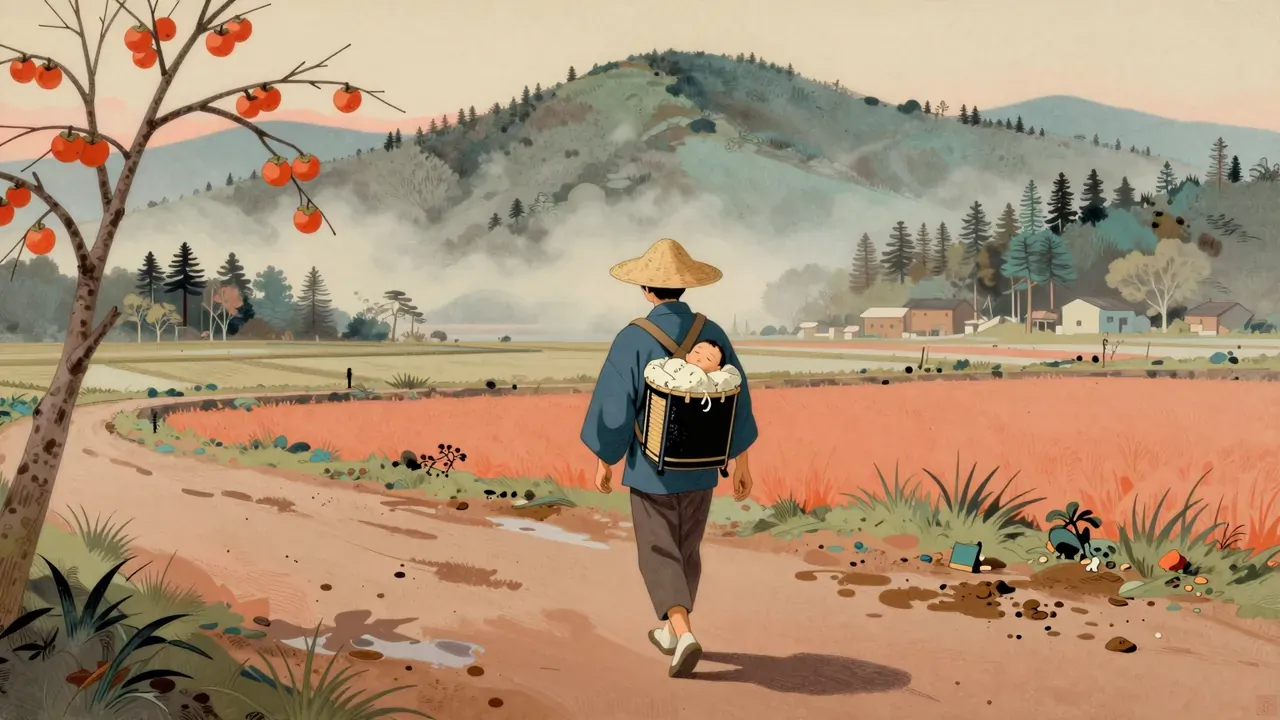
Seijun Suzuki’s 1963 Nikkatsu crime film follows a disgraced detective infiltrating rival yakuza clans, but its real subject is the expressive potential of the genre’s surfaces: saturated colour, abrupt editing, and architectonic framing. It sacrifices psychological realism for formal rigour, treating loyalty, identity, and truth as tactical variables rather than moral absolutes. A pivotal work in Suzuki’s development, it rewards attention to craft over narrative closure.

13:00

Zatoichi and the Chest of Gold

Kazuo Ikehiro · 1964

In Japan, 1964, Zatoichi travels to a drought-stricken village to pay respects at a grave — only to become entangled in the theft of 1,000 ryo raised for taxes. As corrupt officials, rogue samurai, and desperate bandits converge, he navigates a web of complicity without recourse to vengeance. Directed by Kazuo Ikehiro and shot by Kazuo Miyagawa, this sixth Zatoichi film marks a formal and ethical shift: quieter, more politically attentive, and anchored in the material reality of feudal obligation.

13:00

Zatoichi and the One-Armed Swordsman

Kimiyoshi Yasuda · 1971

A Japanese–Hong Kong co-production starring Shintarō Katsu and Jimmy Wang Yu, this 1971 chambara-wuxia crossover stages a deliberate, unresolved encounter between two iconic swordsmen from separate cinematic traditions. Set in rural Japan, it follows Zatoichi and Wang Kang as they misread, clash, and briefly align against corrupt yakuza and a predatory priest — all without shared language or cultural framework. Its strength lies in physical storytelling and choreographic contrast; its limitation is its refusal to bridge the conceptual gap it so carefully constructs.

13:00

Zatoichi at Large

Kazuo Mori · 1972

The twenty-third Zatoichi film, released in 1972 under Toho after two decades with Daiei, follows the blind swordsman as he delivers a newborn to its kin after its mother’s death. Directed by Kazuo Mori and starring Shintarō Katsu and Rentarō Mikuni, it tightens narrative cause-and-effect but retains the series’ unadorned style and ritualised structure. While its central act of care gains quiet power, the climactic duel feels tacked-on, and thematic development remains incremental. It is a film of maintenance, not transformation.

13:00

Zatoichi Challenged

Kenji Misumi · 1967

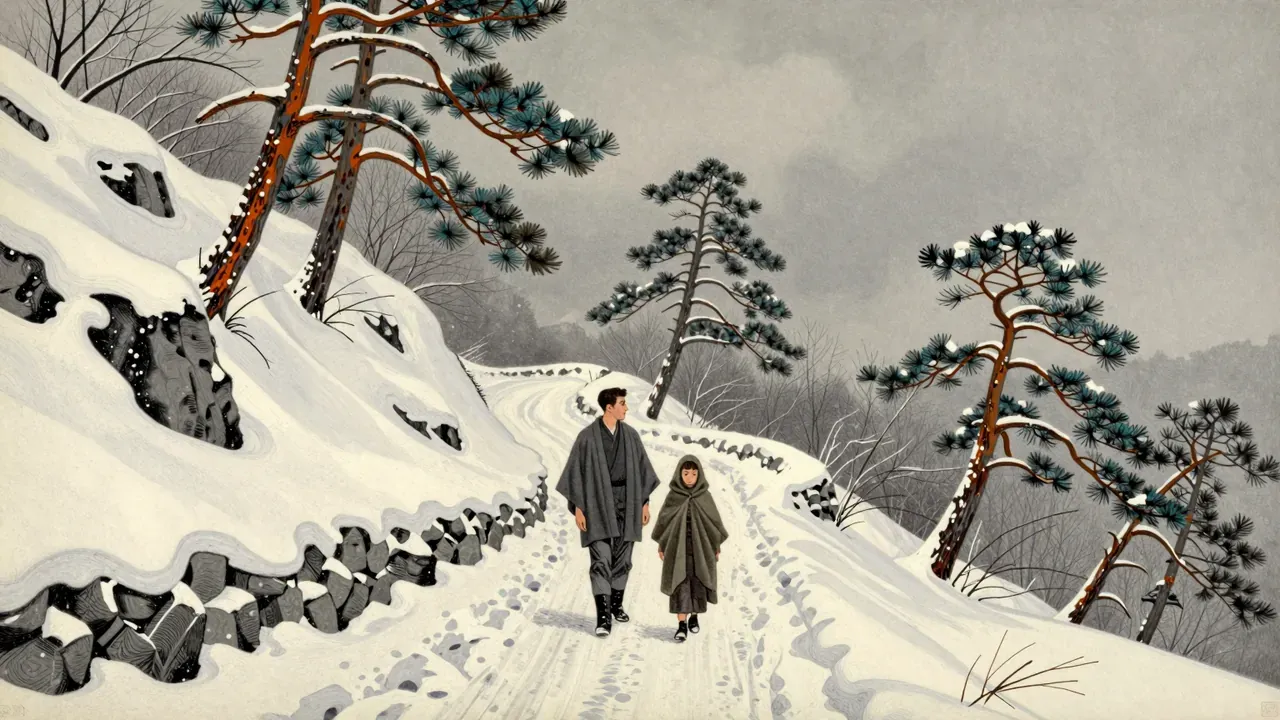
The seventeenth Zatoichi film sees Shintarō Katsu’s blind swordsman escort a boy to his imprisoned father in Maebara, confronting corrupt officials, a yakuza boss, and finally his old friend Akazuka in a snowbound duel. Directed by Kenji Misumi with disciplined framing and Akira Ifukube’s sparse score, it sustains the series’ formal rigour while exposing the limits of its formula — rewarding deep familiarity more than first-time engagement.

13:00

Zatoichi Goes to the Fire Festival

Kenji Misumi · 1970

Zatoichi Goes to the Fire Festival (1970), directed by Kenji Misumi and starring Shintarō Katsu, is the twenty-first and Misumi’s final entry in the original Zatoichi series. Set in the late Edo period, it follows the blind swordsman as he confronts Yamikubo, a rival blind warlord who rules through fear and tribute. With cinematography by Kazuo Miyagawa and music by Akira Ifukube, the film uses the Fire Festival as both backdrop and moral crucible. It is a study in restraint — in performance, editing, and philosophy — closing a chapter not with spectacle but with accumulated weight.

13:00

Zatoichi Meets Yojimbo

Kihachi Okamoto · 1970

Kihachi Okamoto’s 1970 jidaigeki brings together Shintarō Katsu’s blind swordsman Zatoichi and Toshirō Mifune’s sardonic rōnin Daisaku Sasa in a tightly wound, rain-drenched confrontation. Neither man yields his nature; their duel ends in mutual injury, not revelation. The film privileges physical storytelling over exposition, with Akira Ifukube’s restrained score and Yoshinobu Nishioka’s weathered production design reinforcing its unsentimental tone. While some subplots falter, the central performances — grounded, economical, deeply embodied — make it a singular exercise in genre contrast.

13:00

Zatoichi on the Road

Kimiyoshi Yasuda · 1963

The fifth Zatoichi film follows the blind swordsman as he escorts a young woman fleeing a lord’s wrath, navigating rival yakuza factions and his own reluctant reputation. Directed by Kimiyoshi Yasuda and starring Shintarō Katsu, it sustains the series’ lean, episodic structure — prioritising quiet character beats and economical action over exposition or thematic expansion. Its strength is in restraint: in Katsu’s understated performance, Ifukube’s sparse score, and Yasuda’s unadorned framing. It presumes familiarity with the character and his world, offering continuity rather than reinvention.

13:00

Zatoichi the Fugitive

Tokuzō Tanaka · 1963

Zatoichi the Fugitive (1963), the fourth film in Daiei’s long-running chambara series, follows the blind swordsman as he enters a yakuza-controlled town, wins a sumo match, kills a bounty hunter, confronts a grieving matriarch, and becomes entangled in a succession crisis. Directed by Tokuzō Tanaka and starring Shintarō Katsu, it relies on precise staging, sparse music by Akira Ifukube, and performances rooted in implication rather than declaration. Its strength lies in economy: every scene advances moral or social logic, not just plot. It assumes familiarity with the character’s ethos and rewards attention to gesture, silence, and recurring motifs — making it essential viewing within the series, but less accessible in isolation.
13:00

Zatoichi's Flashing Sword

Kazuo Ikehiro · 1964

The seventh Zatoichi film finds Shintarō Katsu’s blind swordsman recovering from an ambush, taking refuge in a riverside town, and becoming entangled in a feud between rival bosses over control of a river crossing. Directed with unshowy precision by Kazuo Ikehiro and written by Minoru Inuzuka, it leans on the series’ established grammar — terse dialogue, tactile action, moral economy — rather than expanding its scope. The fireworks promised early on become both deadline and motif, framing a climax that is less about vengeance than restoration of balance. It is a work of continuity, not rupture.

13:00

Zatoichi's Pilgrimage

Kazuo Ikehiro · 1966

The fourteenth Zatoichi film sees Shintarō Katsu’s blind swordsman undertake the Shikoku pilgrimage, seeking quiet reckoning rather than redemption. Directed by Kazuo Ikehiro with script by Kaneto Shindō, it trades action set-pieces for sustained atmosphere, subtle performance, and restrained craft. Violence is brief and consequential; stillness is prolonged and meaningful. The film’s strength lies in its commitment to rhythm over revelation, repetition over resolution.
13:00

Zatoichi's Vengeance

Tokuzō Tanaka · 1966

The thirteenth Zatoichi film, released in 1966 by Daiei Film, follows the blind masseur as he carries a dying man’s burden into a yakuza-controlled town preparing for its thunder drum festival. Directed by Tokuzō Tanaka and starring Shintarō Katsu, it relies on Kazuo Miyagawa’s understated cinematography and Akira Ifukube’s percussive score to sustain its episodic, morally calibrated chambara rhythm.

13:00

Ivan the Terrible. Part II

Sergei Eisenstein · 1958

Sergei Eisenstein’s Ivan the Terrible. Part II (1958) is the suppressed second chapter of his biographical project on Ivan IV, completed in 1946 but unreleased until after Stalin’s death. Shot in stark studio sets with chiaroscuro lighting by Moskvin and Tisse, and scored by Prokofiev, it depicts the Tsar’s descent into isolation and the founding of the Oprichnina. Starring Nikolay Cherkasov and Pavel Kadochnikov, it is a formally rigorous, psychologically dense, and politically unsparing work — less historical narrative than dialectical study of how power organises space, time, and the human body.

13:00

Come Drink with Me

King Hu · 1966

King Hu’s 1966 wuxia classic Come Drink with Me redefined martial arts cinema through disciplined choreography, spatial economy, and restrained storytelling. Starring Cheng Pei-pei as Golden Swallow, it follows her rescue of a kidnapped magistrate’s son amid Buddhist temples, inns, and coded songs — all staged with balletic precision and shot by Tadashi Nishimoto for Shaw Brothers Studio. Its influence is foundational, but its power lies in what it refuses: exposition, sentimentality, and speed.

13:00

Hard Boiled

John Woo · 1992

John Woo’s 1992 Hong Kong action film stars Chow Yun-fat as Inspector Tequila, a jazz-playing cop pursuing a Triad syndicate alongside undercover officer Alan (Tony Leung). Shot over 123 days, its defining sequence — a five-minute hospital shootout — exemplifies its commitment to spatial coherence and physical storytelling. Though conceived as a ‘Dirty Harry’-style police centrepiece, its improvisational production left thematic threads unresolved. Still, its influence on action cinema remains foundational.

13:00

Hero

Zhang Yimou · 2002

Zhang Yimou’s 2002 Hero uses competing narratives and strict chromatic divisions — red, blue, white, green, black — to explore how truth is shaped by perspective and authority. Starring Jet Li, Tony Leung and Maggie Cheung, and shot by Christopher Doyle with a score by Tan Dun, it reframes the wuxia genre as a formal investigation into storytelling itself: who tells, who believes, and what gets erased in the name of peace.

13:00

Intolerance

D. W. Griffith · 1916

D. W. Griffith’s 1916 Intolerance intercuts four historical stories — Babylonian, Judean, French, and American — to argue that intolerance is a persistent, transhistorical mechanism of power. Shot by Billy Bitzer and Karl Brown, edited by Griffith and the Smiths, and scored by Joseph Carl Breil, it uses colour-tinting, symbolic naming, and accelerating cross-cutting to bind eras through visual and rhythmic repetition. Though uneven in dramatic weight and demanding in pace, its formal ambition and influence on global cinema remain unmatched in the silent era.
13:00

Miller's Crossing

Ethan Coen, Joel Coen · 1990

A 1990 neo-noir gangster film directed by the Coen brothers, set in an unnamed Prohibition-era city. Gabriel Byrne stars as Tom Reagan, a strategist caught between rival mob bosses Albert Finney and Jon Polito. Built on Hammett’s The Glass Key, it prioritises formal rigour over emotional exposition — its dialogue elliptical, its violence understated, its moral universe amoral. Shot in New Orleans by Barry Sonnenfeld, with a restrained score by Carter Burwell, it is a study in control: of image, rhythm, and implication.
13:00

The Killer

John Woo · 1989

John Woo’s 1989 Hong Kong action film follows a professional assassin who, after accidentally blinding a nightclub singer, pledges to fund her corneal transplant — a promise that draws him into lethal conflict with both triads and police. Stylised, morally austere, and formally rigorous, it treats violence as ritual and loyalty as sacred debt. Shot by Peter Pau and scored by Lowell Lo, it stars Chow Yun-fat, Sally Yeh, and Danny Lee.
13:00

The Passion of Joan of Arc

Carl Theodor Dreyer · 1928

Carl Theodor Dreyer’s 1928 silent film distils Joan of Arc’s trial into a single, suffocating day, using radical close-ups, unvarnished performances and a stark concrete set to render her spiritual and physical ordeal with unnerving intimacy. Renée Falconetti’s legendary performance anchors a work of formal and theological rigour — austere, unrelenting, and profoundly human.

13:00

Touch of Evil

Orson Welles · 1958

Orson Welles’s 1958 *Touch of Evil*, shot by Russell Metty and scored by Henry Mancini, follows Mexican narcotics officer Miguel Vargas as he investigates a cross-border bombing amid institutional obstruction and moral decay. Though compromised by studio edits, its formal rigour, layered performances, and unsentimental treatment of power make it a cornerstone of American crime cinema.

13:00

A Bittersweet Life

Kim Ji-woon · 2005

Kim Ji-woon’s 2005 neo-noir follows Sun-woo, a high-ranking enforcer whose life unravels after he spares his boss’s mistress — not out of compassion, but from a failure of nerve. Shot with controlled austerity by Kim Ji-yong and scored with sparse, metallic textures by Dalpalan, the film charts Sun-woo’s descent not into chaos but into increasing clarity: that his obedience has hollowed him out, and his revenge is merely the final act of a man who has nothing left to lose. Lee Byung-hun anchors it with a performance built on restraint, not revelation.

13:00

A Man Escaped

Robert Bresson · 1956

Robert Bresson’s 1956 docudrama follows a French Resistance fighter’s meticulous, solitary planning of an escape from Montluc prison in Lyon. Using non-professional actors, austere framing, and a rigorously controlled soundscape, it renders willpower as physical labour and time as accumulated effort — not as drama, but as form.

13:00

Ain't Them Bodies Saints

David Lowery · 2013

David Lowery’s 2013 drama follows a convict’s slow return to the woman and child he left behind, using restrained performances, atmospheric cinematography by Bradford Young, and a hushed score by Daniel Hart to evoke longing as a physical condition. Set against a mythic Texas landscape, it trades genre mechanics for emotional resonance, prioritising mood over momentum and silence over exposition.

13:00

Blood Simple

Joel Coen, Ethan Coen · 1984

Blood Simple is the Coen brothers’ 1984 crime debut: a Texas bartender and his boss’s wife conspire, then unravel, under the scrutiny of a corrupt private detective. Shot in Austin on a $1.5 million budget, it uses precise cinematography, sparse music, and rigorous editing to trace how small mistakes compound into irreversible consequences. It won Sundance’s Grand Jury Prize and remains a landmark of neo-noir austerity.

13:00

Faces

John Cassavetes · 1968

John Cassavetes’ 1968 drama Faces tracks the quiet implosion of a middle-class marriage across two fractured nights in Los Angeles. Shot on stark black-and-white 16mm, it relies on durational realism, unvarnished performances — including debutant Lynn Carlin — and a refusal of narrative resolution. Its power lies in accumulation: hesitation, repetition, silence, and the physical weight of unspoken tension.

13:00

Gate of Hell

Teinosuke Kinugasa · 1953

Teinosuke Kinugasa’s Gate of Hell (1953) is a Japanese period drama set during the Heiji Rebellion, following a samurai’s fatal obsession with a married woman he rescues. Filmed in Eastmancolor — Daiei’s first colour production — it uses extreme formal control to dramatise the collapse of honour, duty and self-restraint. With performances of studied stillness and a visual language rooted in lacquer, silk and shadow, it builds dread through repetition and omission rather than exposition or climax. It won the Grand Prize at Cannes, an Academy Honorary Award for Best Foreign Language Film, and the Oscar for Best Costume Design, Color.

13:00

Gun Crazy

Joseph H. Lewis · 1950

A lean, unsentimental 1950 crime film tracing the steady collapse of moral choice in a young couple drawn into robbery and murder. Directed by Joseph H. Lewis with stark visual economy and anchored by Peggy Cummins and John Dall, it treats violence as consequence, not climax — and remains potent precisely because it refuses to explain itself.

13:00

Kagemusha

Akira Kurosawa · 1980

Akira Kurosawa’s 1980 epic follows a thief forced to impersonate the dying warlord Takeda Shingen to preserve clan stability. Shot in vivid colour and composed with rigorous symmetry, it traces the slow, fragile construction — and inevitable collapse — of political belief through gesture, silence, and shared illusion. Tatsuya Nakadai plays both men, distinguishing them not by voice or mannerism but by weight, stillness, and the space he occupies. The film ends at the Battle of Nagashino, where symbolism gives way to slaughter, and the kagemusha dies trying to retrieve a fallen banner.

13:00

Léon: The Professional

Luc Besson · 1994

Léon: The Professional is a 1994 French English-language crime thriller written and directed by Luc Besson. Jean Reno plays Léon, a solitary hitman in New York who shelters twelve-year-old Mathilda (Natalie Portman) after her family is murdered by a corrupt DEA agent (Gary Oldman). Their uneasy bond forms the core of a tightly constructed, visually controlled film that balances domestic intimacy with sudden violence. Shot largely in France and New York, it was produced by Patrice Ledoux for Gaumont, with cinematography by Thierry Arbogast and music by Éric Serra. Though commercially successful and critically divisive, its enduring interest lies in its formal discipline and the unresolved tension between its moral premise and its stylistic execution.

13:00

My Blueberry Nights

Wong Kar-wai · 2007

My Blueberry Nights is Wong Kar-wai’s 2007 English-language debut, following Norah Jones as Elizabeth, a woman drifting across New York, Memphis, and Nevada after a breakup. Shot by Darius Khondji and edited by William Chang, it prioritises atmosphere over plot, using diners, motels, and bars as emotional landscapes. Though praised for its visual texture and restraint, its episodic structure and underdeveloped arcs drew mixed reviews. It remains a distinctive, if slender, entry in Wong’s filmography.

13:00

Requiem for a Dream

Darren Aronofsky · 2000

Requiem for a Dream (2000), directed by Darren Aronofsky and adapted from Hubert Selby Jr.’s novel, traces four Brooklyn lives unravelling under addiction — to drugs, television, validation, and fantasy. Shot by Matthew Libatique and edited by Jay Rabinowitz with over 2,000 cuts, its visual and rhythmic intensity mirrors psychological disintegration. Ellen Burstyn, Jared Leto, Jennifer Connelly, and Marlon Wayans perform with physical and emotional extremity. Clint Mansell’s score reinforces the film’s oppressive momentum. Though lauded for its craft and emotional force, its schematic structure limits sociological depth. It remains a landmark of arthouse intensity — demanding, unrelenting, and formally singular.

13:00

Rope

Alfred Hitchcock · 1948

Alfred Hitchcock’s 1948 thriller Rope presents a murder and its aftermath in a single Manhattan apartment, shot to appear as four unbroken takes. Starring James Stewart, John Dall, and Farley Granger, it adapts Patrick Hamilton’s play about two men who kill to prove intellectual superiority — and then host a dinner party atop the corpse. Its formal rigour — movable sets, concealed cuts, shifting Technicolor light — makes it a landmark of studio-era experimentation, though its emotional reserve and constrained subtext remain divisive.

13:00

Sanjuro

Akira Kurosawa · 1962

Akira Kurosawa’s 1962 jidaigeki Sanjuro reunites Toshirō Mifune’s ronin in a tightly coiled feudal intrigue, where tactical wit outweighs swordplay and social comedy emerges from the chasm between idealism and perception. Less violent and more structurally austere than its predecessor Yojimbo, it traces a masterless samurai’s reluctant intervention among nine inept young retainers, culminating not in triumph but in a disillusioned walk away. Shot by Takao Saitō, edited by Kurosawa, and scored by Masaru Sato, it is a film of precision, restraint, and dry, cumulative irony.

13:00

The Bridge on the River Kwai

David Lean · 1957

David Lean’s 1957 war drama follows British POWs forced to build a railway bridge for their Japanese captors in Thailand. At its centre is Colonel Nicholson, whose obsession with discipline and engineering excellence leads him to collaborate with the enemy — not out of weakness, but conviction. With Alec Guinness, William Holden and Sessue Hayakawa, it is a tightly wound study of pride, obedience and the porous line between order and complicity.

13:00

The General

Buster Keaton, Clyde Bruckman · 1926

Buster Keaton’s 1926 film The General is a romantic comedy-war film set during the American Civil War, co-directed with Clyde Bruckman. Starring Keaton as a Southern railroad engineer, it follows his pursuit of a stolen locomotive and his estranged sweetheart across Oregon landscapes shot with period-accurate trains and practical stunts. Though poorly received on release, it is now widely regarded as a landmark of cinematic craft — precise, physically coherent, and emotionally restrained.

13:00

The Killing

Stanley Kubrick · 1956

Stanley Kubrick’s 1956 heist film follows Johnny Clay’s meticulously planned racetrack robbery, told in fractured chronology and executed with clinical precision. Built on Jim Thompson’s dialogue and Lionel White’s novel, it privileges structure over psychology, showing how small, unscripted human actions — a drunken appearance, a dropped horseshoe, a burst suitcase — derail even the most rigorous plan. With Sterling Hayden, Marie Windsor, and Elisha Cook Jr., it delivers lean, unsentimental noir grounded in craft, not catharsis.

13:00

The Lodger: A Story of the London Fog

Alfred Hitchcock · 1927

Alfred Hitchcock’s 1927 silent thriller *The Lodger* follows a London family renting a room to a mysterious man amid a string of blonde-victim murders. Using expressionist lighting, inventive camera angles, and minimal intertitles, it constructs suspense through space, sound (implied), and collective anxiety — establishing Hitchcock’s lifelong preoccupations with guilt, perception, and mob logic.

13:00

The Maltese Falcon

John Huston · 1941

John Huston’s 1941 debut adapts Dashiell Hammett’s novel with surgical fidelity: low-key lighting, unadorned dialogue, and performances that treat deception as craft. Humphrey Bogart’s Sam Spade operates by self-imposed rules, not ethics, and the pursuit of a jewel-encrusted falcon reveals not desire but the architecture of betrayal. Made for $300,000 on the Warner Bros. lot, it endures not as myth but as method — a blueprint for how to build tension without spectacle, and meaning without explanation.

13:00

The State of Things

Wim Wenders · 1982

Wim Wenders’ 1982 Golden Lion winner follows a film crew stranded in Portugal when funding and film stock run out. Director Friedrich Munro travels to Los Angeles to find his missing producer, navigating a landscape of mobile homes, unpaid debts, and suspended creativity. Shot across Portugal and California with a mix of black-and-white and colour, and featuring cameos from Fuller, Corman and Kramer, it is a self-aware, deliberately unhurried meditation on the material conditions of filmmaking—and the quiet endurance required when nothing moves forward.

13:00

The Third Man

Carol Reed · 1949

Set in ruined, four-zone Vienna, Carol Reed’s 1949 noir follows an American writer searching for his vanished friend, only to uncover layers of betrayal, black-market complicity, and compromised ideals. Shot on location with stark, expressionist-influenced cinematography by Robert Krasker and scored entirely on zither by Anton Karas, it sustains a mood of exhausted ambiguity. Its power lies in what it withholds: explanation, catharsis, closure.

13:00

Thief

Michael Mann · 1981

Michael Mann’s 1981 debut follows Frank, a meticulous safecracker released from Joliet, as he builds a legitimate front, pursues a relationship with Jessie, and accepts one last job for a Chicago Outfit boss — only to discover that autonomy, like a safe, can be opened from the outside. Shot on location in Chicago and LA, with Tangerine Dream’s electronic score and Donald E. Thorin’s precise, low-light cinematography, it treats criminality as vocation and freedom as illusion.

13:00

Wuthering Heights

William Wyler · 1939

William Wyler’s 1939 Wuthering Heights, produced by Samuel Goldwyn and shot by Gregg Toland, condenses Emily Brontë’s novel into a stark, atmospheric drama centred on Heathcliff and Cathy’s destructive bond. It omits the novel’s second generation and shifts the setting to the mid-19th century, prioritising visual mood over textual fidelity. Laurence Olivier and Merle Oberon anchor a tightly paced, formally assured adaptation whose power lies in its restraint, shadow, and silence — though its sentimental ending and flattened class dynamics remain contested.

13:00

Who Framed Roger Rabbit

Robert Zemeckis · 1988

Robert Zemeckis's 1988 noir comedy places a toon-hating private eye in an alternate 1947 Hollywood where cartoon characters live alongside humans, tasking him with clearing Roger Rabbit of a murder. Produced by Disney and Amblin with animation supervised by Richard Williams, it required Disney to negotiate cameo rights with Warner Bros. and other studios, and became the second-highest-grossing film of 1988.