filmbriefs
Topic

Family

The first institution, and the one hardest to leave.

210
in film
13:00
average
2730 min
in total
240
across the network
Family across the network →
All briefs210
13:00

A Christmas Tale

Arnaud Desplechin · 2008

Arnaud Desplechin’s 2008 French drama follows the fractured Vuillard family as they reunite for Christmas after matriarch Junon is diagnosed with leukemia. Set over several wintry days in Roubaix, the film charts shifting alliances, buried resentments, and fragile intimacies among three adult siblings, their partners, children, and extended kin — all held in uneasy orbit by Junon’s iron will and Abel’s quiet endurance. With a dense script, naturalistic performances, and Éric Gautier’s muted cinematography, it treats family as a site of repetition, inheritance, and unspoken history.
13:00

A Lesson in Love

Ingmar Bergman · 1954

A Lesson in Love (1954) is Ingmar Bergman’s gently ironic study of a Stockholm marriage tested by professional pride, quiet restlessness, and a charming patient. Starring Eva Dahlbeck and Gunnar Björnstrand, it trades existential gravity for domestic nuance, using light comedy and unhurried observation to explore love as daily practice rather than grand declaration. Shot by Martin Bodin and scored by Dag Wirén, it remains a subtle, underseen pivot in Bergman’s career — modest in scope, exact in execution.

13:00

A Long Goodbye

Kira Muratova · 1971

Kira Muratova’s 1971 Soviet drama observes the quiet unraveling of a mother-son relationship as eighteen-year-old Sasha prepares to move to Siberia. Shot by Gennadi Karyuk and starring Zinaida Sharko and Oleg Vladimirsky, it avoids exposition and climax in favour of behavioural realism: glances held too long, letters intercepted and unopened, conversations that circle but never land. Shelved until 1987, it remains a study in asymmetry — of care, of memory, of time — where emotional weight gathers in silence, routine, and the physical effort of staying present.

13:00

A Married Couple

Allan King · 1969

Allan King’s 1969 Canadian documentary observes Billy and Antoinette Edwards in their Toronto home for ten weeks, with no script, no direction during filming, and no narration. Shot by Richard Leiterman and edited by King, it presents marital life as unvarnished duration — arguments, tenderness, boredom, and silence unfolding without commentary. Though controversial on release for its explicitness and perceived voyeurism, it endures as a landmark of cinema vérité, testing whether sustained observation can reveal truths about intimacy that fiction and journalism obscure.

13:00

À Nos Amours

Maurice Pialat · 1983

Maurice Pialat’s 1983 drama follows sixteen-year-old Suzanne (Sandrine Bonnaire) as she navigates sexual experience, family fracture and emotional drift in early-1980s Paris. Shot with observational restraint by Jacques Loiseleux and written by Pialat and Arlette Langmann, it avoids exposition, score-driven emotion or narrative resolution, holding Suzanne’s contradictions — her hunger for connection and her inability to sustain it — without judgment or explanation.

13:00

A Ship Bound for India

Ingmar Bergman · 1947

A Ship Bound for India (1947) is Ingmar Bergman’s third feature and first original screenplay, co-written with Martin Söderhjelm. Set in a Swedish port town, it follows Johannes, who returns after seven years at sea and dreams of his teenage years under his domineering, blind-bound father. Built around a single extended flashback, the film charts Johannes’s slow assertion of self amid familial cruelty, unrequited love, and physical stigma — all rendered with stark, unhurried realism and no stylistic flourish.

13:00

A Tale of Springtime

Éric Rohmer · 1990

Éric Rohmer’s 1990 film follows Jeanne, a philosophy teacher, as she navigates a weekend at a country house orchestrated by her student Natacha. Through precise dialogue, restrained performances, and unhurried pacing, the film charts Jeanne’s gradual realisation that she is being slotted into an existing relational pattern—and her decision to step out of it. Shot by Luc Pagès and scored sparingly with Beethoven, it is the first of Rohmer’s ‘Tales of the Four Seasons’.

13:00

A Tale of Winter

Éric Rohmer · 1992

Éric Rohmer’s 1992 film follows Félicie, a Parisian hairdresser raising her daughter alone, as she navigates two unsatisfying relationships while holding onto the memory of a summer romance. Five years after losing contact with Charles, she sees him by chance on a New Year’s Eve bus — a reunion made possible not by fate, but by her unwavering, quiet fidelity to possibility. Shot by Luc Pagès and written and directed by Rohmer, it is the second in his ‘Tales of the Four Seasons’ series.

13:00

After the Rehearsal

Ingmar Bergman · 1984

After the Rehearsal is a 1984 Swedish television film written and directed by Ingmar Bergman, shot by Sven Nykvist and starring Erland Josephson, Ingrid Thulin, and Lena Olin. Set entirely in a theatre rehearsal room, it traces a charged encounter between a veteran director and his lead actress — a meeting that triggers memories of her late mother, also his former lover and star. Drawing on Strindberg’s A Dream Play, it uses doubling, repetition, and minimal staging to explore inheritance, memory, and the blurred line between performance and lived experience.

13:00

An Autumn Afternoon

Yasujirō Ozu · 1962

Yasujirō Ozu’s 1962 An Autumn Afternoon follows widower Shūhei Hirayama as he arranges his daughter Michiko’s marriage — not as a triumph of paternal love, but as an act of belated self-reckoning. Set in Tokyo, the film moves through school reunions, bar visits and domestic routines, using precise framing, muted colour and deliberate pacing to trace how time, duty and silence shape family life. With Chishū Ryū, Shima Iwashita and Mariko Okada, it is a restrained, deeply humane portrait of ageing, obligation and the quiet cost of staying put.

13:00

An Unmarried Woman

Paul Mazursky · 1978

Erica Benton’s marriage ends abruptly when her husband leaves for another woman. Over the next months in Manhattan, she navigates divorce, dating, motherhood and self-redefinition without grand declarations or easy answers. Directed by Paul Mazursky and anchored by Jill Clayburgh’s precise, unsentimental performance, the film observes the quiet recalibration of identity with patience and psychological fidelity.

13:00

Army

Keisuke Kinoshita · 1944

Keisuke Kinoshita’s 1944 Army follows three generations of a Japanese family as militarism seeps into domestic life. Chishū Ryū and Kinuyo Tanaka play parents shaping their son for service, culminating in a wordless, censored final scene where Tanaka’s character runs alongside her departing son — an act of love deemed unpatriotic. Made under strict wartime oversight at Shochiku, the film’s power lies in what it omits, delays, or shows without commentary.

13:00

Autumn Sonata

Ingmar Bergman · 1978

Ingmar Bergman’s 1978 drama centres on pianist Charlotte and her daughter Eva, who invite her to their rural Swedish home after seven years apart. Over two days, suppressed grief, resentment, and guilt surface in a series of tightly framed confrontations. Shot by Sven Nykvist in muted tones, with Chopin’s Prelude No. 2 as its only musical motif, the film sustains emotional intensity through stillness, silence, and the physical proximity of Ingrid Bergman and Liv Ullmann. It is Bergman’s last theatrically released film and Ingrid Bergman’s final screen role.

13:00

Baby Boy

John Singleton · 2001

John Singleton’s 2001 crime drama follows Joseph 'Jody' Summers, a 20-year-old South Central LA resident navigating fatherhood, fractured relationships, and the quiet pressure to grow up. Anchored by Tyrese Gibson’s layered performance and grounded in domestic realism, the film traces Jody’s incremental shift from evasion to accountability — not through grand gestures, but through repeated, often awkward choices. Its power lies in specificity, restraint, and its refusal to separate personal failure from structural constraint.

13:00

Bed and Board

François Truffaut · 1970

François Truffaut’s 1970 film follows Antoine Doinel and Christine as newlyweds navigating Parisian domestic life: a cramped apartment, a faltering job, the birth of their son, and Antoine’s brief, hollow affair with a Japanese woman. Shot by Néstor Almendros with restrained naturalism, it avoids moralising or climax, instead observing the textures of habit, compromise, and quiet endurance. It is the fourth in Truffaut’s Doinel cycle and stands apart for its unblinking, unsentimental portrayal of marriage as daily practice rather than emotional event.

13:00

Before Midnight

Richard Linklater · 2013

Before Midnight (2013), directed by Richard Linklater and co-written by Linklater, Ethan Hawke, and Julie Delpy, follows Jesse and Céline nine years after Before Sunset as they vacation in Greece with their twin daughters. Structured around three extended conversations — in a car, at dinner, and in a hotel room — the film examines the quiet tensions of long-term partnership, parental compromise, and the erosion and endurance of love. Shot in 15 days on the Peloponnese coast, it relies on performance, writing, and restraint rather than plot or spectacle. It received universal critical acclaim and was nominated for Best Adapted Screenplay at the Academy Awards.

13:00

Beginners

Mike Mills · 2010

A graphic designer in early-2000s Los Angeles navigates a fragile new relationship while reflecting on his recently deceased father’s late-in-life coming out and four-year journey as an openly gay man. Interwoven flashbacks and restrained performances anchor a film about inherited emotional patterns, the weight of unspoken things, and love as sustained attention rather than resolution.

13:00

Benny's Video

Michael Haneke · 1992

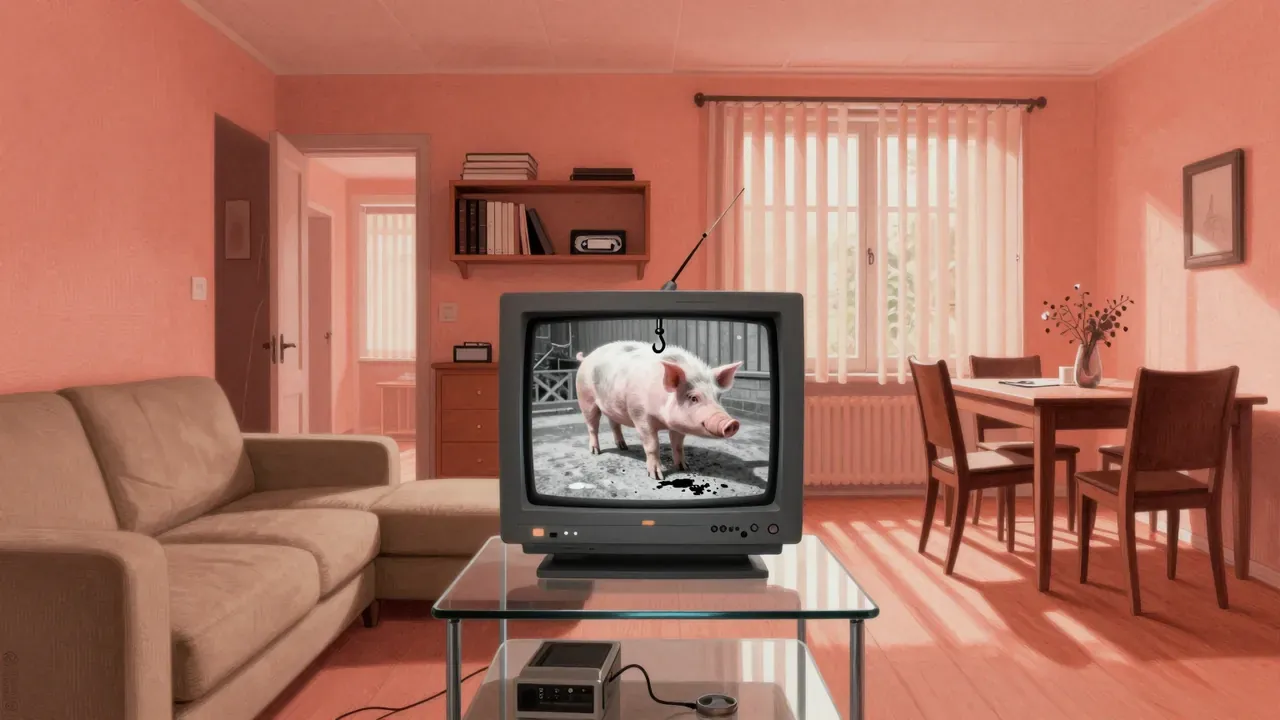
Michael Haneke’s 1992 Austrian horror film follows Benny, a Vienna teenager obsessed with video recording, whose emotionally detached parents enable his fixation. After filming a pig’s slaughter, he invites a girl to his home, kills her on camera, and proceeds with chilling normalcy — cleaning, socialising, travelling — while his parents dispose of the body. The film uses static camerawork, diegetic sound, and layered recordings to dissect how media saturation erodes moral response, treating violence not as rupture but as data.

13:00

Bigger Than Life

Nicholas Ray · 1956

Nicholas Ray’s 1956 drama follows schoolteacher Ed Avery, whose recovery from a rare illness via cortisone treatment triggers a psychological unraveling that fractures his marriage, terrifies his son, and exposes the brittle ideologies underpinning Eisenhower-era domestic life. James Mason stars and produced; Joseph MacDonald’s CinemaScope cinematography turns suburban interiors into psychological pressure chambers.

13:00

Blonde Venus

Josef von Sternberg · 1932

Blonde Venus (1932), directed by Josef von Sternberg and starring Marlene Dietrich, follows a chemist’s wife who returns to the cabaret stage to fund her husband’s life-saving treatment, then descends into flight, poverty, and arrest before a fragile reconciliation. Its power lies not in plot but in Dietrich’s commanding presence, Bert Glennon’s high-contrast cinematography, and a formal insistence on dignity amid degradation — all within the constrained moral universe of pre-Code Hollywood.

13:00

Boyhood

Richard Linklater · 2014

Richard Linklater’s Boyhood (2014) follows Mason Evans Jr. from age six to eighteen, filmed annually over twelve years with the same cast. Eschewing conventional plot, it traces quiet shifts in family, place, and self amid the unremarkable flow of daily life. Patricia Arquette won an Oscar for her grounded, evolving portrayal of Mason’s mother. Shot on 35mm film, edited with patient restraint, and scored with minimal intervention, the film treats time as material rather than metric — a structural experiment that succeeds as portraiture precisely because it refuses to dramatise.

13:00

Boyz n the Hood

John Singleton · 1991

Boyz n the Hood follows Tre Styles from age ten to seventeen as he navigates fatherhood, friendship, and fatal consequences in South Central Los Angeles. Written and directed by John Singleton at twenty-three, it uses linear storytelling, naturalistic performance, and location shooting to ground its depiction of environment as education. The film avoids sensationalism, treating gang culture, policing, and aspiration with equal sobriety. Its power lies in accumulation: small gestures, repeated silences, and the weight of ordinary days.

13:00

César

Marcel Pagnol · 1936

Marcel Pagnol’s 1936 César closes his Marseille Trilogy with Raimu, Pierre Fresnay, and Orane Demazis returning as César, Marius, and Fanny. Twenty years after Marius sailed away, his son Césariot learns the truth of his paternity — and sets in motion a slow, socially intricate reckoning. Set entirely in and around Marseille, the film favours conversational rhythm over plot mechanics, regional texture over spectacle, and moral ambiguity over resolution. Its 168-minute runtime demands patience, but repays it with layered performances and a deeply felt sense of place and consequence.

13:00

Chains

Raffaello Matarazzo · 1950

Raffaello Matarazzo’s 1950 Italian melodrama Chains follows mechanic Guglielmo Aniello, his wife Rosa, and the returned ex-fiancé Emilio whose blackmail threatens their marriage and family. Shot by Carlo Montuori and edited by Mario Serandrei, it builds tension through restraint — in performance, framing, and narrative economy — culminating in a courtroom verdict that affirms legality over morality. Though maligned by neorealist critics, its commercial success and inclusion in Italy’s ‘100 films to be saved’ list attest to its cultural resonance.

13:00

Claudine

John Berry, John Berry · 1974

A 1974 drama set in Harlem, Claudine follows Claudine Price, a single Black mother of six who works as a housekeeper while relying on welfare. When she begins dating Rupert, a cheerful garbage collector, their relationship is tested by poverty, bureaucratic constraints, her children’s resistance, and systemic pressures. Directed by John Berry and written by Tina Pine, the film grounds its social observation in specific place and unvarnished performance—Diahann Carroll and James Earl Jones anchor a portrait of endurance, interdependence, and quiet dignity.

13:00

C'mon C'mon

Mike Mills · 2021

Mike Mills’ 2021 drama follows radio journalist Johnny (Joaquin Phoenix) as he temporarily cares for his nine-year-old nephew Jesse (Woody Norman) while his sister tends to her husband’s mental health crisis. Shot in black-and-white across multiple US cities, the film centres on quiet exchanges, authentic child interviews, and the slow recalibration of fractured family bonds — all held together by Robbie Ryan’s textured cinematography and a restrained Dessner score.

13:00

Crazed Fruit

Kō Nakahira · 1956

Crazed Fruit (1956), directed by Kō Nakahira and written by Shintarō Ishihara, follows two brothers whose rivalry over a woman escalates to fatal violence on Japan’s summer coast. Stylised and restrained, it uses heat, water, and motor noise as narrative forces, avoiding psychology in favour of physical and rhythmic inevitability. Its power lies in what it omits: explanation, redemption, or moral framing.

13:00

Crisis

Ingmar Bergman · 1946

Ingmar Bergman’s 1946 debut Crisis adapts a Danish radio play into a tightly plotted Swedish drama about an 18-year-old girl torn between her stern foster mother and her glamorous, compromised biological mother. Shot in studio-bound naturalism by Oscar Rosander, it traces Nelly’s journey from village innocence to urban disillusionment and back — not as psychological evolution but as a series of ethically weighted decisions. Its strength lies in structural rigour and moral specificity; its weakness in underdeveloped psychology and tonal uncertainty in the city sequences.

13:00

Crumb

Terry Zwigoff · 1994

Terry Zwigoff’s 1994 documentary follows cartoonist R. Crumb and his two brothers over nine years, using long, unadorned takes to trace how childhood trauma echoes through adult lives. Shot by Maryse Alberti and edited by Victor Livingston, it avoids narration, score, or exposition, building its argument through repetition, silence, and sustained attention. It won the Sundance Grand Jury Prize and widespread critical acclaim, though its ethical stance toward vulnerable subjects remains contested.

13:00

Daddy Longlegs

Josh Safdie, Benny Safdie · 2009

Daddy Longlegs (2009) follows Lenny, a divorced Manhattan projectionist, during his annual two-week custody of his sons Sage and Frey. Shot on digital video with non-professional performers and minimal score, it observes his chaotic, often reckless parenting — from impromptu road trips to drugging the boys to avoid leaving them alone — without moral framing or psychological exposition. Directed by Josh and Benny Safdie and written by Benny Safdie and Ronald Bronstein, it is a rigorously unsentimental study of adult failure witnessed by children.

13:00

Dim Sum: A Little Bit of Heart

Wayne Wang · 1985

Dim Sum: A Little Bit of Heart (1985), directed by Wayne Wang, follows Julia, a Chinese immigrant widow in San Francisco, as she navigates the Lunar New Year amid a fortune-teller’s prediction of her death. With gentle precision, the film observes her efforts to arrange her daughter’s marriage and revisit China, all within the rhythms of family meals, mahjong games, and unspoken affection. Starring Cora Miao, Victor Wong, Joan Chen, and Amy Hill, it is a restrained, dialogue-driven drama grounded in behavioural realism and cultural specificity.

13:00

Early Summer

Yasujirō Ozu · 1951

Yasujirō Ozu’s 1951 drama observes Noriko, a 28-year-old Tokyo secretary, as her extended family gently pressures her to marry — then watches, with quiet precision, as she chooses a path that fractures their domestic equilibrium. Set in Kamakura and rural Japan, the film traces the emotional residue of that choice through restrained performances, static compositions, and a structure built on absence and repetition rather than conflict or resolution.

13:00

Equinox Flower

Yasujirō Ozu · 1958

Equinox Flower (1958) is Yasujirō Ozu’s first colour feature—a domestic comedy tracing a Tokyo businessman’s reluctant acceptance of his daughter’s self-chosen marriage. Shot in Agfa colour, it observes generational friction through stillness, repetition, and muted reds, trusting the viewer to register change in posture, silence, and the movement of a teapot. Fujiko Yamamoto’s standout performance anchors a structure built on evasion and quiet reversal, not crisis or catharsis.

13:00

Every-Night Dreams

Mikio Naruse · 1933

Mikio Naruse’s 1933 silent drama follows Omitsu, a bar hostess in depression-era Yokohama, as she navigates poverty, abandonment, and moral compromise to protect her young son. With Sumiko Kurishima in a performance of extraordinary restraint, the film traces how economic precarity reshapes love, duty, and selfhood — not through grand tragedy, but through accumulated, quiet concessions.

13:00

Executioners

Johnnie To, Ching Siu-tung · 1993

Executioners reunites Michelle Yeoh, Anita Mui and Maggie Cheung in a post-apocalyptic Hong Kong where water scarcity and social collapse test their evolving definitions of duty. Directed by Johnnie To and Ching Siu-tung, it prioritises ethical recalibration over martial escalation — with Yeoh tutoring a disfigured former enemy, Mui balancing motherhood and latent power, and Cheung reluctantly embracing collective responsibility. Its strengths lie in restrained performances and atmospheric world-weariness; its weaknesses in underwritten antagonists and uneven tonal discipline.

13:00

Fanny

Marc Allégret · 1932

A 1932 French drama directed by Marc Allégret from Marcel Pagnol’s play, Fanny is the second part of the Marseille Trilogy. Set in the port city, it follows Fanny’s pragmatic marriage to the kindly widower Panisse after becoming pregnant by her childhood love Marius — and the quiet, collective decision to raise their son as Panisse’s heir. Anchored by Raimu’s commanding presence and Orane Demazis’s restrained performance, the film favours moral ambiguity over resolution, and lived-in realism over theatrical flourish.

13:00

Farewell Amor

Ekwa Msangi · 2020

Farewell Amor follows an Angolan family reuniting in Brooklyn after a 17-year separation. Told in three interwoven chapters — from the perspectives of father Walter, mother Esther, and teenage daughter Sylvia — the film observes their tentative, often wordless reconnection in a cramped apartment. Directed by Ekwa Msangi, it prioritises behavioural detail over exposition, using subtle performance, naturalistic lighting, and precise editing to explore migration, memory, and the quiet labour of rebuilding intimacy.

13:00

Fat Girl

Catherine Breillat · 2001

Catherine Breillat’s 2001 drama follows twelve-year-old Anaïs and her fifteen-year-old sister Elena over a summer holiday in Les Mathes. Through precise, unsentimental staging and restrained performances, the film charts their divergent encounters with desire, bodily autonomy, and adult indifference. Its power lies in accumulation — not shock — as small exclusions build toward inevitable rupture. Controversial on release for its frank depiction of teenage sexuality and coercion, it remains a rigorous, unsettling examination of epistemic injustice in the domestic sphere.

13:00

Fight, Zatoichi, Fight

Kenji Misumi · 1964

The eighth Zatoichi film follows the blind masseur as he carries a baby across sixty miles to its estranged father, pursued by assassins and accompanied by reluctant helpers. Built on repetition and restraint, it treats duty as a series of concrete actions — reading documents, changing diapers, rolling out fire — rather than abstract virtue. Directed by Kenji Misumi and starring Shintarō Katsu, it is a lean, unsentimental entry in the series, anchored by precise choreography and moral clarity.

13:00

Fists in the Pocket

Marco Bellocchio · 1965

Marco Bellocchio’s 1965 debut is a stark, black-and-white drama about a young epileptic man who plots to kill his dysfunctional family. Set in a provincial Italian villa, it uses rigorous composition, sparse sound, and restrained performances to explore inheritance, enclosure, and moral inertia — not as ideas, but as lived conditions.

13:00

Floating Weeds

Yasujirō Ozu · 1959

Yasujirō Ozu’s 1959 colour remake of his 1934 silent film follows a fading kabuki troupe and its lead actor, Komajuro, as he revisits his former mistress and their adult son — whose paternity has been concealed. Set over one summer in Wakayama, the film unfolds with Ozu’s signature stillness: low angles, spare dialogue, and compositions that treat laundry lines and empty corridors as emotional anchors. Kazuo Miyagawa’s cinematography uses muted colour deliberately; Toshiro Mayuzumi’s score is near-absent. Its power lies in restraint — in what is withheld, repeated, or left unresolved.

13:00

I Figli di nessuno

Raffaello Matarazzo · 1951

I Figli di nessuno (1951), directed by Raffaello Matarazzo, follows a marble quarry owner and the daughter of his employee whose relationship and child provoke familial rejection and tragic consequences. Starring Amedeo Nazzari and Yvonne Sanson, it is a formally precise, studio-bound drama rooted in postwar Italian melodrama conventions — prioritising emotional legibility, moral structure, and quiet endurance over psychological nuance or social critique.

13:00

Imitation of Life

John M. Stahl · 1934

John M. Stahl’s 1934 Imitation of Life adapts Fannie Hurst’s novel into a dual-narrative drama about Bea Pullman, a white widow who builds a pancake-flour empire with the help of Delilah Johnson, her Black housekeeper and co-creator. Parallel to Bea’s rise is Delilah’s daughter Peola, who rejects her heritage to pass as white. Shot by Merritt B. Gerstad and written by William Hurlbut and Victor Heerman, the film navigates Production Code restrictions to deliver a restrained, visually grounded portrait of race, labour, and grief — preserved in the National Film Registry for its cultural and historical significance.

13:00

King of the Hill

Steven Soderbergh · 1993

Steven Soderbergh’s 1993 coming-of-age drama, adapted from A. E. Hotchner’s memoir, follows eleven-year-old Aaron as he lives alone in a St. Louis hotel during the Great Depression, his mother hospitalised and his father absent. With restrained cinematography by Elliot Davis, sparse scoring by Cliff Martinez, and a lead performance of extraordinary quietude from Jesse Bradford, the film builds emotional force through accumulation — not climax. It treats poverty, illness, and abandonment as environmental facts, not dramatic engines, and finds moral weight in small, sustained acts of self-preservation.

13:00

Last Summer

Catherine Breillat · 2023

Catherine Breillat’s 2023 drama Last Summer, a French remake of Queen of Hearts, follows a Parisian lawyer who enters a destructive relationship with her teenage stepson. Shot by Jeanne Lapoirie and starring Léa Drucker and debutant Samuel Kircher, it unfolds with clinical restraint, avoiding moral framing in favour of behavioural observation. Premiered at Cannes, it divides critics — some praising its formal control and thematic rigour, others finding it emotionally muted and narratively unconvincing in its final stretch.

13:00

Late Autumn

Yasujirō Ozu · 1960

Yasujirō Ozu’s 1960 drama follows a widow and her daughter in Tokyo as three friends attempt to arrange marriages for both. With quiet precision, the film traces the unspoken tensions of filial duty, ageing, and companionship — not through crisis but through accumulation: of glances, silences, and small, repeated gestures. Setsuko Hara and Yōko Tsukasa anchor a cast that treats emotion as behaviour, not exposition. Shot by Yūharu Atsuta and edited by Yoshiyasu Hamamura, it is a masterclass in compositional restraint.

13:00

Late Spring

Yasujirō Ozu · 1949

Yasujirō Ozu’s 1949 drama follows Noriko and her father in the weeks before her arranged marriage. Set in occupied Japan, it unfolds through quiet rituals — tea ceremonies, temple visits, train rides — with minimal dialogue and fixed, low-angle compositions. Chishū Ryū and Setsuko Hara perform with restrained precision; Yūharu Atsuta’s cinematography treats space as emotional architecture. The film’s power lies in accumulation, not climax: in repetition, omission, and the weight of what remains unsaid.

13:00

Les Enfants Terribles

Jean-Pierre Melville · 1950

Jean-Pierre Melville’s 1950 debut adaptation of Jean Cocteau’s novel traces the slow implosion of a brother and sister’s insular world. Shot in Paris with stark, precise compositions and scored almost entirely with Vivaldi concertos, it treats adolescence as a self-sustaining system — one that collapses only when forced to admit outsiders. Nicole Stéphane and Hélène Rémy deliver restrained, physically articulate performances in a film that prioritises structure over psychology and silence over exposition.

13:00

Life During Wartime

Todd Solondz · 2009

Todd Solondz’s 2009 film revisits the Jordan family from Happiness and Welcome to the Dollhouse with new actors and a bleaker, more metaphysical tone. Trish raises her children while hiding her imprisoned ex-husband Bill’s crime; Bill returns seeking absolution he won’t receive; Joy drifts between visions of dead men. Edward Lachman’s restrained cinematography and Solondz’s unsparing script refuse catharsis, treating trauma, accountability, and time as layered, unresolved conditions rather than narrative problems to solve.

13:00

Life Is Sweet

Mike Leigh · 1990

Mike Leigh’s 1990 domestic tragi-comedy follows a North London family over a summer: chef Andy buys a broken fast-food van; his wife Wendy holds things together; their daughters Natalie and Nicola navigate adulthood in opposite directions; and their friend Aubrey opens a doomed Parisian restaurant. Shot on location in Enfield with a cast developed through improvisation, it treats working-class life with unsentimental warmth, finding emotional weight in small gestures, quiet failures, and unspoken care.

13:00

Little Odessa

James Gray · 1994

James Gray’s 1994 debut Little Odessa follows a Russian-Jewish hitman who returns to his estranged family in Brooklyn’s Brighton Beach — a neighbourhood nicknamed 'Little Odessa' for its Soviet immigrant population. Shot by Tom Richmond in muted, low-light tones, the film traces Joshua Shapira’s slow re-immersion in a world of inherited trauma, terminal illness, and unspoken loyalties. Its power lies not in action but in accumulation: glances held too long, doors left ajar, bodies carried in sheets. It is a film of restraint, where violence is routine and grief is domestic.

13:00

Love in the Afternoon

Éric Rohmer · 1972

Éric Rohmer’s 1972 film closes his Six Moral Tales series with a study of marital fidelity tested not by betrayal but by imagination. Frédéric, a contented Parisian husband and father, begins spending afternoons with Chloé, a woman from his past — a relationship built on talk, not sex, until a single moment of near-surrender forces him home. Shot by Néstor Almendros and written and directed by Rohmer, it is a film of restraint, quiet tension, and precise observation.

13:00

Love Streams

John Cassavetes · 1984

John Cassavetes’s 1984 drama follows brother and sister Robert and Sarah as they navigate divorce, addiction, and estrangement in a series of intimate, unvarnished encounters. Shot mostly in Cassavetes’s home with static camerawork and minimal score, the film prioritises duration and emotional exposure over plot. Gena Rowlands and Cassavetes deliver raw, physically committed performances that treat love as labour, not feeling. It won the Golden Bear at Berlin and remains a defining work of American independent cinema — demanding, unresolved, and deeply humane.

13:00

Make Way for Tomorrow

Leo McCarey · 1937

Make Way for Tomorrow (1937), directed by Leo McCarey, follows Barkley and Lucy Cooper, an elderly couple forced to separate after losing their home. With no room for both in any of their children’s houses, they spend their final days together wandering the city before boarding trains to different states. Shot in restrained, unadorned style, it avoids sentimentality while building unbearable emotional pressure through quiet observation and unwavering performances.

13:00

Marriage Story

Noah Baumbach · 2019

Marriage Story follows a New York theatre director and his actress wife as their amicable separation hardens into a bi-coastal custody battle. Written and directed by Noah Baumbach, it stars Adam Driver and Scarlett Johansson, with Laura Dern winning an Oscar for her turn as a formidable divorce lawyer. Shot by Robbie Ryan and edited by Jennifer Lame, it avoids melodrama in favour of procedural realism and emotional granularity — tracking how love endures as habit, memory, and quiet gesture long after the legal terms are settled.

13:00

Meghe Dhaka Tara

Ritwik Ghatak · 1960

Ritwik Ghatak’s 1960 Bengali drama Meghe Dhaka Tara follows Nita, a young refugee woman in Calcutta whose relentless self-sacrifice sustains her displaced family until her body gives way. Shot in muted tones by Dinen Gupta, scored by Jyotirindra Moitra, and anchored by Supriya Devi’s restrained performance, it frames Partition not as history but as lived syntax — one that assigns value, defers futures, and naturalises extraction. Its power lies in accumulation, not climax.

13:00

Mildred Pierce

Michael Curtiz · 1945

Mildred Pierce (1945) is a Warner Bros. drama directed by Michael Curtiz, starring Joan Crawford as a divorced mother who builds a restaurant empire only to be undone by her daughter’s ambition and cruelty. Adapted from James M. Cain’s novel but reshaped as a murder-tinged thriller to satisfy censorship rules, it foregrounds Crawford’s restrained, physically precise performance and Ernest Haller’s atmospheric cinematography. Though structurally conventional and morally rigid, its focus on labour, class, and maternal exhaustion gives it enduring resonance.

13:00

Monsoon Wedding

Mira Nair · 2001

Set over four days in Delhi, Monsoon Wedding follows the Verma family as they prepare for their daughter Aditi’s arranged marriage. Amidst the chaos of planning, buried tensions surface — financial strain, generational rifts, unspoken abuse, and quiet acts of love. Directed by Mira Nair and written by Sabrina Dhawan, the film balances Bollywood energy with arthouse restraint, using ensemble storytelling, naturalistic performances, and layered sound design to explore how family, tradition, and healing operate in real time.

13:00

Moonstruck

Norman Jewison · 1987

A Brooklyn widow engaged to a man who leaves for Sicily accepts his estranged brother’s invitation to the opera — and finds herself drawn into a love that upends family loyalties, generational habits, and her own understanding of mourning. Directed by Norman Jewison from John Patrick Shanley’s Oscar-winning script, it treats romance as a force as elemental as gravity, staged with operatic precision and performed with unwavering sincerity.

13:00

Morning for the Osone Family

Keisuke Kinoshita · 1946

Made in January 1946 and directed by Keisuke Kinoshita, Morning for the Osone Family observes a single day in a Tokyo household recovering from war. Haruko Sugimura and Eitarō Ozawa play mother and son navigating scarcity, silence, and subtle shifts in duty and expectation. Shot with quiet precision and no score, the film finds gravity in routine: preparing meals, folding clothes, sharing tea. It offers no grand statements, only sustained attention to how people hold space for each other when the world outside has fractured. A key early work of postwar Japanese realism.

13:00

Murmur of the Heart

Louis Malle · 1971

Louis Malle’s 1971 coming-of-age film follows 14-year-old Laurent Chevalier in 1954 Dijon, navigating adolescence, jazz, and a complex bond with his Italian-born mother Clara. Set against bourgeois domesticity and post-war France, it centres on a single ambiguous night between them—not as climax, but as a quiet, unexplained convergence of affection and vulnerability. Shot by Ricardo Aronovich and edited by Suzanne Baron, it favours naturalism over exposition, humour over judgement, and atmosphere over argument.

13:00

No Blood Relation

Mikio Naruse · 1932

Mikio Naruse’s 1932 silent drama No Blood Relation follows actress Tamae’s return to Japan after five years abroad, hoping to reclaim her daughter Shigeko from the stepmother Masako, with whom the child has formed a deeper bond through shared hardship. Built on restraint and repetition rather than exposition or climax, it examines kinship as practice, not biology — a foundational work of Japanese realism whose quiet authority grows with attention.

13:00

Passing Fancy

Yasujirō Ozu · 1933

A 1933 Japanese silent film directed by Yasujirō Ozu, Passing Fancy follows Kihachi, a widowed brewery worker in Tokyo, as he shelters a destitute young woman and navigates care for her and his young son. With minimal intertitles, restrained performances, and Hideo Shigehara’s understated cinematography, the film traces quiet shifts in dignity, class, and paternal love — all within the confines of everyday spaces and routines.

13:00

Petite Maman

Céline Sciamma · 2021

Petite Maman is a 2021 French drama written and directed by Céline Sciamma, following eight-year-old Nelly as she encounters her mother as a child in the woods near her grandmother’s empty house. Using a simple, unexplained time-loop, the film explores intergenerational grief, memory, and the quiet continuities between mothers and daughters. Shot by Claire Mathon and scored by Para One, it features twin sisters Joséphine and Gabrielle Sanz in the lead roles, alongside Nina Meurisse, Stéphane Varupenne, and Margot Abascal. Released by France 3 Cinéma, it premiered at the Berlin Film Festival and received widespread critical acclaim.

13:00

Port of Call

Ingmar Bergman · 1948

Set in postwar Gothenburg, Port of Call follows Berit, a young woman recovering from a suicide attempt, and Gösta, a sailor choosing to stay on land. Their relationship unfolds without melodrama, anchored in small gestures, unspoken histories, and the quiet persistence of daily life. Shot by Gunnar Fischer and scored sparingly by Erland von Koch, it is Bergman’s first sustained engagement with psychological realism—grounded, restrained, and resolutely unmetaphorical.

13:00

Red River

Howard Hawks, Arthur Rosson · 1948

A 1948 Western following Thomas Dunson’s cattle drive from Texas to Kansas, and the slow, inevitable rupture between him and his adopted son Matt. Built on restraint and duration, it treats authority, succession and landscape as interlocking forces — not as myth, but as gruelling, embodied work.

13:00

Saraband

Ingmar Bergman · 2003

Saraband (2003) is Ingmar Bergman’s last film — a quiet, formally restrained drama revisiting Marianne and Johan from Scenes from a Marriage, now in their seventies. Set in Sweden and structured around ten acts, it traces intergenerational tension through Johan’s troubled relationship with his son Henrik and granddaughter Karin, while Marianne reflects on love, loss, and the persistence of feeling across time. Shot for television by Sveriges Television, it features Liv Ullmann and Erland Josephson reprising their roles, with music drawn exclusively from Bach’s Cello Suites.

13:00

Saving Face

Alice Wu · 2004

Alice Wu’s 2004 debut follows Wilhelmina Pang, a Chinese American surgeon in New York, as she navigates her closeted relationship with dancer Vivian Shing and her mother Hwei-Lan’s unexpected pregnancy. Filmed on location in Flushing, Queens, and performed in English and Mandarin, it treats intergenerational tension, queer identity, and cultural expectation with lightness and precision. Though criticised for underdeveloped professional detail and predictable structure, its strength lies in understated performances, authentic bilingualism, and a vision of change that accumulates in glances, pauses, and small, unheralded choices.

13:00

Secrets & Lies

Mike Leigh · 1996

Mike Leigh’s 1996 drama follows Cynthia Purley, a white factory worker in South East London, as she confronts the return of Hortense, her Black daughter given up for adoption decades earlier. Their reunion destabilises Cynthia’s already fragile family: her resentful daughter Roxanne, her photographer brother Maurice, and his depressed wife Monica. Shot in natural light with long takes and deeply observed performances, the film maps the quiet damage of withheld truths, the physical grammar of shame, and the tentative, unheroic work of connection.

13:00

Secrets of Women

Ingmar Bergman · 1952

Ingmar Bergman’s 1952 drama Secrets of Women unfolds across three interwoven stories told by women waiting for their husbands. Shot in crisp black-and-white by Gunnar Fischer, it observes marital tension, concealed pregnancy, and marital farce with quiet precision — avoiding grand statements in favour of subtle shifts in tone, glance, and silence.

13:00

Short Cuts

Robert Altman · 1993

Robert Altman’s 1993 ensemble film adapts nine Raymond Carver stories and a poem into a sprawling, interwoven portrait of Los Angeles life. With twenty-two principal characters, it builds meaning not through plot but through proximity, repetition and quiet rupture — helicopters spraying for medflies, overlapping phone calls, accidental collisions. Walt Lloyd’s flat, naturalistic cinematography and Geraldine Peroni’s associative editing sustain a rhythm of accumulation rather than climax. Though some subplots thin out and certain motifs repeat without deepening, its power lies in its unwavering attention to the texture of ordinary disconnection — grief dispersed, attention frayed, empathy deferred. It is arthouse cinema at its most patient and exacting.

13:00

Still Walking

Hirokazu Koreeda · 2008

Hirokazu Koreeda’s 2008 film follows the Yokoyama family over one day as they gather to mark the twelfth anniversary of their eldest son’s death. Built on restrained performances, unhurried pacing and naturalistic detail, it traces the quiet tensions between duty and desire, memory and erasure, love and resentment — all without raising its voice or breaking its rhythm.

13:00

Summer Hours

Olivier Assayas · 2008

Summer Hours follows three siblings negotiating the fate of their late mother’s country house and its art-filled contents. As they choose between preservation, sale, and donation to the Musée d'Orsay, the film traces how objects hold meaning only as long as they remain embedded in shared life — and how easily that meaning unravels across distance, time, and bureaucracy.

13:00

Sweetie

Jane Campion · 1989

Jane Campion’s 1989 black comedy drama follows Kay, a superstitious factory worker, as her erratic sister Dawn returns home and unravels the fragile order of their dysfunctional Australian family. Shot in Sydney on a low budget, the film uses physical performance, jagged editing, and oppressive domestic spaces to explore inheritance, containment, and the violence of care — not as psychology but as atmosphere.

13:00

Testament

Lynne Littman · 1983

Testament (1983) follows Carol Wetherly and her family in a Northern California suburb after a nuclear attack. With no special effects, no named antagonists and no grand speeches, it charts the erosion of domestic life — from school plays to backyard burials — as infrastructure fails and radiation sickness takes hold. Made for PBS and released theatrically by Paramount, it relies on Jane Alexander’s restrained performance, Steven Poster’s naturalistic cinematography and James Horner’s sparse score to anchor nuclear dread in intimate, unremarkable detail.

13:00

That Night's Wife

Yasujirō Ozu · 1930

That Night’s Wife (1930), Yasujirō Ozu’s early Shochiku silent, confines its entire action to a single night in a Tokyo apartment. A father robs a bank to pay for his daughter’s life-saving medicine; a detective tracks him home; the wife disarms the law, then helps her husband flee—only for him to return at dawn and surrender. Shot by Hideo Shigehara and co-written by Ozu and Kōgo Noda, it is a study in compressed ethics, where silence, stillness and domestic detail carry the full weight of choice.

13:00

The Beales of Grey Gardens

Albert Maysles, David Maysles · 2006

Assembled from footage shot for the 1975 documentary Grey Gardens but left unused for over thirty years, The Beales of Grey Gardens (2006) offers a slower, denser immersion in the East Hampton home of ‘Big’ and ‘Little’ Edie Beale. Directed by Albert and David Maysles and edited by Ian Markiewicz, it deepens rather than reinterprets the original — showing more of the mother-daughter dynamic, their caretaker Jerry, friend Lois Wright, and the ever-present cats, including the origin of the famous hallway fire. With no narration or context, it trusts observation over exposition.

13:00

The Celebration

Thomas Vinterberg · 1998

Thomas Vinterberg’s 1998 debut, the first Dogme 95 film, follows a Danish family’s birthday gathering where a son publicly accuses his father of childhood sexual abuse. Shot on Mini-DV with no artificial lighting or post-sync sound, it uses radical formal restraint to focus on performance, gesture and the banality of complicity. The film won the Cannes Jury Prize and numerous Nordic and European awards.

13:00

The Children Are Watching Us

Vittorio De Sica · 1944

Vittorio De Sica’s 1944 drama follows young Pricò as he observes his mother’s repeated departures and his father’s silent collapse. Shot by Romolo Garroni with austere precision and scored sparingly by Renzo Rossellini, it treats childhood not as innocence but as unblinking witness. There are no villains, no explanations — only cause, effect, and the unbearable clarity of a child’s gaze.

13:00

The Damned

Luchino Visconti · 1969

Luchino Visconti’s 1969 film traces the Essenbeck family’s moral dissolution as they align with the Nazi Party in early 1933. Shot across Italy, West Germany and Austria, it uses lavish production, deliberate pacing and psychologically precise performances to chart how privilege, desire and fear enable authoritarianism from within. Though acclaimed, it has drawn criticism for its handling of Jewish characters and its reliance on Helmut Berger’s volatile charisma over Dirk Bogarde’s restrained gravitas.

13:00

The Darjeeling Limited

Wes Anderson · 2007

Three estranged brothers travel across Rajasthan aboard a luxury train one year after their father’s death, attempting a spiritual journey that unravels into confrontation, failure, and quiet reconnection. Directed by Wes Anderson and shot by Robert Yeoman, the film employs symmetrical framing, a muted palette, and carefully curated music to explore inherited mourning, cultural distance, and the slow dissolution of control. It premiered at Venice in 2007, grossed $35.3m on a $17.5m budget, and received generally favourable reviews.

13:00

The Daytrippers

Greg Mottola · 1996

The Daytrippers (1996) follows Eliza and her family on a single-day drive from Long Island to Manhattan after she finds evidence her husband may be having an affair. Written and directed by Greg Mottola, it unfolds through tightly observed interactions, subtle performances, and a refusal to resolve its tensions neatly. With a strong ensemble cast and a focus on emotional authenticity over plot mechanics, it captures the friction and tenderness of family life under uncertainty.

13:00

The End of Summer

Hélène Angel · 2019

Hélène Angel’s 2019 French drama The End of Summer observes a small group across a few days in a provincial house. With no score, minimal dialogue, and restrained performances from Talid Ariss, Christiane Millet, Bernard Le Coq and Maël Rouin Berrandou, it builds meaning through duration, silence and physical detail — not plot or revelation.

13:00

The Flavor of Green Tea over Rice

Yasujirō Ozu · 1952

Yasujirō Ozu’s 1952 drama follows a Tokyo couple drifting apart amid family obligations and their niece’s resistance to arranged marriage. With still compositions, restrained performances, and deliberate pacing, it traces how small, shared acts—like making green-tea rice late at night—can quietly restore connection without resolving deeper tensions.

13:00

The Furies

Anthony Mann · 1950

Anthony Mann’s 1950 Western *The Furies*, adapted from Niven Busch’s novel, follows Vance Jeffords (Barbara Stanwyck) and her tyrannical father T. C. (Walter Huston) in a battle of wills over a New Mexico ranch. With Victor Milner’s restrained cinematography and Franz Waxman’s tense score, the film prioritises psychological architecture over action, building a mythic, morally austere portrait of inheritance as compulsion. Though commercially unsuccessful on release, it has since been reappraised as a key work in Mann’s filmography and a defining ‘Freudian Western’.

13:00

The Grifters

Stephen Frears · 1990

Stephen Frears’ 1990 adaptation of Jim Thompson’s novel follows three grifters—Lilly, her son Roy, and his girlfriend Myra—as their competing deceptions collapse into mutual ruin. Anchored by Anjelica Huston, John Cusack, and Annette Bening, it trades noir stylisation for psychological austerity, rendering betrayal as routine and survival as hollow victory.

13:00

The Heiress

William Wyler · 1949

William Wyler’s 1949 adaptation of Henry James’s Washington Square follows Catherine Sloper’s quiet, decades-long transformation from a cowed daughter into an unassailable heiress. Olivia de Havilland’s precisely calibrated performance, Leo Tover’s under-lit interiors, and Aaron Copland’s sparse score coalesce into a film that treats emotional deprivation as structural fact — not melodrama. It is austere, deliberate, and unsentimental, earning its acclaim through cumulative psychological precision rather than dramatic flourish.

13:00

The Ice Storm

Ang Lee · 1997

Set over a single Thanksgiving weekend in 1973, The Ice Storm follows two Connecticut families adrift in marital and generational disaffection. Directed by Ang Lee from James Schamus’s screenplay, it renders suburban ennui through restrained performances, muted cinematography, and a structure built on accumulation rather than escalation. A fatal accident during an ice storm forces a reckoning — not with morality, but with the cost of emotional drift.

13:00

The In-Laws

Arthur Hiller · 1979

The In-Laws (1979) pairs Alan Arkin and Peter Falk as fathers-in-law drawn into international intrigue when a mild-mannered dentist is swept up by his future son-in-law’s seemingly unhinged CIA operative father. Written by Andrew Bergman and directed by Arthur Hiller, it sustains a high-wire act of farcical escalation grounded entirely in character logic — not plot mechanics — and remains a benchmark for odd-couple comedy built on timing, contrast, and unwavering commitment to its central conceit.

13:00

The Innocent

Louis Garrel · 2022

Louis Garrel’s 2022 comedy follows Abel, a timid aquarium guide whose mother Sylvie marries an ex-con, Michel. Suspicious and guilt-ridden, Abel agrees to help Michel steal caviar — not out of greed, but as a way to re-enter his mother’s orbit. What begins as surveillance becomes participation, then genuine connection, then consequence. Shot in Lyon with quiet precision, the film avoids moralising, favouring rhythm and restraint over revelation.

13:00

The Kid

Charlie Chaplin · 1921

Charlie Chaplin’s 1921 feature The Kid pairs him with six-year-old Jackie Coogan in a comedy-drama about an abandoned infant raised by the Tramp. Built on tight physical performances, economical editing and unforced pathos, it balances street-level pragmatism with quiet tenderness — making care visible as routine, not revelation.

13:00

The Kid Brother

Harold Lloyd, Lewis Milestone, Ted Wilde · 1927

The Kid Brother (1927) is Harold Lloyd’s deliberate departure from urban thrills into rural character comedy. As Harold Hickory — the bookish, overlooked son of a respected sheriff — he must prove himself not through strength but wit, navigating a travelling medicine show, a stolen dam fund, and a beached ship full of thieves. Directed partly by Lewis Milestone and shot by Walter Lundin, it balances dense physical gags with emotional continuity and thematic weight. Restored in 4K for Criterion, it remains a masterclass in silent-era storytelling where every laugh serves the man behind the glasses.

13:00

The Kid with a Bike

Luc Dardenne, Jean-Pierre Dardenne · 2011

The Kid with a Bike follows twelve-year-old Cyril as he navigates abandonment, foster care, and fragile trust in working-class Seraing. Directed by Jean-Pierre and Luc Dardenne, it uses restrained naturalism, precise performances, and a subtle fairy-tale structure to explore how belonging is built — not declared — through small, repeated acts of presence. Shot by Alain Marcoen and edited by Marie-Hélène Dozo, it won the Grand Prix at Cannes and the European Film Award for Best Screenplay.

13:00

The King of Marvin Gardens

Bob Rafelson · 1972

The King of Marvin Gardens (1972) follows depressive Philadelphia radio host David Staebler as he visits his charismatic, scheming brother Jason in a decaying Atlantic City. Against the backdrop of soon-to-be-demolished hotels, Jason pitches a Hawaiian casino venture while tensions mount among the four adults sharing his suite. László Kovács’ muted cinematography and Bob Rafelson’s unhurried direction treat delusion as routine, not crisis — making this a film less about plot than about the weight of unfulfilled promise, both personal and architectural.

13:00

The Love That Remains

Hlynur Pálmason · 2025

Set over one year in Iceland, The Love That Remains follows a family adjusting to separation with quiet, unsentimental attention. Directed and shot on 35 mm by Hlynur Pálmason, it stars Saga Garðarsdóttir and Sverrir Guðnason as parents navigating shared custody, their children absorbing the shift in atmosphere more than in words. With no score-driven emotion or narrative climax, it builds meaning through repetition, texture, and the accumulated weight of small gestures.

13:00

The Makioka Sisters

Kon Ichikawa · 1983

Kon Ichikawa’s 1983 adaptation of Jun’ichirō Tanizaki’s novel follows the Makioka sisters — Tsuruko, Sachiko, Yukiko, and Taeko — as they navigate marriage negotiations, familial duty, and quiet personal rebellion in pre-war Osaka and Kyoto. Shot with deliberate stillness and seasonal precision, the film prioritises atmosphere over plot, restraint over revelation, and social texture over psychological exposition. Its power lies in accumulation: in glances, silences, and the slow erosion of old hierarchies. Not for those seeking narrative urgency, but essential for viewers attuned to the eloquence of the unsaid.

13:00

The Moon Has Risen

Kinuyo Tanaka · 1955

Kinuyo Tanaka’s 1955 film, scripted by Yasujirō Ozu and shot by Shigeyoshi Mine, follows Setsuko as she quietly engineers a romance between her older sister Ayako and a former suitor. Set in Nara, it unfolds across domestic spaces with restrained pacing, gentle performances, and a focus on unspoken feeling. Though structurally loose around some supporting characters, its strength lies in emotional precision and tonal consistency.

13:00

The Red Head

Julien Duvivier · 1932

Julien Duvivier’s 1932 adaptation of Jules Renard’s Poil de carotte is a restrained, psychologically precise portrait of a red-haired boy navigating emotional neglect in a rigid bourgeois household. Robert Lynen’s performance anchors the film, supported by Harry Baur and Catherine Fonteney as his emotionally distant parents. Maurice Monniot’s cinematography and Alexandre Tansman’s sparse score serve the film’s commitment to understatement. Though occasionally undermined by didactic framing and technical limitations of early sound, it remains a masterclass in showing rather than telling — and in treating childhood as lived duration, not narrative arc.

13:00

The Royal Tenenbaums

Wes Anderson · 2001

Wes Anderson’s 2001 black comedy-drama follows the Tenenbaum siblings — child prodigies now adrift — as their estranged father Royal (Gene Hackman) returns with a fabricated illness. Shot across 250 stylised sets in and around New York, it uses symmetrical framing, deliberate pacing, and a baroque score to explore stasis, inherited grief, and the quiet persistence of love beneath formal distance.

13:00

The Secret of the Grain

Abdellatif Kechiche · 2007

Abdellatif Kechiche’s 2007 drama follows Slimane Beiji, a Maghrebi shipyard worker in Sète, as he attempts to convert a derelict boat into a couscous restaurant for his extended Franco-Arab family. With no score, minimal exposition, and scenes that run long enough to feel lived-in, the film traces the rhythms of domestic labour, bureaucratic delay, and intergenerational care — culminating in a gala night derailed by absence, miscommunication, and a stolen motorbike.

13:00

The Soft Skin

François Truffaut · 1964

François Truffaut’s 1964 drama follows Pierre Lachenay, a married writer and lecturer, as he begins an affair with a young flight attendant. Shot on location in Paris, Reims and Lisbon by Raoul Coutard, the film observes the slow, unceremonious collapse of Pierre’s double life — not through melodrama, but through accumulated silences, evasions and logistical missteps. Its power lies in its restraint: no voiceover, no score-driven emotion, no moral framing. The ending arrives with shocking abruptness, underscoring the film’s central concern — not why people fall apart, but how quietly they do so.

13:00

The Squid and the Whale

Noah Baumbach · 2005

Set in 1986 Brooklyn, The Squid and the Whale follows two brothers navigating their parents’ bitter separation. Bernard, a failing novelist, clings to intellectual superiority; Joan, his wife, emerges as a writer in her own right. Their sons absorb the conflict differently: Walt mimics his father’s arrogance and dishonesty; Frank rebels in smaller, messier ways. Shot on Super 16 with tight, handheld framing, the film sustains a claustrophobic intimacy, using music, silence and overlapping dialogue to convey emotional erosion. Semi-autobiographical and formally rigorous, it offers no redemption—only recognition.

13:00

The Stranger

Satyajit Ray · 1991

Satyajit Ray’s last film, The Stranger (1991), follows a Calcutta family unsettled by the arrival of a man claiming to be Anila Bose’s long-lost uncle. Over three days, his presence provokes escalating suspicion, philosophical debate, and quiet self-reckoning — not about whether he is who he says he is, but about why certainty matters more than welcome. Shot in restrained natural light, driven by dialogue and performance, it is a gentle, unsentimental meditation on trust, inheritance, and the cost of vigilance in a changing India.

13:00

The White Angel

Raffaello Matarazzo · 1955

Raffaello Matarazzo’s 1955 sequel The White Angel follows a wrongfully imprisoned woman’s return to society under a false name, her search for her lost child, and her slow reintegration into a world that punished her for motherhood. Starring Amedeo Nazzari and Yvonne Sanson, and shot by Tonino Delli Colli, it sustains emotional force through restraint — in performance, editing, and score — rather than escalation.

13:00

The Woman Who Dared

Jean Grémillon · 1944

Jean Grémillon’s 1944 drama follows Thérèse Gauthier, a mechanic’s wife displaced by airport expansion, who gradually reclaims agency — first as a dealership manager, then as a pilot. Madeleine Renaud and Charles Vanel anchor a film that privileges procedural realism over psychological exposition, showing aspiration as re-attunement to one’s own capacities rather than rupture from circumstance.

13:00

There Was a Father

Yasujirō Ozu · 1942

Yasujirō Ozu’s 1942 drama follows a widowed schoolteacher who distances himself from his son to secure his future, tracing their relationship across two decades of quiet duty, unspoken grief, and stoic endurance. Shot in restrained compositions by Yūharu Atsuta and performed with understated precision by Chishū Ryū and Shin Saburi, it treats filial obligation not as theme but as architecture — shaping movement, speech, and silence. Restored in 2023, it remains resolutely unadorned: no score, no exposition, no climax — only the slow accrual of meaning across trains, seasons, and generations.

13:00

This Happy Breed

David Lean · 1944

David Lean’s 1944 debut follows the Gibbons family across twenty years of peace and gathering storm in suburban London. Anchored by Robert Newton and Celia Johnson, it charts domestic life against national events — the General Strike, the rise of fascism, the abdication — not through speeches or spectacle, but through wallpaper, radio sets, and the weight of unspoken grief. Shot in muted Technicolor and edited with Lean’s signature temporal bleed, it is a film of accumulation: small details, repeated gestures, returning spaces. Its power lies in endurance, not revelation.

13:00

Time

Garrett Bradley · 2020

Garrett Bradley’s 2020 documentary follows Sibil Fox Richardson’s two-decade campaign to free her husband Rob from a 60-year Louisiana prison sentence. Built from 100 hours of her home videos and new black-and-white footage, it treats time as both subject and material — showing how love, labour and resistance persist across decades of separation. It won the Sundance U.S. Directing Award and was nominated for an Academy Award.

13:00

Tiny Furniture

Lena Dunham · 2010

Lena Dunham’s 2010 debut follows Aura, a film-school graduate who moves back into her mother’s Tribeca loft after graduation, adrift between plans and expectations. Shot on the Canon EOS 7D in eleven days, the film renders a summer of small humiliations, tentative connections, and quiet reckonings — with family, with ambition, and with the slow work of becoming adult without a script.

13:00

To Joy

Ingmar Bergman · 1950

Ingmar Bergman’s 1950 drama follows violinists Stig and Marta as their marriage frays under the pressure of professional compromise, unspoken resentment, and the lure of easier affections. Shot in restrained black-and-white by Gunnar Fischer, with performances rooted in physical detail rather than declamation, it is a film of accumulations — glances, silences, repeated gestures — rather than climaxes. Its power lies in its refusal to moralise or resolve.

13:00

Tokyo Twilight

Yasujirō Ozu · 1957

Tokyo Twilight (1957) is Yasujirō Ozu’s final black-and-white drama, following two sisters reunited with their estranged mother in postwar Tokyo. When Akiko discovers the truth about her parentage, the revelation unravels her fragile stability — leading to abortion, confrontation, and sudden death. Her elder sister Takako absorbs the fallout, choosing to return to her failing marriage to break the cycle of abandonment. Shot by Yūharu Atsuta with Ozu’s signature stillness, the film resists melodrama in favour of accumulated quiet, using omission and restraint to articulate grief as atmosphere rather than event.

13:00

Tótem

Lila Avilés · 2023

Set over a single day at her grandfather’s house, seven-year-old Sol attends what is presented as her father’s birthday party — though it functions as a tender, unspoken farewell before his death. Directed and written by Lila Avilés, the film observes Sol’s sensory and emotional navigation of shifting family dynamics as daylight fades and ritual gives way to raw feeling. With Naíma Sentíes in a remarkably restrained central performance and Diego Tenorio’s naturalistic cinematography, Tótem builds emotional weight through accumulation, not climax.

13:00

Vermiglio

Maura Delpero · 2024

Set in a remote Italian alpine village in late winter 1944, Vermiglio follows Lucia, a teenage girl whose secret relationship with a Sicilian deserter upends her family and community. Directed by Maura Delpero and shot by Mikhail Krichman, the film observes tradition, Catholic ritual, and female labour with unsentimental precision — avoiding exposition, score-led emotion, or psychological shorthand. Its power lies in accumulation: in gestures, textures, and the weight of unspoken consequence.

13:00

Wildlife

Paul Dano · 2018

Paul Dano’s 2018 directorial debut Wildlife adapts Richard Ford’s novel into a precisely observed drama set in 1960s Montana. When Jerry loses his job, his wife Jeannette begins an affair with a local businessman, and their teenage son Joe bears quiet witness. With understated performances from Carey Mulligan, Jake Gyllenhaal and Ed Oxenbould, and Diego García’s muted cinematography, the film charts the slow, unspectacular unravelling of a marriage — and the ways children absorb adult failure as grammar, not event.

13:00

Written on the Wind

Douglas Sirk · 1956

Written on the Wind (1956), directed by Douglas Sirk for Universal Pictures, is a Southern Gothic melodrama tracing the disintegration of a Texas oil dynasty. Kyle Hadley’s infertility, his sister Marylee’s obsessive desire, and Lucy Moore’s quiet resilience collide in a world where wealth functions as toxin and dignity as performance. Russell Metty’s cinematography, Dorothy Malone’s Oscar-winning turn, and Robert Wilder’s source novel anchor a film that prioritises symbolic coherence over psychological realism.

13:00

You Can Count on Me

Kenneth Lonergan · 2000

Kenneth Lonergan’s 2000 debut follows Sammy, a single mother and bank officer in the Catskills, as her drifting younger brother Terry arrives after years of silence. Their reunion exposes old fractures and fragile affections, played out in quiet rooms, rain-slicked streets, and the unremarkable routines of small-town life. With Laura Linney and Mark Ruffalo delivering restrained, deeply observed performances, the film builds meaning through accumulation rather than incident—honouring the weight of what goes unsaid.

13:00

A Woman Under the Influence

John Cassavetes · 1974

John Cassavetes’ 1974 drama follows Mabel Longhetti, a Los Angeles housewife whose behaviour grows increasingly erratic, straining her marriage and triggering her involuntary commitment. Starring Gena Rowlands and Peter Falk, it was independently financed, shot on location with non-professional actors, and edited from a three-hour cut to 155 minutes. Its power lies in sustained, unflinching observation — not psychological exposition — rendering mental distress as lived, domestic, and profoundly relational.

13:00

Apur Sansar

Satyajit Ray · 1959

Satyajit Ray’s 1959 Apur Sansar concludes the Apu Trilogy with quiet rigour: Soumitra Chatterjee’s debut as the adult Apu traces a path from drifting graduate to bereft father to tentative parent, shaped by Subrata Mitra’s restrained cinematography and Ravi Shankar’s sparse score. Adapted from Bibhutibhushan Bandopadhyay’s novel, it finds emotional gravity in understatement — in shared meals, unspoken decisions, and the slow reassembly of a life after loss.

13:00

Hunt for the Wilderpeople

Taika Waititi · 2016

Taika Waititi’s 2016 film follows Ricky Baker, a defiant foster child, and Hector, the taciturn man reluctantly tasked with caring for him. After Bella — Hector’s wife and Ricky’s first real anchor — dies, Ricky flees into the bush, and Hector follows. What begins as a simple search becomes a nationwide manhunt, reframing their bond as both tender and subversive. Shot across New Zealand’s Central Plateau and Waitākere Ranges, the film balances deadpan comedy, adolescent anxiety, and quiet grief without recourse to sentiment or spectacle.

13:00

Sometimes Happiness Sometimes Sadness

Karan Johar · 2001

Sometimes Happiness Sometimes Sadness (2001) is a Hindi-language family drama directed by Karan Johar, following the Raichand family across Delhi, London, and Cairo. When adopted son Rahul marries outside his class, his father Yash disowns him, triggering a decade-long estrangement. His younger brother Rohan engineers a reunion, culminating in public apology and dual weddings. Anchored by performances from Amitabh and Jaya Bachchan, Shah Rukh Khan, and Kajol, the film uses music, costume, and ritual to explore inheritance, visibility, and the slow labour of belonging.

13:00

The Son's Room

Nanni Moretti · 2001

Nanni Moretti’s 2001 drama follows a psychoanalyst and his family in Ancona after their teenage son drowns. Shot with unadorned naturalism by Giuseppe Lanci and edited with deliberate restraint by Esmeralda Calabria, the film charts the quiet disintegration of routine, language, and professional distance. Its power lies in accumulation—not revelation—in how photographs, letters, and unspoken silences reconfigure daily life. It won the Palme d’Or and David di Donatello for Best Film.

13:00

The White Balloon

Jafar Panahi · 1994

Set on the eve of the Iranian New Year, Jafar Panahi’s 1994 debut follows seven-year-old Razieh as she tries to buy a goldfish with her mother’s last banknote. When the money slips through a street grate, she and her brother enlist the help of a young Afghan balloon seller to retrieve it. Filmed in natural light, with no score and minimal dialogue, the film observes childhood not as innocence but as embodied negotiation — with space, time, language, and adult indifference.

13:00

A Raisin in the Sun

Daniel Petrie · 1961

Daniel Petrie’s 1961 film adapts Lorraine Hansberry’s landmark play about the Younger family’s struggle to claim dignity, space, and self-determination in 1950s Chicago. Anchored by Sidney Poitier and Claudia McNeil, it unfolds almost entirely within their cramped apartment, using dialogue, gesture, and quiet moral reckoning to explore race, class, generational conflict, and the meaning of home. Its power lies in specificity, restraint, and unwavering attention to how systemic forces shape daily life.

13:00

Aparajito

Satyajit Ray · 1956

Satyajit Ray’s 1956 Bengali drama Aparajito, the second film of The Apu Trilogy, follows Apu from childhood to young adulthood across Varanasi, rural Bengal, and Kolkata. It charts his intellectual ascent alongside his emotional withdrawal from his mother Sarbajaya, culminating in her death and his muted, complex response. Shot by Subrata Mitra with diffused lighting and scored by Ravi Shankar, the film relies on stillness, silence, and precise gesture rather than exposition or climax. Though less immediately accessible than its predecessor Pather Panchali, it deepens the trilogy’s inquiry into time, memory, and filial love—winning the Golden Lion at Venice and cementing Ray’s international reputation.

13:00

Boy

Taika Waititi · 2010

Set in rural New Zealand in 1984, Boy follows eleven-year-old Alamein — known as Boy — as he navigates childhood with imagination as his primary tool. When his absent father Alamein returns, Boy’s carefully constructed myths about him begin to fray. Taika Waititi’s film balances gentle comedy and quiet pathos, anchored by James Rolleston’s understated performance and Adam Clark’s sun-bleached cinematography. It is a story about inheritance, storytelling as survival, and the slow, unceremonious work of growing up without models.

13:00

Charlie and the Chocolate Factory

Tim Burton · 2005

Tim Burton’s 2005 Charlie and the Chocolate Factory is a deliberate departure from the 1971 adaptation: darker, more textured, and psychologically expanded. With Johnny Depp as a tightly wound Willy Wonka and Freddie Highmore as a quietly observant Charlie Bucket, it restores elements from Roald Dahl’s novel while adding Wonka’s estranged dentist father as a key to his pathology. Shot on practical sets at Pinewood Studios, the film privileges tactile realism over digital spectacle. Though praised for its design and tone, its emotional resolution remains thin — Charlie’s virtue is passive, Wonka’s healing unearned. It is a family film that trusts its audience to sit with discomfort.

13:00

Charlie Chaplin

Sakthi Chidambaram · 2002

Charlie Chaplin (2002) is a Tamil-language comedy directed by Sakthi Chidambaram, starring Prabhu Ganesan and Prabhu Deva as a wealthy businessman and his loyal photographer assistant in Ooty. When the husband briefly hires a call girl to appease his suspicious wife, the assistant covers for him by pretending the woman is his own lover — triggering a chain of deceptions that tests loyalty, reputation, and truth itself. Shot by Siva with functional clarity and scored by Bharani, the film balances farcical escalation with grounded performances. Though commercially successful and widely remade, it avoids moral scrutiny of its central transaction, resolving instead through courtroom confession and collective forgiveness.

13:00

Dilwale Dulhania Le Jayenge

Aditya Chopra · 1995

Dilwale Dulhania Le Jayenge (1995) is a 245-minute Hindi romantic drama directed by Aditya Chopra, starring Shah Rukh Khan and Kajol as NRIs whose courtship centres on winning parental consent rather than eloping. Shot across Switzerland, London and Punjab, it uses song, gesture and sustained tone to affirm family values without rejecting individual desire. Its enduring theatrical run — still screening daily in Mumbai since 1995 — reflects its design as ritual, not narrative.

13:00

Eat Drink Man Woman

Ang Lee · 1994

Set in 1990s Taipei, Eat Drink Man Woman follows Zhu, a retired chef and widower, and his three daughters as their weekly Sunday meals become the stage for shifting desires, unspoken tensions, and gradual reinvention. Directed by Ang Lee, the film treats food, faith, career, and love as interwoven strands of daily life — not symbols, but substances. Its strength lies in specificity: Mandarin dialogue, Taipei locations, culinary detail, and performances that resist caricature. While Jia-Ning’s storyline feels underdeveloped, the film’s emotional logic remains coherent and deeply humane.

13:00

Fanny and Alexander

Ingmar Bergman · 1982

Fanny and Alexander is Ingmar Bergman’s semi-autobiographical 1982 drama, set in early-1900s Uppsala. It follows siblings Fanny and Alexander as their family fractures after their father’s death and their mother’s remarriage to a rigid bishop. Shot by Sven Nykvist and designed with meticulous period detail, the film contrasts the warmth of the theatrical Ekdahl household with the austerity of ecclesiastical authority. Though conceived as Bergman’s final feature, its generosity of attention, layered performances, and tactile realism make it a defining work of Swedish cinema — and a rare film where domestic life feels mythic without losing its weight.

13:00

Happiness

Todd Solondz · 1998

Todd Solondz’s 1998 ensemble film follows three sisters and their circle across intersecting stories of loneliness, repression and violation. Shot by Maryse Alberti and scored by Robbie Kondor, it treats pedophilia, obscene phone calls, marital drift and suicidal despair with unblinking, tonally level observation. Its power lies in accumulation, not climax — in the weight of unspoken things, the silence after a confession, the banality of moral collapse. It won the FIPRESCI Prize at Cannes and the National Board of Review’s Top Ten Films award, and was released unrated after surrendering its NC-17 classification.

13:00

Housekeeping

Bill Forsyth · 1987

Bill Forsyth’s 1987 adaptation of Marilynne Robinson’s novel follows two sisters raised by their eccentric aunt in 1950s Idaho. Shot in British Columbia, it trades plot for atmosphere, using restrained performances, muted cinematography, and sparse music to explore inheritance, belonging, and the quiet persistence of absence. Though critically admired, it received little studio support and has remained scarce on home media.

13:00

I Killed My Mother

Xavier Dolan · 2009

Xavier Dolan’s 2009 debut is a French-language Canadian drama about Hubert, a 16-year-old Québécois whose fierce, fractured relationship with his mother Chantale drives a tightly wound narrative of flight, confrontation, and unspoken loyalty. Written when Dolan was sixteen and shot when he was nineteen, the film uses stylised dialogue, intimate framing, and rhythmic editing to render adolescent interiority as both claustrophobic and theatrical. Anne Dorval gives a grounded, unsentimental performance as Chantale, anchoring the film’s emotional volatility. Though occasionally mannered, its power lies in its refusal to resolve — treating family not as problem or refuge, but as the first and most persistent language.

13:00

Postcards from the Edge

Mike Nichols · 1990

Postcards from the Edge (1990), directed by Mike Nichols and adapted by Carrie Fisher from her semi-autobiographical novel, follows actress Suzanne Vale’s return to work after a drug overdose, contingent on living with her formidable mother Doris. Anchored by Meryl Streep and Shirley MacLaine, it uses Hollywood’s machinery — insurance riders, on-set critiques, studio politics — as the frame for a sharp, unsentimental study of intergenerational inheritance, performance as survival, and the quiet labour of staying sober without mythologising it.

13:00

Raising Arizona

Joel Coen, Ethan Coen · 1987

A 1987 Coen brothers comedy starring Nicolas Cage and Holly Hunter as an ex-con and ex-cop who kidnap a baby to start a family. Shot in Arizona with Barry Sonnenfeld’s vivid cinematography and Carter Burwell’s folk-inflected score, it balances surreal farce with emotional sincerity. Though divisive on release, it has since become a cult classic praised for its originality, dialogue, and tonal audacity.

13:00

Scenes from a Marriage

Ingmar Bergman · 1974

Ingmar Bergman’s 1974 Scenes from a Marriage follows a Swedish couple’s decade-long marital unraveling through six intimate, dialogue-driven episodes. Shot by Sven Nykvist and performed with unsparing naturalism by Liv Ullmann and Erland Josephson, it treats domestic life as a site of existential exposure — where love, resentment, and habit coexist without hierarchy. Its power lies in cumulative detail, not plot.

13:00

Stoker

Park Chan-wook · 2013

Park Chan-wook’s English-language debut is a Southern Gothic psychological thriller about an 18-year-old girl whose father’s death brings his enigmatic brother into her life. As buried family truths surface, her acute perception becomes both weapon and wound. Stylised cinematography, Clint Mansell’s score and restrained performances build a world where atmosphere carries more weight than exposition.

13:00

Tender Mercies

Bruce Beresford · 1983

Tender Mercies (1983), directed by Bruce Beresford and written by Horton Foote, follows Mac Sledge — a washed-up country singer recovering from alcoholism — as he rebuilds a life with a young widow and her son in rural Texas. Robert Duvall’s Oscar-winning performance anchors a film defined by restraint: sparse dialogue, unvarnished performances, and a documentary-like gaze. It avoids melodrama, instead locating meaning in small, repeated acts of care — mowing the lawn, singing quietly, sharing meals. Shot on location in Waxahachie, Texas, with Russell Boyd’s naturalistic cinematography and George Dreyfus’s understated score, it is a study in endurance, presence, and the quiet persistence of mercy.

13:00

The Sound of Music

Robert Wise · 1965

Robert Wise’s 1965 musical adapts the Broadway hit into a 174-minute cinematic fable set in Salzburg: Julie Andrews as Maria, Christopher Plummer as Captain von Trapp, and their family’s flight from Nazi annexation. Shot on location with Ted McCord’s naturalistic cinematography and Richard Rodgers’ integrated score, it prioritises emotional continuity over psychological ambiguity. While its political simplification and runtime demand patience, its craft, sincerity, and structural confidence make it a durable artefact of mid-century humanism — not as history, but as enduring emotional syntax.

13:00

The Wedding Banquet

Ang Lee · 1993

Ang Lee’s 1993 film follows a gay Taiwanese man in Manhattan who marries a mainland Chinese woman to satisfy his parents and secure her US residency. When his parents arrive for the wedding banquet, the deception deepens — and so do the bonds between the three adults. Shot on location in New York with bilingual dialogue and understated performances, it balances comedy and pathos without resorting to caricature or easy resolution.

13:00

Through a Glass Darkly

Ingmar Bergman · 1961

Ingmar Bergman’s 1961 chamber drama follows a family over twenty-four hours on a remote Swedish island, centring on Karin, a young woman recently released from psychiatric care. Harriet Andersson delivers a physically precise performance as her grip on reality frays, observed by her husband (Max von Sydow), novelist father (Gunnar Björnstrand), and teenage brother (Lars Passgård). Shot by Sven Nykvist with stark naturalism and scored with Bach’s cello suites, the film explores faith, exploitation, and the asymmetry of care—though its stated philosophy feels tacked on, its emotional precision remains unmatched.

13:00

Yi Yi

Edward Yang · 2000

Edward Yang’s 2000 Taiwanese drama follows the Jian family in Taipei over several months of quiet upheaval: a comatose grandmother, a father’s unresolved past, a daughter’s first heartbreak, a son’s search for meaning through photography. Shot in Mandarin, it unfolds with patient realism, refusing exposition or climax in favour of emotional fidelity. Its 173-minute runtime is structural, not indulgent—each scene a deliberate unit in a sequence built on duration, silence, and the asymmetry of perception across generations.

13:00

Arrietty

Hiromasa Yonebayashi · 2010

A tiny Borrower named Arrietty risks everything her family fears by letting herself be seen by a sickly human boy. Hiromasa Yonebayashi's 2010 directorial debut, based on Mary Norton's novel, trades Ghibli's usual scale for something quieter and more contained.

13:00

Back to the Future

Robert Zemeckis · 1985

Robert Zemeckis's 1985 comedy sends Marty McFly thirty years into his parents' past, where undoing his own accidental sabotage of their romance becomes a race against his own existence. Recast five weeks into shooting, rewritten forty times before a studio would touch it, it turned into the biggest hit of its year on a modest budget, and the mechanics still hold.

13:00

Bambi

David Hand, James Algar, Bill Roberts, Norman Wright · 1942

Bambi follows a white-tailed deer from birth through the loss of his mother to his eventual place as the forest's next Great Prince, told with almost no reliance on plot mechanics and long stretches of near-silent observation. Adapted loosely from Felix Salten's considerably grimmer novel, the film took years longer than planned because Disney's animators had to learn to draw deer realistically rather than as the flour-sack shapes they'd used before, studying live animals and building an in-house menagerie to get the movement right.

13:00

Bicycle Thieves

Vittorio De Sica · 1948

Vittorio De Sica's 1948 film follows Antonio Ricci, newly hired to paste up film posters across postwar Rome, whose bicycle, pawned to buy back for the job, is stolen within hours of his first shift. He and his young son Bruno spend the rest of the film combing the city's markets and streets for it, with almost no professional actors in the cast and much of it shot on location. Made for around $133,000, it won an honorary Academy Award before the foreign-language category existed and has been cited since as one of the clearest statements of Italian neorealism.

13:00

Big Hero 6

Chris Williams, Don Hall · 2014

A robotics prodigy grieving his brother's death assembles a makeshift team, led by a soft, inflatable healthcare robot named Baymax, to confront the person responsible. Don Hall and Chris Williams's 2014 film sets its Marvel-derived plot in a hybrid San Francisco-Tokyo city and keeps its emotional focus on loss rather than spectacle.

13:00

Castle in the Sky

Hayao Miyazaki · 1986

Hayao Miyazaki's 1986 debut for Studio Ghibli follows orphans Sheeta and Pazu as a government agent, the army and a band of air pirates all chase the crystal pendant that unlocks Laputa, a legendary castle adrift above the clouds. It underperformed on release but has since become a Ghibli staple, prized for its nineteenth-century-engineered flying machines and Joe Hisaishi's score.

13:00

Cinderella

Wilfred Jackson, Hamilton Luske, Clyde Geronimi · 1950

A servant in her own home waits out her stepmother's cruelty until a fairy godmother gives her one night at the palace ball, in the version of Perrault's fairy tale Disney finally completed in 1950 after years of false starts. Made for $2.2 million while the studio was roughly $4 million in debt, the film became Disney's biggest hit since Snow White and reversed a run of expensive, underperforming features — helped along by nearly 380 women auditioning for the title role before Ilene Woods got it almost by accident.

13:00

Coco

Lee Unkrich, Adrian Molina · 2017

Twelve-year-old Miguel, banned from music by his shoemaking family, is pulled into the Land of the Dead on the Day of the Dead and has to win his deceased great-great-grandfather's blessing before sunrise or be trapped there. Lee Unkrich and Adrian Molina's Pixar feature, developed over years of research trips to Mexico and a cultural consultant group formed after a trademark controversy, builds its fantasy rules around a specific, sourced idea: that the dead persist only as long as someone living remembers them.

13:00

Coraline

Henry Selick · 2009

A girl finds a door to an alternate version of her home where everything, including her parents, is more attentive and colourful, until she learns the price. Henry Selick's 2009 stop-motion film, based on Neil Gaiman's novella, builds dread through craft rather than jump scares.

13:00

E.T. the Extra-Terrestrial

Steven Spielberg · 1982

Steven Spielberg's 1982 film, written by Melissa Mathison from a rejected Columbia Pictures script, follows a boy named Elliott who hides and befriends a stranded alien while government agents close in. Shot in sequence over four months on a $10.5 million budget, with a Carlo Rambaldi animatronic creature voiced by a chain-smoking retiree, it overtook Star Wars to become the highest-grossing film ever made and held that record for eleven years, until Spielberg's own Jurassic Park surpassed it.

13:00

Encanto

Jared Bush, Byron Howard, Charise Castro Smith · 2021

In a hidden Colombian valley, the Madrigal family's magic house grants every grandchild a power except Mirabel, who sets out to learn why the magic is failing. Directors Jared Bush and Byron Howard built the story from a research trip through Colombia, with Lin-Manuel Miranda's songs doing the work of introducing a dozen major characters.

13:00

Eraserhead

David Lynch · 1977

David Lynch spent roughly five years shooting his AFI student project in disused stables and a soundproofed studio he built himself, financed along the way by donations from friends including Sissy Spacek. The result follows Henry Spencer, left to care for a grotesquely deformed baby in an industrial wasteland, shot in stark black and white with sound design as unsettling as anything on screen. It became a midnight-movie staple and launched Lynch's career from almost nothing.

13:00

Everything Everywhere All at Once

Dan Kwan, Daniel Scheinert · 2022

Michelle Yeoh plays a laundromat owner dragged into a battle across parallel universes while her actual life — a failing business, a strained daughter, a tax audit — keeps intruding on the spectacle. Written for Jackie Chan before Kwan and Scheinert rebuilt it around a mother and daughter, the film pairs handmade, in-house visual effects with a script that keeps returning to a marriage and a laundromat no matter how far the story wanders.

13:00

Fantastic Mr. Fox

Wes Anderson · 2009

George Clooney voices a fox whose one last heist against three farmers turns into a siege on his whole underground community. Wes Anderson's 2009 stop-motion adaptation of Roald Dahl keeps the plot but reshapes the tone into something drier and more personal.

13:00

Finding Nemo

Andrew Stanton, Lee Unkrich · 2003

Finding Nemo follows an overprotective clownfish, Marlin, across the ocean to rescue his son Nemo after a diver captures him, aided by Dory, a fish whose short-term memory resets constantly. Directed by Andrew Stanton for Pixar from a script written before serious animation began, the film grossed $969 million against a $94 million budget, became the best-selling DVD title ever, and won the first Academy Award for Best Animated Feature.

13:00

Flow

Gints Zilbalodis · 2024

A solitary cat, fleeing dogs and a sudden flood, ends up sharing a small boat with a capybara, a lemur, a secretarybird and a dog as the water keeps rising around a seemingly abandoned world. Gints Zilbalodis made the film with no storyboards and no dialogue, animating it in the free software Blender over five and a half years on a budget of 3.5 million euros.

13:00

Frozen

Chris Buck, Jennifer Lee · 2013

Two royal sisters are separated by one sister's uncontrollable ice powers, and the younger one sets out to bring her home rather than defeat her. Chris Buck and Jennifer Lee's 2013 film reworks Hans Christian Andersen's Snow Queen into a story about repair between siblings rather than romance.

13:00

Grave of the Fireflies

Isao Takahata · 1988

Isao Takahata's 1988 adaptation of Akiyuki Nosaka's semi-autobiographical story follows siblings Seita and Setsuko trying to survive the final months of the Pacific War after the firebombing of Kobe and their mother's death. Takahata's first film for Studio Ghibli, it opens by revealing Seita is already dead and builds the rest of its account around a specific, unheroic failure rather than a rescue.

13:00

Guillermo del Toro's Pinocchio

Guillermo del Toro, Mark Gustafson · 2022

Carved by a grieving Geppetto from the tree growing over his dead son's grave, this stop-motion Pinocchio is rowdy, disobedient and impossible to control, set against the rise of Fascist Italy. Fourteen years in development before Netflix financed it, the film keeps Collodi's darkness rather than softening it into a straightforward morality tale.

13:00

How to Train Your Dragon

Dean DeBlois, Chris Sanders · 2010

An undersized Viking teenager befriends the rare dragon he was supposed to kill, and in doing so undoes his village's entire way of understanding its enemy. Dean DeBlois and Chris Sanders's 2010 film pairs a straightforward friendship story with unusually grounded visual craft.

13:00

Inside Out

Pete Docter, Ronnie del Carmen · 2015

Riley Andersen's move from Minnesota to San Francisco throws her mental control room into crisis when Joy and Sadness are accidentally flung from headquarters, forcing them to find their way back through the wreckage of her long-term memory. Pete Docter and Ronnie del Carmen's Pixar feature spends five personified emotions and a five-and-a-half-year production trying to dramatise, rather than explain, why a child needs to be allowed to feel bad.

13:00

Jeanne Dielman, 23 quai du Commerce, 1080 Bruxelles

Chantal Akerman · 1975

Chantal Akerman's 1975 film spends 201 minutes tracking a widowed Brussels housewife, played by Delphine Seyrig, through the exact domestic routine that structures her days, including the afternoon clients she sees for money while her teenage son is at school. Shot by Babette Mangolte from a fixed, eye-level camera that never enters Jeanne's private space and rarely cuts within a task, it was made on a budget of $120,000 and has since been named, in one major critics' poll, the greatest film ever made, a status built almost entirely on how literally it commits to watching unglamorous, repeated labour.

13:00

Jurassic Park

Steven Spielberg · 1993

Steven Spielberg's 1993 adaptation of Michael Crichton's novel follows a Costa Rican dinosaur park that collapses once its systems, and its owner's judgement, both fail during a single act of sabotage. Combining Stan Winston's animatronics with Industrial Light & Magic's early computer-generated dinosaurs on a budget reported as either $56 or $63 million, it grossed over $914 million on its original release, briefly the highest-grossing film ever made, and won three Academy Awards for its sound and visual effects.

13:00

Kiki's Delivery Service

Hayao Miyazaki · 1989

Hayao Miyazaki's 1989 film follows thirteen-year-old witch Kiki as she leaves home to complete a year of independent training in a coastal city, running a flying courier service with her cat Jiji. Miyazaki rewrote Eiko Kadono's more episodic novel to centre on the strain of independence itself, and the film became the first Studio Ghibli release to succeed commercially on first release.

13:00

Klaus

Sergio Pablos · 2019

A spoiled postal cadet exiled to a feuding Arctic town discovers that a reclusive toymaker's handmade gifts can be used to bribe warring children into good behaviour, and the scheme he runs to hit his delivery quota accidentally invents Christmas as it is now understood. Sergio Pablos, directing after years animating for Disney's hand-drawn era, built Klaus specifically to argue that traditional animation, sidelined industry-wide since the 1990s, still had a commercial future.

13:00

Lilo & Stitch

Chris Sanders, Dean DeBlois · 2002

Lilo & Stitch follows an orphaned Hawaiian girl who adopts what she thinks is a stray dog, not realizing he's an escaped, genetically engineered weapon being hunted across the galaxy. Directed by Chris Sanders and Dean DeBlois, the film cost $80 million, grossed $273 million worldwide, and won an Annie Award, building its story around the Hawaiian concept of extended family rather than a generic redemption arc.

13:00

Marcel the Shell with Shoes On

Dean Fleischer Camp · 2021

A documentary filmmaker moves into an Airbnb and finds Marcel, a talking, one-inch-tall shell living there with his grandmother Connie, and starts filming his daily routines. When the resulting videos make Marcel briefly famous, he has to decide whether that attention can actually help him find the family he lost years earlier.

13:00

Mirai of the Future

Mamoru Hosoda · 2018

Kun, four years old and furious at the attention his newborn sister Mirai is getting, starts slipping into the family garden and meeting relatives out of chronological order: a teenage future version of Mirai, his mother as a scolded little girl, his great-grandfather as a young man. Mamoru Hosoda, drawing directly on watching his own son react to a new sibling, builds the film's fantasy elements not as escape from Kun's anger but as a way of walking him back through it.

13:00

Monsters, Inc.

Pete Docter, Lee Unkrich, David Silverman · 2001

Monsters, Inc. imagines child-scaring as an actual industry, converting screams into a city's power supply, until a small girl named Boo slips into the factory and forces two scarers to smuggle her home before anyone notices. Directed by Pete Docter for Pixar over a five-year production, the film cost $115 million, took $632 million worldwide, and won the Academy Award for Best Original Song.

13:00

Mulan

Barry Cook, Tony Bancroft · 1998

Mulan follows a young woman who takes her ailing father's place in an Imperial army conscription by posing as a man, running that story through the machinery of a late-90s Disney musical. Directed by Barry Cook and Tony Bancroft and produced largely at Disney's Florida studio, it paired a $90 million budget with $304 million in worldwide takings and the Annie Award for Best Animated Feature.

13:00

My Neighbor Totoro

Hayao Miyazaki · 1988

Released on a double bill with Grave of the Fireflies in 1988, Hayao Miyazaki's film follows sisters Satsuki and Mei as they move to the countryside while their mother recovers in hospital, and meet the forest spirits living around their new home. It grossed a modest sum on first release but has since become Studio Ghibli's signature work, with Totoro serving as the studio's mascot.

13:00

Oldboy

Park Chan-wook · 2003

Park Chan-wook's 2003 thriller, the middle film of his Vengeance Trilogy, follows Oh Dae-su as he hunts the man who imprisoned him for fifteen years with no explanation. Built around Choi Min-sik's ferocious lead performance and a single-take corridor fight shot over three days, it won the Grand Prix at Cannes and remains one of the most-cited South Korean films abroad, for reasons that are as uncomfortable as they are precise.

13:00

One Hundred and One Dalmatians

Clyde Geronimi, Hamilton Luske, Wolfgang Reitherman · 1961

Two London Dalmatians, Pongo and Perdita, cross the country to rescue their kidnapped puppies from the fur-obsessed socialite Cruella de Vil, picking up 84 more stolen Dalmatians along the way. Adapted from Dodie Smith's novel by Bill Peet, the only writer credited on the finished script, the film used a new Xerox transfer process to keep costs down after Sleeping Beauty's expensive failure had studio executives openly discussing whether animation was worth continuing at all — and the film's box-office success settled that question decisively.

13:00

Parasite

Bong Joon-ho · 2019

Bong Joon-ho's 2019 film follows the Kim family, unemployed and living in a semi-basement flat, as they scheme their way one by one into staff jobs inside a wealthy household run by the oblivious Park family, until a discovery beneath the Parks' house upends both families' arrangements. Built from a stage idea Bong developed after his own experience tutoring a rich family's son, and shot on a purpose-built house designed around the Parks' fictional architect, the film became the first non-English-language film to win the Academy Award for Best Picture after also winning the Palme d'Or at Cannes.

13:00

Paris, Texas

Wim Wenders · 1984

A man wanders out of the Texas desert after four unexplained years, and Wim Wenders spends 147 patient minutes on what it costs him to reclaim a son and finally speak to the wife he left behind.

13:00

Peter Pan

Clyde Geronimi, Wilfred Jackson, Hamilton Luske · 1953

Wendy Darling and her brothers follow Peter Pan to Never Land to escape growing up, then have to help him outwit Captain Hook once they're there. Disney bought the animation rights from Paramount in 1938 and began preliminary work almost immediately, only for the Second World War to divert the studio into government propaganda work for years; production finally resumed after 1945 and the finished film, made for $4 million, became a solid commercial success while carrying a depiction of its Native American characters that has drawn deserved criticism since.

13:00

Pinocchio

Ben Sharpsteen, Hamilton Luske, Norm Ferguson, T. Hee · 1940

A woodcarver's puppet is brought to life and told he must prove himself brave, truthful and unselfish before he can become a real boy, guided — imperfectly — by a cricket appointed as his conscience. Made for $2.5 million as Disney's second feature, the film pushed effects animation further than Snow White had, rendering water, smoke and lightning with a level of realism the studio hadn't attempted before, even as it lost money on first release when the war cut off its overseas markets.

13:00

Puss in Boots: The Last Wish

Joel Crawford · 2022

Down to his last of nine lives, Puss in Boots teams up with Kitty Softpaws and an unflappably cheerful dog named Perrito to chase the Wishing Star's last wish, while a wolf who is actually Death hunts him across a string of fairy-tale locations. Director Joel Crawford borrowed the painterly, Spider-Verse-influenced visual style DreamWorks had just built for The Bad Guys.

13:00

Raging Bull

Martin Scorsese · 1980

Martin Scorsese's 1980 film adapts former middleweight champion Jake LaMotta's own memoir into a study of a man whose jealousy and temper wreck his marriage and his relationship with his brother and manager Joey at the same rate his boxing career rises and falls. Shot in black and white, partly because research showed period boxing gloves came in too narrow a range of colours to justify colour film, and built around a physical transformation in which Robert De Niro gained roughly 60 pounds to play LaMotta's later years, the film returned only a modest $23.4 million against its $18 million budget on release but later won Oscars for De Niro's performance and Thelma Schoonmaker's editing.

13:00

Shaun the Sheep Movie

Richard Starzak, Mark Burton · 2015

When a scheme to win the flock a day off sends their amnesiac farmer rolling into the city inside his own caravan, Shaun and Bitzer follow him into a world built for humans, disguised as people, while an animal control officer closes in. Richard Starzak and Mark Burton's stop-motion feature keeps the television series' silence intact across eighty-five minutes, betting the visual gag can hold a full plot rather than just a sketch.

13:00

Snow White and the Seven Dwarfs

David Hand, William Cottrell, Wilfred Jackson, Larry Morey · 1937

Snow White and the Seven Dwarfs follows the fairy-tale plot closely — a jealous queen, a poisoned apple, seven miners who take in a runaway princess — but its significance is in what it proved possible: a full-length animated feature with distinct character personalities, made for $1.5 million after two years of story meetings that discarded far more ideas than they kept. Industry figures dismissed it in advance as Disney's Folly; it opened at the Carthay Circle Theatre in December 1937 and changed what a cartoon was allowed to be.

13:00

Spider-Man: Across the Spider-Verse

Joaquim Dos Santos, Kemp Powers, Justin K. Thompson · 2022

Miles Morales crosses into a multiverse-spanning Spider-Society alongside Gwen Stacy, only to find that the group's leader believes certain tragedies must happen exactly on schedule to hold reality together. Built with roughly a thousand crew members and six visually distinct animated universes, it became the highest-grossing film Sony Pictures Animation has released.

13:00

Spider-Man: Into the Spider-Verse

Peter Ramsey, Rodney Rothman, Bob Persichetti · 2018

After a radioactive spider bite and Peter Parker's death at the hands of Kingpin, Brooklyn teenager Miles Morales is thrown together with five other Spider-People pulled in from parallel universes to stop a machine that threatens to destroy them all. Phil Lord and Christopher Miller's screenplay, directed by Bob Persichetti, Peter Ramsey and Rodney Rothman, pairs a six-Spider-Man ensemble with a hand-drawn comic-book visual technique built specifically to make computer animation look like it was inked and printed.

13:00

Star Wars: Episode V – The Empire Strikes Back

Irvin Kershner · 1980

Irvin Kershner's 1980 sequel sends the Rebel Alliance into retreat as the Galactic Empire hunts them down, splitting Luke Skywalker's training under Jedi master Yoda from Han Solo and Princess Leia's flight from Darth Vader's forces. Written by Leigh Brackett and Lawrence Kasdan from George Lucas's story outline, it went well over its original $8 million budget to a reported $30.5 million, became the year's highest-grossing film, and is now widely regarded as the strongest entry in the Star Wars series.

13:00

Tangled

Byron Howard, Nathan Greno · 2010

Rapunzel escapes her tower with the help of a fleeing thief, and the film blends painterly computer animation with a straightforward fairy-tale plot. Directors Byron Howard and Nathan Greno's 2010 film, the most expensive animated feature made at the time, marked Disney's title change from Rapunzel to something less overtly a princess story.
13:00

The 400 Blows

François Truffaut · 1959

François Truffaut's 1959 debut follows Antoine Doinel, a twelve-year-old in Paris who lies, skips school and steals rather than be caught in either his parents' indifference or his teacher's contempt. Shot with Jean-Pierre Léaud in the role he would return to four more times, it became a founding film of the French New Wave and ends on one of cinema's most quoted images: a boy running toward the sea, then held there, mid-stride, looking back at the camera.

13:00

The Book of Life

Jorge R. Gutiérrez · 2014

A bullfighter who would rather play guitar navigates a love triangle, his family's expectations and a wager between two gods of the afterlife. Jorge R. Gutierrez's 2014 directorial debut renders its Day of the Dead setting as carved wooden folk art brought to motion.

13:00

The Boy and the Heron

Hayao Miyazaki · 2023

After his mother dies in wartime Japan, Mahito Maki moves to the countryside, follows a talking grey heron into an abandoned tower, and enters a fantastical realm governed by its own private logic. Hayao Miyazaki spent roughly seven years making the film, released in Japan with no trailers, stills or synopsis beyond a single poster.

13:00

The Godfather

Francis Ford Coppola · 1972

Francis Ford Coppola's 1972 adaptation of Mario Puzo's novel follows the Corleone family as the youngest son, Michael, is pulled from war-hero outsider into the head of an organised-crime dynasty. Shot by Gordon Willis in interiors so underlit that faces disappear into shadow, scored by Nino Rota, and built on an ensemble led by Marlon Brando and Al Pacino, it cost Paramount $7 million and returned over $268 million, and swept that year's Best Picture, Best Actor and Best Adapted Screenplay Oscars.
13:00

The Godfather Part II

Francis Ford Coppola · 1974

Francis Ford Coppola's 1974 sequel cuts between young Vito Corleone's immigrant rise in early-twentieth-century New York, played by Robert De Niro, and Michael Corleone's ruthless consolidation of the family's power a generation later, played again by Al Pacino. Gordon Willis returns as cinematographer and Nino Rota as composer, on a budget of $13 million against a $48 million take, and the film won six Oscars including Best Picture and Best Director, an unusual feat for a sequel.

13:00

The Incredibles

Brad Bird · 2004

The Incredibles follows a superhero family forced into hiding by government mandate, focusing on a father stuck in a soul-crushing insurance job until a secret assignment pulls him back into hero work and endangers his family. Written and directed solely by Brad Bird for Pixar, with an all-human cast the studio had never animated before, the film grossed $631 million against a $92 million budget and won two competitive Academy Awards plus the first Hugo Award given to an entirely animated film.
13:00

The Iron Giant

Brad Bird · 1999

The Iron Giant drops a fifty-foot alien robot into small-town Maine in 1957 and lets a lonely boy's friendship with it, rather than its destructive potential, carry the film. Brad Bird's feature debut, made by Warner Bros. on roughly half the budget and schedule of comparable animated films, was a box-office failure on release but has since become a byword for a cult classic.

13:00

The Jungle Book

Wolfgang Reitherman · 1967

Mowgli, a boy raised by wolves in the Indian jungle, is walked toward the safety of a human village by the panther Bagheera and the bear Baloo while the tiger Shere Khan hunts him. Story artist Bill Peet developed an early, darker treatment closer to Rudyard Kipling's original stories before Walt Disney rejected it as unsuited to a family audience, replacing Peet with a new writing team who leaned into comedy and music instead. It became the last animated feature Disney oversaw personally before his death partway through production.

13:00

The Lion King

Roger Allers, Rob Minkoff · 1994

The Lion King follows Simba, a lion cub exiled after his uncle Scar arranges his father Mufasa's death, as he grows up away from his kingdom and eventually returns to reclaim it. Roger Allers and Rob Minkoff directed after an earlier documentary-style version by George Scribner was abandoned for a musical treatment with songs by Elton John and Tim Rice and a score by Hans Zimmer. Made on a $45 million budget, it grossed $968.5 million, becoming the highest-grossing traditionally animated film ever made and winning the Academy Award for Best Original Score.

13:00

The Little Mermaid

John Musker, Ron Clements · 1989

John Musker and Ron Clements's 1989 adaptation of Hans Christian Andersen's fairy tale follows mermaid princess Ariel as she trades her voice to the sea witch Ursula for a chance at life on land and a human prince's love. Built around a Broadway-style score by Howard Ashman and Alan Menken, it became Disney's biggest hit in years and is widely credited with launching the Disney Renaissance.

13:00

The Mitchells vs. The Machines

Mike Rianda, Jeff Rowe · 2021

Katie Mitchell, days from leaving for film school and still at odds with her earnest, technology-suspicious father, is stuck on a cross-country family road trip when a smartphone-assistant uprising begins rounding up humanity. Mike Rianda and Jeff Rowe's Sony Pictures Animation feature, produced by Phil Lord and Christopher Miller, pairs a hand-painted visual style adapted from Into the Spider-Verse's animation technology with a script built from Rianda's own family history and childhood fascination with robots.

13:00

The Polar Express

Robert Zemeckis · 2004

The Polar Express expands Chris Van Allsburg's picture book about a boy's magical Christmas Eve train ride to the North Pole into a full performance-captured feature, using Tom Hanks in six separate roles. Directed by Robert Zemeckis for Castle Rock Entertainment on the highest budget ever given an animated film at the time, it grossed $311 million but drew mixed reviews, with critics divided over its motion-capture human faces.

13:00

The Red Turtle

Michaël Dudok de Wit · 2016

A shipwrecked man's repeated attempts to leave an uninhabited island are sabotaged by a giant red sea turtle, and his violent response to it sets in motion a transformation that reshapes his life on the island rather than ending it. Michaël Dudok de Wit's feature debut, made at Hayao Miyazaki's suggestion after he saw the director's short Father and Daughter, tells its entire story without a single word of dialogue across three generations on one stretch of sand.

13:00

The Searchers

John Ford · 1956

John Ford's 1956 western follows Ethan Edwards, a Confederate veteran played by John Wayne, across years of searching Monument Valley for a niece abducted in a Comanche raid, adapted from Alan Le May's novel and shot in VistaVision and Technicolor, its reputation built on Winton Hoch's photography and an ending that leaves its hero permanently outside the door.

13:00

The Secret of NIMH

Don Bluth · 1982

A widowed field mouse named Mrs. Brisby has to move her sick son before the farmer's plough destroys their home, and finds help among a colony of unusually intelligent rats who escaped a laboratory years earlier. Don Bluth directed the film as his debut after leaving Disney's animation department with several colleagues in 1979 to found an independent studio, taking on a book Disney had rejected twice before, adding mystical elements not present in the source novel, and finishing the whole project on a tighter budget and schedule than the studio he'd left would have allowed.

13:00

The Shining

Stanley Kubrick · 1980

Stanley Kubrick's 1980 adaptation of Stephen King's novel follows a recovering alcoholic, his wife and their clairvoyant son through a winter at an isolated hotel, shot entirely on constructed sets in England on a $19 million budget, built around Jack Nicholson's escalating performance, John Alcott's Steadicam corridors and Wendy Carlos's electronic score.

13:00

The Wild Robot

Chris Sanders · 2024

Shipwrecked on an uninhabited island, service robot Roz has to learn to survive among wildlife that first treats her as a monster, and ends up raising an orphaned gosling as her own. Chris Sanders adapted Peter Brown's 2016 novel with a hand-painted, watercolour visual style built to resemble Bambi filtered through Hayao Miyazaki.

13:00

Tokyo Story

Yasujirō Ozu · 1953

Yasujiro Ozu's 1953 film follows Shukichi and Tomi Hirayama as they leave their coastal town to visit their grown children in Tokyo, only to find themselves parcelled off to a spa resort by sons and daughters too occupied with their own lives to spend much time with them. Shot by Yuharu Atsuta almost entirely from a low, static camera position, with no score credited on the sheet and a cast led by Chishu Ryu and Setsuko Hara, it has since drawn some of the highest aggregate critical scores of any film on record, sitting at 100 percent on Rotten Tomatoes and Metacritic alike.

13:00

Toy Story 2

John Lasseter, Lee Unkrich, Ash Brannon · 1999

Toy Story 2 has Woody stolen by a toy collector who plans to sell him to a Tokyo museum, forcing Andy's other toys into a rescue mission while Woody weighs eternal preservation against a childhood that will end. Originally planned as a direct-to-video cash-in, it was rebuilt into a theatrical Pixar film on a compressed nine-month schedule, going on to gross $497 million against a $90 million budget and a 100% Rotten Tomatoes score.

13:00

Toy Story 3

Lee Unkrich · 2010

Andy leaves for college and his toys are accidentally donated to a daycare centre ruled by a resentful stuffed bear. Lee Unkrich's 2010 conclusion to the Toy Story trilogy pushes the franchise's premise, toys who fear abandonment, to its most literal extreme.

13:00

Toy Story 4

Josh Cooley, John Lasseter · 2019

Woody, no longer Bonnie's favourite toy, follows a homemade spork named Forky on a road trip and is reunited with the long-lost Bo Peep, who has built an independent life as a lost toy rather than an owned one. Josh Cooley, who replaced original director John Lasseter partway through a lengthy development process, uses that reunion to reopen a question Toy Story 3 seemed to have already settled: what a toy is actually for once being loved by a child stops being guaranteed.

13:00

Up

Pete Docter, Bob Peterson · 2009

A widower ties thousands of balloons to his house and flies to South America to fulfil a promise made decades earlier, only to find an uninvited child stowaway waiting on his porch. Pete Docter's 2009 film pairs one of animation's most quoted opening sequences with an adventure plot that keeps circling back to grief.

13:00

Wild Strawberries

Ingmar Bergman · 1957

Victor Sjöström, in his last screen role, plays an elderly professor driving to collect an honorary degree while dreams and hitchhikers force him to confront the coldness he built his life on. Ingmar Bergman wrote it from a hospital bed the same year as The Seventh Seal, and it won the Golden Bear in Berlin, becoming one of the clearest statements of his recurring interest in memory, guilt, and old age.