The premise
Cluny Brown is a 1946 romantic comedy directed and produced by Ernst Lubitsch for 20th Century Studios, adapting Margery Sharp’s 1944 novel. It sets out to satirise British class rigidity and intellectual pretension through the collision of Cluny Brown — a pragmatic, pipe-wrench-wielding London plumber’s niece — with the insulated world of an English country house in 1938. The film aims not at broad farce but at a precise, wry dissection: how manners function as armour, how expertise is misrecognised as vulgarity, and how political urgency (here, the rise of Nazism) brushes against domestic absurdity without ever overwhelming it. Lubitsch treats the setting not as backdrop but as character — its drawing rooms, staircases, and plumbing systems all calibrated to expose hierarchy. The tone is light, but the target is structural: the self-satisfaction of those who mistake decorum for virtue, and who believe that order requires silence — especially from women who know how water flows.
The look of it
The story moves cleanly across three social registers — the modest London flat, the Carmel country estate, and the Wilsons’ suburban parlour — each defined by Joseph LaShelle’s crisp, unshowy black-and-white cinematography: interiors lit just enough to reveal expression but never warmth, corridors deep enough to suggest both privilege and entrapment. Jennifer Jones plays Cluny with grounded physicality — her posture, her grip on tools, her startled blink when confronted with etiquette — while Charles Boyer’s Belinski balances erudition and quiet yearning, his pauses weighted more than his lines. Samuel Hoffenstein’s script avoids exposition; motivation emerges through gesture — a tightened jaw, a delayed pour of tea, a wrench swung not in anger but in instinct. Dorothy Spencer’s editing sustains rhythm without haste, allowing silences to settle like dust on a mantelpiece. Cyril J. Mockridge’s score sketches mood without underlining it: a piano motif recurs, neither sentimental nor ironic, simply present — like Cluny herself.
What sticks
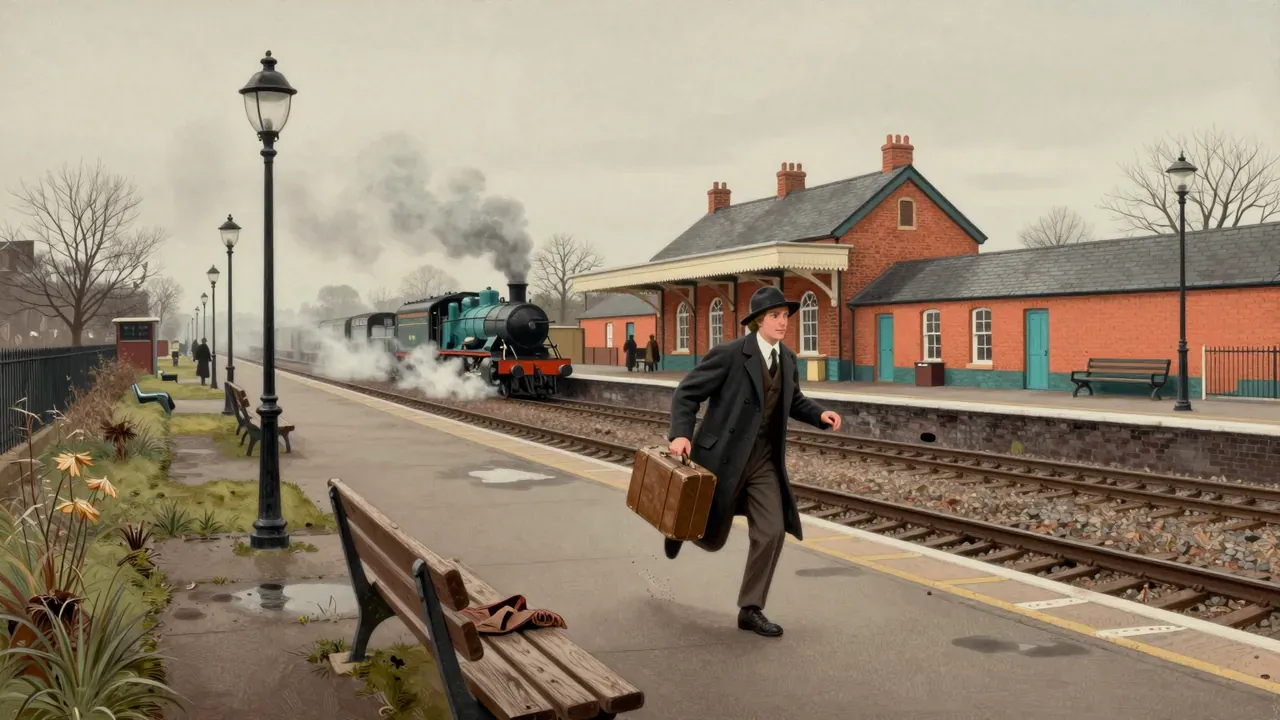
What lands is the film’s sustained tonal control: its ability to hold satire and affection in equilibrium. The scene where Cluny fixes the Wilsons’ plumbing mid-party — banging the pipe with increasing, oblivious force — works because it refuses caricature; her competence is real, their horror is understandable, and the fallout feels earned, not punitive. Similarly, the dynamic between Belinski and Betty Cream — two people fluent in performance but inept at sincerity — lands precisely because neither is mocked outright; their mutual misunderstanding is presented as a shared condition of their milieu. The train-station climax avoids sentimentality by anchoring emotion in action: Cluny runs, not because she has changed her mind about Wilson, but because she has recognised what her own honesty demands. Even the final bookstore shot — with its implied pregnancy — lands lightly, its implication offered not as narrative closure but as quiet, unspoken continuation.
Where it slips
What does not land is the framing of Cluny’s uncle as a figure of oppressive authority. His single scene establishes him as dismissive and patriarchal, but offers no texture — no hint of worry, tradition, or even fatigue — making his intervention feel functional rather than felt. Likewise, the subplot involving Andrew Carmel and Betty Cream, though performed with verve, lacks narrative weight; their reconciliation is tidied too quickly, its stakes never fully clarified beyond social embarrassment. The film also stumbles in its handling of Jonathan Wilson: his eccentricity borders on caricature, and his abrupt withdrawal after the plumbing incident reads less as psychological realism and more as plot necessity. These are not failures of craft — LaShelle frames him warmly, Mockridge gives him a gentle theme — but of conception: Wilson remains a device, not a person, and his role as foil to Belinski never quite coheres beyond surface contrast.
What it’s really about
The themes that matter are competence versus cultivation, and the politics of domestic space. Cluny’s skill with pipes is literal, but it stands for a broader capacity — to diagnose, intervene, and restore function — that the Carmels’ household systematically devalues. Lubitsch treats plumbing not as comic shorthand but as epistemology: knowing how things work, how they connect, how pressure builds and releases. This extends to the film’s treatment of exile: Belinski is a refugee whose intellect is prized only so long as it remains decorative; his departure is not romantic sacrifice but quiet recognition of where he is permitted to speak. Class is shown not through wealth but through access to knowledge — who gets to name problems, who gets to fix them, and who gets to decide whether a problem exists at all. The film’s most pointed satire is not of British manners but of the belief that manners can substitute for moral clarity.
Who it’s for
This film is for viewers who value precision over pace, irony over instruction, and character over incident — particularly those familiar with Lubitsch’s earlier work or with interwar British social comedy. It rewards attention to timing, framing, and subtext, and assumes some fluency with the grammar of 1940s studio filmmaking. It is not for viewers who require clear moral alignment, rapid plotting, or emotional exposition; those who expect Cluny’s arc to resolve in overt triumph or who read Belinski’s restraint as indifference may find the film evasive. A viewer expecting satire to sharpen into polemic will be disappointed — Lubitsch’s method is surgical, not rhetorical. Change the pacing or add explanatory dialogue, and the film’s quiet authority would collapse. Its appeal lies in what it withholds.
Is it worth your evening
Yes, it is worth your evening — provided you approach it as a crafted object, not a story to be consumed. Its 108 minutes unfold without hurry, trusting the viewer to notice how Cluny’s hands move, how Belinski’s gaze lingers just past the shoulder, how a door closes behind a character before they speak. That slowness is not indulgence but architecture: every pause, every withheld line, every unlit corner serves the film’s central concern — the weight of unspoken things. Those who find this mannered will call it dated; those who respond to it will recognise its discipline. It does not demand empathy, but it earns it — slowly, deliberately, like water finding its level. To watch it impatiently is to miss its point entirely. Its value is cumulative, not climactic; its pleasure resides in recurrence, not revelation.