A bullfighter who refuses to kill the bull
The Book of Life, directed by Jorge R. Gutierrez in his feature directorial debut and released in October 2014, follows Manolo Sanchez, a young man from a long family line of bullfighters who would rather be a musician, as he navigates a love triangle with his childhood friend Maria and his closest friend and rival Joaquin. The story is framed as a tale told to a group of detention-bound schoolchildren on a museum tour by a mysterious guide named Mary Beth, who turns out by the film’s end to be one of its own gods walking among mortals in disguise.
Two gods, a wager, and a rigged game
Manolo’s refusal to kill the bull at his first public fight, done directly in front of his disapproving father Carlos and an unhappy, jeering crowd, sets up the film’s personal conflict early, but the larger plot is actually driven by a private wager between La Muerte, ruler of the vibrant Land of the Remembered, and Xibalba, ruler of the more desolate Land of the Forgotten, over which suitor Maria will eventually choose to marry. Xibalba cheats by secretly giving Joaquin a medal granting him effective invincibility in battle, and that single act of dishonesty is what eventually forces Manolo’s own reluctant journey into the realm of the dead.
Puppets that were never meant to be puppets
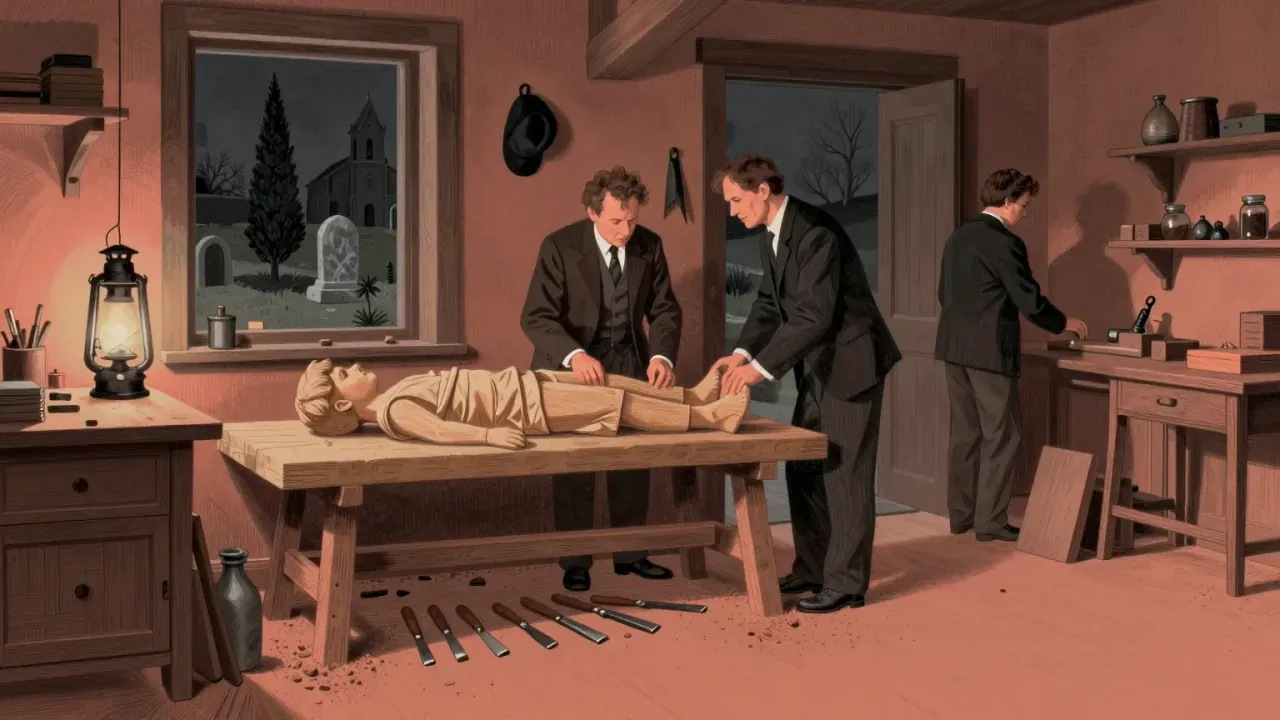
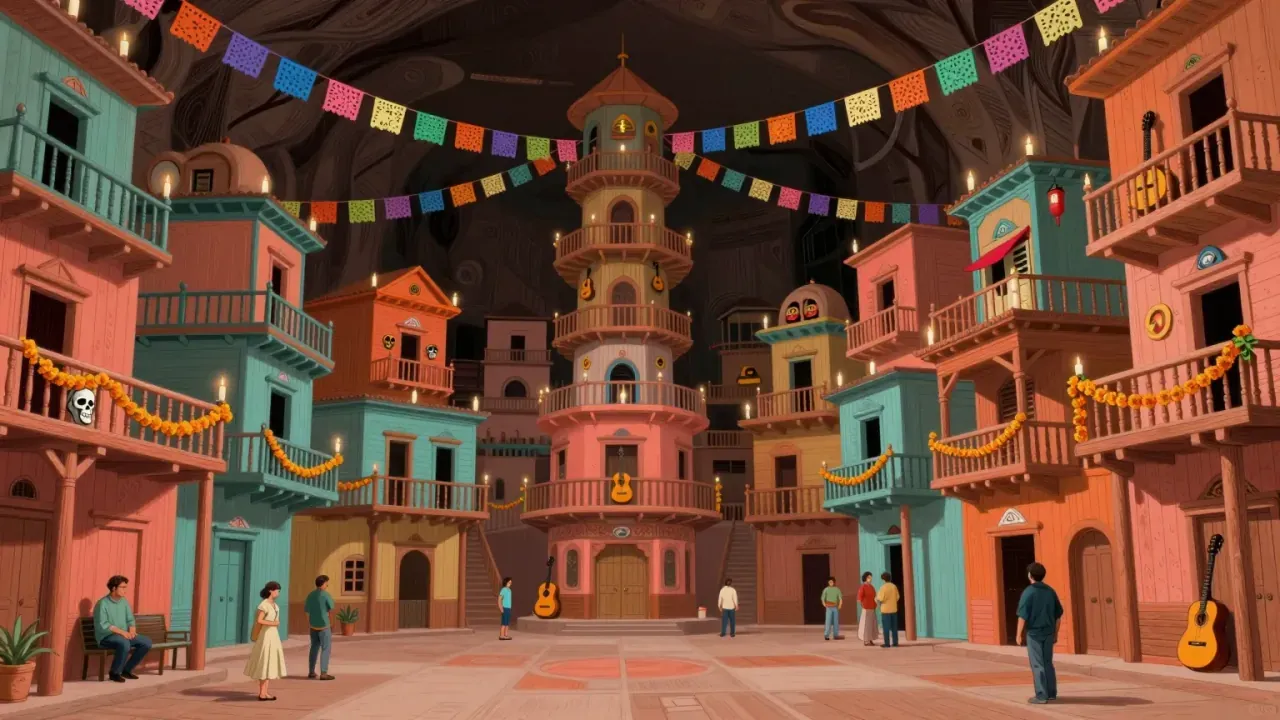
Every character in the film is deliberately designed to resemble a carved wooden folk-art doll, visible joints and all, an aesthetic choice Gutierrez pursued so thoroughly that his own published concept art book was made to match the finished film’s look exactly, frame for frame. Gutierrez has said his greatest heartbreak on prior projects was watching gorgeous concept art fail to survive into the finished picture, and he built this production specifically to avoid repeating that outcome. He was concerned enough that audiences might struggle to connect emotionally with doll-like figures on screen that the film’s actual poster art quietly painted the characters’ joints to look noticeably more human than they ever appear within the film itself.
A studio’s rulebook the director had already rejected once
The project spent a full fourteen years in development before release, including an earlier, ultimately abandoned stint at DreamWorks Animation, which reportedly demanded the film drop its Mexican setting entirely, remove its bullfighting content, abandon its wooden-doll aesthetic, and cut its protagonist’s death from the story, insisting instead on a present-day setting in New York City. Gutierrez refused all four conditions outright, the DreamWorks deal subsequently fell apart, and the project eventually landed at Reel FX with Guillermo del Toro joining on as producer, which allowed the film to finally keep every element Gutierrez had originally wanted in it.
Death treated as a place, not an ending
The film treats death not as a narrative dead end to be avoided but as a fully realised, populated place in its own right, complete with its own social order and geography across the vivid Land of the Remembered and the far more desolate Land of the Forgotten, which lets Manolo’s own death partway through the story function as a genuine continuation of the plot’s stakes rather than a sudden shift into pure abstraction or metaphor. The Candle Maker, overseer of the Book of Life itself, exists specifically to police the boundary between the two realms and to keep mortal stories from ending prematurely.
Who should watch it
This suits families interested in Mexican folklore, Day of the Dead traditions specifically, and the sheer visual novelty of the folk-art character design throughout, as well as viewers simply curious about del Toro’s producing work outside his own directing projects. Those expecting a more streamlined, conventional romantic plot may find the combination of a love triangle, a divine wager and a full afterlife journey to be more plot altogether than the film’s 95 minutes can always manage smoothly at once. It plays best for viewers willing to accept a busy, generous plot in exchange for a genuinely distinctive visual world.
Ninety-five minutes built on a director’s refusal to compromise
At 95 minutes and made for a reported $50 million against a worldwide gross of $99.8 million, The Book of Life is a modest rather than spectacular commercial success by most studio standards, but its real achievement is simply having reached screens at all in the specific, uncompromised form its director spent fourteen years insisting on keeping intact. That persistence shows clearly in the finished film’s distinctiveness, and it is worth the evening for that reason alone, quite apart from how it performed at the box office, having also earned a Golden Globe nomination for Best Animated Feature Film.