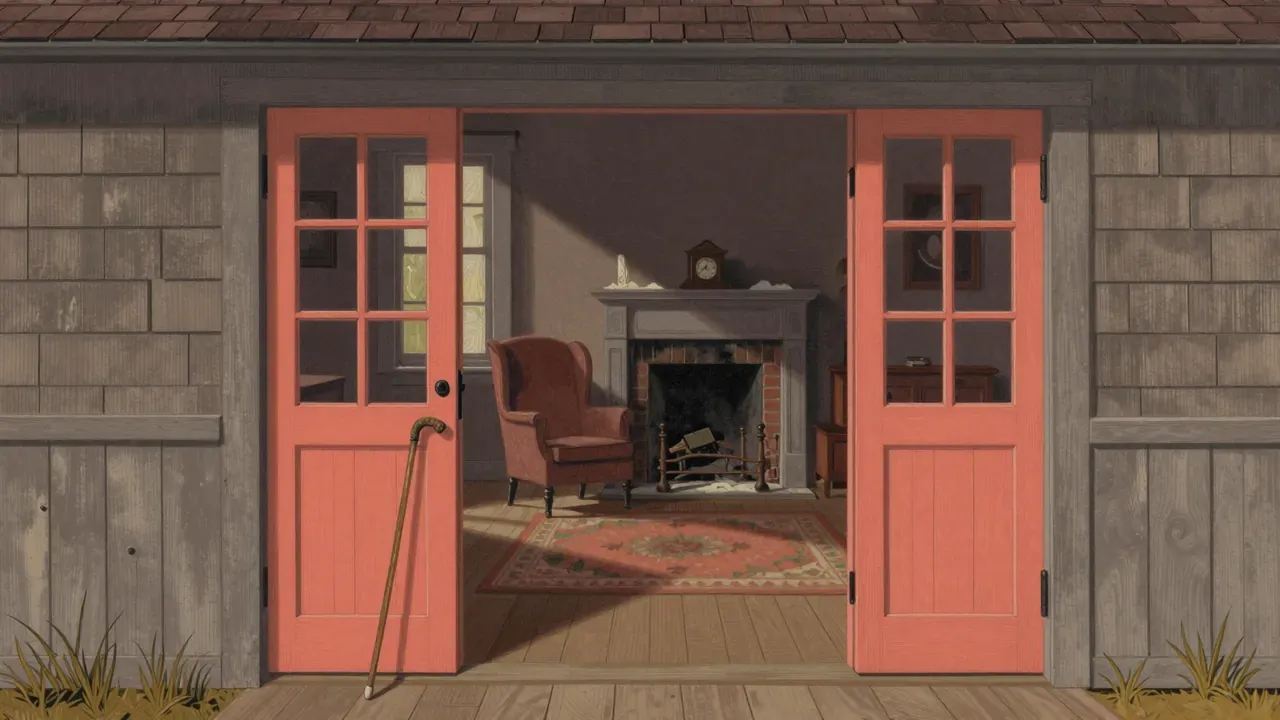
The shape of it
Major Barbara is a filmed stage play: George Bernard Shaw’s 1905 drama, adapted for cinema by Marjorie Deans and Anatole de Grunwald, directed by Gabriel Pascal in 1941. It does not attempt cinematic naturalism or visual expansion; instead it holds to the play’s structure — three acts, largely interior, dialogue-driven, built on argument and reversal. Its aim is not to dramatise poverty or war but to stage a philosophical contest between moral absolutism and pragmatic power, using the Salvation Army and armaments trade as opposing poles. The film assumes its audience knows Shaw’s reputation for wit and polemic, and expects them to follow logic rather than action. It treats ideas as characters, with Barbara’s idealism, Andrew Undershaft’s amoral realism, and Adolphus Cusins’ scholarly capitulation each given equal rhetorical weight. There is no effort to soften the play’s didacticism; the camera stays still, the lighting remains even, and the performances lean into declamation. This is not a film that hides its theatrical bones — it polishes them.
The look of it
The story unfolds across a handful of sets: the Salvation Army shelter, the Undershaft mansion, the foundry. Ronald Neame’s cinematography keeps interiors flat and legible, avoiding chiaroscuro or movement to preserve textual clarity. Charles Frend’s editing sustains rhythm without punctuation — scenes run long, pauses are held, speeches are uninterrupted. Wendy Hiller anchors the film with quiet conviction, her Barbara neither fiery nor brittle but steadily eroded by contradiction. Robert Morley’s Andrew is less a villain than a force of logic, his lines delivered with dry, unhurried certainty. Rex Harrison’s Cusins is all nervous intellect, shifting allegiance like a man testing furniture for squeaks. Deborah Kerr, in her first screen role, brings unforced warmth as Jenny Hill, while Robert Newton’s Bill Walker is broad but never cartoonish — his volatility serves the script’s demand for raw human counterpoint. William Walton’s score underlines transitions but never interprets emotion; it punctuates, not persuades.
The weight of it
What lands is the precision of the argument. Shaw’s language — dense, rhythmic, laced with irony — survives translation because the actors treat it as speech, not ornament. Hiller’s stillness makes Barbara’s final concession feel earned, not defeated. Morley’s delivery of ‘Money is the most important thing in the world’ lands not as bombast but as statement of fact, delivered without inflection. The film’s moral pivots — Barbara’s resignation from the Salvation Army, Cusins’ acceptance of the foundry — work because they follow internal logic, not emotional crescendo. Even minor roles land: Stanley Holloway’s policeman is laconic authority, Miles Malleson’s butler delivers class critique in a raised eyebrow. The wartime context — filming during The Blitz — adds gravity without sentimentality; the film’s calm refusal to acknowledge bombs outside the frame becomes its quietest act of defiance. It trusts the text, and the text rewards that trust.
The pace of it
What does not land is the assumption that all viewers will share Shaw’s confidence in dialectic as drama. The pacing sits heavily: long takes, static framing, and extended monologues test attention without offering compensatory visual invention. Some performances — particularly Sybil Thorndike’s General — tip into theatrical excess without the spatial release of a live stage, making their grandeur feel unmoored. The film’s refusal to visualise poverty or industrial scale leaves its social claims abstract; we hear about slums and furnaces but do not see them. Deborah Kerr’s debut, though promising, is underwritten — her character exists to be rescued, not reasoned with. And while the satire bites, its targets — Victorian philanthropy, bourgeois morality, religious compromise — feel historically specific, requiring either familiarity or patience. Without those, the film can appear stiff, self-satisfied, and remote from lived consequence.
The argument of it
The themes that matter are the durability of moral frameworks under material pressure, the complicity of charity in sustaining inequality, and the seduction of power disguised as pragmatism. Shaw refuses easy binaries: Andrew Undershaft is not evil but coherent; the Salvation Army is not hypocritical but limited. The film interrogates whether ideals survive contact with infrastructure — whether feeding the hungry justifies accepting weapons money, whether reform requires control of the means of production. It treats class not as background but as grammar: every line of dialogue encodes position, inheritance, and access. Religion appears not as doctrine but as organisational strategy; economics not as numbers but as ethical architecture. These are not period concerns. The question of who funds what, and at what cost to principle, remains structurally identical today — only the institutions have changed names. The film’s urgency lies in its refusal to let morality float free of logistics.
The audience of it
This film is for viewers who value language as action, who find intellectual confrontation inherently dramatic, and who do not require visual novelty to sustain engagement. It suits readers of Shaw, students of interwar British theatre, and anyone interested in how ideology behaves under pressure. It is not for those who expect narrative propulsion, psychological realism, or cinematic spectacle — its rhythms are those of debate, not discovery. Those who dislike exposition-heavy writing, or who find mid-Atlantic diction and formal address alienating, will disengage early. A viewer expecting the warmth of later British social realism or the kinetic energy of wartime propaganda will find it austere. But the verdict changes if you approach it as a spoken-word artefact rather than a moving picture: then its rigour becomes its reward, and its stillness feels deliberate, not inert.
The ending of it
Yes, it is worth your evening — provided you watch it on its own terms. Not as a diversion, but as an encounter: with Shaw’s mind, with 1941’s unflinching self-regard, with a cast treating philosophy as physical labour. Its 131 minutes pass without hurry but also without waste; every scene advances the central tension between purity and power. You will not forget Morley’s quiet dismantling of Barbara’s certainty, or Hiller’s silence after she signs the foundry contract. It demands attention, but repays it with clarity. Those who dismiss it as ‘talky’ mistake density for dullness. Those who call it ‘dated’ confuse historical specificity with irrelevance. Its arguments about funding, influence, and moral compromise are more current than ever — only the uniforms have changed. To watch it is to sit in on a conversation that has not ended, only paused for air raids and applause.