The look of it
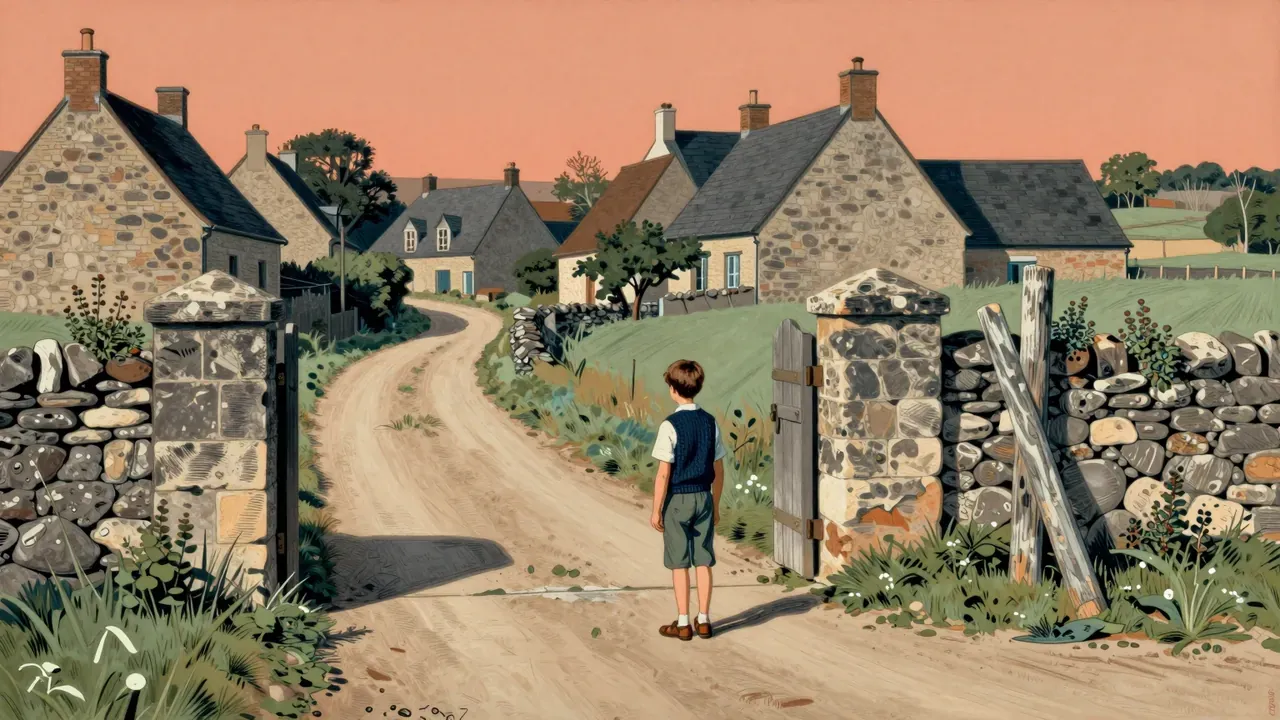
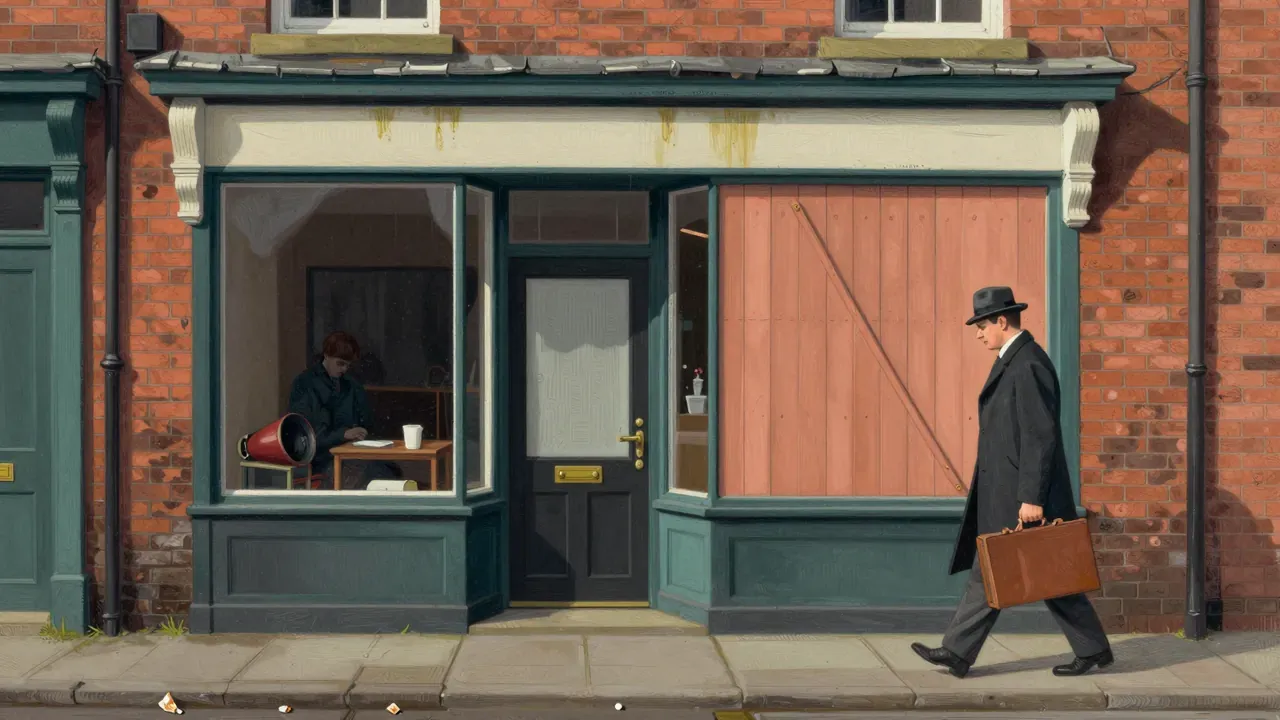
Billy Liar is a 1963 British tragicomedy that adapts Keith Waterhouse’s 1959 novel to examine the gap between aspiration and action in post-war working-class Yorkshire. It does not aim to resolve that gap, nor to moralise about it, but to hold it steady: to show how fantasy functions as both refuge and impediment for a young man who cannot bear his circumstances yet lacks the will—or perhaps the means—to change them. The film situates itself deliberately within the British New Wave, using real locations in Bradford and a CinemaScope frame not for spectacle but for documentary weight, anchoring Billy’s flights of fancy in brick, rain-slicked pavements and cramped terraced houses. Its ambition is structural as much as thematic: to let the rhythm of daily life—the nagging parents, the dead-end job, the overlapping lies—build pressure until the final, unspoken choice becomes inevitable. It treats daydreaming not as whimsy but as a symptom: a nervous system adapting to conditions it cannot alter.
The shape of his mind
The story follows Billy Fisher’s double life: outwardly passive, inwardly imperial, ruling the imaginary nation of Ambrosia while failing to return an engagement ring or pay back postage money. Tom Courtenay’s performance anchors this duality without tipping into caricature; his shifts between sullen deference and manic self-aggrandisement are calibrated in micro-expressions, not monologues. Julie Christie, in her first major film role, gives Liz a quiet, unperformative ease that makes Billy’s fantasies seem smaller by contrast. Denys Coop’s cinematography uses natural light and shallow focus to compress space—hallways feel narrower, rooms more airless—while Richard Rodney Bennett’s score alternates jaunty brass with dissonant strings, underscoring the instability beneath the comedy. Willis Hall’s script tightens the novel’s sprawl without flattening its contradictions: Billy is neither heroic nor contemptible, just persistently, believably stalled.
The weight of the joke
What lands most firmly is the film’s tonal precision: the way it sustains a low hum of unease beneath every comic beat. The scene where Billy imagines himself addressing crowds in Ambrosia while standing motionless in his bedroom is not absurd—it is recognisable, even tender. The ballroom confrontation between Barbara and Rita works because neither woman is mocked; their anger is rooted in real betrayal, not plot convenience. The final sequence—Billy stepping off the train, walking home alone, then closing the door as the Ambrosian anthem swells—is earned not by narrative logic but by cumulative emotional weight. There is no catharsis, only quiet confirmation: he has chosen the known discomfort over the unknown risk. That choice feels less like failure than like gravity taking hold. The film trusts its audience to sit with that ambiguity, and the trust is repaid.
Where the frame narrows
What does not land is the framing of Billy’s work as an undertaker’s clerk: it registers as symbolic shorthand rather than lived reality. The job is never shown with enough texture—no embalming fluids, no funeral parlour hush, no sense of how death circulates through the town—to ground the metaphor of stagnation. Similarly, Mr. Shadrack (Leonard Rossiter) remains a functional antagonist, rigid but underwritten; his authority feels imposed by plot need rather than social fact. The film’s use of Bradford is evocative but selective: we see cobbles and chimneys, but little of the city’s industrial pulse or labour politics. This isn’t a flaw in execution—Coop’s location shooting is exact—but a limitation of scope. The film attends closely to Billy’s interior life and immediate circle, but treats the wider world as backdrop, not participant. Some viewers may find that narrowing too absolute, especially given the New Wave’s stated commitment to social realism.
What the lies mean
The themes that matter are self-deception as survival mechanism, the class-bound limits of imagination, and the quiet violence of expectation. Billy’s fantasies are not escapist in the trivial sense; they are rehearsals for agency he is denied in practice—by his father’s scorn, his employer’s control, his own habit of deferral. The film treats lying not as moral weakness but as linguistic adaptation: a way to negotiate spaces where honesty offers no leverage. His three girlfriends represent different forms of constraint—Barbara’s sheltered conformity, Rita’s abrasive pragmatism, Liz’s liberated example—and none offer rescue, only mirrors. Even Ambrosia is not freedom but inversion: a dictatorship where Billy commands precisely because he cannot command elsewhere. The grandmother’s death is not a turning point but a punctuation mark: it confirms that time moves whether he acts or not, and that grief, like ambition, can be deferred but not dissolved.
Who it is for
This film is for viewers who value psychological fidelity over narrative propulsion, and who find resonance in unresolved endings. It rewards attention to gesture, silence, and spatial composition—not just what characters say but how they occupy rooms, how light falls on a staircase, how a suitcase left behind speaks louder than dialogue. It is not for those who require clear moral arcs, cathartic confrontations, or protagonists who grow in measurable ways. Anyone expecting a conventional coming-of-age story will find Billy’s stasis frustrating; anyone seeking satire with bite may find the tone too muted. The film assumes familiarity with mid-century British class codes—if you do not know why ‘Danny Boon’ signals aspirational showbiz, or why Wormwood Scrubs carries specific cultural weight, some layers recede. But its core dilemma—how much fantasy one can sustain before it hollows out reality—is universal, if quietly rendered.
Why it stays
Yes, it is worth your evening—provided you watch it without demand for resolution. Its 98 minutes pass with unhurried clarity, each scene weighted but never heavy. The performances, particularly Courtenay’s and Christie’s, remain vivid half a century on, not because they are showy but because they refuse theatricality. The ending does not satisfy, but it lingers: Billy’s walk home is neither defeat nor triumph, just continuation. Some might argue the film’s restraint borders on detachment, or that its working-class setting is observed rather than inhabited—but that distance is part of its design. It does not invite identification so much as calibration: holding Billy up as a measure against one’s own compromises. To dismiss it as ‘depressing’ (as Filmink did) mistakes clarity for pessimism. What it offers instead is precision: a portrait of inertia, drawn in natural light, with no flinching.