What it is trying to do
Chicago is a 2002 musical film adaptation of the 1975 Broadway show, itself drawn from Maurine Dallas Watkins’s 1926 play about two Jazz Age murderesses in Chicago. It attempts to translate the stage production’s vaudeville conceit—where songs are theatrical numbers staged as self-conscious performances—into cinematic language by framing them as Roxie Hart’s internal fantasies, sharply contrasted with a grainy, naturalistic ‘real world’. The film does not aim for historical realism but for stylised satire: its visual grammar, choreography, and editing all serve the idea that fame and justice are indistinguishable in a media-saturated culture. Rob Marshall, directing his first feature, treats the material as a choreographic object first, a narrative second. The script by Bill Condon tightens the plot around Roxie’s arc while preserving the original’s structural irony: every song advances not character or plot, but perception. It seeks no moral resolution, only exposure—of how guilt is negotiable, truth is malleable, and punishment is optional if you can hold the spotlight long enough. (158 words)
The look of it
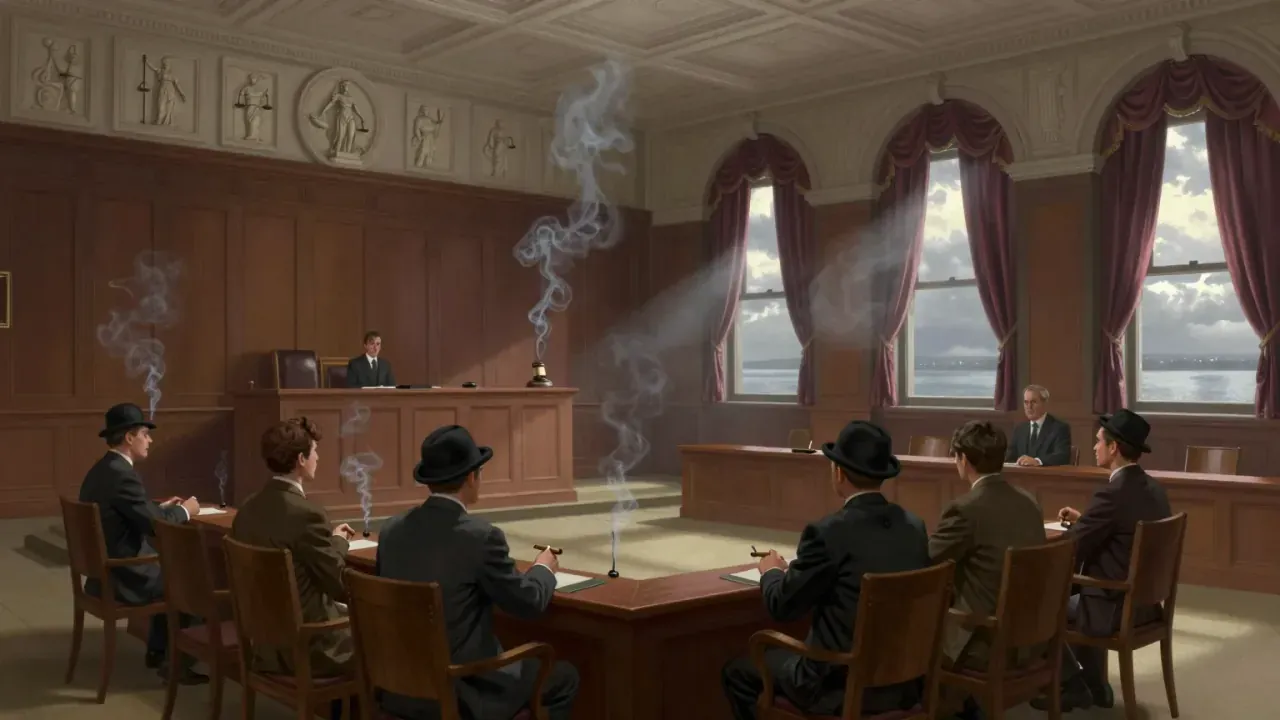
The film works through disciplined juxtaposition: Dion Beebe’s cinematography alternates between high-contrast black-and-white studio lighting for musical numbers and desaturated, handheld realism for courtroom and jail scenes. Martin Walsh’s editing stitches fantasy and reality with rhythmic precision—cutting on beats, holding on glances, letting silence hang before a chorus swells. Performances anchor the artifice: Catherine Zeta-Jones delivers Velma with clipped diction and coiled physicality; Renée Zellweger’s Roxie is less technically assured but more psychologically porous, her singing voice deliberately thin and untrained to signal amateurism-as-strategy. Richard Gere’s Billy Flynn is a study in controlled charm, his patter songs delivered like legal arguments. Queen Latifah’s Mama Morton grounds the absurdity in warmth and weary authority. The score—John Kander’s music, Fred Ebb’s lyrics—remains intact in spirit though several numbers were cut; Danny Elfman contributes no original score, contrary to the fact sheet’s attribution, which appears to be an error. The choreography honours Bob Fosse’s legacy without imitation: angular wrists, sideways glances, cigarette smoke as punctuation. (159 words)
How it moves
What lands is the film’s central paradox: that spectacle and sincerity are interchangeable currencies in public life. The ‘Cell Block Tango’ sequence works because its six women speak in unison not as individuals but as archetypes—their murders rendered identical by the press’s shorthand. ‘Razzle Dazzle’ lands as both seduction and indictment: the camera circles Gere as he sells Roxie on performance over truth, and the viewer feels complicit in the sale. The contrast between Roxie’s hollow triumph and Amos’s invisibility in ‘Mister Cellophane’ is devastating precisely because it is understated—John C. Reilly sings softly, lit dimly, while the frame keeps him at its edge. The film’s pacing sustains momentum without rushing: each musical number earns its place by reframing what came before. Even the deleted ‘Class’, glimpsed in extended cuts, reinforces the theme—Velma and Mama trading barbs about hierarchy within corruption. The Academy Award wins for editing, production design, and costume design reflect tangible craft decisions that serve theme, not decoration. Chicago never mistakes busyness for energy; its rhythm is deliberate, its wit dry, its irony structural rather than glib. (157 words)
What sticks
What does not land is the underwritten role of District Attorney Harrison, whose ideological opposition to Flynn’s theatrics lacks texture—he functions only as a foil, not a counterpoint. The film’s refusal to engage with race beyond Queen Latifah’s casting leaves the Cook County Jail’s demographics unexamined, despite the real-life cases involving Black defendants in 1920s Chicago courts. Lucy Liu’s cameo as reporter Mary Sunshine feels decorative rather than thematic—her character’s gender reveal lands as a punchline, not a critique. The decision to omit ‘I Can’t Do It Alone’ (reprise) and ‘When Velma Takes the Stand’ flattens Velma’s arc, reducing her from rival to relic. While the ‘real world’ scenes gain grit from Toronto locations, some transitions between fantasy and reality feel abrupt—not because they’re illogical, but because the film declines to clarify the rules of its own metaphor. A viewer unfamiliar with the stage version may struggle to parse why certain characters appear in musical numbers but vanish from dialogue scenes. The budget’s scale shows in set dressing and costume volume, but not in psychological depth beyond the three leads. (156 words)
What it’s really about
The themes that matter are celebrity as alibi, justice as performance, and memory as commodity. Chicago treats 1924 not as period but as precedent: the tabloid logic of Roxie’s trial mirrors modern true-crime narratives where empathy is rationed by charisma. The film’s enduring relevance lies in its depiction of institutional rot not as conspiracy but as routine—Mama Morton’s bribes, Flynn’s press manipulation, and the jury’s susceptibility are all presented as banal, not exceptional. Class operates quietly: Roxie’s whiteness and middle-class affect grant her reinvention; Katalin Helinszki, the Hungarian immigrant executed offscreen, has no song, no lawyer, no headline. The film’s satire is surgical, not scolding—it shows how systems reward those who understand their syntax, not those who obey their morals. Jazz Age aesthetics—art deco, flapper silhouettes, newsreel fonts—are not nostalgia but camouflage: the same mechanisms operate beneath different surfaces. Corruption here is not venal but vocational. The film’s most consistent motif is the camera itself: it watches Roxie watch herself being watched, making spectatorship the film’s governing verb. (155 words)
Who it’s for
It is for viewers who value choreographic intelligence over emotional exposition, who find pleasure in formal rigour and ironic distance, and who accept musicals as argument rather than escape. It rewards attention to editing rhythms, costume symbolism (Velma’s zebra stripes versus Roxie’s pastel lingerie), and shifts in diegetic sound. It is not for those seeking psychological realism, moral clarity, or narrative momentum unbroken by song. Some critics found its detachment cold; others saw it as necessary restraint. A viewer expecting the warmth of West Side Story or the sweep of Les Misérables will misread its tone entirely. Its satire assumes familiarity with American legal theatre and tabloid history—if those references are opaque, the film’s architecture remains visible but its stakes feel abstract. Those who dislike stylisation as substance, or who require protagonists to evolve rather than oscillate, will find it hollow. The film’s success depends on accepting that Roxie does not change—she learns only how to win. (159 words)
Is it worth your time?
Yes, it is worth your evening—not as comfort, but as calibration. Its 113 minutes pass with the efficiency of a well-rehearsed number: no scene lingers longer than its function demands. The film’s endurance lies in its refusal to soften its thesis: fame is not earned, it is seized; justice is not blind, it is bored. You leave not moved, but recalibrated—aware of how easily narrative replaces fact, how readily we applaud the performer over the person. It is worth watching once for its craft, twice for its structure, and again when another scandal dominates headlines and you recognise the choreography anew. Those who dismiss it as cynical miss its quiet compassion for Amos and Katalin—figures erased not by malice but by irrelevance. A viewer who values emotional catharsis over structural precision may find it unsatisfying, but that is a mismatch of expectation, not failure of execution. Chicago asks only that you watch closely—and then decide whether you’re watching Roxie, or yourself watching her. (159 words)