The setting and the stakes
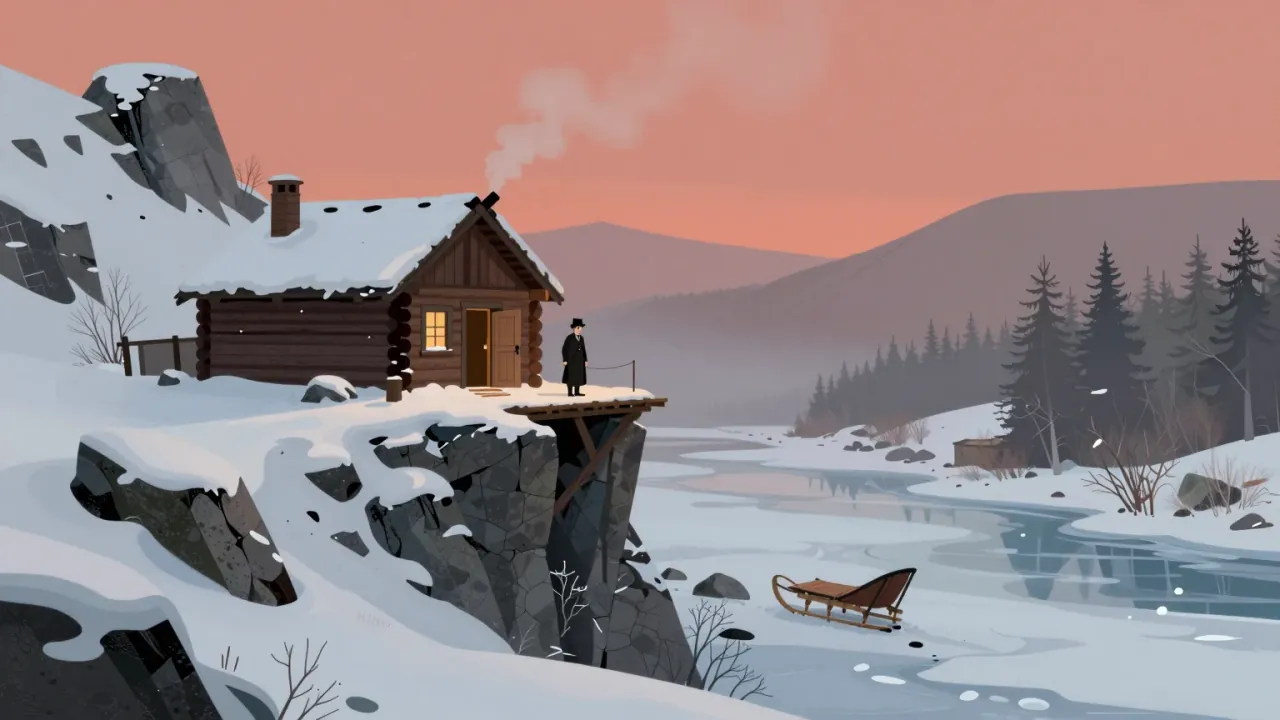
The Gold Rush is a silent comedy feature released in 1925, written, produced, directed by and starring Charlie Chaplin as the Lone Prospector — his Little Tramp character transposed into the Klondike Gold Rush. It attempts something rare for its time: to sustain both broad physical comedy and sustained pathos within a single narrative arc, using extremity — hunger, cold, isolation, delusion — not as backdrop but as structural principle. Chaplin draws on documented hardship, including images of prospectors climbing Chilkoot Pass and accounts of starvation among snowbound parties, then filters them through his comic grammar: the shoe-eating sequence, the roll-dance fantasy, the cabin teetering over a cliff. The film does not parody the gold rush so much as recalibrate its stakes, making desperation legible through gesture and timing rather than exposition. It is neither documentary nor satire, but a fable built from historical texture and emotional logic, aiming to hold laughter and loneliness in the same frame without dilution.
The look of it
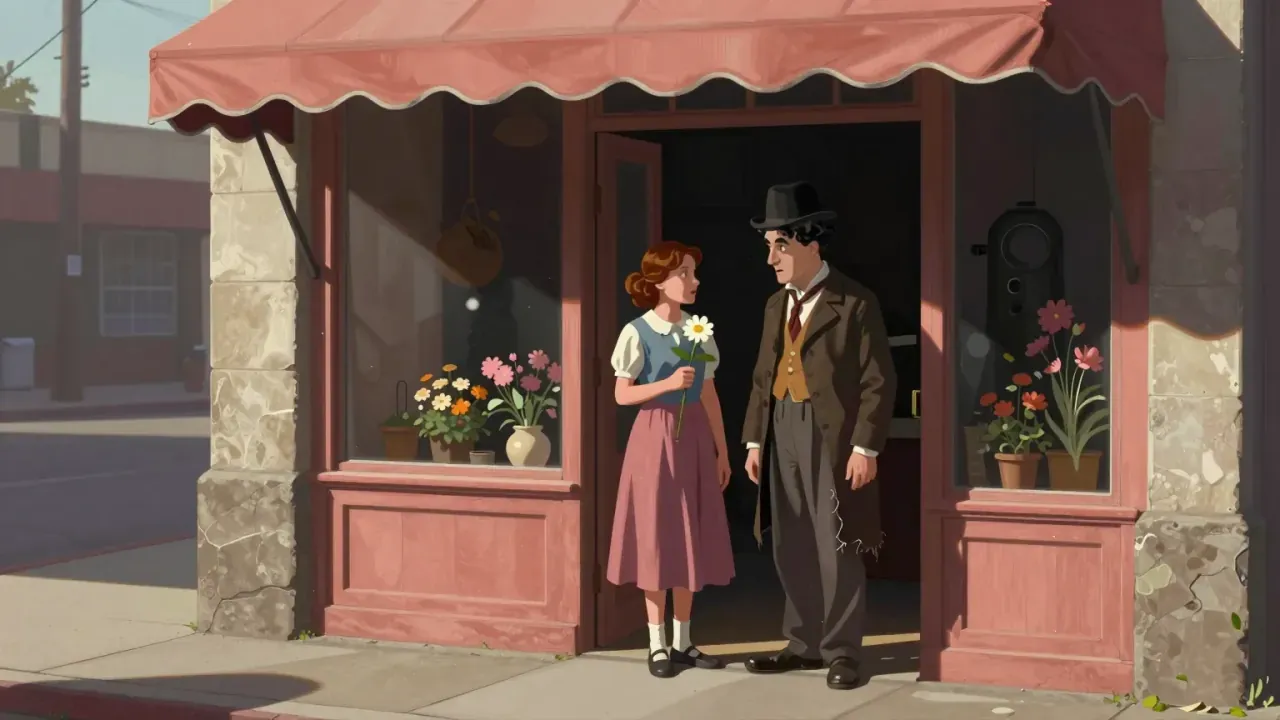
The story follows the Tramp’s misadventures across three phases: survival in a blizzard-bound cabin with Big Jim and the outlaw Black Larsen; a year-long interlude in a frontier town where he courts Georgia, a dance-hall girl; and a final reunion aboard ship. Chaplin’s performance anchors every scene — his gait, his pauses, his way of holding a fork or staring at an empty doorway — all calibrated to register inner life without speech. Roland Totheroh’s cinematography uses deep focus and careful framing to preserve spatial coherence during slapstick, while Chaplin’s editing avoids rapid cuts, letting gags breathe and reactions land. The 1942 re-release added Chaplin’s own score and narration, but the 1925 version relies entirely on intertitles, music cues, and physical rhythm. There are no close-ups for emphasis, no reaction shots inserted for clarity: meaning emerges from sustained action, not punctuation. The craft is unified — writing, acting, camera placement, pacing — all serving the same economy of gesture and consequence.
What stays with you
What lands most firmly is the film’s tonal control: the shoe-cooking scene works because it is played straight, with ritualistic attention to detail — lacing the shoe like poultry, carving the sole like roast beef — turning abjection into absurd dignity. The roll-dance fantasy is equally effective: not as escapism, but as precise visual shorthand for longing made visible. Mack Swain’s Big Jim is physically imposing yet emotionally porous, his delirium credible because it grows from exhaustion, not caricature. The final shipboard reunion avoids sentimentality by resting on coincidence and costume — the Tramp falling down stairs in his old clothes becomes the hinge, not dialogue or music. Even minor moments land: Henry Bergman’s barman wiping glasses with weary precision, Georgia Hale’s slight hesitation before accepting the Tramp’s invitation — these are performances rooted in observation, not invention. The film earns its pathos because it refuses to underline it; the emotion arrives unannounced, like snowfall.
Where it slips
What does not land consistently is the transition between the cabin sequences and the town material. The shift from existential duress to romantic farce feels less like evolution than compartmentalisation: the Tramp’s vulnerability in the blizzard does not clearly inform his posture in the dance hall, nor does Georgia’s initial indifference deepen into recognisable change. Her decision to seek him out after reading his note arrives without sufficient groundwork — her earlier mockery lacks shading, her remorse insufficient cause. The Jack Cameron subplot serves only to provoke her choice, not to complicate it. Similarly, the avalanche death of Black Larsen functions as plot convenience rather than consequence; his menace evaporates once he leaves the cabin, and his return feels narratively expedient. The film’s second half leans on charm and repetition — the Tramp’s persistence, Georgia’s belated kindness — but does not build the same psychological density as the first. It sustains comedy, but not continuity of motive.
What it is really about
The themes that matter are endurance, dignity under erasure, and the thin line between sustenance and symbolism. Gold is never shown as desirable in itself — it is weight, burden, lure, accident — while food becomes the true measure of value: a shoe, a boot, a chicken-shaped hallucination, a carefully set table. Loneliness is treated as physical weather: it chills, it isolates, it distorts perception. The film treats class not as hierarchy but as contingency — Big Jim and the Tramp share the same cabin, the same hunger, the same delusions; their later wealth does not erase that parity, only suspends it. Memory is unreliable but persistent: Jim forgets the location of his fortune but retains the image of the cabin and the Tramp’s face. The film also explores performance as survival — the Tramp dances rolls on forks not to entertain, but to rehearse hope; Georgia performs coquetry until she stumbles into sincerity. These are not abstract ideas but embodied conditions, rendered through repeated actions: chewing, walking, waiting, falling, rising.
Who it is for
This film is for viewers who accept silence as a medium, not a limitation — those willing to read faces, follow movement, sit with duration. It rewards attention to rhythm, to the weight of a pause, to how a character holds space when no one is speaking to them. It is not for those who require exposition, psychological explanation, or narrative efficiency: motivations are implied, not stated; consequences unfold slowly, sometimes ambiguously. Anyone expecting modern pacing or character arcs shaped by internal conflict will find it withholding. Those who associate comedy solely with punchlines may miss how the film builds humour from accumulation — from the third time the Tramp slips on ice, the fourth time he adjusts his hat. It assumes familiarity with Chaplin’s persona, but not expertise: his gestures remain legible even without prior knowledge. What changes the verdict is not technical literacy but tolerance for slowness — not as flaw, but as method.
Why it holds up
Yes, it is worth your evening — not as nostalgia, but as active engagement with a fully realised cinematic language. Its ninety-six minutes move with deliberation, not drag; every scene has weight because nothing is decorative. You do not need to love silent film to feel the ache in the Tramp’s New Year’s vigil, or the quiet triumph when he steps onto the deck at the end, no longer alone. It asks for patience, not surrender. Those who find it distant likely expect different tools — dialogue, scoring, cutting — to deliver meaning. But the film’s power lies precisely in what it omits: no voiceover explains the Tramp’s feelings, no music tells you when to laugh. Its worth is confirmed not by its age or reputation, but by how directly it communicates hunger, hope, and the stubborn persistence of grace — all without a single spoken word.