What it is pretending to be
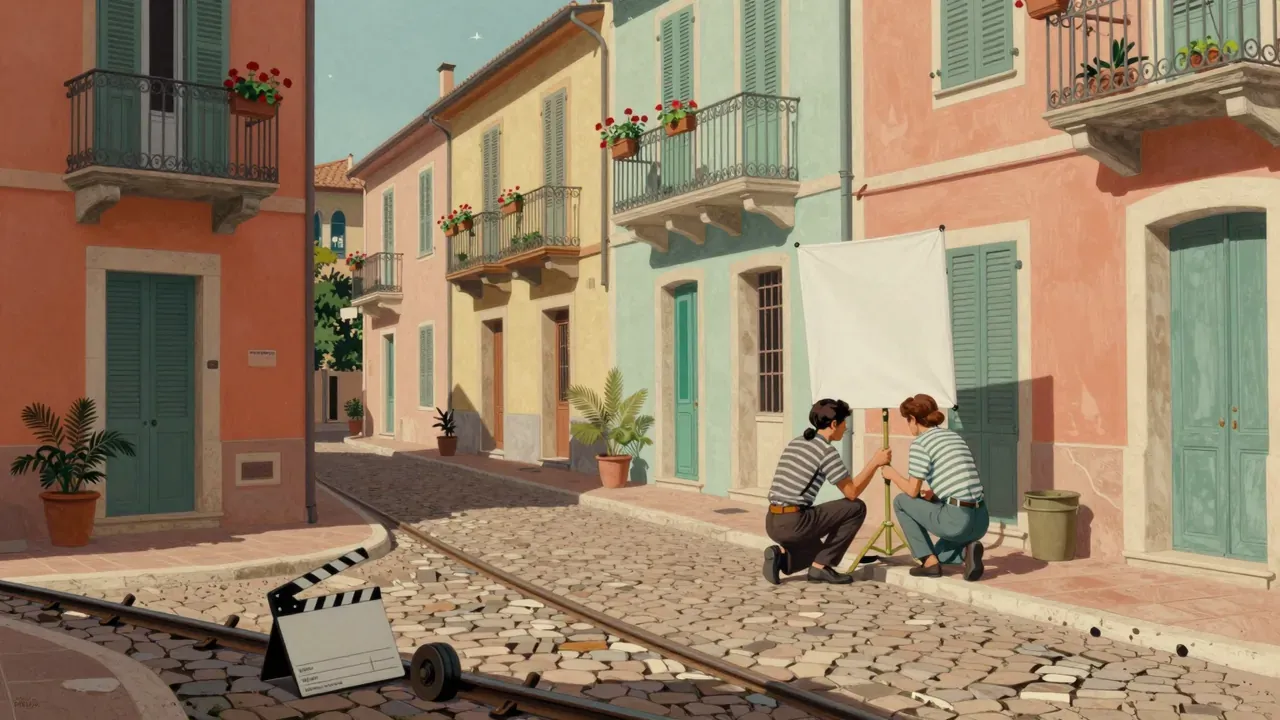
Irma Vep is a French film about the making of a film — specifically, a faltering, self-consuming attempt to remake Louis Feuillade’s 1915 serial Les Vampires. It does not aim to reconstruct that silent work, nor to parody it outright, but to stage a crisis of authorship, cultural translation, and institutional decay within contemporary French cinema. Olivier Assayas writes and directs with the precision of someone who has watched too many dailies go cold in the editing suite: the film is less about vampirism than about what drains life from a production — ego, miscommunication, logistical collapse, and the friction between national myth and foreign presence. Its central conceit — casting Hong Kong actress Maggie Cheung as Irma Vep, an anagram for ‘vampire’ — is structural, not symbolic: she is neither monster nor muse, but a catalyst whose very presence exposes fault lines in language, labour, and legacy. The film refuses nostalgia, even as it cites Feuillade, Truffaut, and Fassbinder; its ambition is diagnostic, not elegiac.
The look of it
The story unfolds through Maggie Cheung’s quiet, watchful perspective: a non-French actor navigating a fracturing set where no one agrees on tone, technique, or authority. Jean-Pierre Léaud’s René Vidal is volatile but never cartoonish; his breakdown feels earned by exhaustion, not whimsy. Éric Gautier’s cinematography avoids flourish: hand-held but unobtrusive, favouring natural light and shallow focus that keeps faces half-lost in shadow or glare. Luc Barnier’s editing sustains rhythm without insisting on meaning — cuts land where attention drifts, not where emphasis demands. Performances are understated, even when heightened: Bulle Ogier’s producer moves with bureaucratic fatigue, Lou Castel’s José Mirano arrives like a gust of dry air, all certainty and condescension. There are no monologues, no climactic confrontations — just accumulated slippage, a series of small failures that compound until the set itself seems to exhale and dissolve.
Where it breathes
What lands is the texture of professional disarray: the way a costume fitting becomes a site of intimacy and discomfort, how a hotel corridor at 3 a.m. holds more narrative weight than any script meeting, how silence between takes carries more tension than shouted direction. Maggie Cheung’s physicality anchors the film — her stillness in the latex suit, the slight hesitation before stepping into a scene, the way she watches others speak French without translating aloud. The film’s reflexive layer — scenes of dailies being screened, edited, rejected — works because it mirrors real production logic: footage is judged not for truth or beauty but for utility, momentum, coherence. Even the rave sequence lands not as spectacle but as spatial disorientation: the taxi door closing on Zoé, the crowd swallowing her, the camera holding on empty pavement. These are moments where craft serves observation, not commentary.
Where it slips
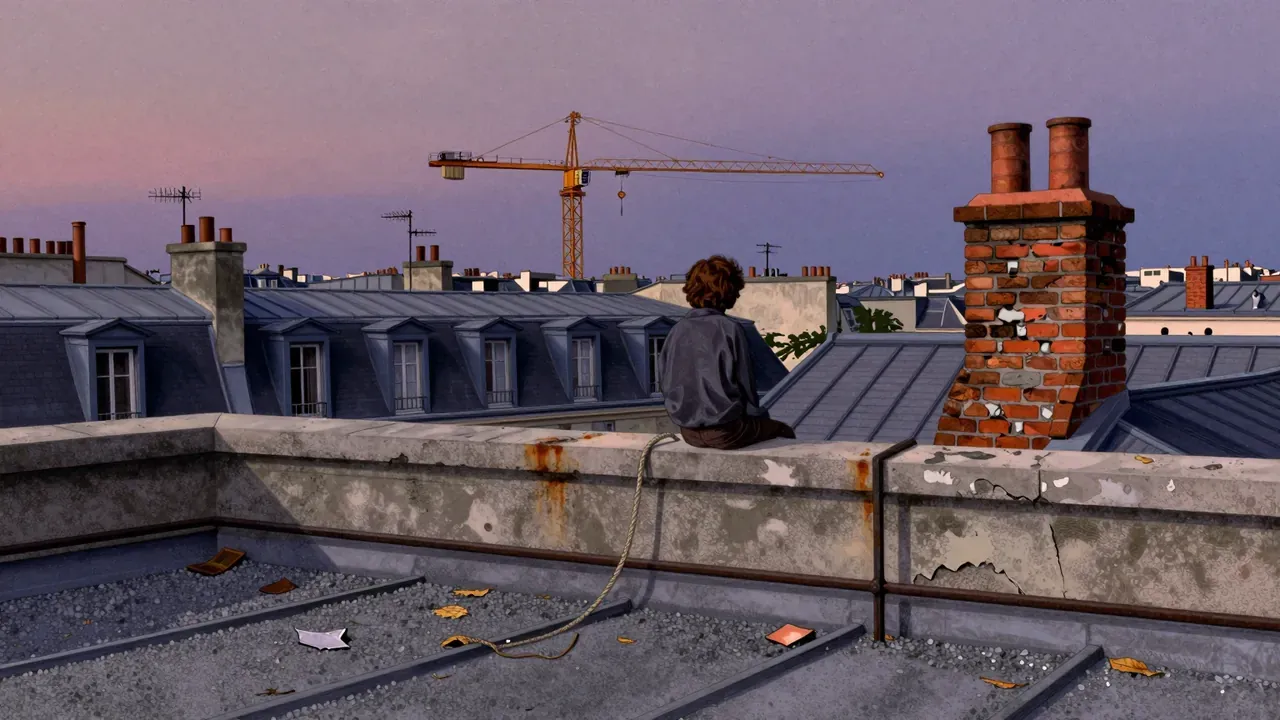
What does not land is the film’s occasional drift into abstraction without grounding consequence. A few sequences — the rooftop theft, the scratched dailies montage — gesture toward psychological rupture or cinematic possession but stop short of clarifying their stakes. The implication that Maggie is ‘possessed’ by Irma Vep remains metaphorical, never dramatised with enough rigour to distinguish it from mood or fatigue. Some supporting characters — Nathalie Richard’s assistant, Antoine Basler’s grip — register as functional rather than felt, their arcs truncated by the film’s tight schedule and narrow focal plane. The ending, while formally coherent, risks under-determination: the absence of resolution feels less like ambiguity and more like withheld information, particularly around René’s fate and the production’s actual viability. It is not that the film fails to commit, but that its commitment to fragmentation occasionally outpaces its capacity to make that fragmentation legible.
What it is really about
The themes that matter are not those of vampirism or silent cinema, but of translation as labour: linguistic, cultural, technical, emotional. The film treats filmmaking as a chain of imperfect transmissions — from Feuillade to René to Maggie to José — each link degrading the signal slightly, not through malice but through necessity. It asks what survives when a national icon is recast by an outsider, and whether fidelity lies in replication or reinvention. Class enters quietly: the crew’s exhaustion is material, not theoretical; their pay, hours, and agency are implied in every delayed call time and impromptu dinner. Globalisation appears not as policy but as logistics — Maggie’s flight to Ridley Scott is mentioned offhand, a reminder that her value lies elsewhere, in systems that operate beyond this Parisian studio’s reach. The film’s meditation on French cinema is not about decline but about recalibration: what persists when infrastructure frays, when authority dissolves, when the next take is always the last chance.
Who it is for
This is for viewers who tolerate uncertainty in pacing and payoff, who find interest in procedural detail over plot propulsion, and who recognise the weight of a glance exchanged across a crowded room more than they do a dramatic revelation. It rewards patience with accumulation, not escalation. It is not for those who require clear causality, emotional catharsis, or narrative closure — viewers expecting satire with punchlines or drama with arcs will find its rhythms alienating. Those accustomed to Anglo-American pacing may mistake its pauses for inertia; those seeking political clarity may read its ambiguity as evasion. A viewer who values craftsmanship over exposition, who finds resonance in what is withheld rather than stated, will stay with it. Change the film’s temporal logic — compress its duration, clarify its metaphors, resolve its loose ends — and it would become another kind of work entirely: less diagnostic, more declarative.
Is it worth your evening?
Yes, it is worth your evening — provided you approach it as a study in atmosphere and attenuation, not as entertainment with a destination. Its ninety-eight minutes pass without hurry but also without waste: every shot serves the film’s central inquiry into how meaning is made, unmade, and remade under pressure. It repays attention not with answers but with calibrated unease — the kind that lingers after credits roll, prompting reconsideration of how films (and people) hold themselves together. Those who dislike slow-burn realism, distrust irony without edge, or expect thematic exposition will feel distanced, not engaged. Its value lies in specificity: the exact shade of grey in a Parisian stairwell at dusk, the precise pitch of a French crew member’s sigh, the way Cheung’s fingers tighten on a hotel doorframe. To watch it is to witness a system in real time — not failing, exactly, but adjusting, adapting, enduring. That is neither comforting nor thrilling, but it is rare, and it is true.