The language of it
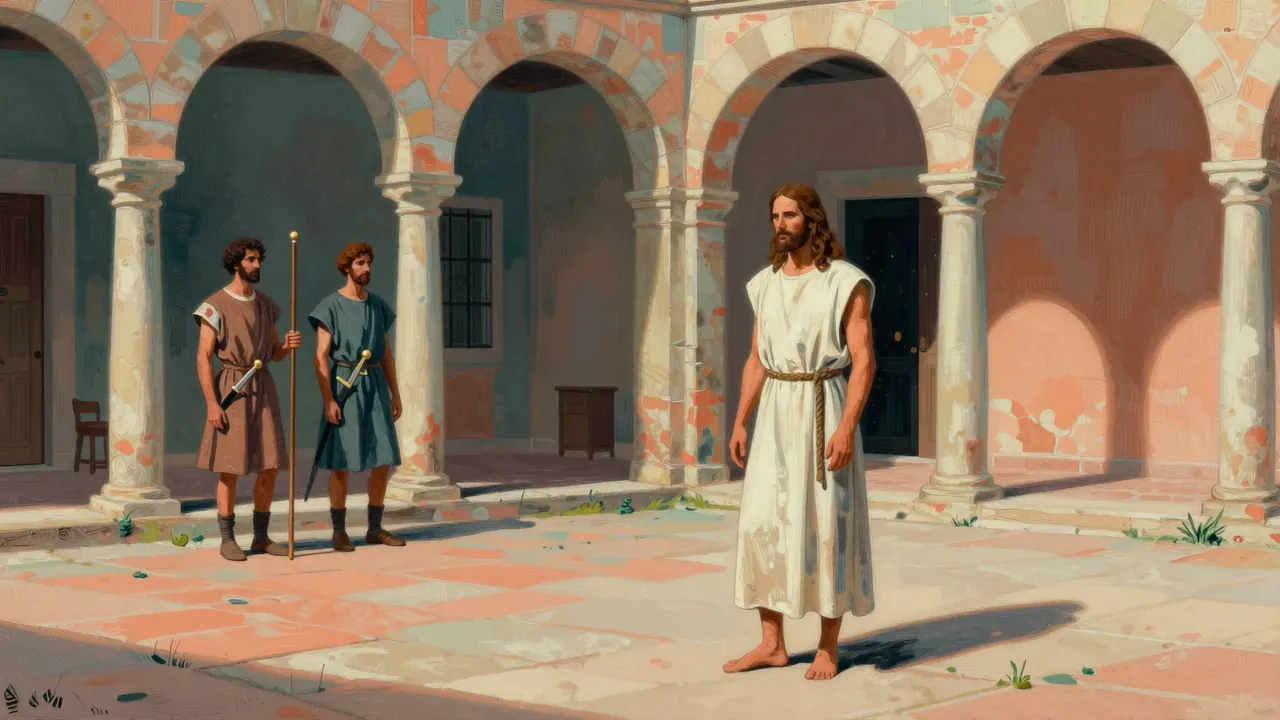
The Decameron is Pier Paolo Pasolini’s first film in his Trilogy of Life — a deliberate, dialect-driven adaptation of Boccaccio’s 14th-century frame narrative, transposed from Florence to Naples and the Campania region. It is not a scholarly reconstruction but a polemical reworking: Pasolini uses the medieval tales as vessels for contemporary critique — of clerical hypocrisy, northern Italian economic dominance over the Mezzogiorno, and the commodification of desire under late capitalism. The film’s structure is episodic, held together by a framing device in which Pasolini himself appears as Giotto’s apprentice, arriving in Naples to paint a mural — a self-reflexive gesture that anchors the film’s concern with art as labour, storytelling as survival, and image-making as resistance. The Neapolitan dialect is central, not decorative: it signals both authenticity and marginality, refusing the linguistic hegemony of standard Italian. This is a film that treats folklore not as quaint relic but as living, unruly material — rough, bodily, and politically charged. It insists on the continuity between Boccaccio’s world and Pasolini’s own: not through fidelity, but through friction. (158 words)
The shape of it
The film works through accumulation rather than cohesion: ten loosely linked episodes, each built around a single comic or erotic set-piece — a tomb robbery, a convent farce, a deaf-mute gardener seduced by nuns. Tonino Delli Colli’s cinematography favours shallow focus and natural light, often shooting in cramped interiors or sun-baked courtyards; the camera lingers on hands, feet, sweat, and cloth without romanticising them. Performances are broad but never cartoonish — Franco Citti’s Ser Ciappelletto is sly and unblinking, Ninetto Davoli’s Masetto moves with the wary grace of someone who knows he is being watched. Ennio Morricone’s score avoids original composition in favour of curated folk and liturgical fragments — Neapolitan washerwomen’s songs, Latin chants, tammurriata rhythms — stitching regional sound into the film’s ideological geography. Nino Baragli’s editing sustains a staccato rhythm, cutting away before punchlines land, trusting the audience to catch the irony in a raised eyebrow or a dropped veil. There is no psychological realism here, only behavioural logic: characters act according to appetite, fear, or necessity, not interior motivation. (159 words)
The body of it
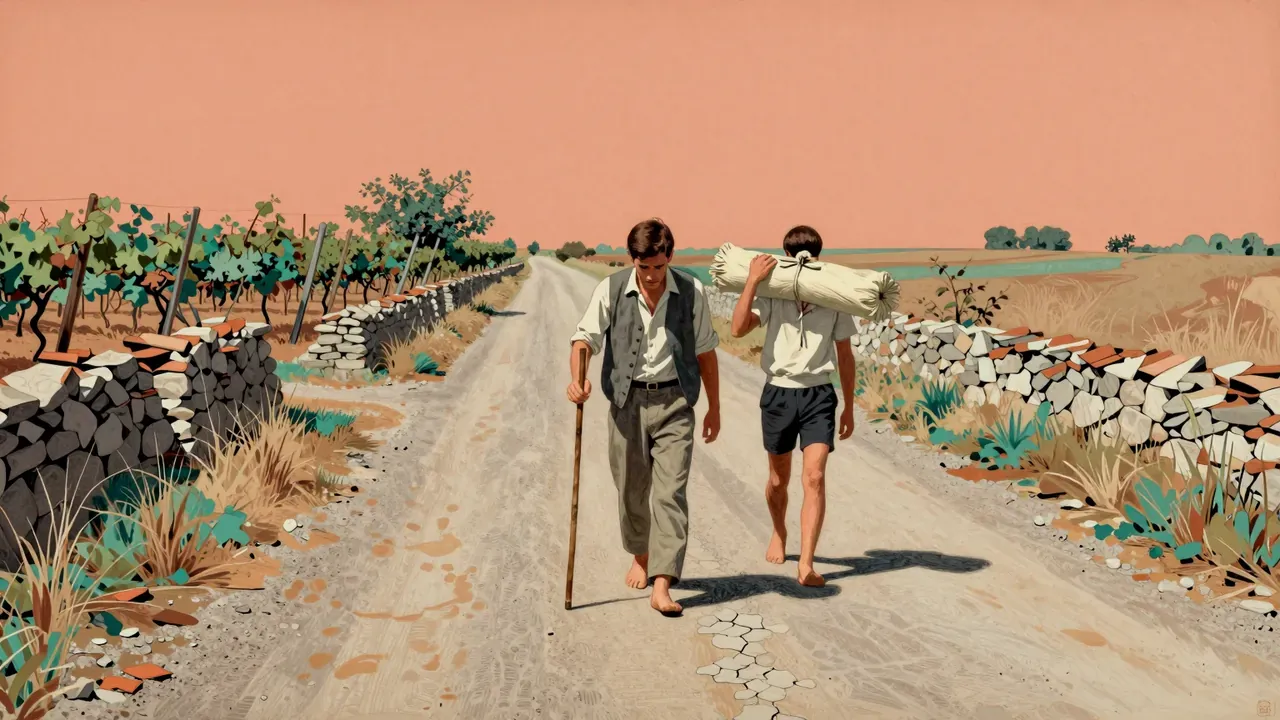
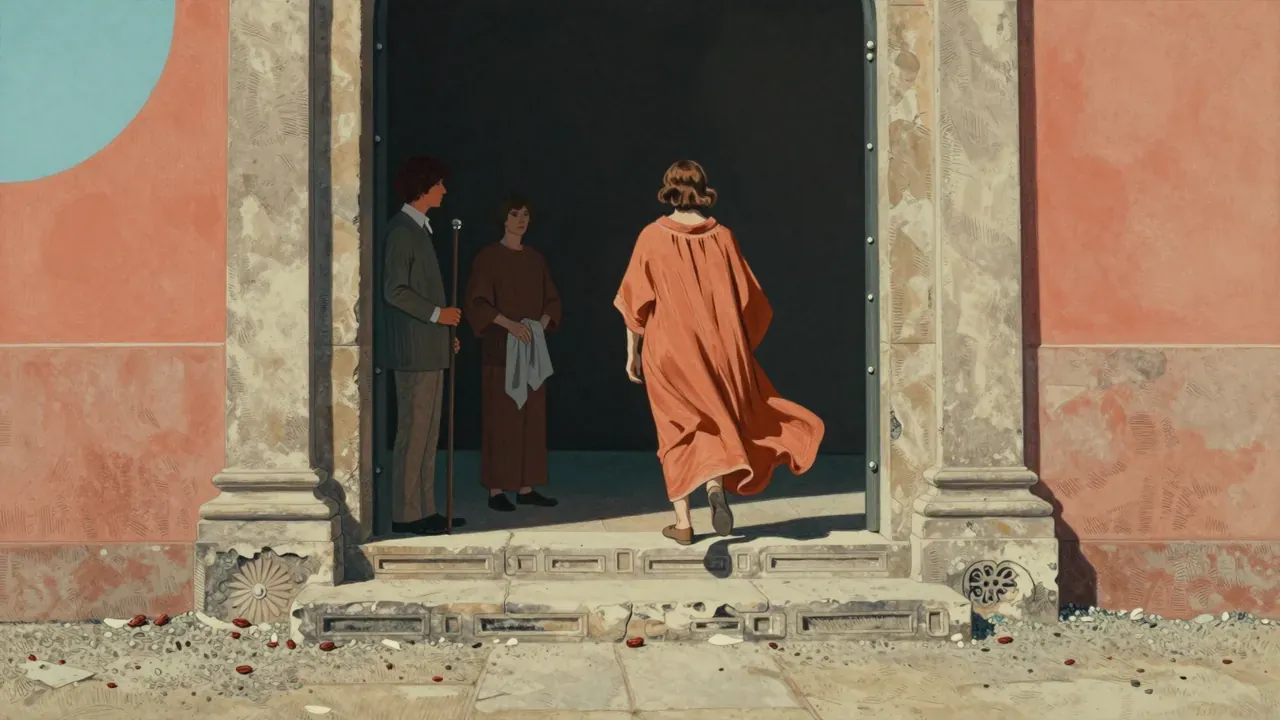
What lands is the film’s irreverent physicality — its commitment to the body as site of both comedy and critique. The Andreuccio sequence, with its excremental fall, tomb claustrophobia, and sudden bite, lands with visceral precision: it is slapstick rooted in real consequence, not whimsy. The nuns’ revolt — sparked by the Mother Superior’s misplaced underpants — works because it refuses moral hierarchy: sin is exposed not to condemn, but to equalise. The use of Neapolitan dialect gives weight to every insult, bargain, and double entendre; it does not need translation to register as lived speech. Pasolini’s decision to shoot in actual locations — Caserta Vecchia, Villa Cimbrone, the streets of Naples — grounds the satire in tangible texture: cracked plaster, uneven cobblestones, laundry strung between balconies. Even the music lands as argument: the juxtaposition of sacred chant and street-vendor song insists that devotion and commerce occupy the same sonic space. These choices cohere not as style but as stance — one that treats laughter as a form of literacy, and vulgarity as a vernacular of truth. (157 words)
The gaps in it
What does not land is the framing device’s thinness: Pasolini’s painter apprentice remains a cipher, his mural never seen, his presence more symbolic than dramatic. The transitions between tales feel perfunctory — often just a cut to a new location or a shift in costume — and the absence of a stronger narrative spine leaves some episodes adrift, particularly those relying on dialect-specific wordplay lost to non-Neapolitan ears. The film’s tonal consistency occasionally tips into monotony: the repetition of sexual revelation-as-liberation, while ideologically coherent, flattens variation in pacing and emotional register. Two scenes were excised — Girolamo and Salvestra, and Rustico and Alibech — and their removal creates gaps in thematic rhythm; the latter especially would have deepened the film’s engagement with religious syncretism and colonial fantasy. The reliance on folk music, though conceptually rich, sometimes overwhelms diegetic action: a tammurriata can drown out dialogue, not enhance it. Some viewers will find the film’s refusal of psychological nuance alienating — characters are types, not individuals, and that choice, however deliberate, denies certain kinds of emotional access. (156 words)
The politics of it
The themes that matter are economic dispossession disguised as piety, the weaponisation of shame, and the resilience of vernacular culture against institutional erasure. Pasolini maps Boccaccio’s Tuscan satire onto the post-war Italian south — Naples becomes a stand-in for the global periphery, its dialect a marker of both exclusion and resistance. The recurring motif of the con — whether by noblewoman, nun, or thief — exposes how power operates through performance and misdirection. Sex is never private here; it is transactional, communal, political. The film treats the body not as site of sin but of knowledge: pleasure, pain, hunger, and exhaustion are all forms of testimony. Religion appears not as doctrine but as architecture — churches as backdrops for theft, convents as sites of mutual aid disguised as scandal. The soundtrack reinforces this: sacred chants sit alongside vendor songs because, for Pasolini, liturgy and hawking belong to the same oral economy. The film’s deepest theme is continuity — not of tradition, but of struggle: the same tricks, the same evasions, the same bodily truths recur across seven centuries, unchanged in essence, only reshaped by circumstance. (159 words)
The audience for it
This film is for viewers who value formal rigour over narrative comfort, who read dialect as politics, and who accept that comedy can be structural, not just situational. It rewards attention to texture — the grain of film stock, the cadence of Neapolitan vowels, the way light falls on a stone wall in Caserta. It is not for those who require character arcs, linear causality, or moral resolution; the film offers no redemption, only recurrence. Those who expect historical accuracy or tasteful restraint will find it alienating — its nudity is unglamorous, its sex uneroticised, its humour deliberately crude. Viewers unfamiliar with Italian regional history may miss layers of economic critique embedded in location choices and dialect shifts. But even without that context, the film’s energy remains legible: it is for anyone who believes that laughter can be a method of analysis, not just release. Those who reject satire as simplification — or who see folk culture as quaint rather than combative — will find little purchase here. (158 words)
The time for it
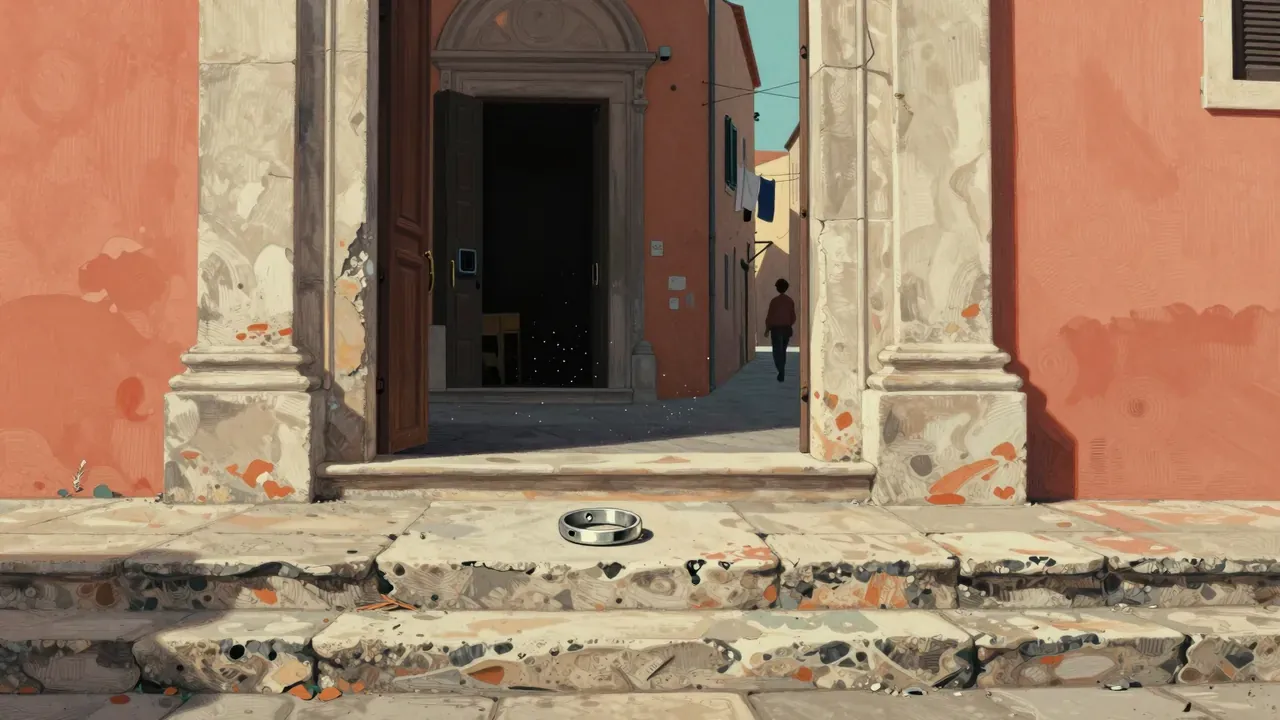
Yes, it is worth your evening — but only if you approach it as a provocation, not a pastime. Its 112 minutes unfold with the deliberation of a ritual: slow to start, dense in implication, resistant to passive viewing. It repays attention not because it reveals hidden meanings, but because it insists on the material reality of its images — the weight of a ring stolen from a tomb, the heat of Vesuvius in the background, the fatigue in a young man’s shoulders as he pretends to be mute. It is not ‘entertaining’ in the conventional sense; it demands recalibration. Someone who values plot efficiency or emotional catharsis may leave frustrated — and that frustration is part of Pasolini’s design. The film’s value lies in its refusal to soften its gaze: it looks at poverty, lust, and hypocrisy without flinching, and without offering solutions. To call it ‘enjoyable’ would misstate its purpose. But to call it unworthy of time would ignore how thoroughly it occupies its own terms — and how few films do that with such clarity. (159 words)