The opening frame
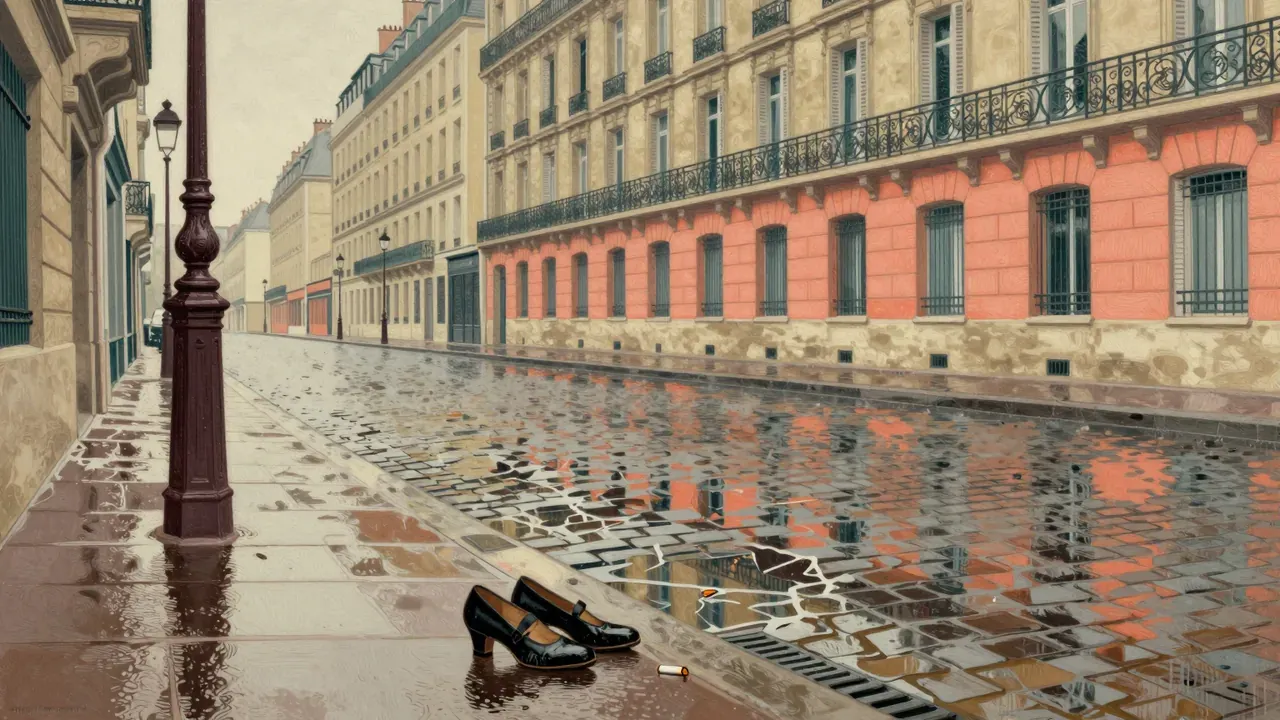
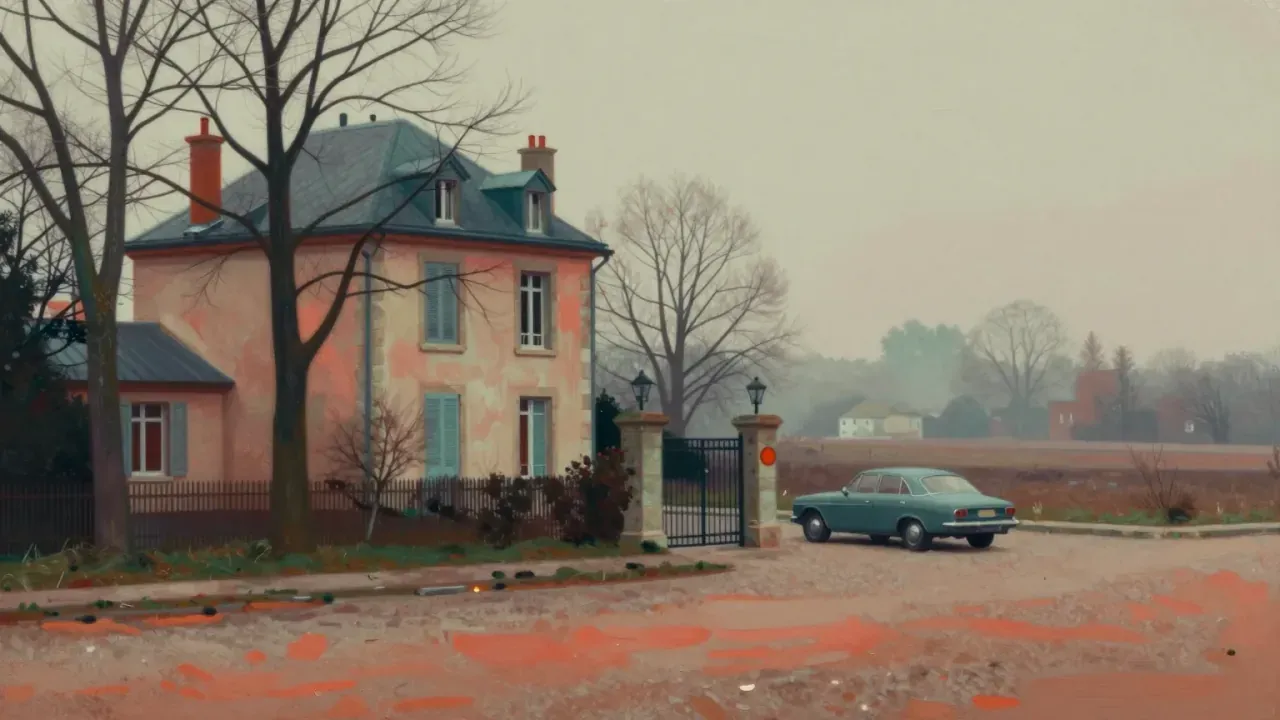
A Woman Is a Woman is Jean-Luc Godard’s third feature and his first in colour and anamorphic widescreen — a self-conscious, rule-bending romantic comedy made as both homage and interrogation of Hollywood musicals. It does not aim to replicate their mechanics but to expose them: the artificiality of song-and-dance interludes, the contrivance of plot resolution, the gendered logic of desire and domesticity. Shot in Paris on modest sets with visible seams and abrupt cuts, it treats genre not as a vessel for story but as a system to be annotated, interrupted, and restaged. Godard writes, directs, and structures the film as a series of propositions — about how love is performed, how language fails or deflects intention, how bodies are assigned roles before they speak. Its ambition is not narrative coherence but rhythmic provocation: every dissolve, every freeze-frame, every burst of Michel Legrand’s score is calibrated to unsettle expectation rather than satisfy it. It belongs to the French New Wave not because of its youthfulness but because of its insistence that form must argue with content, and that comedy, when stripped of reassurance, becomes a site of real friction.
The look of it
The story follows Angéla, an exotic dancer who insists on having a child, and Émile, her reluctant partner, while Alfred — Émile’s friend and Angéla’s suitor — waits in gentle, unthreatening proximity. Dialogue is stylised, often declaimed; arguments unfold via book titles pulled from shelves, turning literary reference into slapstick semaphore. Anna Karina moves with precise physical wit, her performance anchored in gesture and timing rather than psychological realism. Jean-Claude Brialy plays Émile with studied detachment, Jean-Paul Belmondo’s Alfred radiating affable nonchalance. Raoul Coutard’s cinematography favours flat, saturated colour and shallow focus, keeping faces legible while leaving backgrounds deliberately unmoored. Agnès Guillemot’s editing fractures continuity without abandoning rhythm — jump cuts punctuate conversation like exclamation marks. Michel Legrand’s score alternates between brassy pastiche and melancholic piano motifs, underscoring irony rather than emotion. The film’s craft is not invisible; it is foregrounded, interrogated, and occasionally mocked — a set of tools laid bare on the workbench.
The body in motion
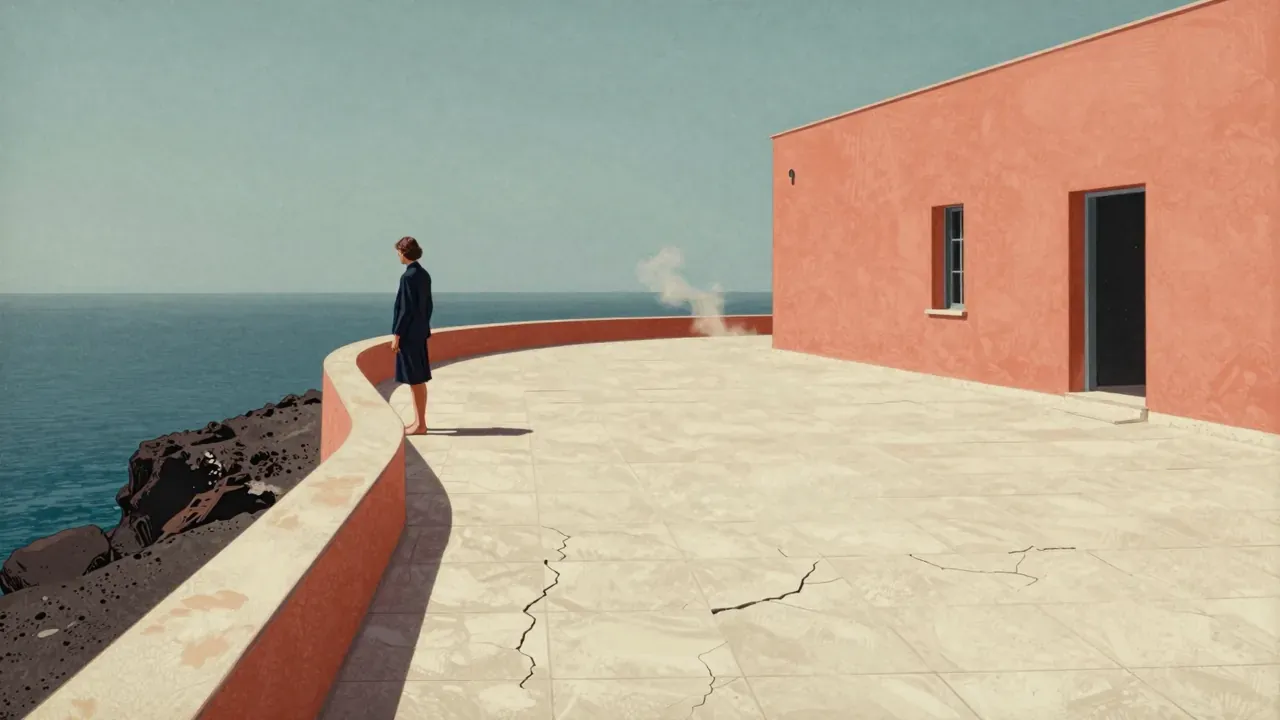
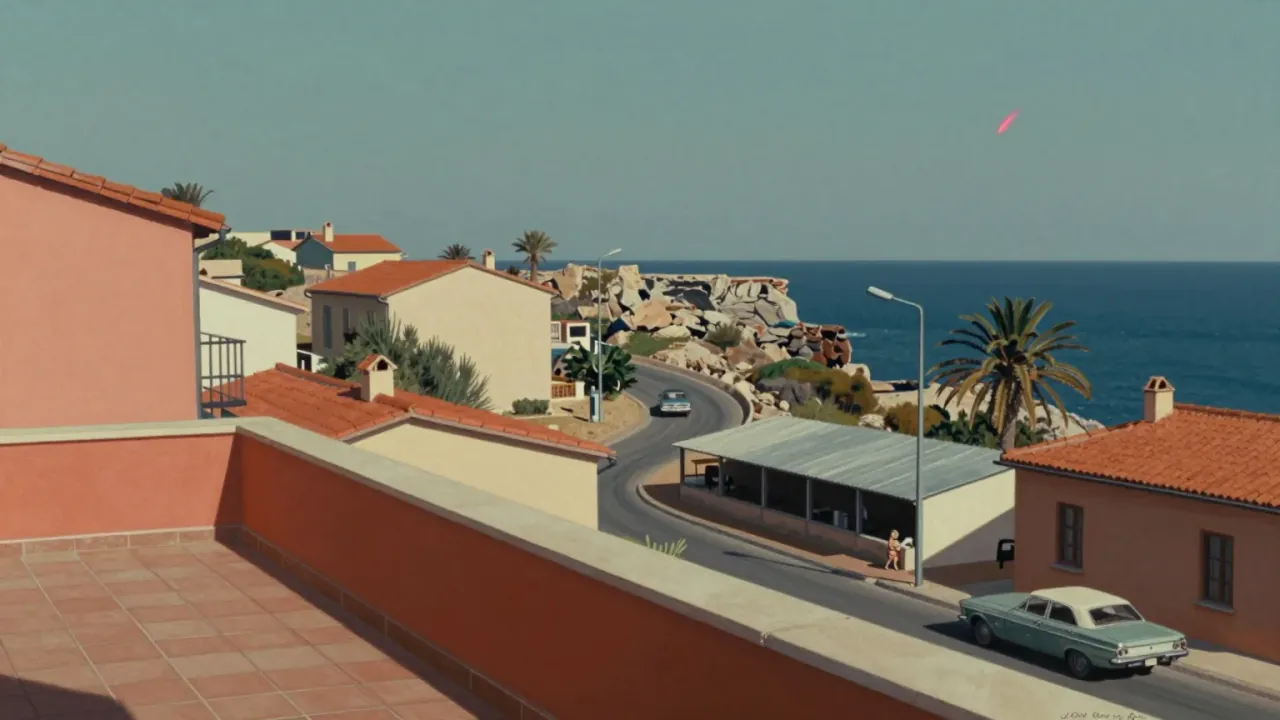
What lands is the film’s tonal precision: its ability to sustain a mood of affectionate impatience — with romance, with genre, with the very idea of resolution. Karina’s charisma carries the central paradox: she is both subject and strategist, performer and author, vulnerable and utterly in control. The visual gags — a character stepping out of frame mid-sentence, a title card announcing ‘THE END’ before the final scene — land because they are timed like vaudeville, not theory. The use of colour feels deliberate rather than decorative: reds and yellows flare at moments of decision, cool blues recede during stalemate. The musical numbers do not pretend to spontaneity; they announce themselves as interruptions, and that honesty makes them persuasive. Even the self-referentiality — characters acknowledging the camera, the crew, the script — works because it is never coy; it is structural. This is not irony as evasion but as architecture: the scaffolding holds because every bolt is visible and accounted for.
The rhythm of the gag
What does not land is the film’s reliance on a certain kind of intellectual reflex — the assumption that naming a convention automatically subverts it. Some interruptions feel arbitrary rather than argued: a sudden cut to black during dialogue, or a repeated line delivered with identical inflection, can read as mannerism rather than method. The supporting cast — including Jeanne Moreau in a cameo — are underused, their presence more symbolic than functional. The film’s resistance to emotional accumulation means moments meant to resonate — Angéla’s loneliness, Émile’s hesitation — remain schematic. There is little sense of consequence beyond the frame: no social texture, no economic pressure, no history pressing in. That is by design, but it also limits the stakes. Viewers expecting either classical farce or psychological depth will find neither. The film’s refusal to settle into rhythm or tone becomes tiring over eighty-five minutes, particularly in scenes where the gag is the absence of one — silence stretched too long, repetition without variation, a joke told twice without escalation.
The weight of the word
The themes that matter are not abstract but embodied: the labour of being a woman in a world that assigns meaning to the body before granting agency to the voice; the gap between biological fact and social demand — especially around motherhood; and the way language, when stripped of sincerity, becomes a tool of negotiation, evasion, or play. Gender here is not identity but role-play, rehearsed in public and revised in private. The film treats desire as a series of propositions — ‘I want a child’, ‘I want you’, ‘I want to be wanted’ — each spoken aloud like lines in a script whose authorship is contested. Colour, music, and framing all serve this inquiry: Legrand’s score swells not to heighten feeling but to underline its artifice; Coutard’s lighting flattens depth to deny psychological interiority. There is no nostalgia for tradition, only scrutiny of its grammar — how stories about love are built, who gets to tell them, and what happens when the heroine rewrites the last act herself.
The grammar of desire
This film is for viewers who treat genre as a language to be parsed, not a contract to be honoured — those comfortable with dissonance, who find pleasure in formal rigour and comic timing that operates at the level of syntax. It rewards attention to composition, cadence, and contradiction. It is not for those who require narrative momentum, emotional anchorage, or exposition that clarifies rather than complicates. Anyone seeking a straightforward romantic comedy, or even a coherent satire of one, will be frustrated. Those who associate ‘French New Wave’ with effortless cool may find its repetitions laboured; those who expect Karina to function as muse rather than co-conspirator may misread her agency. A change in pacing — tighter editing in the middle stretch, or a clearer escalation in the central conflict — would sharpen its impact. Without that, its pleasures remain concentrated, not cumulative.
The final curtain
Yes, it is worth your evening — but only if you arrive prepared to meet it on its own terms: as a choreographed argument, not a story to be followed. Its eighty-five minutes pass briskly when engaged as a series of stylistic decisions — a choice of lens, a pause before a line, a shift in Legrand’s orchestration. It repays rewatching not for hidden meaning but for pattern: how often a door opens off-centre, how many times a character looks directly at the lens, how the colour red recurs at moments of assertion. Those who approach it expecting warmth or catharsis will leave cold. But those who value precision of tone, intelligence of framing, and the rare feat of making philosophy dance will find it quietly exhilarating. Its value lies not in what it resolves but in how insistently it refuses to let any convention go unexamined — least of all the idea that a woman’s wish must be framed as compromise.