The shape of farewell
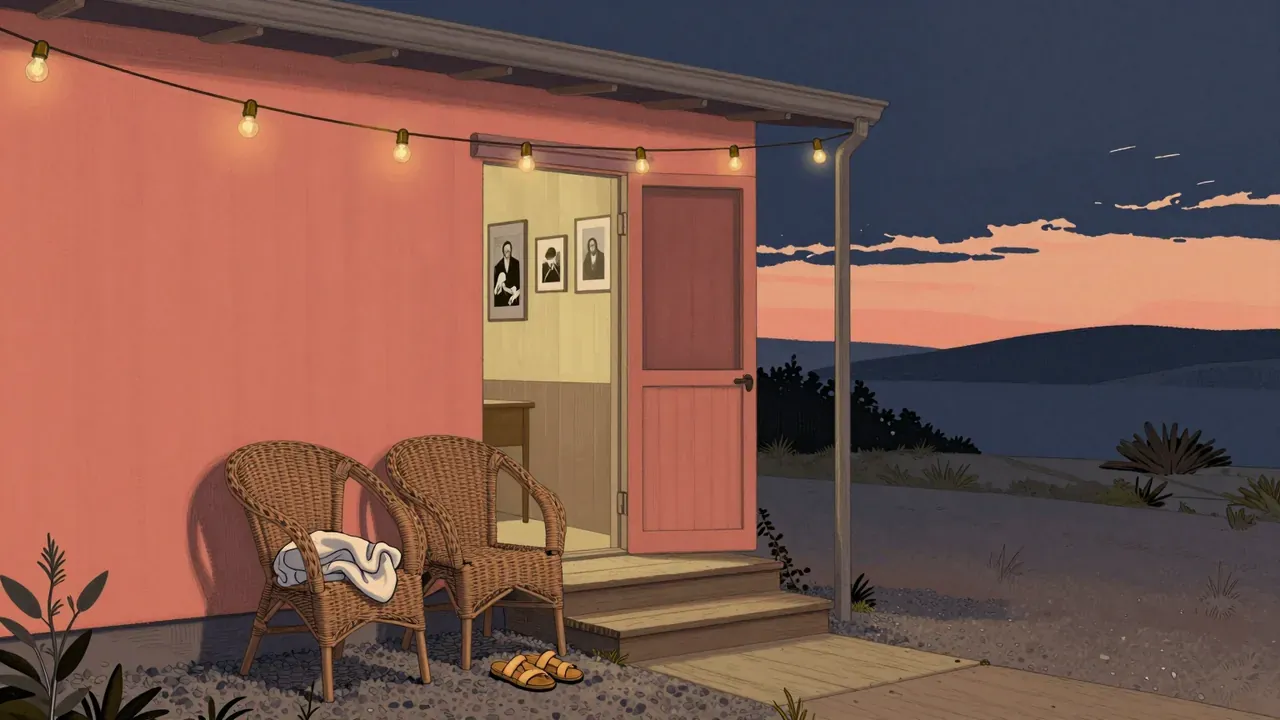
Limelight is Charlie Chaplin’s self-authored reckoning with decline, memory, and the precarious dignity of performance. It is not a return to silent comedy but a deliberate late-career pivot: a talk-heavy, music-hall-inflected drama in which Chaplin plays Calvero, a once-celebrated stage clown now forgotten, alcoholic, and living in a shabby London room above a shop. The film attempts something rare for its time — a sustained, unsentimental portrait of artistic obsolescence, framed by the rescue of a young dancer, Terry, from suicide and their mutual dependence as both try to reassemble purpose. Chaplin wrote, directed, produced, scored, and starred in it; every department bears his hand. Though set in Edwardian London, it was shot entirely in Hollywood studios and backlots, a fact that underscores its nature as an interior reconstruction — less a period piece than a psychological map of Chaplin’s own anxieties about fading relevance, his father’s early death, and the political exile awaiting him. Its ambition is autobiographical honesty, not historical fidelity.
The rhythm of memory
The story unfolds in two movements: Calvero’s intervention in Terry’s despair, then their shared effort to revive her career and his own. Claire Bloom, in her first major film role, brings stillness and unvarnished fragility to Terry; Chaplin’s Calvero balances pathos and physical precision — his cane work, timing, and facial control remain exact even when the script leans on monologue. Karl Struss’s cinematography avoids glamour: interiors are dim and textured, street scenes shallow and slightly claustrophobic, the music hall sequences lit with theatrical flatness rather than cinematic depth. Chaplin’s score — lush, string-dominant, melancholic — carries the emotional weight where dialogue falters. Buster Keaton appears only in the final duet, a sequence shot with loose, collaborative energy; Chaplin reportedly edited his own takes more heavily than Keaton’s, trusting the older comedian’s instincts. Sydney Chaplin, Geraldine Chaplin, and Wheeler Dryden appear in supporting roles, reinforcing the film’s familial, almost ritualistic quality.
The last number
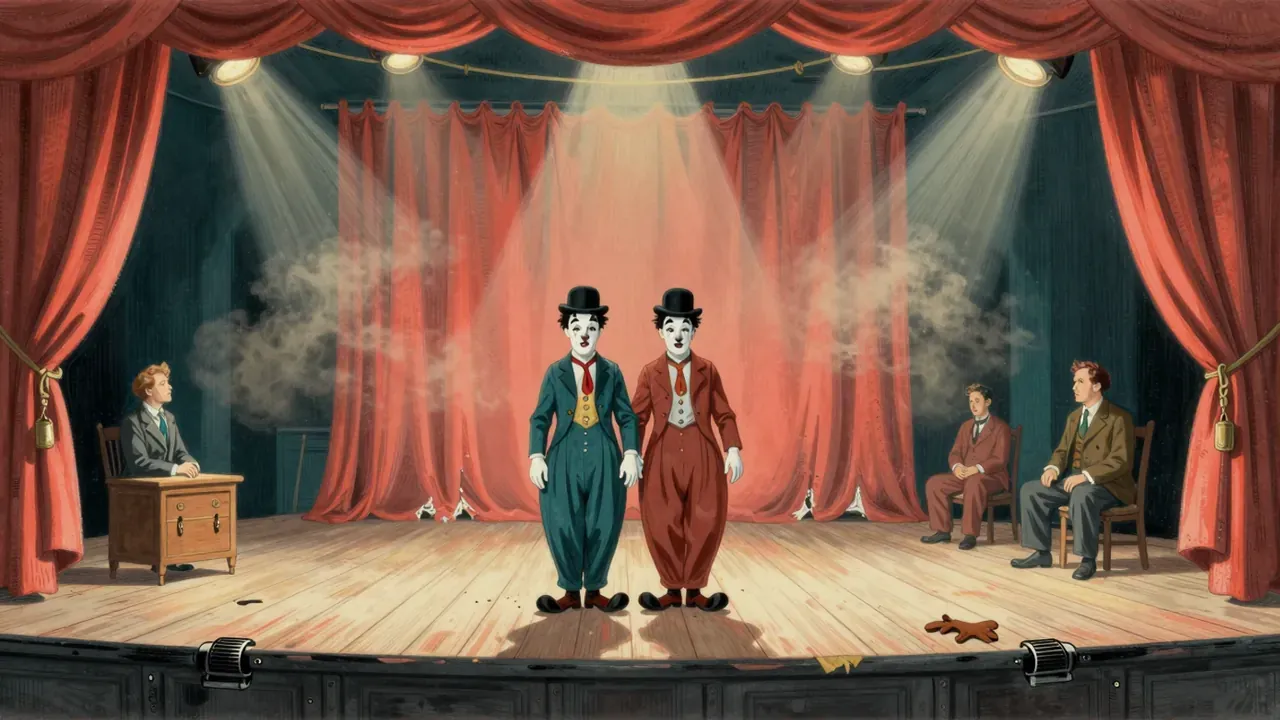
What lands most firmly is the quiet gravity of Calvero’s exhaustion — not just physical, but existential. His gestures retain authority even when his body betrays him; the scene where he rehearses a routine alone in his room, then collapses mid-step, communicates more about faded mastery than any speech. The dance sequences, doubled by Melissa Hayden for Bloom, possess a restrained elegance that feels earned rather than decorative. The final concert hall sequence works not as triumph but as valediction: the applause is real, the exhaustion palpable, the farewell unspoken but absolute. Chaplin’s decision to shoot the music hall scenes at RKO-Pathé, using existing stage architecture rather than building sets, gives them a lived-in authenticity. The score’s ‘Terry Theme’ — later adapted as ‘Eternally’ — lodges itself in the film’s emotional architecture, recurring not as ornament but as structural motif. Even the film’s length — 137 minutes — serves its central idea: time weighs differently on those who have outlived their moment.
The weight of minutes
What does not land is the film’s verbal exposition. Chaplin’s dialogue often veers into didacticism, particularly in Calvero’s speeches on art, mortality, and human frailty — lines that feel less like character revelation and more like authorial interjection. Several scenes, especially in the middle act, stall under the weight of conversation that neither advances plot nor deepens relationship. The film’s pacing assumes patience the modern viewer may not extend: long pauses, repeated motifs, and extended silences that risk drifting into inertia rather than resonance. Some supporting performances — Nigel Bruce’s kindly doctor, Norman Lloyd’s earnest impresario — remain functional rather than vivid. The attempt to balance comedy and tragedy occasionally misfires: a pratfall meant to lighten mood instead underscores Calvero’s physical vulnerability in a way that feels jarring rather than integrated. The film’s refusal to cut away from its own solemnity means moments intended as tender can settle into sentimentality without sufficient dramatic counterweight.
The geography of loss
The themes that matter are ageing as professional erasure, performance as both mask and lifeline, and companionship as temporary shelter against oblivion. Limelight treats fame not as reward but as a condition with expiry — Calvero’s fall is not moral but structural, tied to shifting tastes and generational turnover. The film’s preoccupation with memory is literal (Calvero’s lapses) and metaphorical (the recreation of music-hall aesthetics, the casting of Keaton as a living relic). Chaplin’s insistence that Calvero is modelled on Frank Tinney, not his father, matters less than the fact that both figures represent the same archetype: the artist whose audience has moved on. The film also quietly interrogates American suspicion of European-style artistry — its London setting, its theatrical vocabulary, its resistance to Hollywood narrative efficiency all mark it as culturally alien in the McCarthy-era US. Its enduring power lies in how it frames resilience not as comeback, but as the quiet persistence of dignity in diminished circumstances.
Who it waits for
This film is for viewers who value craft over pace, who find emotional weight in restraint, and who accept that a film can be both flawed and essential. It rewards attention to gesture, silence, and musical phrasing — not just plot or punchlines. It suits those familiar with Chaplin’s earlier work, or with British music-hall tradition, but does not require either. It is not for viewers who need narrative propulsion, comic escalation, or clear resolution — the ending is deliberately unresolved, its final image one of departure without destination. Those put off by mid-century theatrical delivery or long takes will likely disengage before the halfway point. A viewer expecting the kinetic economy of Modern Times or City Lights may find Limelight’s deliberation frustrating. Its 137-minute runtime demands commitment, not passive viewing. Those who prefer irony over sincerity, or satire over sorrow, will find little purchase here.
The light after curtain
Yes, it is worth your evening — provided you approach it as a late testament, not a crowd-pleaser. Its value lies not in entertainment but in its unflinching clarity about what it costs to keep performing when the house lights are already coming up. It repays slow watching: the texture of Struss’s lighting, the weight of Chaplin’s pauses, the precision of Keaton’s physical punctuation. Some will argue it is overlong or self-indulgent — critics in 1952 said as much — but its perceived flaws are inseparable from its purpose. To call it ‘verbose’ is to miss that its verbosity is the point: Calvero talks because he fears silence more than failure. A viewer who watches it expecting a comedy will leave disappointed; one who watches it as a meditation on endurance will find it resonant. Its worth increases with age — both the film’s and the viewer’s — and diminishes only if watched as anything other than what it is: a farewell, rehearsed in full view.