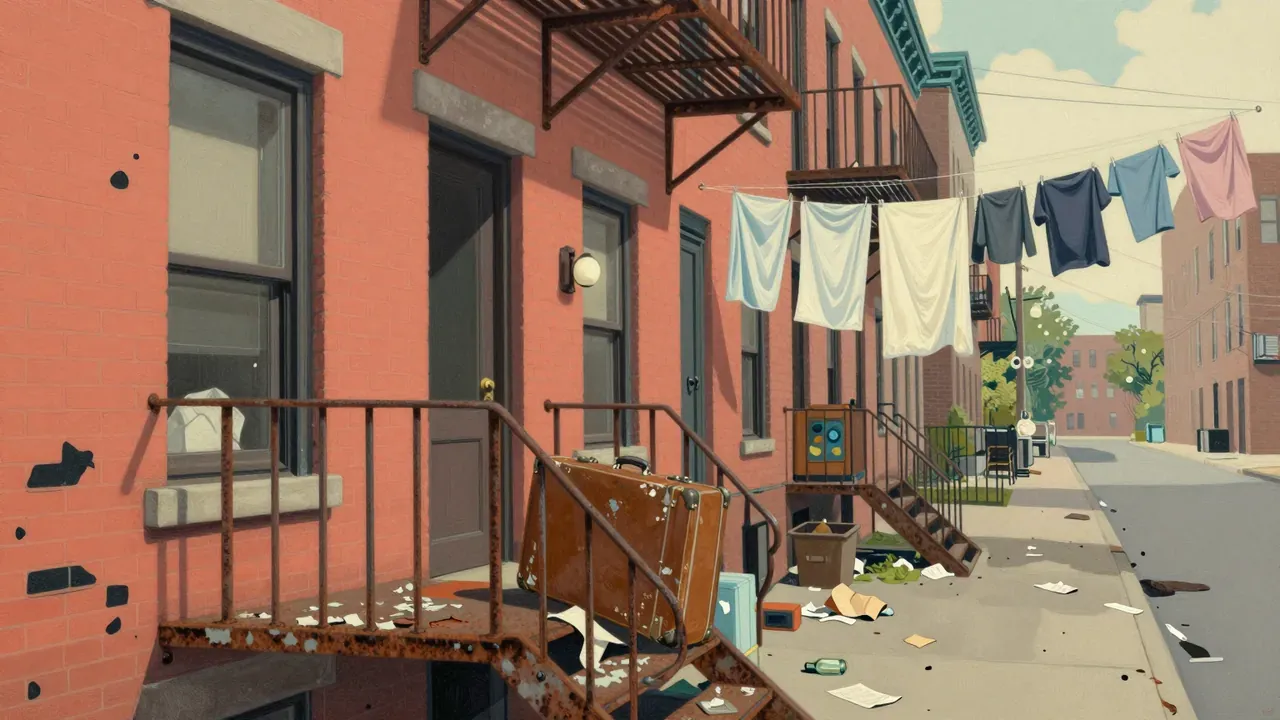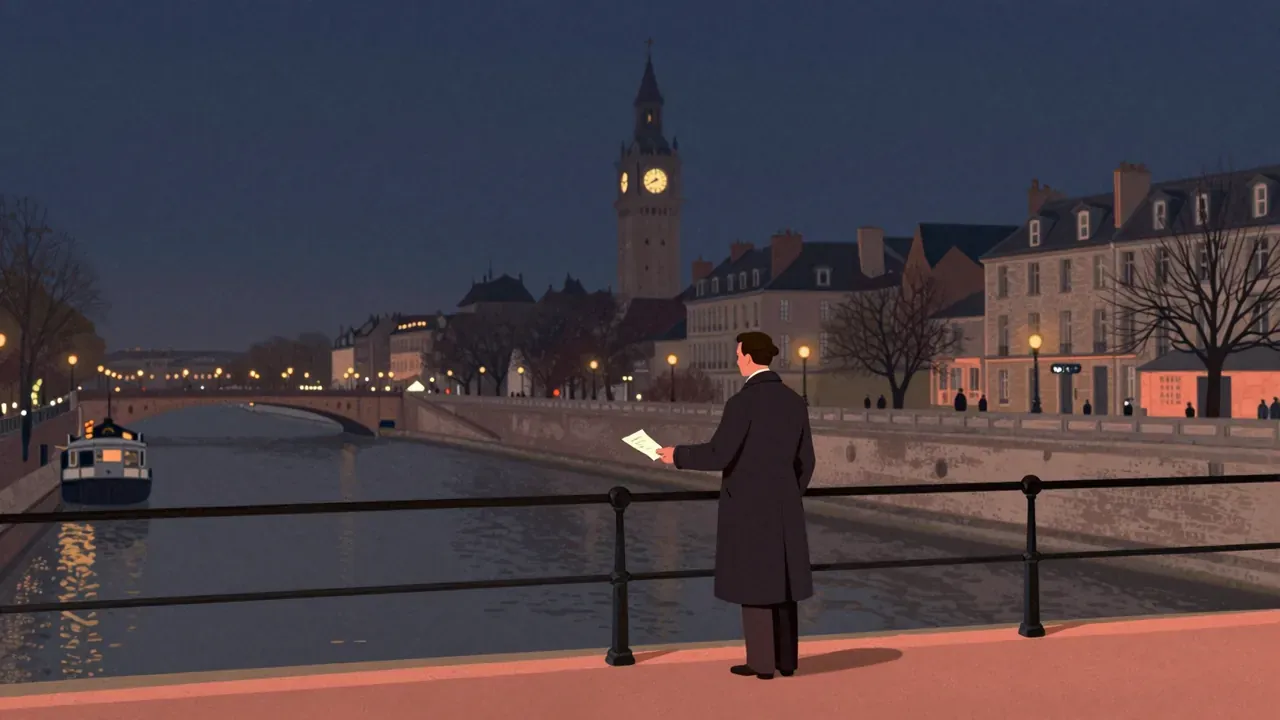
The look of it
Midnight is a 1939 Paramount romantic comedy built on the mechanics of screwball farce: mistaken identity, rapid social ascent, and a plot that hinges on a woman’s performance of class. It tries to sustain lightness while threading real stakes — poverty, exploitation, marital disillusionment — through its gilded Parisian frame. The film does not aim for realism but for tonal precision: a world where a taxi driver can pass as a baron, where pawn tickets double as concert tickets, and where fifty thousand francs arrive unannounced in a suitcase. Its ambition is structural elegance — to make deception feel generous, absurdity feel inevitable, and romance feel earned without sentimentality. It works within the studio system’s constraints, using costume, set, and timing not as decoration but as narrative grammar. The script by Brackett and Wilder treats class as theatre, marriage as contract, and glamour as both weapon and disguise. This is not satire in the corrosive sense, but comedy as calibration: every line, glance and cut calibrated to keep the balance between mockery and affection.
The weight of a gesture
The story moves briskly across three days in Paris, pivoting on Eve Peabody’s improvisation and Tibor Czerny’s quiet loyalty. Claudette Colbert anchors it with physical exactness — her posture shifts with each new role, her voice tightens or softens to match the lie she’s telling. Don Ameche plays Jacques with suave vacancy, John Barrymore hams with surgical control, and Mary Astor gives Helene a brittle, watchful intelligence. Charles Lang’s cinematography avoids high contrast; instead, he uses shallow focus and soft diffusion to blur social boundaries — ballrooms melt into corridors, hotel lobbies dissolve into rain-slicked streets. Doane Harrison’s editing sustains rhythm without hurry: pauses land because they’re earned, not inserted. Friedrich Hollaender’s score is wry and lightly dissonant, never underscoring but occasionally undercutting — a waltz that stutters when Eve lies. Leisen’s direction favours composition over movement: characters are framed in doorways, mirrors, and windows, their status always visible in relation to architecture and fabric.
The rules of the game
What lands is the film’s sustained tonal confidence — its refusal to apologise for its artifice. The bridge scene, where Eve bluffs her way into high society using a pawn ticket, works because the logic is internal and unbroken: the ticket is real, the concert is real, the panic is real, and the solution — lying — feels like the only available tool. The taxi drivers’ pool is a small miracle of economy: five francs, a shared purpose, no exposition needed. Barrymore’s Baron Czerny is not just comic relief but thematic punctuation — his delusion is contagious, then curative. The courtroom sequence succeeds because it treats French divorce law as farcical bureaucracy rather than legal realism, and because Tibor’s feigned madness is both ridiculous and principled. Even the costumes land as character: Eve’s first gown is too tight, her second too lavish, her third — the wedding dress — simple, unadorned, worn without pretence. These are not gags but gestures: the film trusts the audience to read intention in silhouette, gesture, and silence.
Where the logic bends
What does not land is the final act’s pivot from social critique to romantic resolution. Once Tibor enters the Flammarion estate, the film’s sharp observation of class performance softens into convention. His ‘madness’ is less a subversion of aristocratic pretence than a convenient plot device — one that asks the audience to accept that insanity, once performed, becomes legally binding. The judge’s surprise at the couple’s reappearance feels unearned, as if the film has forgotten its own rules about consequence. Helene’s abrupt reformation — from jealous wife to reconciled spouse — lacks the texture given to Eve’s moral drift. The script’s cynicism about money and marriage recedes just as it should deepen, replaced by a tidy pairing that ignores the material realities established in the opening scenes: Eve arrives in Paris with nothing, and leaves with a husband, but the film never reckons with what that exchange costs her beyond pride. That evasion is not careless, but it is a choice — and one that weakens the film’s otherwise consistent logic.
What love looks like here
The themes that matter are performance as survival, the arbitrariness of class signifiers, and the quiet violence of economic dependency. Eve does not choose deception; she is forced into it by circumstance — rain, hunger, lack of papers, absence of credit. Her ‘Baroness’ persona is not vanity but camouflage, and her eventual rejection of it is not moral awakening but recalibration: she chooses Tibor not because he is noble, but because he sees her without costume. The film treats wealth not as virtue but as stage direction — Georges Flammarion hires Eve not to punish his wife but to direct a better drama. Even the title ‘Midnight’ signals transition: not an end, but the moment when one identity expires and another begins. There is no fixed self here, only roles taken up, discarded, or inherited. The film’s most serious idea is that love, like class, is a practice — something done, not declared. That idea is clearest in Tibor’s actions: he does not speak of devotion, but drives through the night, pays for dinner, waits outside courtrooms, and walks away when mocked — all without demanding acknowledgment.
Who it is for
This film is for viewers who value precision of tone over emotional escalation, who find pleasure in construction — in how a joke is timed, a costume chosen, a set dressed — and who do not require moral clarity to feel satisfied. It rewards attention to detail: the way a cigarette holder tilts, how a door closes behind a departing guest, the weight of a single franc dropped into a pool. It is not for those who need psychological realism, narrative causality, or characters whose motivations evolve on screen rather than off. Anyone expecting Wilder’s later, darker irony will be disappointed; this is Brackett and Wilder before they sharpened their tools. Nor is it for viewers allergic to studio-era artifice — the painted backdrops, the unmoving crowds, the dialogue that sounds written rather than spoken. If you prefer naturalism, or if you find charm insufficient compensation for structural compromise, Midnight will feel like a beautifully wrapped box containing slightly stale biscuits.
Is it worth your time?
Yes, it is worth your evening — provided you watch it as a crafted object, not a mirror. Its ninety-two minutes move with the ease of a well-rehearsed quartet: no note too loud, no silence too long. You may disagree if you measure films by emotional authenticity alone, or if you expect 1939 comedies to interrogate power structures more directly than this one does. What would change the verdict? A sharper final act — one that lets Eve’s choice feel hard-won rather than handed to her — or a more sustained interrogation of Tibor’s position as both accomplice and victim. But as it stands, Midnight earns its place not as a masterpiece of depth, but as a masterclass in surface: every frame polished, every line placed, every pause deliberate. It is worth your time because it does exactly what it sets out to do — and does it without haste, without apology, and without a single wasted gesture.