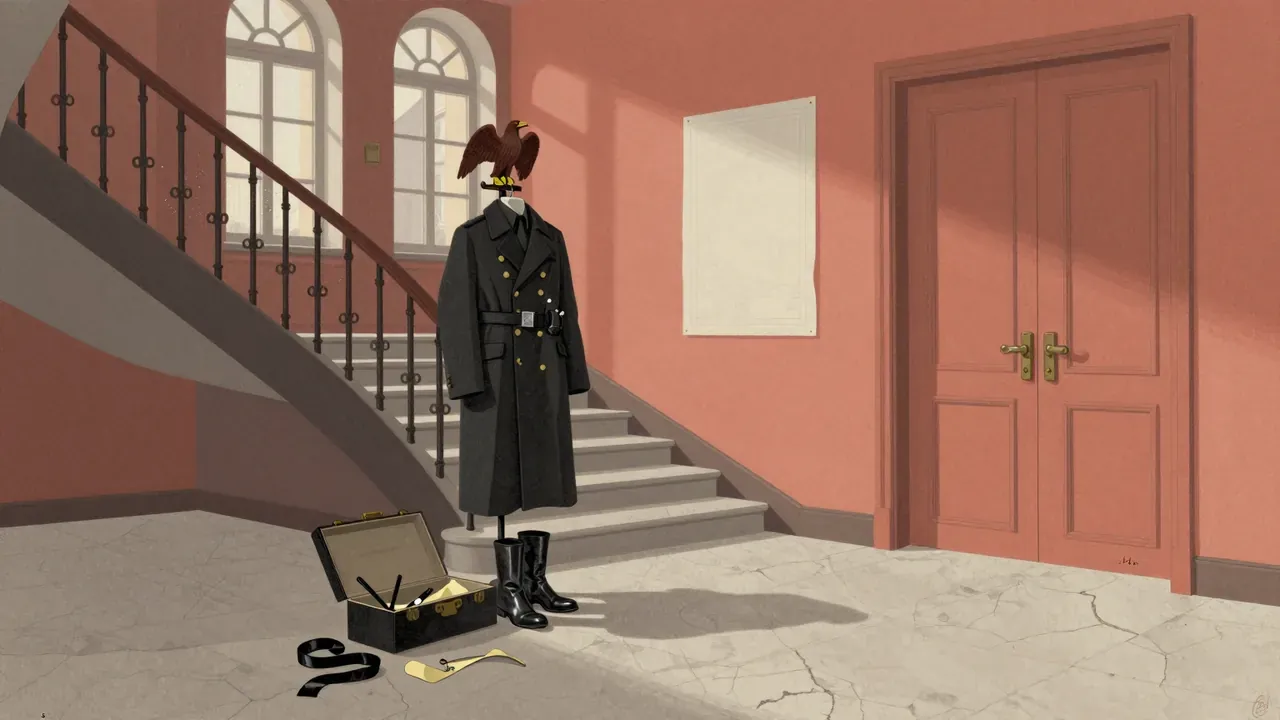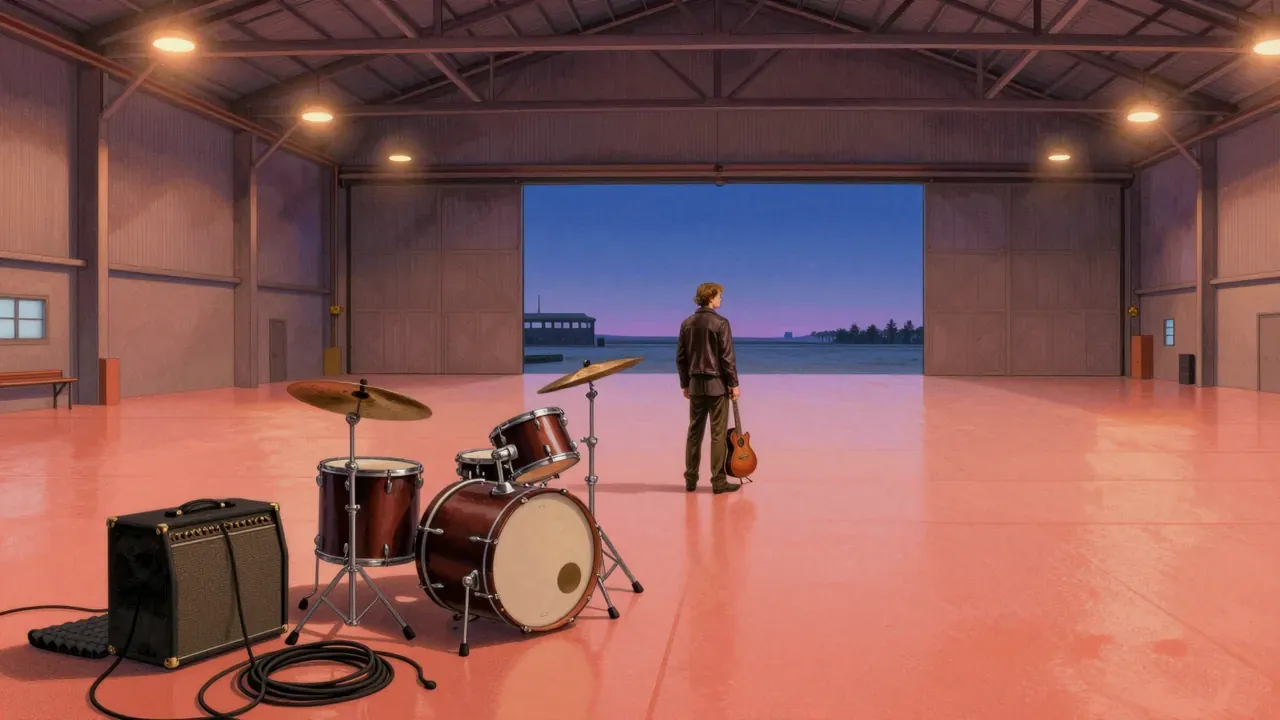
The look of it
This Is Spinal Tap is a mockumentary: a fiction presented as a documentary, shot on handheld 16mm film with no script, built from improvisation around character outlines. It follows Marty Di Bergi, a filmmaker documenting the American tour of Spinal Tap — a fictional British heavy metal band whose career arc parodies real rock trajectories, from skiffle to flower power to metal, and whose internal collapse mirrors the self-importance and fragility of rock mythology. The film does not aim to ridicule music itself, but the apparatus around it: managerial incompetence, label indifference, fan credulity, technical illiteracy, and the documentary form’s tendency to mistake proximity for insight. Its ambition is structural satire — exposing how earnestness, when divorced from competence or self-awareness, becomes indistinguishable from absurdity. It treats rock as a system of rituals, hierarchies and superstitions, then places its subjects inside that system without irony, letting their logic unfold until it collapses under its own weight. That collapse is not plotted; it is observed.
The way it moves
The film works through sustained performance discipline and precise craft choices. Christopher Guest, Michael McKean and Harry Shearer inhabit David St. Hubbins, Nigel Tufnel and Derek Smalls with unbroken commitment — no winks, no breaks in character, no acknowledgment of the camera beyond what a documentary subject would offer. Rob Reiner, as Marty Di Bergi, stays resolutely reactive: his questions are banal, his interventions minimal, his presence that of a technician rather than an interpreter. Cinematographer Peter Smokler shoots in vérité style, favouring tight frames, off-centre compositions and slight focus drifts that mimic documentary fatigue. Kent Beyda’s editing carves coherence from over 100 hours of footage, preserving first-take spontaneity while tightening narrative throughline — particularly the slow erosion of Nigel’s authority and the band’s shrinking venues. The music is performed live on set, with Guest re-shooting hand positions in post-production to match audio. Every prop — the eleven-volume amplifier, the 18-inch Stonehenge — is functional within the world, not symbolic outside it.
What sticks
What lands is the cumulative weight of minor, plausible failures. A drummer dies onstage. A stage prop arrives at one-tenth the intended scale. A record cover is censored, then released as blank black vinyl. These are not gags; they are consequences of miscommunication, ego and institutional neglect, rendered with documentary patience. The band’s belief in their own significance remains intact even as their circumstances degrade — which makes their dignity, however misplaced, quietly tragic. Nigel’s explanation of why eleven is louder than ten lands because it is delivered with total sincerity and zero defensiveness. Jeanine’s astrology-based management suggestions land because they are treated as seriously as Ian Faith’s marketing plans. The Air Force base gig lands because the equipment failure feels physically real — the muffled feedback, the sudden silence, the way Nigel walks off without drama. The film’s comedy emerges from fidelity: to character logic, to documentary grammar, to the texture of low-budget touring life in early-1980s America.
What slips away
What does not land is anything requiring exposition, backstory or emotional pivot. There is no origin story for Jeanine, no resolution for Ian Faith, no reckoning for the band’s past drummers — their deaths are cited once, then dropped, because the film refuses to treat them as plot points. The Jack the Ripper musical idea appears and vanishes, not as a joke but as evidence of creative exhaustion. The ending cuts before closure: Nigel returns, a hit is mentioned in Japan, and the film stops. This is not evasion — it is structural honesty. But viewers expecting catharsis, redemption or even a clear verdict on who was right will find none. The band’s final posture is ambiguity: still together, still confused, still playing. Some scenes — like the puppet-show billing — risk tipping into caricature, but hold back by anchoring the absurdity in logistical detail (the venue’s actual size, the soundcheck time, the rider requests). What fails is not the film, but any expectation that it will explain itself or resolve its tensions.
What it’s really about
The themes that matter are competence versus confidence, the erosion of shared reality, and the documentary form as complicity. Spinal Tap believe they are significant, and the film never contradicts them — it simply records how little control they have over the conditions that shape that significance. Their confidence is not mocked; it is shown to be irrelevant to outcomes. The band’s inability to agree on basic facts — the number of drummers lost, the meaning of ‘Smell the Glove’, whether Nigel’s amp is objectively superior — reflects a wider cultural drift where consensus has dissolved into competing interpretations. The documentary frame reinforces this: Marty Di Bergi does not interrogate, contextualise or interpret — he films, and in doing so, validates their version of events simply by recording them. The film’s quietest theme is labour: the physical effort of hauling gear, tuning guitars, waiting backstage, rehearsing songs no one wants to hear. That labour persists even as meaning drains away, making the film less about rock than about work that continues after purpose has left the room.
Who it’s for
It is for viewers who trust silence, tolerate ambiguity and find humour in systems failing quietly. It rewards attention to background detail — a mislabelled road case, a mismatched cable, a manager’s unreadable contract clause — and assumes familiarity with rock’s visual and verbal shorthand. It is not for those who require narrative propulsion, emotional payoff or clear moral positioning. Fans of conventional comedies may find its pacing too slack, its jokes too dry, its characters too stubbornly un-self-aware. Those who expect satire to name villains or prescribe solutions will leave unsatisfied. The film’s refusal to judge its subjects means it offers no corrective — only observation. Change the verdict? Only if you believe comedy must instruct, not mirror; if you think a documentary should explain, not accumulate; or if you need the band to either succeed or fail conclusively, rather than persist, diminished but undeterred.
Is it worth your evening
Yes, it is worth your evening — not as escapism, but as calibration. Its 82 minutes recalibrate how you read sincerity, how you parse authority, how you distinguish between conviction and competence. It works best on first viewing when you do not yet know the beats — the amplifier, the Stonehenge, the Air Force base — so their arrival feels like discovery, not callback. It holds up on repeat not because of quotable lines, but because of evolving detail: the way Ian Faith’s tie loosens across the film, or how Viv Savage’s keyboard patches grow increasingly irrelevant. It is not demanding, but it is exacting: it asks you to sit with discomfort, boredom and minor disappointment without reaching for explanation. Those who dislike it usually do so not because it is unfunny, but because it refuses to release them from the responsibility of interpretation. Its endurance lies in that refusal — and in the fact that, thirty years on, its targets have multiplied, not vanished.