The shape of the story
Kind Hearts and Coronets is a black comedy crime film that treats murder as a bureaucratic inconvenience and aristocracy as a farcical inheritance system. It sets out to dismantle Edwardian class hierarchy not with polemic but with precision irony: each killing is less an act of passion than a logistical step in Louis Mazzini’s quiet, methodical ascent. The film refuses moral framing — it does not ask whether Louis is right or wrong, only whether the system he exploits is coherent enough to survive its own absurdities. Its tone is dry, its pace unhurried, its syntax deliberately formal, as if the script were composed in the same clipped diction used by the D’Ascoynes themselves. Robert Hamer and John Dighton adapt Roy Horniman’s novel Israel Rank with surgical restraint, excising its darker edges — including anti-Semitic caricature and child murder — to sharpen the satire on social mobility, legitimacy, and the performative nature of rank. This is not rebellion dressed as comedy; it is comedy as structural critique, delivered without raised voice or visible outrage. (158 words)
The rhythm of the killings
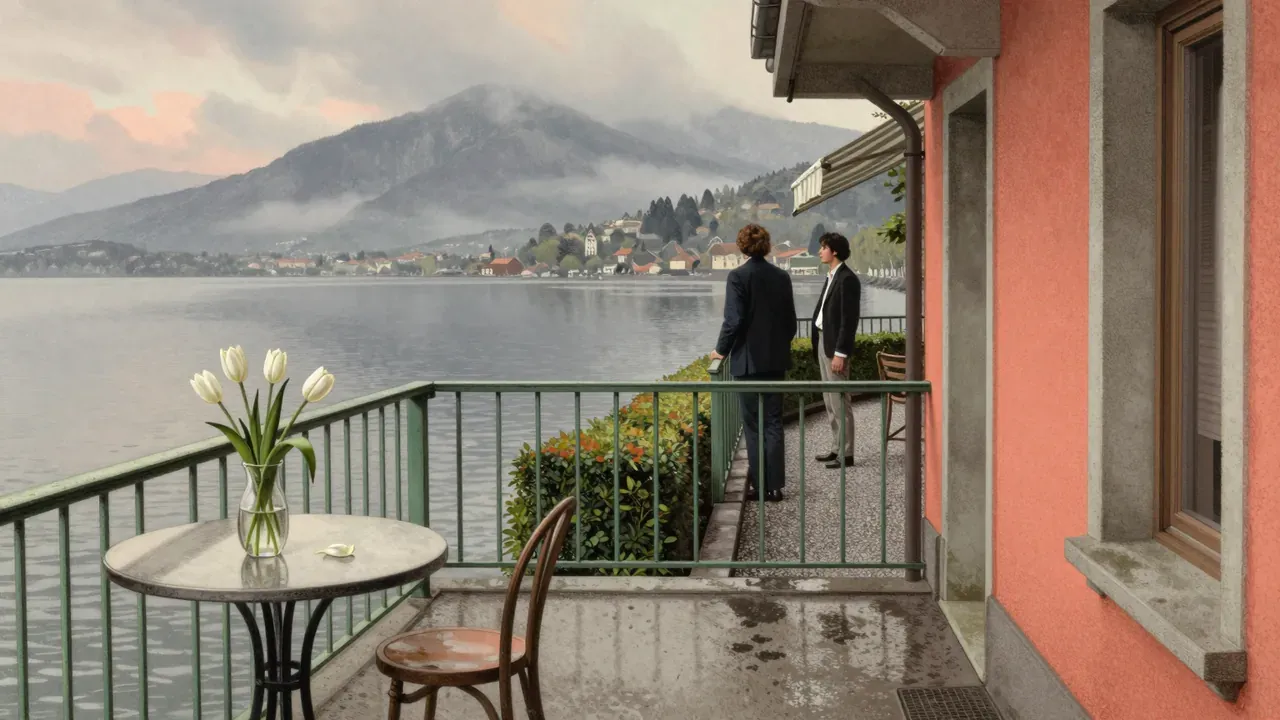
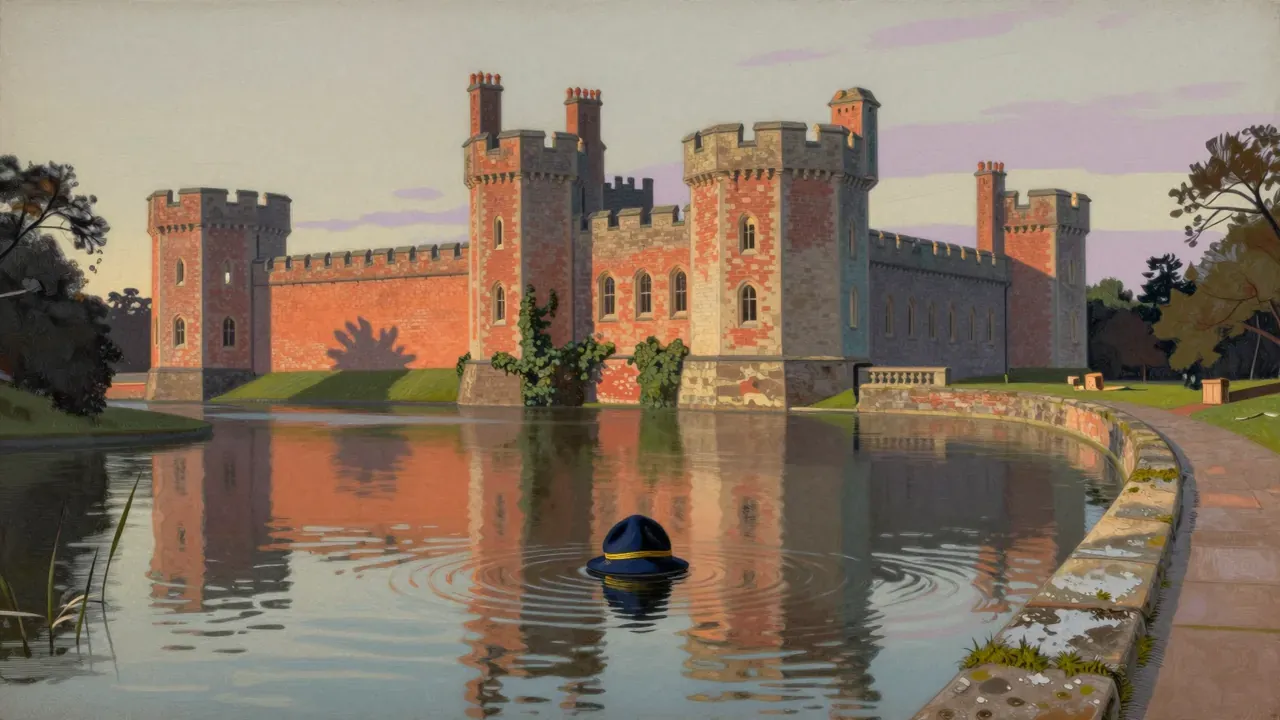
The story follows Louis Mazzini’s unflustered elimination of eight relatives standing between him and a dukedom, each death engineered with bureaucratic patience and aesthetic wit. Dennis Price plays Louis with stillness and faint disdain, his narration measured and unrepentant. Alec Guinness appears in eight distinct roles — admiral, bishop, general, poet, banker, suffragette, reverend, and duchess — differentiated by posture, vocal timbre, and minimal make-up rather than transformational prosthetics. Douglas Slocombe’s cinematography favours shallow focus and symmetrical framing, keeping interiors dim and exteriors sun-bleached, as if the world itself were under a polite, slightly dusty veil. Ernest Irving’s score borrows Mozart not for levity but for decorum: the music never comments on the murders, it accompanies them as if they were appointments in a well-kept diary. Anthony Mendleson’s costumes chart Louis’s ascent through cut and fabric — from ill-fitting serge to quilted-velvet execution jacket — while Leeds Castle and Kent villages stand in for a hereditary England that feels both real and entirely invented. (159 words)
The look of it
What lands is the film’s unwavering tonal discipline. Its deadpan delivery makes the murders plausible not as shocks but as outcomes — each one arrives with the inevitability of a train timetable. Guinness’s performances land because they are precise, not broad: his Admiral D’Ascoyne drowns with rigid salute intact; his General D’Ascoyne dies mid-sneer, rifle still shouldered. The script’s language — arch, allusive, lightly mocking — carries weight precisely because it avoids slang or modern inflection. The visual gags are understated: a floating cap, a collapsing hot-air balloon, a poison-laced scone served with perfect composure. Even the famous six-Guinness shot works because it is presented without flourish — a compositional fact, not a stunt. The film trusts its audience to parse irony without cueing laughter, and that trust is repaid in sustained unease and quiet amusement. Its pacing allows space for pauses, glances, silences — moments where class anxiety, sexual repression, or sheer boredom register before being politely buried again. That restraint is what makes the satire stick, not the jokes themselves. (157 words)
The clothes tell the truth
What does not land is the film’s occasional over-reliance on narrative convenience. Louis’s ability to move undetected between identities, locations, and social strata stretches plausibility beyond the film’s own satirical licence — particularly his access to private homes, military vessels, and ecclesiastical offices without scrutiny. Valerie Hobson’s Sibella remains underwritten: her shifts in allegiance feel less like psychological realism and more like plot necessity, her motivations reduced to vanity and insecurity without deeper texture. Joan Greenwood’s Edith, though elegantly performed, functions primarily as moral counterpoint — a role that grows thin when repeated across three scenes without variation. The American re-cut, which removed references to adultery and altered the ending, exposed a structural vulnerability: the original’s power depends on Louis’s unchallenged self-narration, and any tampering with that voice weakens the film’s coherence. Some viewers may also find the film’s refusal to condemn Louis — or even to clarify whether he is lying — alienating rather than liberating. That ambiguity is deliberate, but it does not serve all audiences equally. (159 words)
The logic of the world
The themes that matter are class as performance, legitimacy as fiction, and social order as fragile consensus. The D’Ascoynes are not evil but hollow — their authority rests on inherited gesture, not competence or virtue. Louis succeeds not because he is cleverer than them, but because he studies their mannerisms and mimics them more faithfully than they do themselves. Sexual repression surfaces in coded glances, stifled proposals, and the suffragette’s abrupt exit from a conversation about marriage — not as subtext but as infrastructure. The film treats desire, ambition, and resentment as socially sanctioned emotions, so long as they are expressed within proper form. Even murder becomes ritualised: each victim receives a letter, a visit, a farewell cup of tea. The title’s reference to Tennyson — ‘Kind hearts are more than coronets’ — is quoted ironically: the film shows that kind hearts are irrelevant to coronets, and coronets confer no kindness. What matters is continuity — of name, of property, of appearance — and Louis disrupts that continuity not with violence but with paperwork, timing, and impeccable tailoring. (156 words)
The language of the film
This film is for viewers who value linguistic precision, structural irony, and performances that withhold rather than declare. It rewards attention to syntax, costume detail, and the rhythm of pauses. It is not for those who require moral anchoring, emotional escalation, or narrative urgency — its pace is deliberate, its protagonist unredeemed, its world emotionally muted. Some will find its detachment cold; others, liberating. Those expecting slapstick or farce will be disappointed: the comedy is verbal and situational, not physical. Viewers sensitive to period-specific class assumptions — particularly the casual elitism embedded in its dialogue — may find its irony insufficiently critical. But the film’s stance is not neutrality; it is exposure. It assumes its audience can hold two ideas at once: that the system is absurd, and that dismantling it requires more than one man’s ambition. Anyone who has ever read a Victorian novel aloud will feel at home here. Anyone who needs a hero to root for, or a villain to hate, will leave unsatisfied. (158 words)
The last line
Yes, it is worth your evening — provided you watch it without expectation of resolution or catharsis. Its 101 minutes unfold like a legal document: dense, exact, quietly consequential. It gains weight on rewatch, not because it hides clues, but because its rhythms and repetitions reveal new layers of irony in the phrasing, the lighting, the placement of a teacup. Those who dislike it tend to cite its moral ambiguity or its slow burn — critics like C. A. Lejeune, who found Price outshone by Guinness, or modern viewers accustomed to faster editing and clearer stakes. But its endurance lies in its refusal to simplify. Change the narration to third-person, or insert a moment of conscience, and the film collapses. Its worth is not in what it says about murder, but in how it uses murder to say something about inheritance, language, and the quiet violence of good manners. (157 words)