The door on floor 7½
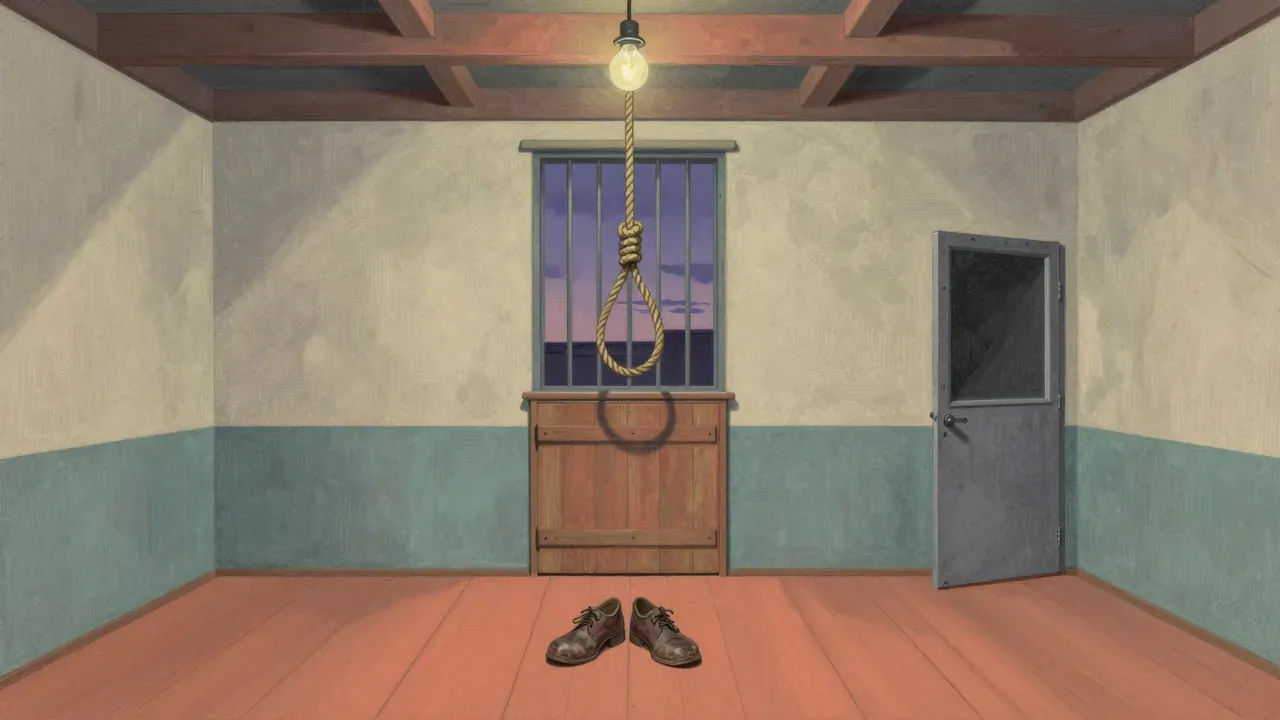
Being John Malkovich is a surrealist comedy-drama that tests the elasticity of identity, desire and control through a literalised metaphor: a portal into another person’s consciousness. It does not aim to explain itself, nor to resolve its paradoxes. Its ambition is structural and philosophical — to build a world where subjectivity is porous, where selfhood leaks, and where love becomes an act of trespass. The film treats consciousness as real estate, intimacy as rental, and embodiment as temporary tenancy. It avoids allegory by refusing to map its conceit onto any single idea — it is not ‘about’ celebrity, or gender, or mental illness, though all three flicker across its surface. Instead, it sustains a sustained, deadpan inquiry into what remains when the ‘I’ is no longer private. Its tone is dry, its pacing deliberate, its logic internal and unyielding. It asks the audience to accept floor 7½ as fact before asking them to believe in Malkovich-as-landscape. This is not speculative fiction with rules; it is metaphysical farce with consequences.
The look of it
The story follows Craig Schwartz’s descent from puppeteer to puppeteer-of-puppeteers, his marriage fraying as he trades physical dexterity for psychic intrusion. Charlie Kaufman’s script moves with surgical precision: each plot turn emerges from character need, not narrative convenience. Lance Acord’s cinematography keeps the Mertin-Flemmer building’s low ceilings oppressive but legible; corridors feel like digestive tracts, offices like holding pens. John Cusack plays Craig with muted desperation — no grand gestures, just flinching shoulders and a voice that tightens at the edges. Catherine Keener’s Maxine is all calculation and stillness; Cameron Diaz’s Lotte is physically ungainly but emotionally precise, her transformation never signalled by music or montage, only by posture and pause. Orson Bean’s Dr. Lester delivers exposition without winking. John Malkovich’s performance is neither satire nor self-parody: he inhabits the role of a man whose name has become a noun, then a verb, then a landscape — and he does so with a flat, unblinking gravity that anchors the absurdity.
The weight of fifteen minutes
What lands is the film’s commitment to its own premises. The fifteen-minute limit inside Malkovich’s mind is never broken, never bent — it functions as law, not gag. The puppetry sequences are not decorative; they establish Craig’s skill set before it becomes his weapon. The New Jersey Turnpike ejection is played straight, its banality heightening the surrealism. The shift from Lotte’s curiosity to obsession feels earned because her early scenes show her watching animals, studying movement, sensing life beyond language. Maxine’s transactional eroticism works because her dialogue never softens — she names her desires, prices them, collects. Even minor roles land: Mary Kay Place’s Lotte’s mother speaks in clipped, dismissive phrases that echo across decades of maternal disappointment. The film’s humour arises from rigour, not randomness: every joke is built on cause and effect, every escalation rooted in a prior choice. There is no comic relief, only cumulative pressure — and that pressure yields laughter that arrives late, then sticks.
The corridor of Malkoviches
What does not land is the final stretch inside the Malkovich-loop world — the endless corridor of identical Malkoviches chanting their own name. It is conceptually sound but tonally inert, repeating the film’s central idea without deepening it. The resolution involving Dr. Lester’s cult of longevity feels tacked on, a narrative afterthought rather than a thematic culmination. Some supporting performances blur into caricature: Brad Pitt and Charlie Sheen appear briefly, their cameos functional rather than felt; David Fincher and Gary Sinise register as names on a list, not presences in the frame. The film’s refusal to explain Malkovich’s reaction — why he follows Maxine, why he enters the portal — leaves a gap where psychology might have anchored the climax. And while the budget constraints show only in the muted palette and sparse sets, they also limit the scale of the interior-Malkovich sequences: what should feel vast and disorienting sometimes reads as underlit and cramped, a limitation the script cannot quite overcome with words alone.
Who lives here?
The themes that matter are the instability of the first person, the erotics of control, and the exhaustion of self-performance. Craig’s puppetry is literalised mastery over bodies; his later inhabitation of Malkovich is an extension of that same impulse — not love, but authorship. Lotte’s fascination with male embodiment is not framed as transition but as access: to agency, to voice, to being taken seriously in a room. Maxine’s attraction to Lotte-in-Malkovich exposes desire as a compound of perception and permission — she wants the woman only when she wears the authority of the man. The film treats identity not as essence but as interface: how you are read, how you move through space, how long the ceiling is above your head. It does not argue for liberation from the self, but shows the cost of trying to rent it out — the wear on the tenant, the erosion of the landlord, the confusion of the guest who forgets which door leads home.
Who is it for?
It is for viewers who tolerate prolonged ambiguity, who find intellectual friction pleasurable, and who do not require emotional catharsis to feel satisfied. It is not for those who need clear moral positions, linear cause-and-effect, or characters who grow in ways that can be named. People who dislike films where tone stays level for ten minutes, or where jokes land three seconds after the punchline, will find it alienating. Those who expect fantasy to offer escape rather than interrogation will leave restless. A viewer who values visual spectacle over conceptual density may feel short-changed. But someone who watches closely — who notices how often characters look down, how rarely they make eye contact, how the camera holds on empty doorways — will find it richly repaid. It rewards attention, not empathy; it asks for patience, not surrender.
Is it worth your evening?
Yes, it is worth your evening — provided you watch it whole, undistracted, and without expecting resolution. Its 108 minutes pass with quiet momentum, each scene tightening the coil of its central paradox. It does not waste time on exposition or recap; it assumes competence. You will not leave with answers, but with sharper questions about where the self begins and ends — and whether the boundary is ever truly yours to hold. Those who find Kaufman’s later work too convoluted may prefer this one: it is his most disciplined, least self-referential script. Those who disliked Adaptation may find this more generous in its construction. It is not a film to love easily, but one that lodges, then expands. Its value lies not in what it gives, but in what it refuses to give — and what that refusal makes you notice about everything else you watch.