The shape of it
Tampopo is a Japanese comedy from 1985 that sets out to treat ramen with the gravity of a western genre — not as parody, but as structural framework. Itami builds the film around a central quest: a widowed shop owner’s pursuit of noodle-soup mastery, guided by a laconic trucker who functions like a wandering gunslinger. This ‘ramen western’ framing is literal in its pacing, visual grammar, and moral economy — the diner becomes a saloon, rival shops are rival towns, and broth refinement is a duel of skill and discipline. But the film does not stop at genre play. It uses food as social syntax: how it is made, served, consumed, and fetishised reveals hierarchies, anxieties, and intimacies across class, gender, and generation. Itami’s aim is neither satire nor documentary, but a gently insistent anthropology of appetite — one that insists on pleasure as serious cultural work, and on craft as a form of quiet resistance to standardisation. The film’s ambition is modest in scale but precise in scope: to map the rituals of eating as they intersect with dignity, desire, and daily survival.
The look of it
The story moves in two registers: a linear apprenticeship narrative anchored by Tsutomu Yamazaki’s dry, unhurried Gorō and Nobuko Miyamoto’s determined, watchful Tampopo; and a series of vignettes that orbit food without advancing plot. These interludes — a businessman flustered by French service, a woman squeezing supermarket tomatoes, a dying housewife cooking her last meal — are shot with natural light by Masaki Tamura, often on location in Shibaura’s pre-bubble industrial streets. Akira Suzuki’s editing stitches them together with rhythmic restraint, never forcing connection but allowing resonance to accumulate. Performances lean into understatement: Ken Watanabe and Kōji Yakusho appear briefly but decisively; non-professional locals fill background roles without theatricality. There is no score beyond diegetic sound — clattering bowls, slurping, sizzling oil — and food stylist Seiko Ogawa’s presence is felt in every bowl’s sheen and steam. The craft is low-tech, unshowy, and grounded in observation rather than invention.
The feel of it
What lands is the film’s affectionate exactness. Its humour arises not from punchlines but from behavioural fidelity: the way a man adjusts his collar before tasting broth, how a child’s eyes widen at first bite of omurice, the shared silence between two people feeding each other oysters. The vignettes succeed when they avoid caricature — the etiquette class shifting from spaghetti to ramen slurping feels earned, not glib; the con man’s meal seducing his mark works because the food is filmed with palpable sensuality, not irony. Yamazaki’s stillness gives weight to small gestures — a nod, a pause before tasting — and Miyamoto’s Tampopo gains authority not through transformation but through accumulated attention: to noodles, to customers, to her own hands. Even the Man in White Suit’s fourth-wall breaks land because they’re delivered with the same matter-of-factness as a chef adjusting seasoning. The film’s warmth comes from refusing to mock its subjects, even when they’re absurd — it treats hunger, pride, and curiosity as equally legitimate motives.
The slip of it
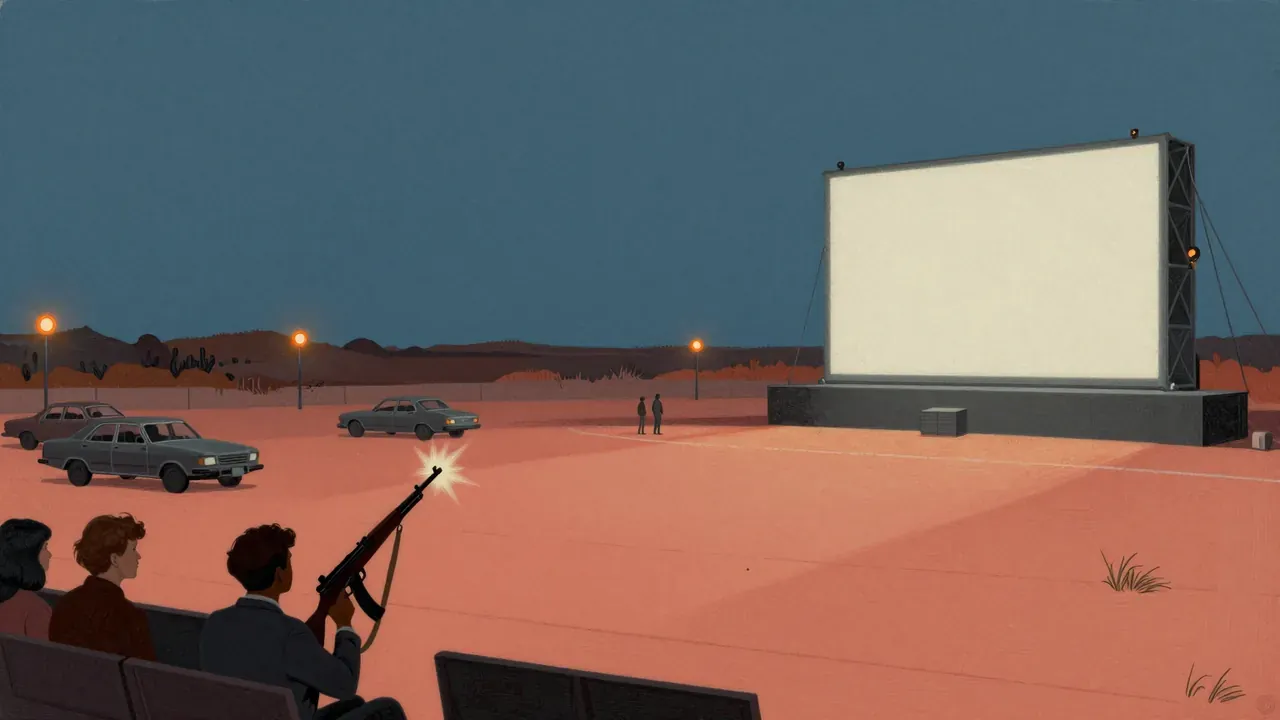
What does not land is the unevenness of tone in some vignettes, particularly those leaning hardest into surrealism or erotic abstraction. The Man in White Suit’s arc — culminating in his shooting and deathbed satisfaction — sits uneasily beside the grounded realism of the ramen workshop scenes. His storyline feels imported from a different film: more allegorical, less tethered to the tactile world the rest of the film cherishes. Similarly, the sequence where food and sex merge in stylised close-ups lacks the specificity that makes other moments resonate; it gestures toward theme without grounding itself in character or consequence. A few interludes — the tooth extraction, the supermarket squeeze — verge on sketch-comedy thinness, their brevity working against depth rather than for it. These passages do not fail outright, but they dilute the film’s strongest quality: its patient, embodied attention to process. When the film stops watching how something is done and starts illustrating an idea, it loses momentum.
The weight of it
The themes that matter are craft, democracy, and ritual. Craft appears not as virtuosity but as repetition, correction, and humility — Tampopo learns not by inspiration but by tasting, adjusting, tasting again. Democracy surfaces in the way ramen flattens hierarchy: the homeless ‘old master’, the chauffeur, the teenage apprentice, and the widow all hold valid knowledge; expertise is distributed, not conferred. Ritual is everywhere — the precise slurp, the folding of an omelette, the silent sharing of ice cream after pain — and these acts are shown as vessels for continuity, care, and quiet resistance to alienation. Food is never just sustenance here; it is syntax, memory, and social contract. The film avoids grand pronouncements about globalisation or tradition, instead showing how culture persists in the muscle memory of making broth, the etiquette of sharing chopsticks, the dignity of serving well. Its politics are local, practical, and nourishing — not polemical, but procedural.
The fit of it
This film is for viewers who value patience over pace, observation over exposition, and texture over twist. It suits those who find pleasure in the rhythm of preparation — the chopping, simmering, arranging — and who respond to comedy rooted in behaviour rather than language. It is not for viewers who require narrative propulsion, emotional escalation, or clear moral resolution. Those expecting consistent tonal unity or tightly woven subplots will find the vignettes disruptive rather than enriching. It also assumes a baseline tolerance for ambiguity: characters reappear without explanation, motifs recur without commentary, and endings are implied rather than stated. A viewer who needs closure or thematic signposting may leave unsatisfied. That said, the film’s accessibility is wider than its structure suggests — its physicality, humour, and reverence for everyday skill translate across language and context, provided the viewer is willing to slow down to its tempo.
The staying of it
Yes, it is worth your evening — not as escapism, but as recalibration. Its 114 minutes ask for attention, not investment, and reward it with cumulative warmth and quiet precision. You will not be startled, but you may notice how you hold your chopsticks differently afterwards, or pause before discarding a stale crust. It works best when watched without expectation of payoff — as a series of small, resonant encounters rather than a story demanding resolution. Those who dislike episodic structures or find deadpan delivery emotionally withholding may feel distanced, but that distance is part of the film’s design: it invites observation, not identification. A second viewing reveals how carefully each vignette mirrors or refracts the central quest — not thematically, but formally, in its attention to gesture, timing, and consequence. Its endurance lies not in spectacle, but in stamina: the stamina of craft, of care, of watching closely for longer than usual.