The look of it
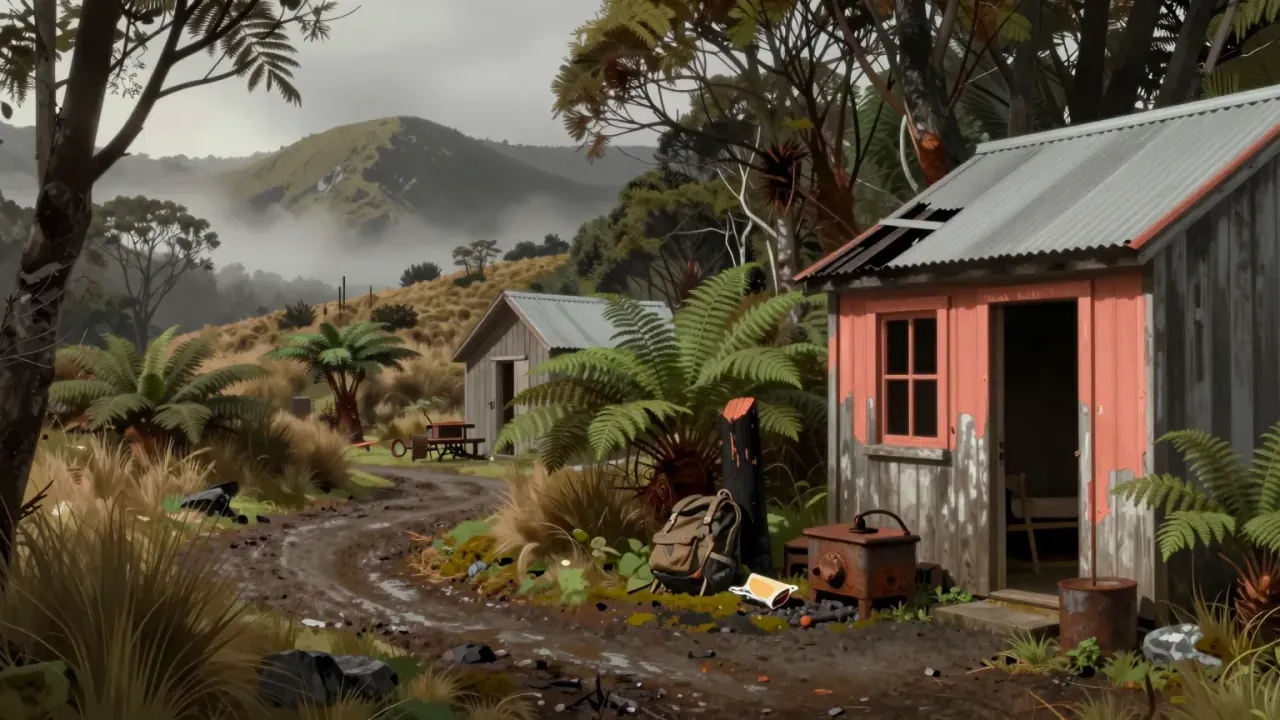
Boy is a New Zealand coming-of-age film set in rural Tairawhiti in 1984, centred on an eleven-year-old Māori boy named Alamein — known as Boy — who constructs elaborate fantasies to buffer the absence of his father. Taika Waititi’s script treats childhood imagination not as escapism but as structural scaffolding: a way to hold together family, identity, and dignity when adult authority is unreliable or absent. The film does not aim for social realism in the documentary sense; instead, it uses heightened tone, rhythmic dialogue, and deliberate visual looseness to mirror how a child organises memory, myth, and longing. Its ambition lies in rendering interiority without voiceover or exposition — letting Boy’s Michael Jackson obsession, his goat, his stories about his father, and his mimicry of adult posturing all function as emotional grammar. It is a portrait of precocious self-invention in a place where infrastructure is sparse, opportunity thinner, and cultural continuity is held in whānau, land, and language — even when those things are fraying. The film’s quiet political gesture is to locate agency and humour not in resistance or rebellion, but in the daily, unremarkable act of holding oneself together.
The rhythm of it
The story follows Boy over a single summer week during which his father Alamein returns — not as saviour, but as a man chasing buried money and a fading sense of control. James Rolleston carries the film with unforced physicality and watchful stillness; he rarely emotes broadly, yet registers shifts in belief, shame, and dawning disillusionment through posture and glance. Taika Waititi’s performance as Alamein avoids caricature: he is neither monster nor tragic hero, but a man whose charm and volatility coexist without explanation. Adam Clark’s cinematography favours natural light, shallow focus, and loose framing — interiors feel lived-in rather than composed, exteriors sun-bleached and slightly unstable. The Phoenix Foundation’s score leans into breezy, slightly off-kilter arrangements that echo Boy’s internal soundtrack: part homage, part parody, part lullaby. Chris Plummer’s editing sustains rhythm without urgency, allowing scenes to breathe — a schoolyard confrontation, a goat’s slow walk across a field, a silent moment between brothers — all given equal weight. There is no visual or narrative hurry, and that unhurriedness is the film’s formal signature.
The truth of it
What lands most firmly is the film’s fidelity to a child’s logic: the way Boy conflates Michael Jackson’s moonwalk with spiritual ascension, or believes his father’s return signals a permanent shift in reality, or treats a goat’s death as both mundane and cosmically significant. These are not comic beats played for irony, but psychological truths rendered with patience. The sibling dynamic between Boy and Rocky — one loud with invention, the other quiet with inherited guilt — lands with particular precision. Their shared silence at their mother’s grave, followed by Rocky’s question about Japan, lands not because it is clever, but because it refuses resolution. The film’s warmth comes from its refusal to condescend: Boy’s fantasies are never mocked, only gently outgrown. Even Alamein’s apology feels earned not because it redeems him, but because it arrives without fanfare, in a barn lit by a single bulb. The mid-credits dance sequence works precisely because it does not resolve anything — it simply reasserts rhythm, community, and embodied joy as durable counterweights to loss. That final image sticks not for its choreography, but for its refusal to be solemn.
The looseness of it
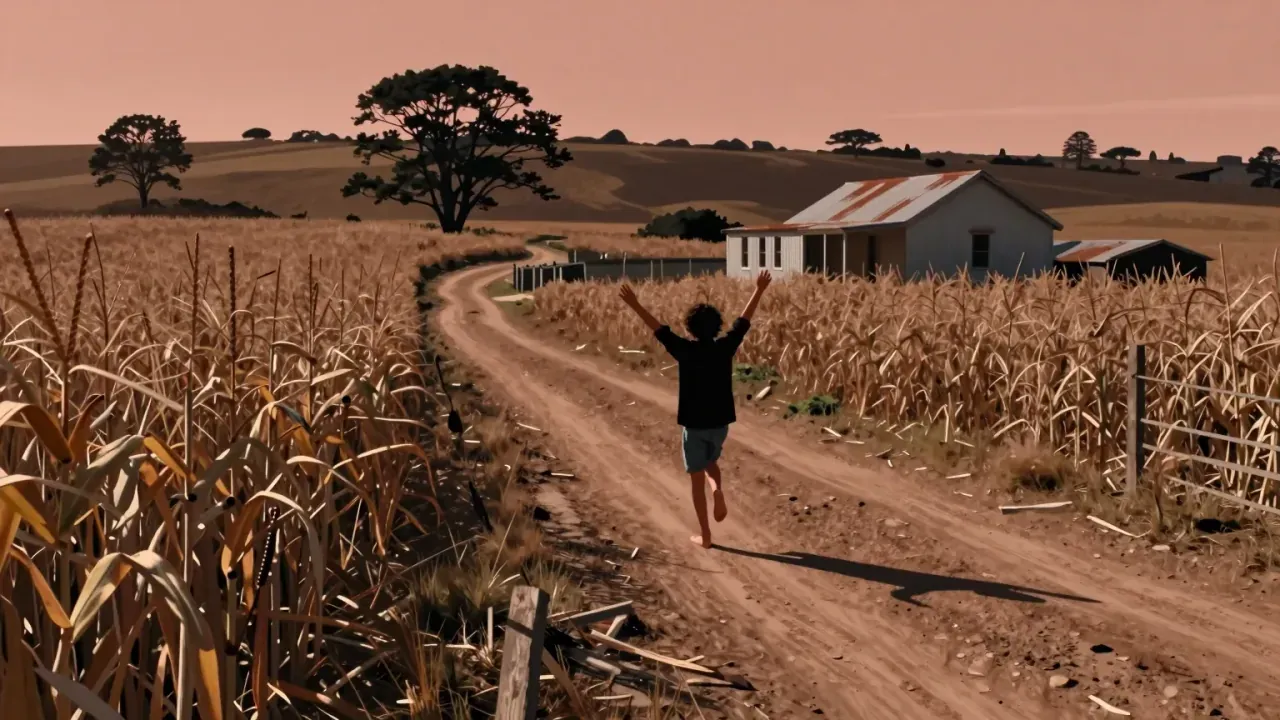
What does not land is the film’s occasional drift into anecdotal looseness — scenes that feel like warm-up takes rather than compositional choices. A subplot involving Dallas’s gang-affiliated father and the marijuana crop lacks the same psychological anchoring as Boy’s relationship with Alamein or Rocky; it functions more as plot machinery than emotional extension. Some secondary characters — Chardonnay, Kingi, Weirdo — remain sketches, defined by function (crush, bully, oddity) rather than inner life. The film’s resistance to exposition occasionally tips into opacity: Alamein’s national service background, his biker ambitions, even the precise nature of his crime, are mentioned but never contextualised, leaving gaps that feel less like restraint and more like omission. The goat’s death, while emotionally raw, arrives without sufficient build-up in the animal’s presence — its symbolic weight exceeds its narrative weight. And though the film avoids sentimentality, it sometimes mistakes stillness for depth: a long shot of Boy staring at a maize field may read as contemplative to some, inert to others. These are not failures of craft, but of calibration — moments where tone outpaces intention.
The weight of it
The themes that matter are inheritance and fabrication: what we receive from our parents, and what we invent to make that inheritance bearable. Boy’s name — identical to his father’s — is not coincidence but condition: he is already living inside Alamein’s shadow before the man returns. The film treats storytelling not as lie-telling but as survival technique — Boy’s fictions about his father are structurally identical to Alamein’s fictions about himself as leader, warrior, samurai. Both men perform versions of masculinity they’ve absorbed from pop culture, history, and rumour. Equally central is the idea of place as memory-keeper: Waihau Bay is not backdrop but participant — its heat, its isolation, its fields of maize harvested in late April, its proximity to the sea and burial grounds. The film also engages quietly with intergenerational trauma, not through diagnosis but through behaviour: Rocky’s belief in his own dangerousness, Boy’s compulsive caretaking, Alamein’s rage as inherited reflex. There is no grand statement on colonialism or poverty, but their presence is felt in the texture — in the way the grandmother leaves for a funeral in Wellington, in the absence of state infrastructure, in the casual bilingualism that never needs explaining.
The audience for it
This film is for viewers who value character over plot, rhythm over revelation, and emotional honesty over dramatic payoff — particularly those familiar with the rhythms of rural New Zealand life or Māori whānau dynamics. It rewards patience and attention to gesture, not just dialogue. It is not for viewers who require clear moral arcs, tightly wound cause-and-effect, or protagonists who change decisively by the end. Those expecting satire will find the comedy too tender; those seeking social critique may find it too embedded in domestic detail. The film assumes familiarity with 1980s New Zealand — not as nostalgia, but as lived context — and its quiet pace may frustrate viewers accustomed to tighter narrative compression. A viewer who values thematic clarity over ambiguity, or who reads childhood innocence as something to be preserved rather than complicated, will likely leave unmoved. The verdict would shift if the film were more formally adventurous — say, using archival footage or shifting aspect ratios — but its restraint is intentional, not a limitation.
The staying of it
Yes, it is worth your evening — provided you arrive without demand for momentum or resolution. Its eighty-eight minutes pass with the ease of a summer afternoon, and its emotional aftertaste lingers longer than many films twice its length. It earns its time not through incident but through accumulation: small looks, repeated motifs, the gradual erosion of a fantasy. You do not need to know New Zealand to feel Boy’s yearning, but you do need to accept that growth here is not linear — it is circular, recursive, marked by returns to graves, goats, and dance routines. Those who dislike understatement, or who expect childhood stories to pivot on epiphany rather than quiet recalibration, will find it thin. But for anyone who remembers building worlds out of absence — whether through music, myth, or sheer repetition — Boy offers recognition, not instruction. Its worth lies in its refusal to overstate, and in the rare confidence of a film that trusts its audience to sit with uncertainty, and still feel seen.