One life left
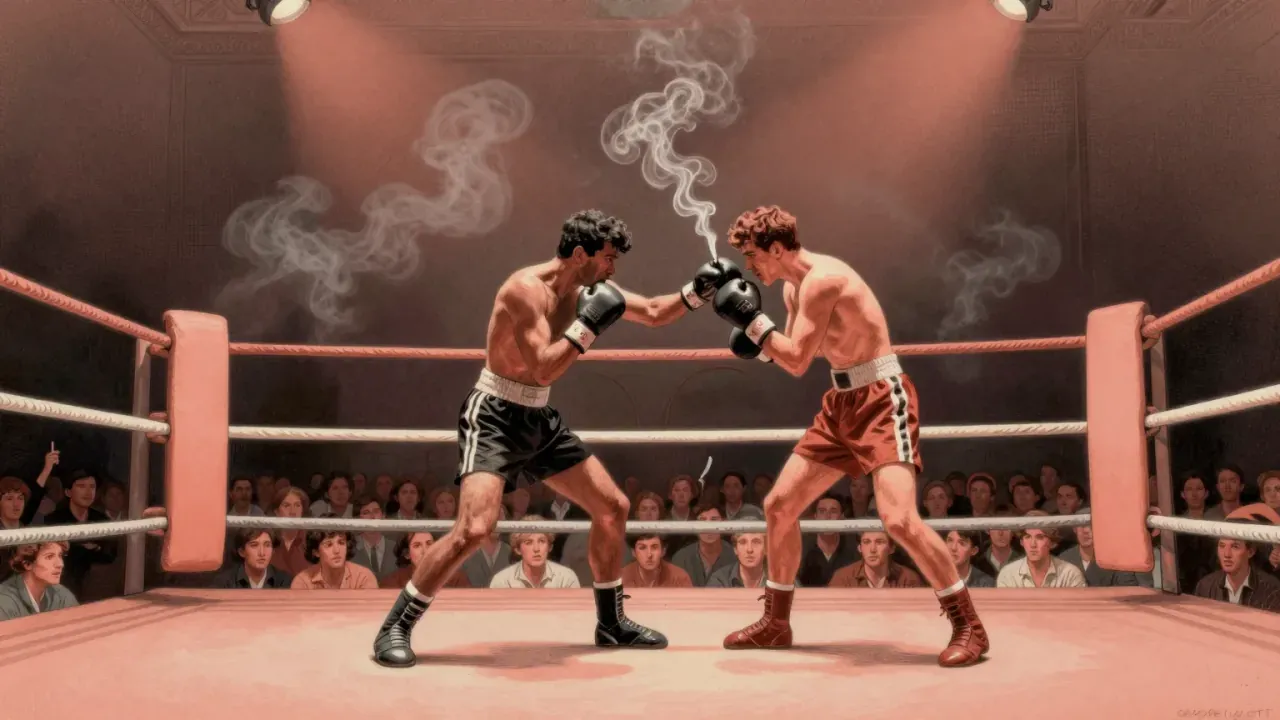
Puss in Boots: The Last Wish picks up the swashbuckling cat years after the character’s introduction in the Shrek franchise, now famous, reckless and down to his final life after burning through eight of them for laughs and glory. Director Joel Crawford, who replaced Bob Persichetti partway through development, built the film around Puss’s fear of death rather than around another round of fairy-tale adventuring for its own sake, sending him after the wish granted by a fallen star while a bounty-hunting wolf who is quite literally Death stalks him from town to town. Producer Mark Swift has said the twenty-year age of the Shrek franchise by that point gave the filmmakers room to go somewhere darker than earlier entries had attempted.
A painterly style borrowed from Spider-Verse
Visually, the film pushes further into the storybook, painterly CG style DreamWorks had just tested on The Bad Guys, itself inspired by Spider-Man: Into the Spider-Verse, replacing the smoother, more conventional look of the earlier Shrek and Puss in Boots films. Heitor Pereira’s score, along with songs from Karol G and Gaby Moreno, leans into the Spaghetti Western influence Crawford has cited, most directly The Good, the Bad and the Ugly, matched against a plot that sends Antonio Banderas’s Puss and Salma Hayek’s Kitty Softpaws across a string of fairy-tale territories chasing a map. New addition Perrito, voiced by Harvey Guillén, gives the two former partners an outsider whose blind cheerfulness has nothing to do with the con games they both grew up running.
Where the fear of death actually lands
The film’s best idea is a mid-story panic attack, drawn from Crawford’s and storyboard artist Taylor Meacham’s own experience, that strips Puss of his usual bravado in a way jokes alone couldn’t manage; it forces the character to admit that a swashbuckler with only one life left is a fundamentally different animal than one with eight to spare. Framing Death as a wolf, in line with how the Brothers Grimm used wolves as figures of dread, gives the abstract fear of dying a physical, chasing presence rather than leaving it as inner monologue, which keeps the film moving even when it’s making a point about mortality.
A wolf that isn’t subtle, and doesn’t need to be
The wolf-as-Death conceit does its job as a plot engine, but it is blunt as metaphor, announcing its meaning early and then repeating it rather than complicating it as the story continues. Some of the returning Shrek-universe cameos and needle-drops of earlier film cues feel aimed squarely at longtime fans rather than earning their place in this specific story. And Puss’s arc toward accepting vulnerability, while well performed by Banderas, resolves fairly quickly once the film has made its central point, leaving Kitty Softpaws’ own parallel guardedness comparatively underexplored by the time the credits roll.
Found family over fairy-tale plotting
Underneath the fairy-tale plotting, the film is asking what a persona built entirely on fearlessness is worth once fear becomes unavoidable, using Puss’s dwindling lives as a literal countdown to make an otherwise abstract midlife question concrete for a family audience. Perrito’s presence complicates that theme usefully: his cheerful lack of self-preservation isn’t naivety so much as a working alternative to Puss and Kitty’s hardened self-reliance, and the found family the three of them build over the journey becomes the film’s actual answer to the fear of dying alone. It is a more specific take on mortality than most animated franchise sequels attempt.
Who should watch this
This suits families who don’t mind their animated comedy carrying real dread alongside the jokes, and fans of the wider Shrek universe curious whether a decade-old spin-off could still find something new to do with its lead. It is a weaker fit for viewers who preferred the broader, lighter tone of the original Puss in Boots, since Crawford’s version trades some of that film’s slapstick ratio for a story willing to sit with fear rather than deflect it every time. Very young children may find the wolf’s pursuit more unsettling than earlier entries in the franchise.
Worth the hour and forty
Yes. Grossing far beyond its budget and drawing nominations at the Oscars, Golden Globes, BAFTAs and Critics’ Choice Awards, the film found an unusually large audience for a franchise sequel willing to take its hero’s fear seriously rather than just escalate the action. Its painterly visual style, borrowed and refined from The Bad Guys, gives the fairy-tale setting a texture the earlier Shrek-adjacent films never had, and Banderas’s performance carries the tonal shift from swagger to vulnerability convincingly. As a hundred-minute family adventure that also has something specific to say about running out of lives, it earns its evening.