filmbriefs
Fiction

Science fiction & fantasy

173
briefs
13:00
average
2249 min
in total
146
people
All briefs173
13:00

After Life

Hirokazu Koreeda · 1998

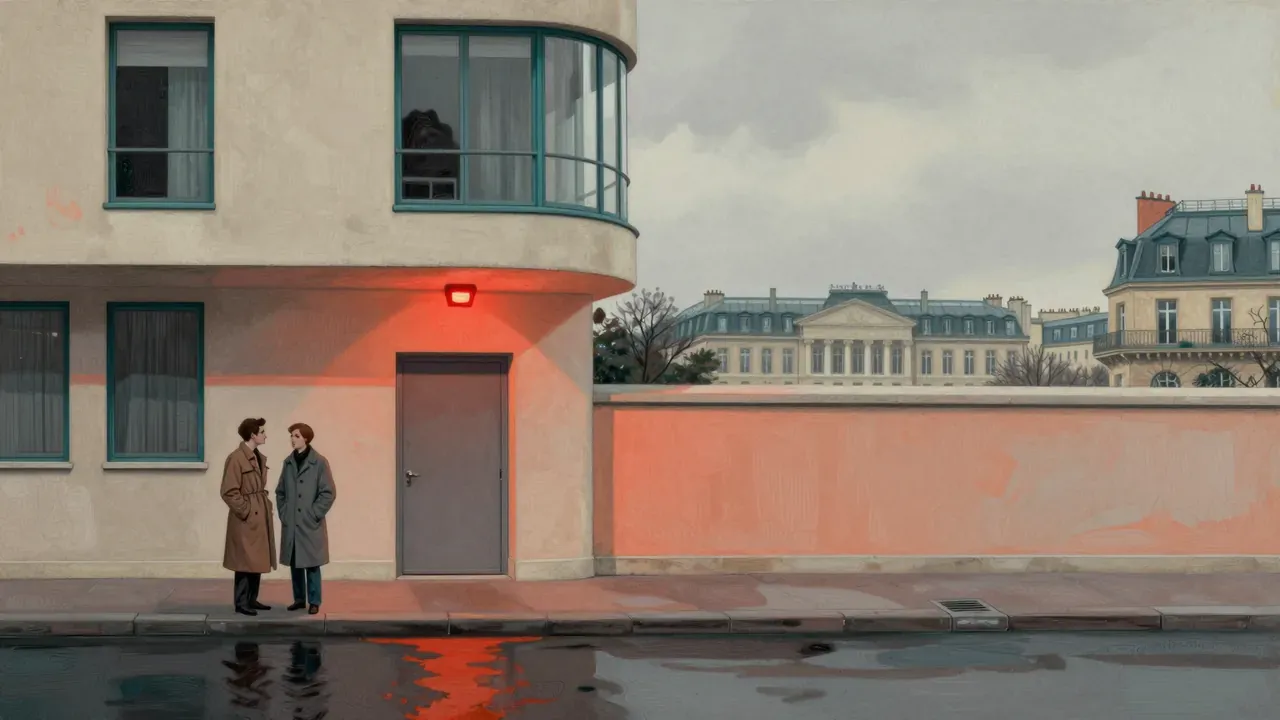
After Life (1998) is Hirokazu Koreeda’s gently speculative film set in a way station between life and death, where the newly deceased must choose one memory to carry into eternity. Shot on grainy 16 mm and 8 mm film, it blends scripted scenes with real interviews, treating memory not as fixed truth but as subjective, evolving reconstruction. With understated performances and deliberate pacing, it explores how identity forms through fragments — a dress, a breeze, a letter — and how meaning accrues in quiet, relational moments rather than grand events.
13:00

Alphaville

Jean-Luc Godard · 1965

Jean-Luc Godard’s 1965 Alphaville transplants American detective Lemmy Caution into a nameless, near-future city ruled by Alpha 60, a sentient computer that bans emotion, poetry, and questioning. Shot on real Paris locations with no futuristic props, it merges film noir and dystopian satire to interrogate language, control, and the persistence of feeling. Eddie Constantine and Anna Karina star; Raoul Coutard shot it, Agnès Guillemot edited it, Paul Misraki scored it. It won the Golden Bear at Berlin in 1965.

13:00

Altered States

Ken Russell · 1980

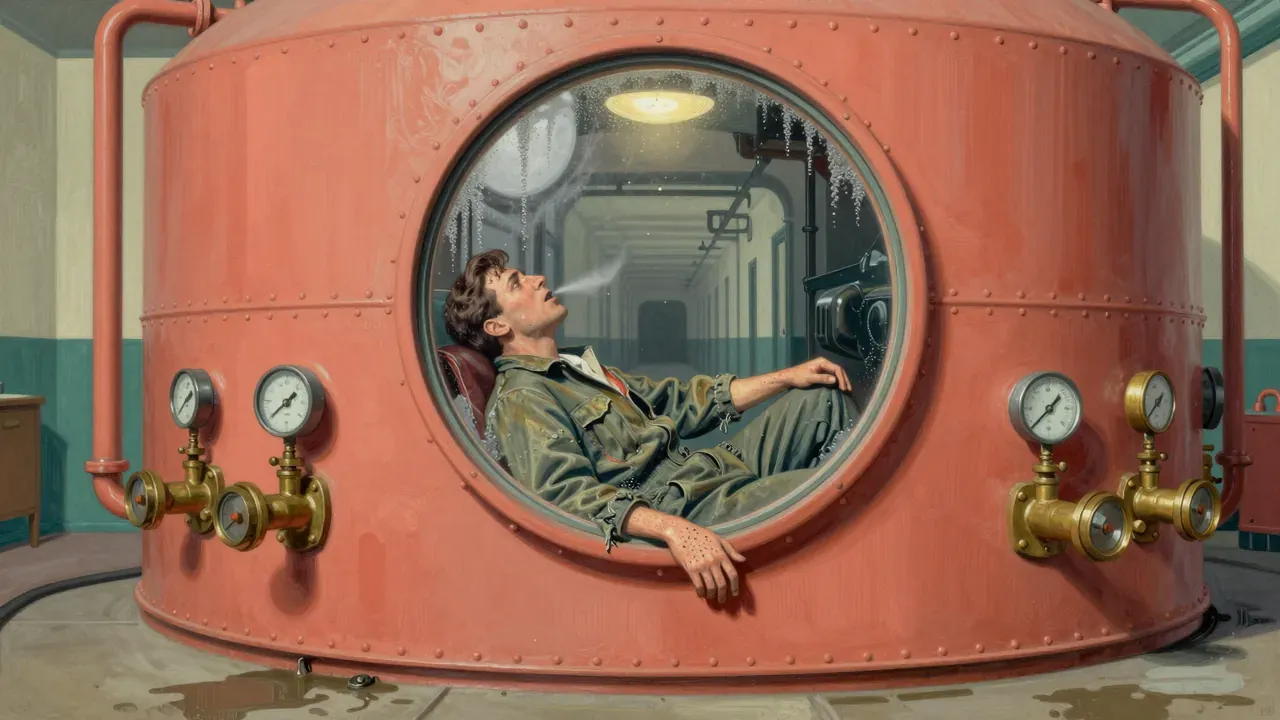
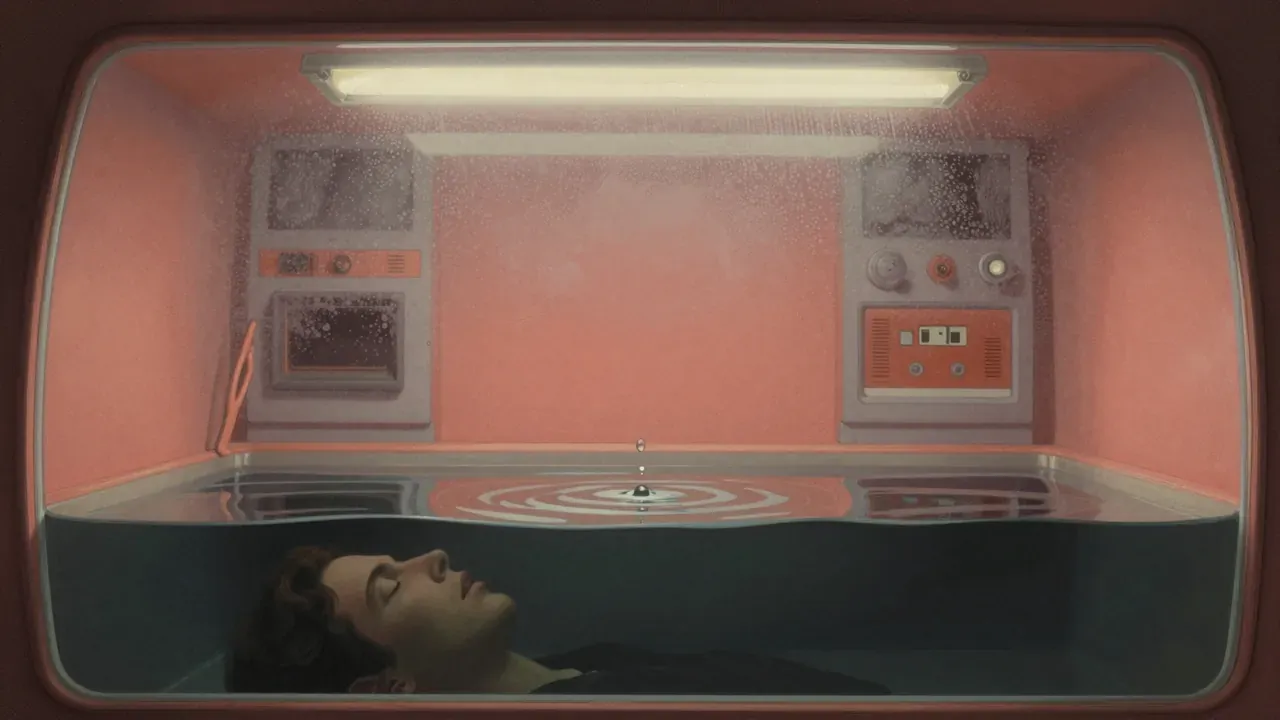
Altered States (1980), directed by Ken Russell from Paddy Chayefsky’s novel, follows a scientist whose experiments with sensory deprivation and psychoactive drugs trigger a terrifying biological regression. Anchored by William Hurt’s debut performance and Dick Smith’s groundbreaking makeup effects, it merges psychological horror with surrealist science fiction. Though marked by creative conflict between writer and director, the film endures as a formally audacious, physically immersive inquiry into consciousness, identity, and the fragility of the human form.

13:00

Arabian Nights

Pier Paolo Pasolini · 1974

Pier Paolo Pasolini’s 1974 Arabian Nights is the final film of his ‘Trilogy of Life’, adapting fragments from the One Thousand and One Nights across real locations in Yemen, Iran, Ethiopia and Nepal. It abandons the frame narrative to focus on bodily pleasure, poetic recitation and episodic storytelling, using non-professional actors, long takes and Ennio Morricone’s sparse score. Though formally daring and visually rich, its resistance to psychology and narrative cohesion divides viewers. It won the Cannes Grand Prix in 1974.

13:00

Armageddon

Michael Bay · 1998

A 1998 American action film directed by Michael Bay, Armageddon follows a team of oil drillers recruited by NASA to destroy a Texas-sized asteroid hurtling toward Earth. With a $140 million budget and an ensemble cast including Bruce Willis, Ben Affleck and Liv Tyler, it prioritises emotional clarity, physical craft and relentless momentum over scientific plausibility or psychological nuance. Though critically divided, it became the highest-grossing film of 1998 and remains a benchmark for large-scale, character-driven spectacle.

13:00

Black Moon

Louis Malle · 1975

Louis Malle’s 1975 Black Moon is a self-contained, English-language French fantasy filmed at his Dordogne estate. Cathryn Harrison plays Lily, a young woman fleeing gendered violence who stumbles into a decaying château inhabited by talking animals, resurrected elders, telepathic siblings and a judging unicorn. Shot by Sven Nykvist with deliberate under-lighting and edited for hypnotic slowness, it rejects narrative logic in favour of sustained mood and symbolic recurrence. Though divisive, it won César Awards for cinematography and sound.

13:00

Bogeyman

G. Aravindan · 1979

G. Aravindan’s 1979 Bogeyman (Kummatty) is a lyrical Malayalam fantasy following a boy named Chindan whose encounter with a wandering masked man blurs the line between folklore and lived reality. Shot by Shaji N. Karun and scored by M. G. Radhakrishnan, it unfolds in unhurried, observational rhythms across a Kerala village, culminating in literal transformation — children become animals, one remains a dog, and only witnessing restores him. Awarded Kerala’s Best Children’s Film, it resists explanation in favour of sensory fidelity and quiet moral weight.

13:00

Born in Flames

Lizzie Borden · 1983

Born in Flames (1983), directed and produced by Lizzie Borden, is a low-budget science fiction drama set in an alternate socialist-democratic United States ten years after revolution. It follows intersecting feminist groups — pirate radio collectives, a radical newspaper, and a militant Women’s Army — as they confront state-backed sexism, racism and classism. Shot on location in New York with non-professional performers and fragmented, urgent editing, it rejects narrative polish in favour of political precision. Its themes remain starkly relevant: media control, reproductive labour, surveillance, and the necessity of coalition across difference.

13:00

Brazil

Terry Gilliam · 1985

A 1985 dystopian satire directed by Terry Gilliam, Brazil follows Sam Lowry, a low-ranking bureaucrat in a decaying, anachronistic state, as he navigates absurd administrative logic, misfiled arrest warrants, and increasingly unstable fantasies. With Jonathan Pryce, Robert De Niro, Katherine Helmond and Michael Palin, it uses retro-futurist design, black comedy and Kafkaesque structure to dissect technocracy, surveillance and institutional incompetence — not as future threats, but as present habits dressed in tweed and duct tape.

13:00

Circus Angel

Albert Lamorisse · 1965

Albert Lamorisse’s 1965 Circus Angel follows a burglar who joins a travelling circus to evade arrest but continues stealing in his spare time, all while navigating its fragile community and tentative romance. Shot in France with a restrained, observational style, it uses fantasy not as spectacle but as a lens for ethical ambiguity and transient belonging. Though its loose structure and muted romance divide opinion, its visual cohesion and tonal discipline make it a distinctive, unhurried work of mid-century arthouse cinema.

13:00

Defending Your Life

Albert Brooks · 1991

Albert Brooks’ 1991 romantic comedy-fantasy follows a recently deceased advertising executive navigating Judgment City, a bureaucratic afterlife where souls are tried on their capacity to overcome fear. With Shirley MacLaine, Rip Torn, and Lee Grant, it blends dry wit, tender romance, and existential inquiry — using the trial format to explore courage not as heroism but as daily, quiet choice.

13:00

Demon Pond

Masahiro Shinoda · 1979

Masahiro Shinoda’s Demon Pond adapts Izumi Kyōka’s 1913 play into a formally rigorous Japanese fantasy. Set in 1930s rural Japan, it follows a schoolteacher caught in a village’s pact with a dragon god — a covenant enforced by daily bell-ringing. When drought drives the villagers to sacrifice the rumoured sorceress Yuri (Tamasaburo Bando, in a dual role), ritual fractures, unleashing flood and transformation. Shot by Masao Kosugi, scored by Isao Tomita with Moog-Debussy-Mussorgsky hybrids, and featuring optical composites by Nobuo Yajima, the film sustains a precise balance between kabuki abstraction and cinematic naturalism.

13:00

Destroy All Monsters

Ishirō Honda · 1968

Destroy All Monsters (1968), directed by Ishirō Honda, assembles Toho’s entire kaiju roster under the control of the Kilaak aliens, using Monsterland as a narrative hub. With Akira Ifukube’s score and Sadamasa Arikawa’s practical effects, it stages a global monster mobilisation culminating in a choreographed battle at Mount Fuji. Structurally ambitious but emotionally sparse, it prioritises systemic logic over character depth — a Cold War parable rendered in rubber suits and balsa-wood spaceships.

13:00

Dreams

Akira Kurosawa, Ishirō Honda · 1990

Akira Kurosawa’s 1990 anthology film Dreams comprises eight vignettes drawn from his own recurring dreams. Shot in Japan with assistance from Steven Spielberg and George Lucas, it deploys rigorous formalism — saturated colour, symmetrical framing, long takes — to render emotional states rather than narratives. Starring Akira Terao, Martin Scorsese as Van Gogh, and Chishū Ryū, it explores childhood, mortality, ecology, and ritual without exposition or irony. Though structurally loose and uneven in impact, its best sequences achieve a rare fusion of painterly control and moral gravity.

13:00

Executioners

Johnnie To, Ching Siu-tung · 1993

Executioners reunites Michelle Yeoh, Anita Mui and Maggie Cheung in a post-apocalyptic Hong Kong where water scarcity and social collapse test their evolving definitions of duty. Directed by Johnnie To and Ching Siu-tung, it prioritises ethical recalibration over martial escalation — with Yeoh tutoring a disfigured former enemy, Mui balancing motherhood and latent power, and Cheung reluctantly embracing collective responsibility. Its strengths lie in restrained performances and atmospheric world-weariness; its weaknesses in underwritten antagonists and uneven tonal discipline.

13:00

Fiend Without a Face

Arthur Crabtree · 1958

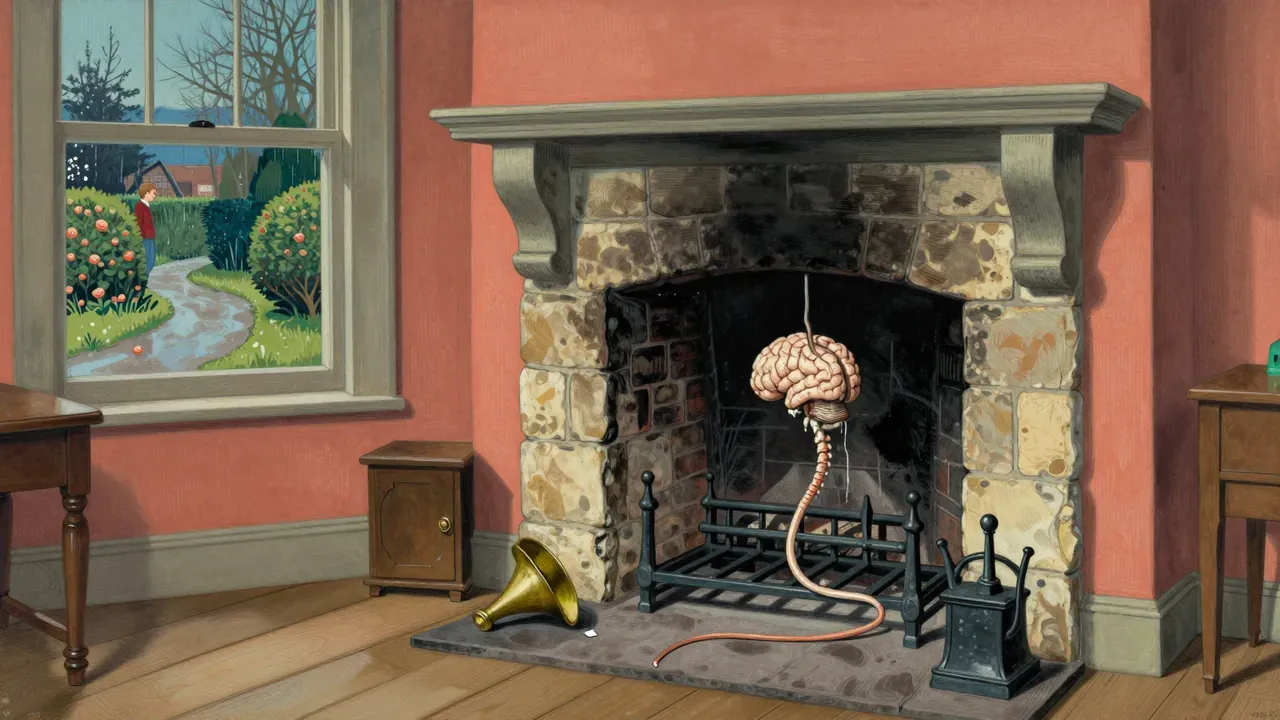
Fiend Without a Face (1958) is a British science fiction horror film directed by Arthur Crabtree, adapted from Amelia Reynolds Long’s short story 'The Thought Monster'. When a scientist’s experiments with thought projection intersect with nuclear-powered radar, invisible entities emerge — then materialise as flying brains with spinal cords and eyestalks. Made on a tight budget in England with stop-motion effects created in Munich, it builds slowly before delivering a memorably visceral climax. Though its first half drags and its setting feels generic, its commitment to anatomical horror and practical ingenuity has earned it enduring cult status.

13:00

First Man into Space

Robert Day · 1959

First Man into Space (1959) is a British science fiction-horror film directed by Robert Day, following a US Navy pilot who returns from extreme altitude encrusted in meteoric dust and transformed into a blood-dependent creature. Built on a tight budget and grounded in procedural realism, it prioritises physiological logic over myth or metaphor, using restrained performances, functional cinematography, and a lean narrative structure to sustain its central conceit. Though limited by its means, it delivers a coherent, atmospheric, and quietly tragic vision of spaceflight as irreversible bodily violation.

13:00

Genocide

Kazui Nihonmatsu · 1968

Genocide (1968), directed by Kazui Nihonmatsu for Shochiku, is a science fiction horror film set on a fictional Japanese archipelago where weaponised insects emerge in the wake of a crashed H-bomb. Blending Cold War paranoia, post-nuclear trauma, and ecological unease, it follows biologist Dr. Nagumo, islander Yukari, and American soldiers as they confront biological invasion, espionage, and the looming threat of nuclear cover-up. Shot by Shizuo Hirase with a sparse score by Shunsuke Kikuchi, it is austere in execution and ambitious in theme — Shochiku’s final horror release, and a singularly uneasy artefact of its time.

13:00

Ghidorah, the Three-Headed Monster

Ishirō Honda · 1964

Ghidorah, the Three-Headed Monster (1964) is Toho’s fifth Godzilla film and the first to stage a three-monster alliance against an extraterrestrial threat. Directed by Ishirō Honda with special effects by Eiji Tsuburaya, it follows a Venusian prophetess who warns Earth of King Ghidorah’s arrival, prompting Godzilla, Rodan, and Mothra to set aside rivalry. Built on recycled suits, hand-crafted miniatures, and Akira Ifukube’s score, it privileges ritual over exposition and collective stance over individual heroism. Though human subplots are thin and Ghidorah’s suit proved technically taxing, its vision of reluctant solidarity remains singular in the franchise.

13:00

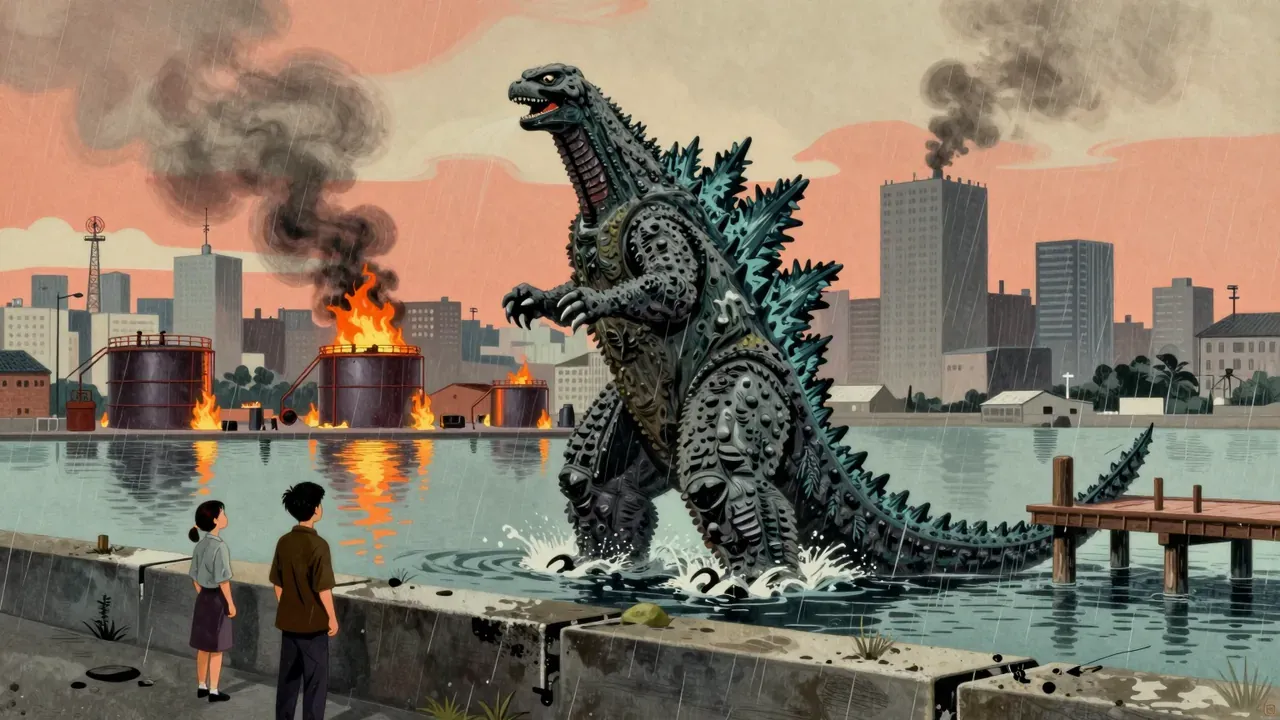
Godzilla

Ishirō Honda · 1954

Godzilla (1954) is Toho’s foundational kaiju film, directed by Ishirō Honda and conceived after the Daigo Fukuryū Maru incident. It follows scientists and officials responding to a prehistoric creature mutated by hydrogen bomb tests. Shot in black-and-white with pioneering suitmation effects, its tone is sober, almost documentary-like. The film avoids monster-movie tropes in favour of bureaucratic realism, scientific debate, and quiet devastation. Though its pacing and formal restraint challenge modern expectations, its thematic urgency — on nuclear consequence, institutional failure, and irreversible change — remains undimmed.

13:00

Godzilla Raids Again

Motoyoshi Oda · 1955

Toho’s 1955 follow-up to Godzilla is a lean, effects-driven kaiju film directed by Motoyoshi Oda under tight deadlines. It introduces Anguirus in a destructive Osaka showdown, prioritising spectacle and procedural urgency over the moral weight of its predecessor. With Haruo Nakajima in the Godzilla suit and Eiji Tsuburaya refining his special-effects techniques — including variable camera speeds and outdoor ice sets — the film functions as both a commercial necessity and a technical bridge to the franchise’s expansive future.

13:00

Godzilla vs. Biollante

Kazuki Ōmori · 1989

Godzilla vs. Biollante (1989) is the second Heisei-era Godzilla film, directed and written by Kazuki Ōmori. It follows corporate and military efforts to weaponise Godzilla’s cells, resulting in Biollante — a creature born from the fusion of those cells with human and plant DNA. Starring Kenpachirō Satsuma and Megumi Odaka, it departs from nuclear allegory toward biotech ethics, using grounded special effects, deliberate pacing, and Koichi Sugiyama’s score to explore inheritance, loss, and the instability of life’s boundaries.

13:00

Godzilla vs. Gigan

Jun Fukuda · 1972

Godzilla vs. Gigan (1972) is Jun Fukuda’s brisk, brightly coloured course correction for Toho’s flagship kaiju series after the experimental Godzilla vs. Hedorah. With Haruo Nakajima’s final performance as Godzilla, the introduction of Takayoshi Mizuki’s sharply designed Gigan, and heavy use of stock footage and Ifukube’s recycled themes, the film prioritises rhythm and recognisability over novelty or depth. Its Nebulan aliens operate through a theme-park front and monster-control tapes, delivering straightforward, physically emphatic battles — including Godzilla’s first on-screen bleeding. It is a work of genre maintenance, best appreciated by those fluent in Shōwa-era kaiju grammar.

13:00

Godzilla vs. Hedorah

Yoshimitsu Banno · 1971

Godzilla vs. Hedorah (1971), directed by Yoshimitsu Banno, recasts Godzilla as an ecological corrector confronting Hedorah — a monster born from industrial pollution. Shot in 35 days on a tight budget, it blends live action, animation, and stop-motion to deliver a blunt, child-facing warning about smog, acid rain, and systemic toxicity. Though criticised on release for tonal inconsistency and the infamous flying-Godzilla sequence, it has since gained stature as a singular, ideologically committed entry in the franchise — less entertainment than intervention.

13:00

Godzilla vs. Mechagodzilla

Jun Fukuda · 1974

Toho’s 1974 Godzilla film pits the King of the Monsters against a space-titanium mecha controlled by ape-like aliens from the Third Planet of the Black Hole. Framed by an ancient Okinawan prophecy and centred on the ritual awakening of guardian deity King Caesar, it balances suitmation spectacle with attempts at mythic structure. Though hampered by thin character work and underdeveloped lore, its monster battles are precisely staged, Masaru Sato’s score is distinctive, and its place in the Shōwa era makes it a thoughtful pivot — less jokey than its predecessor, more invested in continuity and consequence.

13:00

Godzilla vs. Megalon

Jun Fukuda · 1973

A 1973 Toho kaiju film, Godzilla vs. Megalon introduces Jet Jaguar amid a thin plot involving undersea aliens, recycled effects footage, and a famously clumsy Godzilla suit. Made quickly to replace a cancelled project, it leans into juvenile adventure tone and mechanical spectacle over thematic depth. Its enduring appeal lies less in quality than in transparency — every constraint, every shortcut, every act of faith in rubber and wire is on display.

13:00

Godzilla vs. the Sea Monster

Jun Fukuda · 1966

Godzilla vs. the Sea Monster (1966) is Toho’s pragmatic pivot: a South Seas island replaces Tokyo, Ebirah replaces Kong, and Masaru Sato replaces Akira Ifukube. Directed by Jun Fukuda with effects by Sadamasa Arikawa, it relies on repurposed suits, aquarium shots, and a script that never fully sheds its abandoned premise. Its strengths are tactile — Nakajima’s submerged performance, Yamada’s flat daylight, Sato’s light score — not thematic. It is a document of constraint, not conviction.

13:00

Goke, Body Snatcher from Hell

Hajime Satō · 1968

Goke, Body Snatcher from Hell (1968), directed by Hajime Satō, follows survivors of a plane crash on a deserted island who are hunted by a vampiric alien entity. With minimal exposition and stark visuals, it charts their rapid moral collapse under pressure — betrayals, sacrifices and self-preservation escalate until only two remain, walking across a dead world beneath an orbital fleet. Shunsuke Kikuchi’s score and practical effects reinforce its clinical, allegorical tone.

13:00

Heaven Can Wait

Ernst Lubitsch · 1943

Ernst Lubitsch’s 1943 Heaven Can Wait follows Henry Van Cleve, a New York heir who, upon arriving at the reception area of Hell, recounts his life to prove he belongs there. Framed as a wry, non-chronological character study, the film uses fantasy not for spectacle but for structure—tracing seventy years of privilege, marriage, and quiet moral drift with precision, irony, and deep affection for its characters’ limitations.

13:00

Here Comes Mr. Jordan

Alexander Hall · 1941

Here Comes Mr. Jordan (1941) follows boxer Joe Pendleton, mistakenly taken to Heaven before his time, who must inhabit a new body on Earth to complete his life. Directed by Alexander Hall and written by Sidney Buchman and Seton I. Miller, the film balances fantasy, romance, and comedy with precise structure and restrained performances. Its strength lies in treating the afterlife as bureaucratic infrastructure and grounding ethical choices in tangible action — restitution, not revelation. Though its final act softens its earlier rigour, the film remains a masterclass in economical, character-led storytelling.

13:00

I Married a Witch

René Clair · 1942

René Clair’s 1942 I Married a Witch is a tightly wound romantic fantasy starring Veronica Lake as a resurrected witch who disrupts the engagement of politician Wallace Wooley (Fredric March). Adapted from Thorne Smith’s unfinished novel, it uses magic not for wonder but as a scalpel to dissect marriage, politics, and gender. Ted Tetzlaff’s cinematography, Roy Webb’s score, and Clair’s economical staging sustain a tone of wry, unhurried absurdity — one that rewards attention to rhythm and restraint over plot or sentiment.

13:00

Invasion of Astro-Monster

Ishirō Honda · 1965

Invasion of Astro-Monster (1965), directed by Ishirō Honda and co-produced by Toho and UPA, sends Godzilla and Rodan to Planet X to battle King Ghidorah — only for the aliens to betray Earth and unleash all three monsters. Shot under tight budget and time constraints, it relies on recycled effects, economical sets, and a streamlined script. Nick Adams joins the cast for US appeal, and Akira Ifukube’s score anchors its escalating chaos. Though criticised for tonal inconsistency and thin plotting, its craft choices — from the dug-out rocket launch to nitrogen-generated mist — reveal a studio working resourcefully within limits.

13:00

Invention for Destruction

Karel Zeman · 1958

Invention for Destruction (1958) is a Czechoslovak science fiction film directed by Karel Zeman, adapting Jules Verne not literally but visually — recreating the line-engraved aesthetic of nineteenth-century editions through hand-textured sets, stop-motion, matte paintings and stylised performance. Starring Lubor Tokoš and Miloslav Holub, it follows an inventor’s quest to prevent a weapon of mass destruction, using Verne’s submarines, airships and volcanic islands as stages for a unified graphic vision. Scored by Zdeněk Liška and shot by Jiří Tarantík, it remains a landmark of animated integration and period-specific worldbuilding.

13:00

Island of Lost Souls

Erle C. Kenton · 1932

Island of Lost Souls (1932), directed by Erle C. Kenton and starring Charles Laughton as the tyrannical Dr. Moreau, adapts H. G. Wells’ novel into a stark, atmospheric horror about vivisection, control, and the instability of the human form. Shot by Karl Struss and written by Philip Wylie and Waldemar Young, it sustains dread through Laughton’s chillingly rational performance, the beast-men’s halting recitation of ‘The Law’, and a rigorous 70-minute structure. Though some elements feel dated or underdeveloped, its central inquiry—into power as pedagogy, language as coercion, and civilisation as performance—remains unnervingly precise.

13:00

Jabberwocky

Terry Gilliam · 1977

Terry Gilliam’s 1977 solo debut is a medieval comedy built on systemic absurdity: a cooper’s apprentice stumbles into legend not through courage but incompetence, while merchants profit, priests shrug, and kings repeat rituals they no longer understand. Shot in Welsh castles and Shepperton Studios, it trades spectacle for texture — visible wires, muddy light, mumbled proclamations — and finds comedy not in jokes but in the slow collapse of meaning.

13:00

Jellyfish Eyes

Takashi Murakami · 2013

Takashi Murakami’s 2013 debut feature Jellyfish Eyes is a Japanese science-fiction drama about a grieving boy who befriends a jellyfish-like creature in a town where children pilot digital companions called F.R.I.E.N.D.s. Directed with painterly stillness and scored with bright, synthetic music, it explores childhood vulnerability, institutional opacity, and the ethics of creation — not through exposition but through texture, silence, and recurring visual motifs. Though its narrative structure falters and its genre elements remain underdeveloped, its emotional precision and conceptual consistency give it a quiet, cumulative power.

13:00

Journey to the Beginning of Time

Karel Zeman · 1955

Journey to the Beginning of Time (1955) is a Czechoslovak science fiction film directed by Karel Zeman, in which four teenagers row up a river that carries them backward through geological time. Using a blend of live action, stop-motion, 2-D cut-outs, and studio sets—all inspired by palaeo-artist Zdeněk Burian—it illustrates prehistoric life with scientific rigour and visual coherence. The film avoids narrative convention in favour of pedagogical sequencing, treating epochs as habitats and observation as method. Though modest in budget and scope, its integration of craft, content, and calm authority makes it a landmark of cinematic science communication.

13:00

Jubilee

Derek Jarman · 1978

Derek Jarman’s 1978 Jubilee transplants Queen Elizabeth I into a decaying, punk-saturated 1970s London. Shot on location in Blitz-damaged neighbourhoods, it follows a nihilistic gang—Amyl Nitrate, Bod, Chaos, Crabs and Mad—through acts of violence, commodification and petty rebellion, all observed by Elizabeth, John Dee and Ariel. With Brian Eno’s ambient score and Peter Middleton’s raw cinematography, the film rejects narrative fluency in favour of texture, rupture and mythic collapse. Now a cult classic, it remains a stark, unresolved portrait of national exhaustion.

13:00

Jungle Book

Zoltan Korda · 1942

Zoltán Korda’s 1942 Jungle Book is a Hollywood-produced Technicolor fantasy starring Sabu as Mowgli, adapted loosely from Kipling. Shot by Lee Garmes and W. Howard Greene, scored by Miklós Rózsa, and designed by Vincent Korda, it foregrounds jungle atmosphere, animal presence, and physical performance over psychological depth or narrative precision. Though commercially successful and nominated for four Academy Awards, its human drama remains schematic, its themes implied rather than explored. It endures as a feat of mid-century studio craft — vivid, deliberate, and unapologetically ornamental.

13:00

Kalpana

Uday Shankar · 1948

Uday Shankar’s 1948 Hindi-language film Kalpana is a pioneering dance ballet structured around a young dancer’s dream of founding an academy. Starring Shankar and his wife Amala Shankar, with music by Vishnudas Shirali and lyrics by Sumitranandan Pant and Devilal Samar, it treats choreography as primary language — rejecting conventional narrative in favour of rhythmic, symbolic, and spatial logic. Restored by NFAI and the World Cinema Foundation, it remains the first Indian feature to place classical and folk dance at its formal and philosophical core.

13:00

KPop Demon Hunters

Chris Appelhans, Maggie Kang · 2025

KPop Demon Hunters is a 2025 Sony Pictures Animation film co-directed by Maggie Kang and Chris Appelhans. It follows Huntrix, a K-pop girl group who double as demon hunters rooted in Korean folklore, as they confront the Saja Boys — boy-band idols secretly tied to the jeoseung saja. Animated in a bold 3D style inspired by music videos and Korean drama, with songs and score by Marcelo Zarvos, it blends myth, music, and modernity. Released on Netflix, it won Best Animated Feature and Best Original Song at both the Golden Globes and Oscars.

13:00

La Jetée

Chris Marker · 1962

A 28-minute French photomontage from 1962, La Jetée tells a post-nuclear time-travel story almost entirely through still black-and-white photographs, linked by voice-over narration and a sparse orchestral score. Its protagonist is sent from a ruined Paris to the past and future, bound by a childhood memory of a woman on an airport jetty — a memory that proves to be his own death. Built as a photo novel, not a film, it treats time as recursive, memory as architectural, and perception as the only continuous medium across stillness.

13:00

Les Créatures

Agnès Varda · 1966

Agnès Varda’s 1966 Les Créatures follows a writer recovering from a car crash on the island of Noirmoutier, as his real-life experiences blur with the science-fiction novel he is drafting about mind control and communal collapse. Shot by Willy Kurant and edited by Janine Verneau, the film uses red tints, abrupt cuts, and layered performance to sustain ambiguity between fiction and reality. Though commercially unsuccessful and critically divided on release, it remains a rigorous, unsettling study of authorship, perception, and the messy birth of narrative.

13:00

Les Visiteurs du Soir

Marcel Carné · 1942

Marcel Carné’s 1942 Les Visiteurs du Soir, written by Jacques Prévert, is a French fantasy set in 15th-century France. Two devilish emissaries infiltrate a noble castle to sabotage a wedding, but one falls in love — triggering divine intervention, mortal defiance, and a final metamorphosis into statues whose hearts keep beating. Shot in Vichy France under occupation, it uses allegory without direct reference, prioritising mood, restraint, and embodied emotion over plot mechanics or exposition.

13:00

Medea

Pier Paolo Pasolini · 1969

Pier Paolo Pasolini’s 1969 Medea stars Maria Callas in her sole film role, adapting Euripides’ play as an anthropological re-enactment rather than a psychological drama. Shot across Turkey, Syria, and Italy, it uses distinct colour schemes, non-Western music, and ritual pacing to embody three civilisations — Colchis, Iolcus, and Corinth — as competing cosmologies. Callas’s Medea is a force of nature, her infanticide a final assertion of sovereignty over meaning in a world that has abandoned her epistemology.

13:00

Mothra vs. Godzilla

Ishirō Honda · 1964

Mothra vs. Godzilla is a 1964 Toho production directed by Ishirō Honda, pitting the two iconic kaiju in a story where human greed unleashes destruction, and sacred duty restores balance. With practical effects by Eiji Tsuburaya and music by Akira Ifukube, it balances mythic gravity and genre mechanics in 89 tightly composed minutes.

13:00

Naked Lunch

David Cronenberg · 1991

David Cronenberg’s 1991 film Naked Lunch reimagines William S. Burroughs’s 1959 novel not as narrative but as psychological architecture. Starring Peter Weller as writer William Lee, it traces a descent into hallucination following the accidental death of his wife—a descent rendered through literalised surrealism, tactile special effects, and Howard Shore’s layered score. Shot in Toronto with deliberate visual austerity, the film treats addiction, authorship, and language as interlocking systems of compulsion and control. Though commercially unsuccessful and structurally demanding, it endures as a rigorous, self-contained exploration of how trauma reshapes perception—and how perception, in turn, writes itself into being.

13:00

Nineteen Eighty-Four

Michael Radford · 1984

Michael Radford’s 1984 is a literal, location-precise rendering of Orwell’s novel, filmed in London and Wiltshire during April–June 1984. With John Hurt as Winston Smith and Richard Burton’s final performance as O’Brien, it uses bleach bypass cinematography to create a desaturated, airless world. The film prioritises textual fidelity over interpretation, building dread through accumulation rather than spectacle. Though criticised for emotional reserve and ideological flatness, it remains a benchmark of disciplined adaptation.

13:00

Nowhere

Gregg Araki · 1997

Gregg Araki’s 1997 surrealist teen film Nowhere follows a day in the lives of Los Angeles college students whose realities blur with alien visitations, televised sermons, and violent ruptures. Stylised, saturated, and deliberately unmoored from narrative cause and effect, it is the final chapter of Araki’s Teenage Apocalypse trilogy — a controlled descent into emotional and visual extremity, sustained by tight editing, a defining alt-rock soundtrack, and a cast performing in tones of weary detachment.

13:00

Okja

Bong Joon-ho · 2017

A teenage girl in the South Korean mountains raises Okja, a genetically modified 'super pig'. When the Mirando Corporation claims Okja as winner of its global breeding contest, Mija follows her to New York, aided by the Animal Liberation Front. What unfolds is a tonally restless adventure that maps the infrastructure of industrial meat — from farm to lab to slaughterhouse — while holding fast to the physical, emotional reality of one human-animal bond.

13:00

Orpheus

Jean Cocteau · 1950

Jean Cocteau’s 1950 Orpheus recasts the Greek myth as a post-war Parisian fable, where poetry, death and mirrors operate under shared, unspoken rules. Jean Marais stars as a poet drawn into a bureaucratic underworld by María Casares’ enigmatic Princess of Death. Shot in ruined academies and Paris streets, with practical effects that foreground craft rather than conceal it, the film sustains a poetic logic across 95 minutes — demanding attention, not explanation.

13:00

Peau d'Âne

Jacques Demy · 1970

Jacques Demy’s 1970 musical fantasy Peau d’Âne adapts Perrault’s Donkeyskin with meticulous visual and musical precision. Catherine Deneuve stars as a princess who flees her father’s incestuous proposal by donning a magic donkey skin, finding refuge and love in disguise. Shot across historic French châteaux, scored by Michel Legrand, and designed with sumptuous, symbolic costumes, the film treats folklore as a self-contained system of rules, colour, and ritual — not a psychological case study. Its power lies in consistency, not catharsis.

13:00

Petite Maman

Céline Sciamma · 2021

Petite Maman is a 2021 French drama written and directed by Céline Sciamma, following eight-year-old Nelly as she encounters her mother as a child in the woods near her grandmother’s empty house. Using a simple, unexplained time-loop, the film explores intergenerational grief, memory, and the quiet continuities between mothers and daughters. Shot by Claire Mathon and scored by Para One, it features twin sisters Joséphine and Gabrielle Sanz in the lead roles, alongside Nina Meurisse, Stéphane Varupenne, and Margot Abascal. Released by France 3 Cinéma, it premiered at the Berlin Film Festival and received widespread critical acclaim.

13:00

Repo Man

Alex Cox · 1984

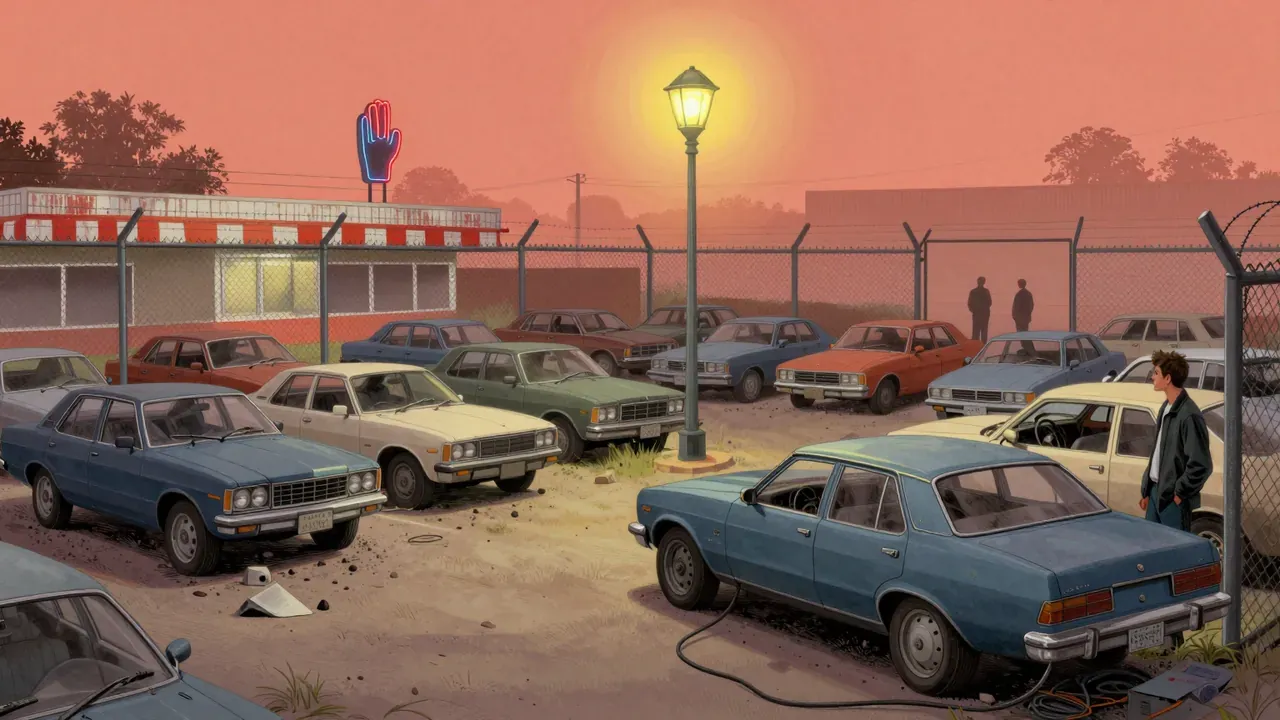
Alex Cox’s 1984 debut follows a disillusioned punk (Emilio Estevez) who joins a car repossession agency in Los Angeles, only to become entangled in a surreal chase for a radioactive Chevrolet Malibu linked to extraterrestrials. Shot on location by Robby Müller and scored by Tito Larriva and punk bands including Black Flag and Iggy Pop, the film uses deadpan absurdity to dissect Reagan-era consumerism, bureaucracy, and Cold War anxiety. It has endured as a cult object for its texture, not its plot.

13:00

Resurrection

Bi Gan · 2025

Bi Gan’s Resurrection is a 156-minute Mandarin-language science fiction film structured around the six Buddhist senses. Starring Jackson Yee as a dying ‘Deliriant’ who relives a century across four dreams, aided by Shu Qi’s enigmatic guide, it uses formal techniques — long takes, double exposure, stop motion — to explore dreaming as forbidden ritual. Shot by Dong Jingsong and scored by M83, it premiered at Cannes 2025, winning the Prix Spécial, and was released theatrically in China and France late that year. Its ambition is liturgical: to make cinema itself the site of resurrection.

13:00

Robinson Crusoe on Mars

Byron Haskin · 1964

Robinson Crusoe on Mars (1964) relocates Defoe’s castaway tale to a scientifically plausible Mars — one with thin air, hidden water, and mineral oxygen. Commander Draper survives alone, then with a monkey and finally with Friday, a fellow captive. Shot in Death Valley by Winton Hoch and directed by Byron Haskin, it favours procedural realism over spectacle, trusting silence, scale, and incremental discovery. Its strengths lie in tactile survival logic and visual consistency; its weaknesses are a rushed finale and underdeveloped alien context. It remains a singular, unhurried vision of isolation and reciprocity in space.

13:00

RoboCop

Paul Verhoeven · 1987

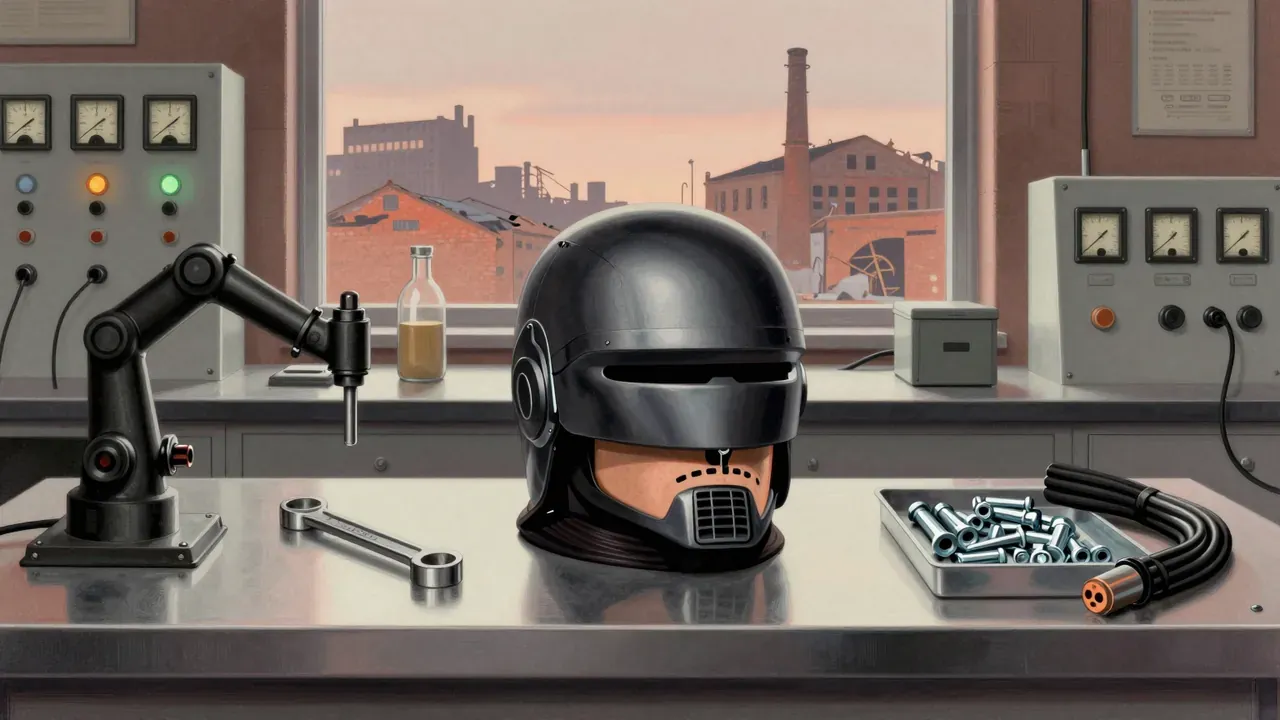
A 1987 science-fiction action film directed by Paul Verhoeven, set in a bankrupt, corporatised Detroit. After police officer Alex Murphy is killed and rebuilt as the cyborg law enforcer RoboCop, he begins to recover fragments of his past while enforcing the directives of the megacorporation Omni Consumer Products. Written by Edward Neumeier and Michael Miner, it uses stylised violence, satirical media interludes, and practical effects to interrogate identity, surveillance, and late-capitalist governance.

13:00

Satyricon

Federico Fellini · 1969

Federico Fellini’s 1969 Satyricon is a hallucinatory, episodic reimagining of Petronius’s fragmented Roman satire. Shot on studio sets and Italian locations by Giuseppe Rotunno, it follows Encolpius (Martin Potter) through a surreal, decaying empire — brothels, banquets, pirate ships, deserts — where power is performative, desire transactional, and narrative secondary to texture and tone. Nino Rota’s score and Danilo Donati’s production design anchor its visceral, dreamlike logic.

13:00

Scanners

David Cronenberg · 1981

David Cronenberg’s 1981 Canadian sci-fi thriller follows Cameron Vale, a scanner with uncontrollable telepathic abilities, as he is recruited by security firm ConSec to stop Darryl Revok, a rogue scanner waging psychic war. Shot in Montreal with industrial precision, the film uses its infamous head explosion not as shock for shock’s sake but as the logical endpoint of a world where minds have no boundaries. Its themes of cognitive permeability, pharmaceutical control, and corporate co-option of human evolution remain starkly relevant.

13:00

Seconds

John Frankenheimer · 1966

John Frankenheimer’s 1966 film follows a disillusioned banker who undergoes surgical transformation to become a younger artist—only to find his new life as hollow as the old. Shot in stark black-and-white by James Wong Howe, with a dissonant score by Jerry Goldsmith, it uses speculative premise to examine alienation, memory, and the cost of reinvention in mid-century America.

13:00

Son of Godzilla

Jun Fukuda · 1967

Son of Godzilla (1967) is Toho’s eighth kaiju film and the first to introduce Minilla, Godzilla’s infant son. Directed by Jun Fukuda on a reduced budget, it shifts focus from nuclear anxiety to familial bonding and juvenile spectacle. Filmed in Guam and Japan, it features marionette Kamacuras, a giant spider named Kumonga, and a deliberately oversized Godzilla suit to convey paternal stature. Marchan the Dwarf performs Minilla, whose design draws from contemporary manga. Though critics were divided and the film underperformed in the US, it remains a distinctive artefact of Shōwa-era genre filmmaking — tactile, economical, and quietly committed to its own small-scale logic.

13:00

Sylvie et le fantôme

Claude Autant-Lara · 1946

Sylvie et le fantôme (1946), directed by Claude Autant-Lara, follows a sixteen-year-old girl in a decaying château who believes in the ghost of a long-dead lover concealed behind a portrait. When the painting is sold, the ghost emerges — played by Jacques Tati — and becomes entangled in a tender, comedic web of mistaken identities, amateur hauntings, and adolescent longing. Shot with optical ingenuity at Saint-Maurice Studios, the film balances fantasy and realism through understated performances, elegant set design, and a script that treats belief as a collaborative act rather than a metaphysical claim.

13:00

Terror of Mechagodzilla

Ishirō Honda · 1975

Terror of Mechagodzilla (1975), directed by Ishirō Honda and written by Yukiko Takayama, is the fifteenth Godzilla film and the last of the Shōwa era. It follows Interpol agents confronting a reclusive scientist, his cyborg daughter Katsura, and the rebuilt Mechagodzilla 2 — all converging in a Tokyo battle with Godzilla and the newly awakened Titanosaurus. With a tight 83-minute runtime, functional performances, and Teruyoshi Nakano’s tactile special effects, it trades spectacle for narrative compression and bodily stakes. Akira Ifukube’s score and Yoshitami Kuroiwa’s editing sustain urgency, while themes of technological possession and paternal control anchor its modest ambitions. Released by Toho, it remains the franchise’s least financially successful entry.

13:00

The Adventures of Baron Munchausen

Terry Gilliam · 1988

Terry Gilliam’s 1988 fantasy follows the ageing Baron Munchausen as he reassembles his legendary crew to rescue a besieged city—not with weapons, but with stories. Shot on practical sets with elaborate costumes and in-camera effects, it privileges tactile invention over narrative efficiency. Though its box office failure and production turmoil are well documented, the film endures as a singular argument for imagination as an act of defiance against literalism, bureaucracy and time itself.

13:00

The Atomic Submarine

Spencer Gordon Bennet · 1959

The Atomic Submarine (1959) is a low-budget American sci-fi film following the USS Tigershark as it hunts an extraterrestrial underwater saucer near the North Pole. Directed by Spencer Gordon Bennet and written by Orville H. Hampton, it centres on a moral and tactical clash between a career submariner and a pacifist scientist, culminating in a biologically grounded alien threat and a technically inventive resolution. Shot in six days with stock footage and minimal sets, it prioritises conceptual cohesion over visual grandeur.

13:00

The Beast

Bertrand Bonello · 2023

Bertrand Bonello’s The Beast follows Gabrielle across three lifetimes — 1910 Paris, 2014 Los Angeles, and 2044, where AI mandates emotional purification — to trace how dread and desire recur as physiological patterns, not psychological choices. Léa Seydoux and George MacKay anchor a formally precise, emotionally austere film that refuses catharsis in favour of cumulative resonance.

13:00

The Blob

Irvin Yeaworth · 1958

The Blob is a concise, location-bound science fiction horror film from 1958, directed by Irvin Yeaworth and starring Steve McQueen in his first leading role. It follows a gelatinous extraterrestrial organism that crashes to Earth near a Pennsylvania town, consumes people, grows larger, and is ultimately contained — not destroyed — by extreme cold. Made on a modest budget with practical effects and regional filming, it prioritises escalation, spatial logic, and collective response over psychology or allegory. Its enduring appeal lies in its structural rigour, tonal consistency, and refusal to over-explain.

13:00

The Blood of a Poet

Jean Cocteau · 1932

Jean Cocteau’s 1932 debut feature is a 55-minute avant-garde fantasy structured in four discontinuous sections. An artist sketches a mouth that migrates to his palm, then to a statue’s lips; he passes through a mirror into a hotel where he is instructed to shoot himself; a marble snowball kills a boy; a card game unfolds over the corpse while a guardian angel absorbs him and departs. Shot by Georges Périnal, scored by Georges Auric, and narrated by Cocteau, it avoids psychology and narrative logic in favour of symbolic recurrence and formal rigour. Financed by Charles de Noailles, it was delayed over fears of blasphemy and remains the first part of Cocteau’s Orphic Trilogy.

13:00

The Devil's Eye

Ingmar Bergman · 1960

Ingmar Bergman’s 1960 fantasy comedy The Devil’s Eye follows Satan’s attempt to cure a metaphysical stye by sending Don Juan to seduce a Swedish vicar’s chaste daughter. Shot by Gunnar Fischer and scored by Erik Nordgren, it treats heaven, hell, and bourgeois domesticity as adjacent departments in the same administrative system — dry, precise, and quietly subversive.

13:00

The Fabulous Baron Munchausen

Karel Zeman · 1962

Karel Zeman’s 1962 The Fabulous Baron Munchausen reimagines the legendary raconteur as a conductor of visual worlds, not a teller of lies. Using live-action actors layered into hand-drawn, animated, and lithographic backdrops inspired by Gustave Doré, the film follows a cosmonaut who lands on the Moon and is escorted by Baron Munchausen through a fantastical, anachronistic Ottoman Empire. With music by Zdeněk Liška and cinematography by Jiří Tarantík, it privileges texture, rhythm, and stylistic unity over psychological realism or narrative drive — a meticulously crafted, gently satirical celebration of storytelling as craft.

13:00

The Face of Another

Hiroshi Teshigahara · 1966

Hiroshi Teshigahara’s 1966 adaptation of Kōbō Abe’s novel follows an engineer who, disfigured by industrial accident, receives a lifelike prosthetic mask. As he lives a double life — one masked, one bandaged — his sense of self fractures. Interwoven is a parallel story of a woman scarred by war. With Tōru Takemitsu’s sparse score, Hiroshi Segawa’s austere cinematography, and Arata Isozaki’s glass-walled sets, the film explores identity as social contract, not essence. It is a rigorous, unsettling inquiry into visibility, recognition, and the violence of normalcy.

13:00

The Fisher King

Terry Gilliam · 1991

Terry Gilliam’s 1991 film follows a disgraced radio host who seeks redemption by helping a delusional homeless man haunted by visions of the Red Knight. Built around Robin Williams’s layered performance as Parry and Jeff Bridges’s restrained turn as Jack, it blends New York realism with Arthurian myth to explore grief, class, and the slow, non-linear work of healing. Though uneven in its framing devices, its emotional honesty and commitment to psychological fidelity make it a singular, unsentimental portrait of care.

13:00

The Heroic Trio

Johnnie To · 1993

Johnnie To’s 1993 action film stars Michelle Yeoh, Anita Mui, and Maggie Cheung as a trio of heroines confronting a subterranean tyrant who kidnaps imperial infants. Stylised rather than schematic, it prioritises choreographic precision, costume-as-character, and tonal volatility over psychological realism or narrative tidiness. Its strengths lie in physical presence and visual density; its weaknesses in underdeveloped motivation and unresolved thematic ambition. It remains a singular artefact of early-90s Hong Kong genre reinvention.

13:00

The Incredible Shrinking Man

Jack Arnold · 1957

Jack Arnold’s 1957 adaptation of Richard Matheson’s novel follows Scott Carey’s gradual, irreversible shrinking — not as allegory or adventure, but as a precise, physical recalibration of self, space, and significance. Shot on Universal’s backlot with meticulous forced perspective and restrained performances, it builds tension through scale, silence, and spatial logic rather than plot twists or moralising. Its power lies in accumulation: each inch lost reshapes the terms of survival.

13:00

The Magician

Ingmar Bergman · 1958

Ingmar Bergman’s 1958 The Magician follows a travelling troupe of performers led by mute magician Albert Vogler, whose claims of supernatural ability provoke suspicion in a Swedish village. Through layered deceptions, an autopsy gone awry, and a final royal summons, the film examines belief, authority, and the blurred line between fraud and revelation — all rendered in Gunnar Fischer’s muted, reflective cinematography and sustained by Max von Sydow’s physically restrained performance.

13:00

The Man Who Fell to Earth

Nicolas Roeg · 1976

Nicolas Roeg’s 1976 adaptation of Walter Tevis’s novel follows Thomas Jerome Newton (David Bowie), an alien who lands in New Mexico to secure water for his drought-ravaged planet. Using advanced knowledge, he amasses wealth and builds a rocket — but becomes entangled in human relationships, addiction, and surveillance. Shot by Anthony B. Richmond in New Mexico, with a fragmented, atmospheric score by John Phillips, the film treats estrangement as perceptual, not biological. Its power lies in cumulative mood, not plot mechanics.

13:00

The Princess Bride

Rob Reiner · 1987

Rob Reiner’s 1987 adaptation of William Goldman’s novel frames a swashbuckling romance as a grandfather’s bedtime story. With precise performances, Adrian Biddle’s understated cinematography, and Mark Knopfler’s acoustic score, it balances earnest adventure and gentle parody — landing its themes of fidelity and craft without irony or condescension.

13:00

The Red Balloon

Albert Lamorisse · 1956

Albert Lamorisse’s 1956 French short The Red Balloon follows five-year-old Pascal as he forms a quiet, wordless bond with a sentient red balloon in the Ménilmontant district of Paris. Shot on location with natural light and minimal intervention, it relies on observation, texture and spatial choreography rather than narrative or dialogue. Though often described as poetic or symbolic, its power lies in its literal fidelity — to place, to childhood scale, to the physics of air and rubber. It won the Palme d’Or for short films and an Academy Award for Best Original Screenplay — the only short ever to receive that honour.

13:00

The Shape of Water

Guillermo del Toro · 2017

Set in 1962 Baltimore, The Shape of Water follows Elisa, a mute cleaner at a high-security lab, who forms a bond with an amphibious creature slated for dissection. Directed by Guillermo del Toro and co-written with Vanessa Taylor, the film uses period realism and lush, water-saturated visuals to frame a tender, politically charged romance. Sally Hawkins and Doug Jones lead a cast that includes Michael Shannon, Octavia Spencer and Richard Jenkins. Dan Laustsen’s cinematography and Alexandre Desplat’s Oscar-winning score deepen its immersive, tactile world. Though its pacing and symbolic density divide viewers, its emotional conviction and formal coherence make it a singular achievement in romantic fantasy.

13:00

The Thief of Bagdad

Michael Powell, Tim Whelan, Alexander Korda, Zoltan Korda · 1940

The Thief of Bagdad (1940) is a British Technicolor fantasy directed by Michael Powell, Tim Whelan, Alexander Korda and Zoltan Korda. It tells of Prince Ahmad’s exile, his alliance with the thief Abu, and their battle against the sorcerer Jaffar — all sustained by Georges Périnal’s Oscar-winning cinematography, Miklós Rózsa’s score, and a cascade of inventive special effects. Though its romance lacks spark and its cultural framing is decorative, its visual logic, tonal consistency, and sheer craft make it a durable, joyful achievement.

13:00

The Wiz

Sidney Lumet · 1978

Sidney Lumet’s 1978 musical The Wiz recasts The Wizard of Oz in Harlem and a decaying, stylised New York City, starring Diana Ross and Michael Jackson. Though critically panned on release for its script, pacing, and direction, its bold production design, choreography, and performances have cemented its status as a culturally vital, if uneven, cult classic.

13:00

The X from Outer Space

Kazui Nihonmatsu · 1967

The X from Outer Space (1967) is a Japanese kaiju film directed by Kazui Nihonmatsu, produced under governmental tax incentives to promote Japanese genre cinema abroad. It follows a Martian spore that mutates into Guilala — a jet-headed, feathered monster — which rampages through Tokyo before being neutralised with a fictional compound and launched into solar orbit. Made with shared effects resources and minimal narrative scaffolding, it prioritises momentum and tactile spectacle over coherence or character. Released theatrically in Japan and later on US television, it has endured as a touchstone of earnest, low-budget tokusatsu.

13:00

Things to Come

William Cameron Menzies · 1936

Things to Come (1936) is a British science fiction film directed by William Cameron Menzies, produced by Alexander Korda, and scripted by H. G. Wells and Lajos Bíró. Set across three eras — 1940, 1970, and 2036 — it charts humanity’s collapse into post-war barbarism and subsequent rebirth under a global technocracy. Starring Raymond Massey and Ralph Richardson, it foregrounds Vincent Korda’s production design and Arthur Bliss’s score, treating cinema as a medium for philosophical demonstration rather than dramatic immersion. Its enduring significance lies in its uncompromising visual logic and its articulation of interwar rationalist utopianism.

13:00

Time Bandits

Terry Gilliam · 1981

Time Bandits (1981) is a British science fiction fantasy co-written and directed by Terry Gilliam, starring Craig Warnock as Kevin, a boy who joins six dwarfs on a time-travelling heist. Shot in England, Morocco and Wales, it moves through historical and mythic settings — Castiglione, Sherwood Forest, Mycenae, the Titanic — guided by a stolen map of spacetime rifts. The film balances absurd comedy with metaphysical stakes, culminating in a confrontation with Evil and the Supreme Being. Its visual style is tactile and deliberately artificial; its themes centre on perception, inheritance, and the instability of systems. It was financed by George Harrison’s HandMade Films and remains the first in Gilliam’s ‘Trilogy of Imagination’.

13:00

Ugetsu

Kenji Mizoguchi · 1953

Kenji Mizoguchi’s 1953 Ugetsu adapts two Edo-period ghost tales into a quiet, devastating portrait of war’s domestic toll. Set in 16th-century Japan, it follows a potter who abandons his wife for wealth and prestige, only to be ensnared by a spirit, while his brother-in-law pursues samurai status at his wife’s expense. Shot by Kazuo Miyagawa in low light and fluid crane movements, with a sparse, harp-accented score by Fumio Hayasaka, the film treats the supernatural not as spectacle but as consequence — a formal and thematic extension of loss. It won the Silver Lion at Venice and remains a benchmark of Japanese arthouse cinema.

13:00

Valerie and Her Week of Wonders

Jaromil Jireš · 1970

Valerie and Her Week of Wonders (1970) is a 73-minute Czechoslovak surrealist fantasy directed by Jaromil Jireš, adapted from Vítězslav Nezval’s novel. Set in a dreamlike Renaissance town, it follows thirteen-year-old Valerie through a week of shifting identities, masked authorities, and uncanny transformations. Shot on location in Slavonice and at Barrandov Studios, with cinematography by Jan Čuřík and music by Luboš Fišer, it blends Gothic horror, eroticism and folklore without exposition or resolution. Its power lies in sustained atmosphere, precise design and the unblinking presence of its young lead.

13:00

Videodrome

David Cronenberg · 1983

David Cronenberg’s 1983 body horror film follows a Toronto TV executive who discovers a mysterious broadcast signal that induces violent hallucinations and physical mutations. Shot in Toronto with a $6m budget, it uses practical effects, analog video textures, and Howard Shore’s synth score to construct a world where media literally rewires the body. Though a box-office failure, it has endured as a cult touchstone for its fusion of psychosexual theory and visceral craft.

13:00

WALL-E

Andrew Stanton · 2008

WALL-E is a 2008 Pixar animated science-fiction romance set in a depopulated future, following a waste-collecting robot who discovers love and purpose after encountering an exploratory probe. Directed by Andrew Stanton, it uses minimal dialogue, expressive sound design, and layered visual storytelling to explore ecological neglect, automation, and human atrophy. Its first act unfolds on a ruined Earth; its second aboard the sterile starship Axiom; its third in the fragile, hopeful return to ground. It won the Academy Award for Best Animated Feature and was added to the US National Film Registry in 2021.

13:00

World on a Wire

Rainer Werner Fassbinder · 1973

Rainer Werner Fassbinder’s 1973 two-part television serial adapts Daniel F. Galouye’s Simulacron-3 as a cool, methodical inquiry into perception, memory, and institutional control. Set in a near-future West Germany indistinguishable from the present, it follows cyberneticist Fred Stiller as he uncovers layers of simulation — not as spectacle, but as bureaucratic fact. Shot on 16mm by Michael Ballhaus, scored sparsely by Gottfried Hüngsberg, and performed with deliberate restraint, it sustains a quiet, recursive unease across 210 minutes. Its power lies in accumulation, not climax: names disappear, people vanish, logic folds — all without fanfare.

13:00

A Trip to the Moon

Georges Méliès · 1902

Georges Méliès’s 1902 A Trip to the Moon is a 16-minute silent French fantasy built from theatrical illusion, hand-painted sets, substitution splices, and hand-coloured frames. It follows astronomers who cannon-launch to the Moon, land in its eye, battle Selenites, and return with a captive. Made at Méliès’s Montreuil studio, it synthesises Verne, Wells, Offenbach, and Buffalo exposition spectacle into a self-contained world of visual puns and mechanical magic. Its power lies not in narrative or realism but in the sustained ingenuity of its craft—and its unwavering assertion that cinema is, first, a maker’s medium.

13:00

Face/Off

John Woo · 1997

John Woo’s 1997 action thriller Face/Off stars John Travolta and Nicolas Cage as an FBI agent and terrorist who swap faces via experimental surgery. Built on operatic violence, precise choreography, and dual performances of startling commitment, it uses identity exchange as narrative engine rather than philosophical probe. Shot by Oliver Wood and scored by John Powell, it balances absurd premise with rigorous craft — delivering coherent, emotionally charged set pieces across 133 minutes. Though thin on thematic depth and scientific rigour, its confidence, control, and clarity make it a durable artefact of late-20th-century studio action cinema.

13:00

Wings of Desire

Wim Wenders · 1987

Wings of Desire (1987) is a West German–French arthouse fantasy set in Cold War Berlin, following an angel who abandons immortality to experience human sensation. Shot in black-and-white for the angels’ perspective and colour for human life, it uses poetic narration, restrained performances, and location-based realism to explore silence, memory, and embodiment. Directed by Wim Wenders with cinematography by Henri Alekan and music by Jürgen Knieper, it won European Film Awards and critical acclaim, though its deliberate pace and abstract structure divide viewers.

13:00

A Matter of Life and Death

Michael Powell, Emeric Pressburger · 1946

A Matter of Life and Death (1946) is a British fantasy romance in which an RAF pilot, saved from certain death by a bureaucratic error in the afterlife, must argue for his right to remain on Earth — not on technicality, but on the strength of his love for a woman he met moments after surviving. Directed by Michael Powell and Emeric Pressburger, it uses Technicolor for Earth and a custom 'Dye-Monochrome' process for the celestial realm, staging its metaphysical trial with procedural rigour and emotional precision.

13:00

A Touch of Zen

King Hu · 1971

King Hu’s 1971 wuxia epic, adapted from Pu Songling’s 'Xia Nü', uses Ming-dynasty politics, Chan Buddhist philosophy, and classical Chinese aesthetics to reimagine action cinema as meditative discipline. Shot over three years in Taiwan, its fragmented editing, operatic sound design, and painterly compositions construct a world where scholarship and swordplay, silence and percussion, ghost stories and state terror coexist as interdependent forces. Though structurally demanding and thematically dense, its formal rigour and ethical precision make it a landmark of arthouse fantasy.

13:00

After Yang

Kogonada · 2021

A quietly devastating science fiction drama in which a family attempts to repair their malfunctioning android son, uncovering layers of memory, loss, and care. Set in a calm, unspecified future, it avoids genre spectacle in favour of domestic intimacy, using restraint as both aesthetic and ethical principle.

13:00

Big Fish

Tim Burton · 2003

Tim Burton’s 2003 fantasy drama Big Fish adapts Daniel Wallace’s novel into a tripartite portrait of a father’s tall tales and his son’s reluctant reckoning with them. Shot in Alabama with Philippe Rousselot’s sun-bleached cinematography and scored by Danny Elfman, it balances Southern Gothic texture with mythic whimsy. Though its tonal shifts and narrative looseness divided critics, its central theme — that stories are how we hold people close after they’re gone — remains its quiet, steady pulse.

13:00

Charlie and the Chocolate Factory

Tim Burton · 2005

Tim Burton’s 2005 Charlie and the Chocolate Factory is a deliberate departure from the 1971 adaptation: darker, more textured, and psychologically expanded. With Johnny Depp as a tightly wound Willy Wonka and Freddie Highmore as a quietly observant Charlie Bucket, it restores elements from Roald Dahl’s novel while adding Wonka’s estranged dentist father as a key to his pathology. Shot on practical sets at Pinewood Studios, the film privileges tactile realism over digital spectacle. Though praised for its design and tone, its emotional resolution remains thin — Charlie’s virtue is passive, Wonka’s healing unearned. It is a family film that trusts its audience to sit with discomfort.

13:00

Delicatessen

Marc Caro, Jean-Pierre Jeunet · 1991

Delicatessen (1991) is a French fantasy film set in a dilapidated Parisian apartment block where food is scarce and the ground-floor butcher doubles as landlord and killer. Unemployed clown Louison takes a job at the shop, falls for the butcher’s daughter Julie, and unwittingly becomes the object of both affection and appetite among the tenants. With production design that won a European Film Award and a visual style rooted in Brassaï’s monochrome grit, the film sustains a precise, tactile dystopia — one where resistance grows in sewers and romance blooms over shared chores. Directed by Marc Caro and Jean-Pierre Jeunet, it is a debut of uncommon control and dark invention.

13:00

Edward Scissorhands

Tim Burton · 1990

Edward Scissorhands (1990), directed by Tim Burton and written by Caroline Thompson, tells of an unfinished humanoid with scissor hands adopted by a suburban family. Johnny Depp stars opposite Winona Ryder, with Danny Elfman scoring and Bo Welch designing the iconic pastel suburb and Gothic mansion. It is a visually unified, deliberately paced fable about difference, empathy, and the quiet violence of assimilation — more mood piece than narrative engine.

13:00

Faraway, So Close!

Wim Wenders · 1993

Wim Wenders’ 1993 fantasy sequel Faraway, So Close! follows the angel Cassiel as he becomes human in reunified Berlin, navigating bureaucracy, addiction, and criminal enterprise. Shot by Jürgen Jürges and scored by Laurent Petitgand, it trades the poetic stillness of Wings of Desire for a grittier, more fragmented register — one that reflects the city’s uncertain new reality. Though it won the Grand Prix at Cannes, its loose structure and tonal shifts divided critics. It is a film of texture over trajectory, best approached as a sustained meditation on presence, not a story with stakes.

13:00

House of Flying Daggers

Zhang Yimou · 2004

Zhang Yimou’s 2004 wuxia fantasy House of Flying Daggers uses Tang dynasty rebellion as a framework for choreographed spectacle. Shot across Ukraine and China, it foregrounds Zhao Xiaoding’s saturated cinematography, Zhang Ziyi’s physically precise performance as a blind dancer, and Shigeru Umebayashi’s textural score. Its strengths lie in rhythmic editing, deliberate colour symbolism and the physical grammar of its fight sequences — not in narrative coherence or psychological depth. Though nominated for Best Cinematography at the Academy Awards, it prioritises sensory immersion over storytelling resolution.

13:00

Juliet of the Spirits

Federico Fellini · 1965

Federico Fellini’s 1965 Juliet of the Spirits is his first feature-length colour film, starring Giulietta Masina as a Roman housewife whose repressed inner life erupts in visions, memories and surreal encounters. Shot at Safa Palatino and Cinecittà Studios, it uses colour, costume and set design as primary tools to map a woman’s slow, non-linear path toward self-perception. Though nominated for two Academy Awards and widely acclaimed abroad, its reception in Italy was divided — some critics finding its baroque surfaces overwhelming its human core.

13:00

King Kong

Peter Jackson · 2005

Peter Jackson’s 2005 King Kong is a 187-minute expansion of the 1933 original, set in 1933 and starring Naomi Watts, Jack Black and Andy Serkis as Kong. It balances spectacle with emotional precision, grounding its giant gorilla in behavioural realism and its human drama in period texture. Though criticised for length and uneven character development, it succeeds in making Kong feel alive, vulnerable and irreplaceable — a feat of performance, sound design and sustained vision.

13:00

Life of Pi

Ang Lee · 2012

Ang Lee’s 2012 adaptation of Yann Martel’s novel follows a teenage Indian boy stranded at sea with a Bengal tiger. Shot across India, Taiwan and Montreal, it uses meticulous visual effects, Claudio Miranda’s cinematography and Mychael Danna’s score to render philosophy tangible. Though its Pondicherry prologue feels expository and its dual-ending pivot risks imbalance, the film’s sustained attention to sensation — water, light, breath, weight — makes its central ambiguity feel earned, not evasive.

13:00

Light of My Life

Casey Affleck · 2019

Casey Affleck’s Light of My Life is a restrained, low-key post-apocalyptic drama set in British Columbia, following a father and his daughter as they evade male raiders in a world where most women have died. Shot by Adam Arkapaw and scored by Daniel Hart, it prioritises behavioural realism over exposition or action, building emotional resonance through gesture, routine and withheld information.

13:00

Melancholia

Lars von Trier · 2011

Lars von Trier’s 2011 science fiction drama Melancholia uses an inevitable planetary collision to examine how two sisters—one depressive, one anxious—respond when all future is cancelled. Kirsten Dunst and Charlotte Gainsbourg anchor its two-part structure, supported by Manuel Alberto Claro’s restrained cinematography and Richard Wagner’s Tristan und Isolde prelude, which dictates the film’s rhythm. Made by Zentropa with co-producers across Europe, it premiered at Cannes, where Dunst won Best Actress. Its power lies in tonal certainty, not plot mechanics: it asks how consciousness persists when meaning has no horizon.

13:00

Metropolis

Fritz Lang · 1927

Fritz Lang’s 1927 silent science-fiction film Metropolis stages class division as vertical geography — elites above, workers below — using expressionist design, pioneering special effects, and gruelling physical production. Its moral is stated plainly: 'The Mediator Between the Head and the Hands Must Be the Heart.' Though criticised then and since for schematic politics and narrative naivety, its formal authority, spatial imagination, and material intensity make it foundational. The 2010 restoration recovers nearly all of Lang’s original cut.

13:00

Planet of the Apes

Tim Burton · 2001

Tim Burton’s 2001 Planet of the Apes is a visually rich, commercially successful remake that prioritises creature design, production scale, and tonal consistency over narrative coherence or thematic depth. Starring Mark Wahlberg and Helena Bonham Carter, it recasts the ape-dominated world as a tactile, myth-saturated empire — impressive in execution, thin in conception. Critics noted its craft and score but faulted its script and ending. It earned $362 million worldwide but was not followed by a sequel.

13:00

Sleepy Hollow

Tim Burton · 1999

Tim Burton’s 1999 Sleepy Hollow reimagines Washington Irving’s tale as a painterly, studio-crafted horror fable. Johnny Depp plays Ichabod Crane, a forensic-minded constable investigating decapitations in an insular Hudson Valley village. With Emmanuel Lubezki’s moody cinematography, Rick Heinrichs’ Oscar-winning production design, and Danny Elfman’s brooding score, the film builds dread through saturated colour, deliberate artifice and tactile detail — not plot mechanics or psychological realism. Its strengths are visual and atmospheric; its weaknesses lie in structural looseness and underdeveloped relationships. It rewards patience with mood over momentum.

13:00

Strange Days

Kathryn Bigelow · 1995

Kathryn Bigelow’s 1995 science fiction thriller, set in a gritty, near-future Los Angeles, follows a black-market dealer of recorded memories (SQUID) who uncovers a conspiracy tied to police violence, racial injustice, and sexual assault. Anchored by Ralph Fiennes and Angela Bassett, it merges noir structure with dystopian texture, using immersive point-of-view sequences and a brooding electronic score to explore surveillance, memory, and power. Though a box-office failure, its formal rigour and thematic prescience have earned it enduring critical reassessment.

13:00

The City of Lost Children

Jean-Pierre Jeunet, Marc Caro · 1995

Jean-Pierre Jeunet and Marc Caro’s 1995 science fiction film constructs a decaying, steampunk-adjacent port city where dreams are harvested, children kidnapped, and bodies augmented. Ron Perlman plays a strongman searching for his abducted brother, aided by a resourceful orphan and a salvaged scientist. Its power lies in tactile worldbuilding — costume, lighting, set design — rather than plot mechanics. Though critically admired for its visual imagination, its narrative opacity divides viewers. It is arthouse science fiction that prioritises atmosphere over explanation.

13:00

The Double Life of Véronique

Krzysztof Kieślowski · 1991

Krzysztof Kieślowski’s 1991 metaphysical portrait follows two women—Weronika in Poland and Véronique in France—who share a face, a voice, and an unexplained emotional tether. Shot by Sławomir Idziak with diffused, saturated light and scored by Zbigniew Preisner under the fictional name Van den Budenmayer, it builds meaning through recurrence, texture, and silence rather than exposition. Irène Jacob gives a performance of extraordinary subtlety, registering shifts in feeling before thought catches up. The film refuses to explain its central mystery, treating doubleness not as plot device but as perceptual condition.

13:00

The Fifth Element

Luc Besson · 1997

Luc Besson’s 1997 science-fiction film is a French-produced, English-language spectacle built on maximalist design, constructed language, and daylight-driven futurism. Starring Bruce Willis, Milla Jovovich, and Gary Oldman, it follows a taxi driver and a resurrected super-being racing to save Earth using four mystical stones. Shot in London and Mauritania, it won BAFTA and César awards for visual effects, cinematography, direction, and production design. Though divisive in its emotional restraint and mythic opacity, it remains a landmark of tactile, stylised worldbuilding.

13:00

The Golem

Paul Wegener, Henrik Galeen · 1915

The Golem (1915) is a partially lost German silent film co-directed by Paul Wegener and Henrik Galeen, adapting Jewish folklore into a proto-horror narrative about a clay creature reawakened in modern times. With only fragments surviving — held by Deutsche Kinemathek — its story, performances, and themes remain partly speculative. It establishes the golem as autonomous yet unstable, but lacks the psychological or visual cohesion of later Weimar horror. Its value lies in lineage, not completeness.

13:00

The Green Knight

David Lowery · 2021

David Lowery’s The Green Knight reimagines the 14th-century poem as a visually dense, deliberately paced speculative fiction film. Dev Patel stars as Gawain, whose year-long journey to keep a supernatural bargain unfolds through ritualised encounters, practical effects, and a refusal of narrative resolution. Shot in Ireland with hand-painted sets and wood-grain prosthetics, it privileges texture over exposition and ambiguity over catharsis.

13:00

The Lord of the Rings: The Fellowship of the Ring

Peter Jackson · 2001

Peter Jackson’s 2001 adaptation of Tolkien’s first volume establishes Middle-earth as a lived-in world, anchored by Andrew Lesnie’s grounded cinematography, Howard Shore’s leitmotif-driven score and performances that privilege quiet resolve over grand pronouncement. At 178 minutes, it balances epic scope with intimate moral stakes — Frodo’s burden, Sam’s loyalty, Arwen’s choice — treating myth not as allegory but as lived consequence. Though some narrative compressions blunt psychological nuance, its thematic coherence and craft cohesion make it a benchmark for fantasy filmmaking.

13:00

The Matrix

Lilly Wachowski · 1999

The Matrix is a 1999 science-fiction thriller directed by Lilly Wachowski, starring Keanu Reeves as Neo, a computer hacker who discovers reality is a machine-generated simulation. Guided by Morpheus (Laurence Fishburne) and Trinity (Carrie-Anne Moss), he joins a rebellion against sentient machines. Built on rigorous martial arts choreography, innovative visual effects including 'bullet time', and a green-tinged visual grammar, the film treats perception as infrastructure and freedom as embodied practice. It won four Academy Awards, including Best Visual Effects and Best Film Editing, and remains culturally resonant for its fusion of philosophy, action, and formal invention.

13:00

The Northman

Robert Eggers · 2022

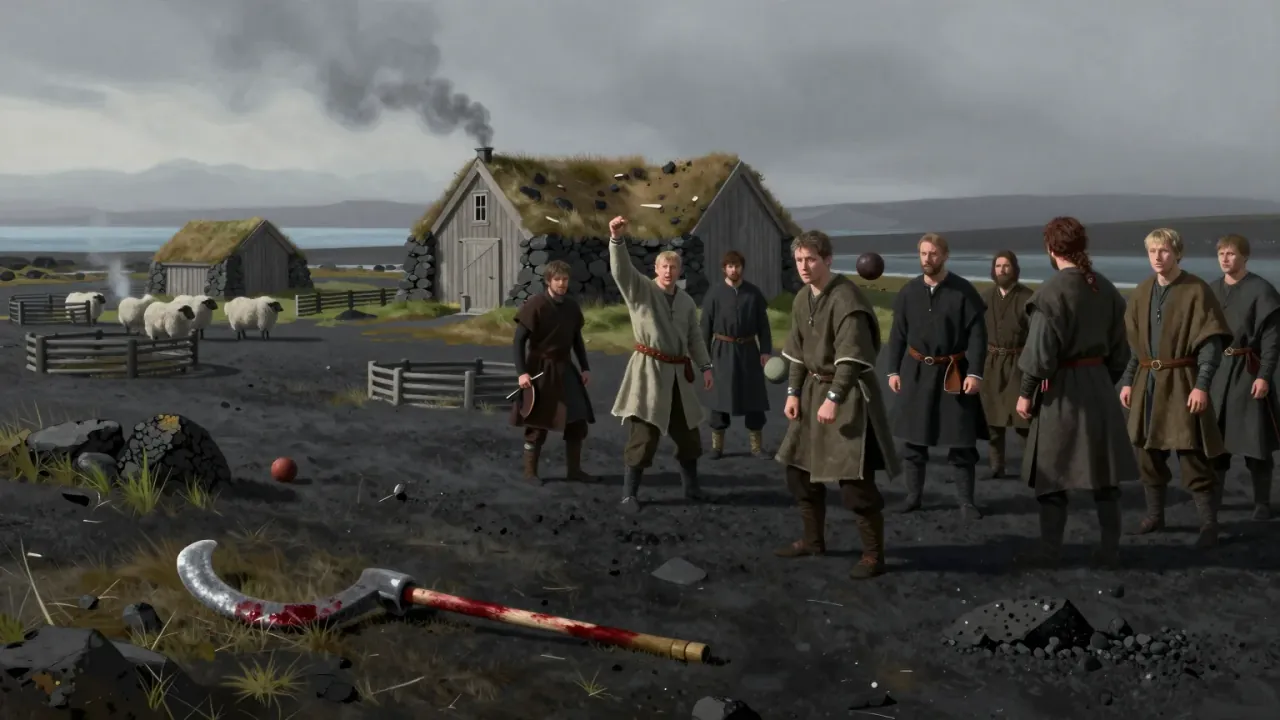
Robert Eggers’ The Northman adapts the Amleth legend into a stark, sensory-driven saga of fate and vengeance. Shot across Iceland and Northern Ireland, it follows Alexander Skarsgård’s Amleth as he fulfils a childhood oath to kill his uncle, played by Claes Bang. With Jarin Blaschke’s austere cinematography and Vessel’s drone-heavy score, the film prioritises ritual over psychology and texture over exposition. Though critically praised, it underperformed commercially and divides audiences on its emotional austerity.

13:00

The Wizard of Oz

Victor Fleming, King Vidor · 1939

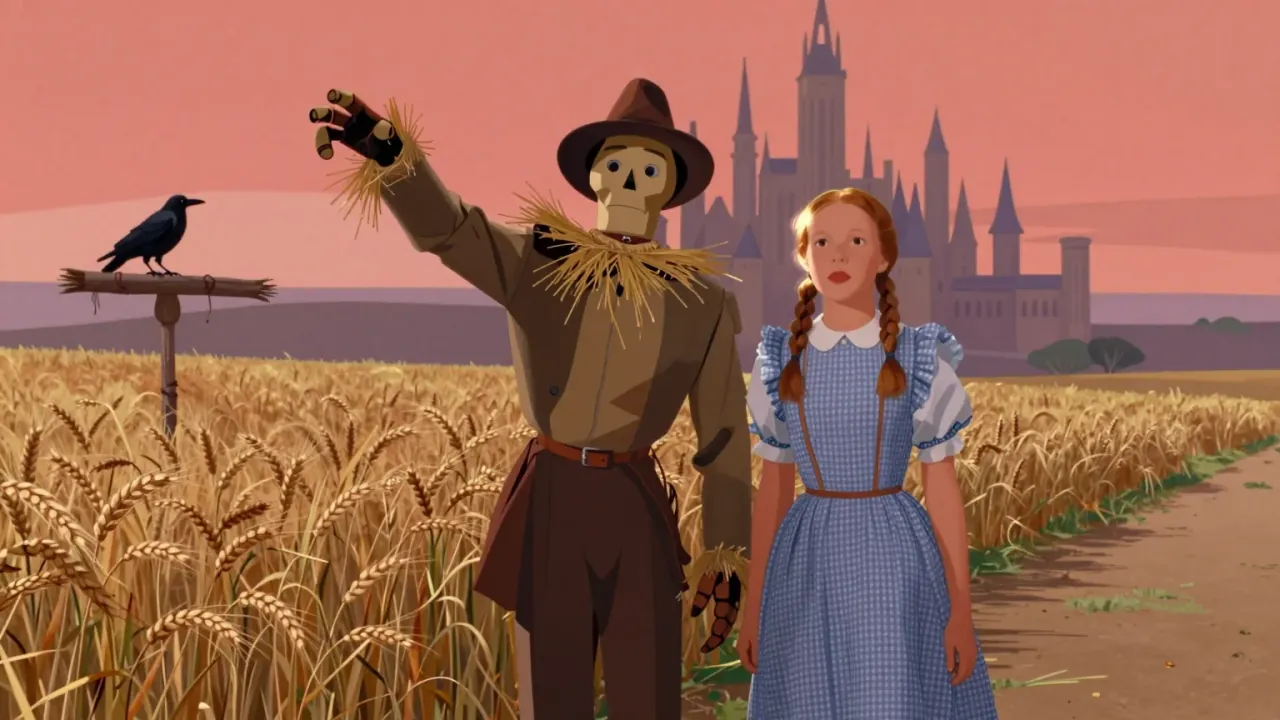
The Wizard of Oz (1939) is a Metro-Goldwyn-Mayer musical fantasy directed primarily by Victor Fleming, adapted from L. Frank Baum’s novel. Starring Judy Garland, it follows Dorothy’s journey from Kansas to Oz and back, using three-strip Technicolor, integrated song, and character-driven performance to explore competence, belonging, and self-recognition. Though framed as a dream, its power lies in the consistency of its emotional logic and the precision of its craft — from Harold Rosson’s cinematography to Harold Arlen’s score. It remains culturally central not as myth but as a sustained demonstration of how form and feeling can be made inseparable.

13:00

Thor: Ragnarok

Taika Waititi · 2017

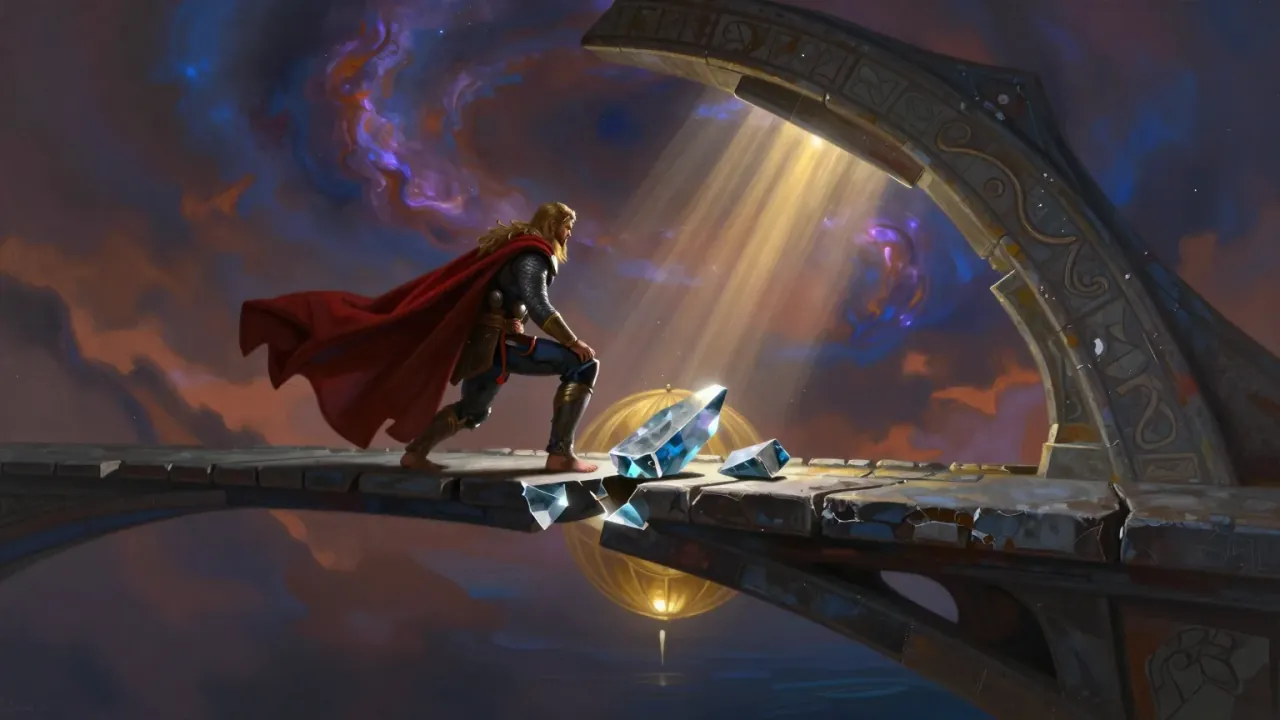
Thor: Ragnarok (2017), directed by Taika Waititi, is the third Thor film in the Marvel Cinematic Universe. It follows Thor’s exile to the alien planet Sakaar, his gladiatorial duel with the Hulk, and his return to Asgard to stop Hela’s conquest. With vibrant cinematography by Javier Aguirresarobe, a synth-driven score by Mark Mothersbaugh, and performances led by Chris Hemsworth, Cate Blanchett, and Tessa Thompson, the film prioritises wit, pace, and visual invention over mythic solemnity. It grossed $854 million worldwide and received praise for its direction and energy, though some critics found its themes underdeveloped and its finale visually overwhelming.

13:00

Under the Skin

Jonathan Glazer · 2013

Jonathan Glazer’s 2013 film adapts Michel Faber’s novel into a stark, sensory-driven study of alien perception. Scarlett Johansson plays an extraterrestrial who preys on men across Scotland, filmed with hidden cameras and minimal dialogue. Dan Landin’s cinematography, Mica Levi’s dissonant score and Paul Watts’ restrained editing sustain a consistent, disorienting viewpoint. The film prioritises texture and duration over exposition, generating unease through omission rather than shock. Acclaimed for its formal rigour, it remains deliberately ambiguous about motive, origin and outcome.

13:00

Until the End of the World

Wim Wenders · 1991

Wim Wenders’ 1991 epic follows Claire and Sam across continents as they evade bounty hunters and test a camera that lets the blind see recorded experiences. Shot across eleven countries with Robby Müller, it treats the road movie as philosophical drift — prioritising texture, duration, and the fragility of perception over plot or resolution.

13:00

2001: A Space Odyssey

Stanley Kubrick · 1968

Stanley Kubrick's 1968 film, written with Arthur C. Clarke, tracks a black monolith's appearances across four million years, from a tribe of prehistoric hominids to a Jupiter mission overseen by the calm computer HAL 9000. Shot by Geoffrey Unsworth with in-camera effects that took over a year to complete, and scored with existing classical pieces by Strauss, Khachaturian and Ligeti rather than an original soundtrack, it cost MGM $10.5 million, returned over $190 million, and won Kubrick his only competitive Oscar, for visual effects.

13:00

Akira

Katsuhiro Otomo · 1988

Akira is Katsuhiro Otomo's 1988 adaptation of his own unfinished manga, following biker-gang leader Kaneda as he tries to stop his friend Tetsuo, whose collision with an escaped psychic child leaves him with telekinetic power that threatens to destroy Neo-Tokyo. A landmark of Japanese animation on its original release, it has grown into one of the most influential science-fiction films of its era.

13:00

Aladdin

John Musker, Ron Clements · 1992

John Musker and Ron Clements's 1992 musical follows a street thief who finds a genie's lamp and poses as a prince to court Princess Jasmine while the vizier Jafar schemes to steal the lamp for himself. Rewritten entirely on a compressed schedule after a studio-mandated overhaul, it became the highest-grossing film of 1992 and the first animated feature to cross half a billion dollars worldwide.

13:00

Alice in Wonderland

Clyde Geronimi, Wilfred Jackson, Hamilton Luske · 1951

A bored young girl follows a white rabbit down a hole into a nonsensical kingdom ruled by a short-tempered Queen of Hearts, encountering a parade of self-absorbed creatures along the way. Disney first considered adapting Lewis Carroll's books in the early 1930s and spent nearly two decades discarding drafts — a live-action hybrid with Mary Pickford, a literal script judged too grotesque, a version written by Aldous Huxley — before settling on the fully animated, more comic take released in 1951 to a muted box office and mixed reviews that only later warmed.

13:00

Alien

Ridley Scott · 1979

A commercial towing crew, woken early by what they believe is a distress signal, boards a derelict ship and returns with something that starts killing them one by one. Ridley Scott's first science-fiction film builds the genre's most enduring monster movie almost entirely out of dread, sound design and H.R. Giger's biomechanical creature, on a budget that a science-fiction boom had only just made possible.

13:00

Aliens

James Cameron · 1986

James Cameron's 1986 sequel to Alien sends Sigourney Weaver's Ripley back to the colonised moon where the first creature was found, this time with a unit of Colonial Marines whose confidence collapses fast once the aliens appear. Greenlit only after Brandywine settled a profit-sharing lawsuit with Fox, and made after two separate standoffs over Weaver's return, the film swept effects and sound awards, earned Weaver a rare Best Actress nomination for a science-fiction role, and returned more than seven times its 18.5 million dollar budget.

13:00

Arrietty

Hiromasa Yonebayashi · 2010

A tiny Borrower named Arrietty risks everything her family fears by letting herself be seen by a sickly human boy. Hiromasa Yonebayashi's 2010 directorial debut, based on Mary Norton's novel, trades Ghibli's usual scale for something quieter and more contained.

13:00

Back to the Future

Robert Zemeckis · 1985

Robert Zemeckis's 1985 comedy sends Marty McFly thirty years into his parents' past, where undoing his own accidental sabotage of their romance becomes a race against his own existence. Recast five weeks into shooting, rewritten forty times before a studio would touch it, it turned into the biggest hit of its year on a modest budget, and the mechanics still hold.

13:00

Big Hero 6

Chris Williams, Don Hall · 2014

A robotics prodigy grieving his brother's death assembles a makeshift team, led by a soft, inflatable healthcare robot named Baymax, to confront the person responsible. Don Hall and Chris Williams's 2014 film sets its Marvel-derived plot in a hybrid San Francisco-Tokyo city and keeps its emotional focus on loss rather than spectacle.

13:00

Blade Runner

Ridley Scott · 1982

Ridley Scott's 1982 science fiction film, adapted from Philip K. Dick's novel, sends former police officer Rick Deckard after a group of fugitive synthetic humans, or replicants, hiding in a decaying future Los Angeles. Shot by Jordan Cronenweth with a score by Vangelis, it underperformed on release and split critics over its pacing, only to be reissued in seven different versions and become one of the defining works of neo-noir and cyberpunk cinema.

13:00

Blade Runner 2049

Denis Villeneuve · 2017

Thirty-five years after Ridley Scott's original, Denis Villeneuve's sequel sends replicant blade runner K into a discovery that threatens the order between humans and the synthetics who serve them, with Harrison Ford's Deckard drawn back into the search. Visually enormous and emotionally patient, it won over critics but not, relative to its cost, box offices.

13:00

Castle in the Sky

Hayao Miyazaki · 1986

Hayao Miyazaki's 1986 debut for Studio Ghibli follows orphans Sheeta and Pazu as a government agent, the army and a band of air pirates all chase the crystal pendant that unlocks Laputa, a legendary castle adrift above the clouds. It underperformed on release but has since become a Ghibli staple, prized for its nineteenth-century-engineered flying machines and Joe Hisaishi's score.

13:00

E.T. the Extra-Terrestrial

Steven Spielberg · 1982

Steven Spielberg's 1982 film, written by Melissa Mathison from a rejected Columbia Pictures script, follows a boy named Elliott who hides and befriends a stranded alien while government agents close in. Shot in sequence over four months on a $10.5 million budget, with a Carlo Rambaldi animatronic creature voiced by a chain-smoking retiree, it overtook Star Wars to become the highest-grossing film ever made and held that record for eleven years, until Spielberg's own Jurassic Park surpassed it.

13:00

Eternal Sunshine of the Spotless Mind

Michel Gondry · 2004

Jim Carrey and Kate Winslet play exes who each have their relationship erased from memory, in a film that plays their romance in reverse and ends with them choosing it again anyway.

13:00

Everything Everywhere All at Once

Dan Kwan, Daniel Scheinert · 2022

Michelle Yeoh plays a laundromat owner dragged into a battle across parallel universes while her actual life — a failing business, a strained daughter, a tax audit — keeps intruding on the spectacle. Written for Jackie Chan before Kwan and Scheinert rebuilt it around a mother and daughter, the film pairs handmade, in-house visual effects with a script that keeps returning to a marriage and a laundromat no matter how far the story wanders.

13:00

Fantastic Planet

René Laloux · 1973

On the planet Ygam, humans called Oms are kept as pets or exterminated as vermin by the giant Draags, until an orphaned Om named Terr escapes his owner with a stolen education headset and helps organise a rebellion. René Laloux directed this 1973 French-Czechoslovak co-production, animated at Prague's Jiří Trnka Studio from designs by Roland Topor, based on Stefan Wul's 1957 novel Oms en série.

13:00

Flow

Gints Zilbalodis · 2024

A solitary cat, fleeing dogs and a sudden flood, ends up sharing a small boat with a capybara, a lemur, a secretarybird and a dog as the water keeps rising around a seemingly abandoned world. Gints Zilbalodis made the film with no storyboards and no dialogue, animating it in the free software Blender over five and a half years on a budget of 3.5 million euros.

13:00

Frozen

Chris Buck, Jennifer Lee · 2013

Two royal sisters are separated by one sister's uncontrollable ice powers, and the younger one sets out to bring her home rather than defeat her. Chris Buck and Jennifer Lee's 2013 film reworks Hans Christian Andersen's Snow Queen into a story about repair between siblings rather than romance.

13:00

Ghost in the Shell

Mamoru Oshii · 1995

Ghost in the Shell follows Major Motoko Kusanagi, a cyborg security agent, as she pursues a mysterious hacker called the Puppet Master through a near-future city modelled on Hong Kong, a case that increasingly unsettles her sense of what makes her identity her own. Mamoru Oshii directed the adaptation of Masamune Shirow's manga for Production I.G, using a hybrid digital animation process and a score by Kenji Kawai built around classical Japanese vocals. Initially considered a box-office disappointment, it became a defining cult film, influencing The Matrix and drawing praise from James Cameron as one of animation's first truly adult works.

13:00

Guillermo del Toro's Pinocchio

Guillermo del Toro, Mark Gustafson · 2022

Carved by a grieving Geppetto from the tree growing over his dead son's grave, this stop-motion Pinocchio is rowdy, disobedient and impossible to control, set against the rise of Fascist Italy. Fourteen years in development before Netflix financed it, the film keeps Collodi's darkness rather than softening it into a straightforward morality tale.

13:00

Her

Spike Jonze · 2013

In a comfortable near-future Los Angeles, a lonely letter-writer buys an artificially intelligent operating system and falls for the voice that answers back, in Spike Jonze's Oscar-winning screenplay.

13:00

How to Train Your Dragon

Dean DeBlois, Chris Sanders · 2010

An undersized Viking teenager befriends the rare dragon he was supposed to kill, and in doing so undoes his village's entire way of understanding its enemy. Dean DeBlois and Chris Sanders's 2010 film pairs a straightforward friendship story with unusually grounded visual craft.

13:00

Howl's Moving Castle

Hayao Miyazaki · 2004

Howl's Moving Castle adapts Diana Wynne Jones's novel about a young milliner cursed into old age by a witch, who ends up living in a wizard's walking castle as a war between two kingdoms escalates around them. Hayao Miyazaki directed the film for Studio Ghibli after an earlier director departed, and it took $236 million against a $24 million budget, becoming one of the most commercially successful Japanese films ever made and winning a Nebula Award for Best Script.

13:00

Jurassic Park

Steven Spielberg · 1993

Steven Spielberg's 1993 adaptation of Michael Crichton's novel follows a Costa Rican dinosaur park that collapses once its systems, and its owner's judgement, both fail during a single act of sabotage. Combining Stan Winston's animatronics with Industrial Light & Magic's early computer-generated dinosaurs on a budget reported as either $56 or $63 million, it grossed over $914 million on its original release, briefly the highest-grossing film ever made, and won three Academy Awards for its sound and visual effects.

13:00

Kiki's Delivery Service

Hayao Miyazaki · 1989

Hayao Miyazaki's 1989 film follows thirteen-year-old witch Kiki as she leaves home to complete a year of independent training in a coastal city, running a flying courier service with her cat Jiji. Miyazaki rewrote Eiko Kadono's more episodic novel to centre on the strain of independence itself, and the film became the first Studio Ghibli release to succeed commercially on first release.

13:00

Kubo and the Two Strings

Travis Knight · 2016

In a fictionalised feudal Japan, a one-eyed boy named Kubo earns a living by animating paper figures with music, until his grandfather's ghostly aunts arrive to finish what took his eye in infancy. Travis Knight's directorial debut for Laika pairs handmade stop-motion craft, inspired by ukiyo-e woodblock printing, with a quest plot that leans harder on grief and loss than most animated adventures aimed at children.

13:00

Lilo & Stitch

Chris Sanders, Dean DeBlois · 2002

Lilo & Stitch follows an orphaned Hawaiian girl who adopts what she thinks is a stray dog, not realizing he's an escaped, genetically engineered weapon being hunted across the galaxy. Directed by Chris Sanders and Dean DeBlois, the film cost $80 million, grossed $273 million worldwide, and won an Annie Award, building its story around the Hawaiian concept of extended family rather than a generic redemption arc.

13:00

My Neighbor Totoro

Hayao Miyazaki · 1988

Released on a double bill with Grave of the Fireflies in 1988, Hayao Miyazaki's film follows sisters Satsuki and Mei as they move to the countryside while their mother recovers in hospital, and meet the forest spirits living around their new home. It grossed a modest sum on first release but has since become Studio Ghibli's signature work, with Totoro serving as the studio's mascot.

13:00

Nausicaä of the Valley of the Wind

Hayao Miyazaki · 1984

A thousand years after industrial civilisation collapsed, Princess Nausicaä tries to keep her small valley out of a war between an empire determined to burn a toxic jungle and the giant insects that guard it. Miyazaki wrote and directed the film from his own still-unfinished manga, with only sixteen chapters of story to draw from and a production schedule of nine months on a budget under a million dollars, working with composer Joe Hisaishi for the first time and with the minor studio Topcraft rather than a major animation house.

13:00

Nimona

Nick Bruno, Troy Quane · 2023

Framed for the Queen's murder, disgraced knight Ballister teams up with Nimona, a shapeshifter with no interest in explaining herself, to clear his name in a medieval-futuristic kingdom. Originally a Blue Sky Studios production cancelled when Disney shut the studio down in 2021, the film was revived by Annapurna and Netflix and completed by a new creative team.

13:00

Pan's Labyrinth

Guillermo del Toro · 2006

In 1944 Spain, a girl named Ofelia arrives with her pregnant mother at the outpost of her new stepfather, a sadistic Francoist captain hunting republican guerrillas, and finds an ancient labyrinth where a faun sets her three tasks to prove she is the reincarnated princess of an underworld kingdom. Guillermo del Toro's 2006 film alternates between this fantasy and the household's real brutality, using practical creature effects on a modest budget to win three Academy Awards.

13:00

Paprika

Satoshi Kon · 2006

A stolen dream-sharing device lets a psychologist's alter ego, the detective Paprika, chase a saboteur through other people's nightmares. Satoshi Kon's 2006 feature, adapted from Yasutaka Tsutsui's novel, folds one dream into another until the seams between them disappear.

13:00

Peter Pan

Clyde Geronimi, Wilfred Jackson, Hamilton Luske · 1953

Wendy Darling and her brothers follow Peter Pan to Never Land to escape growing up, then have to help him outwit Captain Hook once they're there. Disney bought the animation rights from Paramount in 1938 and began preliminary work almost immediately, only for the Second World War to divert the studio into government propaganda work for years; production finally resumed after 1945 and the finished film, made for $4 million, became a solid commercial success while carrying a depiction of its Native American characters that has drawn deserved criticism since.

13:00

Pinocchio

Ben Sharpsteen, Hamilton Luske, Norm Ferguson, T. Hee · 1940

A woodcarver's puppet is brought to life and told he must prove himself brave, truthful and unselfish before he can become a real boy, guided — imperfectly — by a cricket appointed as his conscience. Made for $2.5 million as Disney's second feature, the film pushed effects animation further than Snow White had, rendering water, smoke and lightning with a level of realism the studio hadn't attempted before, even as it lost money on first release when the war cut off its overseas markets.

13:00

Princess Mononoke

Hayao Miyazaki · 1997

Princess Mononoke follows Ashitaka, a young prince cursed by a demonized boar god, as he travels west and becomes caught in the war between Lady Eboshi's ironworks town and the animal gods defending their forest, including San, a girl raised by wolves. Hayao Miyazaki wrote and directed the film for Studio Ghibli after nearly two decades of development, using limited computer-generated imagery alongside hand-drawn animation for the first time in his work. Marketed by producer Toshio Suzuki in the largest advertising campaign Japan had seen for a film at that point, it became the country's highest-grossing release and the first Ghibli film given a wide international release, through a Disney-brokered deal that handed its English dub to novelist Neil Gaiman.

13:00

Raiders of the Lost Ark

Steven Spielberg · 1981

Steven Spielberg's 1981 adventure sends archaeologist Indiana Jones after the Ark of the Covenant, racing Nazi treasure hunters across three continents. Financed by Lucasfilm rather than a studio, built from a George Lucas story and a Lawrence Kasdan script, it swept the technical Academy Awards and became the year's biggest earner despite tracking that predicted it would be overshadowed.
13:00

Sleeping Beauty

Clyde Geronimi, Les Clark, Eric Larson, Wolfgang Reitherman · 1959

Princess Aurora is cursed at birth to die by a spinning wheel's needle, saved instead by three fairies who soften the curse to a deep sleep breakable only by true love's kiss, while the evil fairy Maleficent works to see the original curse fulfilled anyway. Designed around Eyvind Earle's tapestry-like visual style, drawing on pre-Renaissance European art, and scored using Tchaikovsky's 1889 ballet, the film took nearly ten years and $6 million to complete, making it Disney's most expensive animated feature at the time — and, on release, one of its most costly failures.

13:00

Solaris

Andrei Tarkovsky · 1972

Andrei Tarkovsky's 1972 adaptation of Stanislaw Lem's novel sends psychologist Kris Kelvin to a station orbiting the ocean planet Solaris, where the surviving crew have fallen into crisis after the planet's ocean began materialising physical visitors drawn from their memories, and Kelvin's own dead wife Hari soon appears to him in the same way. Shot by Vadim Yusov with a score by Eduard Artemyev built around a Bach chorale, and made partly as a rebuttal to what Tarkovsky saw as the coldness of 2001: A Space Odyssey, it won the Grand Prix at Cannes and has stood since as one of Soviet cinema's most significant contributions to science fiction.

13:00

Stalker

Andrei Tarkovsky · 1979

Andrei Tarkovsky's 1979 film follows a guide known only as Stalker as he leads a writer and a scientist illegally into the Zone, a restricted area said to contain a room that grants a visitor's innermost desire, and the three spend most of the journey arguing about faith, art and science rather than confronting any visible danger. Adapted loosely from a novel by Arkady and Boris Strugatsky and scored by Eduard Artemyev, the production required three different cinematographers after an early batch of footage was ruined during processing, forcing much of the film to be shot again from scratch over the following year.

13:00

Star Wars: Episode IV – A New Hope

George Lucas · 1977

George Lucas's 1977 space opera sends farm boy Luke Skywalker into a rebellion against the Galactic Empire after he acquires stolen plans for a planet-destroying superweapon, teaming with smuggler Han Solo, Princess Leia and Jedi master Obi-Wan Kenobi. Made for $11 million after multiple studios turned the project down, it became a surprise blockbuster, grossing $775 million across its releases, winning six Academy Awards, and establishing the modern template for franchise filmmaking.

13:00

Star Wars: Episode V – The Empire Strikes Back

Irvin Kershner · 1980

Irvin Kershner's 1980 sequel sends the Rebel Alliance into retreat as the Galactic Empire hunts them down, splitting Luke Skywalker's training under Jedi master Yoda from Han Solo and Princess Leia's flight from Darth Vader's forces. Written by Leigh Brackett and Lawrence Kasdan from George Lucas's story outline, it went well over its original $8 million budget to a reported $30.5 million, became the year's highest-grossing film, and is now widely regarded as the strongest entry in the Star Wars series.

13:00

Suzume

Makoto Shinkai · 2022

Seventeen-year-old Suzume Iwato joins a young door-closer named Souta, who is turned into a three-legged chair partway through their journey, on a trip across Japan sealing doors that release a giant, earthquake-triggering worm. The third film in Makoto Shinkai's disaster trilogy, following Your Name and Weathering with You, draws directly on the 2011 Tohoku earthquake and tsunami.

13:00

The Adventures of Mark Twain

Will Vinton · 1985

Tom Sawyer, Huckleberry Finn and Becky Thatcher stow away on an airship piloted by Mark Twain, who is travelling to keep what he believed was his destined appointment with the returning Halley's Comet, and along the way the children hear vignettes drawn from Twain's own stories, from a jumping frog to a vision of heaven. Vinton's stop-motion studio spent three and a half years and $1.5 million building the film in a converted Portland house, developing new computer-controlled camera and lighting systems along the way, only for a distributor to release the finished, distinctly adult-toned film as children's matinee programming.

13:00

The Boy and the Heron

Hayao Miyazaki · 2023

After his mother dies in wartime Japan, Mahito Maki moves to the countryside, follows a talking grey heron into an abandoned tower, and enters a fantastical realm governed by its own private logic. Hayao Miyazaki spent roughly seven years making the film, released in Japan with no trailers, stills or synopsis beyond a single poster.

13:00

The Iron Giant

Brad Bird · 1999

The Iron Giant drops a fifty-foot alien robot into small-town Maine in 1957 and lets a lonely boy's friendship with it, rather than its destructive potential, carry the film. Brad Bird's feature debut, made by Warner Bros. on roughly half the budget and schedule of comparable animated films, was a box-office failure on release but has since become a byword for a cult classic.

13:00

The Matrix Revolutions

Lilly Wachowski · 2003

The Wachowskis' 2003 conclusion to the Matrix trilogy sends Neo into the machine city to end humanity's war with the machines while Zion faces a final assault and Agent Smith threatens to overwrite both worlds. Shot back to back with The Matrix Reloaded and released the same year, it opened to the widest simultaneous release of its time and grossed $427.3 million, but drew a marked drop in critical reception, with reviewers praising the visual effects while faulting the film's characterisation and climax.

13:00

The Mitchells vs. The Machines

Mike Rianda, Jeff Rowe · 2021

Katie Mitchell, days from leaving for film school and still at odds with her earnest, technology-suspicious father, is stuck on a cross-country family road trip when a smartphone-assistant uprising begins rounding up humanity. Mike Rianda and Jeff Rowe's Sony Pictures Animation feature, produced by Phil Lord and Christopher Miller, pairs a hand-painted visual style adapted from Into the Spider-Verse's animation technology with a script built from Rianda's own family history and childhood fascination with robots.
13:00

The Nightmare Before Christmas

Henry Selick · 1993

The Nightmare Before Christmas follows Jack Skellington, Halloween Town's bored king, as he discovers Christmas Town and decides, badly, that he can run the holiday himself. Henry Selick directed the stop-motion musical from a story and poem by Tim Burton, with songs and score by Danny Elfman, who also voices Jack's singing parts. Released under Disney's Touchstone label rather than the studio's own name, it grossed $75.1 million and earned an Academy Award nomination for Best Visual Effects, a first for an animated film.
13:00

The Secret of NIMH

Don Bluth · 1982

A widowed field mouse named Mrs. Brisby has to move her sick son before the farmer's plough destroys their home, and finds help among a colony of unusually intelligent rats who escaped a laboratory years earlier. Don Bluth directed the film as his debut after leaving Disney's animation department with several colleagues in 1979 to found an independent studio, taking on a book Disney had rejected twice before, adding mystical elements not present in the source novel, and finishing the whole project on a tighter budget and schedule than the studio he'd left would have allowed.
13:00

The Thing

John Carpenter · 1982

A helicopter pilot and a research crew at a remote Antarctic base find a shape-shifting alien freed from a Norwegian camp, and John Carpenter turns the ensuing hunt for the impostor into a study of paranoia as much as a monster film. Poorly received and a box-office loss on release, it has since been reassessed as one of the strongest science-fiction horror films made.

13:00

The Wild Robot

Chris Sanders · 2024

Shipwrecked on an uninhabited island, service robot Roz has to learn to survive among wildlife that first treats her as a monster, and ends up raising an orphaned gosling as her own. Chris Sanders adapted Peter Brown's 2016 novel with a hand-painted, watercolour visual style built to resemble Bambi filtered through Hayao Miyazaki.