What the film is
Tom Jones is a 1963 British colour comedy, adapted from Henry Fielding’s 1749 novel by John Osborne and directed by Tony Richardson for Woodfall Film Productions. It sets out to translate Fielding’s satirical, digressive, morally ambivalent narrative into a cinematic idiom that is both period-accurate and formally irreverent — using intertitles, fourth-wall breaks, a wry off-screen narrator, and rapid editing to mirror the novel’s tone and structure. The film does not aim for fidelity in episode or character but for fidelity in spirit: it treats virtue and vice as slippery, socially contingent, and often indistinguishable in practice. Its ambition is structural as much as thematic — to make the audience complicit in the narration, to undercut solemnity with timing and framing, and to treat sexual appetite, class pretension and moral hypocrisy as inseparable strands of English life. It is not a costume drama pretending to be timeless; it is a deliberately anachronistic, energetic, and self-aware re-staging of eighteenth-century manners through a mid-twentieth-century lens. (158 words)
How it works
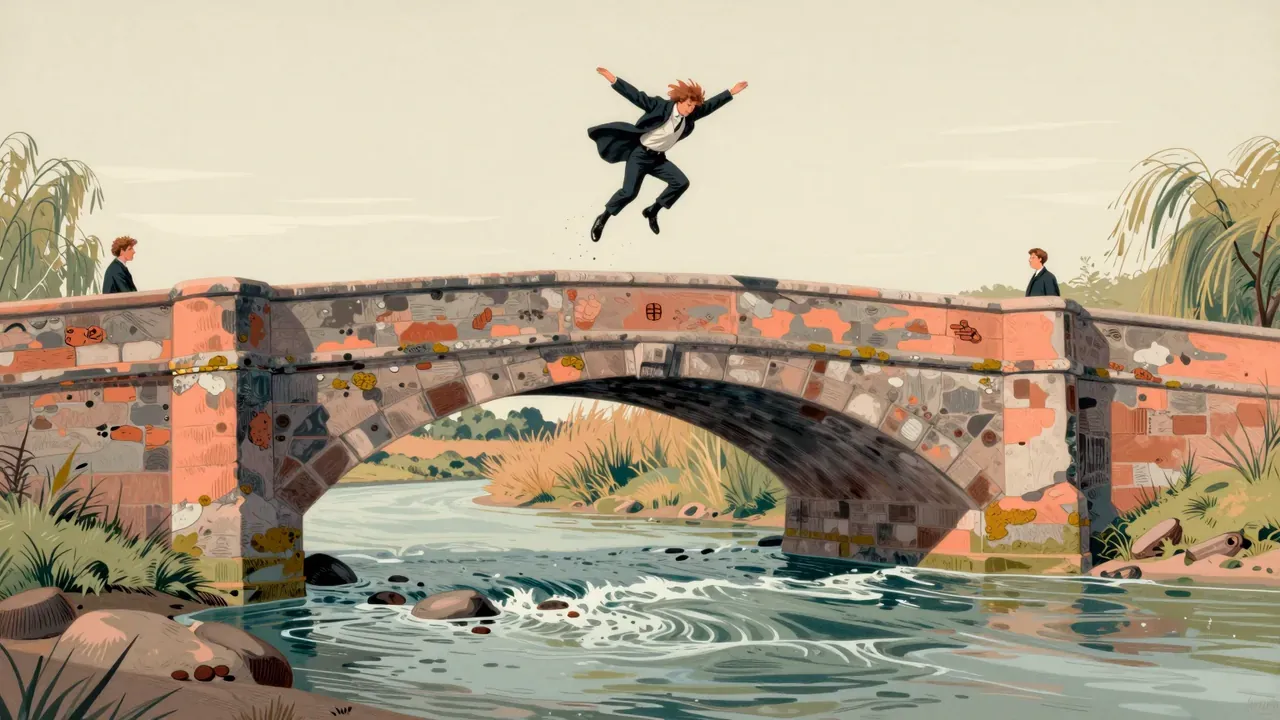
The story follows Tom Jones from foundling to reconciled heir, but its momentum comes less from plot than from rhythm and juxtaposition: a chase across Somerset fields cuts to a silent-film-style title card; a seduction scene dissolves into a mock-solemn voiceover lamenting human frailty. Albert Finney’s performance anchors the film — physically expressive, emotionally direct, unembarrassed by either lust or vulnerability. Susannah York gives Sophie quiet resolve beneath her decorum; Hugh Griffith and Edith Evans shape their roles with precise, theatrical economy. Walter Lassally’s cinematography favours natural light and mobile framing, avoiding painterly composition in favour of immediacy. Antony Gibbs’ editing sustains a brisk, almost vaudevillian pace, while John Addison’s score alternates baroque pastiche with jaunty jazz inflections. The narration by Micheál Mac Liammóir provides tonal ballast, never explanation. Every craft choice serves the film’s central conceit: that morality is best exposed through laughter, not lecture. (159 words)
What lands
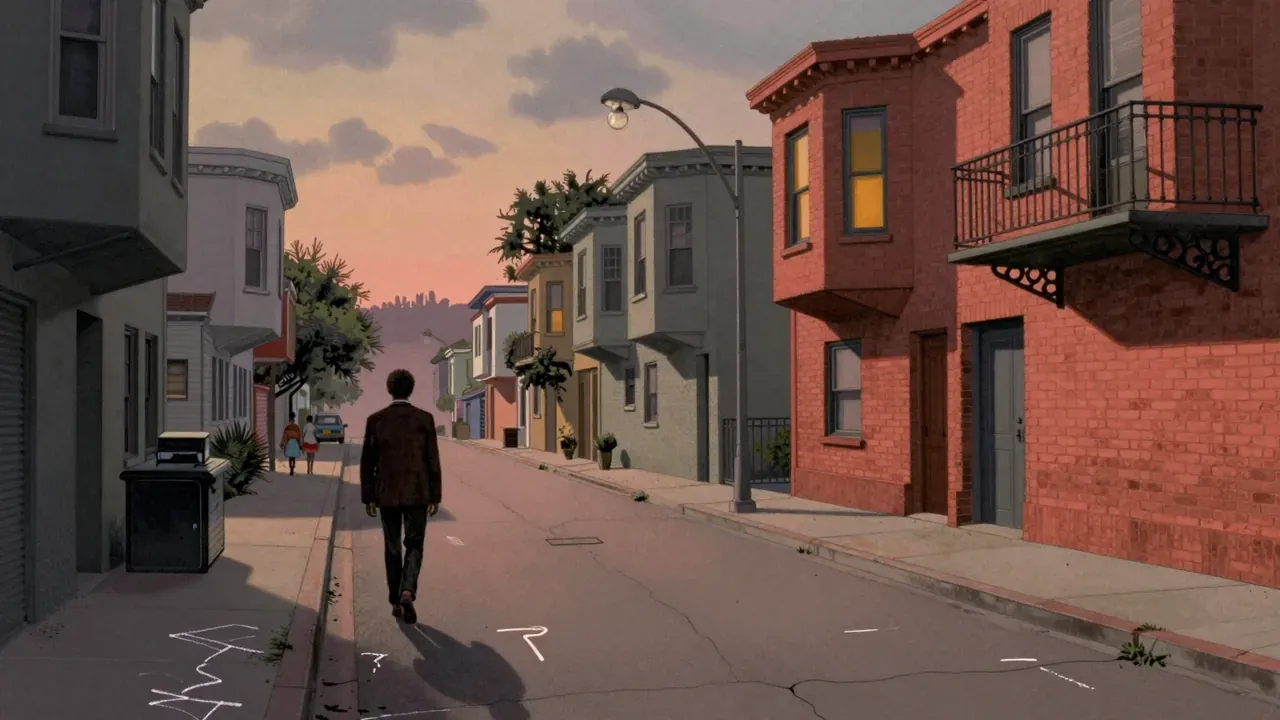
What lands most securely is the film’s tonal confidence — its refusal to apologise for bawdiness, nor to soften its satire with sentiment. The opening sequence, with its slapstick intertitles and sped-up action, establishes a contract with the viewer: this will not behave like other period films. The fourth-wall glances work because they are sparing, timed to puncture pomposity rather than flatter the audience. Finney’s charisma carries scenes where plot logic frays — particularly in the road-journey section, where chance encounters and mistaken identities feel less like contrivance and more like the world’s cheerful indifference to individual virtue. The visual texture holds up: Castle Street in Bridgwater and Cerne Abbas retain their lived-in roughness, and the Eastmancolor palette avoids both gaudiness and nostalgia. Even the narrator’s Dryden quotation at the close lands not as a moral summary but as a sigh of relief — earned, not imposed. The film’s energy remains infectious precisely because it is never trying to be ‘important’, only alive. (157 words)
What does not
What does not land consistently is the film’s attempt to balance farce with emotional weight. The relationship between Tom and Sophie lacks the friction or interiority needed to sustain the third act’s jeopardy; their reunion feels narratively inevitable rather than emotionally earned. Some supporting characters — particularly Mr. Thwackum and Mr. Square — are reduced to caricature without enough textual or performative shading to justify their presence beyond exposition. The courtroom and jail sequences strain under the weight of exposition, relying on voiceover to clarify stakes that the visuals do not dramatise. Richardson’s own dissatisfaction, noted in his autobiography, registers in moments where pacing falters — notably in the middle stretch, where episodic structure begins to feel additive rather than cumulative. The film’s stylistic boldness occasionally masks underwritten motivation: Blifil’s malice is clear, but his psychology remains schematic. And while the narrator’s commentary is witty, it sometimes substitutes for dramatic tension rather than deepening it. (158 words)
The themes that matter
The themes that matter are not those of the novel’s Enlightenment preoccupations — reason versus passion, nature versus nurture — but those the film insists upon: the absurdity of moral certainty, the contingency of reputation, and the resilience of embodied joy in a world governed by arbitrary rules. Class is treated not as static hierarchy but as performative theatre: Squire Allworthy’s benevolence is undermined by his readiness to banish Jenny Jones; Western’s bluster collapses when confronted with actual consequence. Sexuality is neither punished nor sanctified, but presented as ordinary, messy, and often comically misaligned with intention. The film’s repeated breaking of the fourth wall functions thematically: it denies the audience the comfort of passive observation, implicating us in the same moral ambiguities we judge on screen. Even the narrator’s poetic closure — quoting Dryden — does not resolve the characters’ dilemmas so much as acknowledge the fleeting, precarious nature of happiness itself. These are not ideas argued, but rhythms enacted. (159 words)
Who should watch it
This film rewards viewers who enjoy formal playfulness, verbal wit, and performances that privilege vitality over polish. It suits those familiar with Fielding’s irony or with mid-century British theatre — particularly the Royal Court’s post-war sensibility — and those open to comedy that treats sex, status and stupidity as inseparable. It is less suited to viewers who require psychological realism, sustained emotional arcs, or narrative coherence over stylistic exuberance. Those put off by fourth-wall breaks, intertitles or a narrator who comments on characters’ failings may find its devices distancing rather than engaging. A viewer expecting a conventional romance or a stately literary adaptation will leave disappointed. But someone who values Albert Finney’s physical expressiveness, Walter Lassally’s unshowy camerawork, or John Osborne’s ruthless distillation of a 900-page novel into 128 minutes of forward motion will find it richly rewarding. Its pleasures are cumulative, not instantaneous. (159 words)
Is it worth your evening
Yes, it is worth your evening — provided you approach it as a piece of choreographed mischief rather than a solemn period statement. Its 128 minutes pass with unusual swiftness, its energy rarely flagging despite occasional lulls in dramatic urgency. It repays attention not for hidden meanings but for its consistent refusal to settle into one mode: it is bawdy and lyrical, chaotic and tightly constructed, irreverent and deeply humane. Those who dislike overt stylisation or find its humour too broad may prefer later adaptations of Fielding — or none at all. But for anyone willing to meet it on its own terms — as a live-wire experiment in comic storytelling — it remains singular. Its Academy Awards were not for prestige alone, but for execution: every major craft decision serves the film’s central, unapologetic proposition — that laughter is the sound virtue makes when it trips over its own dignity. (159 words)