filmbriefs
Fiction

Western

40
briefs
13:00
average
520 min
in total
32
people
All briefs40
13:00

3:10 to Yuma

Delmer Daves · 1957

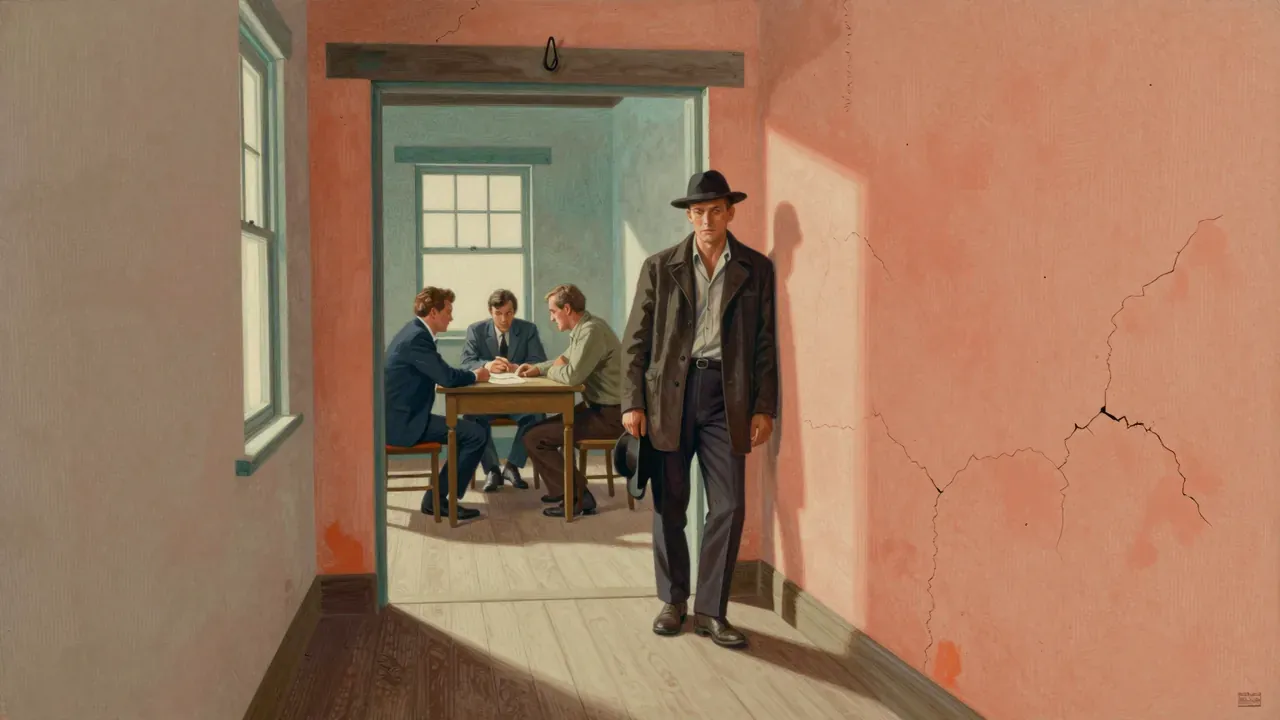
Delmer Daves’ 1957 Western 3:10 to Yuma adapts Elmore Leonard’s taut short story into a study of obligation under pressure. Rancher Dan Evans agrees to escort outlaw Ben Wade to the 3:10 train for Yuma, facing ambush, betrayal, and his own wavering resolve. Shot by Charles Lawton Jr. with sun-bleached realism and scored sparingly by George Duning, the film builds suspense through pacing, performance, and moral granularity — not spectacle. It was preserved by the Library of Congress in 2012 for its cultural and aesthetic significance.

13:00

Black God, White Devil

Glauber Rocha · 1964

Glauber Rocha’s 1964 Black God, White Devil is a foundational Cinema Novo film set in Brazil’s drought-ravaged sertão. It follows a ranch hand and his wife as they flee, convert, join bandits, and flee again — never escaping cycles of violence sanctified by religion or revolution. Shot in stark black and white, edited by Rocha himself, and scored by Sérgio Ricardo, it treats myth and history as inseparable, and endurance as the only authentic political act.

13:00

Buchanan Rides Alone

Budd Boetticher, Harry Joe Brown · 1958

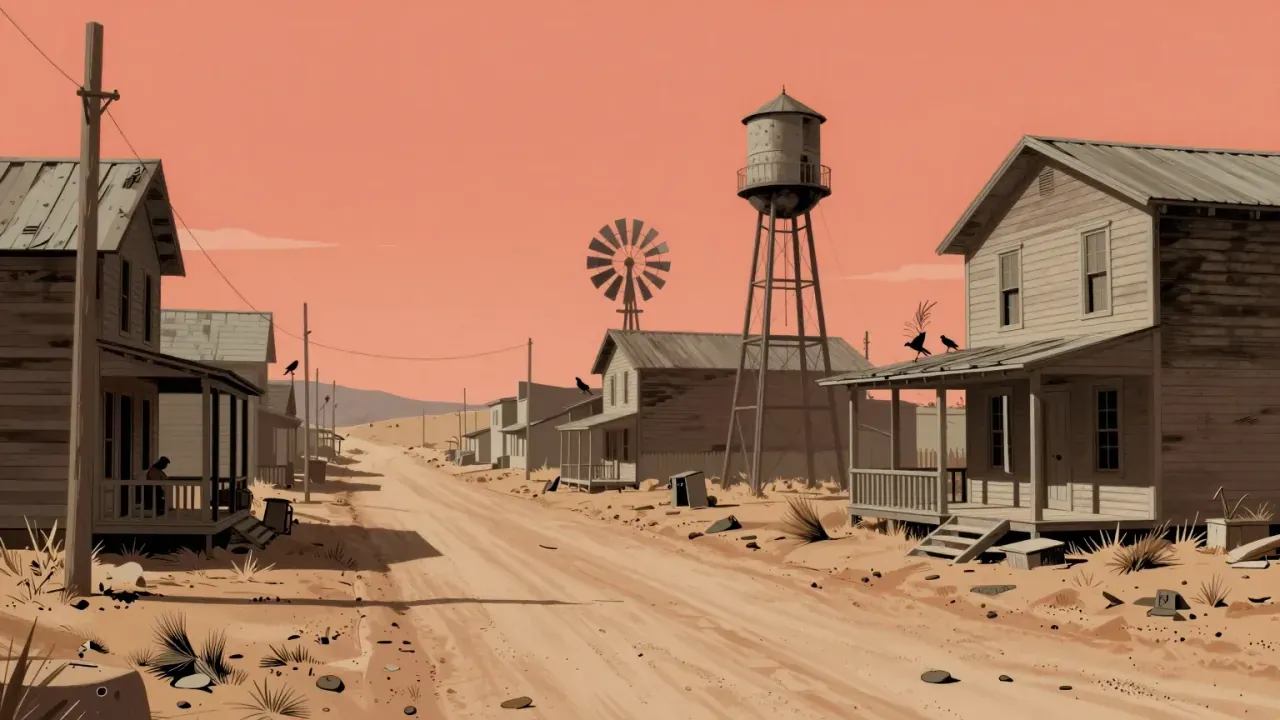
Buchanan Rides Alone (1958) is a tightly wound Western starring Randolph Scott as a lone drifter caught in a corrupt border town run by the Agry family. Directed by Budd Boetticher and Harry Joe Brown, written by Charles Lang, and shot by Lucien Ballard, it uses sparse dialogue, confined spaces, and deliberate pacing to explore jurisdiction, consent, and quiet resistance. At 78 minutes, it prioritises behavioural precision over plot escalation, anchoring its themes in posture, framing, and silence.
13:00

Buck and the Preacher

Sidney Poitier · 1972

Sidney Poitier’s 1972 directorial debut Buck and the Preacher recasts the Western around the Exoduster movement: Buck (Poitier) leads freed people westward, negotiates with Native Americans for safe passage, and allies with the sharp-tongued Reverend Rutherford (Harry Belafonte) to evade white marauders. Shot in Mexico and Kenya, with cinematography by Alex Phillips Jr. and music by Benny Carter, it balances action with quiet realism — prioritising collective survival over individual legend. Though its villains lack nuance and some plot devices feel functional, its commitment to Black self-determination, material history, and genre reclamation remains potent.

13:00

Comanche Station

Budd Boetticher, Randolph Scott · 1960

A retired Texas Ranger tracks a Comanche raiding party to rescue a woman abducted years earlier. Joined by two morally divergent men, he crosses hostile terrain toward an uncertain settlement — all in 74 taut, unadorned minutes. Directed by Budd Boetticher and starring Randolph Scott, it is the penultimate film of the Ranown cycle: lean, taciturn, and resolutely uninterested in explaining itself.

13:00

Dead Man

Jim Jarmusch · 1995

Dead Man (1995) is Jim Jarmusch’s monochrome acid western starring Johnny Depp as a fatally wounded accountant guided west by Gary Farmer’s enigmatic Native American spirit-guide Nobody. Shot by Robby Müller and scored by Neil Young, it rejects narrative convention in favour of ritual, silence, and poetic logic — foregrounding Indigenous epistemology, untranslated Cree and Blackfoot dialogue, and a vision of landscape as sentient participant. Though critically divisive on release, it has since been reassessed as a singular, austere meditation on mortality, colonialism, and perception.

13:00

Decision at Sundown

Budd Boetticher · 1957

Decision at Sundown (1957), directed by Budd Boetticher and starring Randolph Scott, follows a man seeking vengeance in a small Western town — only to have his certainty unravel over a single day. With Burnett Guffey’s stark cinematography and Charles Lang’s tightly coiled script, the film builds tension through dialogue and silence rather than action, culminating not in a showdown but in a quiet, bitter withdrawal. Part of the Boetticher–Scott cycle, it stands apart for its psychological austerity and moral ambiguity.

13:00

Destry Rides Again

George Marshall · 1939

Destry Rides Again (1939) is a Universal Pictures Western comedy directed by George Marshall, starring James Stewart and Marlene Dietrich. It follows a gunless sheriff who restores order in the corrupt town of Bottleneck not through force but through patience, wit, and carefully orchestrated social pressure. Written by Henry Myers and Gertrude Purcell, it subverts genre expectations with dry humour, deliberate pacing, and character-driven irony—most notably in Dietrich’s iconic turn as the saloon singer Frenchy. Though loosely based on Max Brand’s novel, the film bears little resemblance to earlier adaptations and stands as a singular blend of Western structure and comedic timing.

13:00

Easy Rider

Dennis Hopper · 1969

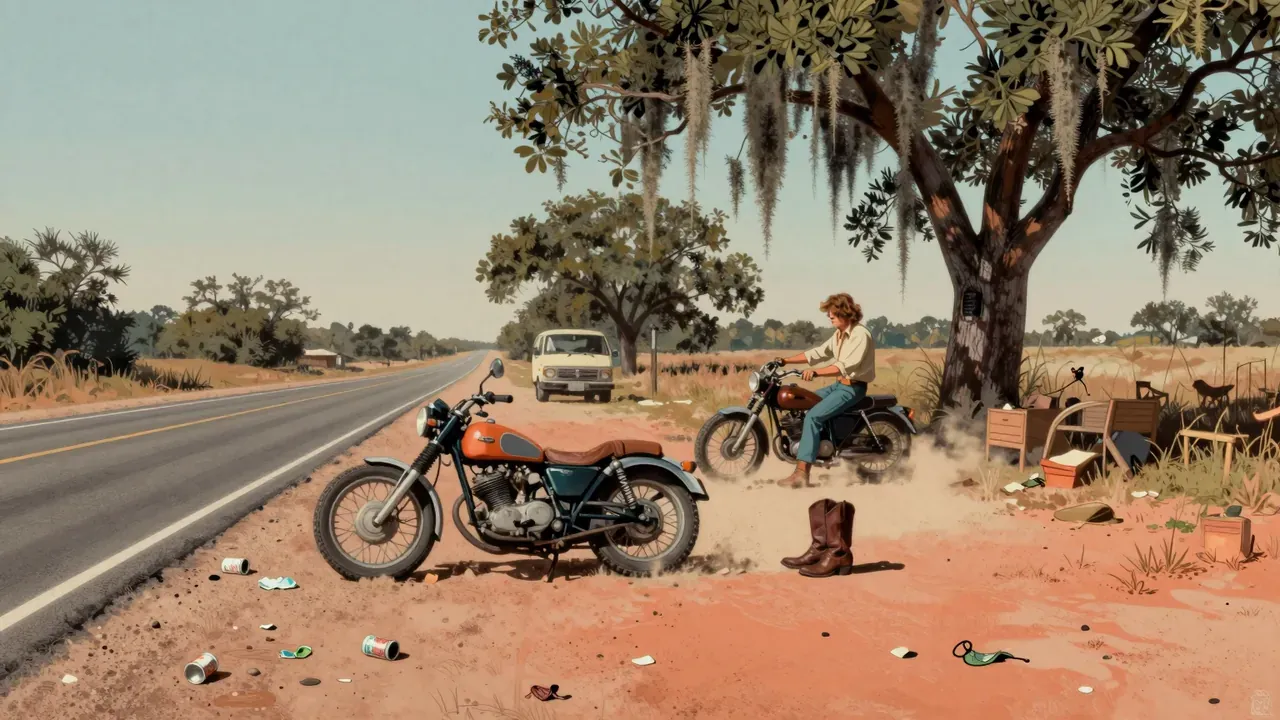
Easy Rider (1969), directed by Dennis Hopper and starring Peter Fonda and Jack Nicholson, follows two bikers travelling cross-country after a drug deal. Shot on location with natural light and improvised dialogue, it captures a fractured America through landscape, gesture, and omission. Its influence on independent cinema is well documented, but its endurance rests on formal discipline — not countercultural myth-making.

13:00

Forty Guns

Samuel Fuller · 1957

Samuel Fuller’s 1957 Forty Guns is a lean, black-and-white Western filmed in CinemaScope, starring Barbara Stanwyck as Jessica Drummond, a landowner who rules Tombstone with forty hired guns. Griff Bonnell (Barry Sullivan) arrives to enforce federal law, not settle scores — and finds himself negotiating not with outlaws but with systems: debt, inheritance, jurisdiction. Fuller’s direction is precise, Joseph F. Biroc’s cinematography exploits width for irony not spectacle, and the film’s moral architecture refuses easy binaries. It is less about taming the frontier than transferring authority — from family to state, from whip to warrant.

13:00

Heaven's Gate

Michael Cimino · 1980

Michael Cimino’s 1980 Western Heaven’s Gate, starring Kris Kristofferson and Christopher Walken, is a visually sumptuous but narratively austere epic loosely based on the Johnson County War. Shot by Vilmos Zsigmond and scored by David Mansfield, it attempts to render class conflict as landscape and duration. Though reviled on release for its cost and length, later reappraisals treat it as a landmark of directorial conviction — flawed, forbidding, and formally uncompromising.

13:00

Hud

Martin Ritt · 1963

Hud (1963), directed by Martin Ritt and starring Paul Newman, is a stark, black-and-white drama set on a Texas ranch during a foot-and-mouth outbreak. It follows the corrosive rivalry between cynical son Hud and principled father Homer, with grandson Lonnie caught between them. James Wong Howe’s austere cinematography and Elmer Bernstein’s sparse score serve a screenplay that treats amorality as fact, not flaw. It won three Academy Awards and endures for its unblinking restraint.

13:00

I Shot Jesse James

Samuel Fuller · 1949

Samuel Fuller’s 1949 directorial debut tells the story of Bob Ford, the man who murdered Jesse James—not as a folk villain but as a psychologically fraying opportunist. Shot cheaply and quickly, it uses stark black-and-white cinematography and tightly written scenes to trace Ford’s moral disintegration after the killing, his failed attempts at respectability, and his inevitable downfall. With John Ireland in a defining early role and Fuller’s signature moral directness, it remains a lean, unsentimental study of infamy, reputation, and the cost of self-deception.

13:00

Jubal

Delmer Daves · 1956

Delmer Daves’s 1956 Western Jubal transposes Othello’s jealousy plot onto a cattle ranch, using CinemaScope not for spectacle but containment. Glenn Ford plays Jubal, a drifter hired as foreman, whose quiet competence provokes Rod Steiger’s resentful Pinky and triggers Ernest Borgnine’s fatal misreading of his wife’s loyalty. With minimal score, naturalistic lighting and restrained performances, the film builds tension through gesture and silence — not action — culminating in a morally ambiguous resolution that refuses catharsis or clarity.

13:00

McCabe & Mrs. Miller

Robert Altman · 1971

Robert Altman’s 1971 film follows a gambler and a madam building a brothel in a rain-lashed Pacific Northwest boomtown—only to face absorption by corporate interests. Shot in British Columbia with Vilmos Zsigmond’s muted cinematography and scored with Leonard Cohen’s songs, it rejects Western conventions in favour of ambient realism, overlapping sound, and structural patience. Its power lies in accumulation, not climax.
13:00

My Darling Clementine

John Ford · 1946

John Ford’s 1946 Western My Darling Clementine reshapes the O.K. Corral legend into a solemn, visually restrained parable about civic order. Henry Fonda’s Wyatt Earp is less a man than a principle — calm, enduring, taciturn — and the film’s power lies in its long takes, muted palette, and refusal to explain. Though heavily edited by the studio and loosely based on fact, it endures as a masterclass in cinematic gravitas: not a story about violence, but about what remains after it.

13:00

One-Eyed Jacks

Marlon Brando · 1961

Marlon Brando’s 1961 Western One-Eyed Jacks follows Rio, a bandit seeking revenge on his former mentor Dad Longworth, now sheriff of Monterey. Shot in VistaVision across California and Mexico, it foregrounds psychological tension over action, with Brando starring and directing. Though critically mixed on release and commercially disappointing, its reputation has deepened over decades for its atmospheric realism, complex male relationships, and formal restraint. Restored in 4K in 2016, it remains Brando’s only film behind the camera.

13:00

Pat Garrett and Billy the Kid

Sam Peckinpah · 1973

Sam Peckinpah’s 1973 revisionist Western follows Pat Garrett’s reluctant pursuit of Billy the Kid, framed by Garrett’s own assassination. Shot in Durango with John Coquillon, scored by Bob Dylan, and written by Rudy Wurlitzer, it rejects heroic narrative in favour of cyclical fatalism—where lawmen are hired hands, outlaws are inconveniences, and violence serves capital, not justice.
13:00

Red River

Howard Hawks, Arthur Rosson · 1948

A 1948 Western following Thomas Dunson’s cattle drive from Texas to Kansas, and the slow, inevitable rupture between him and his adopted son Matt. Built on restraint and duration, it treats authority, succession and landscape as interlocking forces — not as myth, but as gruelling, embodied work.
13:00

Ride in the Whirlwind

Monte Hellman · 1966

Made back-to-back with The Shooting in the Utah desert for under $75,000, Ride in the Whirlwind is Monte Hellman’s austere 1966 western, written and co-produced by Jack Nicholson. Two cowboys become fugitives after a case of mistaken identity, hunted by a vigilante posse across barren terrain. With minimal dialogue, sparse scoring and deliberate pacing, it strips the genre to its procedural bones — asking not who is guilty, but how guilt is assigned, enforced and endured.

13:00

Ride Lonesome

Budd Boetticher · 1959

Ride Lonesome (1959), directed by Budd Boetticher and starring Randolph Scott, is the fourth of the Ranown Westerns — a tightly constructed, Eastmancolor CinemaScope film shot on location in Lone Pine. Bounty hunter Ben Brigade captures a wanted man, then becomes entangled with outlaws and a widow at a besieged swing station, all while drawing closer to a confrontation with the killer of his wife. With a lean script by Burt Kennedy and disciplined craft from cinematographer Charles Lawton Jr. and editor Jerome Thoms, it sustains tension through restraint, silence, and unblinking moral arithmetic.

13:00

Ride with the Devil

Ang Lee · 1999

Ang Lee’s 1999 film Ride with the Devil follows young Missouri bushwhackers during the Civil War, adapting Daniel Woodrell’s novel with deliberate slowness and minimal exposition. Shot by Frederick Elmes and written by James Schamus, it foregrounds domestic endurance over battlefield drama, treating violence as rupture rather than climax. Its themes — loyalty, freedom, gendered labour, and the weight of time — emerge through gesture and silence, not speech. Though commercially overlooked and structurally demanding, it remains a singular, unhurried portrait of war’s human residue.

13:00

Stagecoach

John Ford · 1939

John Ford’s 1939 Stagecoach adapts Ernest Haycox’s short story into a tightly wound Western about nine strangers travelling by stagecoach from Arizona to New Mexico. Trapped together by geography and danger, their prejudices and pretensions erode under shared risk — culminating in childbirth, battle, and quiet acts of grace. Shot in Monument Valley, it launched John Wayne’s stardom and redefined the Western as a vehicle for moral and social inquiry. Its formal rigour remains unmatched; its omissions, particularly regarding Apache people, remain consequential.

13:00

The Ballad of Gregorio Cortez

Robert Milton Young · 1982

Robert Milton Young’s 1982 biographical Western follows Gregorio Cortez, a Mexican-American farmer wrongly accused after a fatal misunderstanding in 1901 Texas. Starring Edward James Olmos and shot on authentic locations—including the real Gonzales courthouse—the film unfolds with documentary restraint, charting twelve years of trials and imprisonment. Its strength lies in structural clarity and historical fidelity; its limitation, in emotional distance. Preserved by the Library of Congress in 2022, it is a rigorous, unsentimental account of jurisdictional violence on the US-Mexico border.

13:00

The Baron of Arizona

Samuel Fuller · 1950

Samuel Fuller’s 1950 film tells the true-ish story of James Reavis, a conman who forged documents to claim the Arizona Territory as his personal fiefdom. Starring Vincent Price as the fastidious fraudster, it unfolds as a procedural drama of paper, precedent, and institutional hesitation — less a Western than a forensic study of how authority is manufactured, authenticated, and eventually unmade.

13:00

The Furies

Anthony Mann · 1950

Anthony Mann’s 1950 Western *The Furies*, adapted from Niven Busch’s novel, follows Vance Jeffords (Barbara Stanwyck) and her tyrannical father T. C. (Walter Huston) in a battle of wills over a New Mexico ranch. With Victor Milner’s restrained cinematography and Franz Waxman’s tense score, the film prioritises psychological architecture over action, building a mythic, morally austere portrait of inheritance as compulsion. Though commercially unsuccessful on release, it has since been reappraised as a key work in Mann’s filmography and a defining ‘Freudian Western’.

13:00

The Gunfighter

Henry King · 1950

The Gunfighter (1950) follows Jimmy Ringo, a legendary gunfighter seeking reconciliation with his estranged wife and son in a small Western town. His reputation precedes him, drawing vengeful challengers and forcing old friends to confront shared pasts. Directed by Henry King and starring Gregory Peck, it rejects genre spectacle in favour of psychological compression, using precise framing, restrained performance, and tightly wound structure to explore fame, fatigue, and the impossibility of escape.

13:00

The Shooting

Monte Hellman · 1966

Monte Hellman’s 1966 low-budget Western The Shooting follows two men and a mysterious woman across the Utah desert, trailed by a black-clad gunman. With no exposition, minimal music, and cinematography shot entirely in available light, it sustains a mood of unresolved tension. Written by Carole Eastman (as Adrien Joyce), it stars Warren Oates, Millie Perkins, Will Hutchins, and Jack Nicholson, and was produced by Hellman and Nicholson for $75,000. Though initially ignored by US distributors, it found arthouse success in Paris and remains a touchstone of minimalist, existential Western filmmaking.

13:00

The Tall T

Budd Boetticher · 1957

The Tall T (1957), directed by Budd Boetticher and starring Randolph Scott, is a tightly wound Western adapted from Elmore Leonard’s 'The Captives'. When ranch hand Pat Brennan is kidnapped alongside a reluctant heiress by three outlaws, the film becomes a study in constrained choice, quiet courage, and the cost of moral consistency. Shot by Charles Lawton Jr. and edited by Al Clark, it relies on stillness, silence, and precise performance over action. Its power lies in what it omits—and what it insists the viewer notice instead.

13:00

Winchester '73

Anthony Mann · 1950

Winchester ’73 (1950), directed by Anthony Mann and starring James Stewart, follows the turbulent passage of a prized Winchester 1873 rifle through seven owners across the American frontier. Structured as a chain of cause and effect rather than a linear quest, it foregrounds economy of form, psychological restraint, and moral ambiguity over myth or spectacle. Though groundbreaking in its use of the 'object-as-plot-engine' and influential on later genre filmmaking, its depiction of Indigenous characters remains reductive and its secondary roles underdeveloped. It rewards attentive, unsentimental viewing.

13:00

Ain't Them Bodies Saints

David Lowery · 2013

David Lowery’s 2013 drama follows a convict’s slow return to the woman and child he left behind, using restrained performances, atmospheric cinematography by Bradford Young, and a hushed score by Daniel Hart to evoke longing as a physical condition. Set against a mythic Texas landscape, it trades genre mechanics for emotional resonance, prioritising mood over momentum and silence over exposition.

13:00

Near Dark

Kathryn Bigelow · 1987

Near Dark (1987) is Kathryn Bigelow’s solo directorial debut: a neo-Western horror film about a young Oklahoma man drawn into a nomadic family of vampires. Shot by Adam Greenberg and scored by Tangerine Dream, it fuses frontier iconography with bodily horror, treating vampirism as irreversible social adoption rather than supernatural affliction. Though it underperformed commercially, its atmospheric precision, committed performances — particularly from Lance Henriksen and Bill Paxton — and genre-blending ambition have secured its status as a cult landmark.

13:00

Sholay

Ramesh Sippy · 1975

A 1975 Hindi-language dacoit western directed by Ramesh Sippy, Sholay follows two outlaws hired to eliminate a ruthless bandit in a rural Indian village. Built on Salim-Javed’s tightly wound script, Dwarka Divecha’s stark cinematography, and R. D. Burman’s iconic score, it synthesises Spaghetti Western pacing, samurai film gravitas, and Indian folk idioms into a mythic, 204-minute epic. Its enduring power lies in formal discipline — in gesture, silence, and repetition — rather than psychological realism or moral ambiguity.

13:00

The Treasure of the Sierra Madre

John Huston · 1948

John Huston’s 1948 adaptation of B. Traven’s novel follows two American drifters and an ageing prospector searching for gold in the Mexican wilderness. As the find is made, trust fractures, language fails, and morality simplifies to survival. With restrained cinematography by Ted McCord, sparse scoring by Max Steiner, and performances anchored by Humphrey Bogart and Walter Huston, the film traces the slow, unsentimental collapse of shared reality under pressure. Shot on location in Mexico and California, it remains a benchmark of psychological realism — austere, exacting, and unyielding.

13:00

No Country for Old Men

Ethan Coen, Joel Coen · 2007

No Country for Old Men follows a welder who finds two million dollars at a drug deal gone wrong, the hitman sent to retrieve it, and the ageing sheriff trailing both of them across 1980 West Texas. Joel and Ethan Coen adapt Cormac McCarthy's novel with unusual fidelity, keeping dialogue sparse and letting Roger Deakins's landscapes and Javier Bardem's performance as Anton Chigurh carry a story that deliberately withholds the confrontation genre habit expects.

13:00

Once Upon a Time in the West

Sergio Leone · 1968

Sergio Leone's 1968 Western, funded by Paramount specifically to secure Henry Fonda, casts the actor against type as a hired killer clearing land for the railroad while a harmonica-playing stranger, played by Charles Bronson, pursues him for reasons the film withholds until its final scenes. Composed with Ennio Morricone's score written and recorded before filming began, and shot across Spain, Utah and Cinecittà, the film ran 165 minutes in Europe to strong box office, but Paramount's 140-minute US cut flopped on release in 1969, a fate the film's reputation has long since reversed.

13:00

Rango

Gore Verbinski · 2011

A pet chameleon stranded in the desert invents a tough-guy persona to survive a lawless town, and the fiction becomes real enough to matter. Gore Verbinski's 2011 animated Western leans on genre homage and an unusually cinematic visual approach for an animated film.

13:00

The Good, the Bad and the Ugly

Sergio Leone · 1966

Sergio Leone's 1966 close to the Dollars Trilogy follows a bounty hunter, an outlaw and a hired gun across the American Civil War as they hunt buried Confederate gold, shot in Techniscope across Spain on a $1.2 million budget that returned nearly $39 million, built around Eli Wallach's performance and Ennio Morricone's score.

13:00

The Searchers

John Ford · 1956

John Ford's 1956 western follows Ethan Edwards, a Confederate veteran played by John Wayne, across years of searching Monument Valley for a niece abducted in a Comanche raid, adapted from Alan Le May's novel and shot in VistaVision and Technicolor, its reputation built on Winton Hoch's photography and an ending that leaves its hero permanently outside the door.

13:00

Unforgiven

Clint Eastwood · 1992

Directed by and starring Clint Eastwood, Unforgiven follows a widowed farmer and reformed killer pulled back into one last bounty job, made on a $14.4 million budget that returned over $101 million and won four Academy Awards including Best Picture, with Gene Hackman's affable, brutal sheriff as its centre of gravity.