The words of it
Pygmalion is a 1938 British film adaptation of George Bernard Shaw’s 1913 stage play, directed jointly by Anthony Asquith and Leslie Howard. It aims to translate Shaw’s linguistic satire and class critique from the proscenium arch to the screen without softening its intellectual rigour or moral ambiguity. The film does not seek to sentimentalise Eliza Doolittle’s transformation, nor to resolve her relationship with Henry Higgins into romance; it preserves the play’s refusal of conventional closure. Its ambition is structural as much as thematic: to retain Shaw’s dialogue-driven architecture while using cinematic tools — editing, sound design, spatial framing — to deepen rather than dilute his argument about speech as social currency. It treats elocution not as self-improvement but as coercion, and education not as liberation but as reconditioning. The screenplay, co-written by Shaw himself alongside Lipscomb, Lewis and Dalrymple, tightens exposition, adds the ballroom sequence and Count Karpathy, and deliberately retains ‘Not bloody likely!’ — a line whose inclusion signals fidelity not to realism but to provocation. Word count: 142
The sound of it
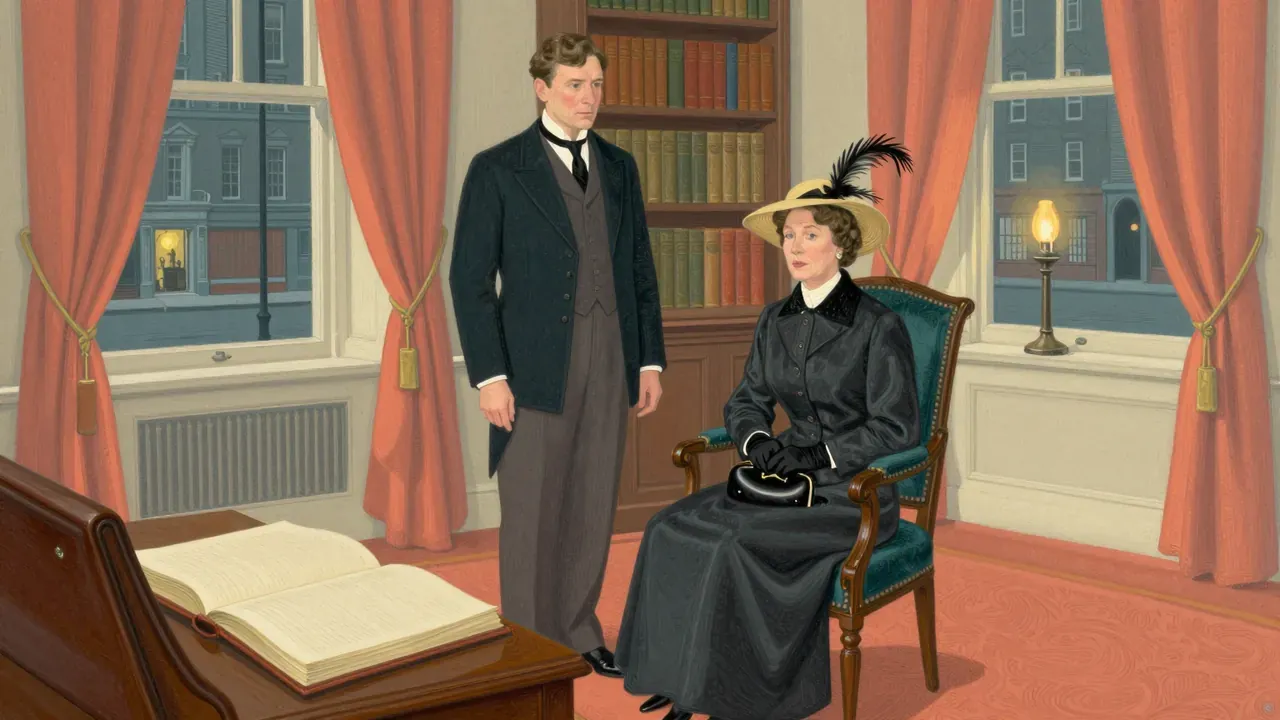
The story follows Eliza Doolittle’s passage from Covent Garden flower seller to polished mimic under Professor Higgins’s tutelage, culminating in her successful deception of high society — and her subsequent rejection of his emotional neglect. Wendy Hiller anchors the film with physical precision: her posture shifts, her voice tightens and loosens like a tuning fork, her gestures shrink then expand with social confidence. Leslie Howard plays Higgins with clipped diction and restless energy, never softening his arrogance into charm. Harry Stradling’s cinematography avoids expressionist flourish; interiors are lit with naturalistic restraint, favouring mid-shots that hold both speaker and listener in frame, preserving the play’s conversational balance. David Lean’s editing — his first major credit — sustains rhythm without embellishment, particularly in the montage of Eliza’s training, where repetition and duration replace exposition. Arthur Honegger’s score remains discreet, underscoring irony rather than emotion. The production design by Laurence Irving grounds the film in interwar London: no sets feel theatrical, yet none pretend to documentary realism. Word count: 156
The cost of it
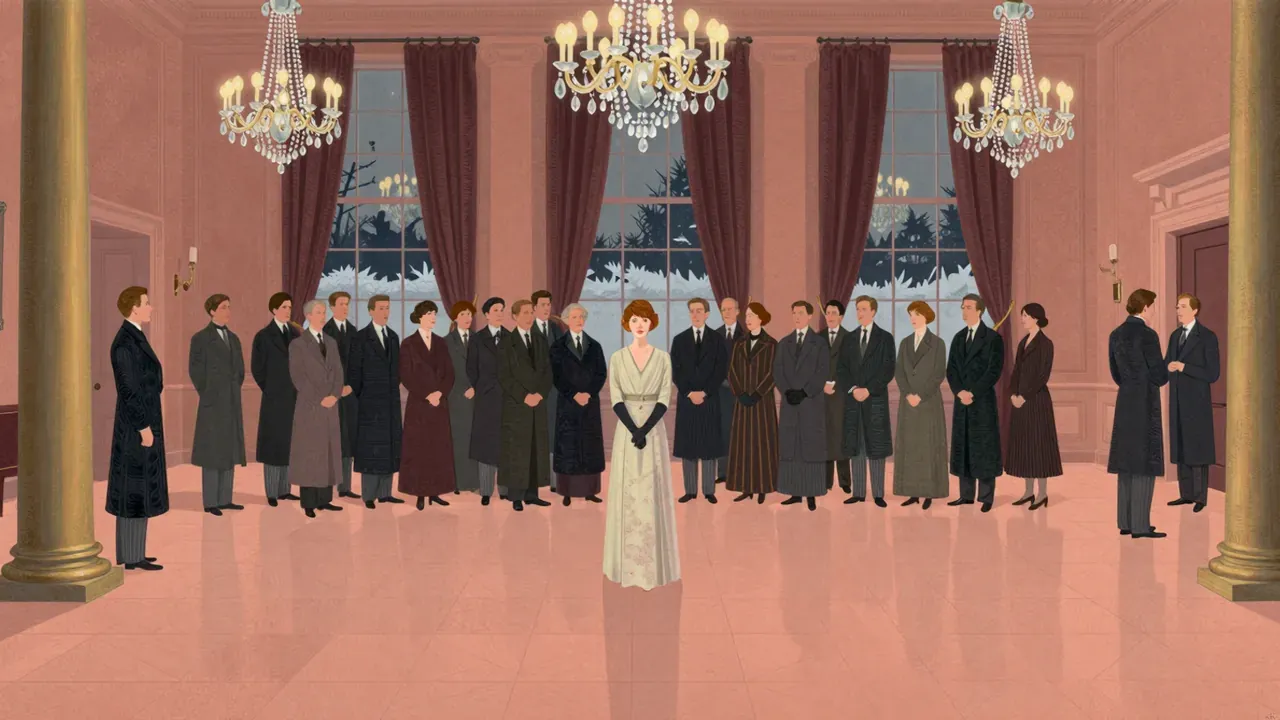
What lands is the film’s unblinking clarity about power. Eliza’s triumph at the embassy ball is undercut not by failure but by indifference: Higgins and Pickering celebrate their own cleverness while ignoring her exhaustion and agency. That moment crystallises the film’s central tension — between technical success and human cost. Hiller’s performance lands because it refuses uplift: her Eliza is neither grateful nor broken, but recalibrating. The ballroom scene works precisely because it is not glamorous — the gowns are stiff, the music polite, the guests politely baffled — making Eliza’s linguistic mastery all the more unnerving. Shaw’s dialogue lands intact: the wit is dry, the logic relentless, the jokes land not through timing but through implication. Even minor roles — Wilfrid Lawson’s Alfred Doolittle, Cathleen Nesbitt’s Mrs Higgins — function as calibrated counterweights, each articulating a different facet of class negotiation. The film’s restraint makes its barbs sharper: when Eliza throws Higgins’s slippers, it reads not as tantrum but as punctuation. Word count: 154
The edges of it
What does not land is the film’s attempt to widen its social canvas beyond its core quartet. The Eynsford-Hill family remain sketchily drawn, their function purely schematic — Freddy’s infatuation feels less like attraction than narrative necessity. The Count Karpathy, though invented by Shaw, lacks dramatic weight; his role is expositional, and his Hungarian accent (performed by David Tree) sits uneasily beside Hiller’s meticulously calibrated phonetics. Some transitions feel abrupt: Eliza’s departure from Higgins’s house occurs off-screen, leaving her motivation under-explored. The film’s fidelity to the play also means it inherits its structural limitations — long stretches of dialogue-heavy exposition, particularly in the early lessons, test pacing without offering visual compensation. There is little sense of London beyond the drawing rooms and Wimpole Street; the city exists only as backdrop or dialect source. The editing, though disciplined, rarely surprises: Lean’s montage is efficient but unadorned, missing opportunities for rhythmic or tonal variation. Word count: 150
The rules of it
The themes that matter are language as class weapon, education as assimilation, and autonomy as economic claim. The film treats speech not as neutral tool but as inherited property — something Eliza must steal, mimic, and ultimately repurpose. Her threat to teach elocution herself is not romantic rebellion but material assertion: she names the terms on which she will be paid, not praised. Higgins’s belief that he can ‘make’ a lady exposes the violence of benevolent paternalism, while Alfred Doolittle’s sudden respectability reveals how moral worth is assigned by income, not character. Mrs Higgins’s quiet disgust at her son’s treatment of Eliza frames the film’s ethical centre: dignity is not conferred by accent, but demanded through reciprocity. The film resists psychological interiority — there are no flashbacks, no voiceover — insisting instead that identity is performed, observed, and policed in real time. Its critique of meritocracy remains current: success is measured by who accepts you, not who you become. Word count: 148
The terms of it
This film is for viewers who value dialogue over spectacle, irony over sentiment, and unresolved endings over catharsis. It suits those familiar with Shaw’s work or interested in the mechanics of adaptation — how a stage-bound text negotiates camera, sound, and duration. It rewards attention to vocal texture, spatial hierarchy, and the politics of framing. It is not for viewers seeking emotional resolution, romantic payoff, or visual flamboyance; those expecting the warmth of My Fair Lady will find Pygmalion withholding. Anyone requiring narrative momentum above thematic density may grow impatient during the lesson sequences. Those who dislike British class satire, or who read Higgins’s behaviour as merely eccentric rather than structurally oppressive, will miss the film’s point. A viewer who values character psychology over social analysis would likely prefer the musical. Word count: 147
The end of it
Yes, it is worth your evening — provided you watch it as a deliberate, spoken artefact rather than background entertainment. Its ninety minutes pass with the taut economy of a well-argued essay: every scene advances the thesis, no line wastes breath. It gains force from its lack of compromise: no musical numbers, no softened edges, no concession to Hollywood convention. Those who dismiss it as ‘talky’ mistake density for dullness. Its pleasures are intellectual and auditory — the thrill of precise diction, the satisfaction of logical escalation, the shock of a swear word landing exactly where Shaw placed it. It is not for everyone, but for its intended audience — readers of Shaw, students of screenwriting, lovers of mid-century British craft — it remains unmatched in its field. To call it ‘dated’ mistakes its rigour for irrelevance. Word count: 149