The sound of it
Don’t Play Us Cheap is a 1973 musical film written, directed, and scored by Melvin Van Peebles, adapting his own 1970 stage musical — itself drawn from his 1967 French-language novel La fête à Harlem. It sets a theological farce in a Harlem apartment on a Saturday night: two demons, Brother Dave and Trinity, take human form to sabotage a birthday party thrown by Miss Maybell for her niece Earnestine. Their mission unravels when Trinity falls for the hostess and the guests collectively resist disruption through song, wit, and communal presence. Van Peebles intends this not as escapism but as philosophical theatre — a deliberate counterweight to the grim social realism of his concurrent stage work Ain’t Supposed to Die a Natural Death. The film proposes that resilience is enacted, not declared; that joy, rhythm, and self-determination are political acts. Its structure rejects linear cause-and-effect in favour of episodic, song-driven portraiture — less ‘what happens next’ than ‘what lives here, now, and how does it sound?’ It is an argument made in gospel cadence, doo-wop harmony, and Brechtian interruption: that Black life in early-1970s Harlem is neither pathology nor protest alone, but a sustained, inventive, embodied affirmation. (158 words)
The space of it
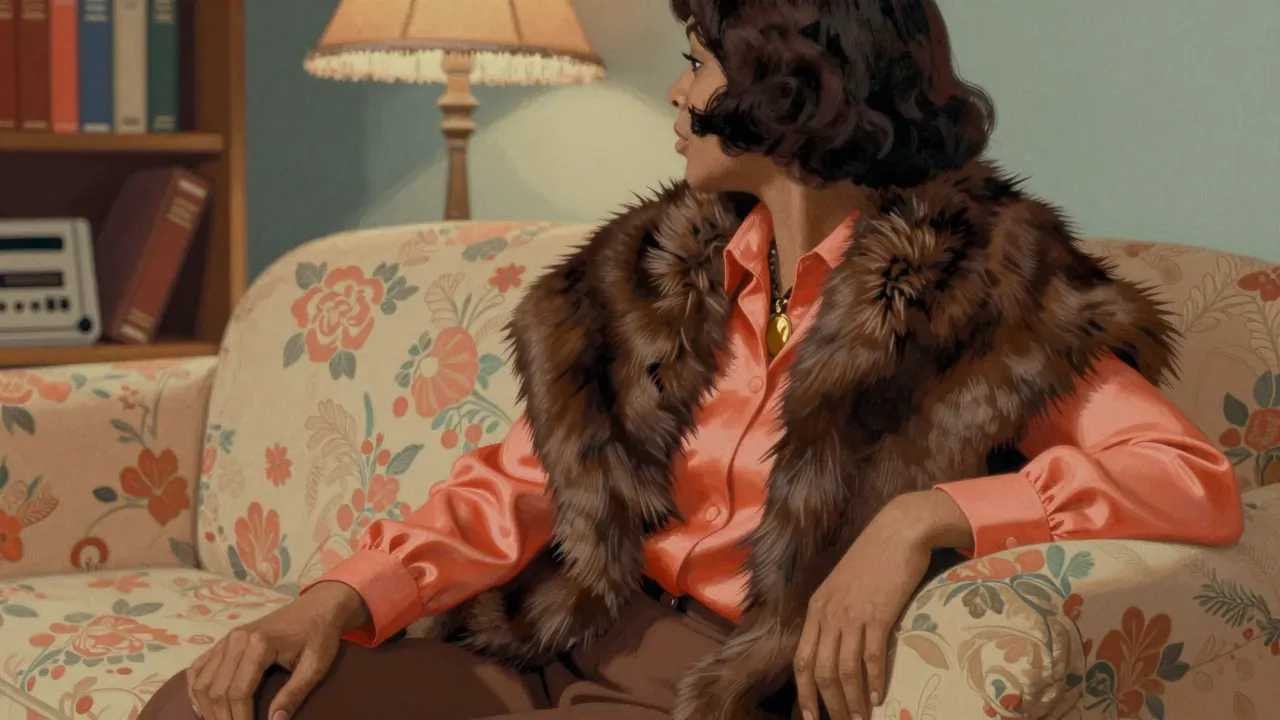
The story unfolds in real time across one cramped apartment, its plot thin by design — a pretext for performance rather than a scaffold for suspense. Avon Long and Joe Keyes Jr. play the imps with vaudevillian timing, their physicality rooted in minstrel-inflected gesture but stripped of mockery by intention and context. Esther Rolle’s Miss Maybell anchors the film with warmth and unflappable authority; Rhetta Hughes’ Earnestine carries quiet gravity, her romance with Trinity emerging not through dialogue but through shared glances and vocal interplay. Van Peebles shoots on location with handheld immediacy, using available light and tight framing to compress space and heighten intimacy. The music — recorded live on set or dubbed with studio precision — functions diegetically: characters select records, argue over lyrics, sing along mid-conversation. Editing is rhythmic, not narrative — cuts land on downbeats, not revelations. Costume and set decoration are precise: Malcolm X and Martin Luther King portraits hang beside Isaac Hayes’ Black Moses album cover; Mrs. Johnson’s fake fur signals class pretension without exposition. There are no establishing shots, no voiceover, no exposition — only presence, reaction, and response. (159 words)
The music of it
What lands is the sheer density of lived texture: the way laughter overlaps song, how arguments about marriage law dissolve into dance, how a gospel melody underpins secular defiance. The film’s tonal confidence holds — it never winks at its own allegory, nor apologises for its theatricality. The musical numbers succeed not as spectacle but as social choreography: background singers sway in unison while soloists testify, turning the party into a chorus of collective witness. Trinity’s internal conflict registers most clearly in the audio mix of ‘I’m a Bad Character’, where dissonance fractures Keyes Jr.’s voice without explaining why. The Johnsons’ exposure as impostors works because their affectation is rendered physically — the stiff posture, the forced laugh, the ill-fitting coat — not through exposition. Even the demons’ failure feels earned: they are out-sung, out-danced, out-lived. The film trusts its audience to parse meaning from gesture, rhythm, and juxtaposition — and rewards that trust with moments of sudden, unforced clarity: a glance held too long, a record needle lifted mid-phrase, a door left open just as the music swells. These are not flourishes but functions — the grammar of its optimism. (159 words)
The resistance of it
What does not land is the structural looseness when momentum stalls — some scenes linger past their rhythmic logic, particularly the extended comic routines between minor characters that lack the thematic weight or vocal invention of the central performances. The allegorical framework occasionally hardens into didacticism, especially in monologues that name ‘the man’ or ‘whitey’ without embedding those terms in action or irony. The film’s refusal of cinematic convention becomes a liability in transitions: scene changes rely on abrupt cuts or blackouts that interrupt flow rather than punctuate it. Some supporting performers — particularly those playing partygoers with minimal lines — remain types rather than individuals, their roles defined more by function (‘the sceptic’, ‘the flirt’, ‘the elder’) than by development. The decision to shoot on grainy 16mm stock, while authentic to its production circumstances, limits visual nuance in low-light interior scenes, flattening facial expression at key emotional junctures. And though the film’s celebration of community is its core strength, it risks flattening internal difference — generational, ideological, spiritual — within that community, presenting consensus as natural rather than negotiated. A more restless or contradictory energy might have sharpened its thesis. (159 words)
The talk of it
The themes that matter are resilience as practice, not promise; community as improvisation, not doctrine; and joy as resistance that refuses to be legible to power. The house party stands for continuity — not as nostalgia but as active preservation, where elders pass down recipes, teenagers test new rhythms, and lovers negotiate old taboos. The demons represent external forces of division — not just racism or capitalism, but any logic that insists Black life must be framed by lack, trauma, or reaction. Their defeat is not violent but aesthetic: they lose when the party chooses its own soundtrack, its own rules, its own definitions of fidelity and family. The ‘quarter-separated’ marriages signal a class-based ethics of care — one that bypasses legal or religious sanction in favour of mutual consent and daily reciprocity. The portraits on the wall — Malcolm X, King, Hayes, Van Peebles — are not icons but citations: evidence of lineage, not hierarchy. This is not a film about overcoming adversity so much as refusing to let adversity set the terms of existence. Its philosophy is pragmatic, not utopian: change begins when you decide what music to play, who to invite, and whether to open the door. (159 words)
The change of it
This film is for viewers who value musical theatre as social document, who find formal experimentation compelling when it serves character and place, and who approach 1970s Black cinema not for historical salvage but for living syntax. It rewards attention to vocal timbre, spatial choreography, and lyrical slant-rhyme. It is not for those who require psychological realism, tightly wound plotting, or visual polish — nor for those who read allegory as instruction rather than invitation. Anyone expecting the grit of Sweet Sweetback or the documentary urgency of later Blaxploitation will misread its tone. Those who associate ‘musical’ with spectacle or romance may mistake its domestic scale for thinness. Its pleasures are cumulative, not climactic; its politics embedded, not announced. A viewer who needs moral clarity on screen may find its ambiguity frustrating; one who values ambiguity as a condition of freedom will find it generous. It assumes familiarity with gospel phrasing, Harlem vernacular, and the sonic vocabulary of Stax Records — but does not exclude those learning it. Its ideal viewer arrives ready to listen first, interpret after. (159 words)
The end of it
Yes, it is worth your evening — provided you watch it as Van Peebles intended: not as a relic but as a score to be inhabited. Its ninety-minute runtime moves with the breath of a live set, its repetitions building like call-and-response, its silences weighted with implication. It repays rewatching: new details surface in costume, in background chatter, in the way a single chord resolves. It is not ‘entertaining’ in the passive sense — it asks for participation in its rhythm, its logic, its refusal of easy binaries. Those who dismiss it as dated or slight have likely approached it as illustration rather than argument. Critics who call it ‘defensive’ or ‘heroic’ miss its humility: it does not claim victory, only persistence. Its value lies in how it holds space — for contradiction, for noise, for love that emerges mid-argument. To call it ‘lighter’ than Van Peebles’ other work is to misunderstand its weight: lightness here is discipline, not absence. If you have ninety minutes to spend with people who know how to throw a party — and why it matters — this is where to be. (159 words)