What the ghost is for
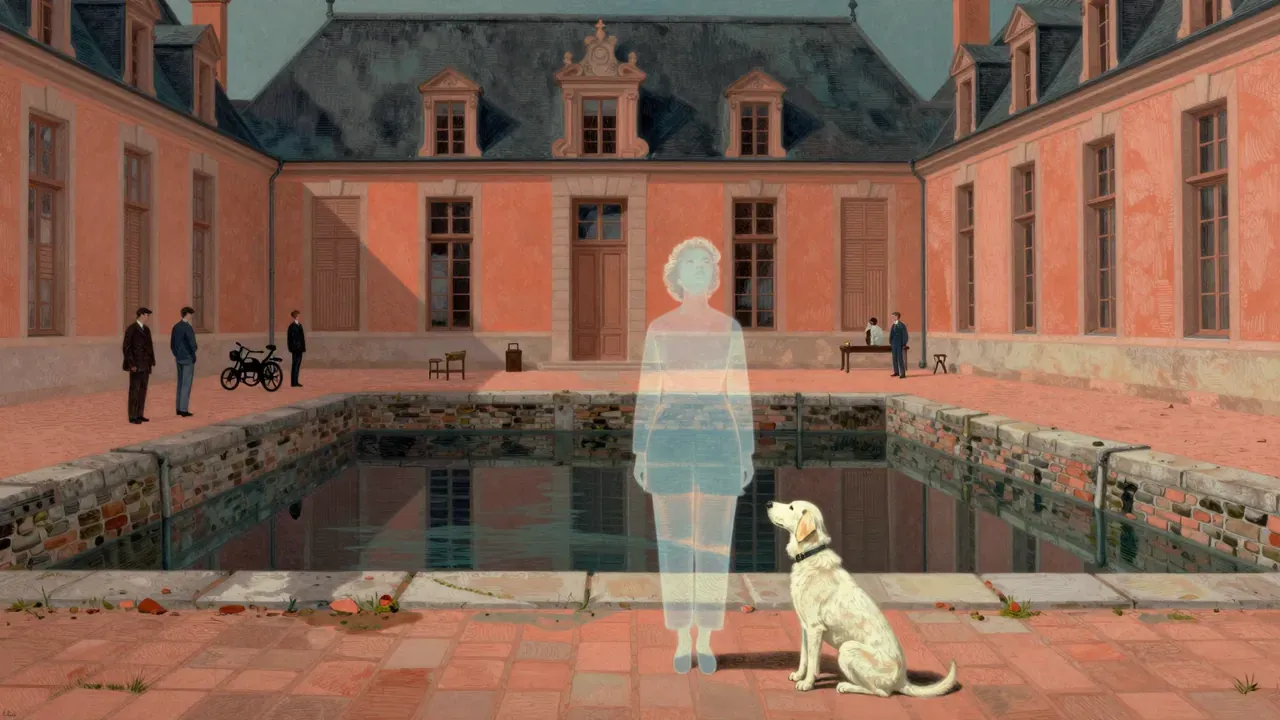
Sylvie et le fantôme is a French postwar fantasy-comedy that uses the ghost story not as horror or allegory but as a delicate, self-aware mechanism for examining adolescence, inheritance, and the porous line between belief and performance. It does not aim to frighten, nor to satirise superstition outright; rather, it treats the supernatural as a shared fiction — one the characters negotiate, rehearse, and revise in real time. The film’s ambition lies in its structural play: the ghost is both real and staged, visible only through optical trickery that mirrors how belief itself is constructed — layer upon layer of reflection, suggestion, and consent. It is not a film about whether ghosts exist, but about what happens when a sixteen-year-old girl insists they might — and when the adults around her choose, for kindness or convenience, to let the fiction hold. Its tone is gently ironic but never cruel, its pacing unhurried, its stakes emotional rather than existential. It belongs to no tradition of Gothic excess, nor to the surreal rupture of contemporaneous avant-garde work; instead, it occupies a quiet, sunlit corner of French studio craftsmanship, where fantasy is domesticated, not exorcised.
How belief is staged
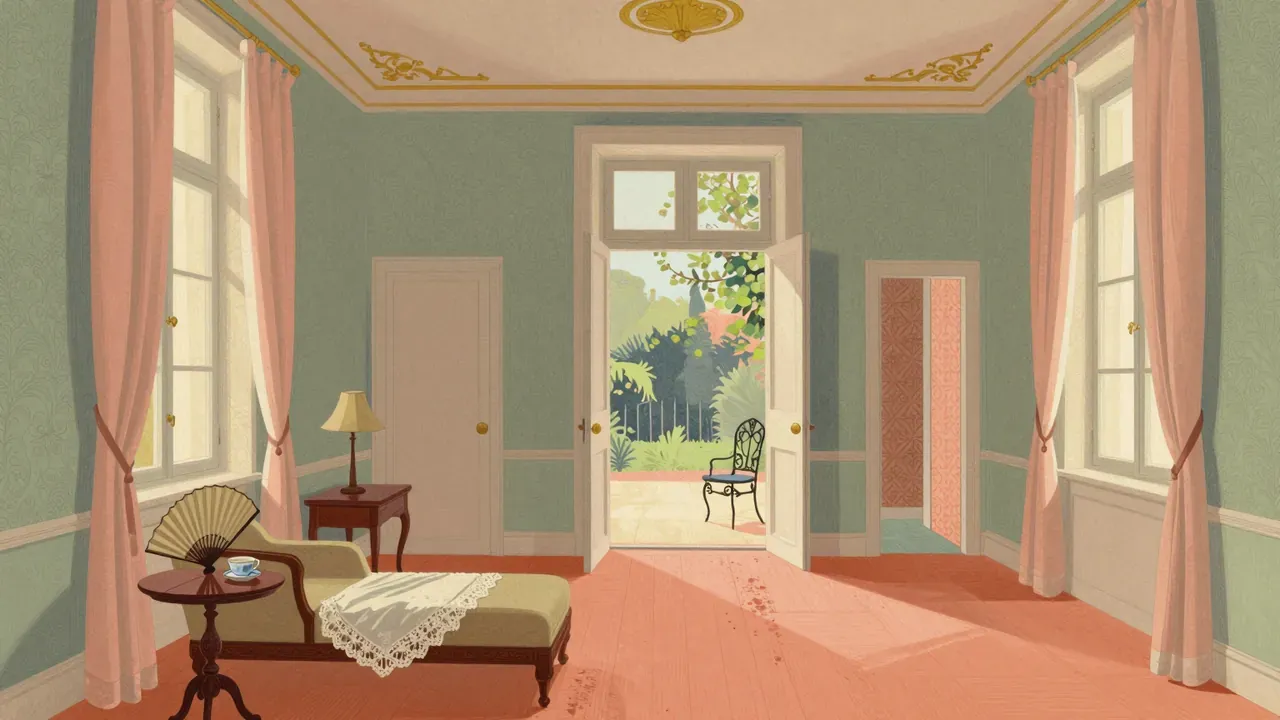
The film works through precise orchestration: Jean Aurenche’s script parcels out revelation with the patience of a chamber play, allowing each character’s motivation — Sylvie’s yearning, Ramure’s opportunism, Frederick’s diffidence, the Baron’s weary pragmatism — to settle without exposition. Philippe Agostini’s cinematography avoids expressionist shadows; instead, he keeps interiors bright and legible, the château’s grandeur unthreatening, its corridors wide enough for three men in sheets to chase each other without claustrophobia. Jacques Tati’s ghost is silent, gliding, physically light — a contrast to the grounded, slightly rumpled presence of François Périer’s thief or Odette Joyeux’s Sylvie, whose performance rests on stillness and watchfulness rather than flourish. Madeleine Gug’s editing sustains rhythm without urgency, letting scenes breathe across cuts. The Pepper’s Ghost effect is deployed not as spectacle but as punctuation — a visual corollary to Sylvie’s quiet conviction. Even René Cloërec’s score remains discreet, underscoring mood without dictating it. Nothing here is overstated; everything is calibrated to the scale of a birthday party, a stolen cameo, a moat jump.
Where the paradox holds
What lands is the film’s central paradox: that sincerity and artifice coexist without contradiction. Sylvie’s belief in Alain feels real because it is rooted in tangible things — the portrait’s texture, the dog’s barking, the secret stair’s worn stone — not mystical certainty. The comedy arises not from slapstick but from alignment: when Ramure, Frederick, and Anicet all don identical robes, their confusion is social, not physical; the humour lies in how easily identity dissolves when costume and context converge. Pierre Larquey’s Baron is quietly devastating in his exhaustion — a man who sells an ancestor’s portrait not for greed but to keep the roof on, then improvises a ghost to spare his daughter grief. The final image — Alain rising with the star, not vanishing but becoming part of the sky — lands because it refuses resolution: he does not stay, nor does he cease to matter. That ambiguity, held without strain, is the film’s quiet triumph. It trusts the audience to sit with wonder without demanding explanation, and that trust is repaid.
Where the illusion frays
What does not land is the attempt to give Ramure and Frederick equal emotional weight as suitors. Neither character is given sufficient interiority beyond function: Ramure is charm and reflex, Frederick is decency and bouquet-holding. Their rivalry lacks friction because their differences are schematic, not lived — one steals, the other offers flowers, and Sylvie’s attraction to either remains unexamined. Julien Carette’s majordomo Hector is underused, his potential for farce muted by the film’s restraint. The subplot involving the art dealer’s son feels tacked on, its moral contrast (greed versus compassion) too blunt for the rest of the film’s nuance. There is also a slight tonal dissonance in the police’s arrival: their procedural gravity jars with the prevailing air of gentle make-believe. These moments do not break the film, but they thin its consistency — like a single note slightly flat in an otherwise tuned ensemble. They suggest where Autant-Lara’s control slips, not from haste, but from overconfidence in the script’s ability to carry weight it was not built to bear.
What lives in the château
The themes that matter are inheritance as both burden and invitation, and belief as practice rather than doctrine. The château is not just setting but archive — its portraits, passages, and heirlooms are repositories of stories that Sylvie must decide whether to inherit, reinterpret, or discard. Her fascination with Alain is less romantic than archaeological: she digs into him as a way of understanding her grandmother, her lineage, her own impending adulthood. The ghost’s invisibility and flight are not powers but conditions — markers of what cannot be owned, only witnessed. The film treats class not as critique but as texture: the Baron’s debt is real, but his dignity is intact; Ramure’s theft is criminal, yet his loyalty to Sylvie feels more honest than the art dealer’s transactional ethics. Time is another theme — not linear, but folded: the duel, the portrait, the secret stair, the birthday — all coexist in the château’s architecture, making history something you walk through, not study. This is a film about how the past stays present, not as weight, but as possibility.
Who walks these stairs
This film is for viewers who value patience, precision, and the quiet resonance of understatement — those who find emotional weight in a glance, a pause, or the way light falls across a staircase. It suits fans of mid-century French studio craft, lovers of Jacques Tati’s early physicality, or anyone drawn to fantasies that treat magic as etiquette rather than explosion. It is not for those who require narrative propulsion, psychological exposition, or clear moral binaries. Viewers expecting the whimsy of Amélie or the darkness of Le Château de verre will find Sylvie et le fantôme too restrained; those seeking genre thrills or romantic clarity will leave unsatisfied. Some may call it slight — and they would be right, if ‘slight’ meant insubstantial. But its lightness is deliberate, structural: like the ghost himself, it floats just above the ground, refusing to anchor itself in heaviness. To dismiss it as minor is to mistake economy for emptiness.
Why it rises
Yes, it is worth your evening — provided you arrive without expectation of momentum or revelation, and with willingness to attend to small things: the rustle of a sheet, the bark of a dog at a portrait, the way a star held in spectral hands catches the light. It rewards attention, not analysis; it lingers, it does not insist. Those who dislike films where nothing much happens — where conflict is resolved by moat-jumping, not courtroom drama — will find it tedious. A viewer who values narrative efficiency over atmosphere, or who needs characters to articulate their feelings aloud, would reasonably prefer something else. What would change the verdict? A tighter focus on Sylvie’s inner life, or a bolder embrace of the absurd — but that would make it a different film, not a better one. Its worth lies precisely in its refusal to overstate.