A pest-control duo dragged into a monster plot
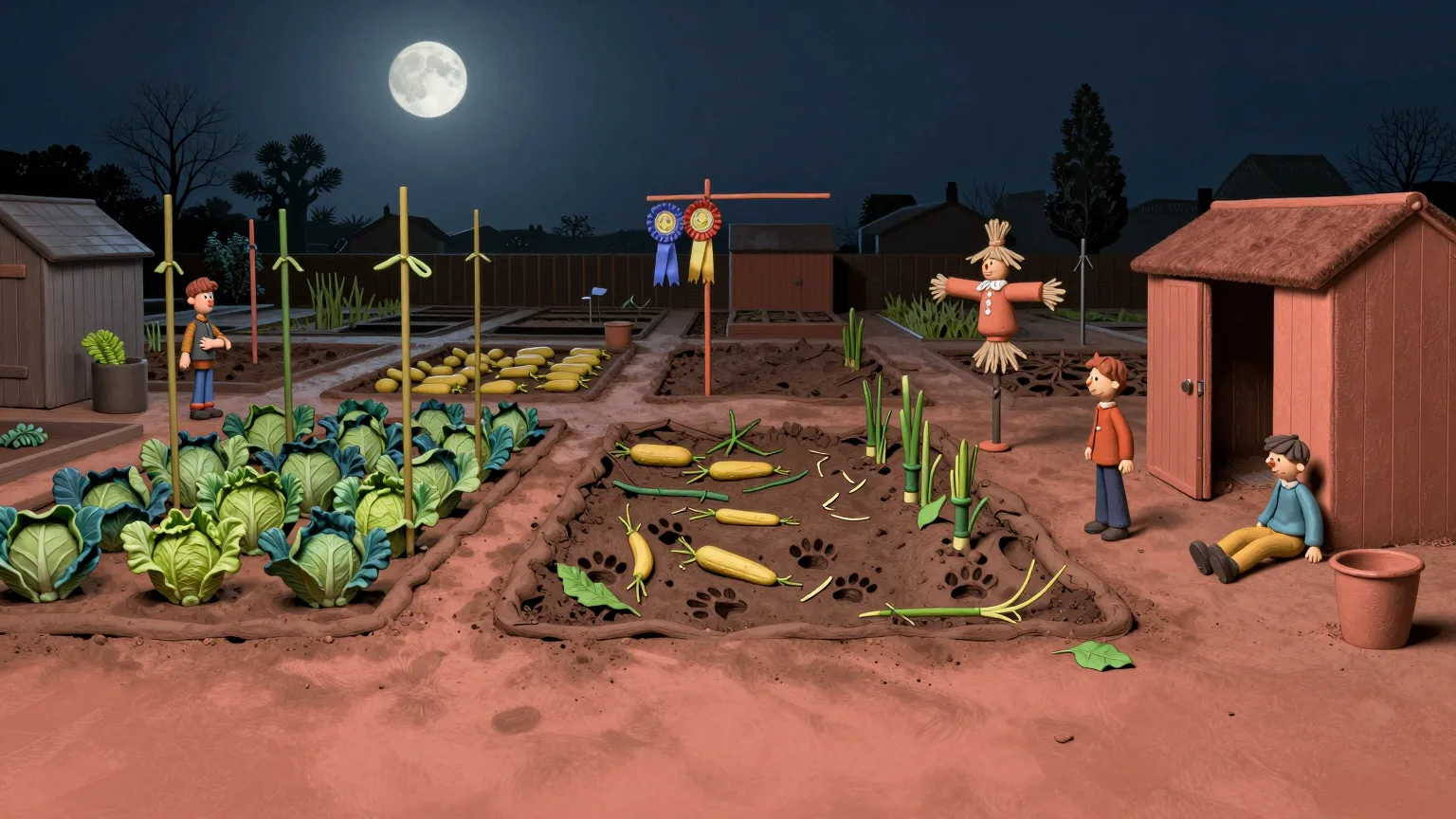
Wallace & Gromit: The Curse of the Were-Rabbit expands the stop-motion short-film duo into a feature-length monster-movie parody, with the inventor Wallace and his silent dog Gromit running a humane pest-control business ahead of the town’s annual giant-vegetable competition, only to find their rabbit-brainwashing experiment gone wrong when Wallace’s mind fuses with one of the captured rabbits. Nick Park and Steve Box direct, describing their own film as the world’s first vegetarian horror film, and the plot escalates from pest control into a full monster hunt once a giant, vegetable-devouring Were-Rabbit starts terrorizing the town’s gardens on full-moon nights.
Studio notes pushing against the film’s own instincts
Production began in September 2003 under a co-financing arrangement between Aardman and DreamWorks Animation that followed the two studios’ earlier collaboration on Chicken Run, and DreamWorks pushed repeatedly for changes aimed at broader American appeal, at one point suggesting Wallace’s beat-up Austin A35 van should look trendier, a note Park rejected because he felt the vehicle’s old-fashioned look made the film funnier through its own sincerity about being unfashionable. The title itself was changed late from The Great Vegetable Plot after market research came back against it, a small decision that nonetheless signals how much the studio’s commercial instincts shaped the finished film around the edges even where Park held his ground on tone. Julian Nott, composer for the prior Wallace & Gromit shorts, returned to keep the score’s chamber-orchestra scale consistent with the series’ earlier, smaller-budget identity.
Playing a vegetable contest with horror-movie gravity
The film’s commitment to treating a vegetable-growing competition with the full gravity of a horror-movie plot is what makes the parody work rather than just referencing old monster films for recognition; the Were-Rabbit’s rampages are staged with real full-moon dread even though the stakes are prize marrows. Gromit, communicating entirely through expression and body language as established in the earlier shorts, carries much of the plot’s emotional weight without a line of dialogue, and his skepticism toward Wallace’s inventions functions as the story’s real moral compass. Ralph Fiennes’s Lord Victor Quartermaine, a hunter more interested in winning Lady Tottington’s affection and fortune than in actually solving the town’s rabbit problem, gives the film’s satire of class aspiration a specific, punchable target.
Where the transformation logic bends to the scene
Some of the plot mechanics around Wallace’s mind-fusion with the rabbit Hutch resolve through convenient cross-cutting rather than a fully worked-out internal logic, asking the audience to accept the transformation’s rules shifting slightly to suit whatever the scene needs next. A handful of gags aimed at contemporary American audiences, added at the studio’s urging, sit at a different register from the film’s otherwise thoroughly English sensibility and read as slightly grafted-on rather than native to the world. The giant fake female rabbit built as a trap, an elaborate set piece in its own right, resolves in a single quick beat once it fails, which makes the effort put into building it feel slightly disproportionate to its payoff.
Genteel aspiration as the real target
The film’s real target is genteel English aspiration: the vegetable competition, Lady Tottington’s manor, and Lord Victor’s fortune-hunting all satirize a specific, parochial version of status-seeking that has nothing to do with the monster plot layered over it. Wallace’s accidental transformation, caused by his own vanity about weight loss rather than any external malevolence, keeps the film’s version of the classic werewolf curse rooted in a mundane, self-inflicted flaw rather than a tragic fate imposed from outside. Gromit’s unwavering loyalty despite Wallace’s repeated carelessness gives the film’s comic plot an emotional throughline about friendship absorbing someone else’s mistakes without complaint.
Who the English parody and stop-motion craft suit
This suits viewers who enjoy genre parody rooted in specifically English social comedy, and anyone with affection for stop-motion’s tactile character work, since the Were-Rabbit’s design and the vegetable-competition set pieces carry a handmade quality studio notes never fully sanded off. It also rewards fans of the earlier Wallace & Gromit shorts, since Gromit’s silent performance style depends on that established grammar. It’s a less satisfying choice for viewers wanting a monster movie played with real menace throughout, since the film’s commitment to comedy means the horror elements never threaten to actually unsettle.
Why 85 minutes of comic horror earned the Oscar
At 85 minutes, the film moves from pest-control setup to full monster-hunt climax without slack, and it became the first stop-motion film to win the Academy Award for Best Animated Feature, alongside a BAFTA for Best British Film, suggesting the finished product satisfied both craft-focused and mainstream audiences. A 6.5x return on its $30 million budget held up despite the film underperforming DreamWorks’ domestic expectations, doing notably better overseas. Worth the evening for Gromit’s silent comic timing alone, and for a monster movie that never once loses its sense of humor about its own premise.