filmbriefs
Topic

Adaptation

A work moved between media, and what does not survive the move.

210
in film
13:00
average
2730 min
in total
372
across the network
Adaptation across the network →
All briefs210
13:00

3:10 to Yuma

Delmer Daves · 1957

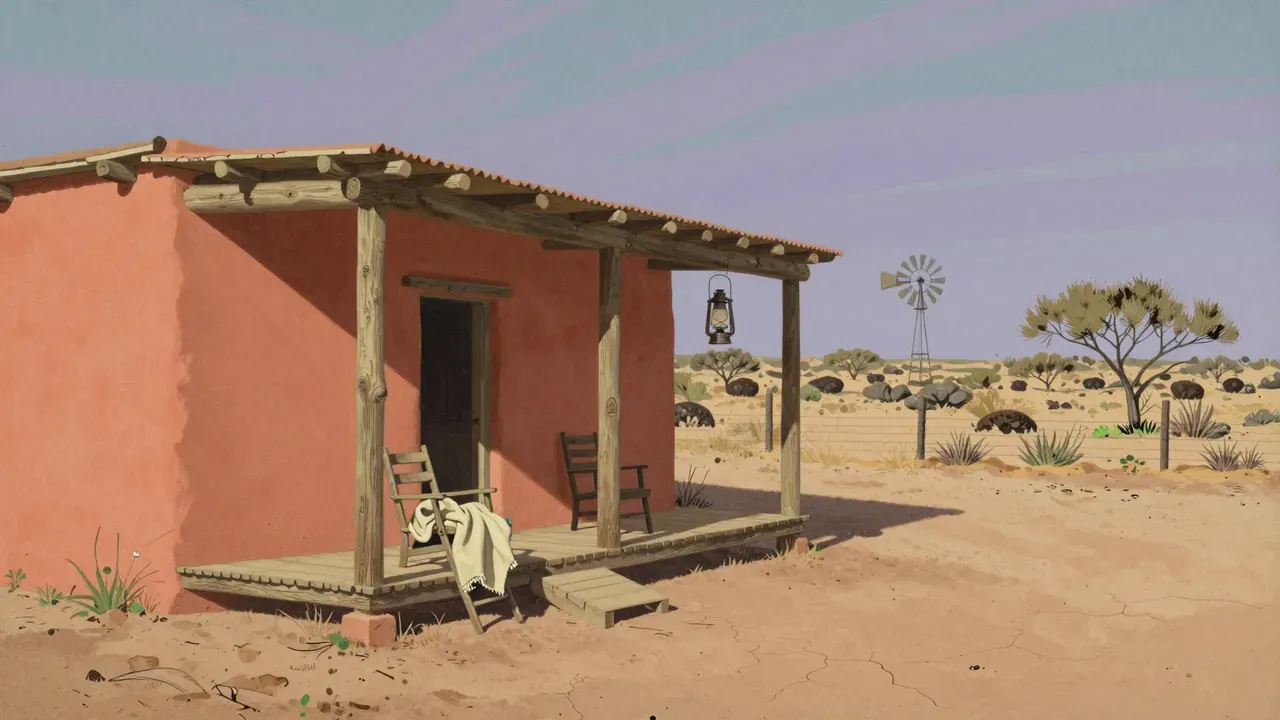
Delmer Daves’ 1957 Western 3:10 to Yuma adapts Elmore Leonard’s taut short story into a study of obligation under pressure. Rancher Dan Evans agrees to escort outlaw Ben Wade to the 3:10 train for Yuma, facing ambush, betrayal, and his own wavering resolve. Shot by Charles Lawton Jr. with sun-bleached realism and scored sparingly by George Duning, the film builds suspense through pacing, performance, and moral granularity — not spectacle. It was preserved by the Library of Congress in 2012 for its cultural and aesthetic significance.

13:00

A Master Builder

Jonathan Demme · 2013

Jonathan Demme’s 2013 film A Master Builder adapts Ibsen’s play into a tightly contained, single-set drama starring Wallace Shawn as the ageing architect Halvard Solness. With Declan Quinn’s restrained cinematography and Tim Squyres’ unhurried editing, it foregrounds language, pause and presence over action or spectacle. Julie Hagerty and Lisa Joyce deliver precise, understated performances that deepen the film’s study of memory, guilt and the slow collapse of authority. Though its formal austerity divides opinion, it remains a rare and committed act of textual fidelity — demanding, quiet, and morally unblinking.

13:00

A Night to Remember

Roy Ward Baker · 1958

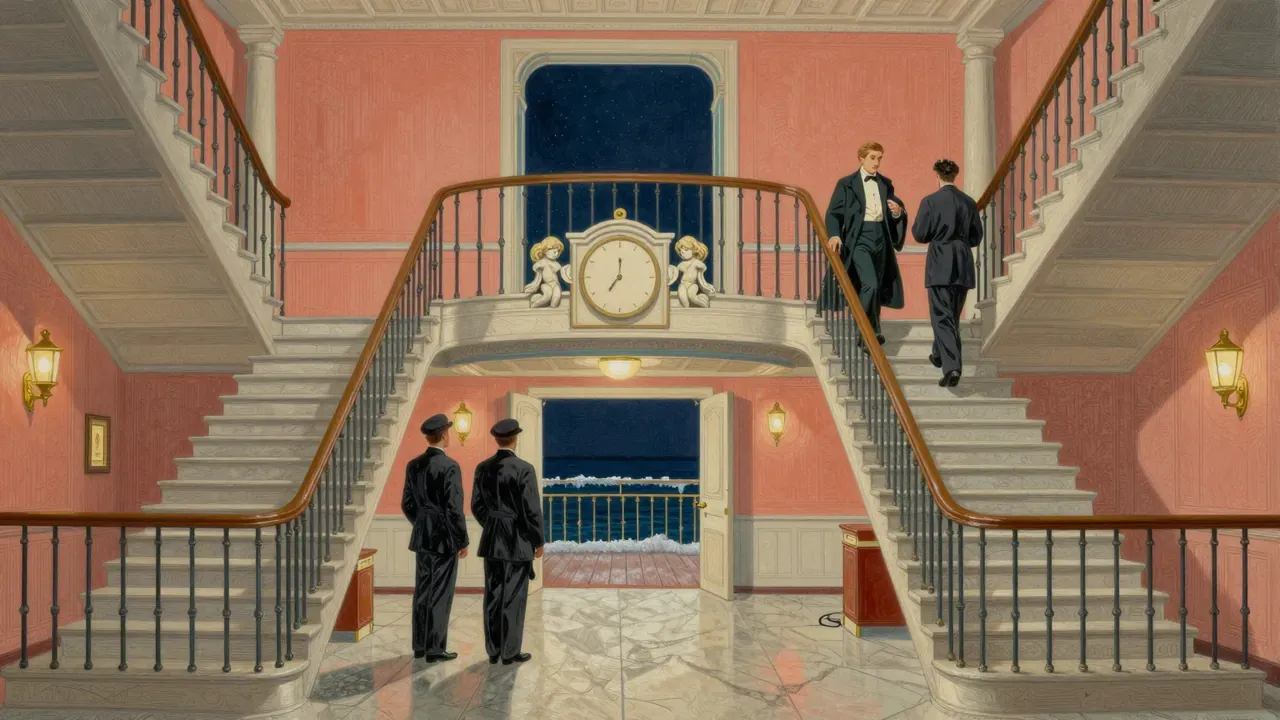
A 1958 British drama reconstructing the sinking of the RMS Titanic with procedural fidelity, based on Walter Lord’s 1955 book and informed by survivor testimony. Directed by Roy Ward Baker and produced by William MacQuitty, it avoids sentimentality in favour of chronological precision, using authentic sets, restrained performances and Geoffrey Unsworth’s understated cinematography to trace the collapse of routine, hierarchy and certainty.

13:00

All Night Long

Basil Dearden · 1962

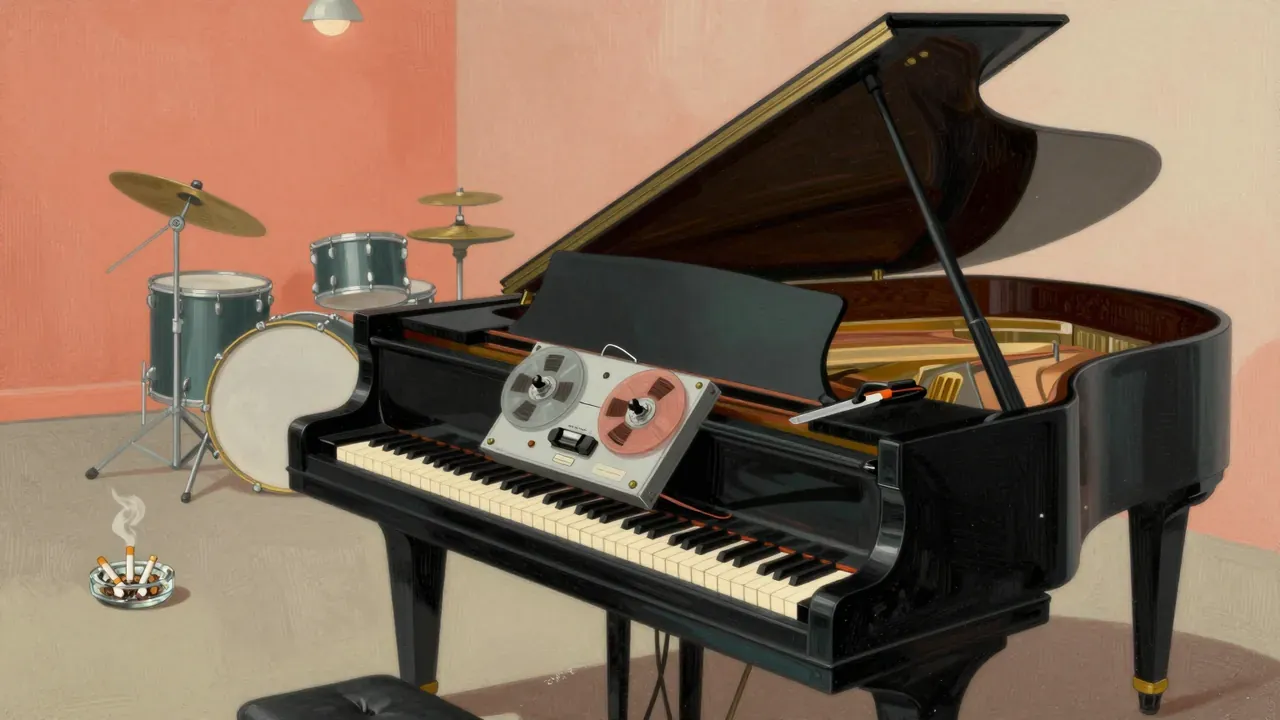
Basil Dearden’s All Night Long transposes Shakespeare’s Othello to a single night at a Thames-side jazz party, starring Patrick McGoohan as a scheming drummer, Paul Harris as a bandleader, and Marti Stevens as his wife. With contributions from Dave Brubeck, Charles Mingus and John Dankworth, the film treats jazz not as ornament but as narrative grammar — its rhythms, improvisations and silences shaping character and consequence. Shot in black and white by Edward Scaife, written by blacklisted screenwriter Paul Jarrico, it is a study in mediation, mistrust and the cost of control.

13:00

An Actor's Revenge

Kon Ichikawa · 1963

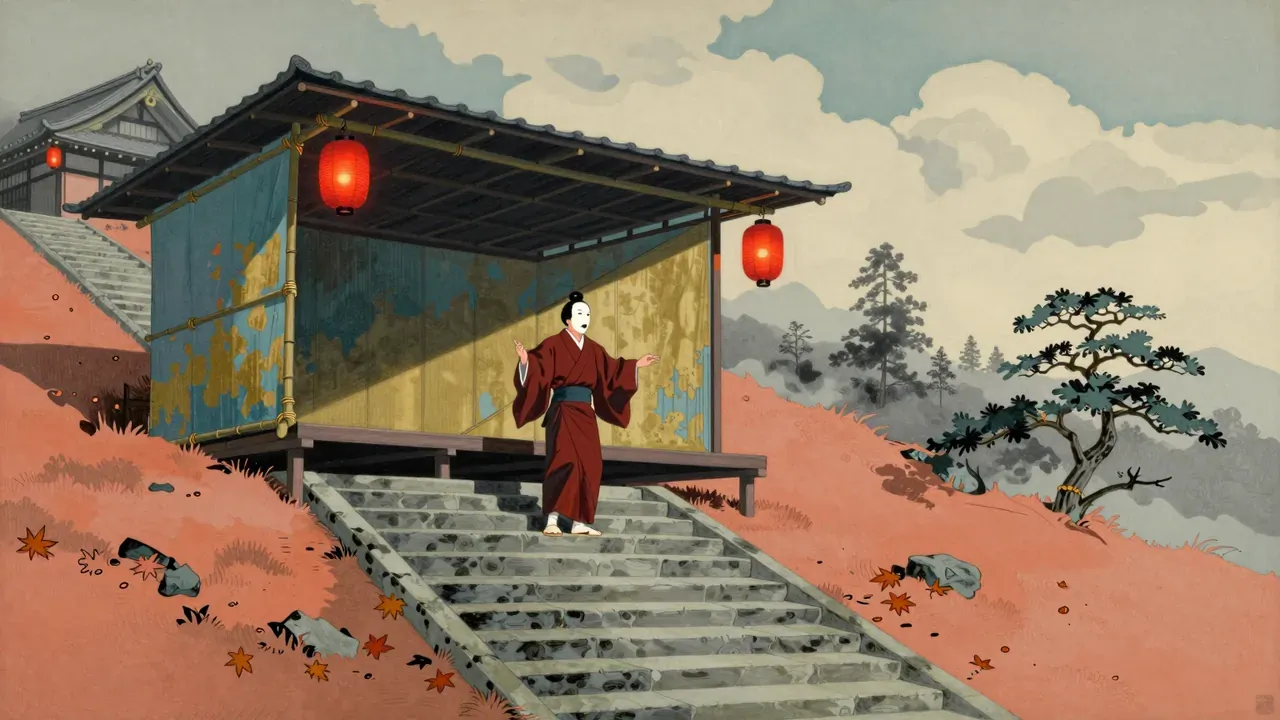
Kon Ichikawa’s 1963 film follows Yukinojō Nakamura, an onnagata kabuki actor who returns to Edo to enact revenge on the men who caused his parents’ suicide. Kazuo Hasegawa plays both Yukinojō and the thief Yamitarō, anchoring a film defined by theatrical composition, restrained music by Yasushi Akutagawa, and Musei Tokugawa’s wry benshi narration. It is less a story of justice than a study in performance as survival, gender as labour, and vengeance as repetition — all rendered with formal control and deliberate emotional distance.
13:00

An Enemy of the People

Satyajit Ray · 1990

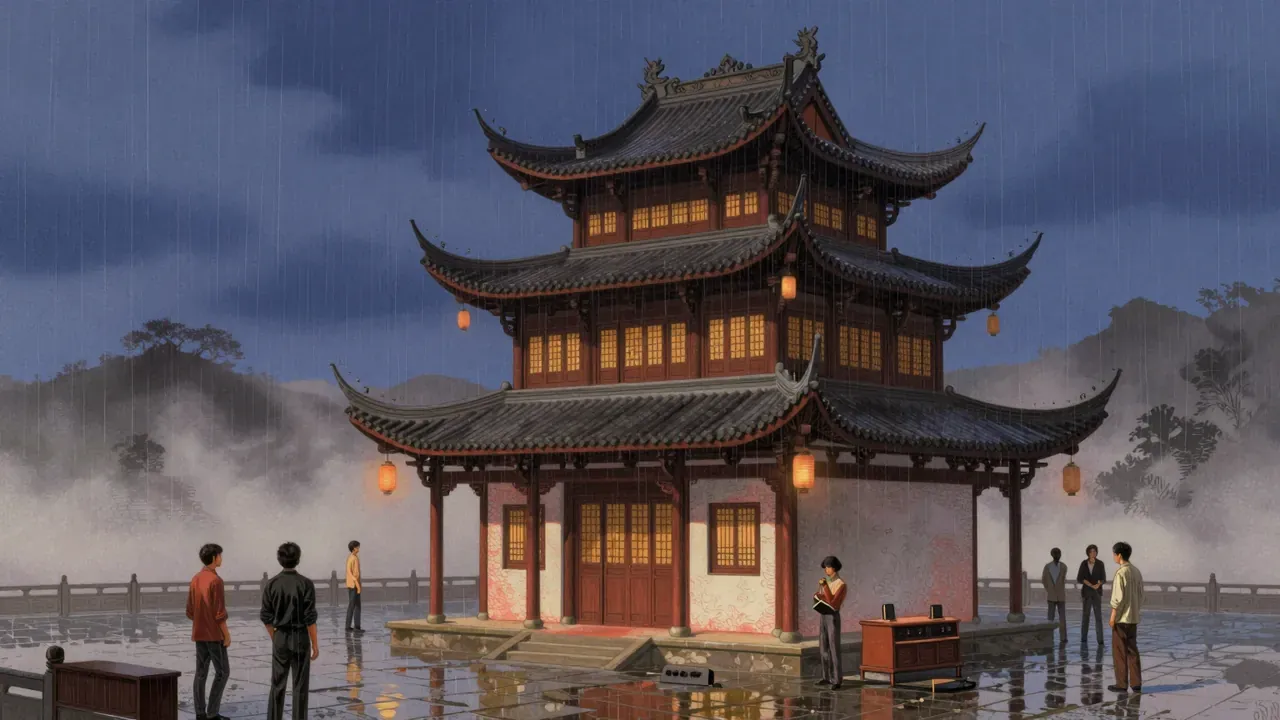
Satyajit Ray’s 1990 Bengali-language drama transposes Ibsen’s An Enemy of the People to a small Indian town whose economy depends on a temple’s ‘holy water’. When doctor Ashok Gupta (Soumitra Chatterjee) proves the water is contaminated, he is systematically silenced by municipal officials, journalists and religious authorities — all invested in maintaining the status quo. Shot with clinical precision and performed with restrained gravity, the film traces the erosion of professional integrity and communal trust. Though its resolution feels underprepared, its central inquiry — how facts are weighed against utility — remains urgently relevant.

13:00

Androcles and the Lion

Chester Erskine, Nicholas Ray · 1952

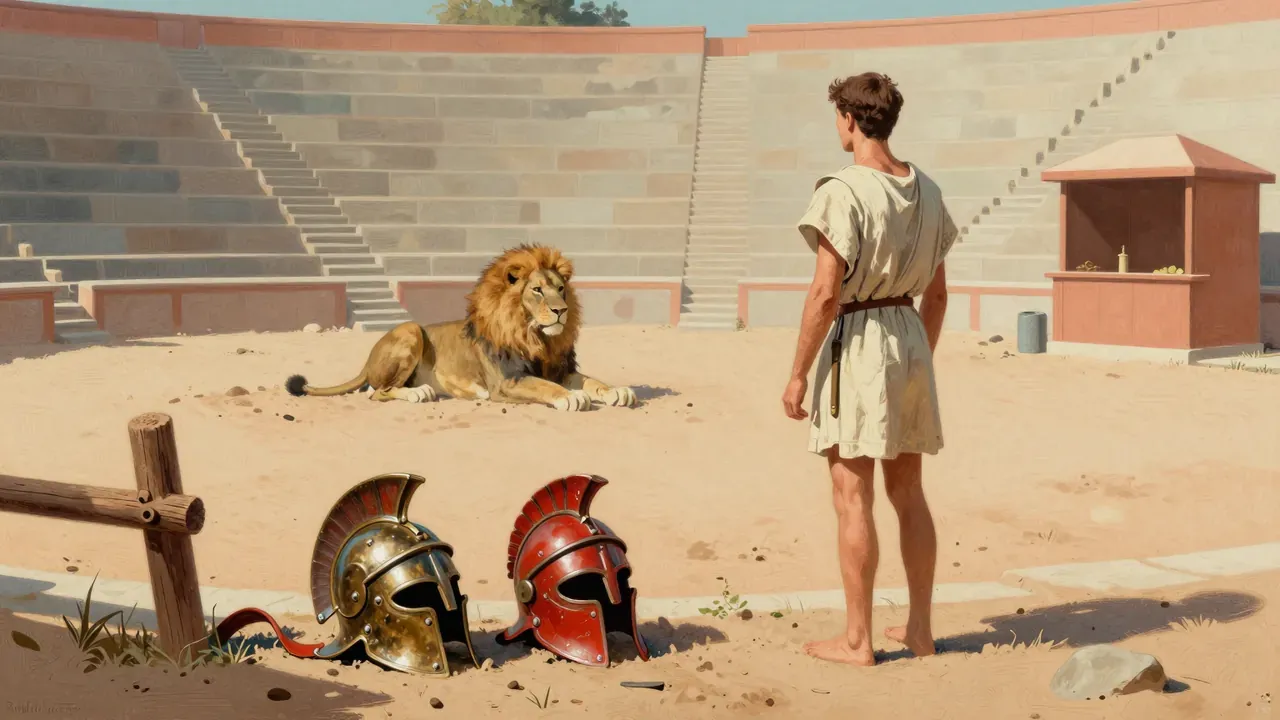
RKO’s 1952 Androcles and the Lion adapts George Bernard Shaw’s 1912 play with strict fidelity to his text, casting Alan Young as a gentle Christian tailor who befriends a lion in the Roman wilderness. Directed by Chester Erskine and Nicholas Ray, it foregrounds verbal wit over visual spectacle, staging philosophical debate in studio-bound sets. Though reshoots added arena theatrics, the film’s strength remains its unflinching commitment to Shaw’s irony, pacifism, and bureaucratic satire—making it a rare, talkative anomaly in the sword-and-sandal cycle.

13:00

Arabian Nights

Pier Paolo Pasolini · 1974

Pier Paolo Pasolini’s 1974 Arabian Nights is the final film of his ‘Trilogy of Life’, adapting fragments from the One Thousand and One Nights across real locations in Yemen, Iran, Ethiopia and Nepal. It abandons the frame narrative to focus on bodily pleasure, poetic recitation and episodic storytelling, using non-professional actors, long takes and Ennio Morricone’s sparse score. Though formally daring and visually rich, its resistance to psychology and narrative cohesion divides viewers. It won the Cannes Grand Prix in 1974.

13:00

Arsenic and Old Lace

Frank Capra · 1944

Frank Capra’s 1944 adaptation of Joseph Kesselring’s play is a tightly wound black comedy set over one Halloween day in a Brooklyn house where two elderly sisters poison lonely bachelors, their delusional nephew buries the bodies, and their theatre-critic nephew tries to contain the chaos. Starring Cary Grant, Josephine Hull and Raymond Massey, it prioritises rhythmic precision over emotional depth, using studio-era craft to sustain a high-wire act of escalating absurdity.

13:00

Baal

Volker Schlöndorff · 1970

Volker Schlöndorff’s 1970 adaptation of Brecht’s Baal transposes the 1923 play into late-1960s West Germany, starring Rainer Werner Fassbinder in the title role. Shot in vivid, expressionistic colour by Dietrich Lohmann and scored sparsely by Klaus Doldinger, it refuses psychological exposition or moral framing. Instead, it holds Baal — a self-destructive, charismatic, violently entitled poet — in unrelenting focus, exposing the social machinery that enables his ‘genius’. Long suppressed and recently restored, it remains a rigorous, uncomfortable, and formally exacting work.

13:00

Berlin Alexanderplatz

Rainer Werner Fassbinder · 1980

Rainer Werner Fassbinder’s 1980 fourteen-part television adaptation of Alfred Döblin’s novel traces Franz Biberkopf’s failed attempts at honest living in late-Weimar Berlin. Shot by Xaver Schwarzenberger, scored by Peer Raben, and edited by Juliane Lorenz, it treats the city as a system of pressures — economic, legal, sexual — that wear down individual agency. With a cast including Barbara Sukowa, Gottfried John, and Hanna Schygulla, it avoids psychological exposition in favour of documentary texture, rhythmic repetition, and moral density. At 894 minutes, it asks for time not as concession but as condition.

13:00

Blithe Spirit

David Lean · 1945

David Lean’s 1945 Blithe Spirit adapts Noël Coward’s stage comedy with formal care and muted energy. Shot in Technicolor by Ronald Neame, it preserves the play’s wit and structure while adding exterior scenes and a controversial new ending. Margaret Rutherford’s Madame Arcati anchors the film, but Rex Harrison and Kay Hammond struggle to translate their stage roles to screen. The film’s strength lies in its textures — domestic detail, vocal rhythm, restrained visual effects — not in narrative drive or emotional revelation. Though commercially disappointing in 1945, it endures as a document of mid-century British craft and constraint.

13:00

Blood Wedding

Carlos Saura · 1981

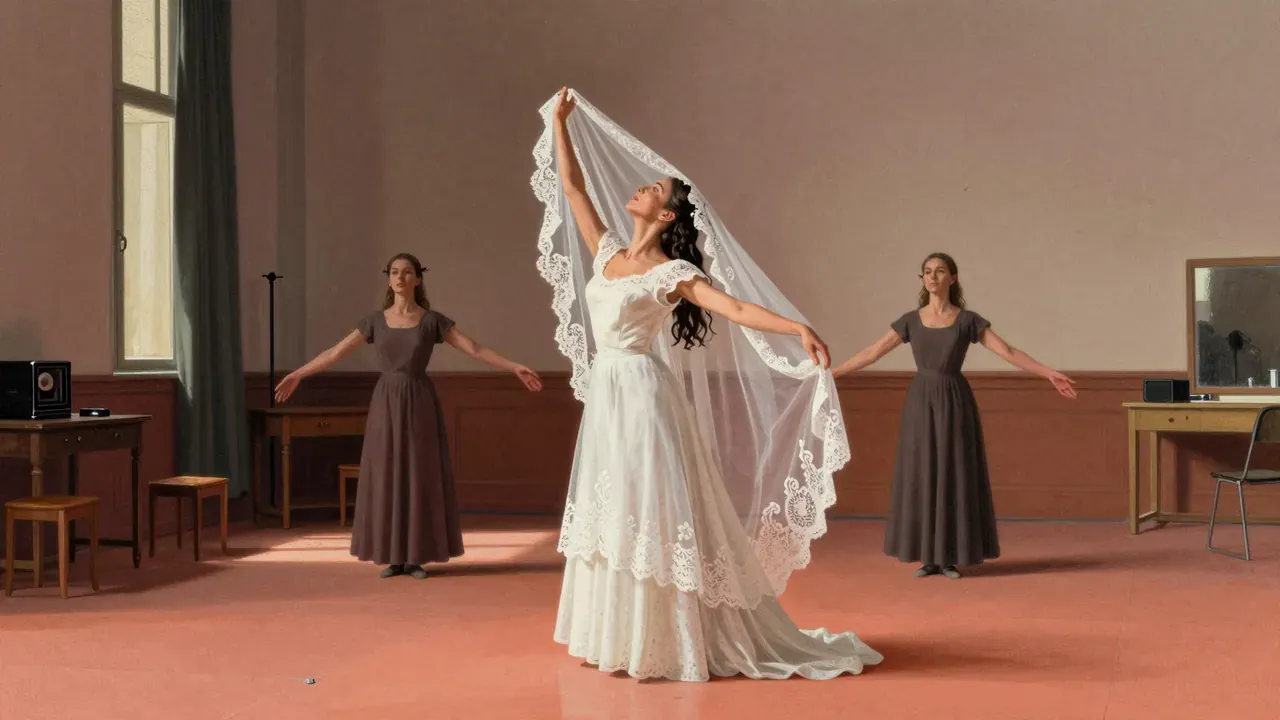
Carlos Saura’s 1981 Blood Wedding is a rigorously stripped-back flamenco staging of Federico García Lorca’s play, performed by Antonio Gades and company in a bare studio. With no sets, minimal props, and no spoken dialogue, it translates Lorca’s themes of blood, honour, and fate into choreography, percussion, and sustained physical presence. Teodoro Escamilla’s cinematography observes without embellishment; the film begins and ends with the dancers preparing — foregrounding labour, discipline, and collective authorship.
13:00

Caesar and Cleopatra

Gabriel Pascal · 1945

Gabriel Pascal’s 1945 Technicolor film adapts George Bernard Shaw’s 1901 play with near-verbatim fidelity. Starring Vivien Leigh and Claude Rains, it follows Cleopatra’s tutelage under Caesar during the Siege of Alexandria. Lavish in scale but restrained in execution, it privileges dialogue, idea and historical procedure over spectacle or sentiment. Though a financial failure on release, it endures as a rare example of British studio craft applying philosophical seriousness to ancient subject matter.

13:00

Capricious Summer

Jiří Menzel · 1968

Jiří Menzel’s 1968 Czechoslovak comedy follows three middle-aged men — a bathhouse owner, a retired artillery major and a local canon — over three rainy summer days at an abandoned resort. Their routines are disrupted by the arrival of a touring tightrope walker and his assistant, prompting a series of small, overlapping seductions, humiliations and quiet reconciliations. Shot in soft colour by Jaromír Šofr and performed with understated precision, the film treats desire, ageing and social ritual as weather systems — persistent, unpredictable, ultimately indifferent to individual will.

13:00

Carmen

Carlos Saura · 1983

Carlos Saura’s 1983 Carmen follows a troupe of dancers rehearsing a flamenco adaptation of Bizet’s opera, as their off-stage relationships mirror the opera’s fatal arc. Shot in Spain by Teodoro Escamilla and scored by Paco de Lucía, the film blurs rehearsal and reality, using movement and music — not dialogue — to trace obsession, rivalry and violence. It won the BAFTA for Best Film Not in the English Language and was nominated for an Oscar.
13:00

Chilly Scenes of Winter

Joan Micklin Silver · 1979

Joan Micklin Silver’s 1979 adaptation of Ann Beattie’s novel follows Charles Richardson, a Salt Lake City civil servant clinging to a failed relationship. Shot with quiet precision and performed with unshowy realism, it charts his slow, uneventful withdrawal from obsession — not through epiphany, but through accumulated small choices. Two versions exist: the original 1979 cut ends with reconciliation; the 1982 re-release concludes with quiet resignation. Neither offers catharsis. Both insist on the dignity of ordinary endurance.
13:00

Chimes at Midnight

Orson Welles · 1965

Orson Welles’s 1965 Chimes at Midnight condenses five Shakespeare plays into a stark, tactile drama centred on Sir John Falstaff and Prince Hal. Shot in Spain on a tight budget, it privileges physical presence and moral ambiguity over narrative fluency or sonic consistency. Its enduring power lies in Welles’s performance, Edmond Richard’s muted cinematography, and a vision of kingship as betrayal dressed as duty.
13:00

Contempt

Jean-Luc Godard · 1963

Jean-Luc Godard’s 1963 Contempt adapts Moravia’s novel into a self-aware drama about a playwright whose marriage unravels during the fraught production of a film version of the Odyssey. Shot in Rome and Capri, it stars Brigitte Bardot and Michel Piccoli, with Fritz Lang playing himself. The film interrogates authorship, fidelity, and the commodification of art — using form, colour, and silence as its primary arguments.

13:00

Coup de Grâce

Volker Schlöndorff · 1976

Volker Schlöndorff’s 1976 Coup de Grâce, adapted from Marguerite Yourcenar’s novel and co-written by Margarethe von Trotta, relocates the story from Erich von Lhomond’s first-person account to Sophie von Reval’s silent, searching presence. Set in a Latvian chateau during the 1919 Freikorps campaign, it uses black-and-white cinematography, elliptical editing and muted performances to examine desire, trauma and ideological vacancy amid collapsing empires. Not a conventional war film, it holds violence at a distance and finds its force in omission, restraint and unresolved tension.

13:00

David Golder

Julien Duvivier · 1930

Julien Duvivier’s 1930 adaptation of Irène Némirovsky’s David Golder stars Harry Baur as a dying Jewish financier whose wealth cannot insulate him from betrayal or bodily failure. Shot by Georges Périnal with deliberate claustrophobia and scored sparingly by Walter Goehr, the film sustains moral and psychological pressure through performance, framing, and silence — not spectacle or sentiment. Its rigour is uncompromising: no catharsis, no exposition, no relief. A landmark of early French sound cinema and a precise study of transactional identity.

13:00

Day of Wrath

Carl Theodor Dreyer · 1943

Carl Theodor Dreyer’s 1943 Danish drama, set in 1623, follows Anne, a young woman married to an elderly pastor, as she navigates suspicion, forbidden desire and the violent logic of witch trials. Made under Nazi occupation, it uses extreme restraint—of movement, music, editing—to expose how authority, faith and family conspire to erase individual conscience.

13:00

Demon Pond

Masahiro Shinoda · 1979

Masahiro Shinoda’s Demon Pond adapts Izumi Kyōka’s 1913 play into a formally rigorous Japanese fantasy. Set in 1930s rural Japan, it follows a schoolteacher caught in a village’s pact with a dragon god — a covenant enforced by daily bell-ringing. When drought drives the villagers to sacrifice the rumoured sorceress Yuri (Tamasaburo Bando, in a dual role), ritual fractures, unleashing flood and transformation. Shot by Masao Kosugi, scored by Isao Tomita with Moog-Debussy-Mussorgsky hybrids, and featuring optical composites by Nobuo Yajima, the film sustains a precise balance between kabuki abstraction and cinematic naturalism.

13:00

Desert Hearts

Donna Deitch · 1985

A 1985 romance set in 1959 Reno, Desert Hearts follows a reserved English professor who, while awaiting a divorce, falls in love with a free-spirited sculptor. Directed by Donna Deitch and adapted from Jane Rule’s novel, it treats lesbian desire with narrative gravity, visual restraint, and emotional authenticity — avoiding both sensationalism and didacticism. Its power lies in quiet accumulation: glances, silences, gestures — all anchored by Helen Shaver and Patricia Charbonneau’s restrained, deeply felt performances.

13:00

Destry Rides Again

George Marshall · 1939

Destry Rides Again (1939) is a Universal Pictures Western comedy directed by George Marshall, starring James Stewart and Marlene Dietrich. It follows a gunless sheriff who restores order in the corrupt town of Bottleneck not through force but through patience, wit, and carefully orchestrated social pressure. Written by Henry Myers and Gertrude Purcell, it subverts genre expectations with dry humour, deliberate pacing, and character-driven irony—most notably in Dietrich’s iconic turn as the saloon singer Frenchy. Though loosely based on Max Brand’s novel, the film bears little resemblance to earlier adaptations and stands as a singular blend of Western structure and comedic timing.

13:00

Diabolique

Henri-Georges Clouzot · 1954

Henri-Georges Clouzot’s 1954 thriller Diabolique follows two women who murder a cruel headmaster, only to confront evidence he has returned. Shot with clinical precision by Armand Thirard and edited by Madeleine Gug, the film sustains dread through confinement, ambiguity, and the unreliability of perception — not gore or score. Its legacy rests on structural influence (notably on Psycho), its Louis Delluc Prize win, and its enduring demonstration that horror begins where consensus ends.

13:00

Double Indemnity

Billy Wilder · 1944

A 1944 crime film directed by Billy Wilder, adapted from James M. Cain’s novella by Wilder and Raymond Chandler. Insurance salesman Walter Neff conspires with Phyllis Dietrichson to kill her husband and collect a double indemnity payout, only to find himself trapped by his own logic and the scrutiny of claims manager Barton Keyes. Shot in stark black-and-white by John F. Seitz, with a taut script and restrained performances, it established core conventions of film noir while refusing easy moral binaries or emotional release.

13:00

Double Suicide

Masahiro Shinoda · 1969

Masahiro Shinoda’s Double Suicide adapts Chikamatsu’s 1721 puppet play into live action, preserving its theatrical grammar: kuroko in black manipulate the world around the lovers, sets remain deliberately artificial, and music by Tōru Takemitsu punctuates rather than soothes. Shima Iwashita plays both wife and courtesan, binding the film’s duality in performance. It is a rigorous, unsentimental study of obligation, debt, and the formal limits of agency — where suicide is not escape but the only sentence the world permits.
13:00

Drive, He Said

Jack Nicholson · 1971

Jack Nicholson’s 1971 directorial debut, adapted from Jeremy Larner’s novel, follows a disillusioned college basketball star navigating affairs, draft anxiety, campus unrest, and a volatile roommate. Shot on location at the University of Oregon, it features committed performances from William Tepper, Karen Black, and Bruce Dern, with cinematography by Bill Butler and a sparse score by David Shire. Though critically divided and commercially obscure, it remains a singular artefact of early-70s American countercinema—uneven, urgent, and uninterested in tidy answers.

13:00

Drive My Car

Ryusuke Hamaguchi · 2021

Drive My Car (2021), directed by Ryusuke Hamaguchi, follows a Tokyo theatre director who, two years after his wife’s death, accepts a residency in Hiroshima to direct a multilingual production of Uncle Vanya — required to be chauffeured in his red Saab. With Hidetoshi Nishijima and Tōko Miura, and shot by Hidetoshi Shinomiya, it unfolds across 179 patient minutes, building meaning through repetition, silence, and the physicality of speech and listening.

13:00

El Amor brujo

Carlos Saura · 1986

Carlos Saura’s 1986 El Amor brujo adapts Manuel de Falla’s ballet into a tightly wound flamenco drama starring Antonio Gades and Cristina Hoyos. Set in Andalusia, it follows Candela, haunted by her dead husband’s ghost, whose release requires a ritual dance with the woman he loved in life. Shot by Teodoro Escamilla and choreographed by María Pagès, the film subordinates narrative to rhythm, dialogue to zapateado, and psychology to physical repetition — making it less a ghost story than a study in embodied memory.

13:00

Elephant Boy

Robert J. Flaherty, Zoltan Korda · 1937

Elephant Boy (1937), directed by Robert J. Flaherty and Zoltan Korda, adapts Kipling’s 'Toomai of the Elephants' with location footage shot in Mysore and studio work at Denham. Twelve-year-old Sabu stars as a boy whose quiet observation of elephants earns him recognition among mahouts. The film balances documentary realism with narrative simplicity, avoiding sensationalism in favour of physical authenticity and restrained craft.

13:00

Fear and Loathing in Las Vegas

Terry Gilliam · 1998

Terry Gilliam’s 1998 adaptation of Hunter S. Thompson’s Fear and Loathing in Las Vegas commits fully to the novel’s hallucinatory logic and period specificity. Starring Johnny Depp and Benicio del Toro as Raoul Duke and Dr. Gonzo, it charts their chemically accelerated descent through Las Vegas in 1971 — less a story than a sensory and moral autopsy of a fraying American dream. The film’s craft serves immersion over clarity, its themes revolve around eroded reality and institutional decay, and its value lies in fidelity, not comfort.

13:00

Floating Weeds

Yasujirō Ozu · 1959

Yasujirō Ozu’s 1959 colour remake of his 1934 silent film follows a fading kabuki troupe and its lead actor, Komajuro, as he revisits his former mistress and their adult son — whose paternity has been concealed. Set over one summer in Wakayama, the film unfolds with Ozu’s signature stillness: low angles, spare dialogue, and compositions that treat laundry lines and empty corridors as emotional anchors. Kazuo Miyagawa’s cinematography uses muted colour deliberately; Toshiro Mayuzumi’s score is near-absent. Its power lies in restraint — in what is withheld, repeated, or left unresolved.

13:00

Frankenstein

Guillermo del Toro · 2025

Guillermo del Toro’s 2025 Frankenstein reimagines Mary Shelley’s novel as a morally dense, visually austere drama centred on Victor Frankenstein (Oscar Isaac) and his Creature (Jacob Elordi). Shot by Dan Laustsen and scored by Alexandre Desplat, it trades genre thrills for theological gravity, emphasising responsibility, language, and embodied consequence. Though its pacing falters mid-film and some supporting roles lack depth, its production design, performances, and thematic coherence make it a singular, sombre achievement—less monster movie than sacred rite.
13:00

Game of Death

Bruce Lee, Robert Clouse, Sammo Hung · 1978

Game of Death (1978) is a re-edited, partially reshot version of Bruce Lee’s unfinished 1972 film, built around three surviving fight sequences he choreographed and filmed. Directed by Robert Clouse and Sammo Hung, it grafts a new revenge plot onto Lee’s original pagoda-ascent concept, using doubles and newly shot scenes to bridge gaps. Though commercially successful and culturally influential — especially for Lee’s yellow jumpsuit and the Abdul-Jabbar fight — it sacrifices narrative coherence and thematic depth for continuity. Its power resides entirely in Lee’s physical presence and choreographic intelligence, not in its story.

13:00

Gertrud

Carl Theodor Dreyer · 1964

Carl Theodor Dreyer’s final film, Gertrud (1964), adapts Hjalmar Söderberg’s 1906 play into a rigorous, dialogue-driven drama about a woman who chooses absolute fidelity to her idea of love over every form of compromise. Shot in static, prolonged takes, with minimal music and muted visuals, it follows Gertrud Kanning from marital rupture through successive failed attachments to a solitary, unrepentant old age. Its power lies in its refusal to dramatise or explain—only to present, hold, and trust the viewer to attend.

13:00

Ghost World

Terry Zwigoff · 2001

Ghost World (2001), directed by Terry Zwigoff and co-written with Daniel Clowes, follows Enid and Rebecca through the hollow summer after high school. Shot by Affonso Beato with deliberate oversaturation and lingering takes, it renders adolescent disaffection as structural fact rather than passing mood. Thora Birch’s performance anchors a film that values silence over exposition, texture over plot, and ambiguity over resolution.

13:00

Godzilla vs. the Sea Monster

Jun Fukuda · 1966

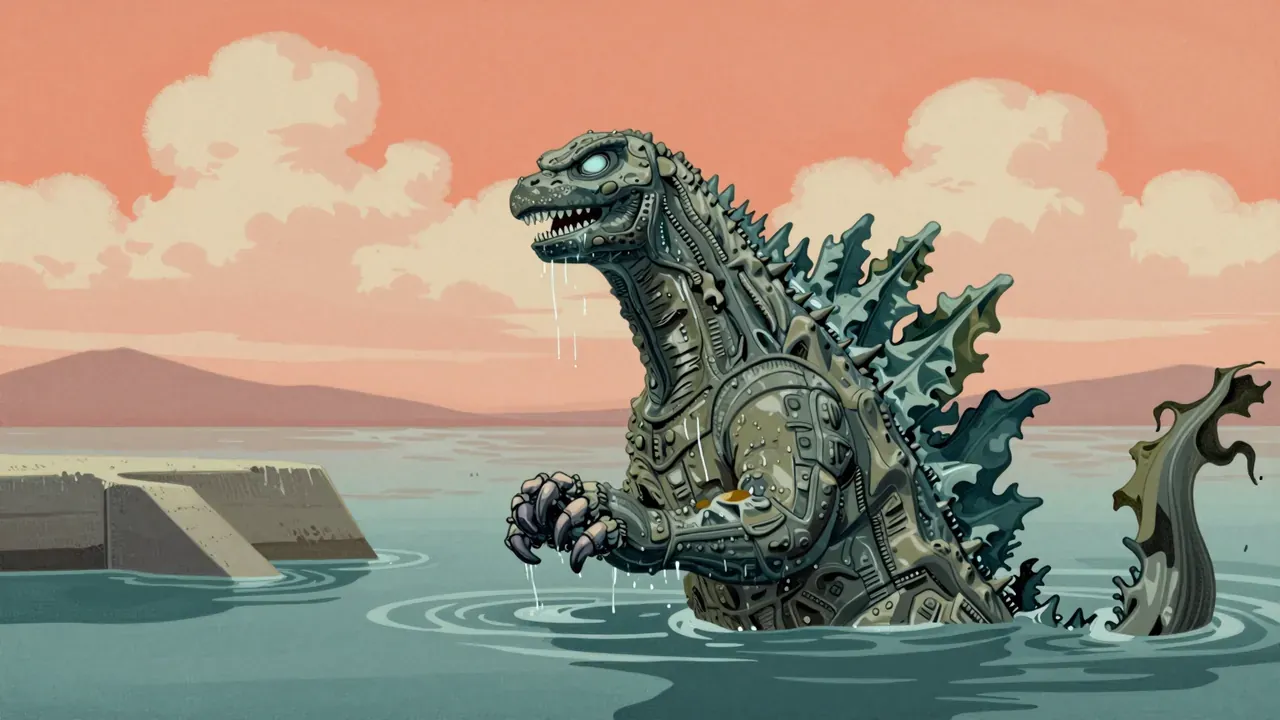
Godzilla vs. the Sea Monster (1966) is Toho’s pragmatic pivot: a South Seas island replaces Tokyo, Ebirah replaces Kong, and Masaru Sato replaces Akira Ifukube. Directed by Jun Fukuda with effects by Sadamasa Arikawa, it relies on repurposed suits, aquarium shots, and a script that never fully sheds its abandoned premise. Its strengths are tactile — Nakajima’s submerged performance, Yamada’s flat daylight, Sato’s light score — not thematic. It is a document of constraint, not conviction.

13:00

Hamlet

Laurence Olivier · 1948

Laurence Olivier’s 1948 Hamlet is a tightly focused, black-and-white adaptation that cuts over half the play to centre Hamlet’s paralysed will and moral uncertainty. Shot by Desmond Dickinson with deep focus and scored by William Walton, it uses sound design, editing, and performance to render interiority as physical fact. Though controversial among purists for its omissions — including Fortinbras and Rosencrantz and Guildenstern — it won Best Picture and Best Actor at the 1949 Oscars, and remains a landmark of Shakespearean cinema for its formal rigour and psychological intensity.

13:00

Henry V

Laurence Olivier · 1944

Laurence Olivier’s 1944 Henry V is a British government-backed film designed to bolster morale during the Second World War. Shot in Technicolor on location in Ireland and at Denham Studios, it blends miniature models, medieval manuscript aesthetics, and naturalistic battle scenes to recast Shakespeare’s play as a unifying national myth. Olivier stars, directs, and co-writes, omitting Henry’s harsher actions to foreground leadership, language, and legacy. Its craft — in cinematography, costume, editing and Walton’s score — is exacting and intentional. Though simplified in ethics, it remains a landmark of cinematic adaptation and wartime culture.

13:00

Hud

Martin Ritt · 1963

Hud (1963), directed by Martin Ritt and starring Paul Newman, is a stark, black-and-white drama set on a Texas ranch during a foot-and-mouth outbreak. It follows the corrosive rivalry between cynical son Hud and principled father Homer, with grandson Lonnie caught between them. James Wong Howe’s austere cinematography and Elmer Bernstein’s sparse score serve a screenplay that treats amorality as fact, not flaw. It won three Academy Awards and endures for its unblinking restraint.

13:00

I Married a Witch

René Clair · 1942

René Clair’s 1942 I Married a Witch is a tightly wound romantic fantasy starring Veronica Lake as a resurrected witch who disrupts the engagement of politician Wallace Wooley (Fredric March). Adapted from Thorne Smith’s unfinished novel, it uses magic not for wonder but as a scalpel to dissect marriage, politics, and gender. Ted Tetzlaff’s cinematography, Roy Webb’s score, and Clair’s economical staging sustain a tone of wry, unhurried absurdity — one that rewards attention to rhythm and restraint over plot or sentiment.

13:00

In Cold Blood

Richard Brooks · 1967

Richard Brooks’ 1967 adaptation of Truman Capote’s nonfiction novel reconstructs the 1959 Clutter family murders with stark, black-and-white realism. Shot on location in Holcomb, Kansas—including inside the actual Clutter home—and starring relative unknowns Robert Blake and Scott Wilson, the film avoids psychological exposition in favour of procedural detail, ambient sound, and deliberate pacing. Conrad Hall’s cinematography and Quincy Jones’s bass-heavy score reinforce its documentary austerity. Though critically lauded and preserved in the National Film Registry, its fictional reporter subplot and omission of two surviving Clutter daughters introduce subtle fractures in its otherwise unwavering formal control.

13:00

Invention for Destruction

Karel Zeman · 1958

Invention for Destruction (1958) is a Czechoslovak science fiction film directed by Karel Zeman, adapting Jules Verne not literally but visually — recreating the line-engraved aesthetic of nineteenth-century editions through hand-textured sets, stop-motion, matte paintings and stylised performance. Starring Lubor Tokoš and Miloslav Holub, it follows an inventor’s quest to prevent a weapon of mass destruction, using Verne’s submarines, airships and volcanic islands as stages for a unified graphic vision. Scored by Zdeněk Liška and shot by Jiří Tarantík, it remains a landmark of animated integration and period-specific worldbuilding.
13:00

Irma Vep

Olivier Assayas · 1996

Irma Vep (1996) follows Hong Kong actress Maggie Cheung as she joins a chaotic French production attempting to remake Louis Feuillade’s silent serial Les Vampires. Directed by Olivier Assayas, it observes the collapse of creative consensus through Cheung’s quiet, outsider perspective — less a satire of cinema than a forensic account of its daily attrition. Shot in thirty days with no retakes, it privileges texture over exposition, procedural realism over plot, and ambiguity over resolution.

13:00

Judex

Georges Franju · 1963

Georges Franju’s 1963 Judex is a neo-noir reimagining of Louis Feuillade’s silent serial, prioritising visual grammar over narrative fidelity. Set in a world of masked balls, black-leotarded cat burglars, and rooftop duels fought in near-silence, it disperses moral agency across women — Jacqueline, Diana, and Daisy — while reducing Judex himself to a handsome, enigmatic cipher. Marcel Fradetal’s high-contrast cinematography, Maurice Jarre’s restrained score, and Franju’s unhurried pacing build a film less about crime-solving than about how justice, power, and identity are performed.

13:00

Jungle Book

Zoltan Korda · 1942

Zoltán Korda’s 1942 Jungle Book is a Hollywood-produced Technicolor fantasy starring Sabu as Mowgli, adapted loosely from Kipling. Shot by Lee Garmes and W. Howard Greene, scored by Miklós Rózsa, and designed by Vincent Korda, it foregrounds jungle atmosphere, animal presence, and physical performance over psychological depth or narrative precision. Though commercially successful and nominated for four Academy Awards, its human drama remains schematic, its themes implied rather than explored. It endures as a feat of mid-century studio craft — vivid, deliberate, and unapologetically ornamental.

13:00

King Lear

Jean-Luc Godard · 1987

Jean-Luc Godard’s 1987 King Lear is a ninety-minute essay-film shot in Switzerland, using only shards of Shakespeare’s text alongside quotations from Weil, Bresson, Woolf, and others. It rejects narrative continuity, linear character arcs, and cinematic convention in favour of repetition, silence, and deliberate disjunction. Funded by Cannon Films and shot alongside denim commercials, it treats money, copyright, and authorship as structural elements. Norman Mailer’s abandoned script and departure mid-production are woven into its fabric. The film is less about Lear than about the conditions under which any cultural work can be made—or remembered—after catastrophe.
13:00

La Cérémonie

Claude Chabrol · 1995

Claude Chabrol’s 1995 adaptation of Ruth Rendell’s A Judgment in Stone follows Sophie, an illiterate maid hired by a wealthy Brittany family, and Jeanne, a disgraced postmistress. Their bond curdles into shared contempt for the Lelièvres’ unexamined privilege, culminating in a methodical, unemphatic massacre. Shot with clinical precision by Bernard Zitzermann and performed with chilling understatement by Isabelle Huppert and Sandrine Bonnaire, the film sustains a tone of moral neutrality that renders its violence not shocking but structurally inevitable.

13:00

La commare secca

Bernardo Bertolucci · 1962

La commare secca (1962) is Bernardo Bertolucci’s first feature, a formally rigorous Italian drama based on a Pier Paolo Pasolini story. Structured around seven contradictory police testimonies concerning the murder of a Rome prostitute, it uses repetition, weather and setting—not psychology or suspense—to expose class, gender and aspiration in post-war marginality. Shot by Giovanni Narzisi, edited by Nino Baragli and scored by Piero Piccioni, it is a debut marked by discipline, austerity and social observation.

13:00

Lady Snowblood

Toshiya Fujita · 1973

Lady Snowblood (1973), directed by Toshiya Fujita and starring Meiko Kaji, is a tightly constructed jidaigeki thriller adapted from Kazuo Kamimura’s manga. It follows Yuki, raised in prison and trained as an assassin to avenge her mother’s rape and her brother’s murder. Structured in fractured chronology, the film uses stark cinematography, minimal dialogue, and deliberate pacing to render vengeance as inherited obligation rather than personal release. Its influence on later works — notably Kill Bill — is undeniable, but its own power lies in austerity, not homage.

13:00

Le Amiche

Michelangelo Antonioni · 1955

Michelangelo Antonioni’s 1955 drama follows Clelia, a Rome-based fashion executive returning to Turin, where she becomes entangled with a circle of upper-class women — including the fragile Rosetta, whose suicide attempt sets in motion a series of restrained, unresolved encounters. Shot on location in Turin by Gianni Di Venanzo and adapted from Cesare Pavese’s novella, the film observes emotional distance, class performance, and the hollowness beneath social ritual — all without exposition, climax, or catharsis.

13:00

Les Dames du Bois de Boulogne

Robert Bresson · 1945

Robert Bresson’s 1945 adaptation of Diderot follows Hélène’s coldly calculated revenge on Jean, whom she tricks into marrying Agnès — a cabaret dancer she presents as aristocratic. Shot under German occupation with limited resources, the film deploys stillness, sparse scoring, and precise editing to dramatise moral collapse without melodrama. Though Bresson later disowned it, its influence on the French New Wave and its formal rigour make it a pivotal, unsettling work of postwar French cinema.

13:00

Les Enfants Terribles

Jean-Pierre Melville · 1950

Jean-Pierre Melville’s 1950 debut adaptation of Jean Cocteau’s novel traces the slow implosion of a brother and sister’s insular world. Shot in Paris with stark, precise compositions and scored almost entirely with Vivaldi concertos, it treats adolescence as a self-sustaining system — one that collapses only when forced to admit outsiders. Nicole Stéphane and Hélène Rémy deliver restrained, physically articulate performances in a film that prioritises structure over psychology and silence over exposition.

13:00

Les Misérables

Raymond Bernard · 1933

Raymond Bernard’s 1933 French adaptation of Les Misérables runs 281 minutes across three parts. Starring Harry Baur as Jean Valjean and Charles Vanel as Javert, it treats Victor Hugo’s novel as a civic document rather than literary property — emphasising systemic injustice, material poverty and the slow, unglamorous work of moral repair. Shot on location in Biot and at Victorine Studios, with sets by Lucien Carré and Jean Perrier and music by Arthur Honegger, it sacrifices romantic shorthand for ethical density. Though faithful in spirit, it omits key episodes involving Cosette and the sewers, flattening some arcs. Restored by Pathé in 2013 and Criterion in 2007, it remains the most structurally ambitious screen version of the novel.

13:00

Lone Wolf and Cub: Baby Cart to Hades

Kenji Misumi · 1972

Lone Wolf and Cub: Baby Cart to Hades (1972), directed by Kenji Misumi, is the third in a six-film Japanese martial arts series following the wandering assassin Ogami Ittō and his infant son Daigoro. Set in Edo-period Japan, it weaves episodic encounters — ambushes, torture, duels, and siege — into a sustained meditation on duty, endurance, and the embodied logic of bushidō. Tomisaburō Wakayama’s restrained performance anchors a film defined by stillness, procedural violence, and moral austerity. Though formally rigorous and thematically rich, its treatment of women remains functional, and its pacing assumes fluency with chanbara conventions. It rewards patience, not passive viewing.

13:00

Lone Wolf and Cub: White Heaven in Hell

Yoshiyuki Kuroda · 1974

The sixth and final film in the Lone Wolf and Cub series, released in Japan in April 1974, follows ronin assassin Ogami Ittō and his infant son Daigoro as they flee the Yagyū clan across snowbound mountains. Directed by Yoshiyuki Kuroda and written by Kazuo Koike, it escalates the series’ violence and austerity to near-abstract extremes — culminating in a battle where Ittō defeats over a hundred men using the baby cart as a weaponised sled. It does not resolve the manga’s storyline, nor does it seek psychological depth; instead, it commits to physical logic, formal repetition, and unrelenting forward motion.

13:00

Lord of the Flies

Peter Brook · 1963

Peter Brook’s 1963 Lord of the Flies adapts William Golding’s novel with stark formal discipline: non-professional actors, location shooting in Puerto Rico, minimal scripting, and editing that prioritises rhythm over exposition. It charts the slow dissolution of order among schoolboys stranded on an island, avoiding psychology for observation, symbolism for consequence. Thomas Hollyman’s black-and-white photography and Raymond Leppard’s sparse choral score reinforce its austerity. Though structurally uneven in the middle stretch and compromised by post-production dubbing, its power lies in its unwavering commitment to showing — not telling — how easily consensus unravels when no one is watching.

13:00

Macbeth

Roman Polanski · 1971

Roman Polanski’s 1971 Macbeth, co-written with Kenneth Tynan and produced by Hugh Hefner, grounds Shakespeare’s tragedy in mud, rain, and psychological realism. Shot across Wales and Northumberland with a young cast — Jon Finch and Francesca Annis as Macbeth and Lady Macbeth — it trades verse for voiceover, spectacle for stamina, and myth for material consequence. Gilbert Taylor’s cinematography and the Third Ear Band’s aleatoric score reinforce its unflinching tone. Though controversial on release for its violence and nudity, it has since been recognised for its formal rigour and thematic severity.

13:00

Magnificent Obsession

Douglas Sirk · 1954

Douglas Sirk’s 1954 Magnificent Obsession follows a reckless playboy who, after inadvertently causing a doctor’s death, dedicates himself to healing and love as atonement. With Jane Wyman and Rock Hudson, it renders ethical transformation through gesture, silence, and recurring visual motifs — water, light, thresholds — rather than exposition or psychology. Its power lies in structural rigour, not realism.

13:00

Manon des Sources

Claude Berri · 1986

A 1986 French drama, directed by Claude Berri and adapted from Marcel Pagnol’s novel, concluding the story begun in Jean de Florette. Set in rural Provence ten years later, it follows Manon Cadoret as she uncovers the truth behind her father’s death and orchestrates a slow, water-based reckoning against those who ruined him. Starring Yves Montand, Daniel Auteuil, and Emmanuelle Béart, it is a formally restrained, morally exacting film about inheritance, silence, and the physical reality of justice.

13:00

Marius

Alexander Korda · 1931

Marius (1931), directed by Alexander Korda from Marcel Pagnol’s play, is the first film of the Marseille Trilogy. Set in a waterfront bar in pre-war Marseille, it traces Marius’s conflict between love for Fanny and longing for the sea. With restrained performances, naturalistic lighting by Theodore J. Pahle, and dialogue rooted in subtext, it prioritises emotional authenticity over plot mechanics. Though structurally dependent on coincidence, its power lies in specificity: gesture, silence, and the quiet gravity of ordinary choice.

13:00

Marketa Lazarová

František Vláčil · 1967

Marketa Lazarová (1967), directed by František Vláčil, is a Czechoslovak arthouse drama adapted from Vladislav Vančura’s novel. Set in early 13th-century Bohemia, it follows the collision of two warring clans amid the violent rise of Christian authority. Shot in stark black-and-white by Beda Batka over 548 days in freezing conditions, its 162-minute runtime sustains an immersive, tactile world built on repetition, silence, and fractured chronology — not exposition. Zdeněk Liška’s dissonant score and Theodor Pištěk’s austere costumes reinforce its refusal of narrative ease. Though critically revered — voted the greatest Czech film in 1998 — it demands patience and rewards it with unparalleled sensory gravity.

13:00

Mayerling

Anatole Litvak · 1936

Anatole Litvak’s 1936 Mayerling is a French historical drama starring Charles Boyer and Danielle Darrieux, adapted from Claude Anet’s novel Idyll’s End. Set in late-19th-century Vienna, it traces Crown Prince Rudolf’s estrangement from duty and his fatal relationship with Baroness Marie Vetsera. Shot in restrained, underlit interiors by Armand Thirard and scored by Honegger, Jaubert and Tchaikovsky, the film avoids melodrama in favour of cumulative emotional weight. Though criticised in 1936 for its muted politics and ambiguous ending, its coherence, precision and formal discipline make it a distinctive artefact of interwar European arthouse cinema.

13:00

Ministry of Fear

Fritz Lang · 1944

Fritz Lang’s 1944 Ministry of Fear adapts Graham Greene’s novel into a tightly paced spy thriller set in Blitz-era London. Ray Milland plays Stephen Neale, a man recently released from a mental asylum who stumbles into a Nazi espionage ring masquerading as a charitable organisation. The film prioritises procedural suspense and period texture over the novel’s deep psychological guilt, delivering a lean, atmospheric, studio-era noir anchored in tangible wartime detail.

13:00

Morocco

Josef von Sternberg · 1930

Josef von Sternberg’s 1930 romantic drama stars Marlene Dietrich as a disillusioned cabaret singer who follows Gary Cooper’s legionnaire into the desert — not as a conclusion, but as a gesture. Filmed entirely in California, it uses light, costume, and composition to construct desire as defiance. Though stripped of its source novel’s grittier elements, it endures for its visual authority and psychological economy.

13:00

My Brilliant Career

Gillian Armstrong · 1979

Gillian Armstrong’s 1979 debut adapts Miles Franklin’s 1901 novel into a restrained, luminous portrait of Sybylla Melvyn, a headstrong Australian teenager who chooses writing over marriage in 1897. Judy Davis stars in her first leading role, supported by Sam Neill and Wendy Hughes. Shot in the Monaro region by Donald McAlpine, with a Schumann-inflected score by Nathan Waks, it won five AACTA Awards and helped define the Australian New Wave. Its enduring power lies in its unwavering commitment to Sybylla’s autonomy — intellectual, emotional, and vocational.

13:00

My Own Private Idaho

Gus Van Sant · 1991

Gus Van Sant’s 1991 arthouse drama follows two young male hustlers — Mike, who suffers narcoleptic blackouts, and Scott, the mayor’s son — as they travel from Portland to Idaho and Rome in search of Mike’s absent mother. Loosely modelled on Shakespeare’s Henry IV plays, it blends documentary realism with poetic fragmentation, anchored by River Phoenix’s understated performance and Eric Alan Edwards’ naturalistic cinematography. Though uneven in execution, its cultural impact and formal daring have secured its place as a landmark of new queer cinema.

13:00

Oedipus Rex

Pier Paolo Pasolini · 1967

Pier Paolo Pasolini’s 1967 Oedipus Rex reframes Sophocles’ tragedy as a Freudian myth-cycle, bookended by a 1920s Italian prologue and epilogue and centred on a stylised Moroccan-Greek middle. Starring Franco Citti and scored with Romanian folk music, Japanese gagaku, and Mozart, it rejects psychological realism for ceremonial repetition — using costume, sound, and landscape as structural grammar rather than decorative detail.

13:00

Ornamental Hairpin

Hiroshi Shimizu · 1941

Set entirely at a remote Japanese hot-spring resort in 1941, Ornamental Hairpin follows a group of guests — a soldier, a geisha, two boys, a professor, an old man — whose intersecting stays are extended by a single lost hairpin. Directed by Hiroshi Shimizu and starring Kinuyo Tanaka, it is a quiet, observational drama that finds emotional weight in routine, restraint, and unspoken connection, refusing both wartime urgency and narrative resolution.

13:00

Othello

Orson Welles · 1951

Orson Welles’s 1951 Othello is a self-financed, erratically shot adaptation of Shakespeare’s tragedy, filmed across Morocco, Venice and Rome between 1949 and 1951. Starring Welles as Othello and Micheál Mac Liammóir as Iago, it won the Palme d’Or in 1952 but reached US audiences only in 1955 — in a heavily altered version. A 1992 restoration, supervised by Welles’s daughter, became the default home-video release despite widespread criticism of its dubbing, re-recorded score and departures from Welles’s original cut. The film’s power lies in its stark, discontinuous style and unwavering focus on the mechanics of belief and betrayal.

13:00

Pearls of the Deep

Věra Chytilová, Jan Němec, Jiří Menzel, Jaromil Jireš · 1966

Pearls of the Deep (1966) is a Czechoslovak anthology film comprising five short segments, each directed by a different filmmaker — Věra Chytilová, Jan Němec, Jiří Menzel, Jaromil Jireš and Evald Schorm — and all adapted from short stories by Bohumil Hrabal. Shot in naturalistic style by Jaroslav Kučera, with sparse scores by Jan Klusák and Jiří Šust, the film resists thematic or tonal unity in favour of fidelity to Hrabal’s voice: his fascination with minor lives, unremarkable epiphanies, and the comic gravity of everyday speech. Though uneven in execution, its collective stance — against grand narrative, against didacticism, against the idea that meaning must be earned — makes it a defining work of the Czechoslovak New Wave.

13:00

Peau d'Âne

Jacques Demy · 1970

Jacques Demy’s 1970 musical fantasy Peau d’Âne adapts Perrault’s Donkeyskin with meticulous visual and musical precision. Catherine Deneuve stars as a princess who flees her father’s incestuous proposal by donning a magic donkey skin, finding refuge and love in disguise. Shot across historic French châteaux, scored by Michel Legrand, and designed with sumptuous, symbolic costumes, the film treats folklore as a self-contained system of rules, colour, and ritual — not a psychological case study. Its power lies in consistency, not catharsis.

13:00

Purple Noon

René Clément · 1960

René Clément’s 1960 crime thriller adapts Patricia Highsmith’s The Talented Mr. Ripley with surgical precision: Alain Delon’s Tom Ripley murders and assumes the identity of wealthy playboy Philippe Greenleaf (Maurice Ronet) during a sun-drenched Italian summer. Shot by Henri Decaë and written by Clément and Paul Gégauff, the film treats identity as forgery, class as costume, and murder as logistics—not morality. Its power lies in restraint, rhythm, and the unnerving ease of its central deception.

13:00

Pygmalion

Anthony Asquith, Leslie Howard · 1938

Pygmalion (1938) adapts George Bernard Shaw’s play with exacting fidelity, starring Wendy Hiller as Eliza Doolittle and Leslie Howard as Professor Higgins. Directed by Anthony Asquith and Howard, it charts Eliza’s linguistic transformation and its social consequences, preserving the play’s sharp class critique and ambiguous ending. Shot by Harry Stradling and edited by David Lean, it prioritises dialogue, diction, and moral precision over spectacle or sentiment. It won the Academy Award for Best Adapted Screenplay and remains a benchmark for literary adaptation.

13:00

Querelle

Rainer Werner Fassbinder · 1982

Rainer Werner Fassbinder’s 1982 Querelle is a highly stylised, studio-bound adaptation of Jean Genet’s novel, starring Brad Davis as a murderous sailor navigating a closed world of erotic power games. Shot in lurid expressionist colour, it privileges symbolic repetition and artificial lighting over narrative logic or psychological realism. Though divisive, it stands as Fassbinder’s most uncompromising formal statement — a film less about story than about the weight of gesture, colour, and silence.

13:00

Richard III

Laurence Olivier · 1955

Laurence Olivier’s 1955 Richard III is a Technicolor, 161-minute British drama adapting Shakespeare with material from Henry VI, Part 3. Olivier directs, produces and stars, supported by Ralph Richardson, Claire Bloom and John Gielgud. Otto Heller’s cinematography and William Walton’s score reinforce the film’s theatrical intensity. Though heavily cut for pace and focus, it remains a landmark in Shakespearean adaptation — acclaimed at release, awarded five major prizes, and later reappraised as Olivier’s finest screen Shakespeare.

13:00

Robinson Crusoe on Mars

Byron Haskin · 1964

Robinson Crusoe on Mars (1964) relocates Defoe’s castaway tale to a scientifically plausible Mars — one with thin air, hidden water, and mineral oxygen. Commander Draper survives alone, then with a monkey and finally with Friday, a fellow captive. Shot in Death Valley by Winton Hoch and directed by Byron Haskin, it favours procedural realism over spectacle, trusting silence, scale, and incremental discovery. Its strengths lie in tactile survival logic and visual consistency; its weaknesses are a rushed finale and underdeveloped alien context. It remains a singular, unhurried vision of isolation and reciprocity in space.

13:00

Romeo and Juliet

Franco Zeffirelli · 1968

Franco Zeffirelli’s 1968 adaptation casts teenage actors Leonard Whiting and Olivia Hussey as Romeo and Juliet, filming on authentic Italian locations with period-accurate design. Trimmed for emotional directness and shot by Pasqualino De Santis, it prioritises tactile realism over rhetorical flourish. Though structurally simplified and sometimes tonally uneven, its sincerity, craft and commitment to adolescent authenticity have sustained its relevance for over fifty years.

13:00

Rouge

Stanley Kwan · 1987

Stanley Kwan’s 1987 romantic drama Rouge follows Fleur, a 1930s courtesan who returns from the afterlife to find her lover Chan, presumed dead after their joint suicide pact. Instead, she discovers he survived, married, failed, and now lives in obscurity. Anchored by Anita Mui’s restrained performance and Bill Wong’s understated cinematography, the film measures time not in years but in unkept promises, social constraint, and the quiet persistence of grief.

13:00

Samurai I: Musashi Miyamoto

Hiroshi Inagaki · 1954

Hiroshi Inagaki’s 1954 Samurai I: Musashi Miyamoto follows the transformation of the unruly Takezo into the disciplined swordsman Musashi Miyamoto. Adapted from Eiji Yoshikawa’s novel, it charts his journey through exile, imprisonment, and moral education in early Tokugawa Japan. With Toshirō Mifune in a physically commanding, psychologically restrained performance, the film privileges restraint over action, silence over exposition, and accumulation over epiphany. Shot in Eastman Color by Toho, it won a Special Academy Award in 1955 and remains a cornerstone of Japanese cinematic craft.

13:00

Samurai II: Duel at Ichijoji Temple

Hiroshi Inagaki, Jun Fukuda · 1955

Samurai II: Duel at Ichijoji Temple (1955), directed by Hiroshi Inagaki and Jun Fukuda, is the second part of Toho’s Samurai Trilogy. Starring Toshirō Mifune as Miyamoto Musashi, it follows his path from provincial fighter to disciplined swordsman through a series of duels, betrayals, and quiet reckonings in Kyoto and its surrounds. Adapted from Eiji Yoshikawa’s novel, it foregrounds ethical growth over spectacle — emphasising waiting, withdrawal, and sparing life as acts of mastery. Ikuma Dan’s score, Kisaku Itō’s production design, and Tokuho Azuma and Yoshio Sugino’s choreography support a vision of jidaigeki grounded in physical truth and moral ambiguity.

13:00

Samurai III: Duel at Ganryu Island

Hiroshi Inagaki · 1956

Hiroshi Inagaki’s 1956 Samurai III: Duel at Ganryu Island concludes his trilogy with deliberate slowness, following Miyamoto Musashi’s year-long retreat before his fateful duel with Sasaki Kojirō. Shot in Eastmancolor by Kazuo Yamada and starring Toshirō Mifune, it privileges stillness over action, moral weight over spectacle, and quiet mourning over triumph. Its strength is structural and tonal: every performance, cut, and musical phrase serves a single, unwavering register of gravity and restraint.

13:00

Sanshiro Sugata

Akira Kurosawa · 1943

Akira Kurosawa’s 1943 debut adapts Tsuneo Tomita’s novel about a young judo student’s moral and physical education in Meiji-era Tokyo. Made under wartime censorship, it foregrounds cinematic control — wipes, weather, slow motion — over didacticism. Its power lies in quiet accumulation: the pond vigil, the measured matches, the unspoken parting. Though some characters remain schematic and its politics underdeveloped, its focus on discipline as self-erasure remains potent. Restored footage has deepened, but not altered, its austere coherence.

13:00

Shadows of Forgotten Ancestors

Sergei Parajanov · 1964

Shadows of Forgotten Ancestors (1964) is Sergei Parajanov’s visually dense, folk-infused adaptation of Mykhailo Kotsiubynskyi’s novella. Set in the Carpathian Mountains, it follows Ivan Mykolaichuk’s Ivan through love, loss, and spectral return, using saturated colour, ritualised movement, and Myroslav Skoryk’s folk-orchestral score to evoke a Hutsul worldview. Shot in Ukrainian and the Hutsul dialect at Dovzhenko Film Studios, it resists Soviet linguistic assimilation and prioritises embodied tradition over psychological exposition. Though demanding in its formal rigour, it remains a landmark of Ukrainian arthouse cinema.

13:00

Short Cuts

Robert Altman · 1993

Robert Altman’s 1993 ensemble film adapts nine Raymond Carver stories and a poem into a sprawling, interwoven portrait of Los Angeles life. With twenty-two principal characters, it builds meaning not through plot but through proximity, repetition and quiet rupture — helicopters spraying for medflies, overlapping phone calls, accidental collisions. Walt Lloyd’s flat, naturalistic cinematography and Geraldine Peroni’s associative editing sustain a rhythm of accumulation rather than climax. Though some subplots thin out and certain motifs repeat without deepening, its power lies in its unwavering attention to the texture of ordinary disconnection — grief dispersed, attention frayed, empathy deferred. It is arthouse cinema at its most patient and exacting.

13:00

Show Boat

James Whale · 1936

James Whale’s 1936 Show Boat is a rigorously faithful adaptation of the Kern–Hammerstein musical, starring Irene Dunne and Paul Robeson. Shot by John J. Mescall and edited by Bernard W. Burton, it preserves the original’s multi-decade structure, racial themes, and theatrical grammar — even adding three new songs to deepen character rather than modernise. Though some late edits weaken its temporal arc, its integrity, restraint, and historical precision make it a singular artifact in Hollywood’s musical canon.

13:00

Sorcerer

William Friedkin · 1977

William Friedkin’s 1977 Sorcerer adapts Georges Arnaud’s novel as a stark, tactile thriller about four fugitives transporting volatile nitroglycerin across a jungle road. Shot in the Dominican Republic with documentary rigour, it trades psychological exposition for procedural realism — trucks, terrain, and time as the true protagonists. Though a box-office failure on release, it has since been reappraised as a masterwork of sustained tension and formal discipline.

13:00

Stagecoach

John Ford · 1939

John Ford’s 1939 Stagecoach adapts Ernest Haycox’s short story into a tightly wound Western about nine strangers travelling by stagecoach from Arizona to New Mexico. Trapped together by geography and danger, their prejudices and pretensions erode under shared risk — culminating in childbirth, battle, and quiet acts of grace. Shot in Monument Valley, it launched John Wayne’s stardom and redefined the Western as a vehicle for moral and social inquiry. Its formal rigour remains unmatched; its omissions, particularly regarding Apache people, remain consequential.

13:00

Tess

Roman Polanski · 1979

Roman Polanski’s 1979 Tess adapts Thomas Hardy’s novel with rigorous visual fidelity and unhurried pacing. Shot in northern France by Ghislain Cloquet and the late Geoffrey Unsworth, it renders late-Victorian rural life as a system of material constraint, not romantic backdrop. Nastassja Kinski’s restrained performance anchors a film that prizes texture over exposition, endurance over agency, and consequence over catharsis. It won three Academy Awards — for cinematography, costume design, and production design — and remains Polanski’s most formally controlled, morally unvarnished work.

13:00

The American Friend

Wim Wenders · 1977

Wim Wenders’ 1977 adaptation of Patricia Highsmith’s Ripley’s Game stars Bruno Ganz as a terminally ill picture framer drawn into murder by Dennis Hopper’s enigmatic American, Tom Ripley. Shot in Hamburg and Paris by Robby Müller, with a sparse score by Jürgen Knieper, the film treats the thriller form as a vessel for existential portraiture — prioritising texture, hesitation, and linguistic nuance over plot mechanics. Its power lies in accumulation, not revelation.

13:00

The Ascent

Larisa Shepitko · 1977

Larisa Shepitko’s 1977 film The Ascent adapts Vasil Bykaŭ’s novel Sotnikov into a stark, black-and-white study of endurance and betrayal among Soviet partisans in Nazi-occupied Belarus. Starring Anatoly Solonitsyn and Boris Plotnikov, it follows two men captured after a failed mission, charting their divergent responses to torture and moral pressure. Shot in brutal winter conditions, with a dissonant score by Alfred Schnittke, the film rejects narrative convention in favour of sustained, embodied tension. It won the Golden Bear at Berlin and remains Shepitko’s final completed work.

13:00

The Ballad of Narayama

Keisuke Kinoshita · 1958

Keisuke Kinoshita’s 1958 adaptation of Shichirō Fukazawa’s story presents the fictional practice of ubasute — abandoning elders on Mount Narayama — not as barbarism but as a disciplined, communal rite. Stylised like kabuki theatre, with stark black-and-white cinematography by Tatsuo Suzuki and a restrained, chant-like score by Ichirō Saitō, the film follows Orin (Kinuyo Tanaka) in her final month before ascent. Its power lies in formal unity and moral austerity, refusing psychology or judgement in favour of ritual precision. Though divisive at Venice in 1958, it has since been recognised as a landmark of Japanese arthouse cinema.

13:00

The Beat That My Heart Skipped

Jacques Audiard · 2005

Jacques Audiard’s 2005 drama follows Thomas Seyr, a Parisian real estate enforcer who attempts to rebuild his life around concert piano after his mother’s death and his father’s murder. Romain Duris trained intensively for the role, playing his own piano sequences. The film reframes the 1978 American original Fingers through French social realism, emphasising physical discipline, linguistic barriers, and the uneasy continuity between violence and artistry.

13:00

The Bohemian Life

Aki Kaurismäki · 1992

Aki Kaurismäki’s 1992 French-language drama relocates Murger’s bohemian Paris to the late twentieth century, following a poet, painter and composer as they share rent, meals and misfortune. Shot in black-and-white with static frames and minimal scoring, it treats artistic survival, migration and mortality with unwavering restraint. Matti Pellonpää and André Wilms won European Film Awards for their understated performances.

13:00

The Breaking Point

Michael Curtiz · 1950

Michael Curtiz’s 1950 adaptation of To Have and Have Not stars John Garfield as Harry Morgan, a struggling fishing-boat captain drawn into smuggling and armed robbery to save his family. Shot by Ted McCord in Newport Beach, the film strips away noir glamour to focus on economic pressure, moral compromise, and bodily consequence. Patricia Neal plays his wife Lucy; Phyllis Thaxter is Leona Charles. Ranald MacDougall’s script moves with procedural rigour, and Howard Jackson’s score remains subdued. It ends not with resolution but with Harry critically wounded, his fate left open.

13:00

The Canterbury Tales

Pier Paolo Pasolini · 1972

Pier Paolo Pasolini’s 1972 film adapts eight of Chaucer’s tales as a vibrant, painterly, and deliberately anachronistic re-creation of medieval England. Shot in England with English dialogue later dubbed into Italian, it features a mix of British actors and non-professionals, and draws visual inspiration from Bosch, Bruegel, and Antonello da Messina. The film foregrounds bodily experience, class conflict, and clerical hypocrisy, rejecting literary fidelity in favour of ideological and sensual immediacy.

13:00

The Comfort of Strangers

Paul Schrader · 1990

Paul Schrader’s 1990 adaptation of Ian McEwan’s novel, scripted by Harold Pinter, follows an English couple drawn into the unsettling hospitality of a Venetian couple. With Natasha Richardson, Christopher Walken, and Rupert Everett, it builds dread through restraint: sparse dialogue, controlled framing, and the gradual erosion of autonomy. Not a thriller of action but of atmosphere, it asks the viewer to sit with ambiguity, not solve a mystery.

13:00

The Crucified Lovers

Kenji Mizoguchi · 1954

Kenji Mizoguchi’s 1954 drama adapts Chikamatsu’s 1715 play into a precise, unsentimental study of love and law in feudal Kyoto. Mohei, an apprentice scroll-maker, and Osan, his employer’s wife, flee after a forgery and alleged adultery, pursued not by passion but by property, debt and collective punishment. Shot by Kazuo Miyagawa in long, unbroken takes, the film treats morality as infrastructure — not belief, but rent, reputation and ritual.

13:00

The Dead

John Huston · 1987

John Huston’s final film adapts James Joyce’s 'The Dead' with restrained fidelity: a Dublin Epiphany party in 1904 becomes the vessel for Gabriel Conroy’s quiet epiphany about love, memory and mortality. Shot largely on a CalArts soundstage due to Huston’s failing health, Fred Murphy’s cinematography and Tony Huston’s screenplay preserve the story’s hushed intensity. Anjelica Huston and Donal McCann anchor an ensemble cast in performances defined by subtlety, not declaration. The film’s strength is its unwavering commitment to emotional realism — no flashbacks, no exposition, no catharsis, only the slow, snow-laden fall into understanding.

13:00

The Decameron

Pier Paolo Pasolini · 1971

Pier Paolo Pasolini’s 1971 film adapts Boccaccio’s Decameron into a dialect-rich, episodic satire shot across southern Italy and France. Rejecting historical fidelity, it transplants medieval tales to Naples and Caserta to critique regional inequality, clerical hypocrisy, and the commodification of desire. Tonino Delli Colli’s naturalistic cinematography, Ennio Morricone’s curated folk-and-liturgical score, and performances rooted in physical truth anchor its polemical energy. Though structurally loose and tonally relentless, it remains a rigorous, unsentimental assertion of vernacular culture as resistance.

13:00

The Emperor Jones

Dudley Murphy · 1933

Dudley Murphy’s 1933 adaptation of Eugene O’Neill’s play stars Paul Robeson as Brutus Jones, a charismatic Black man whose self-made empire on a Caribbean island collapses under guilt, fear and colonial myth. Made independently in New York with a Black-led creative core, it attempts avant-garde cinematic translation — using music, rhythm and stylised performance — but is hampered by Hays Office censorship, budget limits and narrative additions. Though structurally uneven, Robeson’s performance and the film’s formal ambition secure its place as a culturally significant, aesthetically urgent work.

13:00

The Fallen Idol

Carol Reed · 1948

Carol Reed’s 1948 drama follows seven-year-old Philippe, who lives alone in a London embassy while his diplomat father is away and his mother lies ill in hospital. He idolises the butler Baines—until he witnesses a struggle that ends with Baines’s wife falling to her death. Convinced Baines pushed her, Philippe flees, lies, and unravels under police questioning. Adapted by Graham Greene from his own story, the film renders childhood not as innocence but as radical epistemic limitation—where truth is assembled from fragments, and every object in the frame carries the weight of what cannot yet be named.

13:00

The Four Musketeers

Richard Lester · 1974

Richard Lester’s 1974 The Four Musketeers completes his adaptation of Dumas’s novel, picking up where The Three Musketeers left off. Shot back-to-back with the first film, it follows d’Artagnan and the musketeers through Milady de Winter’s revenge plot and the siege of La Rochelle, culminating in her execution and d’Artagnan’s promotion. With David Watkin’s crisp cinematography, Lalo Schifrin’s sardonic score, and George MacDonald Fraser’s streamlined script, it prioritises clarity, pace and physical storytelling over psychological depth or historical elaboration.

13:00

The French Lieutenant's Woman

Karel Reisz · 1981

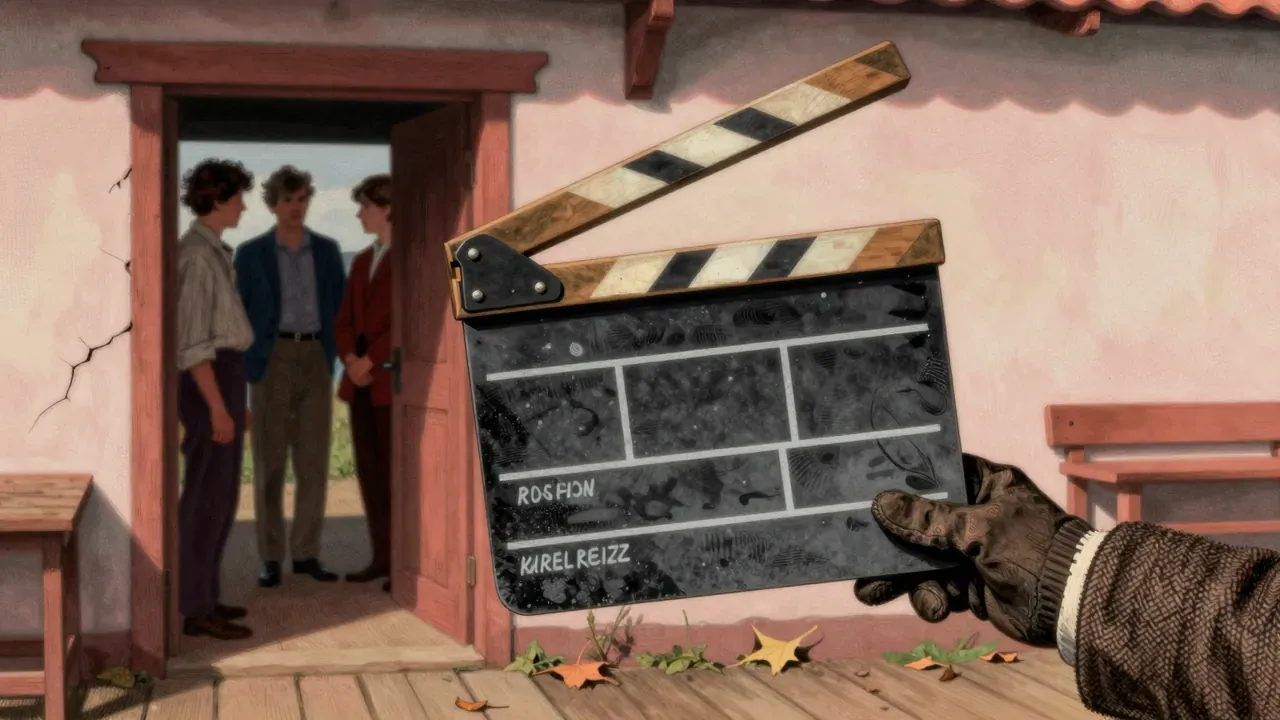
Karel Reisz’s 1981 adaptation of John Fowles’s novel intercuts a Victorian romance between palaeontologist Charles Smithson and enigmatic Sarah Woodruff with the modern affair between actors Mike and Anna, who play them. Written by Harold Pinter, it uses formal devices — visible crew, clapperboards, contrasting cinematography — to sustain tension between historical constraint and contemporary freedom. Freddie Francis’s photography, Assheton Gorton’s production design and Carl Davis’s score anchor both timelines in tangible detail, while Jeremy Irons and Meryl Streep deliver layered, restrained performances. It is a film about how desire is shaped by context, not character.

13:00

The Fugitive Kind

Sidney Lumet · 1959

Sidney Lumet’s 1960 adaptation of Tennessee Williams’s Orpheus Descending stars Marlon Brando and Anna Magnani as doomed lovers in a repressive Southern town. Shot in upstate New York, it struggles to translate theatrical heat into cinematic coherence — undermined by dubbing, miscasting, and unresolved thematic tensions — yet endures for its atmosphere, Boris Kaufman’s photography, and Kenyon Hopkins’s evocative score.

13:00

The Golden Coach

Jean Renoir · 1952

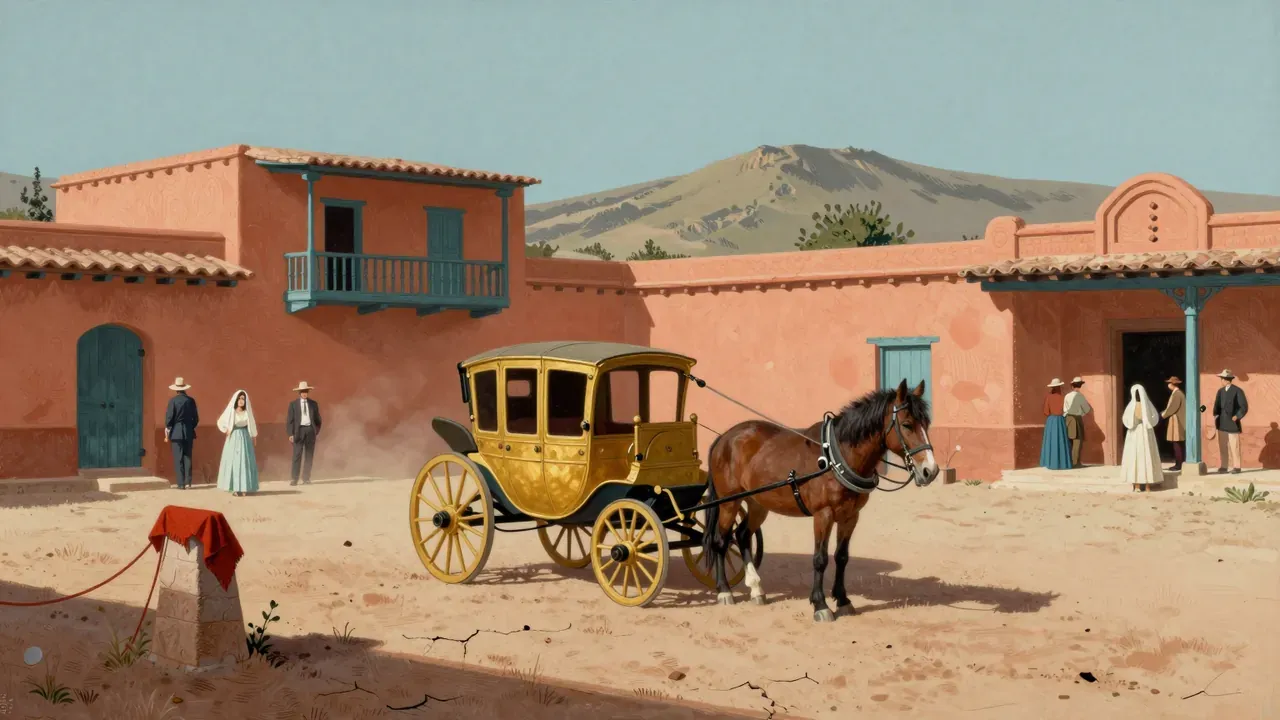
Jean Renoir’s 1952 film follows an Italian commedia troupe arriving in colonial Peru, where their performances intersect with the Viceroy’s court, local bullfighting culture, and a magnificent golden coach. Shot in Technicolor at Cinecittà, it uses Vivaldi’s music, Claude Renoir’s cinematography, and Anna Magnani’s precise performance to explore the porous boundary between acting and living — not as a critique of illusion, but as an affirmation of its necessity.

13:00

The Gospel According to St. Matthew

Pier Paolo Pasolini · 1964

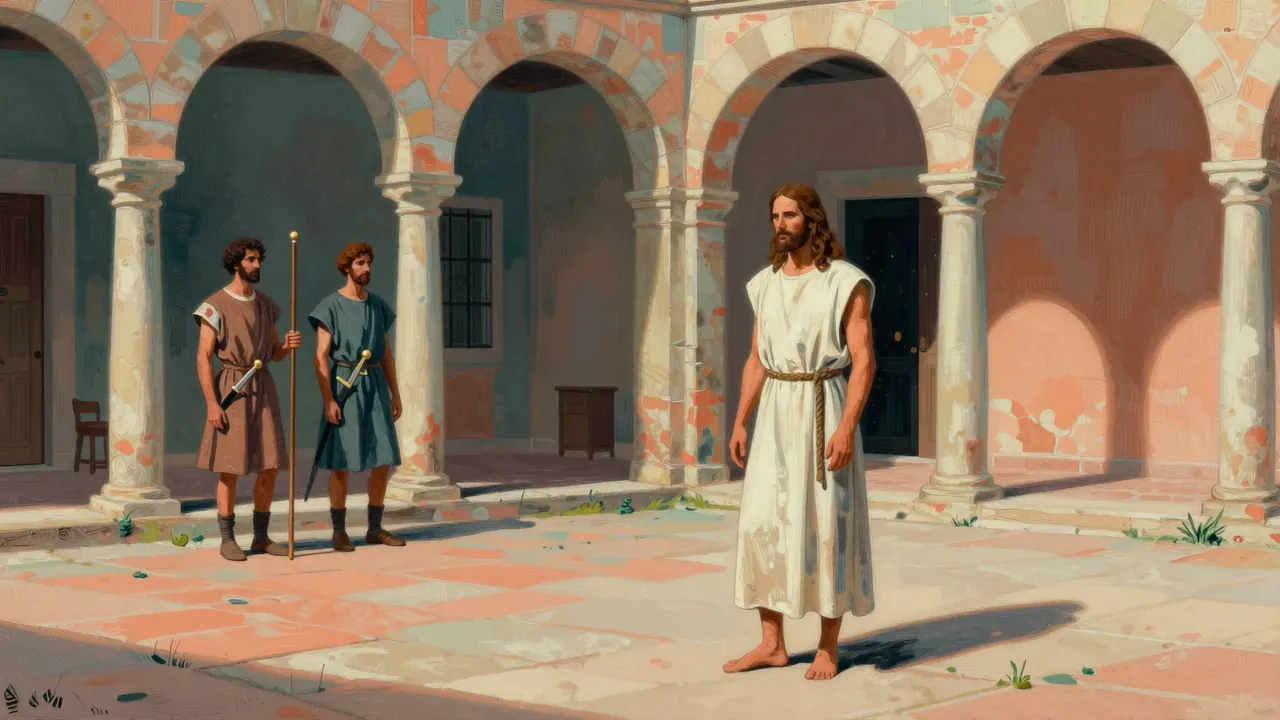
Pier Paolo Pasolini’s 1964 film adapts the Gospel of Matthew with near-verbatim fidelity, shot in southern Italy with non-professional actors and stark black-and-white cinematography. Rejecting psychological realism, it treats scripture as sacred text first and cinematic material second — a deliberate act of remythologisation that absorbs two millennia of Christian storytelling into image and gesture. Tonino Delli Colli’s photography, Luis Bacalov’s choral-folk score and Nino Baragli’s restrained editing reinforce its liturgical gravity. Though awarded the Venice Grand Jury Prize and hailed by L’Osservatore Romano as the best Christ film ever made, it remains demanding: slow, silent, unexplained, and resolutely uninterested in making faith easy.

13:00

The Great Escape

John Sturges · 1963

John Sturges’ 1963 epic adapts the real 1944 Stalag Luft III escape with deliberate fictionalisation, centring invented American characters amid a meticulously rendered ensemble of POWs. Shot in Bavaria, it foregrounds collective craft — tunnelling, forging, scouting — over individual heroics, building tension through repetition and restraint. Though its motorcycle stunt and US framing depart from history, its commitment to procedural authenticity and moral clarity gives it enduring weight.

13:00

The Heiress

William Wyler · 1949

William Wyler’s 1949 adaptation of Henry James’s Washington Square follows Catherine Sloper’s quiet, decades-long transformation from a cowed daughter into an unassailable heiress. Olivia de Havilland’s precisely calibrated performance, Leo Tover’s under-lit interiors, and Aaron Copland’s sparse score coalesce into a film that treats emotional deprivation as structural fact — not melodrama. It is austere, deliberate, and unsentimental, earning its acclaim through cumulative psychological precision rather than dramatic flourish.

13:00

The Hole

Jacques Becker · 1960

Jacques Becker’s 1960 film The Hole reconstructs a real 1947 escape attempt at Paris’s La Santé Prison with forensic calm. Five inmates — played largely by non-actors, including one actual participant — dig a tunnel beneath their cell floor using scavenged tools and stolen time. The film avoids drama in favour of procedure, silence over score, and group rhythm over individual arc. Its power lies in accumulated detail, moral ambiguity, and the quiet collapse of trust when freedom arrives — not as rescue, but as a choice no one can fully explain.

13:00

The Home and the World

Satyajit Ray · 1984

Satyajit Ray’s 1984 adaptation of Rabindranath Tagore’s Ghare Baire follows Bimala, a sheltered Bengali wife whose worldview fractures when her husband’s charismatic friend Sandip draws her into the Swadeshi movement. Set in 1907 Bengal, the film charts her slow, painful awakening amid rising communal tension, culminating in personal and political rupture. With restrained performances, Soumendu Roy’s luminous cinematography, and Ray’s own spare score, it prioritises interiority over incident — a quiet, demanding portrait of conscience in crisis.

13:00

The Idiot

Akira Kurosawa · 1951

Akira Kurosawa’s 1951 The Idiot transposes Dostoevsky’s novel to post-war Hokkaido, following Kameda — a gentle, epileptic man returning home — as he becomes entangled with Taeko, a woman discarded by her wealthy patron, and Akama, a volatile heir. Shot in stark black-and-white and severely cut by Shochiku from its original 265-minute form, the film relies on restraint: minimal music, extended silences, performances built on micro-gestures. Its moral force lies in what it refuses — explanation, catharsis, resolution — making it a demanding but deeply resonant portrait of integrity in a compromised world.

13:00

The Immortal Story

Orson Welles · 1968

Orson Welles’ 1968 French-language drama adapts Karen Blixen’s short story into a tightly wound fable set in nineteenth-century Macao. A dying merchant forces a sailor and a young woman to enact a seafaring legend, testing whether myth can survive embodiment. Shot in Spain with a small cast and sparse design, it foregrounds stillness, silence, and the instability of narrative authority — not as flaws, but as principles.

13:00

The Importance of Being Earnest

Anthony Asquith · 1952

Anthony Asquith’s 1952 adaptation of The Importance of Being Earnest is a faithful, studio-bound rendering of Wilde’s comedy, anchored by Edith Evans’s legendary Lady Bracknell and performed with linguistic rigour. It privileges dialogue, timing and textual fidelity over cinematic expansion, making it a benchmark for literary adaptation — austere, intelligent, and increasingly rewarding on repeat viewings.

13:00

The Innocents

Jack Clayton · 1961

Jack Clayton’s 1961 adaptation of Henry James’s The Turn of the Screw sustains a rigorous ambiguity: are the ghosts real, or projections of the governess’s repressed psyche? Shot by Freddie Francis in stark CinemaScope, scored by Georges Auric with early electronic textures, and carried almost entirely by Deborah Kerr’s tightly coiled performance, the film refuses resolution. Its power lies in what it withholds — no confirmation, no diagnosis, no moral anchor — making it a landmark of psychological horror and arthouse restraint.

13:00

The Joke

Jaromil Jireš · 1969

Jaromil Jireš’s 1969 film adapts Milan Kundera’s novel about Ludvík Jahn, expelled from the Communist Party for a sardonic postcard, then seeking revenge two decades later. Shot during the Prague Spring and banned for twenty years, it traces how political dogma reshapes love, memory, and moral choice — not through grand pronouncements but through glances, silences, and bureaucratic routines.

13:00

The Life of Oharu

Kenji Mizoguchi · 1952

Kenji Mizoguchi’s 1952 film follows Oharu, a noblewoman whose life disintegrates after a forbidden romance, forcing her through successive roles — concubine, courtesan, servant, wife, nun, prostitute — each ending in expulsion. Adapted from Ihara Saikaku, it uses long takes, restrained performance, and sparse design to trace how Edo-period Japan’s hierarchies erase women not with violence but with quiet, repeated exclusion.

13:00

The Magic Flute

Ingmar Bergman · 1975

Ingmar Bergman’s 1975 film of Mozart’s The Magic Flute is a meticulous recreation of an eighteenth-century theatrical experience, shot in studio with a replica of the Drottningholm Palace Theatre. Using pre-recorded music and mimed performance, it foregrounds stagecraft, audience presence, and symbolic clarity over psychological realism or cinematic flourish. Its power lies in fidelity to ritual, not narrative.

13:00

The Makioka Sisters

Kon Ichikawa · 1983

Kon Ichikawa’s 1983 adaptation of Jun’ichirō Tanizaki’s novel follows the Makioka sisters — Tsuruko, Sachiko, Yukiko, and Taeko — as they navigate marriage negotiations, familial duty, and quiet personal rebellion in pre-war Osaka and Kyoto. Shot with deliberate stillness and seasonal precision, the film prioritises atmosphere over plot, restraint over revelation, and social texture over psychological exposition. Its power lies in accumulation: in glances, silences, and the slow erosion of old hierarchies. Not for those seeking narrative urgency, but essential for viewers attuned to the eloquence of the unsaid.

13:00

The Man in Grey

Leslie Arliss · 1943

The Man in Grey (1943), directed by Leslie Arliss for Gainsborough Pictures, is a dual-timeline period drama adapting Eleanor Smith’s novel. In 1943 London, a Wren and an RAF pilot visit an auction; the event triggers a flashback to the early 1800s, where Clarissa Rohan’s loyalty to the ambitious, bitter Hesther Shaw sets in motion a chain of betrayal, coercion, and vengeance. Margaret Lockwood, James Mason, Phyllis Calvert, and Stewart Granger lead a cast defined by stark moral contrasts, supported by Arthur Crabtree’s expressive cinematography and a tightly wound studio aesthetic. It inaugurated the Gainsborough melodramas — escapist, emotionally direct, and formally assured.

13:00

The Men Who Tread on the Tiger's Tail

Akira Kurosawa · 1945

Akira Kurosawa’s 1945 film adapts a classical Japanese tale of disguise and deception at a border checkpoint. Made under severe wartime constraints — one set, minimal lighting, a script written overnight — it pits the solemnity of Noh theatre against the irreverent commentary of a low-status porter. Denjirō Ōkōchi’s Benkei anchors the ritual; Ken’ichi Enomoto’s porter destabilises it. The film is a study in economy, tension, and the performative nature of authority — austere, precise, and deeply intentional.

13:00

The Mikado

Victor Schertzinger · 1939

The Mikado (1939) is a British Technicolor film adaptation of Gilbert and Sullivan’s 1885 comic opera, starring Martyn Green and members of the D’Oyly Carte Opera Company. Directed by Victor Schertzinger and produced by Geoffrey Toye, it preserves the original music and libretto with minimal alteration, using the London Symphony Orchestra and Marcel Vertès’s vivid art direction. Its strength lies in vocal precision and ensemble discipline; its limitation is its adherence to stage convention over cinematic language. It offers no cultural critique of its Japanese setting, treating it as decorative backdrop. A document of a performing tradition, not a reinterpretation.

13:00

The Princess Bride

Rob Reiner · 1987

Rob Reiner’s 1987 adaptation of William Goldman’s novel frames a swashbuckling romance as a grandfather’s bedtime story. With precise performances, Adrian Biddle’s understated cinematography, and Mark Knopfler’s acoustic score, it balances earnest adventure and gentle parody — landing its themes of fidelity and craft without irony or condescension.

13:00

The Private Life of Don Juan

Alexander Korda · 1934

Alexander Korda’s 1934 film stars Douglas Fairbanks, aged 51, as an ageing Don Juan returning to Seville only to discover his name has become a public fiction. Adapted from Henry Bataille’s play by Frederick Lonsdale, it uses irony, restraint, and studio-era craft to explore reputation, ageing, and the quiet persistence of self amid erasure. Georges Périnal’s cinematography and Ernst Toch’s music support a tone of wry melancholy, anchored by Fairbanks’s physically diminished but emotionally precise performance.

13:00

The Rise of Catherine the Great

Paul Czinner · 1934

The Rise of Catherine the Great (1934) is a UK-produced biographical drama directed by Paul Czinner and produced by Alexander Korda. Starring Elisabeth Bergner as Catherine, Douglas Fairbanks Jr. as Grand Duke Peter, and Flora Robson as Empress Elizabeth, it adapts a 1912 Hungarian play to trace Catherine’s path from German princess to Russian empress. Shot by Georges Périnal with music by Ernst Toch, the film privileges interiority over action, restraint over spectacle, and performance over exposition.

13:00

The Servant

Joseph Losey · 1963

Joseph Losey’s 1963 adaptation of Robin Maugham’s novella, scripted by Harold Pinter, charts the slow, chilling inversion of power between a wealthy Londoner and his manservant. Shot at Elstree Studios by Douglas Slocombe and edited by Reginald Mills, it uses minimal dialogue, precise framing, and psychological tension to dissect British class structures without exposition or judgment.

13:00

The Suitor

Pierre Étaix · 1963

Pierre Étaix’s 1962 debut The Suitor is a meticulously timed comedy about a man racing to marry before a deadline, modelled on Buster Keaton’s Seven Chances but filtered through Gallic irony and silent-era physical logic. With minimal dialogue, clean framing, and relentless cause-and-effect plotting, it turns courtship into bureaucratic theatre. Though its final act falters and some gags rely on period-specific codes, its control of rhythm and commitment to form make it a distinctive, demanding, and rewarding work of mid-century French comedy.

13:00

The Sword of Doom

Kihachi Okamoto · 1966

Kihachi Okamoto’s 1966 jidaigeki adapts Kaizan Nakazato’s unfinished novel as a stark, episodic descent: Tatsuya Nakadai’s Ryunosuke Tsukue, an amoral master swordsman, moves from calculated killings to haunted delusion, culminating in a freeze-frame mid-massacre. With minimal dialogue, tight compositions, and Masaru Sato’s percussive score, the film renders nihilism as physical fact — not through exposition, but posture, timing, and repetition. Its power lies in what it refuses: explanation, redemption, or release.

13:00

The Tall T

Budd Boetticher · 1957

The Tall T (1957), directed by Budd Boetticher and starring Randolph Scott, is a tightly wound Western adapted from Elmore Leonard’s 'The Captives'. When ranch hand Pat Brennan is kidnapped alongside a reluctant heiress by three outlaws, the film becomes a study in constrained choice, quiet courage, and the cost of moral consistency. Shot by Charles Lawton Jr. and edited by Al Clark, it relies on stillness, silence, and precise performance over action. Its power lies in what it omits—and what it insists the viewer notice instead.

13:00

The Three Musketeers

Richard Lester · 1973

Richard Lester’s 1973 adaptation of The Three Musketeers is a brisk, precisely timed adventure that prioritises rhythm and character-in-action over exposition or psychological depth. Shot in Spain by David Watkin, with fencing choreographed by William Hobbs and music by Michel Legrand, it stars Michael York, Oliver Reed, Frank Finlay and Richard Chamberlain as the titular quartet, alongside Raquel Welch, Faye Dunaway and Charlton Heston. Faithful to Dumas’s plot but distinct in tone, it balances wit and vigour without tipping into parody—or solemnity.

13:00

The Unbearable Lightness of Being

Philip Kaufman · 1988

Philip Kaufman’s 1988 adaptation of Milan Kundera’s novel follows brain surgeon Tomas, his wife Tereza, and his lover Sabina across Prague, Geneva, and rural Czechoslovakia during and after the 1968 Soviet invasion. Shot in France with Sven Nykvist’s understated cinematography and scored largely with Janáček’s piano works, it explores eroticism, political constraint, and the paradoxes of freedom—not through exposition, but through gesture, silence, and weathered surfaces.

13:00

The Uninvited

Lewis Allen · 1944

The Uninvited (1944), directed by Lewis Allen and written by Dodie Smith, follows siblings who purchase a Cornish seaside house only to encounter inexplicable phenomena rooted in grief and suppressed attachment. Shot by Charles Lang with deliberate restraint, it avoids horror tropes in favour of sustained atmosphere, ambiguous motivation, and psychological weight. Though uneven in performance and occasionally expositional, its influence on supernatural cinema is foundational — less about ghosts than about what haunts us long after we stop speaking their names.

13:00

The Wandering Princess

Kinuyo Tanaka · 1960

Kinuyo Tanaka’s 1960 film, adapted from Hiro Saga’s memoir, follows a Japanese aristocrat’s marriage into the deposed Qing imperial family in Manchukuo. Shot in CinemaScope and colour — Tanaka’s first in both formats — it prioritises stillness over spectacle, using muted palettes, precise framing, and understated performances to trace quiet endurance across political rupture. Machiko Kyō anchors the film with restrained intensity; Eiji Funakoshi’s Pujie remains enigmatic by design. The script avoids exposition and moral framing, treating history as atmosphere rather than argument.

13:00

The Wiz

Sidney Lumet · 1978

Sidney Lumet’s 1978 musical The Wiz recasts The Wizard of Oz in Harlem and a decaying, stylised New York City, starring Diana Ross and Michael Jackson. Though critically panned on release for its script, pacing, and direction, its bold production design, choreography, and performances have cemented its status as a culturally vital, if uneven, cult classic.

13:00

Thirst for Love

Koreyoshi Kurahara · 1967

Koreyoshi Kurahara’s 1967 Thirst for Love, adapted from Yukio Mishima’s novel, follows a young widow’s entanglement with her wealthy father-in-law in a meticulously restrained Japanese domestic setting. Starring Ruriko Asaoka and Nobuo Nakamura, it uses abrupt editing, strategic colour, and near-silence to render psychological disintegration without exposition. The film prioritises atmosphere over explanation, formal control over catharsis, and inherited power over individual agency.

13:00

Throne of Blood

Akira Kurosawa · 1957

Akira Kurosawa’s 1957 Throne of Blood transposes Macbeth to feudal Japan, using Noh aesthetics, volcanic landscapes, and deliberate stillness to trace the physical and psychological narrowing of a man who kills to become lord — and finds only enclosure. Toshirō Mifune and Isuzu Yamada anchor a film where fog obscures but never excuses, and silence carries more threat than speech.

13:00

Tom Jones

Tony Richardson · 1963

Tony Richardson’s 1963 adaptation of Henry Fielding’s novel stars Albert Finney as the roguish, good-hearted Tom, whose journey from foundling to accepted heir unfolds through slapstick, satire and fourth-wall breaks. Written by John Osborne and shot by Walter Lassally, it balances period detail with formal audacity — intertitles, a wry narrator, and abrupt edits — to embody Fielding’s moral ambiguity. Though some emotional arcs falter and its satire occasionally overshadows character, its energy, performances and stylistic confidence remain distinctive. It won four Academy Awards, including Best Picture and Best Director.

13:00

Ugetsu

Kenji Mizoguchi · 1953

Kenji Mizoguchi’s 1953 Ugetsu adapts two Edo-period ghost tales into a quiet, devastating portrait of war’s domestic toll. Set in 16th-century Japan, it follows a potter who abandons his wife for wealth and prestige, only to be ensnared by a spirit, while his brother-in-law pursues samurai status at his wife’s expense. Shot by Kazuo Miyagawa in low light and fluid crane movements, with a sparse, harp-accented score by Fumio Hayasaka, the film treats the supernatural not as spectacle but as consequence — a formal and thematic extension of loss. It won the Silver Lion at Venice and remains a benchmark of Japanese arthouse cinema.

13:00

Under the Volcano

John Huston, Danny Huston · 1984

John Huston’s 1984 adaptation of Malcolm Lowry’s novel follows one Day of the Dead in 1938, as British consul Geoffrey Firmin — played by Albert Finney — unravels across the streets and cantinas of Quauhnahuac. Shot in sequence with Gabriel Figueroa’s restrained cinematography and Alex North’s brooding score, it commits fully to the novel’s psychological density and temporal claustrophobia. The film’s strength lies in its unflinching portrayal of addiction as embodied decay, not moral failure.

13:00

Valley of the Dolls

Mark Robson · 1967

Valley of the Dolls (1967), directed by Mark Robson, adapts Jacqueline Susann’s novel into a glossy, emotionally heightened drama about three women whose careers in entertainment unravel amid barbiturate dependency. Starring Barbara Parkins, Patty Duke, and Sharon Tate, with Susan Hayward as the formidable Helen Lawson, it uses tight close-ups, emphatic scoring, and location shooting to anchor its melodrama in a specific cultural moment — the twilight of the studio system. Though critically divided and formally uneven, it endures as a revealing artefact of how mid-century Hollywood represented female ambition, exhaustion, and systemic collapse.

13:00

Vanya on 42nd Street

Louis Malle · 1994

Louis Malle’s final film documents Andre Gregory’s long-term workshop on Chekhov’s Uncle Vanya, shot in the derelict New Amsterdam Theatre with Wallace Shawn, Julianne Moore, and others. It preserves the rhythms of rehearsal — interruption, repetition, uncertainty — rather than staging a polished performance. Declan Quinn’s restrained cinematography and Joshua Redman’s sparse saxophone score support a film that values duration, silence, and the physical reality of a decaying space over narrative propulsion or dramatic resolution.

13:00

War and Peace

Sergei Bondarchuk · 1965

Sergei Bondarchuk’s War and Peace (1965–67) is a four-part, 432-minute adaptation of Tolstoy’s novel, produced by Mosfilm with unprecedented state support. Shot on Soviet 70mm stock, it deploys over ten thousand soldiers as extras, authentic period artefacts, and vast battlefield choreography to realise Tolstoy’s world—not his ideas. While lauded for its monumental realism and awarded the 1969 Oscar for Best International Feature, it streamlines the novel’s philosophical arguments and relies on physical presence over psychological nuance. Its value lies in endurance, not explication.

13:00

White Nights

Luchino Visconti · 1957

Luchino Visconti’s 1957 adaptation of Dostoevsky’s ‘White Nights’ transposes the short story’s introspective melancholy into a meticulously controlled studio production. Set over three winter nights in a recreated Livorno, it follows Mario’s growing attachment to Natalia, who waits nightly for a lover who may never return. With Maria Schell, Marcello Mastroianni and Jean Marais, and cinematography by Giuseppe Rotunno, the film sustains a tone of quiet inevitability—rejecting catharsis in favour of emotional precision.

13:00

Wildlife

Paul Dano · 2018

Paul Dano’s 2018 directorial debut Wildlife adapts Richard Ford’s novel into a precisely observed drama set in 1960s Montana. When Jerry loses his job, his wife Jeannette begins an affair with a local businessman, and their teenage son Joe bears quiet witness. With understated performances from Carey Mulligan, Jake Gyllenhaal and Ed Oxenbould, and Diego García’s muted cinematography, the film charts the slow, unspectacular unravelling of a marriage — and the ways children absorb adult failure as grammar, not event.

13:00

Women in Love

Ken Russell · 1969

Ken Russell’s 1969 Women in Love adapts D. H. Lawrence’s novel with fidelity to its psychological and philosophical core. Starring Glenda Jackson, Alan Bates, Oliver Reed, and Jennie Linden, it charts two sisters’ contrasting paths through love, intellect, and selfhood in post-war England and Switzerland. Billy Williams’s naturalistic cinematography and Georges Delerue’s restrained score support performances that prioritise presence over exposition. Though structurally uneven and occasionally opaque in its secondary arcs, the film remains a rare example of cinema treating ideas as visceral, not illustrative.

13:00

Wrong Move

Wim Wenders · 1975

Wrong Move (1975), directed by Wim Wenders and written with Peter Handke, follows Wilhelm Meister’s journey across West Germany as he attempts to become a writer. Shot by Robby Müller with stark, painterly compositions, the film reframes Goethe’s Bildungsroman as a critique of Romantic self-making. Its sparse dialogue, detached performances, and refusal of catharsis make it the most philosophically dense and emotionally austere entry in Wenders’ Road Movie trilogy.

13:00

Faust (2011 film)

Alexander Sokurov · 2011

Alexander Sokurov’s 2011 Faust is a Russian-German co-production, shot across the Czech Republic, Germany and Iceland, and set in an indeterminate 19th-century Europe. Johannes Zeiler stars as Faust, a scholar dissecting corpses in search of the soul, drawn into a pact with Anton Adasinsky’s moneylender — a grotesque, worldly Mephistopheles. Bruno Delbonnel’s cinematography renders the world in Flemish-toned greys and ochres; Andrey Sigle’s score is sparse and resonant. The film won the Golden Lion at Venice and was lauded for its visual rigour and philosophical gravity, though its deliberate opacity divided critics.

13:00

Flowers of Shanghai

Hou Hsiao-Hsien · 1998

Set in 1884 Shanghai’s elite brothels, Hou Hsiao-Hsien’s Flowers of Shanghai adapts Han Bangqing’s novel via Eileen Chang’s translation. Shot entirely on Taiwanese soundstages under candlelight, it unfolds across thirty-eight long takes, tracing the constrained lives and negotiated intimacies of ‘flower girls’ and their patrons. With no outdoor scenes, minimal dialogue, and fades replacing cuts, it constructs a world governed by ritual, debt, and quiet endurance—not historical recreation, but emotional archaeology.

13:00

Four Nights of a Dreamer

Robert Bresson · 1971

Robert Bresson’s 1971 Four Nights of a Dreamer adapts Dostoyevsky’s 'White Nights' into a restrained, colour-saturated study of two Parisians who meet for four consecutive evenings. Jacques, a withdrawn artist, tries to keep Marthe from suicide; she listens, shares memories, and gradually draws him into her orbit — only to choose her former lover when he reappears. Shot by Pierre Lhomme and scored by F. R. David, the film favours quiet observation over exposition, using tape recordings, city textures and hesitant performances to trace the asymmetry of attachment.

13:00

Miami Vice

Michael Mann · 2006

Michael Mann’s 2006 Miami Vice is a digitally shot, atmospherically dense crime film starring Colin Farrell and Jamie Foxx as Miami-Dade detectives infiltrating a transnational drug operation. Shot on location across the Caribbean and South Florida, it trades the 1980s TV series’ stylisation for a muted, immersive realism — prioritising surveillance aesthetics, ambient sound, and moral ambiguity over exposition or catharsis. Though polarising on release, its reputation has grown for its formal rigour and sensory coherence.

13:00

Ran

Akira Kurosawa · 1985

Akira Kurosawa’s 1985 epic reimagines King Lear as a Sengoku-period warlord’s collapse, grounded in Japanese history and his own artistic mortality. Shot across volcanic plains and ancient castles, it uses wide compositions, deliberate pacing, and Emi Wada’s award-winning costumes to build a world where chaos is not disorder but the inevitable residue of violence. With Tatsuya Nakadai’s monumental performance and Toru Takemitsu’s dissonant score, Ran sustains its 160-minute duration through material conviction rather than exposition — a film that trusts time, silence, and scale to carry meaning.

13:00

Shadow

Zhang Yimou · 2018

Zhang Yimou’s Shadow is a 2018 Chinese wuxia film shot in near-monochrome to emulate classical ink painting. Deng Chao plays both a wounded general and his decoy, Jingzhou, who must impersonate him to reclaim a lost territory. Set against rain-dampened courts and mist-shrouded duels, the film prioritises visual cohesion and philosophical combat over exposition or emotional catharsis. Zhao Xiaoding’s cinematography and the deliberate, yin-inflected fight choreography anchor its formal ambition.

13:00

The Red Shoes

Emeric Pressburger, Michael Powell · 1948

The Red Shoes (1948) is a British dance drama directed by Powell and Pressburger, following ballerina Victoria Page as she joins a prestigious company, falls in love with a composer, and faces an ultimatum from her domineering director. Built around a fifteen-minute ballet adaptation of the Hans Christian Andersen fairy tale, the film uses saturated Technicolor, disciplined choreography, and a tightly wound narrative to explore the cost of artistic commitment. Moira Shearer stars in her film debut, supported by Anton Walbrook and Marius Goring. Shot largely in Paris and at Pinewood Studios, it won two Academy Awards and remains a landmark of cinematic integration of dance and drama.

13:00

The Tales of Hoffmann

Michael Powell, Emeric Pressburger · 1951

Michael Powell and Emeric Pressburger’s 1951 Technicolor opera film transcribes Offenbach’s score into pure cinematic language—no dialogue, only sung text, stylised movement, symbolic colour and deliberately artificial sets. Framed by Hoffmann’s drunken recollection, three tales (Olympia, Giulietta, Antonia) unfold as tonal variations on obsession, each governed by a dominant hue and choreographed to Sir Thomas Beecham’s conducting. It is less a story about love than a demonstration of how film can function like music: through repetition, contrast, texture and timing.

13:00

West Side Story

Robert Wise, Jerome Robbins · 1961

West Side Story (1961) adapts the Broadway musical into a formally rigorous film where dance, editing and colour articulate racial tension and adolescent love in 1950s New York. Directed by Robert Wise and Jerome Robbins, it stars Natalie Wood and Richard Beymer, with music by Leonard Bernstein and choreography rooted in Robbins’s stage vision. Though its dramatic interludes lack the same force as its musical sequences, its sustained formal intelligence — in cinematography, editing and staging — secures its place as a benchmark for the genre.

13:00

A Room with a View

James Ivory · 1986

James Ivory’s 1986 adaptation of E. M. Forster’s novel follows Lucy Honeychurch’s awakening to desire and selfhood amid the rigid codes of Edwardian England and Italy. Starring Helena Bonham Carter and Julian Sands, it is a restrained, visually precise romance that trusts subtlety over exposition and behaviour over backstory.

13:00

Ashes of Time

Wong Kar-wai · 1994

Wong Kar-wai’s 1994 Ashes of Time reimagines Jin Yong’s wuxia universe as a landscape of regret and deferred feeling. Starring Leslie Cheung as the brooding Ouyang Feng, it follows fragmented encounters across a bleached desert, where martial skill matters less than the weight of unspoken words. Shot by Christopher Doyle and Kwan Pun Leung in muted, atmospheric tones, and scored with sparse, resonant instrumentation, the film privileges mood over momentum. Though its elliptical structure divides opinion, its central performances and visual discipline make it a defining arthouse wuxia — less about heroes and villains, more about the quiet violence of remembering.

13:00

Barry Lyndon

Stanley Kubrick · 1975

Stanley Kubrick’s 1975 adaptation of Thackeray’s novel follows an Irish opportunist’s calculated ascent and collapse in 18th-century Europe. Shot in candlelight, built around painterly compositions and governed by an impassive narrator, it treats social hierarchy as an inescapable physical law — not a theme to explore, but a structure to inhabit.

13:00

Batman Returns

Tim Burton · 1992

Tim Burton’s 1992 sequel discards superhero convention to explore abandonment and performance through Gotham’s grotesque, snowbound winter. With Michael Keaton, Danny DeVito, and Michelle Pfeiffer delivering career-defining turns, it leans on Stefan Czapsky’s shadow-heavy cinematography, Bo Welch’s layered production design, and Danny Elfman’s jagged score to sustain a tone both festive and funereal. Structurally loose but thematically tight, it remains a landmark of auteur-driven genre filmmaking.

13:00

Black Orpheus

Marcel Camus · 1959

Black Orpheus (1959) transplants the Orpheus and Eurydice myth to Rio de Janeiro’s Carnaval, filmed on location in Morro da Babilônia with non-professional actors. Directed by Marcel Camus and scored by Luiz Bonfá and Antônio Carlos Jobim, it won the Palme d’Or and the Academy Award for Best International Feature Film. Though celebrated for its visual and musical vitality, it has been criticised—especially in Brazil—for reducing Afro-Brazilian life to aestheticised spectacle, sidelining social reality for mythic form.

13:00

Bride of Frankenstein

James Whale · 1935

James Whale’s 1935 Bride of Frankenstein refines the gothic horror of its predecessor into something stranger and more enduring: a stylised, ironic, deeply humane meditation on autonomy and complicity. With Boris Karloff, Elsa Lanchester and Ernest Thesiger at their most expressive, and John J. Mescall’s chiaroscuro cinematography and Franz Waxman’s unresolved score lending it formal rigour, the film sustains a unique tonal balance — part fable, part farce, part tragedy. Its reputation as a masterpiece rests not on scares, but on its precision, its patience and its refusal to resolve what it sets in motion.

13:00

Charlie and the Chocolate Factory

Tim Burton · 2005

Tim Burton’s 2005 Charlie and the Chocolate Factory is a deliberate departure from the 1971 adaptation: darker, more textured, and psychologically expanded. With Johnny Depp as a tightly wound Willy Wonka and Freddie Highmore as a quietly observant Charlie Bucket, it restores elements from Roald Dahl’s novel while adding Wonka’s estranged dentist father as a key to his pathology. Shot on practical sets at Pinewood Studios, the film privileges tactile realism over digital spectacle. Though praised for its design and tone, its emotional resolution remains thin — Charlie’s virtue is passive, Wonka’s healing unearned. It is a family film that trusts its audience to sit with discomfort.

13:00

Charulata

Satyajit Ray · 1964

Satyajit Ray’s 1964 adaptation of Tagore’s Nastanirh follows Charu, an intelligent Bengali wife in 1879 Calcutta, whose intellectual isolation deepens when her husband invites his cousin Amal into their home. As Charu and Amal bond over literature and writing, unspoken feelings grow — but Ray refuses melodrama, resolving nothing. Shot by Subrata Mitra, scored by Ray, and performed with meticulous restraint, it is a film built on stillness, composition, and the weight of what goes unsaid.

13:00

Death in Venice

Luchino Visconti · 1971

Luchino Visconti’s 1971 adaptation of Thomas Mann’s novella recasts its author protagonist as a composer and uses Mahler’s music, Pasqualino De Santis’s Technicolor cinematography, and Dirk Bogarde’s restrained performance to enact a slow, physical dissolution in Venice. Faithful in tone but not literal in detail, it prioritises mood, texture, and duration over narrative or psychology.

13:00

Devdas

Bimal Roy · 1955

Bimal Roy’s 1955 Devdas adapts Sarat Chandra Chattopadhyay’s novel with austere precision. Set in early-1900s Bengal, it follows Dilip Kumar’s Devdas as he fails — repeatedly, quietly — to claim his love for Suchitra Sen’s Paro, retreating instead into alcohol and Vyjayanthimala’s Chandramukhi. Kamal Bose’s underlit cinematography and S. D. Burman’s Baul-inflected score deepen its fatalism. The film resists catharsis, treating caste, gender and indecision as interlocking constraints rather than dramatic obstacles.

13:00

Eyes Wide Shut

Stanley Kubrick · 1999

Stanley Kubrick’s final film adapts Arthur Schnitzler’s Dream Story into a slow-burning psychological mystery set in 1990s New York. Dr. Bill Harford’s night-long descent, triggered by his wife’s confession of fantasy, exposes the rituals of power, secrecy, and male fragility beneath the surface of privilege. Shot by Larry Smith and scored by Jocelyn Pook, it sustains a single, unwavering tone — neither erotic nor thrilling, but rigorously observed and formally controlled.

13:00

Frankenweenie

Tim Burton · 2012

Tim Burton’s 2012 stop-motion Frankenweenie expands his 1984 short into a black-and-white feature about Victor Frankenstein, a lonely boy who reanimates his dead dog Sparky — then contends with chaos when classmates follow suit. Built with meticulous puppetry and Danny Elfman’s score, it balances gothic parody with emotional sincerity, landing most strongly in its tactile detail and restrained treatment of loss. Though some subplots feel schematic and its satire stays broad, its commitment to mood, materiality, and moral ambiguity makes it a distinctive, unhurried piece of animation.

13:00

Funny Girl

William Wyler · 1968

Funny Girl (1968), directed by William Wyler, adapts the Fanny Brice story into a romantic musical drama starring Barbra Streisand in her film debut. It charts her rise from Brooklyn vaudeville to Ziegfeld stardom and her turbulent marriage to Nicky Arnstein (Omar Sharif). With music by Jule Styne and a script by Isobel Lennart, the film privileges psychological realism over musical convention — its camerawork is tight and unshowy, its performances grounded, its emotional arcs unresolved. Though commercially huge and critically lauded — winning Streisand the Best Actress Oscar — it remains a singular, deliberate work: more portrait than pageant, more rehearsal than revue.

13:00

Gate of Hell

Teinosuke Kinugasa · 1953

Teinosuke Kinugasa’s Gate of Hell (1953) is a Japanese period drama set during the Heiji Rebellion, following a samurai’s fatal obsession with a married woman he rescues. Filmed in Eastmancolor — Daiei’s first colour production — it uses extreme formal control to dramatise the collapse of honour, duty and self-restraint. With performances of studied stillness and a visual language rooted in lacquer, silk and shadow, it builds dread through repetition and omission rather than exposition or climax. It won the Grand Prize at Cannes, an Academy Honorary Award for Best Foreign Language Film, and the Oscar for Best Costume Design, Color.

13:00

Gigi

Vincente Minnelli, Charles Walters · 1958

Gigi (1958) is a Metro-Goldwyn-Mayer romantic musical set in Belle Époque Paris, adapted by Alan Jay Lerner from Colette’s novella. Leslie Caron stars as a young woman raised to be a courtesan who instead chooses love on her own terms. Directed by Vincente Minnelli and Charles Walters, it features music by Frederick Loewe, cinematography by Joseph Ruttenberg and Ray June, and costumes by Cecil Beaton. It won nine Academy Awards, including Best Picture and Best Director.

13:00

Grease

Randal Kleiser · 1978

A 1978 musical romantic comedy directed by Randal Kleiser, Grease adapts the stage show into a brightly lit, rhythm-driven portrait of high-school identity as performance. Starring John Travolta and Olivia Newton-John, it trades realism for theatrical consistency, using song and choreography to advance both plot and mood. Its enduring appeal lies in its unwavering commitment to surface — costume, cadence, charisma — rather than depth.

13:00

Great Expectations

David Lean · 1946

David Lean’s 1946 adaptation of Great Expectations condenses Dickens’s novel into a tightly composed black-and-white drama. Shot by Guy Green and designed by John Bryan and Wilfred Shingleton, it uses setting, light and restraint to convey Pip’s moral education and the corrosive legacy of class and abandonment. Though some psychological nuance is lost in compression, its formal discipline and emotional precision have secured its status as a landmark of British cinema.

13:00

Guide

Vijay Anand · 1965

Guide (1965), directed by Vijay Anand and adapted from R. K. Narayan’s novel, follows Raju — a tour guide whose entanglement with dancer Rosie leads to scandal, imprisonment, and accidental deification in a drought-hit village. With Dev Anand and Waheeda Rehman in career-defining roles, and music by S. D. Burman, it is a slow, unsentimental study of identity, performance, and the social mechanics of belief. Its 183-minute runtime demands patience, but its structural rigour and moral ambiguity reward sustained attention.

13:00

Housekeeping

Bill Forsyth · 1987

Bill Forsyth’s 1987 adaptation of Marilynne Robinson’s novel follows two sisters raised by their eccentric aunt in 1950s Idaho. Shot in British Columbia, it trades plot for atmosphere, using restrained performances, muted cinematography, and sparse music to explore inheritance, belonging, and the quiet persistence of absence. Though critically admired, it received little studio support and has remained scarce on home media.

13:00

King Kong

Peter Jackson · 2005

Peter Jackson’s 2005 King Kong is a 187-minute expansion of the 1933 original, set in 1933 and starring Naomi Watts, Jack Black and Andy Serkis as Kong. It balances spectacle with emotional precision, grounding its giant gorilla in behavioural realism and its human drama in period texture. Though criticised for length and uneven character development, it succeeds in making Kong feel alive, vulnerable and irreplaceable — a feat of performance, sound design and sustained vision.

13:00

Lancelot of the Lake

Robert Bresson · 1974

Robert Bresson’s 1974 Lancelot of the Lake strips the Arthurian legend of romance, mysticism, and psychological exposition, rendering it as a stark, ritualistic study of loyalty’s failure. Shot in Noirmoutier-en-l’Île with amateur actors and austere cinematography by Pasqualino De Santis, the film follows Lancelot’s return from the Grail quest, his doomed love for Guinevere, and the violent unravelling of Camelot. Its power lies in restraint: flat performances, abrupt editing, sparse music, and unflinching, unsentimental violence. It is arthouse cinema at its most uncompromising — demanding attention not to story, but to form.

13:00

Letter from an Unknown Woman

Max Ophüls · 1948

Max Ophüls’ 1948 adaptation of Stefan Zweig’s novella follows Lisa Berndle’s lifelong devotion to concert pianist Stefan Brand, rendered in flashback through her final letter. Joan Fontaine’s restrained performance and Franz Planer’s under-lit cinematography sustain a mood of quiet accumulation, where emotional weight gathers not in climaxes but in silences, glances, and withheld names.

13:00

Life of Pi

Ang Lee · 2012

Ang Lee’s 2012 adaptation of Yann Martel’s novel follows a teenage Indian boy stranded at sea with a Bengal tiger. Shot across India, Taiwan and Montreal, it uses meticulous visual effects, Claudio Miranda’s cinematography and Mychael Danna’s score to render philosophy tangible. Though its Pondicherry prologue feels expository and its dual-ending pivot risks imbalance, the film’s sustained attention to sensation — water, light, breath, weight — makes its central ambiguity feel earned, not evasive.

13:00

Lolita

Stanley Kubrick · 1962

Stanley Kubrick’s 1962 Lolita is a black-and-white arthouse drama adapted from Vladimir Nabokov’s novel under strict Hays Code restrictions. Starring James Mason as Humbert Humbert and Sue Lyon as Dolores Haze, it reframes the story as a tragicomic romance, avoiding explicit content through irony, voice-over, and visual indirection. Filmed largely in England despite its American setting, it features Peter Sellers in multiple roles and a jazz-inflected score by Nelson Riddle. Though commercially successful and critically well-received, it sacrifices the novel’s psychological and linguistic complexity for viability — making it less a faithful adaptation than a record of constraint.

13:00

Mughal-e-Azam

K. Asif · 1960

K. Asif’s 1960 epic retells the legend of Prince Salim and Anarkali as a monumental study in authority, desire, and sacrifice. Shot over years with unprecedented scale and linguistic care, it uses Urdu poetry, classical music, and handcrafted sets to construct a vision of Mughal grandeur that feels less like recreation than revelation.

13:00

Murder, My Sweet

Edward Dmytryk · 1944

RKO’s 1944 adaptation of Raymond Chandler’s Farewell, My Lovely, directed by Edward Dmytryk, stars Dick Powell as private detective Philip Marlowe in his first screen appearance. Told as a flashback from Marlowe’s bandaged-eye interrogation, the film follows his search for a vanished singer, entanglement with two women named Grayle, and descent into a web of blackmail, murder, and deception. With Harry J. Wild’s chiaroscuro cinematography and Roy Webb’s brooding score, it helped define film noir’s visual and psychological grammar — less a whodunit than a study in compromised perception.

13:00

Nosferatu

F. W. Murnau · 1922

F. W. Murnau’s 1922 silent film is an unauthorized adaptation of Dracula, recast as a German Expressionist study in dread. Max Schreck plays Count Orlok, a rodent-like vampire whose arrival in the port town of Wisburg brings plague and paralysis. Shot across northern Germany and Slovakia, with sets and costumes designed by occultist Albin Grau, the film builds horror through composition, texture and pacing — not dialogue or psychology. Though its human drama is thin and its intertitles often compromised by translation, its visual logic remains uncompromising and deeply influential.

13:00

Planet of the Apes

Tim Burton · 2001

Tim Burton’s 2001 Planet of the Apes is a visually rich, commercially successful remake that prioritises creature design, production scale, and tonal consistency over narrative coherence or thematic depth. Starring Mark Wahlberg and Helena Bonham Carter, it recasts the ape-dominated world as a tactile, myth-saturated empire — impressive in execution, thin in conception. Critics noted its craft and score but faulted its script and ending. It earned $362 million worldwide but was not followed by a sequel.

13:00

Rebecca

Alfred Hitchcock · 1940

Alfred Hitchcock’s 1940 adaptation of Daphne du Maurier’s novel is a black-and-white psychological thriller about a young woman who marries a widowed aristocrat and moves into his Cornwall estate, Manderley — a house saturated with the memory of his first wife, Rebecca, who died under ambiguous circumstances. Though unseen, Rebecca dominates every room, every conversation, every glance. The film’s power lies in its restraint: its suspense is atmospheric, its horror psychological, its resolution earned not by revelation but by erosion of illusion.

13:00

Red Cliff

John Woo · 2008

John Woo’s 2008–09 two-part epic Red Cliff adapts the Battle of Red Cliffs with deliberate historical latitude, prioritising psychological texture and tactical realism over strict fidelity. Shot across reservoirs and studios in China, it follows the fragile Sun–Liu alliance against Cao Cao’s imperial army, using wide compositions, restrained performances, and weather-driven strategy to ground myth in physical reality. The full 288-minute version demands—and rewards—attention to rhythm, gesture, and consequence.

13:00

Ryan's Daughter

David Lean · 1970

David Lean’s 1970 film transposes Madame Bovary to wartime Ireland, following Rosy Ryan’s affair with a British officer amid nationalist suspicion and coastal isolation. At 189 minutes, it leans into duration, weather, and visual texture over psychological exposition. Freddie Young’s cinematography and Maurice Jarre’s score anchor its scale, while Robert Mitchum and John Mills deliver its most grounded performances. Critically divisive on release, it remains a demanding, atmospheric study of visibility, consequence, and containment — best approached as a work of sustained mood, not narrative drive.

13:00

Senso

Luchino Visconti · 1954

Luchino Visconti’s 1954 colour debut adapts Camillo Boito’s novella into a Venice-set melodrama about Countess Livia Serpieri’s ruinous affair with an Austrian officer during the 1866 war. Alida Valli’s restrained performance anchors a film whose painterly visuals, Bruckner-scored intensity, and structural rigour treat romantic obsession as a slow, irreversible erosion of moral and political clarity.

13:00

Shoot the Piano Player

François Truffaut · 1960

François Truffaut’s 1960 second feature adapts David Goodis’s Down There into a grainy, kinetic neo-noir starring Charles Aznavour as a pianist hiding from fame and grief. Shot on location in Paris and the Alps by Raoul Coutard, edited with jarring cuts and voice-over digressions, and scored by Georges Delerue, it balances burlesque gangsters with quiet despair. Its themes — anonymity, misrecognition, love as shelter — unfold through mood and gesture more than plot. Though narratively loose, its emotional logic holds firm.

13:00

Sweeney Todd: The Demon Barber of Fleet Street

Tim Burton · 2007

Tim Burton’s 2007 adaptation of Sweeney Todd condenses Stephen Sondheim’s stage musical into a tightly wound Gothic drama. Starring Johnny Depp and Helena Bonham Carter, it follows a vengeful barber and his pie-making accomplice in a blood-soaked, desaturated Victorian London. With Dariusz Wolski’s cinematography, Dante Ferretti’s production design, and a ruthlessly edited score, it sustains a tone of operatic despair — prioritising psychological intensity over narrative breadth or musical spectacle.

13:00

The 39 Steps

Alfred Hitchcock · 1935

Alfred Hitchcock’s 1935 adaptation of John Buchan’s novel is a foundational British spy thriller: Robert Donat plays Richard Hannay, a man falsely accused who flees across England and Scotland pursued by spies and police alike. Shot by Bernard Knowles and edited by Derek Twist, it relies on geography, rhythm and understated performance rather than exposition or spectacle. Though it departs significantly from the source, it established core Hitchcock tropes — the innocent man on the run, the MacGuffin, the public-space climax — and remains a masterclass in classical suspense construction.

13:00

The Asphalt Jungle

John Huston · 1950

John Huston’s 1950 heist film follows a meticulously planned jewel robbery and its unraveling, centred on professionals whose expertise is undone by physiology, chance and debt. Shot by Harold Rosson and scored by Miklós Rózsa, it favours procedural realism over noir stylisation, grounding its characters in economic necessity rather than moral ambiguity. Though commercially modest and initially resisted by MGM, it endures as a benchmark of structural discipline in American crime cinema.

13:00

The Assassin

Hou Hsiao-Hsien · 2015

Hou Hsiao-Hsien’s 2015 wuxia film, set in the Tang dynasty, follows an assassin ordered to kill her cousin and former betrothed. Loosely based on a ninth-century story, it replaces genre conventions with austere composition, elliptical storytelling and profound stillness. Shot by Mark Lee Ping Bin and scored by Lim Giong, it won the Golden Horse Award for Best Feature Film and Best Director at Cannes.

13:00

The Deep Blue Sea

Terence Davies · 2011

Terence Davies’ 2011 adaptation of Terence Rattigan’s play follows Hester Collyer over one day in her London flat, tracing her affair with a former RAF pilot against the quiet certainty of her marriage to a High Court judge. Rachel Weisz anchors a restrained, visually exacting film about love as destabilisation, not salvation.

13:00

The Europeans

James Ivory · 1979

James Ivory’s 1979 film adapts Henry James’s 1878 novel about European siblings arriving in 1850s New England, where their charm unsettles their puritanical American cousins. Shot on location in Massachusetts and New Hampshire, it relies on understated performances, natural light, and period detail to evoke cultural friction without melodrama. Though modest in scale, it launched Merchant Ivory’s celebrated run of literary period dramas.

13:00

The Green Knight

David Lowery · 2021

David Lowery’s The Green Knight reimagines the 14th-century poem as a visually dense, deliberately paced speculative fiction film. Dev Patel stars as Gawain, whose year-long journey to keep a supernatural bargain unfolds through ritualised encounters, practical effects, and a refusal of narrative resolution. Shot in Ireland with hand-painted sets and wood-grain prosthetics, it privileges texture over exposition and ambiguity over catharsis.

13:00

The Handmaiden

Park Chan-wook · 2016

Park Chan-wook’s 2016 adaptation of Sarah Waters’s Fingersmith relocates the Victorian con plot to 1930s Japanese-occupied Korea, where a handmaiden and a secluded heiress navigate deception, trauma, and liberation across three interlocking narrative sections. Shot by Chung Chung-Hoon and scored by Jo Yeong-wook, it uses meticulous craft to explore literacy as coercion, intimacy as resistance, and colonial complicity as inherited architecture.

13:00

The Killers

Robert Siodmak · 1946

Robert Siodmak’s 1946 crime film expands Hemingway’s terse short story into a layered noir investigation, anchored by Burt Lancaster’s debut performance and Elwood Bredell’s atmospheric cinematography. It traces an insurance investigator’s dogged reconstruction of a doomed ex-boxer’s final years, using flashbacks to expose how betrayal, loyalty, and fatalism accumulate like sediment. Though structurally ambitious, its commitment to mood over momentum makes it demanding—and deeply rewarding—for viewers attuned to tone, texture, and the quiet gravity of inevitability.

13:00

The Lord of the Rings: The Fellowship of the Ring

Peter Jackson · 2001

Peter Jackson’s 2001 adaptation of Tolkien’s first volume establishes Middle-earth as a lived-in world, anchored by Andrew Lesnie’s grounded cinematography, Howard Shore’s leitmotif-driven score and performances that privilege quiet resolve over grand pronouncement. At 178 minutes, it balances epic scope with intimate moral stakes — Frodo’s burden, Sam’s loyalty, Arwen’s choice — treating myth not as allegory but as lived consequence. Though some narrative compressions blunt psychological nuance, its thematic coherence and craft cohesion make it a benchmark for fantasy filmmaking.

13:00

The Maltese Falcon

John Huston · 1941

John Huston’s 1941 debut adapts Dashiell Hammett’s novel with surgical fidelity: low-key lighting, unadorned dialogue, and performances that treat deception as craft. Humphrey Bogart’s Sam Spade operates by self-imposed rules, not ethics, and the pursuit of a jewel-encrusted falcon reveals not desire but the architecture of betrayal. Made for $300,000 on the Warner Bros. lot, it endures not as myth but as method — a blueprint for how to build tension without spectacle, and meaning without explanation.

13:00

The Power of the Dog

Jane Campion · 2021

Jane Campion’s 2021 adaptation of Thomas Savage’s novel is a slow-burning psychological drama set on a 1925 Montana ranch. Benedict Cumberbatch plays Phil Burbank, a rancher whose contempt for his brother’s new wife and her son masks deeper anxieties about masculinity, inheritance, and control. Shot by Ari Wegner in New Zealand, scored by Jonny Greenwood, and edited by Peter Sciberras, the film trades Western spectacle for interior tension — building dread through restraint, composition, and performance. It premiered at Venice, won Best Director there and at the Oscars, and received widespread critical acclaim for its formal discipline and thematic rigour.

13:00

The Sound of Music

Robert Wise · 1965

Robert Wise’s 1965 musical adapts the Broadway hit into a 174-minute cinematic fable set in Salzburg: Julie Andrews as Maria, Christopher Plummer as Captain von Trapp, and their family’s flight from Nazi annexation. Shot on location with Ted McCord’s naturalistic cinematography and Richard Rodgers’ integrated score, it prioritises emotional continuity over psychological ambiguity. While its political simplification and runtime demand patience, its craft, sincerity, and structural confidence make it a durable artefact of mid-century humanism — not as history, but as enduring emotional syntax.

13:00

The Wizard of Oz

Victor Fleming, King Vidor · 1939

The Wizard of Oz (1939) is a Metro-Goldwyn-Mayer musical fantasy directed primarily by Victor Fleming, adapted from L. Frank Baum’s novel. Starring Judy Garland, it follows Dorothy’s journey from Kansas to Oz and back, using three-strip Technicolor, integrated song, and character-driven performance to explore competence, belonging, and self-recognition. Though framed as a dream, its power lies in the consistency of its emotional logic and the precision of its craft — from Harold Rosson’s cinematography to Harold Arlen’s score. It remains culturally central not as myth but as a sustained demonstration of how form and feeling can be made inseparable.

13:00

Thirst

Park Chan-wook · 2009

Park Chan-wook’s 2009 Thirst reworks Zola’s Thérèse Raquin as a Korean Catholic vampire tragedy. Song Kang-ho plays a priest turned vampire after a failed virus experiment; his descent into bloodlust entangles him with Kim Ok-vin’s restless, trapped wife. Shot by Chung Chung-Hoon and scored by Jo Yeong-wook, it trades gothic tropes for moral gravity and domestic claustrophobia. It won the Jury Prize at Cannes and the Best Actress award at Sitges.

13:00

Wuthering Heights

William Wyler · 1939

William Wyler’s 1939 Wuthering Heights, produced by Samuel Goldwyn and shot by Gregg Toland, condenses Emily Brontë’s novel into a stark, atmospheric drama centred on Heathcliff and Cathy’s destructive bond. It omits the novel’s second generation and shifts the setting to the mid-19th century, prioritising visual mood over textual fidelity. Laurence Olivier and Merle Oberon anchor a tightly paced, formally assured adaptation whose power lies in its restraint, shadow, and silence — though its sentimental ending and flattened class dynamics remain contested.

13:00

Aladdin

John Musker, Ron Clements · 1992

John Musker and Ron Clements's 1992 musical follows a street thief who finds a genie's lamp and poses as a prince to court Princess Jasmine while the vizier Jafar schemes to steal the lamp for himself. Rewritten entirely on a compressed schedule after a studio-mandated overhaul, it became the highest-grossing film of 1992 and the first animated feature to cross half a billion dollars worldwide.

13:00

Beauty and the Beast

Gary Trousdale, Kirk Wise · 1991

Gary Trousdale and Kirk Wise's 1991 musical retelling of the French fairy tale follows Belle as she trades her freedom for her father's release and slowly reconsiders the beast holding her captive. Written from a completed script by Linda Woolverton and scored by Howard Ashman and Alan Menken, it became the first animated film nominated for the Academy Award for Best Picture.

13:00

Robin Hood

Wolfgang Reitherman · 1973

Wolfgang Reitherman's 1973 Robin Hood turns the English outlaw tale into a musical fox-and-wolf caper, the first Disney feature made without Walt Disney's guidance and the first built entirely around animal stand-ins for a human cast. Cheaply made and visibly recycled from earlier Disney films, it survived mixed reviews at release to become a durable cult favourite.

13:00

The Little Mermaid

John Musker, Ron Clements · 1989

John Musker and Ron Clements's 1989 adaptation of Hans Christian Andersen's fairy tale follows mermaid princess Ariel as she trades her voice to the sea witch Ursula for a chance at life on land and a human prince's love. Built around a Broadway-style score by Howard Ashman and Alan Menken, it became Disney's biggest hit in years and is widely credited with launching the Disney Renaissance.