The look of it
Rushmore is a comedy-drama set in a Houston prep school, built around the rivalry and unlikely kinship between a precocious, academically failing 15-year-old and a disillusioned 50-year-old industrialist. It attempts something precise: to render adolescent self-invention not as whimsy but as urgent, almost architectural labour — a series of staged productions, clubs, and declarations through which Max Fischer tries to construct authority, dignity, and consequence. The film does not aim for realism but for a calibrated, slightly brittle theatricality — one that treats social codes, grief, and unrequited feeling with the same formal attention as costume or set dressing. Its ambition is structural as much as emotional: to hold together contradiction without smoothing it — absurdity alongside sincerity, cruelty beside tenderness, farce within genuine loss. It works from a premise Anderson and Wilson shaped over years: a teenager and an adult meeting on equal footing not despite their age gap but because both are stranded outside expected roles. That equality is never assumed; it is earned, tested, and repeatedly broken.
The shape of performance
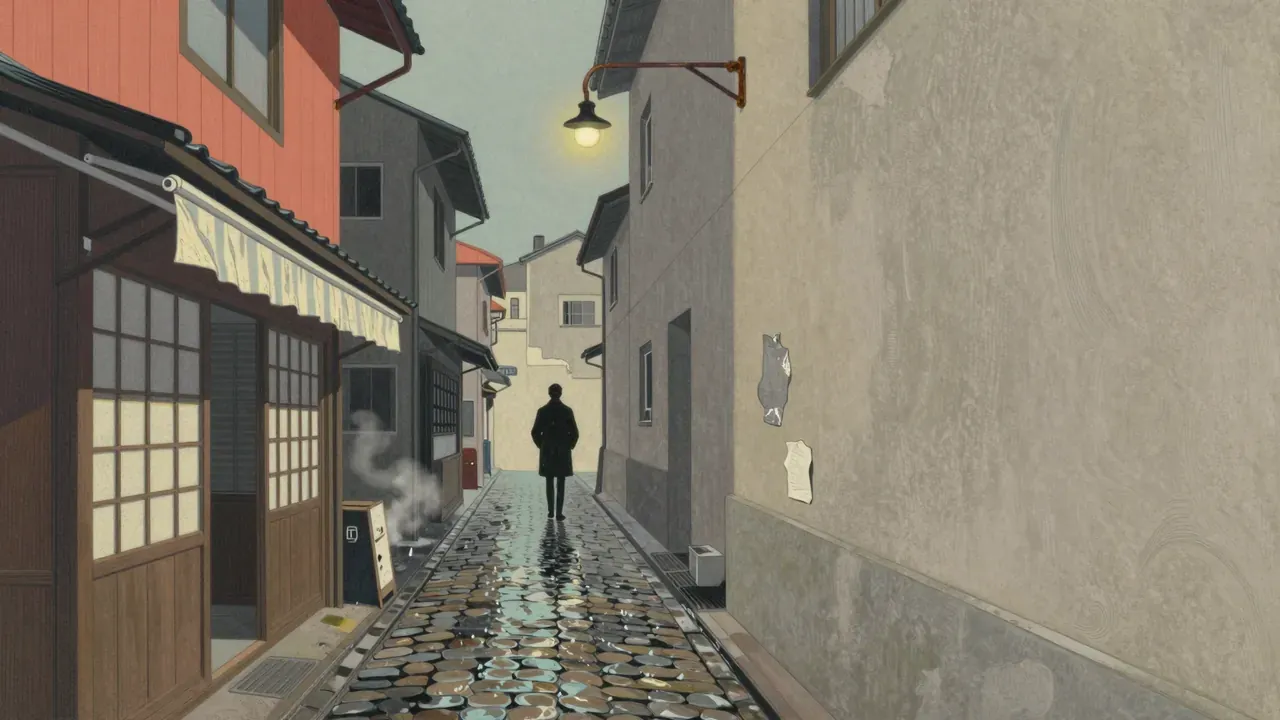
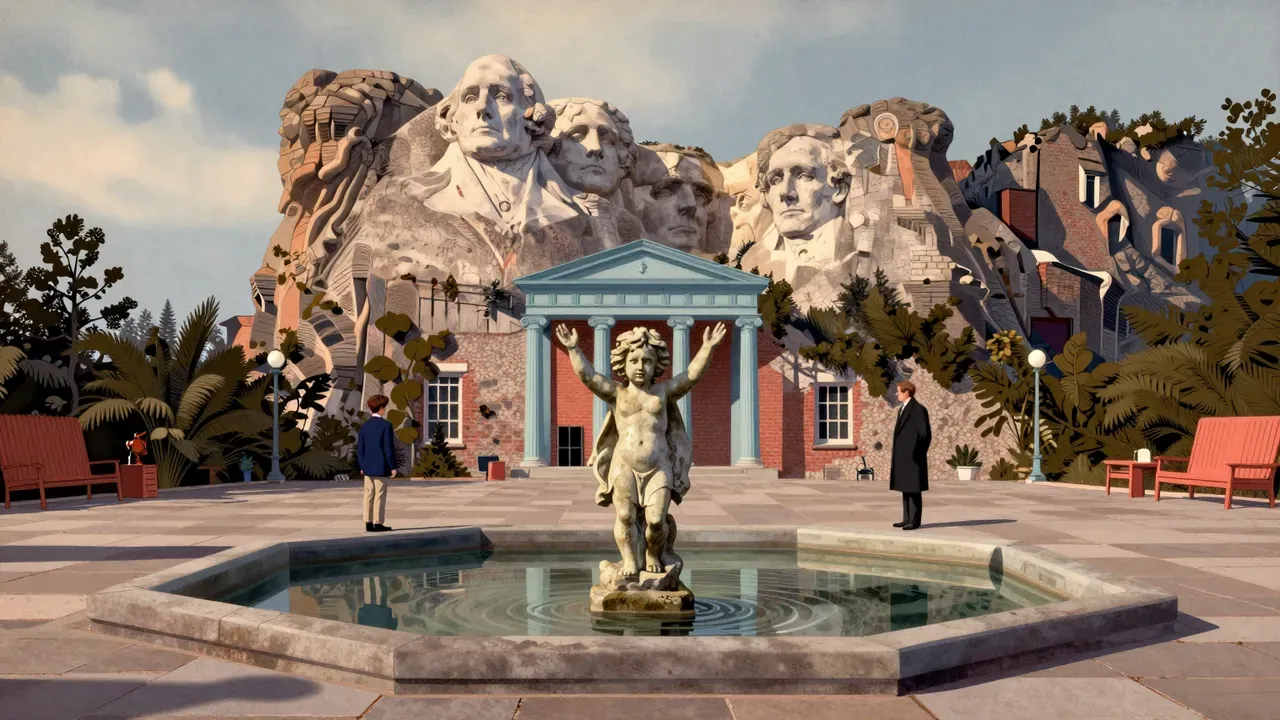
The story unfolds in tightly wound episodes, each pivoting on gesture, miscommunication, or ritualised failure — Max’s expulsion, Herman’s withdrawal from his family, Rosemary’s quiet retreat from both men. Jason Schwartzman’s performance anchors the film not through charm but through stubborn physicality: stiff posture, abrupt turns, hands that never rest. Bill Murray plays Herman with minimal inflection, letting silence and small shifts in weight carry resignation and dawning agency. Olivia Williams gives Rosemary a stillness that reads less as composure than as containment — a teacher holding herself together while everything she teaches unravels. Robert Yeoman’s cinematography uses symmetrical framing, shallow focus, and a palette dominated by muted blues and rust-reds to reinforce the film’s sense of curated artifice. The editing favours abrupt cuts and rhythmic montage, especially in early sequences establishing Max’s hyperactive extracurricular life. Mark Mothersbaugh’s score blends theremin-led melodies with British Invasion covers, underscoring the film’s tonal duality: nostalgic yet detached, playful yet exacting.
Where it sticks
What lands most firmly is the film’s refusal to condescend to its characters’ emotional logic. Max’s schemes — founding a beekeeping society, staging elaborate school plays, declaring war on a rival — feel absurd only until you register the real stakes behind them: survival of identity, avoidance of invisibility. Herman’s arc lands because his collapse is understated — no monologues, just a slow withdrawal from boardrooms into Max’s chaotic orbit. The friendship between them gains weight precisely because it is never sentimentalised; they use each other, misunderstand each other, and yet keep returning. The school setting functions as more than backdrop: its hierarchies, uniforms, and rituals become legible as shared grammar — a language both men speak fluently even when they’re at war. The film’s visual consistency — the repeated use of centre-framing, the deliberate flatness of certain shots — doesn’t distance the viewer so much as invite scrutiny: this world is constructed, yes, but every brick has been placed with care and purpose.
Where it slips
What does not land is the film’s occasional drift into mannerism for its own sake. A few set pieces — particularly some of Max’s later, more baroque retaliations — tip from stylised to strained, their irony outpacing their emotional grounding. The subplot involving Margaret Yang, though briefly affecting, remains underdeveloped; her presence feels like a narrative placeholder rather than a fully weighted counterpoint. The film’s tone also falters in moments where deadpan delivery crosses into affectless detachment — notably in some exchanges between Max and Dr. Guggenheim, where the headmaster’s exasperation reads less as character than as exposition. There is also a slight imbalance in rhythm: the first half moves with brisk, almost nervous energy, while the second slows into quieter, more internalised beats that lack the same structural propulsion. This isn’t a flaw in intention — the shift mirrors Herman’s growing introspection — but it does leave certain scenes feeling suspended rather than resolved.
What it’s really about
The themes that matter are ambition without infrastructure, grief without vocabulary, and the performance of adulthood as both shield and trap. Max’s relentless activity is not distraction but translation — an attempt to render inner chaos into outward order. Herman’s midlife unraveling is framed not as crisis but as delayed adolescence: he has spent decades playing a role, and only now notices the script is hollow. The film treats education as theatre and theatre as education — both are arenas where identity is rehearsed, contested, and sometimes discarded. Class operates quietly but insistently: Max’s scholarship status marks him as interloper, yet his cultural fluency (in music, literature, production) grants him a different kind of capital — one the school neither measures nor rewards. Love here is less about desire than about recognition: Max and Herman do not want Rosemary so much as they need her as proof that someone sees them clearly, even if she cannot love them back.
Who it’s for
This film is for viewers who tolerate — and prefer — emotional precision over emotional volume, who find resonance in restraint, and who accept that sincerity can wear a mask. It suits those familiar with Anderson’s syntax — symmetry, repetition, abrupt tonal shifts — but also works as an entry point for newcomers willing to adjust their expectations of pacing and payoff. It is not for viewers who require clear moral arcs, psychological exposition, or cathartic resolution. Those who expect teenage characters to be either rebellious archetypes or earnest strivers may find Max insufferable; those who rely on plot momentum may grow restless during its quieter, more static stretches. A viewer who values narrative efficiency over texture, or who finds stylisation alienating rather than clarifying, would likely disengage. The verdict changes if the film were less consistent in its aesthetic — loosen the framing, add voiceover, soften the performances — but that would make it a different film entirely.
Is it worth your evening?
Yes, it is worth your evening — not as light entertainment but as a compact, carefully assembled object of sustained attention. Its 93 minutes move with purpose, each scene calibrated to advance character or deepen tone, never merely to fill time. It repays rewatching not because it hides clues but because its craft reveals itself gradually: how a glance lingers a beat too long, how a colour recurs to signal shift, how silence is used as punctuation. It is not demanding in the way of dense dialogue or complex plotting, but it does ask the viewer to meet it on its own terms — to read gesture as meaning, stillness as tension, repetition as emphasis. Those who approach it expecting broad comedy or conventional drama will likely leave unsatisfied. But for anyone open to a film that treats adolescence and middle age as parallel conditions of displacement — and renders both with equal gravity and wit — Rushmore holds up, unchanged and unsoftened, twenty-five years on.