A favourite toy who is no longer anyone’s favourite
Toy Story 4 finds Woody displaced from his old position as Andy’s favourite toy, now largely ignored by his new owner Bonnie in favour of other toys, and compensating by attaching himself to Forky, a spork Bonnie fashioned into a toy at school and who is having an existential crisis over being considered a toy at all. Development on the film began shortly after Toy Story 3’s 2010 release and went through years of revision, with original director John Lasseter’s treatment eventually reworked by Josh Cooley, who took over as director in 2016 and reconceived both the story and the purpose of bringing Bo Peep back into it.
A reunion with a toy who chose not to be owned
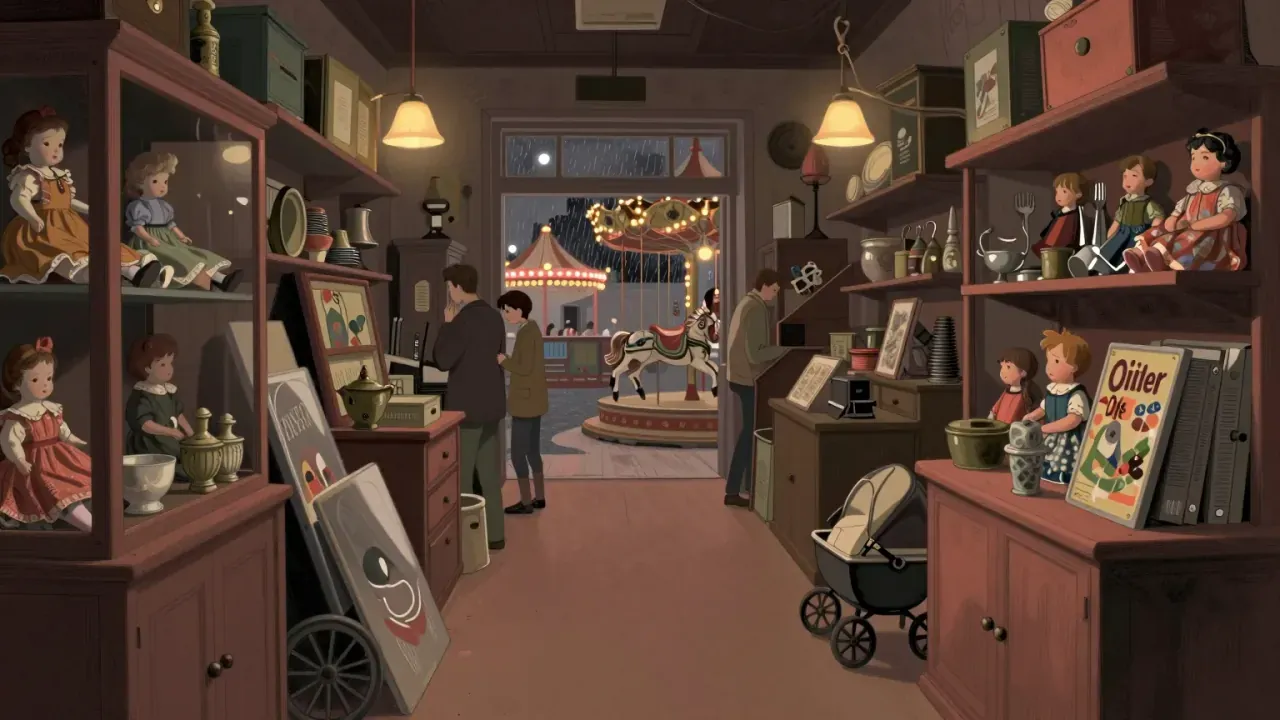
A carnival stop during Bonnie’s family road trip brings Woody back into contact with Bo Peep, missing since being given away years before the events of Toy Story 3, who has spent the intervening time as a self-sufficient lost toy moving between owners and locations rather than seeking a permanent home. Her independence directly contradicts everything Woody has organised his identity around, that a toy’s purpose is to be owned and loved by a specific child, and the tension between his worldview and her lived alternative becomes the film’s actual emotional engine beneath its adventure plot.
A road trip structured around rescue set pieces
The film’s middle section builds two substantial rescue sequences, first retrieving Forky from an antique shop guarded by Gabby Gabby, a damaged pull-string doll who wants Woody’s voice box for herself, and later a carnival-set retrieval involving Duke Caboom, a failed stunt-toy voiced by Keanu Reeves. These sequences carry genuine physical stakes and tension, giving the film’s pacing real momentum in stretches that could otherwise have felt like connective tissue between the character-driven scenes on either side of them, and the antique shop in particular functions as a small horror set piece built entirely from toys.
A crowded supporting cast thinning out the emotional core
New characters including the carnival prize toys Ducky and Bunny, and Duke Caboom, contribute comic material and, according to director Cooley, more story motivation than pure comic relief, but their combined presence spreads the film’s attention across a wider ensemble than the central Woody-Bo Peep question strictly needs. Certain stretches, particularly around the carnival set pieces, read more as ensemble comedy than the more introspective, two-hander film the film’s premise otherwise sets up, and the tonal balance between the two registers is not always even across the full runtime, with the film’s funniest material occasionally arriving at the expense of its own momentum.
Belonging redefined away from ownership
The film’s real argument, articulated through Bo Peep’s example rather than through dialogue stating it outright, is that being chosen and owned by a child is one way for a toy to matter but not the only one, a genuinely difficult proposition for a franchise built across three prior films on the premise that a child’s love is a toy’s entire purpose. Tim Allen has said the film’s ending was emotional enough that he struggled to get through the final scene, and that difficulty reflects how much weight the film puts on unsettling an idea the series had previously treated as settled.
An ending built for adults who grew up on the earlier films
Children will follow the road-trip adventure and Forky’s comic existential panic without needing the underlying philosophical question to land, but the ending’s actual weight, a toy choosing to leave the entire framework the series has operated within since 1995, is aimed squarely at adults who have followed Woody across two decades of films. It is a rare sequel that assumes its emotional stakes will register more with the audience that grew up alongside the franchise than with the children currently watching it for the first time, which is either a mark of confidence or a slight miscalibration depending on who is in the room.
A hundred minutes that risked the franchise’s ending to ask one more question
Toy Story 4 grossed over a billion dollars worldwide, becoming the highest-grossing film in the franchise, and won the Academy Award for Best Animated Feature, its second for the series. At a hundred minutes, it justifies revisiting a story Toy Story 3 had already closed by having something genuinely unresolved left to explore in it, rather than simply extending the franchise for its own sake, and that justification is what makes it worth the evening even for viewers who considered the earlier film’s ending sufficient on its own terms and were not looking for the series to continue any further.