The shape of the family
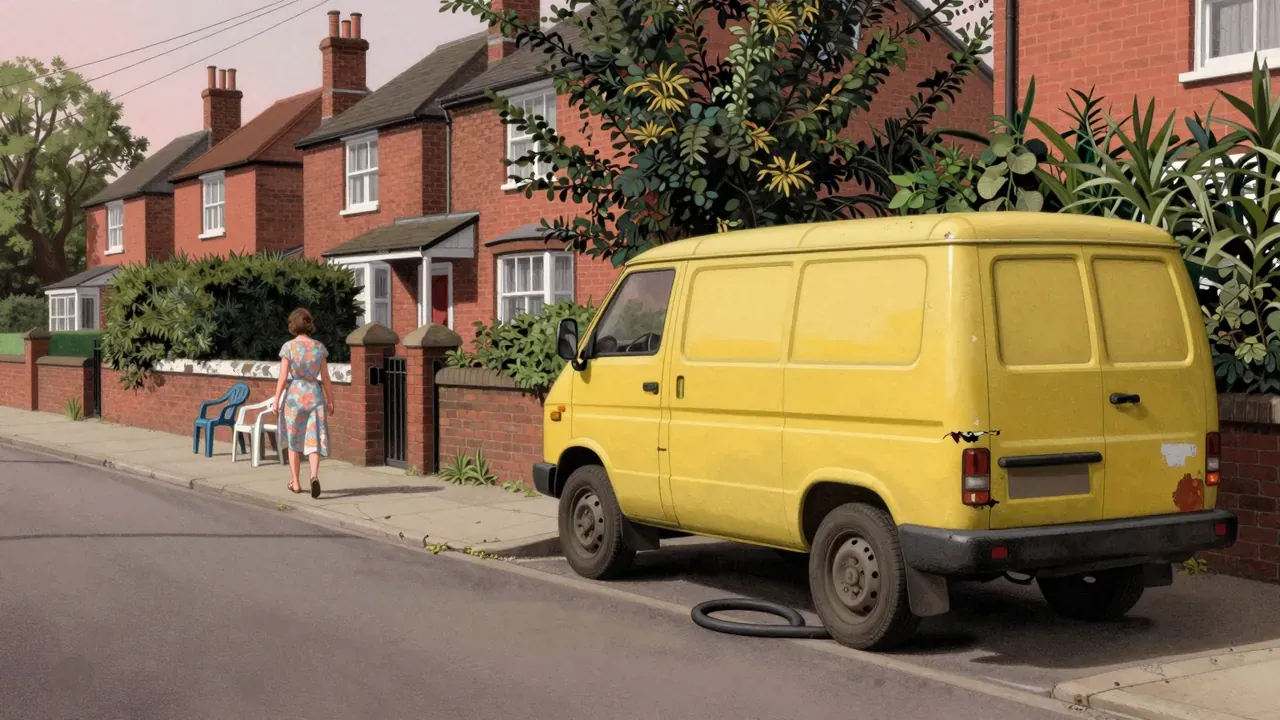
Life Is Sweet is a domestic tragi-comedy set over a few summer weeks in North London, following the Warmington family and their orbit. Mike Leigh does not aim for plot propulsion or narrative resolution but for accumulated texture: small decisions, unspoken tensions, habitual kindnesses and quiet failures. The film treats working-class life as neither aspirational nor pitiable, but as a field of persistent, unglamorous agency — Andy’s van, Aubrey’s restaurant, Natalie’s plumbing work, Nicola’s withdrawal — all are attempts to shape meaning within narrow margins. Leigh’s method of extended ensemble rehearsal before shooting yields behaviour that feels lived-in rather than performed, and the script emerges from that process rather than preceding it. There is no voiceover, no score-driven emotional cueing, no symbolic weather; the tone stays grounded in the physicality of Enfield back gardens, kitchen linoleum, and the sticky residue of chocolate spread on skin. It is a film about endurance disguised as lightness, and about love that persists despite chronic misunderstanding.
The way they move
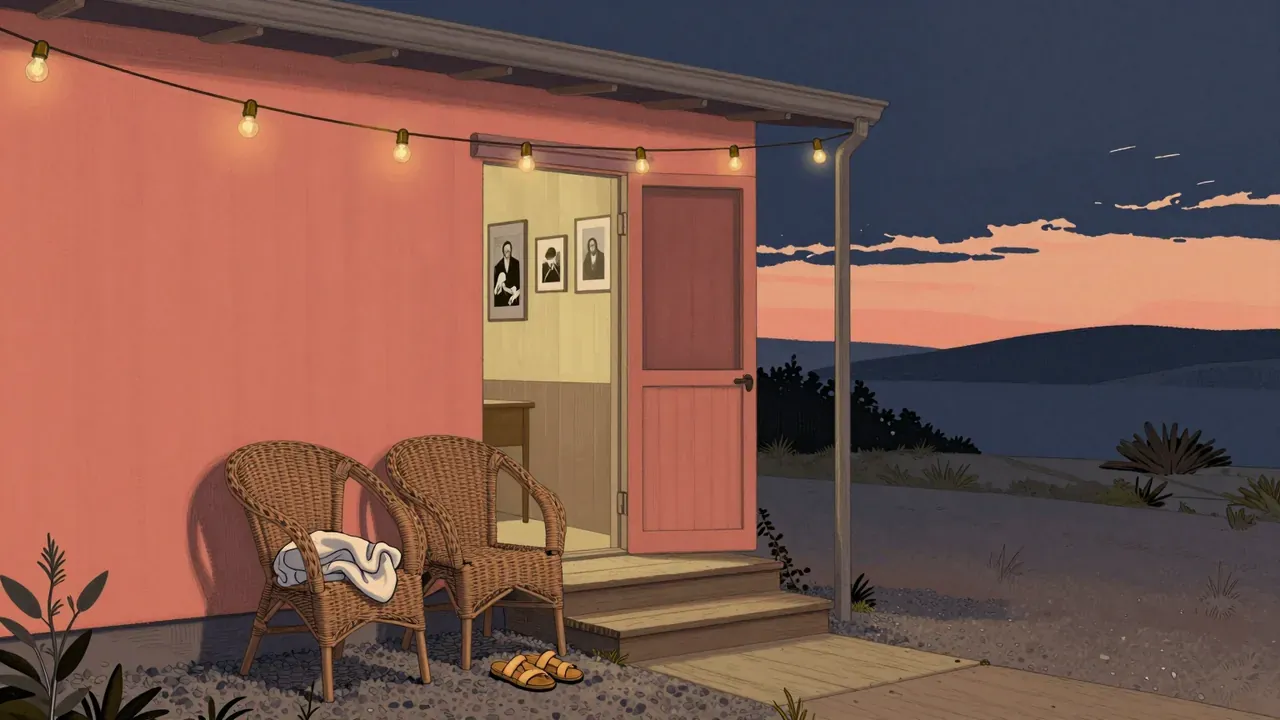
The story unfolds episodically, without a central crisis or arc, held together by rhythm and recurrence: morning routines, pub visits, failed openings, late-night arguments. Performances are calibrated to naturalism — Alison Steadman’s Wendy moves between brisk competence and sudden exhaustion; Jim Broadbent’s Andy toggles between comic bluster and quiet disappointment; Jane Horrocks’ Nicola conveys self-loathing not through monologue but through posture, silence, and the precise timing of a retch. Dick Pope’s cinematography keeps colour saturated but light even — primary reds and yellows in the van, the Regret Rien’s absurd décor, the garden shed — never stylised, always legible. Rachel Portman’s score is sparse and melodic, used only at key transitions, never to underscore emotion. Jon Gregory’s editing avoids emphasis: scenes end when they exhaust their purpose, not when they deliver a punchline or revelation. The production design — the mobile snack-bar, the mismatched furniture, the Piaf poster replaced by a cat’s head — functions as quiet social commentary, not decoration.
The weight of lightness
What lands most firmly is the film’s refusal to simplify its characters. Nicola’s bulimia is not framed as a ‘problem to be solved’ but as one strand in a tangle of grief, class resentment, and thwarted articulation; her breakdown feels earned because it is preceded by dozens of small, unremarkable choices — turning away, eating alone, rejecting help. The warmth between Wendy and Natalie is persuasive precisely because it is unromanticised: they share a pint, fix a tap, sit side by side without speaking. Even Aubrey’s disastrous restaurant opening works because his delusion is tender, not grotesque — his drunken pavement rant is pathetic but never mocked. The film’s humour arises from recognition, not ridicule: Andy’s spoon-slip ankle break lands because it follows hours of him trying, earnestly, to make the van run. These moments accumulate into something like emotional accuracy — not every scene sings, but none rings false. The film earns its affection by refusing to demand it.
The edges of the frame
What does not land is the structural looseness, which some viewers will read as drift rather than deliberation. The subplot involving David Thewlis’ unnamed lover — brief, underwritten, emotionally opaque — serves more as exposition for Nicola’s interior state than as a relationship with independent weight. His departure feels abrupt not because it is unmotivated, but because the film gives him no language or history beyond what Nicola projects onto him. Similarly, Stephen Rea’s Patsy remains a cipher: his role as the van’s original owner and Andy’s foil lacks development beyond functional exposition. The film’s resistance to exposition means some motivations — why Nicola rejects politics while claiming radicalism, why Aubrey clings to Parisian affectation — remain suggestive rather than clarified. This is intentional, but it can leave gaps where other films would offer bridges. A viewer expecting psychological closure or causal explanation will find the film withholding.
The air they breathe
Class is the film’s unspoken grammar: not as polemic, but as daily infrastructure — the cost of the van, the geography of Enfield versus central London, the fact that Wendy never went to college because she had babies, the way Natalie’s plumbing work is both skilled and invisible. Mental health appears not as diagnosis but as embodied habit: Nicola’s vomiting, Wendy’s suppressed fatigue, Andy’s compensatory jokiness. Family is shown as a site of persistent negotiation, not loyalty or rupture — love persists even when communication fails, even when help is refused. The film treats food as both sustenance and symbol: Aubrey’s impossible recipes, Nicola’s binge-and-purge cycle, the shared meal that never quite happens. Time is cyclical, not progressive: the final garden scene echoes the opening, but with subtle shifts — Nicola accepts money, Natalie asks the question, the light is softer. Nothing is resolved, but something has changed: not in the world, but in the capacity to hold contradiction.
The pace of ordinary time
This film is for viewers who value behavioural truth over narrative efficiency, who find resonance in the unspectacular rhythms of ordinary life, and who trust that small gestures — a hand placed on a shoulder, a shared silence in a garden — can carry the weight of major feeling. It suits those familiar with Leigh’s method or with British social realism more broadly, and those willing to sit with ambiguity rather than seek resolution. It is not for viewers who require clear stakes, escalating tension, or character arcs defined by external achievement. Those expecting satire will find the comedy too gentle; those seeking trauma narratives may find Nicola’s struggles under-contextualised. A viewer who needs cause-and-effect logic or psychological exposition will leave frustrated. The film assumes patience as a condition of engagement — not as a virtue, but as a practical necessity. Without it, the texture dissolves into anecdote.
The garden at dusk
Yes, it is worth your evening — not as escapism, but as recalibration. Its 103 minutes pass without hurry, yet leave a durable impression: of how people persist, miscommunicate, care imperfectly, and keep showing up. It rewards attention to gesture and pause, not plot turns. Someone who values tightly wound thrillers or emotionally directive dramas will find it slack; someone who watches for the way light falls on a kitchen floor or how a person folds their arms when angry will find it rich. Its value lies in its refusal to flatter the viewer with clarity — it trusts you to sit with discomfort, boredom, and tenderness in equal measure. That trust is rare. If you expect a film to tell you what to feel, Life Is Sweet will disappoint. If you accept that feeling is often muddled, contradictory, and best observed from the corner of the room, then it repays its time fully.