The logic of the child
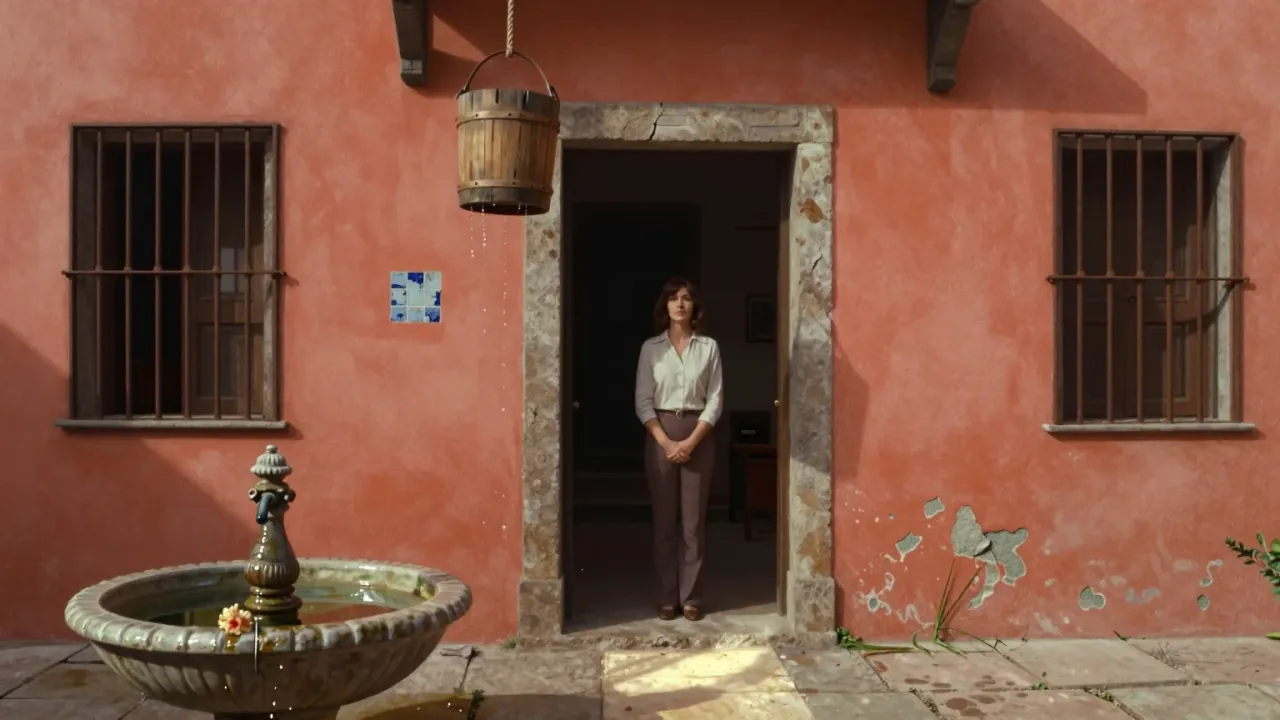
Zazie in the Metro is a French comedy film from 1960 that adapts Raymond Queneau’s linguistically exuberant novel with deliberate, systematic irreverence. It does not aim to tell a story in sequence or develop character in depth, but to stage a sustained collision between childlike logic and adult absurdity, using Paris — its streets, façades, signage and silences — as both setting and prop. The film treats narrative convention as optional scaffolding, discarding cause-and-effect in favour of rhythmic escalation, visual non-sequitur and verbal play. Its ambition is structural as much as tonal: to build a world where grammar bends, authority collapses on contact, and every shot is calibrated for comic disorientation rather than exposition. Louis Malle and Jean-Paul Rappeneau’s script retains Queneau’s invented words and syntactic tumbles, while William Klein’s contribution as artistic consultant anchors the chaos in a precise, high-contrast visual language — neon-lit interiors, telephoto compression, handheld urgency. This is not satire with a target, nor farce with a moral; it is linguistic and cinematic slapstick made rigorous by design. (158 words)
The look of it
The plot follows ten-year-old Zazie as she navigates a Paris paralysed by a Métro strike, but story serves only as pretext for set pieces built on misdirection, repetition and spatial disjunction. Catherine Demongeot’s performance as Zazie avoids precocity-as-precociousness: her delivery is flat, uninflected, almost documentary — which makes her profanity and matter-of-fact violence land with deadpan force. Philippe Noiret’s Gabriel moves between weary uncle and flamboyant drag performer without transition, his shifts marked not by psychology but costume and lighting. Jean Charvein’s cinematography uses only two lenses — wide-angle and telephoto — creating either distorted proximity or flattened distance, never neutral observation. Kenout Peltier’s editing favours abrupt cuts and repeated takes, echoing Klein’s suggestion to retain multiple versions of a single line. Fiorenzo Carpi’s score is sparse, often absent, letting street noise and dialogue dominate. Voice actor Albert Augier supplies off-screen narration that mimics textbook tone while describing nonsense — a formal counterpoint to the visual anarchy. (159 words)
The rhythm of the gag
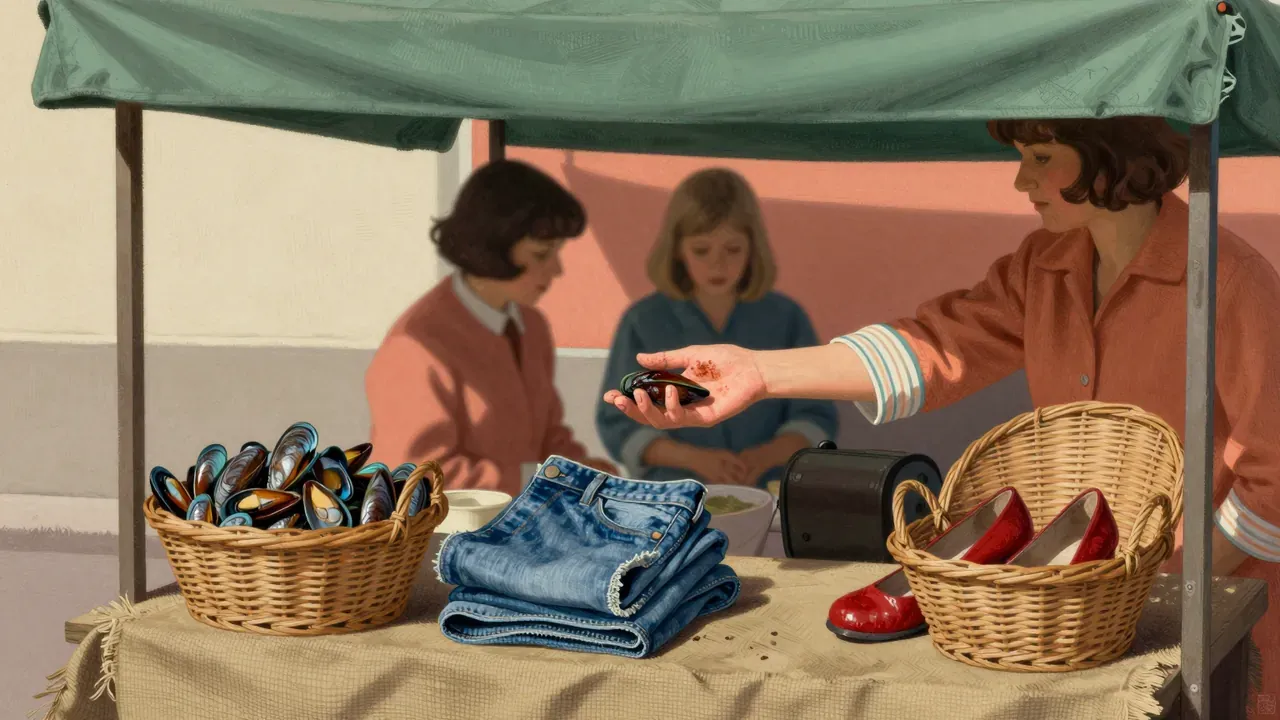
What lands is the film’s consistency of tone and method: every gag, however fleeting, obeys the same internal grammar. The flea market sequence works because Zazie’s transactional honesty — trading mussels for jeans, confession for attention — is mirrored in the framing: tight close-ups, abrupt zooms, no establishing shots. The Eiffel Tower scene succeeds not through spectacle but through anti-spectacle: Gabriel and Zazie arrive expecting grandeur, find only a bored attendant and a broken lift, then descend into a corridor of identical doors — a visual pun on bureaucratic futility. Turandot’s public shaming, the fake policeman’s interrogation, the bar brawl — all escalate with mathematical inevitability, each beat tightening the screw of social collapse. Even minor characters hold their shape: Annie Fratellini’s Mado speaks of marriage while delivering soup; Vittorio Caprioli’s Trouscaillon shifts allegiance mid-scene without explanation, yet remains legible as pure function — law as costume, desire as reflex. The film’s energy is never improvised; it is engineered, like a music box wound too tight. (157 words)
The weight of the break
What does not land is any attempt at emotional anchorage beyond the surface. The subplot involving Albertine’s near-rape and window leap arrives without setup or aftermath, treated as another absurd interruption rather than a rupture — and it feels that way, not as daring but as underweight. Zazie’s backstory — the axe murder, the mother’s lover — is delivered with such detachment that it fails to register as dark humour or psychological insight; it simply hangs, unresolved and unexamined. The drag act finale, though visually sharp, lacks stakes: Gabriel’s identity is neither affirmed nor questioned, only displayed and discarded. Some gags rely on period-specific Parisian geography or Queneau’s wordplay, which flattens in translation or without context — the Sainte-Chapelle/Saint-Vincent-de-Paul mix-up matters only if you know the buildings. The film’s refusal of continuity also means secondary characters vanish without trace: Gridoux the cobbler appears twice, then disappears; Moaque’s arc ends in flirtation, not consequence. These are not flaws in intention — the film rejects coherence — but limits in effect: when nothing accumulates, nothing lingers. (156 words)
The costume of authority
The themes that matter are language as performance, authority as costume, and childhood as epistemological privilege. Zazie sees adult institutions — law, transport, marriage, gender — not as systems but as arbitrary rules, and her questions expose their fragility. When she asks whether Gabriel is homosexual, she is not probing identity but testing syntax: the word has no weight for her, only sound and reaction. The Métro strike functions less as plot device than as metaphor for suspended logic — a city halted, yet still humming with illegible purpose. Advertising dominates the frame not as backdrop but as active agent: neon signs bleed into rooms, posters use invented typography, electric light replaces natural light — commerce as ambient consciousness. Class appears obliquely: Turandot runs a café but lives above it; Gabriel drives a taxi but performs in drag; Albertine sleeps through crises. There is no critique of inequality, only its texture — worn, unremarked, woven into the pavement cracks and café steam. The film’s deepest concern is not society but signification: how meaning is made, broken, and remade in real time, by children, by cameras, by chance. (155 words)
The audience it assumes
This film is for viewers who find pleasure in formal rigour disguised as chaos — those who enjoy noticing how a wide-angle lens distorts a doorway, or how a repeated line alters its meaning with each delivery. It rewards attention to craft over character, pattern over plot. It suits readers of Queneau, fans of Dada or early Godard, or anyone who values cinema as a medium of construction rather than transmission. It is not for viewers who require emotional payoff, narrative closure, or even consistent tone — those who dislike films that withhold motivation, reject exposition, or treat trauma as punctuation will find it alienating. Some critics have called it soulless; others see that absence as the point. A viewer who values psychological realism or moral clarity will leave frustrated. But someone open to comedy as structural experiment — who finds joy in the gap between what is said and how it is filmed — will find it richly sustaining. Its demands are specific, not universal. (154 words)
The evening it gives you
Yes, it is worth your evening — provided you approach it as a piece of choreographed mischief rather than a story to be followed. Its eighty-two minutes pass with the velocity of a dropped escalator: disorienting, exhilarating, slightly alarming. It repays rewatching not for hidden meaning but for visible mechanics — how Charvein frames a chase, how Peltier edits a lie, how Klein’s posters punctuate silence. Those who expect narrative momentum will feel short-changed; those who value invention over immersion will feel energised. It is not a film to love in the conventional sense, but one to admire, dissect, and return to for its sheer audacity of method. Its endurance lies in its refusal to soften — no sentiment, no apology, no concession to comfort. If you’ve ever laughed at a malfunctioning lift, a misprinted sign, or a bureaucrat reciting nonsense with perfect gravity, this film speaks your language. (152 words)