The premise of it
Female Trouble is a 1974 American independent comedy film written, produced, directed, and shot by John Waters. It attempts a sustained, stylised satire of celebrity culture, moral panic, and the commodification of transgression — framing crime not as rebellion but as performance, and beauty not as harmony but as extremity. Its method is deliberate artificiality: flat lighting, static frames, theatrical line readings, and a narrative that treats cause and effect as optional. Waters does not simulate realism; he builds a Baltimore of plywood sets, thrift-store glamour, and tabloid logic — a world where social consequences are inverted, punished only when inconvenient to the story’s internal rhythm. The film’s ambition is structural: to make outrage legible as syntax, and bad behaviour into a coherent aesthetic system. It presumes no shared morality with its audience — instead, it tests how far caricature can stretch before snapping into parody, and how long absurdity can hold a straight face before collapsing into farce. It is not an argument about society so much as a demonstration of what happens when its rules are replaced with those of a drag revue.
The look of it
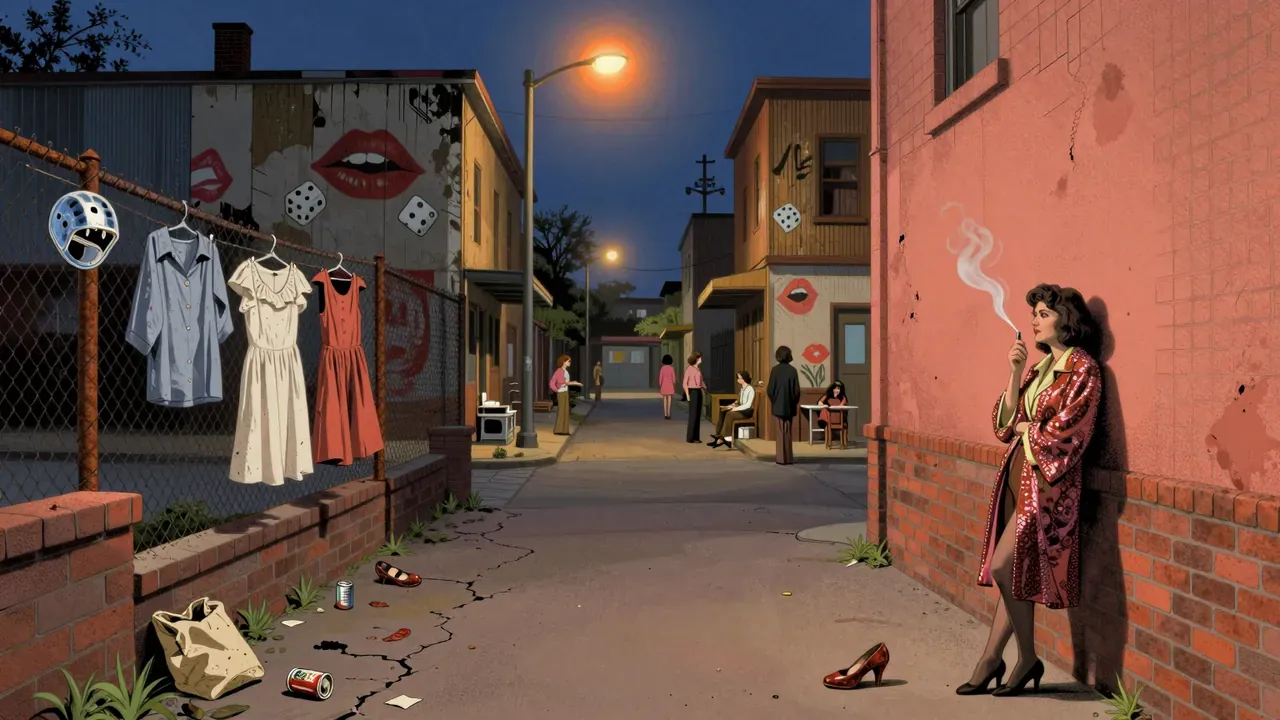
The story follows Dawn Davenport — played by Divine — from teenage expulsion through pregnancy, petty crime, failed marriage, acid disfigurement, and eventual execution. Waters structures it like a warped biopic, using rigid time stamps (1960, 1961–1967, 1968, etc.) to mimic documentary authority while undercutting it with escalating nonsense. Divine’s performance is physical, precise, and unflinching: trampoline flips done without wig displacement, river crossings in sleet and drag, a birth scene filmed with real postpartum blood and liver-filled prophylactics. David Lochary, Mary Vivian Pearce, Mink Stole, and Edith Massey all commit fully to the deadpan register — their line deliveries land like announcements, not confessions. Cinematography is functional and frontal, often lit by a single bulb; editing is rhythmic but unadorned. Bob Harvey and Waters’ score leans on jazz motifs, especially the recurring ‘Black Velvet Soul’ riff, repurposed as a sinister fanfare. Production design by Vincent Peranio — including Dawn’s apartment in a condemned suite above a store — sustains the film’s handmade, anti-industrial texture. Every element serves the same tone: ceremonial, unapologetic, and dryly controlled.
The tone of it
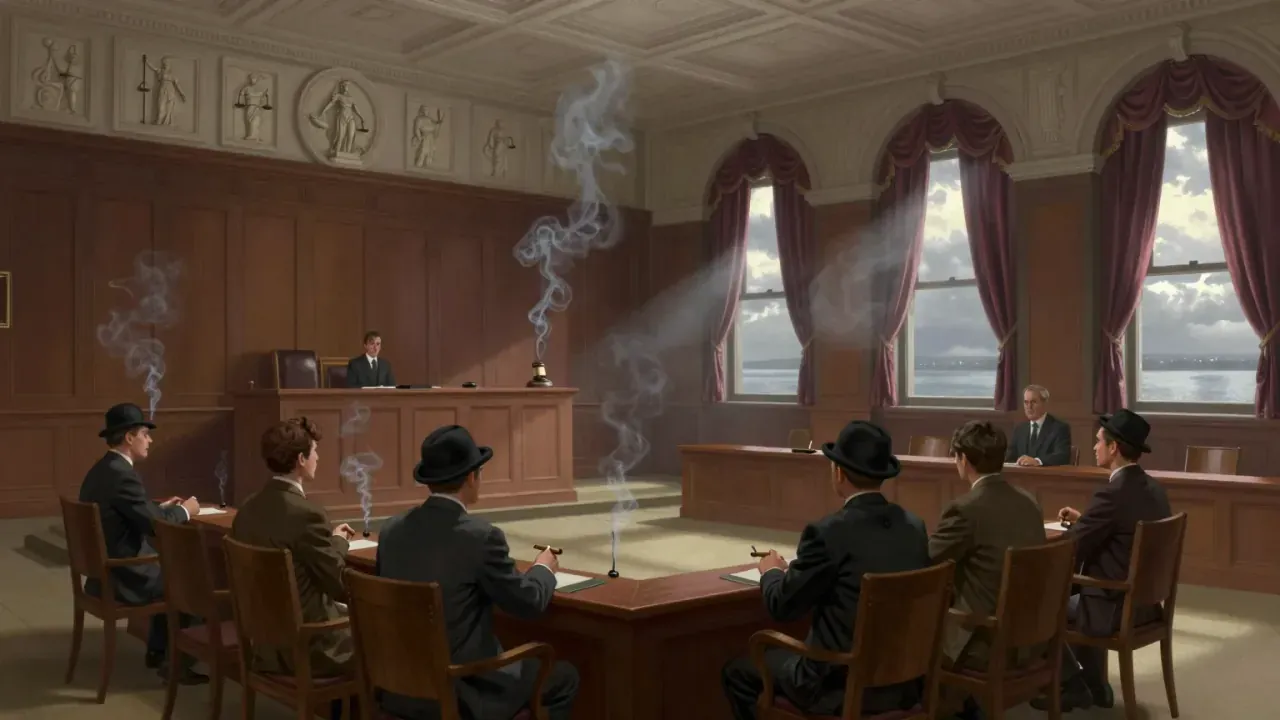
What lands is the film’s consistency of tone and its refusal to wink. Divine’s charisma anchors every frame — not despite the grotesque makeup or violence, but because it is never treated as grotesque within the film’s own logic. The courtroom scene works because the jury is visibly composed of relatives, making the trial feel less like justice and more like a family feud staged for public consumption. The Dashers’ ‘crime is beauty’ experiment lands precisely because it is presented without irony: their studio lights, their photo sessions, their gift of a caged aunt — all are rendered with the same gravity as a Vogue editorial. The electric chair finale lands because it completes the film’s central equation: fame, punishment, and spectacle are interchangeable currencies. Even the title song — sung by Divine over a jazz vamp — functions as both theme and epitaph, its lyrics mapping Dawn’s arc onto a pop structure. Nothing feels improvised or accidental; the film’s power comes from its unwavering commitment to its own grammar, however perverse that grammar may be.
The cost of it
What does not land is any attempt at psychological realism or emotional continuity. Dawn’s relationship with her daughter Taffy shifts abruptly between neglect, manipulation, and murderous rage without interior scaffolding — not because it is poorly written, but because interiority is excluded by design. The acid attack, the axe-wielding, the strangulation: these are plot points, not character turns. Some viewers will find the satire too blunt, the repetitions too insistent — the nightclub act, for instance, repeats the same beats (trampoline, fish, phone directory) until they become ritual rather than revelation. The film’s dedication to Charles ‘Tex’ Watson — mentioned in the credits and cited as thematic inspiration — remains opaque without external context, and offers no narrative function. Likewise, the prison visits that informed the ‘crime is beauty’ motif do not surface in the text. The film assumes familiarity with Waters’ earlier work, particularly Pink Flamingos, and its jokes rely on recognising the same faces, same locations, same tonal shorthand — a barrier for first-time viewers unfamiliar with the Dreamlanders’ repertoire.
The idea of it
The themes that matter are the instrumentalisation of identity, the aesthetics of punishment, and the collapse of moral categories under celebrity logic. Female Trouble treats crime not as deviance but as branding — Dawn’s disfigurement is not tragedy but rebranding, her execution not condemnation but apotheosis. The film interrogates how institutions (family, school, law, media) assign value through spectacle: Dawn is expelled for wanting cha-cha heels, imprisoned for performing on stage, executed for doing what the Dashers instructed. Her body is constantly remade — by makeup, surgery, costume, violence — always in service of an image someone else controls. Gender is treated as costume, motherhood as prop, justice as theatre. The recurring motif of photography — the Dashers documenting crimes, the courtroom sketch artist, the final electric-chair ‘award speech’ — suggests that visibility itself is the ultimate reward and punishment. There is no redemption arc, no moral pivot: the film’s ethics are structural, not personal — it asks not whether Dawn is good or bad, but how systems manufacture both labels to serve their own ends.
The audience for it
This film is for viewers who value formal rigour over emotional access, who find pleasure in sustained tonal control and recognise camp as a language rather than a mood. It rewards attention to repetition, costume detail, and compositional symmetry — not just what is said, but how it is framed, lit, and timed. It is not for those who require narrative causality, psychological plausibility, or tonal variation. Anyone expecting satire to soften its edges, or transgression to offer catharsis, will leave frustrated. Those who dislike deadpan delivery, static camerawork, or non-naturalistic pacing will find it alienating. A viewer who values character development over iconography, or who finds Divine’s performance abrasive rather than commanding, will reject it outright. The film makes no concessions: its worth depends entirely on whether its chosen terms — artifice, extremity, repetition — resonate as meaningful rather than merely shocking. Change the lighting, add a voiceover, or insert a moment of vulnerability, and the entire architecture collapses.
The time for it
Yes, it is worth your evening — provided you approach it as a crafted object rather than a story to be followed. Its 97 minutes pass with the inevitability of a clockwork toy: each scene winds down only to reset the next. It repays close viewing not for hidden meaning but for visible craft — the way Divine’s wig stays fixed mid-flip, the precision of a courtroom pan across real relatives, the decision to shoot the birth scene with actual newborn blood. It is not relaxing, nor is it designed to be — but it is coherent, economical, and exact. Those who dismiss it as mere provocation miss how tightly calibrated its provocations are. Anyone who expects entertainment to soothe or affirm will find it exhausting. But for those who treat film as a discipline of form — where every choice serves a principle — Female Trouble remains one of the most rigorously constructed American comedies of the 1970s. Its value lies not in what it says about the world, but in how completely it builds its own.