filmbriefs
Non-fiction

Essay film

143
briefs
13:00
average
1859 min
in total
92
people
All briefs143
13:00

24 Frames

Abbas Kiarostami · 2017

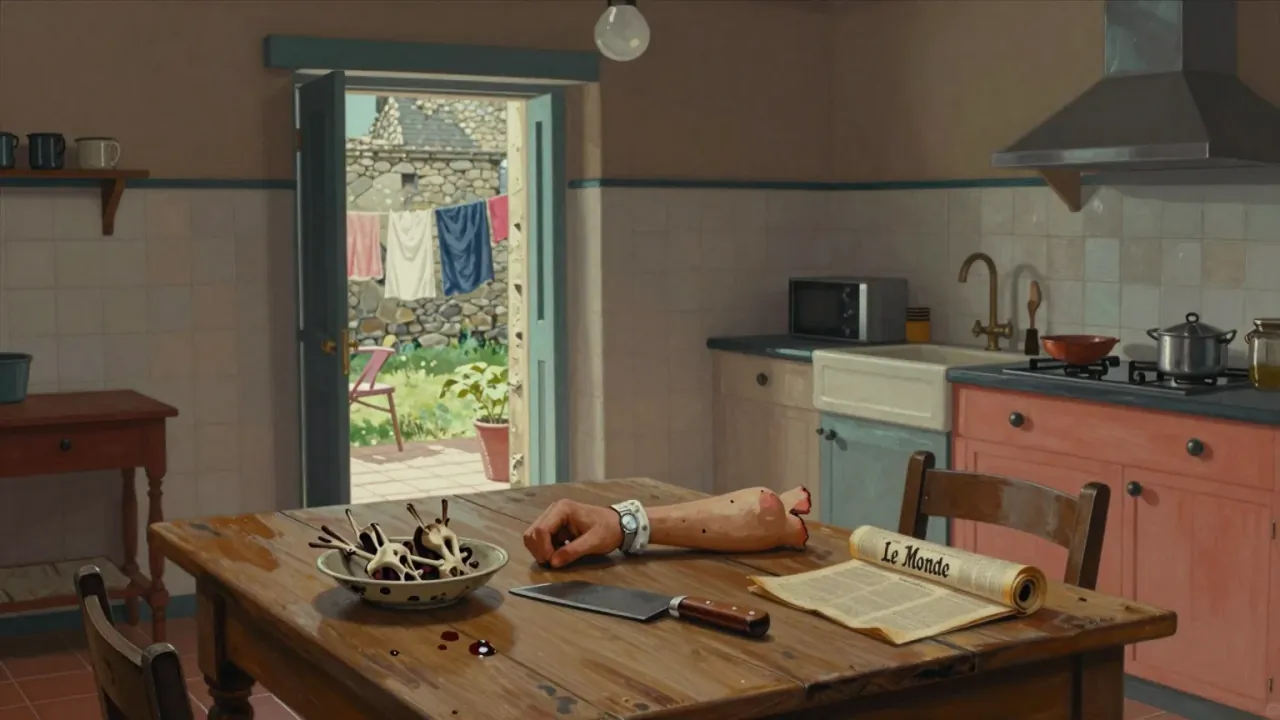
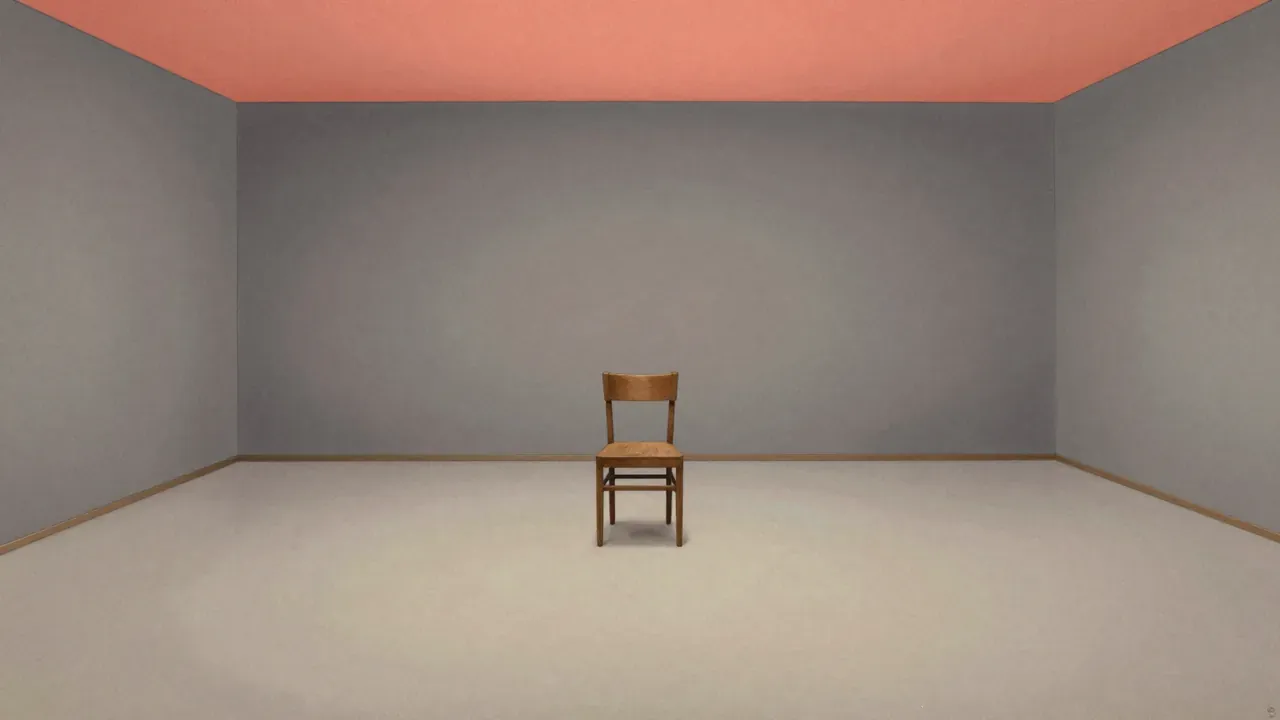
Abbas Kiarostami’s final film, 24 Frames, comprises twenty-four uncut, static shots — each ninety seconds long — observing nature, animals, and thresholds between interior and exterior. Beginning with animated movement superimposed on Bruegel’s Hunters in the Snow, it proceeds into real-world stillness, testing how much meaning resides in time, attention, and unmediated presence. Released posthumously at Cannes 2017, it is a rigorous, unsentimental essay on perception and impermanence.
13:00

A Brief History of Time

Errol Morris · 1991

Errol Morris’s 1991 documentary profiles Stephen Hawking not as a disembodied genius but as a man whose physical constraints and intellectual ambitions coexist in constant dialogue. Shot on studio sets with a score by Philip Glass, it weaves family testimony, scientific reflection, and quiet observation into a portrait where cosmology and biography are inseparable.

13:00

A Dedicated Life

Kazuo Hara · 1994

Kazuo Hara’s 1994 documentary follows Japanese writer Mitsuharu Inoue during his final four years with terminal cancer. Filmed in real time, it interweaves public appearances, private moments, interviews with peers and former students, and re-enactments of Inoue’s childhood — some later challenged by relatives. The film avoids narration or score, trusting juxtaposition and duration to build a portrait defined by contradiction, not coherence.
13:00

A Married Couple

Allan King · 1969

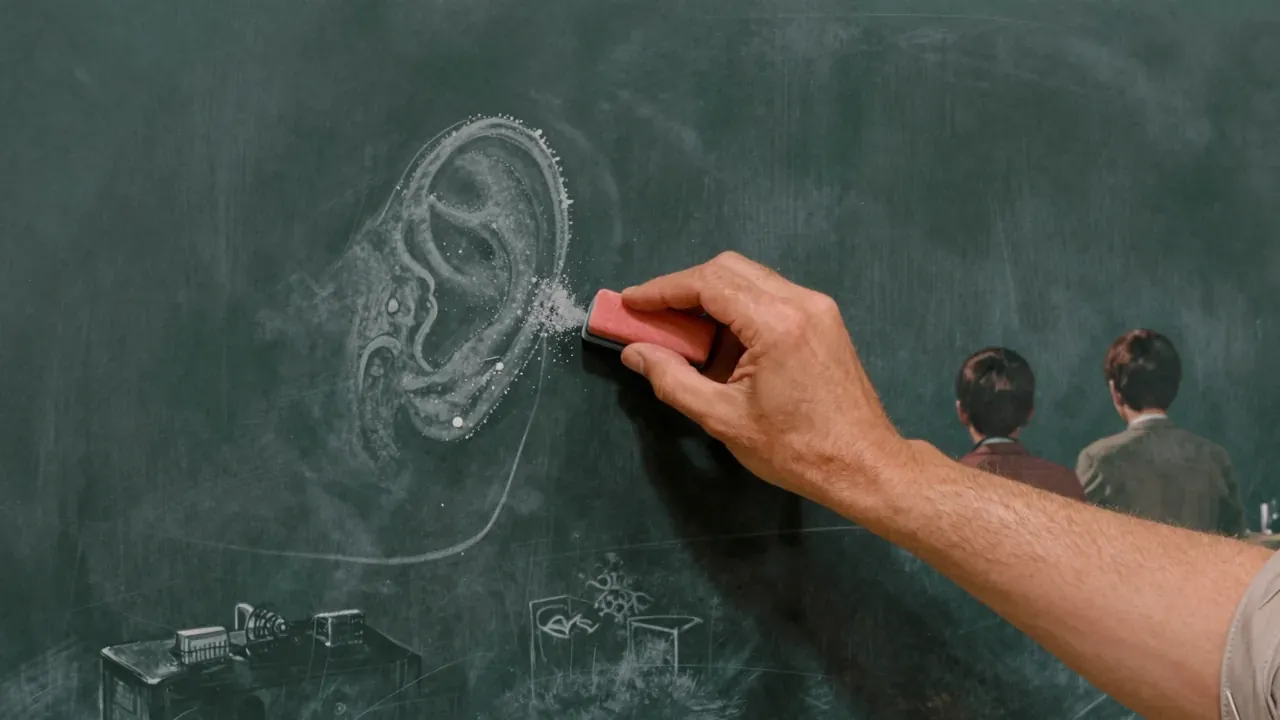
Allan King’s 1969 Canadian documentary observes Billy and Antoinette Edwards in their Toronto home for ten weeks, with no script, no direction during filming, and no narration. Shot by Richard Leiterman and edited by King, it presents marital life as unvarnished duration — arguments, tenderness, boredom, and silence unfolding without commentary. Though controversial on release for its explicitness and perceived voyeurism, it endures as a landmark of cinema vérité, testing whether sustained observation can reveal truths about intimacy that fiction and journalism obscure.

13:00

À propos de Nice

Jean Vigo · 1930

Jean Vigo’s 1930 debut À propos de Nice is a 25-minute silent documentary shot in Nice by Boris Kaufman and edited by Vigo. It juxtaposes images of bourgeois leisure — casinos, promenades, motor races — with scenes of working-class life — laundry, street play, factory labour — to expose social fracture without commentary. Structured as a visual essay, it avoids travelogue conventions and relies on rhythmic editing, low-angle framing, and stark contrasts to make its case. Though abstracted and deliberately unspecific, its formal rigour and polemical clarity remain potent.

13:00

Affirmations

Marlon Riggs · 1990

Marlon Riggs’s 1990 ten-minute short Affirmations places Black gay men visibly within Harlem’s African American Freedom Day parade, intercutting Reginald T. Jackson’s quiet recollection of intimacy with footage of protest, portraiture and public speech. Using minimal craft and maximal assertion, it treats queerness not as deviation from Black tradition but as its living, contested continuation.

13:00

All That Breathes

Shaunak Sen · 2022

All That Breathes follows brothers Mohammad Saud and Nadeem Shehzad as they treat injured black kites in a makeshift clinic in Delhi. Shot over several years with minimal intervention, the film observes their daily labour — cleaning wounds, administering medicine, releasing recovered birds — against the backdrop of a city thick with pollution and political tension. It avoids exposition, relying instead on texture, repetition, and sound to convey interdependence: between species, faith and pragmatism, decay and devotion.

13:00

All the Beauty and the Bloodshed

Laura Poitras · 2022

Laura Poitras’s 2022 documentary follows photographer and activist Nan Goldin across five decades — from her early portraits of New York’s queer and AIDS-affected communities to her founding of P.A.I.N. and protests against the Sackler family’s role in the opioid crisis. Built almost entirely from Goldin’s own archive and recent footage of museum demonstrations, the film frames art-making and political action as inseparable practices of truth-telling.

13:00

And Everything Is Going Fine

Steven Soderbergh · 2010

Steven Soderbergh’s 2010 documentary And Everything Is Going Fine assembles archival monologues, interviews and home movies of Spalding Gray into a portrait built entirely from his own words and presence. Edited by Susan Littenberg and scored by Gray’s son Forrest, it avoids biography-by-explanation in favour of temporal layering and verbal recurrence. The film premiered at Slamdance in January 2010 and was released on Criterion Collection Blu-ray and DVD in 2012.
13:00

And the Pursuit of Happiness

Louis Malle · 1986

And the Pursuit of Happiness (1986) is a television documentary directed by Louis Malle for HBO’s America Undercover series. Shot in the mid-1980s, it profiles six immigrants — including General José R. Somoza, poet Derek Walcott, and physicist Franklin Chang-Díaz — as they navigate work, language, and belonging in the United States. Narrated by Malle, the film avoids commentary or advocacy, favouring sustained observation and unvarnished interview. Released on Independence Day 1986, it screened at Cannes in 1987 and won a Peabody Award in 1989.

13:00

Anselm

Wim Wenders · 2023

Wim Wenders’ 2023 documentary Anselm is a 3D portrait of German artist Anselm Kiefer, filmed over three years across Germany, France, and Italy. Eschewing biography and exposition, it renders Kiefer’s creative process — burning canvases, photographing ruins, building towers from rubble — through sustained, tactile 6K 3D imagery. Staged sequences with younger actors echo Kiefer’s life across decades, while poetry by Paul Celan and archival footage anchor the film in postwar German reckoning. The result is less a film about art than an attempt to make cinema behave like painting: slow, material, heavy with time.
13:00

Anthem

Marlon Riggs · 1991

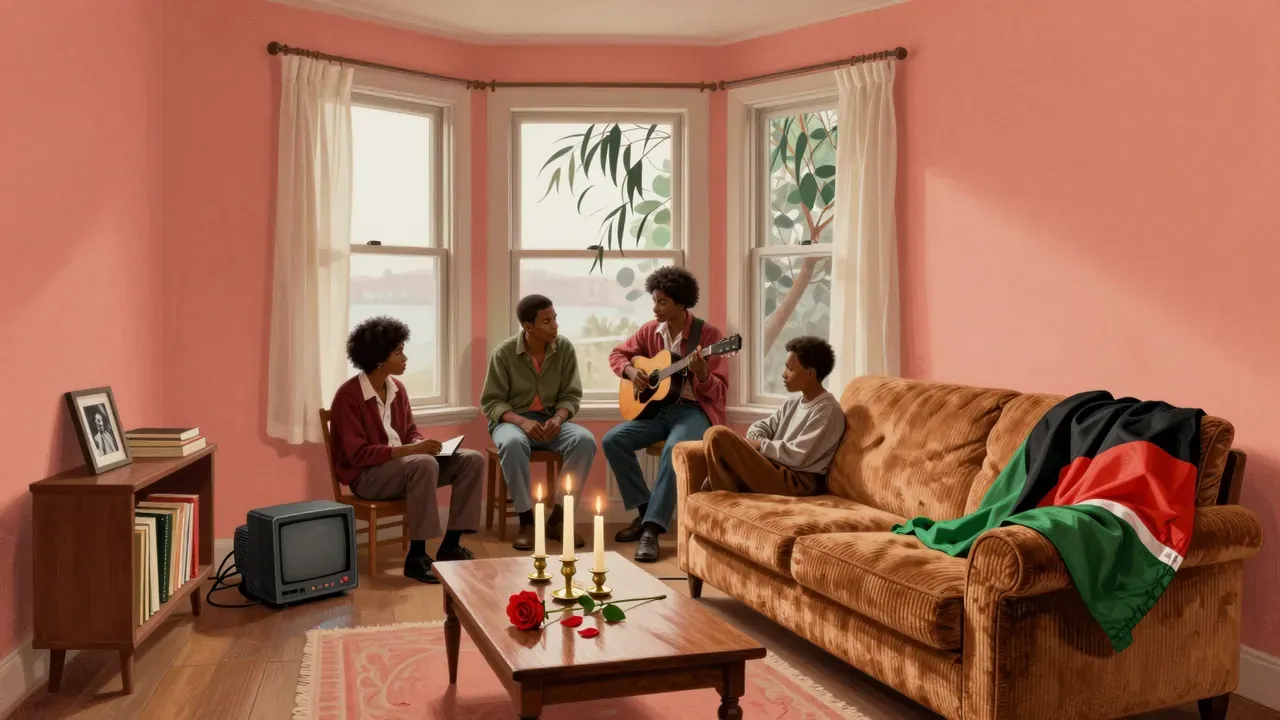
Marlon Riggs’s 1991 eight-minute music video Anthem fuses poetry, hip-hop rhythm, and political iconography to assert Black gay identity as inseparable from African heritage and American citizenship. Featuring Essex Hemphill, Colin Robinson, and others, it overlays ACT UP slogans with Pan-African symbols, memorial candles with erotic intimacy, and spoken word with drum patterns — building a declarative, non-narrative montage that refuses assimilation and rejects erasure.
13:00

Antonio Gaudi

Hiroshi Teshigahara · 1984

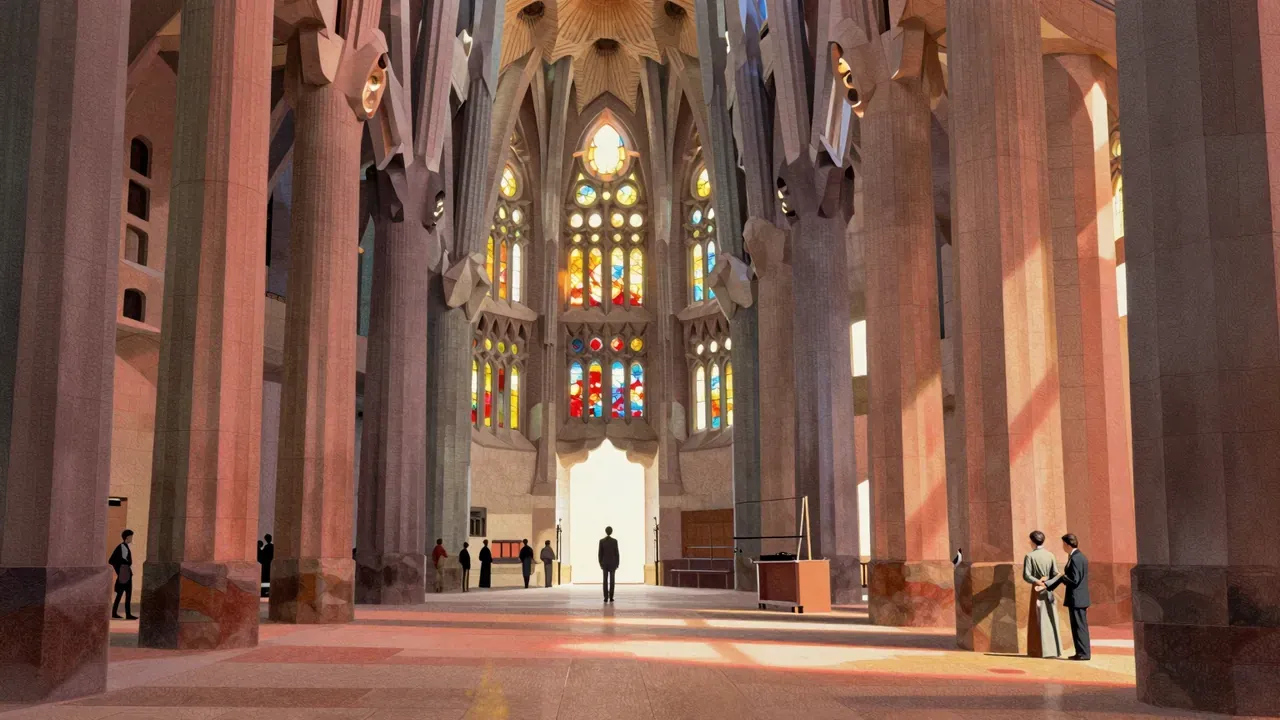
Hiroshi Teshigahara’s 1984 documentary Antonio Gaudi is a wordless, immersive study of Antoni Gaudí’s architecture in Barcelona. Shot in Spanish but produced in Japan, it uses sustained camera movement, deliberate pacing, and Toru Takemitsu’s evocative score to foreground the physical presence of buildings like the Sagrada Família and Park Güell — avoiding biography, history, or explanation entirely.

13:00

Black is... Black Ain't

Marlon Riggs · 1994

Marlon Riggs’s final film is a sprawling, urgent essay on Black identity in America, built from hundreds of unmediated testimonies, performances by Bill T. Jones and Essex Hemphill, and commentary from Angela Davis, bell hooks, and Cornel West. Framed by Riggs’s own illness and unfinished work, it treats Blackness not as a fixed category but as a contested, embodied, intersectional practice—resisting homogenisation, patriarchy, homophobia, and colourism while insisting on solidarity without uniformity.

13:00

Blue Heron

Sophy Romvari · 2025

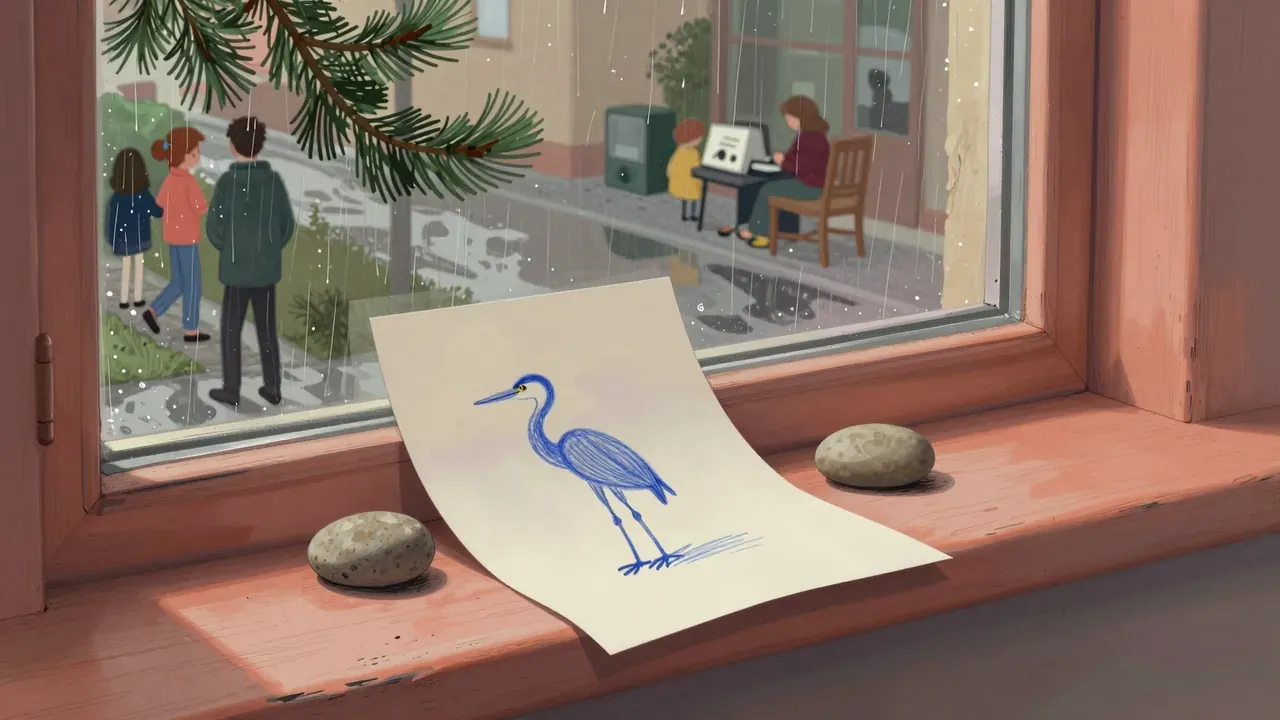
Blue Heron is Sophy Romvari’s semi-autobiographical debut feature, following a Hungarian immigrant family’s move to Vancouver Island in the late 1990s amid their eldest son’s escalating behavioural crisis. Told through overlapping timelines and anchored by Eylul Guven and Amy Zimmer as young and adult Sasha, it uses restrained performances, Maya Bankovic’s hushed cinematography, and a layered soundscape to explore how childhood perception absorbs trauma without comprehension. Released in 2025 after festival acclaim, it prioritises sensory fidelity over exposition, rendering memory as atmosphere rather than narrative.

13:00

Bowling for Columbine

Michael Moore · 2002

Michael Moore’s 2002 documentary uses the Columbine massacre as a lens to examine America’s relationship with guns, fear, and violence. Through staged interventions, selective interviews, and associative editing, it builds a case against cultural complacency — not by proving single causes, but by exposing patterns of denial, profit, and performance. It won the Academy Award for Best Documentary and remains a touchstone for debates about advocacy filmmaking.
13:00

Burroughs: The Movie

Howard Brookner · 1983

Howard Brookner’s 1983 documentary Burroughs: The Movie is the only film made with William S. Burroughs’ full participation during his lifetime. Shot over five years with Tom DiCillo and sound by Jim Jarmusch, it traces Burroughs’ life through interviews, location footage, and quiet observation—no narration, no re-enactments, no interpretive framing. The film premiered at the 1983 New York Film Festival and aired as part of BBC Arena. Restored in 2012, it remains a rare, unvarnished portrait of a writer whose life and work resist easy summary.

13:00

Calcutta

Louis Malle · 1969

Louis Malle’s 1969 documentary Calcutta observes the city over 105 minutes without narration, interviews, or explanatory text. Shot on location in 1967–68, it relies on long takes, ambient sound, and unmediated access to street life, ritual, and labour. Its method is observational, its stance unflinching but unjudging. It offers no synthesis — only duration, texture, and the quiet insistence of the real.

13:00

Cameraperson

Kirsten Johnson · 2016

Cameraperson is a 2016 documentary assembled by cinematographer Kirsten Johnson from unused footage shot over twenty-five years on assignments across fifteen countries. Without narration or score, it constructs a self-portrait through lingering, unvarnished moments — births, courtrooms, landscapes, faces — revealing the ethics, labour and quiet persistence of looking. Directed and shot by Johnson, edited by Nels Bangerter, and produced by Abigail Disney, Johnson and Gini Reticker, it premiered at Sundance and won Sheffield Doc/Fest’s top prize.

13:00

Carl Th. Dreyer: My Metier

Torben Skjødt Jensen · 1995

Torben Skjødt Jensen’s 1995 documentary examines Carl Theodor Dreyer’s filmmaking practice through interviews with collaborators, archival material, and voiceover readings of his notes. It focuses on method — rehearsal, lighting, editing, negotiation — rather than biography or interpretation, assuming prior knowledge of Dreyer’s major works.

13:00

Caught by the Tides

Jia Zhangke · 2024

Caught by the Tides is a 2024 Chinese drama directed by Jia Zhangke, constructed from footage shot between 1999 and 2024 — including material from Unknown Pleasures, Still Life, and Ash Is Purest White — and centred on Zhao Tao’s character Qiao Qiao across two decades of social and personal change. It premiered in competition for the Palme d’Or at Cannes.

13:00

Close-Up

Abbas Kiarostami · 1990

Close-Up (1990) is Abbas Kiarostami’s reconstruction of a real 1980s Tehran fraud case: Hossein Sabzian, a print-shop worker, posed as filmmaker Mohsen Makhmalbaf to gain entry into a family’s home, promising them roles in a film. With full participation from Sabzian, the Ahankhah family, the journalist who exposed him, the judge, and Makhmalbaf himself, Kiarostami films their trial and re-enactments of key events — all playing themselves. The film treats identity, cinema, and justice not as abstractions but as lived, contingent acts of attention and consent.

13:00

Color Adjustment

Marlon Riggs · 1992

Marlon Riggs’s 1992 documentary examines four decades of African American representation on US prime-time television, tracing how sitcoms and variety shows absorbed racial conflict into safe, marketable formats. Narrated by Ruby Dee and built from archival clips, interviews with performers and producers, and cultural criticism, it argues that inclusion was conditional — granted only when it reinforced, rather than challenged, dominant myths of the American family and dream.

13:00

Colossal Youth

Pedro Costa · 2006

Pedro Costa’s 2006 Colossal Youth is a DV-shot, static-take meditation on ageing, memory and displacement in Lisbon’s Fontainhas district. Starring non-professional Cape Verdean residents — especially the 75-year-old Ventura — it blends documentary observation with scripted recitation, refusing narrative clarity in favour of durational presence. Shot in high-contrast interiors and stark new housing blocks, it explores the aftermath of Portugal’s Carnation Revolution through quiet encounters, repeated phrases and sustained silences.
13:00

Confessions of a Cheat

Sacha Guitry · 1936

Sacha Guitry’s 1936 Confessions of a Cheat tells the life story of a man who cheats his way through childhood, war, love and gambling — all narrated in voiceover by Guitry himself, who speaks every line of dialogue. Structured as a café-bound memoir, it uses formal restraint to examine dishonesty as habit, not sin. Adapted from Guitry’s own novel, it privileges narrative control over emotional display, and ends not with repentance but with quiet professional reinvention.
13:00

Daguerréotypes

Agnès Varda · 1975

Made in 1975 on Paris’s Rue Daguerre, Agnès Varda’s Daguerréotypes is a quietly radical documentary composed of static portraits of local shopkeepers and residents, all filmed within ninety metres of her home. Each subject answers three questions about origin and arrival, their responses left unedited and unframed by commentary. Nurith Aviv and William Lubtchansky’s cinematography is unobtrusive and naturalistic; Varda’s direction is resolutely local, anti-extractive, and typologically curious. The film treats the street as both subject and limit—offering not analysis, but sustained attention.

13:00

David Lynch: The Art Life

Jon Nguyen, Rick Barnes, Olivia Neergaard-Holm · 2016

David Lynch: The Art Life is a 2016 documentary shot over four years, composed entirely of Lynch’s voice (recorded across twenty conversations) and footage of him painting, sketching and caring for his infant daughter at home. Archival photographs punctuate his recollections of childhood in the American West, art school in Boston and Philadelphia, and the early days of his filmmaking career in Los Angeles. Directed by Jon Nguyen, Rick Barnes and Olivia Neergaard-Holm, it avoids commentary, context or interpretation — offering not a life story but a sustained, quiet immersion in Lynch’s sensory memory and daily practice.

13:00

Dick Johnson Is Dead

Kirsten Johnson · 2020

Kirsten Johnson’s documentary follows her father Dick, a retired psychiatrist with dementia, as she collaboratively stages elaborate, darkly comic fantasies of his death — falls, accidents, funerals, heaven. Shot with John Foster, the film shows each sequence alongside its making: rigs, doubles, direction, Dick’s quiet participation. It avoids exposition, clinical context or sentimentality, holding instead to a precise, unsentimental tenderness.

13:00

Documenteur

Agnès Varda · 1981

Made in Los Angeles in 1981, Documenteur follows Emilie, a Frenchwoman rebuilding daily life after separation, working as a typist and caring for her young son. Shot in English and interwoven with imagery from Varda’s documentary Mur Murs, the film treats the city’s murals as silent companions to private adjustment. With minimal plot, restrained performances, and a focus on light, texture, and repetition, it offers a delicate, unsentimental portrait of displacement as routine rather than rupture.

13:00

Ethnic Notions

Marlon Riggs · 1987

Marlon Riggs’ 1987 documentary Ethnic Notions traces the development and function of anti-Black stereotypes in American popular culture from the 1800s to the 1960s. Using archival footage, academic commentary, and Esther Rolle’s narration, it dissects figures like The Mammy, The Tom, and The Brute across minstrelsy, advertising, film, and song — showing how visual language enforced racial hierarchy and shaped self-perception. It won a 1988 National Emmy and remains Riggs’ most widely seen work.

13:00

F for Fake

Orson Welles · 1973

Orson Welles’s 1973 essay-film F for Fake uses the lives of art forger Elmyr de Hory and hoax biographer Clifford Irving to dissect authorship, authenticity, and the cinematic construction of truth. Shot across France, Spain, Italy, and the US, it layers re-enactments, spliced interviews, and fabricated footage — including a wholly invented War of the Worlds scene — to demonstrate how belief is engineered through editing, voice, and framing. With François Reichenbach as cinematographer and Michel Legrand scoring its sly, jazz-inflected passages, the film refuses documentary convention in favour of procedural argument. Its themes — self-deception, the economics of attribution, and the gendered politics of credibility — remain urgent. Though demanding, its 89-minute run is tightly controlled, its provocations precise.

13:00

Faces Places

Agnès Varda, JR · 2017

Faces Places is a 2017 French documentary in which filmmaker Agnès Varda and artist JR travel rural France photographing local residents and pasting their enlarged portraits onto buildings and structures. The film documents their collaboration, their conversations, and the quiet impact of making people visible on their own terms — all while Varda confronts her failing eyesight and JR maintains his enigmatic presence behind dark glasses.

13:00

Fårö Document

Ingmar Bergman · 1970

Shot on Fårö in early 1969, Ingmar Bergman’s Fårö Document is a 16 mm documentary about the island’s 754 residents, their infrastructure deficits, educational underfunding and political marginalisation. With Sven Nykvist as cinematographer and a five-person crew, it avoids stylisation in favour of direct testimony and observational footage — interviews with the mayor, farmers and schoolchildren, scenes of seasonal labour and civic meetings. Broadcast on Swedish television on 1 January 1970, it functions as both record and advocacy, calling for subsidies, daycare, schools and a bridge across Fårö Sound.

13:00

Fårö Document 1979

Ingmar Bergman · 1979

Ingmar Bergman’s 1979 documentary observes daily life on Sweden’s Fårö island with absolute restraint: no narration, no music, no interviews, no explanation. Shot by Arne Carlsson for Cinematograph, it records fishing, farming, schooling, and worship in unhurried, uninflected takes. Its power lies in duration and precision — not in what it reveals, but in how it trains attention on the ordinary.

13:00

Fellow Citizen

Abbas Kiarostami · 1983

Fellow Citizen (1983) is Abbas Kiarostami’s 48-minute observational documentary, shot on a Tehran street. It follows a civil servant attempting to regulate pedestrian and vehicle movement, capturing unscripted reactions without narration, interviews or contextual framing. The film’s method is rigorously restrained: fixed camera, natural sound, no edits that conceal time. Its interest lies in behavioural nuance — hesitation, mimicry, negotiation — rather than argument or exposition.

13:00

First Case, Second Case

Abbas Kiarostami · 1979

Abbas Kiarostami’s First Case, Second Case (1979) presents two near-identical classroom scenarios — one where pupils remain silent after a disruption, another where one names the culprit — then films real Iranian educators and political figures reacting to each. Made in the volatile weeks before the Islamic Revolution, it was banned after its premiere and vanished until 2009. Rigorous, austere and structurally radical, it treats pedagogy as political theatre and silence as ethical resistance.

13:00

First Graders

Abbas Kiarostami · 1984

First Graders (1984) is Abbas Kiarostami’s observational documentary following Iranian six- and seven-year-olds during a single school day. Filmed with concealed cameras, it avoids narration, music, or intervention, relying instead on long takes, natural sound, and uninflected framing. Its purpose is not exposition but sustained attention — to register the rhythms, hierarchies and quiet labours of early socialisation as they occur. Though rooted in Iran’s post-revolutionary educational context, it offers no explicit commentary on politics or pedagogy. Its power lies in accumulation: small gestures, repeated behaviours and unscripted silences build a portrait less of individuals than of collective habit. A rigorous, unsentimental work, it rewards patience and resists easy interpretation.

13:00

For All Mankind

Al Reinert · 1989

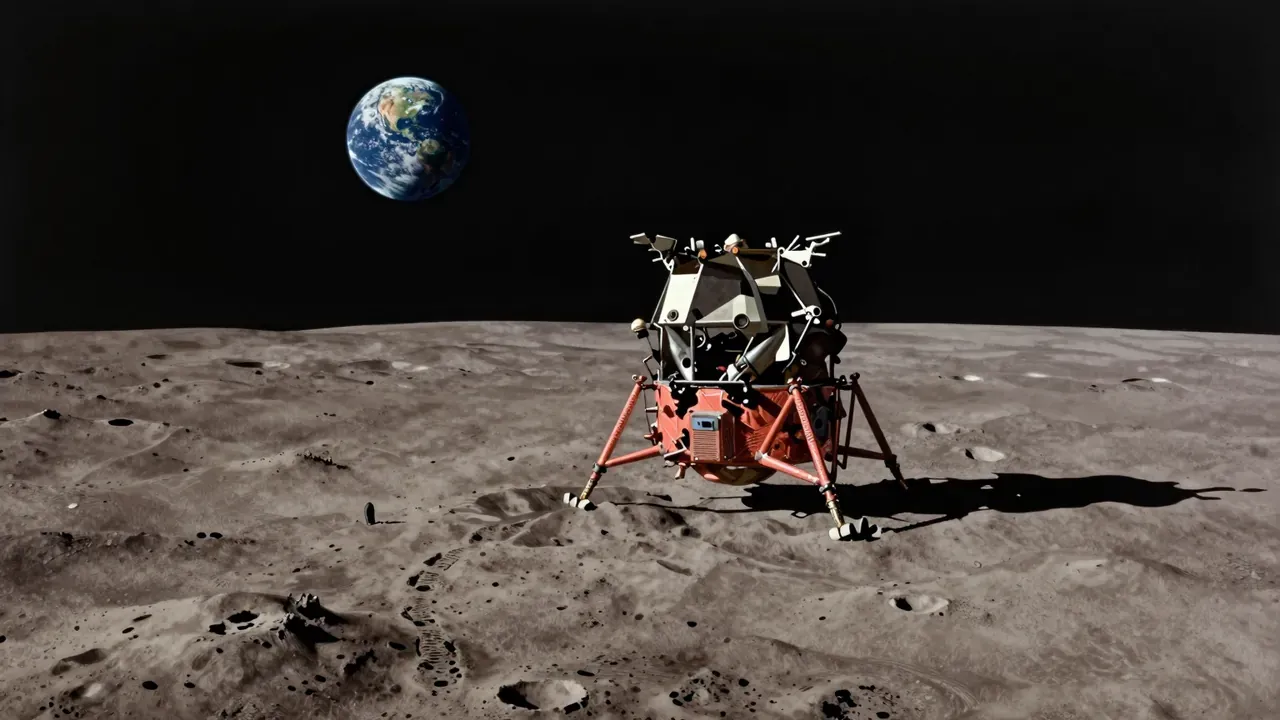
Al Reinert’s 1989 documentary For All Mankind assembles six million feet of NASA film into a single, continuous lunar mission, using astronauts’ interview voices and Brian Eno’s ambient score to evoke the physical and psychological experience of spaceflight — prioritising sensation over explanation, silence over speech, and scale over story.

13:00

Gates of Heaven

Errol Morris · 1978

Errol Morris’s 1978 debut is an unnarrated documentary about pet cemeteries in California, built entirely from interviews with entrepreneurs, mourners and bystanders. Shot on a shoestring budget with three fired cinematographers before settling on Ned Burgess, it avoids irony, exposition and music, letting speech — hesitant, repetitive, earnest — carry philosophical weight. Its structure divides two competing businesses, revealing not satire or sentiment but a sustained inquiry into how people articulate meaning around death, care and failure.

13:00

General Idi Amin Dada: A Self Portrait

Barbet Schroeder · 1974

Barbet Schroeder’s 1974 documentary follows Idi Amin across military drills, cabinet meetings, and staged spectacles, all filmed with Amin’s full cooperation and direction. Shot by Néstor Almendros, it presents Amin’s self-mythology without commentary, letting his rhetoric, gestures, and contradictions accumulate as evidence. Though stripped of historical context or moral framing, its rigour lies in sustained observation — a portrait not of a man, but of power performing itself.

13:00

God's Country

Louis Malle · 1985

A 1985 PBS documentary by Louis Malle, filmed across six years in Glencoe, Minnesota, capturing the quiet unraveling of a farming community amid the mid-1980s agricultural crisis. Shot and edited with deliberate restraint, it observes residents’ daily lives, conversations, and surroundings without narration or exposition — offering texture over analysis, continuity over climax.

13:00

Gray's Anatomy

Steven Soderbergh · 1996

Spalding Gray’s 1996 monologue film, directed by Steven Soderbergh, documents his diagnosis with macular pucker and his turn toward alternative treatments. Filmed in ten days with minimal staging, it relies entirely on Gray’s voice, syntax, and timing. Elliot Davis’s restrained cinematography and Cliff Martinez’s sparse score support rather than interpret. The film balances wit and vulnerability without resolving into either satire or sermon — though its final passages strain under the weight of their own metaphysical drift.

13:00

Häxan

Benjamin Christensen · 1922

A 1922 Swedish-Danish silent film directed by Benjamin Christensen, Häxan blends documentary exposition and dramatised medieval vignettes to argue that witch-hunts stemmed from misdiagnosed mental and neurological conditions. Shot in Denmark with meticulous period detail, it uses restrained cinematography, functional special effects, and a deliberate pace to trace a line from superstition to early psychiatry. Though censored on release for its depictions of torture and nudity, it endures as a landmark essay film — rigorous, unsettling, and structurally innovative.

13:00

Head

Bob Rafelson · 1968

A 1968 satirical musical directed by Bob Rafelson and written by Jack Nicholson, Head uses The Monkees as raw material to dissect celebrity, media construction, and narrative coherence. With non-linear editing, meta-commentary, and deliberate tonal rupture, it rejects conventional storytelling in favour of structural critique — exposing how pop culture manufactures meaning by assembling fragments. Shot across Los Angeles, Palm Springs, Alaska, and The Bahamas, its craft serves its argument: every cut, lyric, and cameo functions as evidence in a case against authorship, authenticity, and audience expectation.

13:00

Heart of a Dog

Laurie Anderson · 2015

Laurie Anderson’s 2015 essay-film Heart of a Dog reflects on the death of her dog Lolabelle, weaving personal memory, Buddhist bardo teachings, and reflections on post-9/11 New York into a meditative, non-linear structure. Composed, scored, and narrated by Anderson, it favours restraint over exposition, silence over score, and association over argument — offering not answers but a sustained mode of attention.

13:00

Hearts and Minds

Peter Davis · 1974

Hearts and Minds (1974), directed by Peter Davis, is a fiercely focused documentary about the Vietnam War that builds its argument through juxtaposition rather than narration. Shot by Richard Pearce and edited by Lynzee Klingman, it assembles interviews with American officials, veterans, and Vietnamese civilians into a sustained critique of US assumptions about race, power, and civilisation. Winning the 1975 Academy Award for Best Documentary, it remains polarising: praised for its moral urgency and condemned for its selectivity. Its enduring significance lies not in balance, but in its unflinching exposure of how language enables violence—and how footage, once recorded, outlives intention.

13:00

Hollywood Shuffle

Robert Townsend · 1987

Hollywood Shuffle is a 1987 semi-autobiographical satire directed by Robert Townsend, following Bobby Taylor as he navigates Hollywood’s demand for stereotypical Black roles. Shot on a $100,000 budget over two and a half years, it uses vignettes, parodies, and daydreams to expose how race is commodified in casting, writing, and performance. Though praised for its sharp humour and technical ingenuity, it draws criticism for reproducing sexist and homophobic stereotypes it otherwise critiques. The film ends not with success but with quiet recalibration — Bobby filming a US Postal Service PSA.

13:00

Homework

Abbas Kiarostami · 1989

Homework (1989) is Abbas Kiarostami’s 16mm documentary filmed at a Tehran primary school, composed almost entirely of interviews with pupils and two fathers about the practice of assigning homework. With no narration, music or illustrative footage, it foregrounds unscripted speech — hesitant, contradictory, revealing — to expose the gap between educational policy and domestic reality in late-1980s Iran.

13:00

Hôtel Monterey

Chantal Akerman · 1972

Chantal Akerman’s 1972 debut feature is a silent, sixty-five-minute documentary shot in fixed long takes inside New York’s Hotel Monterey. With Babette Mangolte’s precise cinematography, it maps the building’s corridors, rooms and roof without narration, music or commentary — treating architecture as a sequence of visual propositions about time, space and perception.

13:00

Humain, trop humain

Louis Malle, René Vautier · 1973

Humain, trop humain (1973) is a French observational documentary co-directed by Louis Malle and René Vautier, filmed inside a Citroën car plant. With no narration, interviews, or music, it records the rhythms of assembly-line work — shifts, tools, gestures, pauses — over 73 minutes. Its power lies in sustained attention, not argument.

13:00

I Am Curious (Blue)

Vilgot Sjöman · 1968

I Am Curious (Blue) is Vilgot Sjöman’s 1968 companion to Yellow, recutting and retoning the same material into a colder, more fragmented inquiry. Starring Lena Nyman as a version of herself, it follows her sexual and political reckoning across Stockholm and rural Sweden, using documentary interludes, staged debates and bodily realism — notably a scabies outbreak — to test the limits of nonviolence, meritocracy and personal authenticity. Peter Wester’s underlit cinematography and Bengt Ernryd’s sparse score reinforce its sombre, unsentimental tone.

13:00

I Am Curious (Yellow)

Vilgot Sjöman · 1967

I Am Curious (Yellow) is Vilgot Sjöman’s 1967 Swedish art film starring Lena Nyman as a politically engaged theatre student conducting street interviews while navigating a fraught relationship and family history. Shot in naturalistic style by Peter Wester and edited with deliberate fragmentation by Wic’ Kjellin, it blends documentary impulse with autobiographical exposure. Notorious for its nudity and legal battles over obscenity, its real subject is the entanglement of ideology and intimacy — how class, race and war live in the body and the bedroom. Though uneven and dated in places, it remains a singular document of 1960s political cinema’s ambition to make thought visible, tactile and unresolved.

13:00

Innocence Unprotected

Dušan Makavejev · 1968

Dušan Makavejev’s Innocence Unprotected (1968) is a Yugoslav documentary essay built around fragments of Dragoljub Aleksić’s unreleased 1942 film of the same name. Makavejev expands the material with wartime newsreels, interviews with surviving cast, and subtle visual interventions — tinting, selective colouring — to explore how amateur art endures under political pressure. Neither satire nor homage, it treats innocence as a cultural condition worth preserving, not excusing. The film won the Silver Bear Grand Jury Prize at Berlin in 1968 and is now recognised as cultural heritage in Serbia.

13:00

Intervista

Federico Fellini · 1987

Intervista (1987) is Federico Fellini’s self-reflexive portrait of filmmaking in late middle age. Framed as a Japanese TV crew’s visit to Cinecittà, the film weaves together present-day preparations for a non-existent Kafka adaptation, reconstructed memories of Fellini’s 1938 debut at the studios, and staged scenes from imagined films — all held together by tone, texture and the physical presence of Fellini himself. Tonino Delli Colli’s cinematography and Nicola Piovani’s score support a structure that privileges process over plot, and observation over exposition.

13:00

Jacquot de Nantes

Agnès Varda · 1991

Jacquot de Nantes (1991) is Agnès Varda’s tender, unhurried portrait of her husband Jacques Demy’s childhood in wartime Nantes. Blending dramatised scenes with documentary interludes and archival fragments, it traces his early fascination with film-making — not as spectacle, but as tangible craft: drawing, lighting, set-building, animation. Shot by Patrick Blossier, Agnès Godard and Georges Strouvé, with music by Joanna Bruzdowicz, it privileges material detail and quiet observation over narrative drive or psychological exposition.

13:00

Jane B. par Agnès V.

Agnès Varda · 1988

Agnès Varda’s 1988 essay-film Jane B. par Agnès V. is a collaborative, self-reflexive portrait of actress and singer Jane Birkin, conceived around her apprehension at turning forty. Blending real interviews with scripted vignettes in which Birkin plays invented roles, the film rejects linear biography in favour of variation, ambiguity, and playful artifice. Shot in English with a modest crew and naturalistic craft, it foregrounds Birkin’s presence — humorous, vulnerable, restless — over exposition or resolution. Though occasionally uneven in execution, its intelligence, warmth, and formal daring make it a singular work in Varda’s filmography and in the history of cinematic portraiture.

13:00

King Lear

Jean-Luc Godard · 1987

Jean-Luc Godard’s 1987 King Lear is a ninety-minute essay-film shot in Switzerland, using only shards of Shakespeare’s text alongside quotations from Weil, Bresson, Woolf, and others. It rejects narrative continuity, linear character arcs, and cinematic convention in favour of repetition, silence, and deliberate disjunction. Funded by Cannon Films and shot alongside denim commercials, it treats money, copyright, and authorship as structural elements. Norman Mailer’s abandoned script and departure mid-production are woven into its fabric. The film is less about Lear than about the conditions under which any cultural work can be made—or remembered—after catastrophe.

13:00

Koko: A Talking Gorilla

Barbet Schroeder · 1978

Barbet Schroeder’s 1978 documentary observes Francine Patterson’s work teaching American Sign Language to Koko the gorilla at Stanford University. Shot by Néstor Almendros in restrained, natural light, it avoids explanation or advocacy, instead holding sustained, quiet attention on Koko’s signing, expressions, and interactions. It engages with questions of animal personhood, the ethics of observation, and the limits of human language — not as arguments, but as durational encounters. Released by New Yorker Films in the US and later restored by Criterion, it remains a singular, understated work in the history of science-facing documentary.

13:00

Koyaanisqatsi

Godfrey Reggio · 1982

Koyaanisqatsi (1982) is a non-narrative American documentary directed by Godfrey Reggio, shot by Ron Fricke and scored by Philip Glass. Comprising time-lapse, slow motion and static imagery of natural and urban landscapes across the US, it constructs a sensory argument about technological acceleration and ecological rupture — without voiceover, text or exposition. Its title, from the Hopi language, means 'life out of balance'. Though widely regarded as a landmark of avant-garde documentary, its formal rigour sits alongside omissions: no engagement with the people behind the images, no contextualisation of its US-specific sites, and no reckoning with the cultural source of its title.

13:00

La chambre

Chantal Akerman · 1972

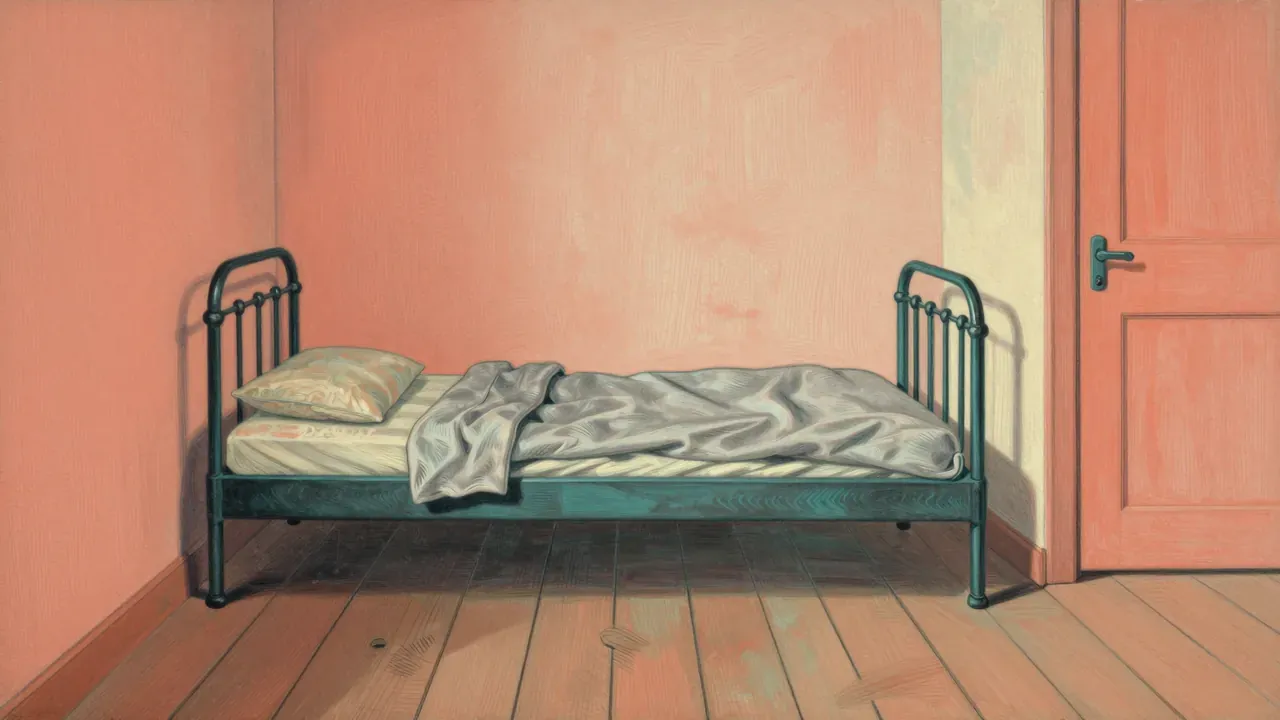
Chantal Akerman’s 1972 short La chambre is an eleven-minute, single-take study of a woman moving silently within a bare bedroom. Shot in black-and-white with no editing, no score, and no dialogue, it tests the limits of attention, duration, and cinematic presence. Its power lies not in narrative or psychology, but in the accumulated weight of stillness and the material reality of the frame.

13:00

La Jetée

Chris Marker · 1962

A 28-minute French photomontage from 1962, La Jetée tells a post-nuclear time-travel story almost entirely through still black-and-white photographs, linked by voice-over narration and a sparse orchestral score. Its protagonist is sent from a ruined Paris to the past and future, bound by a childhood memory of a woman on an airport jetty — a memory that proves to be his own death. Built as a photo novel, not a film, it treats time as recursive, memory as architectural, and perception as the only continuous medium across stillness.

13:00

Land of Milk and Honey

Pierre Étaix · 1970

Land of Milk and Honey (1971) is Pierre Étaix’s documentary portrait of French society after May 1968. Shot in contrasting colour and black-and-white, it observes summer holidays, amateur song contests, and street interviews to trace anxieties around advertising, gender, media, and identity. Étaix appears both as filmmaker and subject in a reflexive closing sequence. Though poorly received on release and withdrawn quickly, it has since been reassessed as a subtle, structurally daring essay-film.

13:00

Le 15/8

Chantal Akerman · 1973

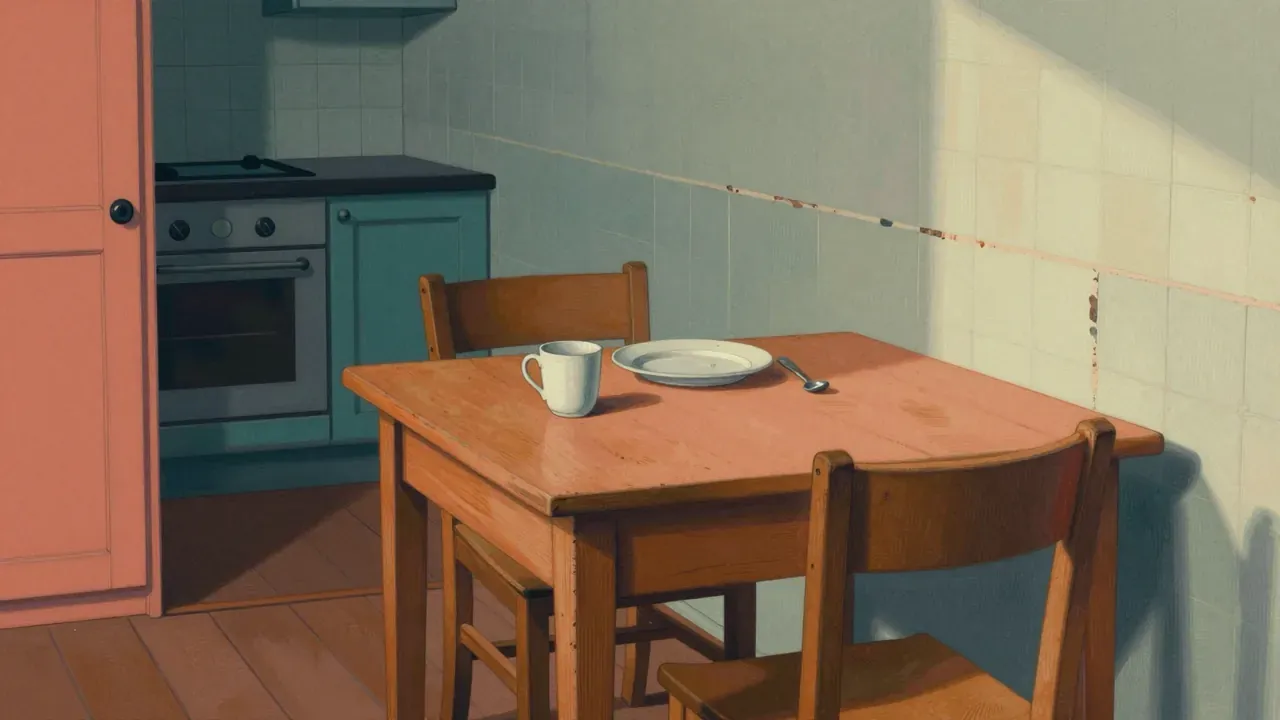
Le 15/8 is a 1973 Belgian essay-film by Chantal Akerman, shot in black-and-white on 16mm in a Brussels apartment. Over thirty-two minutes and seven static takes, it observes a young woman’s uneventful afternoon — eating, reading, gazing — with no dialogue, music, or narrative. Its power lies in duration, silence, and rigorous attention to light, space, and repetition. A foundational work of structural and feminist avant-garde cinema, it asks the viewer to inhabit time rather than consume it.

13:00

Les glaneurs et la glaneuse... deux ans après

Agnès Varda · 2002

Two years after her acclaimed documentary about gleaning, Agnès Varda revisits its subjects and settings, filming herself as much as others. With handheld camerawork, unvarnished sound, and a gently recursive structure, the film measures time’s passage not in events but in textures — wrinkled skin, sprouting potatoes, reused objects, remembered conversations. It is a modest, self-aware extension of her earlier work, rooted in attention rather than argument.

13:00

Love Meetings

Pier Paolo Pasolini, Vincenzo Cerami · 1964

A 1964 Italian documentary in which Pier Paolo Pasolini interviews citizens across the country on virginity, prostitution, homosexuality and sex education. Shot in black and white by Tonino Delli Colli and edited by Nino Baragli, it presents unvarnished, often contradictory testimony without commentary or resolution — treating speech itself as historical evidence.

13:00

Lynch/Oz

Alexandre O. Philippe · 2022

Lynch/Oz (2022) is a documentary by Alexandre O. Philippe examining the enduring formal and psychological resonance between The Wizard of Oz (1939) and David Lynch’s filmography. Structured in six chapters narrated by filmmakers and critics, it uses rapid, precise editing to draw visual and thematic parallels across Lynch’s career — from The Alphabet to Twin Peaks: The Return — without claiming direct causation. Shot partly on drone in Colorado’s Central City Opera House, it favours atmosphere over argument, pattern over proof.

13:00

Maidstone

Norman Mailer · 1970

Norman Mailer’s 1970 independent film Maidstone stars him as a narcissistic filmmaker-politician shooting a brothel drama on his East Hampton estate. Shot over five days with no script, handheld cameras, and improvised performances — including a real, bloody fight with Rip Torn — it attempts a radical critique of media, power and ego. Its ambition is structural: to make authority visible by dismantling control. But its execution exposes the limits of that vision — especially in its treatment of women and race. Though obscure for decades, it remains a singular, uncomfortable artefact of late-1960s American cultural crisis.

13:00

Masculin Féminin

Jean-Luc Godard · 1966

Jean-Luc Godard’s 1966 Masculin Féminin follows Paul—a young idealist navigating love, work, and politics in Paris—as a loose sequence of interviews, encounters, and interruptions. Shot in black-and-white with natural light and minimal crew, it treats youth culture as a field of study, not a story. Its structure mimics opinion polling: questions posed, answers recorded, conclusions withheld. Starring Jean-Pierre Léaud, Chantal Goya, Marlène Jobert, and Catherine-Isabelle Duport, it remains one of Godard’s most formally rigorous and thematically restless works.

13:00

Medium Cool

Haskell Wexler · 1969

Haskell Wexler’s 1969 film merges scripted drama with documentary footage shot during the 1968 Democratic National Convention riots in Chicago. It follows a television cameraman who begins to question his role in recording — rather than intervening in — social crisis. Shot in cinéma vérité style, with minimal artifice and deliberate genre blurring, it interrogates media complicity, surveillance, and the ethics of observation. Though its romance and character arcs remain deliberately thin, its formal rigour and historical immediacy give it enduring force.

13:00

Memories of Underdevelopment

Tomás Gutiérrez Alea · 1968

Tomás Gutiérrez Alea’s 1968 drama follows Sergio, a Havana intellectual who stays behind after the Revolution while his family flees. Narrated by Sergio himself, the film interweaves his relationships, memories, and political observations with documentary footage from the era. Shot economically and with formal rigour, it presents alienation not as existential angst but as the quiet persistence of privilege amid upheaval.

13:00

Minding the Gap

Bing Liu · 2018

Minding the Gap is a 2018 documentary by Bing Liu, filmed over twelve years in Rockford, Illinois. It follows Liu and two friends—Keire Johnson and Zack Mulligan—as they navigate adulthood amid economic hardship, domestic violence, and racial inequality. Shot and edited by Liu, the film uses skateboarding as both connective tissue and quiet counterpoint to deeper struggles with fatherhood, accountability, and survival. It premiered at Sundance, won the Special Jury Prize for Breakthrough Filmmaking, and was nominated for an Academy Award for Best Documentary Feature.

13:00

Moonage Daydream

Brett Morgen · 2022

Moonage Daydream is a 140-minute documentary about David Bowie, directed and edited by Brett Morgen from five million items in Bowie’s personal archive. It uses montage, remixed music, and unreleased footage to construct a non-linear, sensory portrait — avoiding biography in favour of immersion. Premiered at Cannes in 2022, it won a Grierson Award and was shortlisted for an Oscar. It is structured as a series of associative chapters, emphasising Bowie’s intellectual and aesthetic preoccupations over career milestones.

13:00

Mural Murals

Agnès Varda · 1982

Agnès Varda’s 1981 documentary Mur Murs observes the painted walls of Los Angeles, focusing on Chicano-led muralism in working-class neighbourhoods. Shot on location with minimal intervention, it pairs static images of murals with layered narration and interviews, treating walls as sites of communal memory and political expression. The film avoids exposition, instead trusting texture, duration, and specificity to convey meaning.

13:00

My Crasy Life

Jean-Pierre Gorin · 1992

Jean-Pierre Gorin’s 1992 UK documentary My Crasy Life observes working-class teenagers in post-industrial Britain through a restrained, essayistic lens. Eschewing narration, score, and exposition, it builds meaning through fragmented interviews, ambient sound, and sustained, unvarnished observation. Its focus is not on circumstance alone but on how language, silence, and gesture reveal the slow erosion — and quiet persistence — of selfhood under structural pressure.

13:00

My Dinner with Andre

Louis Malle · 1981

My Dinner with Andre (1981) is a 111-minute filmed dialogue between Wallace Shawn and Andre Gregory, playing fictionalised versions of themselves over dinner in a Manhattan restaurant. Directed by Louis Malle, it unfolds as a single, sustained exchange about theatre, mysticism, fear, and everyday life — with no subplot, no visual digression, and no resolution beyond mutual understanding. Shot in Richmond, Virginia, and edited for rhythmic continuity rather than emphasis, it relies entirely on performance, writing, and acoustic intimacy. Its reputation rests on its formal rigour and philosophical candour.

13:00

My Winnipeg

Guy Maddin · 2007

Guy Maddin’s My Winnipeg (2007) is a self-narrated ‘docu-fantasia’ that uses staged re-enactments, archival fragments and invented history to explore his lifelong entanglement with his hometown. Framed as an attempt to ‘film his way out’, the film treats Winnipeg as a psychic landscape — where sleepwalking is epidemic, rivers run double beneath the streets, and demolition sites hold sacred residue. It is less about the city’s facts than its emotional architecture.

13:00

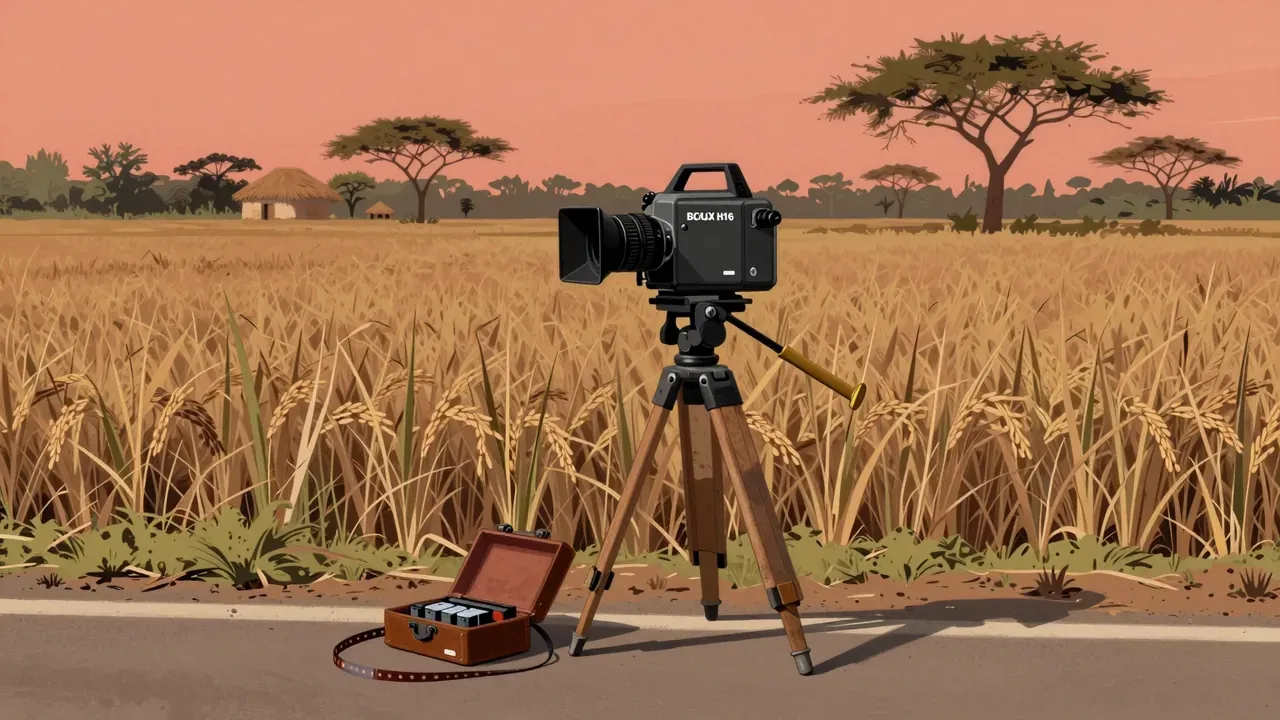
Mysterious Object at Noon

Apichatpong Weerasethakul · 2000

Mysterious Object at Noon (2000) is Apichatpong Weerasethakul’s debut feature: an unscripted, 16mm Thai documentary that travels the country using the exquisite corpse game. Strangers contribute lines to a shared story; actors then enact fragments of it. Shot by Sayombhu Mukdeeprom and edited by Apichatpong and Mingmongkol Sonakul, it privileges listening, texture and drift over narrative or exposition.

13:00

Naqoyqatsi

Godfrey Reggio · 2002

Naqoyqatsi (2002), the final film in Godfrey Reggio’s Qatsi trilogy, uses digitally manipulated archive footage and Philip Glass’s cello-led score to argue that modern life operates under a regime of ‘civilized violence’: abstraction, competition, and technological acceleration displacing embodied reality. Edited by Jon Kane and produced by Reggio, it abandons the observational style of its predecessors for a collage of stock, surveillance, and CGI imagery. Its reception was divided — critics called it the trilogy’s weakest — yet its formal rigour and thematic persistence make it a singular, unsettling document of early-digital consciousness.

13:00

Native Land

Leo Hurwitz, Paul Strand · 1942

A 1942 American docudrama co-directed by Leo Hurwitz and Paul Strand, Native Land combines archival footage and staged reenactments to document corporate suppression of union organising in the 1930s, drawing on the La Follette Committee’s findings. Paul Robeson narrates and sings; Marc Blitzstein scores; Strand photographs. Restored in 2011 from original nitrate elements, it remains a rigorous, austere, and politically uncompromising work of activist cinema.

13:00

News from Home

Chantal Akerman · 1976

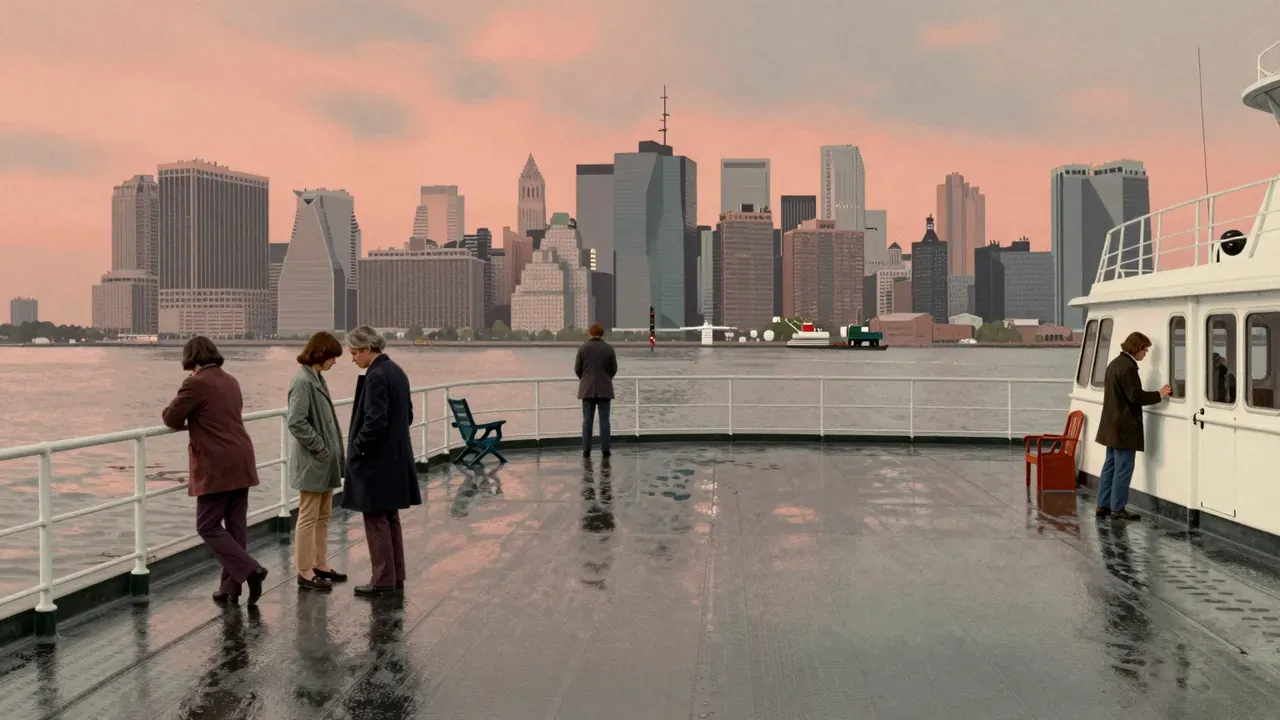
News from Home (1976) is a French-language documentary by Chantal Akerman, composed of extended static shots of New York City locations — subway platforms, ferry decks, city streets — accompanied by Akerman’s voice reading letters from her mother written between 1971 and 1973. Shot by Babette Mangolte and edited by Francine Sandberg, it is a study in duration, alienation, and the quiet labour of correspondence across distance.

13:00

Night and Fog

Alain Resnais · 1956

Alain Resnais’s 1956 documentary Night and Fog uses stark juxtaposition — new colour footage of abandoned camps alongside archival black-and-white material — to dissect the concentration camp as a functional extension of fascism. Written by survivor Jean Cayrol and Chris Marker, and scored by Hanns Eisler, it avoids sentimentality in favour of structural analysis: architecture, logistics, bureaucracy, and the diffusion of responsibility. Commissioned for the tenth anniversary of camp liberation, it remains a foundational essay film, rigorous, unsettling, and deliberately unresolved.

13:00

No Bears

Jafar Panahi · 2022

Jafar Panahi’s No Bears (2022) is a self-reflexive Iranian drama shot secretly in rural Iran. Playing a fictionalised version of himself, Panahi directs a docudrama remotely from a border village while becoming embroiled in a local scandal over a rumoured photograph. The film intercuts this with footage of the actors he oversees — a couple attempting to flee the country — and holds both narratives in unresolved tension. It explores censorship, communal control, and the ethics of representation without recourse to exposition or resolution.

13:00

Not a Pretty Picture

Martha Coolidge · 1976

Martha Coolidge’s 1976 debut is a rigorously constructed docudrama that reconstructs her teenage rape through dramatisation, direct address, and interviews. Shot on 16mm, edited by Coolidge herself, and scored with restraint, it treats memory as contested and testimony as relational—not cathartic, but constitutive.

13:00

One Hundred and One Nights

Agnès Varda · 1995

Agnès Varda’s One Hundred and One Nights (1995) is a French comedy essay-film set over 101 nights at a château belonging to Simon Cinéma, a centenarian film veteran whose fading memory blurs reality and reel. Starring Michel Piccoli and featuring cameos from Marcello Mastroianni, Anouk Aimée, Alain Delon, and others, it weaves scripted scenes with archival clips and playful allusion to celebrate cinema’s first hundred years — not as chronicle, but as collective, tactile memory.

13:00

One Sings, the Other Doesn't

Agnès Varda · 1977

One Sings, the Other Doesn’t (1977) follows Pomme and Suzanne across fourteen years of personal and political change in France. Directed and written by Agnès Varda, it charts their friendship through illegal abortion, protest, motherhood, clinic work, and reunion — all rendered with quiet precision, natural light, and minimal score. Charles Van Damme’s cinematography and Varda’s narration structure the story around letters, songs, and real-life activism, including a recreation of the 1972 Bobigny abortion trial demonstration. The film avoids didacticism, treating feminism as daily practice rather than theory.

13:00

Orderly or Disorderly

Abbas Kiarostami · 1981

Orderly or Disorderly is a seventeen-minute 1981 Iranian short film by Abbas Kiarostami. Using a single courtyard, two groups of children and young adults, and a static camera, it compares structured and unstructured movement — one group walking in line, the other moving freely. There is no dialogue beyond instruction, no music, no editing within sequences. The film is a precise, quiet study of social patterning, asking what emerges when rules are given, withdrawn, or merely drawn on the ground.

13:00

Orlando, My Political Biography

Paul B. Preciado · 2023

Paul B. Preciado’s 2023 documentary brings together 26 trans and non-binary participants—from age eight to seventy—to collectively reinterpret Virginia Woolf’s Orlando. Shot in France and structured around testimony, reenactment, and mythic staging, it treats gender transition as inseparable from law, medicine, and power. Victor Zébo’s cinematography and Yotam Ben-David’s editing sustain a deliberate, unhurried rhythm that privileges multiplicity over singularity. The film premiered at Berlinale, where it won the Teddy Award for Best Documentary.

13:00

Overlord

Stuart Cooper · 1975

Overlord (1975) is a British black-and-white film written and directed by Stuart Cooper, blending newly shot drama with archival footage from the Imperial War Museum and German sources. It traces the brief life of Thomas Beddows, a conscripted soldier, from call-up to death on D-Day at Sword Beach. Shot on period lenses and edited to match the grain and rhythm of wartime film, it avoids heroism and exposition in favour of quiet accumulation — of gesture, texture, silence. Awarded the Silver Bear Grand Jury Prize at Berlin in 1975, it was later championed by Roger Ebert and added to the Criterion Collection.

13:00

Paul Robeson: Tribute to an Artist

Saul J. Turell · 1979

Saul J. Turell’s 1979 Oscar-winning short documentary focuses on Paul Robeson’s evolving performances of 'Ol’ Man River' across three decades, using archival footage and Sidney Poitier’s restrained narration to trace artistic and political transformation without biographical exposition. It is a precise, austere act of reclamation — less a life story than a sustained listening.

13:00

Phantom India

Louis Malle · 1969

Louis Malle’s 1969 seven-part documentary Phantom India is a 378-minute observational record of India, filmed over four months in 1968 with a crew of two. Shot in French, it avoids narration, explanation, or advocacy, relying instead on long takes, ambient sound, and unmediated presence. Though praised as Malle’s most personal work, it drew criticism from the Indian government and diaspora for its focus on poverty and ritual at the expense of modernity and agency. Its endurance lies not in completeness but in its unwavering, ambiguous attention.

13:00

Place de la République

Louis Malle · 1974

Louis Malle’s 1974 documentary Place de la République observes daily life at its namesake Paris square with fixed cameras, natural sound, and no narration. Eschewing context or commentary, it treats duration and routine as primary subjects — a rigorous, unsentimental study of public space as lived, uninterpreted time.

13:00

Powaqqatsi

Godfrey Reggio · 1988

A 1988 non-narrative documentary directed by Godfrey Reggio, Powaqqatsi observes labour, ritual and urban flux across Africa, Asia and Latin America, scored by Philip Glass. With no dialogue or exposition, it builds meaning through rhythm, scale and repetition — proposing transition, not progress or decay, as its central condition.

13:00

Rolling Thunder Revue: A Bob Dylan Story by Martin Scorsese

Martin Scorsese · 2019

Rolling Thunder Revue is a hybrid concert film and constructed documentary, built from restored 1975 tour footage shot by Dylan for Renaldo and Clara, intercut with contemporary interviews — some real, some fictionalised. Directed by Martin Scorsese and produced by Jeff Rosen, it deliberately obscures the line between fact and invention, inviting the viewer to question memory, myth, and the ethics of archival storytelling. Released by Netflix in 2019, it foregrounds performance over biography and texture over testimony.

13:00

Roma

Federico Fellini · 1972

Federico Fellini’s 1972 Roma is a semi-autobiographical, episodic portrait of the city as living archive. Alternating between the director’s youth in Fascist-era Rome and his present-day filming in the early 1970s, it builds meaning through texture, juxtaposition, and sustained observation rather than narrative. Giuseppe Rotunno’s cinematography, Nino Rota’s score, and Danilo Donati’s production design render Rome tactile and layered — ancient, sacred, vulgar, and resilient. Though uneven in pacing and occasionally opaque in intent, it remains a singular achievement in cinematic essay-making: a city remembered not as fact, but as feeling.

13:00

Room 666

Wim Wenders · 1982

Room 666 is a 1982 documentary by Wim Wenders, filmed in a single hotel room during the Cannes Film Festival. Fourteen directors — including Godard, Fassbinder, Spielberg, and Antonioni — each answer the same question about cinema’s future, recorded in uninterrupted takes. Shot by Agnès Godard on 16 mm, with music by Bernard Herrmann, the film offers no commentary, only testimony.

13:00

Room 999

Lubna Playoust · 2023

Room 999 (2023) is a French documentary directed by Lubna Playoust, filmed in a single hotel room with thirteen international filmmakers — including Cronenberg, Wenders, Farhadi and Ramsay — speaking freely over one day. Shot by Marine Atlan and scored by Pierre Rousseau, it offers no narration, no subtitles for overlapping dialogue, no biographical context. Its rigour lies in restraint: fixed framing, natural light, unedited duration. It captures conversation not as argument but as collective thinking-in-motion — hesitant, contradictory, embodied. A film about presence, not position.

13:00

Sans Soleil

Chris Marker · 1983

Sans Soleil (1983) is Chris Marker’s 100-minute French essay-film, structured around letters from a fictional cameraman and narrated by Florence Delay. Shot on silent 16mm and edited with found footage from Japan, Guinea-Bissau, Iceland and Paris, it explores memory’s fragility through juxtaposition, colourisation and Moog-scored stillness — not as documentary exposition but as a sustained, self-aware meditation on what images remember and forget.

13:00

Sennan Asbestos Disaster

Kazuo Hara · 2016

Kazuo Hara’s 2016 documentary Sennan Asbestos Disaster observes survivors of industrial asbestos exposure in Osaka over many years. With no narration, score, or archival inserts, it tracks legal battles, medical decline, and daily endurance — treating latency, embodiment, and institutional slowness as its core subjects.

13:00

Shoah

Claude Lanzmann · 1985

A nine-hour French documentary directed by Claude Lanzmann, released in 1985. Made over eleven years, it contains no archival footage, no narration, no music — only interviews with survivors, perpetrators and bystanders, filmed on location at former death camps in Poland. Its method is durational, forensic and ethically uncompromising: testimony is left untranslated where necessary, interpreters’ voices remain audible, silence is preserved, and geography is matched to memory. It does not explain the Holocaust but locates it in speech, space and procedure.

13:00

So Can I

Abbas Kiarostami · 1975

So Can I (1975) is a seventeen-minute Iranian short by Abbas Kiarostami, following two boys watching an educational cartoon. One boy repeatedly asserts 'So can I' in response to animals’ actions—until birds fly across the screen, and he falls silent. The film ends with an aeroplane circling overhead. Made for Kanun, it treats childhood cognition with formal rigour: no narration, no adult presence, no resolution—only repetition, silence, and a single, resonant visual rupture.

13:00

Soleil Ô

Med Hondo · 1967

Soleil Ô (1970) is a French-Mauritanian essay-film written and directed by Med Hondo. Shot in 1967 and released after its 1970 Cannes premiere, it follows a Black West African man arriving in Paris in search of Gaulish ancestry — a premise that exposes the absurdity of colonial logic. Blending documentary, musical, and absurdist elements, it critiques institutional racism, linguistic erasure, and bureaucratic violence. François Catonné’s cinematography and George Anderson’s score reinforce its fractured, argumentative form. Restored in 2017, it remains a rigorous, unsentimental work of decolonial cinema.

13:00

Sweet Movie

Dušan Makavejev · 1974

Dušan Makavejev’s 1974 Sweet Movie is a formally rigorous, politically charged art film split between two women — a Canadian beauty queen and a communist sailor — whose bodies become battlegrounds for competing systems of control. Shot in France, Canada and West Germany, it uses surreal juxtaposition, taboo imagery and real archival footage to dissect the failures of both capitalism and state socialism. Controversial on release and banned in multiple countries, it remains a demanding, uncompromising work that prioritises dialectical tension over narrative resolution.

13:00

Testament of Orpheus

Jean Cocteau · 1960

Testament of Orpheus (1960) is Jean Cocteau’s black-and-white fantasy film starring himself as an 18th-century poet moving through a mythic France. With cameos from Picasso, Marais, Brynner and others, it forms the third part of his Orphic Trilogy. Structured as a series of symbolic vignettes rather than a narrative, it reflects on mortality, authorship and artistic legacy through repetition, doubling and formal restraint. Georges Auric composed the score; Marie-Josèphe Yoyotte edited it. It is an essay-film in cinematic form — elliptical, self-referential, and addressed to those already familiar with Cocteau’s work.

13:00

The Beaches of Agnès

Agnès Varda · 2008

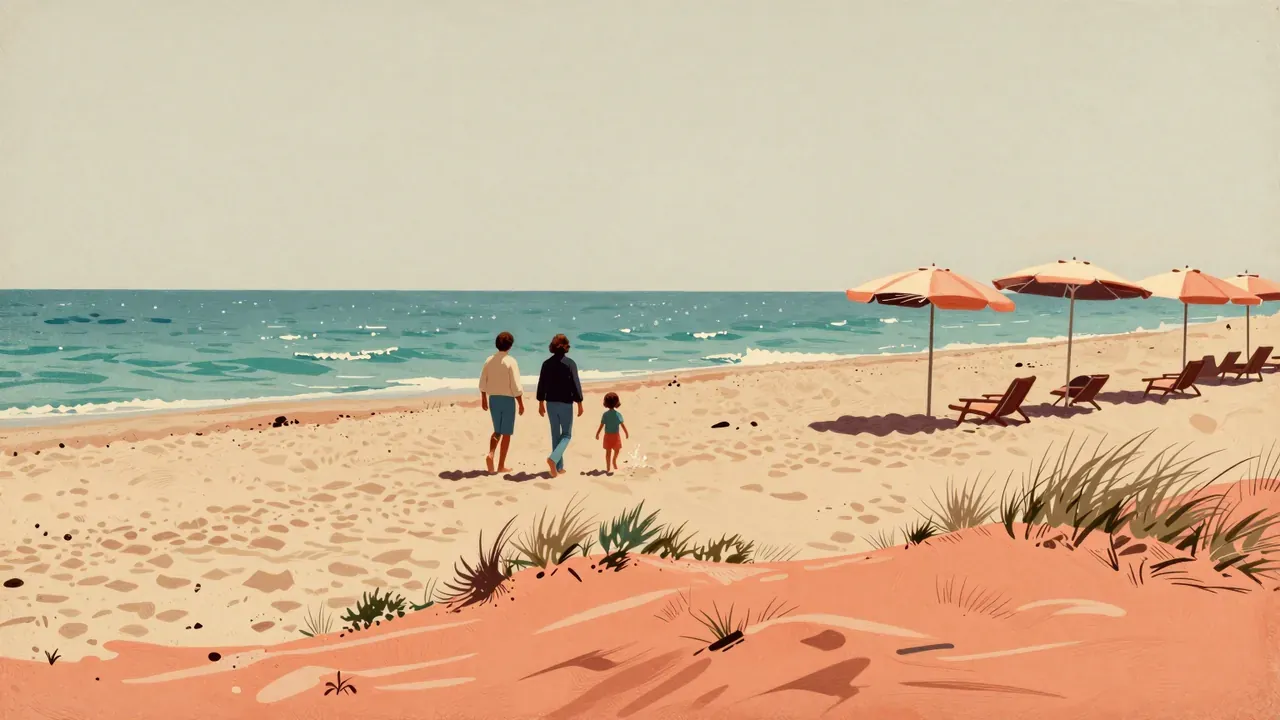
The Beaches of Agnès is a 2008 French documentary essay directed by Agnès Varda, in which she revisits places, people and objects from her life to mark her eightieth birthday. Using mirrors on beaches, stills, home movies, and everyday artefacts, she builds a portrait that privileges texture over timeline, presence over exposition. Shot and edited with Hélène Louvart and Marie-Josèphe Yoyotte, with music by Joanna Bruzdowicz, it won the César Award for Best Documentary in 2009.

13:00

The Color of Pomegranates

Sergei Parajanov · 1969

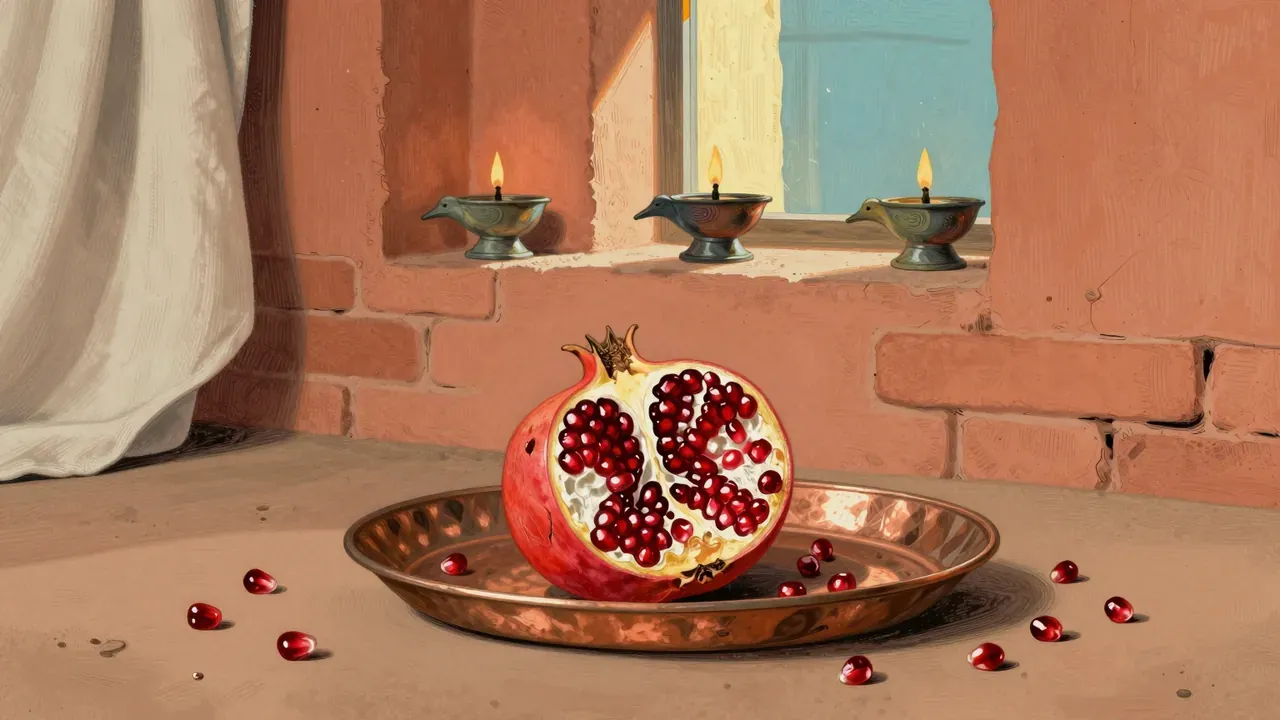
Sergei Parajanov’s 1969 Armenian-language film is a non-narrative, tableau-based meditation on the 18th-century poet Sayat-Nova. Shot across medieval monasteries in Armenia, Georgia, and Azerbaijan, it replaces dialogue with symbolic imagery, ritual gesture, and saturated colour. Restored in 2014 to align with Parajanov’s original vision, it remains deliberately opaque — a work of visual poetry rooted in Armenian manuscript tradition, queer sensibility, and resistance to Soviet cultural suppression.

13:00

The Emperor's Naked Army Marches On

Kazuo Hara · 1987

Kazuo Hara’s 1987 documentary follows Kenzō Okuzaki, a 62-year-old Japanese veteran, as he confronts former comrades over the unexplained deaths of two soldiers in New Guinea during the Second World War. Using unobtrusive, long-take observation, the film records Okuzaki’s aggressive, often physically coercive interviews, his indictment of the Shōwa Emperor, and fragmented, contradictory testimonies about starvation, execution, and cannibalism. It ends with an epilogue detailing Okuzaki’s imprisonment for attempted murder—a stark contrast to the impunity of those he pursued.

13:00

The French Dispatch

Wes Anderson · 2021

Wes Anderson’s 2021 anthology film presents the final issue of a fictional American newspaper’s Paris bureau as a series of formally exact, stylistically distinct journalistic features. Shot in 1.37:1 on 35 mm in Angoulême, it honours mid-century magazine aesthetics, French New Wave syntax, and the physical texture of print — treating journalism as craft, not just content.

13:00

The Gleaners and I

Agnès Varda · 2000

Made in 2000, Agnès Varda’s The Gleaners and I is a self-reflexive French documentary shot on early digital video. Travelling across rural and suburban France, Varda observes people who glean—collecting leftover crops, discarded food, or abandoned objects—for reasons ranging from need to artistry. She includes chefs, lawyers, artists, and farmers, and inserts herself as both filmmaker and subject, filming her ageing hands, her grey hair, and even her lens cap swinging at her side. The film avoids thesis or resolution, favouring accumulation, texture, and quiet observation. It won the European Film Award for Best Documentary and has since been ranked among the greatest documentaries and 21st-century films by multiple critics’ polls.

13:00

The Hawks and the Sparrows

Pier Paolo Pasolini · 1966

Pier Paolo Pasolini’s 1966 film follows Totò and Ninetto Davoli on a rambling journey through rural and suburban Italy, punctuated by encounters with a talking crow, impoverished families, landowners, mourners and performers. Framed by a Franciscan parable about hawks and sparrows, the film tests whether love or reason can overcome structural inequality — and concludes it cannot. Shot on location with non-professionals and icons alike, it is rigorous, unsentimental and deliberately unresolved.

13:00

The Inland Sea

Lucille Carra · 1991

Lucille Carra’s 1991 documentary follows Donald Richie’s 1971 journey across Japan’s Seto Inland Sea islands. Shot by Hiro Narita and narrated by Richie, it observes daily life on depopulating islands with deliberate slowness and minimal intervention. There are no interviews, no score, no explanatory text — only light, sound, and a voice reflecting on continuity and quiet change.

13:00

The Making of Fanny and Alexander

Ingmar Bergman · 1986

Ingmar Bergman’s 1984 documentary records the making of his 1982 film Fanny and Alexander with clinical precision: no narration, no interviews, no context — just rehearsals, fittings, lighting tests and editorial decisions as they happened. Photographed by Arne Carlsson and edited by Lena Åberg, it treats filmmaking as iterative craft, not artistic revelation.

13:00

The Milky Way

Luis Buñuel · 1969

Luis Buñuel’s 1969 film follows two French vagrants walking the Camino de Santiago, encountering historical Christian heresies, doctrinal disputes, and theological contradictions staged with documentary precision and surrealist detachment. Shot in straightforward colour by Christian Matras and written by Buñuel and Jean-Claude Carrière, it treats dogma as performance, time as collapse, and pilgrimage as recursion — not redemption.

13:00

The Taking of Power by Louis XIV

Roberto Rossellini · 1966

Roberto Rossellini’s 1966 television film charts Louis XIV’s consolidation of power not through battle or charisma, but through administrative rigour, spatial control, and ceremonial discipline. Shot in 23 days with non-professional actors and restrained cinematography, it presents the birth of the modern French state as a slow, procedural accumulation — where tax reform, Versailles’ construction, and the arrest of Fouquet are all moments in the same system. Its power lies in its austerity: no score, no close-ups, no moralising — just the steady, unsettling logic of institutional control.

13:00

The Tree of Life

Terrence Malick · 2011

Terrence Malick’s 2011 film interweaves cosmic origins, prehistoric evolution, and a 1950s Texas childhood into a single sensory continuum. Shot by Emmanuel Lubezki and edited from hundreds of hours of footage, it replaces plot with rhythm, dialogue with light, and psychology with presence. Its ambition is ontological: to treat human experience and natural process as variations on the same physical law.

13:00

The Velvet Underground

Todd Haynes · 2021

Todd Haynes’s 2021 documentary examines the Velvet Underground not as a rock band but as a convergence of avant-garde film, minimalist composition, and 1960s New York counterculture. Built from newly shot interviews and rigorously curated archival material — much of it silent, scratched, or degraded — the film privileges texture, timing, and material constraint over narrative or biography. It foregrounds the roles of Andy Warhol, Jonas Mekas, and the Factory milieu while leaving gaps around later line-up changes and musical evolution. Edward Lachman’s cinematography and Affonso Gonçalves’s editing sustain a deliberate, almost tactile pace.

13:00

The Watermelon Woman

Cheryl Dunye · 1996

Cheryl Dunye’s 1996 debut is a mockumentary about a Black lesbian filmmaker researching a fictional 1930s Black actress — ‘The Watermelon Woman’ — erased from film history. Blending interviews, staged archive photos by Zoe Leonard, and autobiographical elements, it exposes how race, sexuality and institutional power shape what gets preserved — and what must be invented to survive.

13:00

Thirty Two Short Films About Glenn Gould

François Girard · 1993

François Girard’s 1993 Canadian film abandons linear biography for thirty-two discrete segments — documentary, re-enactment, animation, silence — each offering a distinct, unmediated angle on pianist Glenn Gould. Colm Feore performs with meticulous restraint, Alain Dostie photographs with quiet exactness, and the soundtrack uses only Gould’s own recordings. It does not seek to resolve his contradictions — his isolation, his technology use, his early retirement — but to hold them in careful, cumulative balance.

13:00

Tongues Untied

Marlon Riggs · 1989

Marlon Riggs’s 1989 experimental documentary Tongues Untied uses poetry, archive, personal testimony and radical editing to articulate the intersecting realities of Black gay life in America. Funded in part by the NEA, it provoked national controversy upon PBS broadcast for its frank depiction of Black gay desire and critique of institutional exclusion — a backlash Riggs framed as confirmation of the film’s central thesis: that silence on sexual and racial difference is systemic, not incidental.

13:00

Toothache

Abbas Kiarostami · 1980

Abbas Kiarostami’s 1980 short Toothache is a rigorously functional educational film made for Iranian schoolchildren. Shot on 16mm at Kanoon, it traces a boy’s physical and social decline due to poor dental hygiene, culminating in a thirteen-minute direct-to-camera lecture by a dentist, punctuated by animated sequences and clinical footage. Its power lies in its unwavering commitment to pedagogy over artifice — a rare, unembellished record of how cinema can serve public health.

13:00

Tout Va Bien

Jean-Luc Godard, Jean-Pierre Gorin · 1972

Tout Va Bien (1972) is a French-Italian essay-film directed by Jean-Luc Godard and Jean-Pierre Gorin. Starring Jane Fonda and Yves Montand, it depicts a sausage factory strike through a self-reflexive, Brechtian framework: a cross-sectioned set, flat performances, direct address, and anti-continuity editing. It interrogates class, media, and capitalism in the wake of May 1968, refusing psychological realism in favour of structural clarity.

13:00

Town Bloody Hall

D. A. Pennebaker · 1979

Town Bloody Hall documents a volatile 1971 New York panel featuring Norman Mailer and feminist thinkers Germaine Greer, Jill Johnston, Diana Trilling and Jacqueline Ceballos. Filmed by D. A. Pennebaker and edited with minimal intervention, it preserves the debate’s rhythms, interruptions and ideological fractures without commentary or context. Released in 1979, it stands as a stark, unvarnished artefact of second-wave feminism’s internal and external confrontations.

13:00

Uncle Janco

Agnès Varda · 1967

Agnès Varda’s 1967 documentary Uncle Janco observes Romanian-born sculptor Marcel Janco in his Paris studio over 22 minutes. With no narration, no interviews, and no contextual framing, the film rests on sustained observation: Janco’s speech, his handling of materials, and the quiet rhythm of his daily practice. It is a study in presence, not biography — a work that values tactile knowledge and embodied memory over exposition or historical positioning.

13:00

Varda by Agnès

Agnès Varda · 2019

Varda by Agnès is Agnès Varda’s last film: a self-directed documentary in which, at eighty-nine, she reflects on her six-decade career in photography and film. Seated, speaking directly to camera, she watches excerpts from her own work and comments on them with characteristic clarity, wit and warmth. Structured around the words inspiration, creation and sharing, it is less a historical account than an act of sustained authorial presence — intimate, unhurried, materially attentive. Edited by Varda herself, it privileges texture, recurrence and silence over exposition or argument.

13:00

Vernon, Florida

Errol Morris · 1981

Errol Morris’s 1981 documentary Vernon, Florida profiles residents of a small Florida town through unadorned, static interviews. Abandoning an earlier plan to investigate insurance-related limb loss, Morris instead captures everyday speech — on pigeons, dentures, mousetraps and heaven — with clinical stillness and no narration, music or context. Its power lies in duration, neutrality and the quiet dignity of unmediated presence.

13:00

Visions of Eight

Claude Lelouch, Miloš Forman, Kon Ichikawa, Yuri Ozerov · 1973

Visions of Eight (1973) is a documentary composed of eight segments directed by international filmmakers, each interpreting a different aspect of the 1972 Munich Olympics. Commissioned by David L. Wolper, it prioritises stylistic divergence over narrative unity — from Penn’s slow-motion pole vault to Lelouch’s focus on defeat. Though awarded Best Documentary at the 1974 Golden Globes, its treatment of the Munich massacre remains fragmented and indirect. Available via Criterion, it functions best as a formal experiment in perspective, not as historical record.

13:00

Vive le Tour

Louis Malle · 1962

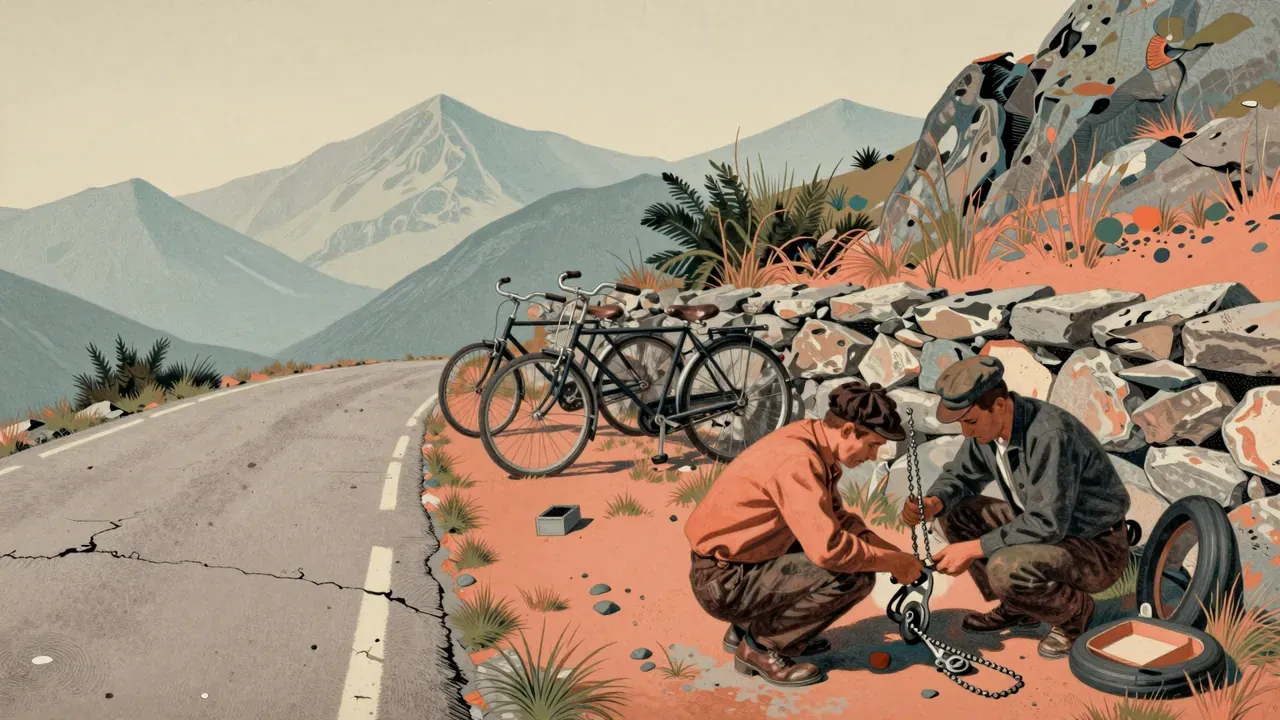
Louis Malle’s 1962 documentary Vive le Tour observes the 1962 Tour de France with clinical intimacy: mechanics adjusting bikes roadside, riders eating cold sandwiches, journalists shouting questions, medical staff administering injections. Shot on location by Malle alongside Ghislain Cloquet and Jacques Ertaud, and narrated by cyclist Jean Bobet, it avoids heroics and exposition in favour of accumulated detail — food, fatigue, doping, injury — treated as routine elements of a vast, mobile operation. Georges Delerue’s restrained score underscores transitions, not emotions. At 18 minutes, it is brief but densely observed, offering no answers, only a clear-eyed look at endurance as collective, unglamorous work.

13:00

W.R.: Mysteries of the Organism

Dušan Makavejev · 1971

Dušan Makavejev’s 1971 W.R.: Mysteries of the Organism intercuts documentary, satire and archival footage to test Wilhelm Reich’s theories of sexual energy and social control. Shot in Serbia and New York, it links Yugoslav socialism, Soviet propaganda and American counterculture through montage — not narrative — arguing that repression of the body sustains repression of the state. Banned in Yugoslavia for 16 years, it remains a rigorous, unsettling demonstration of how ideology lives in the nerves, not just the mind.

13:00

Man with a Movie Camera

Dziga Vertov · 1929

Man with a Movie Camera (1929) is a Soviet silent documentary directed by Dziga Vertov, filmed by Mikhail Kaufman and edited by Vertov and Yelizaveta Svilova. Shot across Moscow, Kiev, Kharkov and Odessa, it presents urban life through radical montage, self-reflexive technique and zero intertitles — aiming to forge a pure cinematic language. With over 1,775 shots in 68 minutes, it remains a foundational essay-film on perception, machinery and the modern city.

13:00

Meshes of the Afternoon

Maya Deren, Alexandr Hackenschmied · 1943

A fourteen-minute 1943 American experimental film directed by Maya Deren and Alexandr Hackenschmied, starring Deren and shot by Hackenschmied. It uses repetition, recursive editing, and shifting subjectivity to map the interior logic of anxiety and dissociation—not as metaphor but as cinematic structure. Silent on release, later scored by Teiji Ito. Preserved in the US National Film Registry for cultural and aesthetic significance.

13:00

Two or Three Things I Know About Her

Jean-Luc Godard · 1967

Jean-Luc Godard’s 1967 essay-film follows a Parisian housewife who prostitutes herself by day, using her routine as a lens to examine consumerism, advertising, the Vietnam War, and the banlieue as ideological infrastructure. Built from fragmented scenes, whispered narration, and deliberate interruptions, it rejects narrative for inquiry — asking not what happens next, but how meaning is produced, circulated, and dissolved in modern life.

13:00

A Married Woman

Jean-Luc Godard · 1964

Jean-Luc Godard’s 1964 film follows Charlotte, a married woman navigating infidelity, pregnancy, and consumer culture in early-1960s Paris. Shot by Raoul Coutard in stark black-and-white, it uses fragmentation, repetition, and deliberate juxtaposition — of Holocaust testimony and fashion ads, Beethoven and pop songs — to examine how identity is shaped by advertising, memory, and political history. Censored on release for its title and sexual content, it remains a rigorous, unsentimental inquiry into the infrastructure of everyday life.

13:00

At Land

Maya Deren · 1944

Maya Deren’s 1944 silent short At Land is a fifteen-minute experimental film in which Deren, playing a solitary woman, traverses a series of uncanny locations — beach, dining room, forest, covered interior — encountering doubles and shifting figures. Shot on Long Island, it uses precise editing, physical performance and repetition to explore identity not as essence but as embodied action. There is no dialogue, no score, no exposition — only movement, recurrence and resistance.

13:00

Caro diario

Nanni Moretti · 1993

Caro diario (1993) is Nanni Moretti’s semi-autobiographical essay film in three chapters: riding a Vespa through Rome, seeking quiet on the Aeolian Islands, and navigating misdiagnosis and treatment for Hodgkin’s lymphoma. Shot with quiet precision by Giuseppe Lanci and edited by Mirco Garrone, it uses personal experience to examine failures of attention in politics, culture, and medicine. Moretti appears as himself throughout, his dry, self-aware tone holding the film’s fragments together.

13:00

Cave of Forgotten Dreams

Werner Herzog · 2010

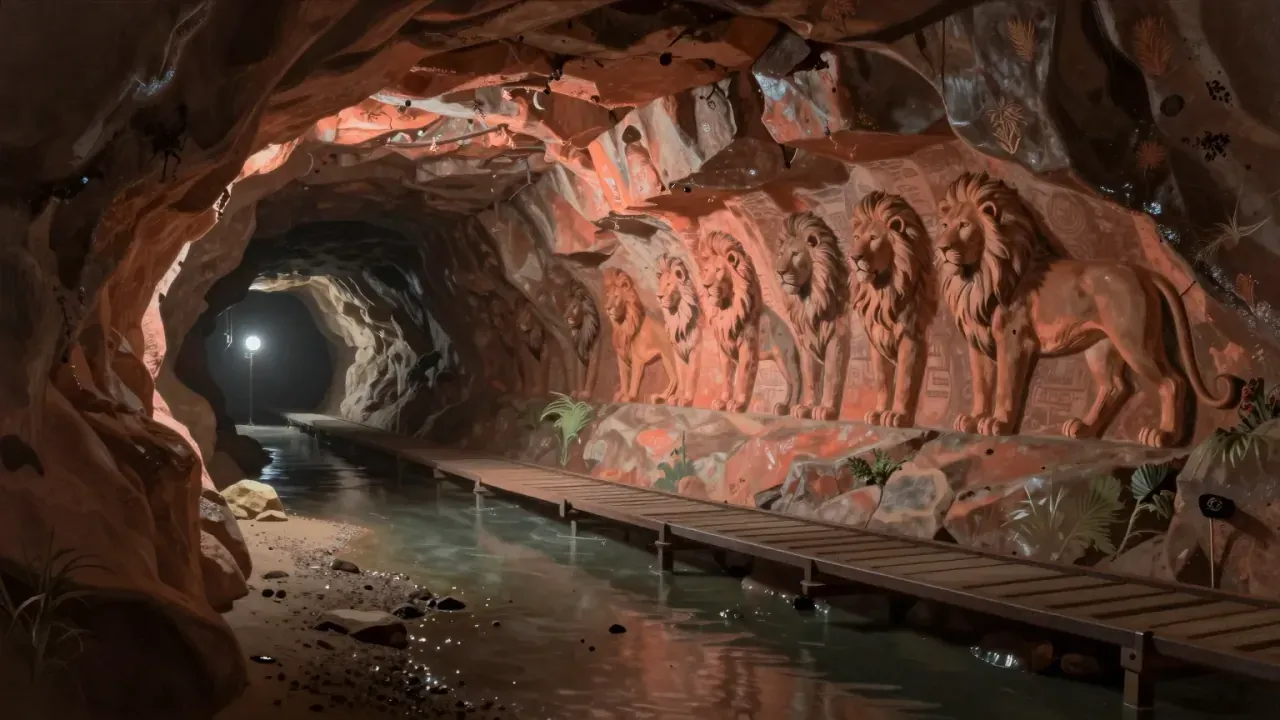
Werner Herzog’s 2010 documentary enters France’s Chauvet Cave — home to the oldest known figurative paintings — under strict access conditions. Shot in 3D by Peter Zeitlinger, the film foregrounds the physical relationship between the Palaeolithic artists and the cave’s contours, with minimal narration and quiet interviews. It avoids archaeological exposition in favour of sensory immersion, treating deep time as atmosphere rather than epoch.

13:00

Grizzly Man

Werner Herzog · 2005

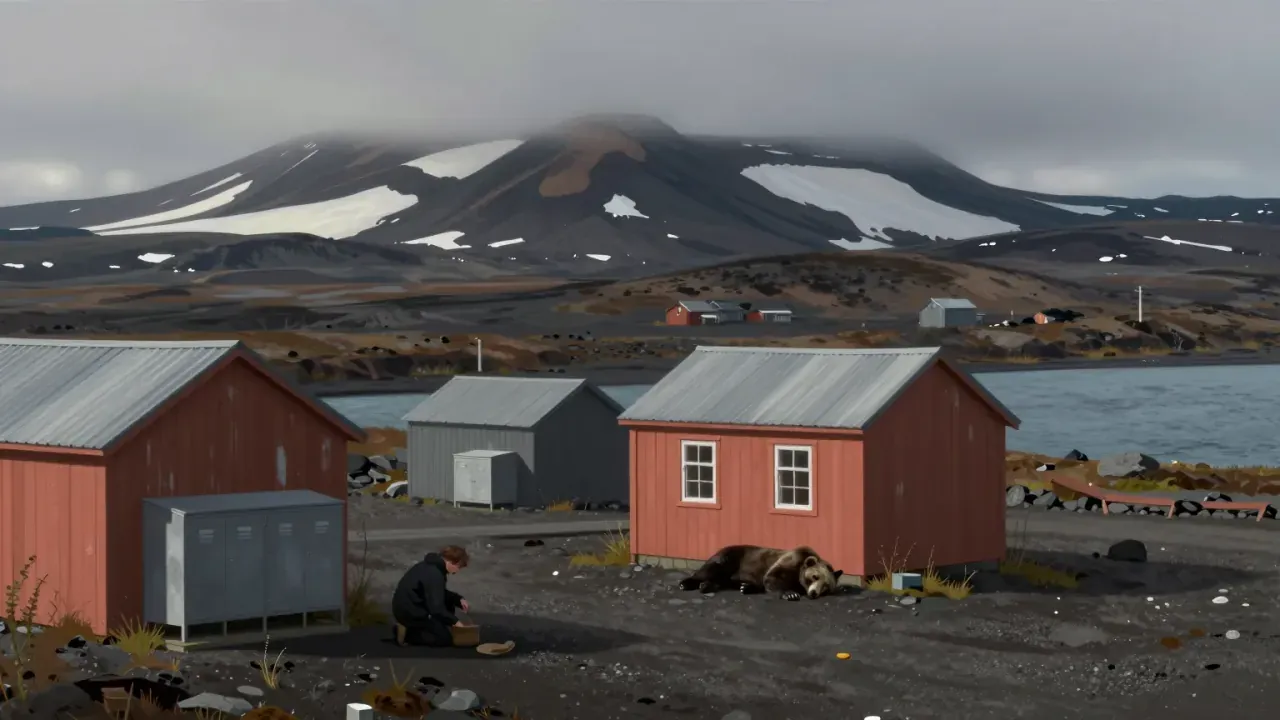
Werner Herzog’s 2005 documentary assembles Timothy Treadwell’s own footage, interviews with friends and experts, and his own narration to examine the bear enthusiast’s thirteen years in Alaska and his 2003 death alongside Amie Huguenard. It does not seek to vindicate or condemn, but to trace the logic of a man who believed he had transcended the boundary between human and wild—and what that belief cost.

13:00

Mishima: A Life in Four Chapters

Paul Schrader · 1985

Paul Schrader’s 1985 film interweaves Yukio Mishima’s final day with biographical flashbacks and dramatisations of three of his novels, organised into four colour-coded chapters. Shot in Japan with a rigorous visual syntax, it privileges form over exposition, using John Bailey’s cinematography, Philip Glass’s score and Eiko Ishioka’s production design to render Mishima’s aesthetic absolutism as cinematic grammar. It was banned in Japan until 2025.

13:00

Notre musique

Jean-Luc Godard · 2004

Jean-Luc Godard’s 2004 essay-film Notre musique uses Dante’s tripartite structure — Hell, Purgatory, Heaven — to examine how violence, language, and image condition moral perception. Set around a Sarajevo arts conference, it stages encounters between Israeli and Palestinian voices, philosophers and poets, while critiquing cinematic conventions like shot/reverse shot. Julien Hirsch’s restrained cinematography and Godard’s elliptical editing foreground ethics over exposition. Though formally demanding and emotionally austere, it rewards sustained attention with a rare rigour in thinking through representation itself.

13:00

October: Ten Days That Shook the World

Grigori Aleksandrov, Sergei Eisenstein · 1927

October: Ten Days That Shook the World (1927) is a Soviet silent film commissioned for the tenth anniversary of the Bolshevik Revolution. Directed by Sergei Eisenstein and Grigori Aleksandrov, it dramatises the uprising through intellectual montage — juxtaposing images to generate ideas rather than narrative. Eduard Tisse’s stark cinematography and Eisenstein’s rigorous editing construct revolution as rhythm, mass, and inevitability. Though criticised at the time for opacity and formalism, it remains a foundational work of avant-garde cinema and political filmmaking.

13:00

Swimming to Cambodia

Jonathan Demme · 1987

Spalding Gray sits alone at a table and speaks for eighty-five minutes about filming The Killing Fields, the Khmer Rouge’s rise, and his own search for meaning amid atrocity. Directed by Jonathan Demme and scored by Laurie Anderson, it is a formally austere essay-film built on voice, silence, and the moral weight of first-person recollection—neither documentary nor drama, but something stricter and stranger.

13:00

The Mirror

Andrei Tarkovsky · 1975

Andrei Tarkovsky’s 1975 film The Mirror is a non-linear, autobiographical essay in image and sound. Shot by Georgy Rerberg and scored by Eduard Artemyev, it weaves childhood recollection, wartime newsreel, poetic voiceover, and maternal presence into a single, flowing meditation on time, inheritance, and perception. Margarita Terekhova plays dual roles; Oleg Yankovsky appears only in voiceover. With around 200 shots across 108 minutes, its rhythm is durational, not dramatic. Released under constraint by Mosfilm, it polarised Soviet critics before becoming widely regarded as Tarkovsky’s most intimate work.

13:00

This Is Not a Film

Jafar Panahi, Mojtaba Mirtahmasb · 2011

Made under house arrest while awaiting the outcome of an appeal against a six-year prison sentence and twenty-year filmmaking ban, Jafar Panahi’s This Is Not a Film documents a single day in his Tehran apartment. Shot partly on iPhone and co-directed with Mojtaba Mirtahmasb, it blends self-portrait, legal testimony, and meta-cinematic reflection — all without scripted scenes or permitted production. It is a documentary of constraint that asserts continuity of vision, not protest of circumstance.

13:00

Un Chien Andalou

Luis Buñuel · 1929

A 1929 French silent short co-written and directed by Luis Buñuel and Salvador Dalí, Un Chien Andalou rejects narrative, chronology and symbolism in favour of dream-logic assembled from two shared dreams. Filmed in black-and-white over ten days, it deploys stark imagery — a sliced eye, ants from a hand, pianos dragging dead donkeys — with clinical precision. Its sixteen minutes offer no resolution, no character psychology, no moral framework: only a sustained, principled refusal of sense.

13:00

Weekend

Jean-Luc Godard · 1967

Jean-Luc Godard’s 1967 Weekend follows a bourgeois couple’s disastrous road trip through a hallucinatory French countryside, where narrative collapses into allegory, history bleeds into farce, and revolution ends in cannibalism. Shot by Raoul Coutard and edited by Agnès Guillemot, it is a formally radical, politically abrasive essay-film that treats cinema as a site of ideological combat — not storytelling.