A dog ban dressed as public health policy
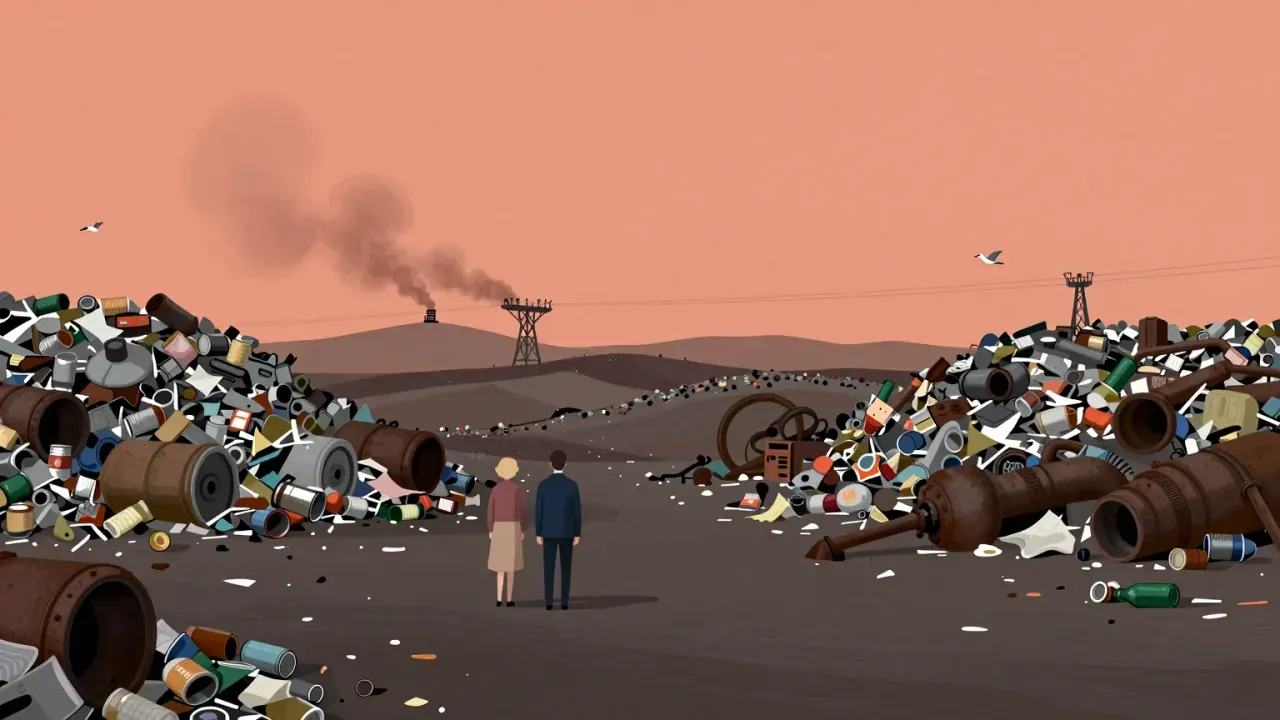
Isle of Dogs sets its story in a fictional near-future Megasaki, where authoritarian mayor Kenji Kobayashi exiles every dog in the city to Trash Island under the pretext of a canine flu outbreak, overriding his own political rival’s claim that a cure is close. Wes Anderson, making his second stop-motion feature after Fantastic Mr. Fox, builds the setup as much around political conspiracy as around pet rescue from the outset, with the mayor’s decree functioning less as a plot device than as a description of how manufactured crises get used to justify exclusion, a theme the film keeps returning to as the conspiracy widens.
A boy, a plane, and a pack of strays
Atari, the mayor’s twelve-year-old ward, hijacks a small plane and crash-lands on Trash Island searching for his exiled bodyguard dog, Spots, and is taken in by a pack of strays led by Chief, an all-black dog who has never belonged to anyone and resists helping at first. Bryan Cranston voices Chief, and the arc that follows, a stray learning to accept both a boy and a home, becomes the emotional spine running underneath the wider political plot, giving the film’s ensemble structure a single relationship to anchor itself around as the search for Spots pulls in more of the island’s population.
A thousand puppets built for a specific kind of stillness
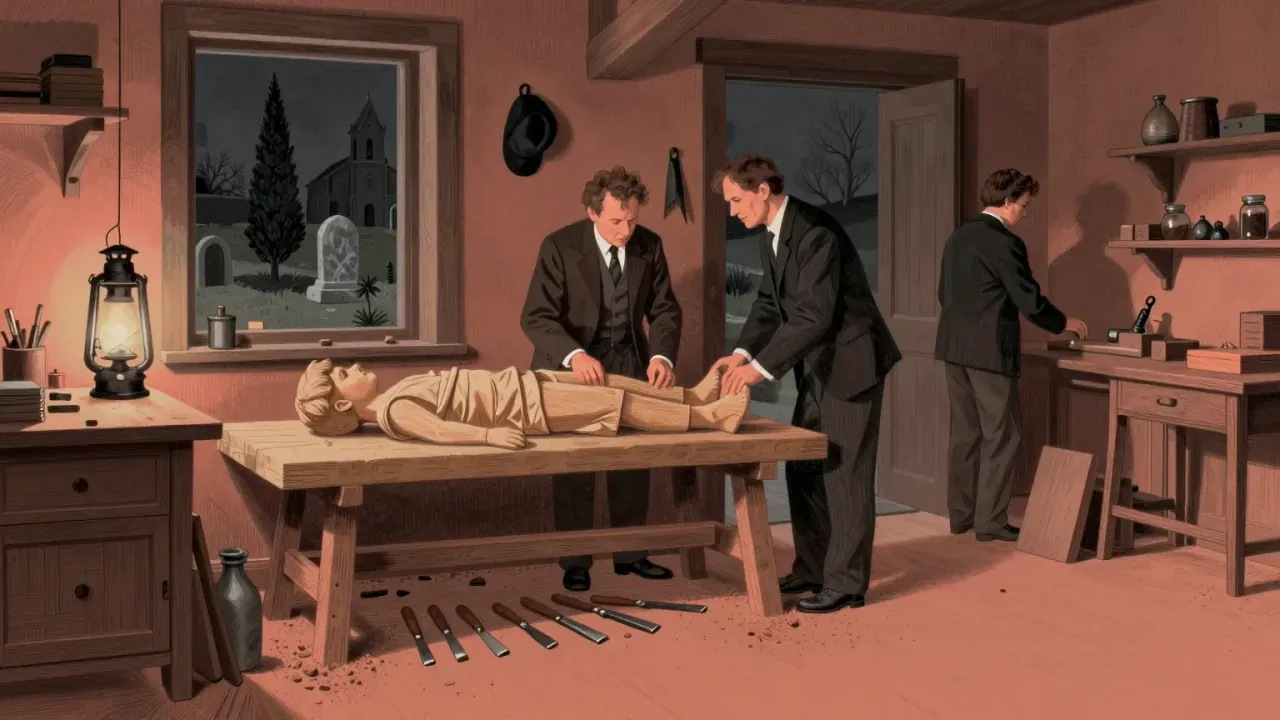
The physical craft behind the film is considerable: roughly a thousand animatable puppets for named characters and around twenty thousand individual faces were built by twelve sculptors working six-day weeks, with the most detailed puppets taking two to three months each to construct, and Anderson kept computer graphics to a minimum, reserving it mainly for crowd duplication. What is notable is how restrained Anderson’s direction is with all of that craft on hand; his flat, symmetrical, deadpan style keeps the puppetry from ever being showcased for its own sake, foregrounding character blocking and comic timing over spectacle even in a film built from thousands of handmade objects.
A conspiracy plot that outgrows its rescue-mission frame
What begins as a boy’s search for his dog widens considerably once the film reveals that Kobayashi’s dynasty has engineered the entire flu outbreak to finish an extermination campaign against dogs that an earlier generation of the same family lost centuries before. That reveal gives the film’s plot more mechanism and political specificity than the rescue-mission premise initially suggests, turning Trash Island’s dogs and Atari’s search into instruments of a much older, more deliberate campaign, and the conspiracy plotting borrows directly from the political intrigue structure of the Kurosawa films Anderson has cited as influences.
A borrowed setting the film does not fully reckon with
The film is visibly indebted to Kurosawa and Miyazaki and stages its story specifically in Japan, yet its choice to leave much of the Japanese human characters’ dialogue untranslated, while the dogs speak fluent English throughout, produces an imbalance critics flagged on release: the culture the film borrows its aesthetic and political structure from is kept at arm’s length from the audience’s understanding, while its animal characters, voiced by an overwhelmingly American and British cast, are given full interiority. The film’s craft and intent do not resolve that tension, and it remains a legitimate point against a film otherwise built with evident care.
Anderson’s tone applied evenly to comedy and to loss
Anderson’s deadpan comic register, precise line readings delivered flat regardless of stakes, works well for the film’s jokes but applies the same measured tone to genuinely dark material: a fascist political dynasty engineering mass death, an assassination by poisoned sushi, and the death of a major dog character all arrive with the same unhurried, restrained delivery as the film’s comedy. That consistency is a hallmark of Anderson’s style generally, but here it occasionally flattens material that might have benefited from a tonal shift the film never allows itself to make.
A hundred and one minutes built for repeat viewing more than a single sitting
At a hundred and one minutes, Isle of Dogs is dense enough with background detail and layered sound design, its score by Alexandre Desplat drawing on Kurosawa’s own film scores, that it rewards a second viewing more than most animated features aimed at a comparable runtime. It grossed around sixty-four million dollars worldwide and received two Academy Award nominations, alongside genuine critical praise for its craft and genuine criticism of its handling of Japanese culture. It is worth an evening for what it builds visually and structurally, with the caveat that its treatment of its own setting is a real and unresolved problem rather than a minor footnote.