The shape of the dance
Quadrille is a French studio comedy from 1938, written and directed by Sacha Guitry, built around the mechanics of romantic misdirection. It treats the Parisian newspaper world not as a setting for reportage or satire but as a stage for polite chaos — a place where professional authority dissolves under the pressure of vanity, timing, and an outsider’s arrival. The film attempts to sustain lightness through structural repetition: characters circle one another like dancers in a quadrille, swapping partners with clockwork regularity while preserving decorum. There is no social critique beneath the surface, no subversion of class or gender roles — only the pleasure of watching well-dressed people recalibrate their affections without raising their voices. Guitry’s authorial hand is visible in every line and pause; this is not ensemble improvisation but tightly wound farce, calibrated to land on the beat of a waltz. It asks nothing of the viewer except willingness to follow its rhythm, and it offers nothing beyond that rhythm’s consistency. Word count: 124.
The hotel as clockwork
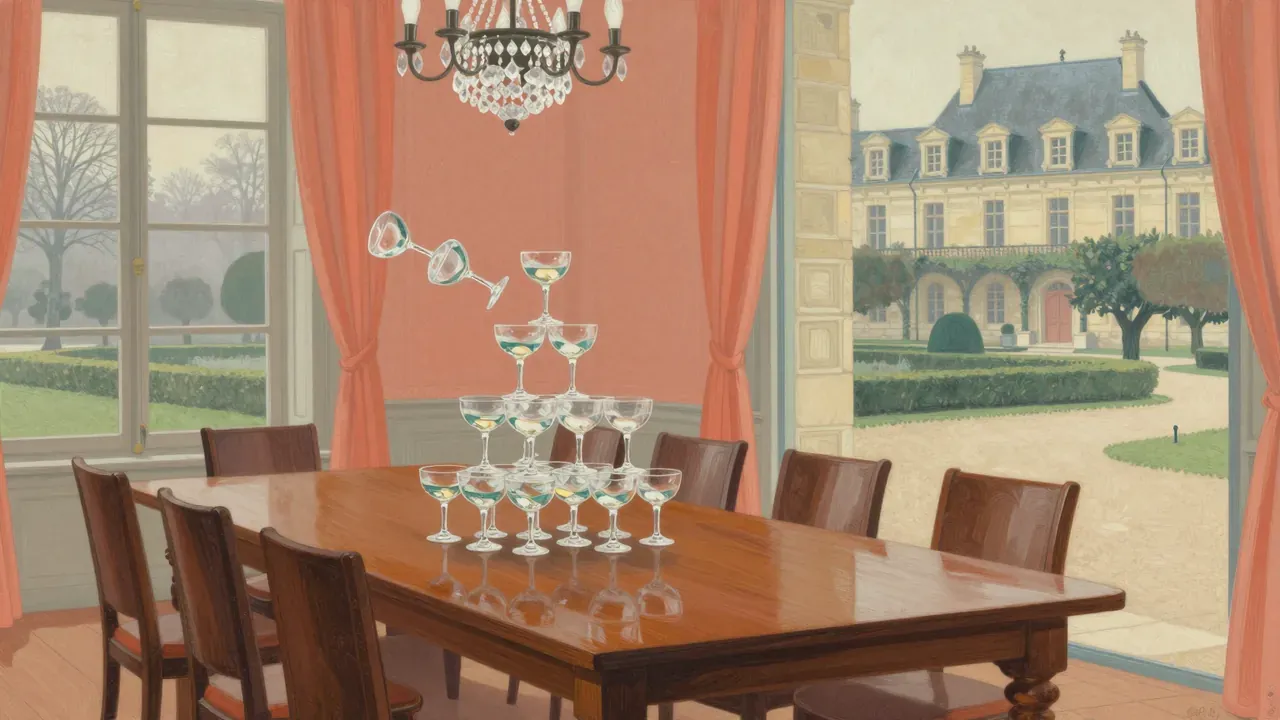
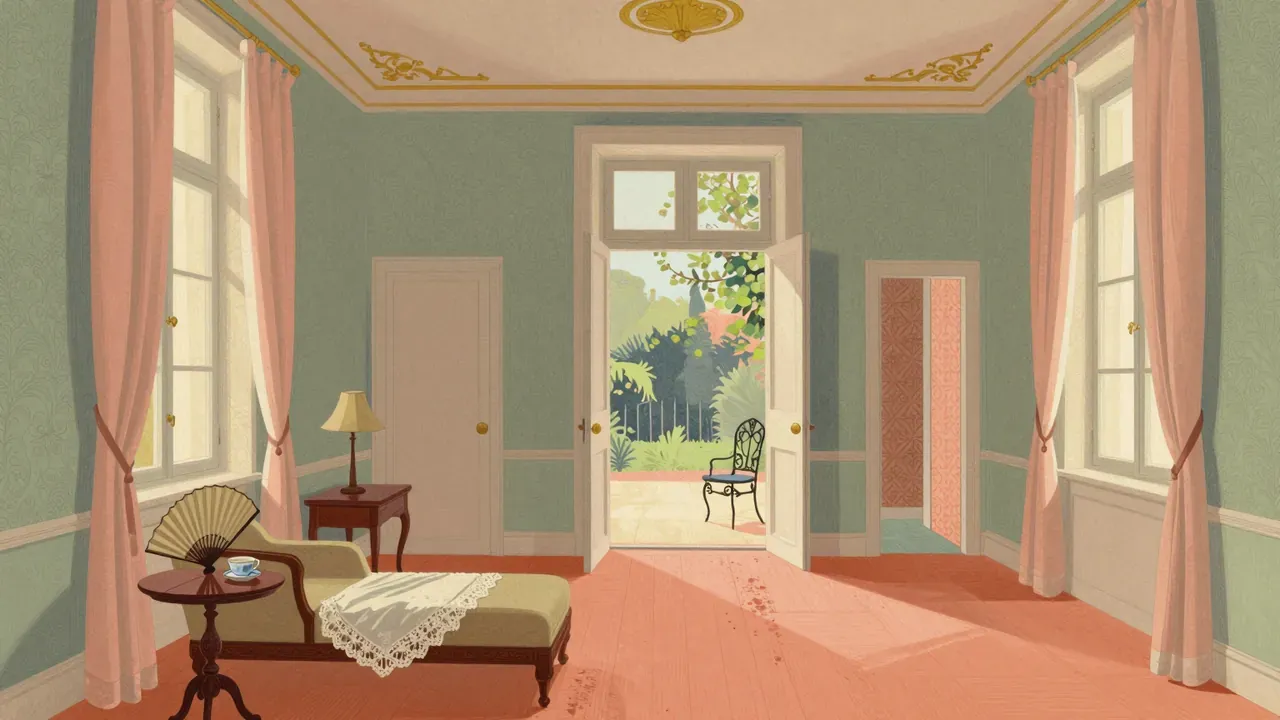
The story hinges on Philippe de Morannes, a newspaper editor whose domestic equilibrium — shared with Paulette and Claudine — fractures when American star Carl Erickson checks into his hotel. From there, the plot unfolds in set-piece encounters: breakfasts interrupted, telegrams misdelivered, misunderstandings compounded by servants’ discretion and editors’ pride. Guitry performs with clipped diction and minimal gesture; Morlay matches him in stillness, Delubac adds brisk physical punctuation. Adolphe Borchard’s score is discreet, mostly piano-led, underscoring transitions rather than emotions. Jean Perrier’s sets at Joinville Studios are compact but precise — hotel lobbies, editorial offices, and boudoirs all share the same measured scale, reinforcing the film’s claustrophobic elegance. Lighting is even, unobtrusive; camera movement is limited to tracking shots along corridors or slow push-ins during revelations. There are no visual metaphors, no symbolic props — just doors that open at the right moment and clocks that chime on cue. The craft serves the mechanism, never interrupts it. Word count: 137.
The weight of the pause
What lands is the precision of timing and the quiet confidence of its performers. Guitry’s script gives each character a distinct register — the editor’s weary authority, the American’s breezy condescension, the maids’ murmured asides — and the cast holds those registers without slippage. The hotel staff, played by Carton, Vonelly, Templey and others, function as a Greek chorus of minor panic, their reactions calibrated to amplify rather than explain. The quadrille metaphor works because it is literalised: characters physically rotate between rooms and relationships, often within the same shot. A sequence where Claudine and Paulette exchange places in Philippe’s study — one exiting as the other enters, both wearing identical cloaks — lands cleanly, relying on staging, not exposition. The film’s restraint becomes its strength: no punchline is overstated, no character humiliated beyond propriety. Even the American’s departure feels less like resolution than a change of tempo. Word count: 142.
The unbroken mirror
What does not land is any sense of consequence or emotional risk. The stakes remain purely logistical: who sits where at lunch, who receives which telegram, who overhears what in the lift. No character questions their position, their choices, or the system that sustains them. The American star’s presence introduces no cultural friction — he speaks fluent French, admires French journalism, and departs without altering anyone’s life. The newspaper itself is a prop, not a subject: we see no headlines, no deadlines, no readers. Guitry’s wit is verbal and situational, but it lacks bite; it flatters the audience’s intelligence without challenging their assumptions. The film’s refusal to engage with interwar France — its anxieties, its politics, its shifting gender dynamics — leaves it suspended in a hermetic belle-époque bubble. Later viewers may find the servants’ deference unexamined, the women’s agency confined to choosing between men, and the entire enterprise faintly archaic not in style but in sensibility. Word count: 139.
The rules of the room
The themes that matter are ritual, substitution, and the illusion of control. The quadrille is not just a dance but a model for social order: partners change, but the formation holds. Characters do not fall in love so much as step into pre-arranged positions — editor, mistress, rival, guest — and the film treats those roles as interchangeable, temporary, and lightly worn. There is no moral weight attached to fidelity or ambition; loyalty is a matter of convenience, not principle. The hotel functions as a microcosm where hierarchy is maintained not by power but by routine: the concierge knows when to interrupt, the chambermaid knows what not to see. This is not satire of class but its choreography — a demonstration of how smoothly surfaces can shift without cracking. The film’s quiet conservatism lies not in its values but in its certainty that nothing essential changes, even when everyone moves. Word count: 126.
Who keeps time with it
This film is for viewers who value formal elegance over psychological depth, and who enjoy comedy as architecture rather than catharsis. It suits those familiar with Guitry’s theatrical style or with French interwar farce more broadly — fans of Cocteau’s dialogue or Clair’s timing may find common ground here. It is not for those who require narrative momentum, moral ambiguity, or historical texture; viewers expecting social commentary on 1930s Paris, or even sustained character development, will leave unsatisfied. Someone who values thematic resonance over rhythmic precision — say, a student of Weimar cinema or post-war realism — would likely find Quadrille too airless. Its appeal narrows further for audiences unused to static framing or untranslated French idioms delivered at conversational pace. A single viewing suffices; repeated viewings reveal craft, not complexity. Word count: 133.
What it does not promise
Yes, it is worth your evening — provided you approach it as a piece of calibrated craftsmanship rather than a story with stakes. Ninety-five minutes passes without strain, its pacing deliberate but never sluggish, its performances uniformly assured. It rewards attention to detail: the way a door handle turns, the pause before a name is corrected, the exact angle at which a telegram is handed over. Those who dislike studio-bound comedies, or who find pre-war European manners alienating, will not warm to it — and that is fair. But its value lies in its coherence: every element serves the central conceit, and nothing overreaches. A remake would miss the point; this is not about the plot but about the polish. If you accept its terms — lightness as discipline, repetition as rhythm — it delivers exactly what it promises. Word count: 134.