The shape of the dream
Sherlock Jr. is a 44-minute silent comedy from Metro Pictures, released in April 1924, directed by Buster Keaton and Roscoe Arbuckle (credited as William Goodrich), and starring Keaton as a cinema projectionist who dreams himself into the film he is screening. It is not a detective parody in the manner of later genre spoofs, but a structural experiment: it treats the cinema screen as a threshold, a physical plane one can step across, and uses that premise to interrogate how film constructs continuity, space, and agency. The film’s central ambition is formal rather than narrative — to make visible the grammar of editing, the illusion of depth, and the spectator’s complicity in sustaining fiction. Its dream sequence does not dissolve logic but subjects it to precise mechanical testing: cuts become doorways, camera positions are surveyed like surveyor’s marks, and the protagonist’s persistence inside the film is measured in repeated failures and recalibrations. This is not whimsy; it is architecture made kinetic. The film attempts no social satire, no character study beyond its protagonist’s quiet dignity, and no emotional crescendo — only the rigorous, unhurried demonstration of what the medium can do when treated as a set of physical constraints to be mastered. (158 words)
The look of it
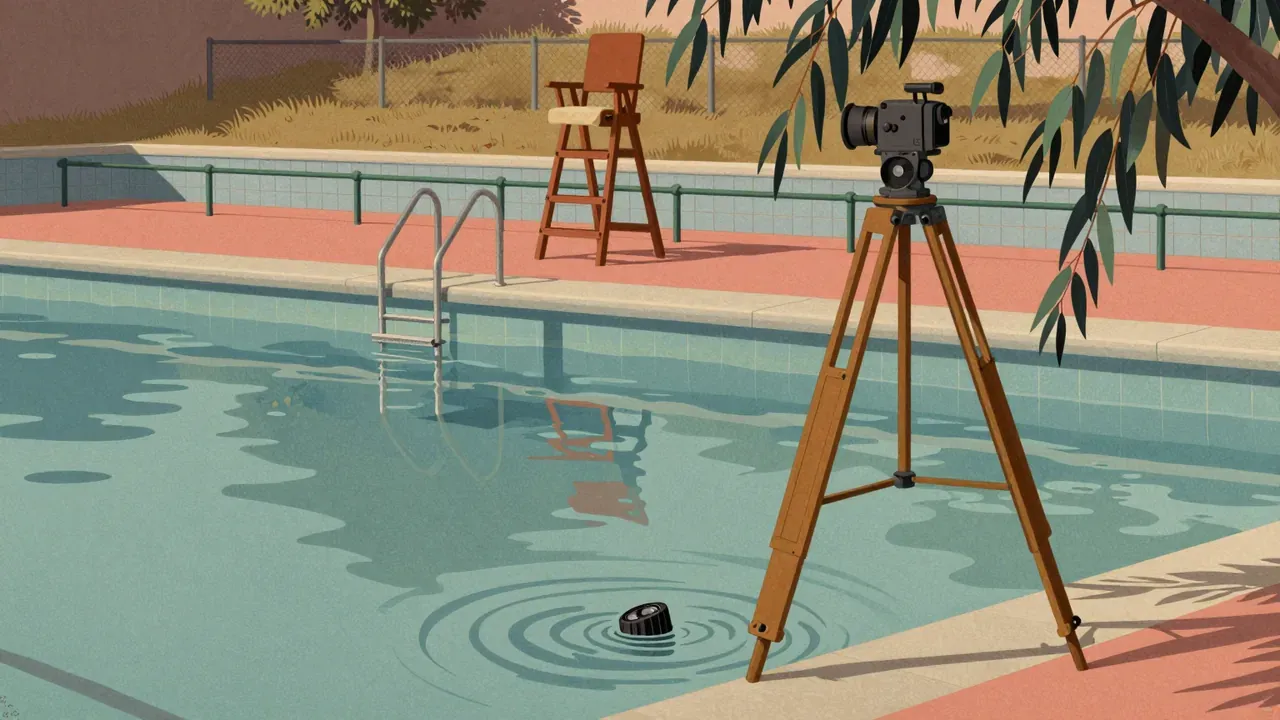
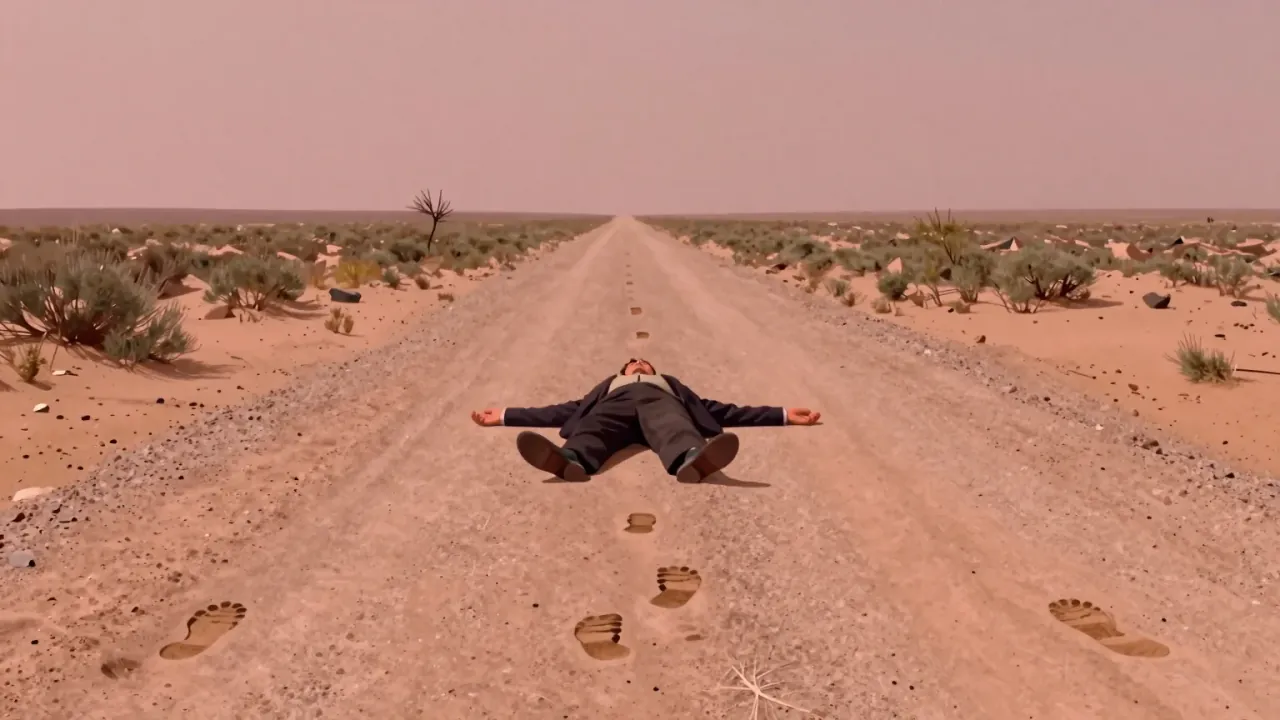
The story follows a linear, almost schematic progression: a poor projectionist is falsely accused, banished, then enters a dream where he becomes Sherlock Jr., solves a theft, rescues the girl, and wakes — though the final shot implies the real-world resolution remains unresolved. Performance is understated and precise: Keaton’s face registers neither triumph nor despair, only concentration and mild surprise; Kathryn McGuire moves with unforced naturalism, Ward Crane plays the rival with minimal inflection, and Joe Keaton’s father is all stoic stillness. The craft is where the film lives: Byron Houck and Elgin Lessley’s cinematography keeps focus tight and lighting flat, favouring clarity over mood; Buster Keaton’s editing stitches discontinuity into coherence, most notably in the dream’s seamless transitions between park, lake, and desert — achieved not by dissolves but by exact camera-to-subject distance, calibrated with surveyor’s tools. The optical tricks — suitcase disappearance, screen-entry, repeated ejection from the film — rely on rigour, not sleight. There is no score in the original release; music was added decades later, and none appears in the fact sheet. The film’s rhythm is that of a clockwork mechanism: each gag is timed, each cut placed, each fall calculated. (159 words)
The weight of the gag
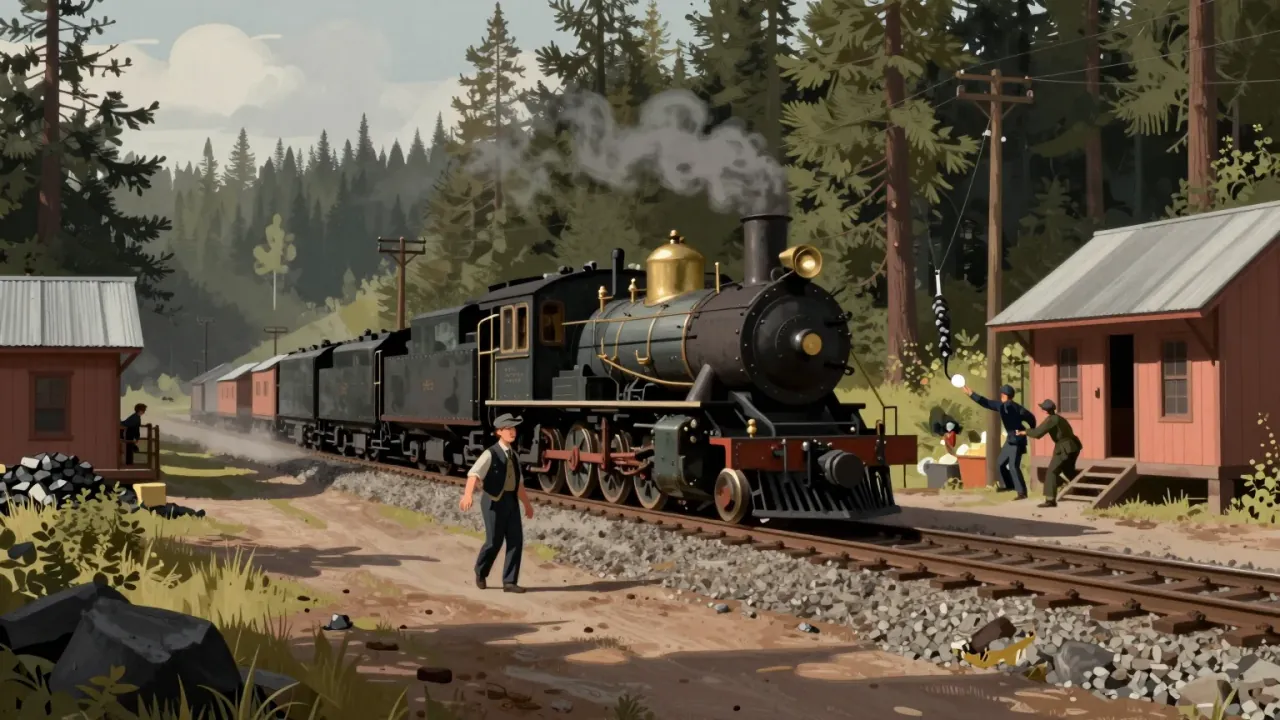
What lands is the film’s unwavering commitment to its own logic. The dream sequence works because it refuses metaphor: Sherlock Jr. does not symbolise aspiration or escape, but functions as a literal extension of the projectionist’s skill — his ability to read, enter, and navigate a constructed world. The visual gags land not through speed or exaggeration but through spatial fidelity: the train-car chase feels dangerous because the angles and distances are legible; the pool-table trap lands because the physics of the exploding ball are shown, not implied. Even the framing device — the projectionist reading How to be a Detective — lands as quiet irony, not setup for punchline. The film’s restraint makes its few departures potent: the moment Keaton walks onto the screen and into the film is not a flourish but a pivot, executed with the gravity of a threshold crossing. The audience does not laugh at the impossibility, but accepts it as rule — and that acceptance is the film’s achievement. Its durability lies in this: it asks the viewer to participate in its mechanics, not just observe them. That participation remains immediate, even ninety years on, because the rules it establishes are clear, consistent, and physically grounded. (157 words)
The edges of the frame
What does not land is the framing narrative’s emotional scaffolding. The projectionist’s love for the girl and rivalry with the Sheik are sketched in shorthand — gestures, glances, a pawn ticket slipped into a pocket — but never given psychological weight or variation. The characters outside the dream exist as functional units: the father as authority, the Sheik as obstacle, the girl as object of restitution. Their motivations are procedural, not persuasive. The film’s refusal to dramatise their inner life leaves the stakes feeling abstract, especially when contrasted with the vivid, tactile urgency of the dream. The opening reels — the projectionist sweeping, counting coins, adjusting chocolates — move with deliberate slowness, but without the rhythmic propulsion of Keaton’s later features like The General, they risk feeling like exposition rather than economy. Some viewers will find the absence of music in the original version a deficit, though the fact sheet confirms no score existed at release; others may read the film’s austerity as coldness. The film does not seek empathy, but some may miss the warmth that softens the edges of Chaplin’s contemporaneous work. Its rigour is its virtue — and its limitation. (156 words)
The logic of the screen
The themes that matter are not those of detection or romance but of mediation, competence, and the materiality of illusion. The projectionist does not wish to be a detective; he wishes to master the apparatus — first the projector, then the film itself. His dream is not fantasy but rehearsal: a controlled environment in which to test perception, timing, and spatial reasoning. The film treats cinema not as a window onto reality but as a machine with levers, lenses, and thresholds — and treats the viewer not as passive recipient but as co-operator, required to hold the frame, track the cut, accept the splice. This makes it a film about attention as labour, about the ethics of seeing, and about the quiet dignity of technical mastery. It is also, unavoidably, a film about exclusion and re-entry: the projectionist is ejected from the film three times before he stays — a motif that echoes his banishment from the girl’s home, and Arbuckle’s own expulsion from the industry. But the film does not dwell on injustice; it treats re-entry as a problem of alignment, not morality. Its enduring resonance lies in this: it locates meaning not in motive or message, but in the precision of the act. (155 words)
Who watches with whom
This film is for viewers who value structure over sentiment, who watch films to see how they are built, not just what they say. It rewards patience, attention to composition, and tolerance for silence — both auditory and emotional. It is for students of editing, for architects of narrative, for anyone who finds pleasure in the exact placement of a camera or the calibrated fall of a body. It is not for those who require psychological motivation, sustained character arcs, or emotional payoff; those expecting a love story or a satire of detective fiction will find the film withholding. Some modern viewers, accustomed to rapid cuts and layered soundtracks, may struggle with its pacing and monochrome restraint. Those who dislike silent film on principle will not be converted here — there is no concession to contemporary syntax. But the verdict is not categorical: someone who finds Keaton’s later work too diffuse may prefer the tighter architecture of Sherlock Jr., while those who love Chaplin’s pathos may find this alienating. A change in context — say, viewing it with live accompaniment or in a curated programme on early special effects — would shift the experience, but not the film’s essential disposition. (159 words)
The time it takes
Yes, it is worth your evening — provided you approach it as a demonstration, not a diversion. Its 44 minutes pass without haste but also without waste; every shot serves the central proposition. It repays close viewing not because it hides meaning but because it reveals method: how a cut sustains belief, how a costume change signals a new scene, how a black cut-out screen and front-row seats produce the illusion of stepping into light. It is not ‘entertaining’ in the sense of offering relief, but it is deeply satisfying as an act of intellectual and physical choreography. Those who dismiss it as ‘old-fashioned’ mistake historical distance for deficiency — its innovations remain legible, its gags still function, its logic still holds. Anyone who has ever paused a film to examine a transition, or wondered how a trick shot was done, will find here a masterclass delivered without commentary. It does not ask for affection, only attention — and returns precision for time. To call it ‘light’ or ‘escapist’ is to misread its gravity. It is, instead, a compact, unblinking lesson in how cinema thinks. (158 words)