filmbriefs
Topic

Crime

What a society criminalises, and what that says about it.

199
in film
13:00
average
2587 min
in total
234
across the network
Crime across the network →
All briefs199
13:00

A Colt Is My Passport

Takashi Nomura · 1967

Takashi Nomura’s 1967 yakuza noir follows contract killer Shuji Kamimura as he navigates a collapsing web of yakuza betrayals after a botched hit. With precise, unhurried direction and Joe Shishido’s stoic performance, the film treats survival as a series of calibrated actions — installing a second brake, digging a ditch, building a bomb — rather than a psychological journey. Its power lies in functional coherence, not thematic elaboration.
13:00

A History of Violence

David Cronenberg · 2005

David Cronenberg’s 2005 crime thriller adapts a graphic novel into a precise, unsentimental study of identity, memory, and embodied violence. Viggo Mortensen plays Tom Stall, a small-town diner owner whose past as hitman Joey Cusack resurfaces after he kills two robbers. The film tracks the unraveling of his family life and his return to Philadelphia, where violence proves inescapable — not as choice, but as somatic fact. Shot by Peter Suschitzky and scored by Howard Shore, it favours stillness over spectacle and implication over exposition.

13:00

Anatomy of a Murder

Otto Preminger · 1959

Otto Preminger’s 1959 Anatomy of a Murder is a rigorously procedural crime drama set in Michigan’s Upper Peninsula. James Stewart plays a small-town lawyer defending an army lieutenant accused of murder, using an 'irresistible impulse' insanity plea. Shot on location with documentary restraint, it prioritises legal mechanics over psychology, and evidentiary tension over emotional payoff. Sam Leavitt’s cinematography and Duke Ellington’s score support, never dominate, its deliberate pace. Though acclaimed for authenticity, it resists moral framing — leaving viewers with the structure of doubt, not the comfort of verdict.

13:00

Arsenic and Old Lace

Frank Capra · 1944

Frank Capra’s 1944 adaptation of Joseph Kesselring’s play is a tightly wound black comedy set over one Halloween day in a Brooklyn house where two elderly sisters poison lonely bachelors, their delusional nephew buries the bodies, and their theatre-critic nephew tries to contain the chaos. Starring Cary Grant, Josephine Hull and Raymond Massey, it prioritises rhythmic precision over emotional depth, using studio-era craft to sustain a high-wire act of escalating absurdity.

13:00

As Tears Go By

Wong Kar-wai · 1988

Wong Kar-wai’s 1988 debut follows Wah, a Mong Kok triad enforcer, as he tries to manage his volatile friend Fly while growing close to his cousin Ngor, who visits from Lantau Island. Shot in naturalistic tones by Andrew Lau and edited with deliberate slowness by William Chang, the film grounds crime-drama tropes in quiet consequence rather than spectacle. Its power lies in restraint: in Andy Lau’s muted performance, Maggie Cheung’s understated presence, and the unforced contrast between urban claustrophobia and island stillness. Though structurally uneven in its second half, it establishes Wong’s enduring concerns — time, loyalty, and the geography of longing.

13:00

Badlands

Terrence Malick · 1973

Terrence Malick’s 1973 debut is a stylised, time-suspended retelling of the Starkweather–Fugate killings, starring Martin Sheen and Sissy Spacek. Shot on a $300,000 budget in Colorado, it uses sparse dialogue, hypnotic repetition, and Tak Fujimoto’s flat, wide compositions to construct a fairy-tale logic around murder and flight. Holly’s detached narration, Orff’s Gassenhauer, and the vast, indifferent landscape all serve a single vision: human action as pattern, not pathology.

13:00

Big Deal on Madonna Street

Mario Monicelli · 1958

Big Deal on Madonna Street (1958) is an Italian heist comedy directed by Mario Monicelli, following a group of Rome-based petty criminals attempting—unsuccessfully—to burgle a pawn shop through a shared wall. Shot on location with harsh, naturalistic lighting by Gianni Di Venanzo and scored with restrained jazz by Piero Umiliani, it parodies both neorealist gravity and crime-thriller solemnity by applying their formal rigour to characters who lack the means to succeed. The film’s humour arises from procedural fidelity, not absurdity: every setback follows logically from material constraint, linguistic mismatch or spatial miscalculation. Though nominated for an Academy Award and listed among Italy’s 100 essential films, its appeal lies in its precision, not its polish.

13:00

Blast of Silence

Allen Baron · 1961

Blast of Silence is a 1961 American neo-noir crime film written, directed by, and starring Allen Baron. Set over Christmas week in New York City, it follows Frankie Bono, a hitman returning to his hometown to carry out a contract killing. Shot on location without permits and scored with stark minimalism, the film leans on atmosphere, silence, and moral ambiguity rather than plot mechanics. Its narration — written by blacklisted Waldo Salt and voiced uncredited by Lionel Stander — adds a layer of literary distance. Though modest in budget and scope, it endures as a precise, unsparing study of alienation and consequence.

13:00

Bob le flambeur

Jean-Pierre Melville · 1956

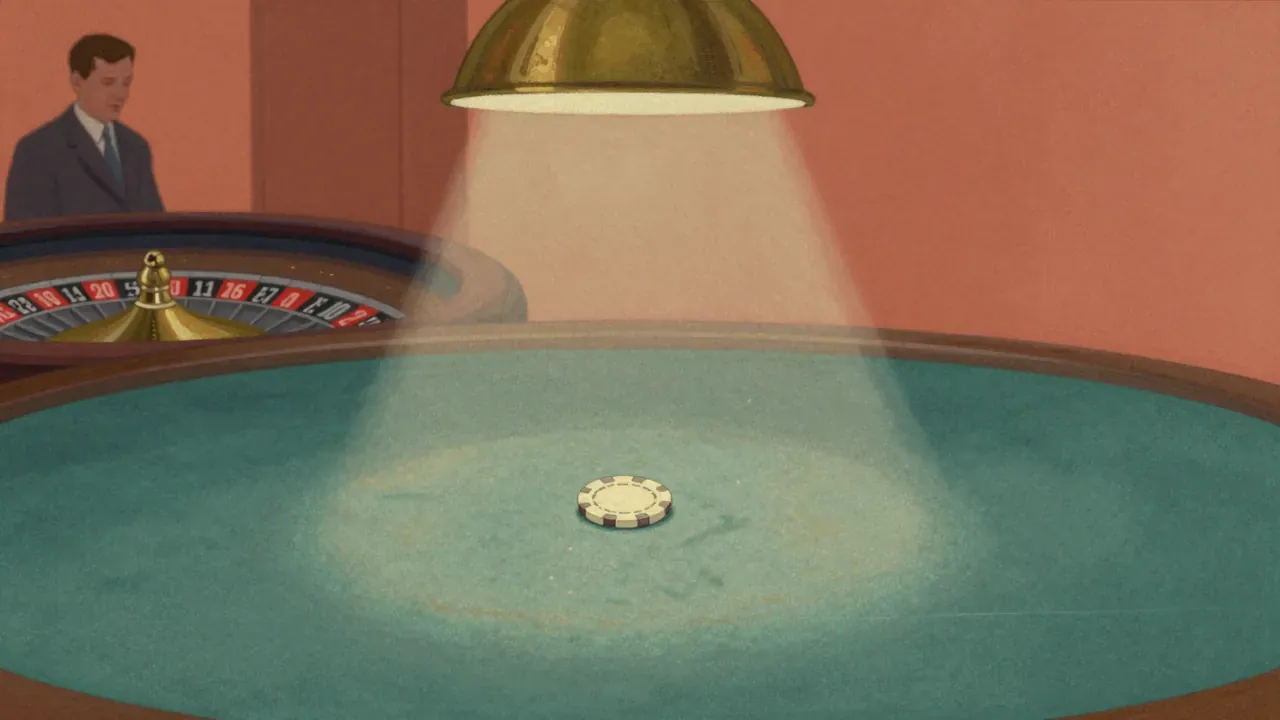
Jean-Pierre Melville’s 1956 heist film follows ageing gambler Bob as he plans a raid on a Deauville casino. Shot on location in Paris and Deauville by Henri Decaë, it moves with unhurried precision, treating criminality as habit rather than transgression. Its influence on the French New Wave stems less from innovation than from its disciplined use of space, silence, and repetition. Roger Duchesne anchors the film with quiet authority; the heist fails not through chaos but through Bob’s fatal, human lapse — losing track of time at the roulette table. A film of tone over twist, form over function.

13:00

Body Heat

Lawrence Kasdan · 1981

A 1981 neo-noir thriller set in sweltering south Florida, Body Heat follows a small-time lawyer drawn into a lethal affair with a wealthy man’s wife. Written and directed by Lawrence Kasdan, it updates classic noir fatalism with 1980s sexual frankness and structural rigour. Its power lies in atmosphere, implication, and the slow, inevitable collapse of illusion — forged wills, assumed identities, and withheld truths all converge in a climax that reframes everything that came before.

13:00

Bound

Lilly Wachowski · 1996

A 1996 neo-noir crime thriller directed by Lilly Wachowski, Bound follows two women — a gun moll and an ex-convict — who conspire to steal Mafia money from the man who controls them. Shot on a tight budget, it uses confined spaces, deliberate pacing and tactile visual motifs to anchor a story about agency, enclosure and erotic autonomy. Its craft is precise, its politics implicit, its impact cumulative.

13:00

Brute Force

Jules Dassin · 1947

Brute Force (1947) is a tightly wound crime drama set inside Westgate Prison, where Capt. Munsey’s sadistic enforcement and Warden Barnes’ passivity create a powder keg. When Joe Collins organises an escape, the system responds not with reform but with annihilation. Directed by Jules Dassin and written by Richard Brooks, it uses noir’s visual austerity and moral severity to mount a sustained critique of punitive justice — not as aberration, but as design.

13:00

Carlos

Olivier Assayas · 2010

Olivier Assayas’s 2010 French drama Carlos traces the operational life of Ilich Ramírez Sánchez across three decades and multiple continents. Shot in English with multilingual dialogue, it avoids moral framing in favour of procedural fidelity: safe houses, intercepted signals, bureaucratic friction, and the slow decay of ideological certainty. Édgar Ramírez leads a large international cast; editing and cinematography privilege duration and texture over exposition. At 338 minutes, it demands sustained attention but repays it with historical granularity and structural rigour.

13:00

Casque d'Or

Jacques Becker · 1952

Jacques Becker’s 1952 drama follows Marie and Manda, lovers caught in the violent hierarchies of Belle Époque Paris. Shot with precise, unadorned realism, it avoids moralising or spectacle, instead anchoring emotion in gesture, setting, and consequence. Simone Signoret and Serge Reggiani deliver performances of quiet intensity, supported by Robert Lefebvre’s understated cinematography and Marguerite Renoir’s taut editing. Its final sequence — Marie watching Manda’s execution from a hotel window — remains one of cinema’s most devastating uses of spatial restraint.

13:00

Classe tous risques

Claude Sautet · 1960

Claude Sautet’s 1960 crime film follows a fugitive gangster who returns to Paris with his sons, seeking help from former associates now settled into bourgeois comfort. As old loyalties fray and new alliances prove fragile, his attempt to secure a future ends in isolation and inevitability. Shot with restraint by Ghislain Cloquet and scored with quiet melancholy by Georges Delerue, it is a study in moral erosion, not spectacle.

13:00

Coup de Torchon

Bertrand Tavernier · 1981

Bertrand Tavernier’s 1981 adaptation of Jim Thompson’s Pop. 1280 relocates the story to French West Africa in 1938, following a lethargic, humiliated police chief who begins murdering local figures to assert control. Starring Philippe Noiret and Isabelle Huppert, it is a satirical neo-noir dark comedy that treats violence as bureaucratic procedure and colonialism as ambient condition — dry, exact, and morally unflinching.

13:00

Cruel Gun Story

Takumi Furukawa · 1964

Takumi Furukawa’s 1964 Cruel Gun Story follows ex-convict Joji Togawa as he leads a heist for a yakuza boss, only to be betrayed and drawn into escalating violence. Starring Joe Shishido and Chieko Matsubara, it is a tightly wound crime film grounded in moral exhaustion rather than glamour or catharsis — its power lies in its restraint, its downfall in its late departure from that discipline.

13:00

Cruel Story of Youth

Nagisa Ōshima · 1960

Nagisa Ōshima’s 1960 debut Cruel Story of Youth follows two Tokyo teenagers whose relationship unravels through coercion, petty crime, and illegal abortion. Shot on location with hand-held cameras and stark, uninflected performances, it rejects moral framing in favour of structural realism — showing how class, gender, and political neglect shape intimacy. Though controversial on release, it helped define Japan’s New Wave and remains a rigorous, unsentimental study of youth as condition rather than stage.

13:00

Deep Cover

Bill Duke · 1992

A Cincinnati police officer goes undercover in Los Angeles to dismantle a drug cartel, only to discover his mission is entangled with State Department interests protecting a South American politician. Directed by Bill Duke and starring Laurence Fishburne and Jeff Goldblum, the 1992 neo-noir sustains a tone of institutional weariness, using voice-over, Bojan Bazelli’s shadowed cinematography, and Michel Colombier’s score to trace the slow dissolution of professional conviction. Its strength lies in moral texture, not plot mechanics.

13:00

Deep Crimson

Arturo Ripstein · 1996

Arturo Ripstein’s 1996 Deep Crimson transposes the Lonely Hearts Killers’ crimes to Mexico, following Coral Fabre and Nicolás Estrella as their lonely-hearts scam hardens into serial murder. With no psychological exposition or moral framing, the film charts their descent through ritualised acts, understated performances, and a stark visual style. It won eight Ariel Awards and Sundance Honorable Mention, and was Mexico’s Oscar submission.

13:00

Devil in a Blue Dress

Carl Franklin · 1995

Carl Franklin’s 1995 adaptation of Walter Mosley’s novel follows WWII veteran Easy Rawlins through a 1948 Los Angeles entangled in political corruption, racial surveillance, and familial secrets. Denzel Washington anchors a tightly constructed crime narrative shaped by Tak Fujimoto’s restrained cinematography and Elmer Bernstein’s blues-tinged score. The film excels in atmosphere and historical texture but resolves its central tensions with procedural efficiency rather than emotional resonance.

13:00

Diabolique

Henri-Georges Clouzot · 1954

Henri-Georges Clouzot’s 1954 thriller Diabolique follows two women who murder a cruel headmaster, only to confront evidence he has returned. Shot with clinical precision by Armand Thirard and edited by Madeleine Gug, the film sustains dread through confinement, ambiguity, and the unreliability of perception — not gore or score. Its legacy rests on structural influence (notably on Psycho), its Louis Delluc Prize win, and its enduring demonstration that horror begins where consensus ends.

13:00

Double Indemnity

Billy Wilder · 1944

A 1944 crime film directed by Billy Wilder, adapted from James M. Cain’s novella by Wilder and Raymond Chandler. Insurance salesman Walter Neff conspires with Phyllis Dietrichson to kill her husband and collect a double indemnity payout, only to find himself trapped by his own logic and the scrutiny of claims manager Barton Keyes. Shot in stark black-and-white by John F. Seitz, with a taut script and restrained performances, it established core conventions of film noir while refusing easy moral binaries or emotional release.

13:00

Dragnet Girl

Yasujirō Ozu · 1933

Yasujirō Ozu’s 1933 silent crime film Dragnet Girl follows Tokiko, girlfriend of a small-time gangster, as she slowly withdraws from complicity and steers both herself and him toward surrender. With restrained performances, unemphatic pacing, and Hideo Shigehara’s naturalistic cinematography, it treats moral change as incremental, not dramatic — a film less about breaking the law than about noticing the weight of a choice, a glance, a pause.

13:00

Drugstore Cowboy

Gus Van Sant · 1989

Set in 1971 Portland, Drugstore Cowboy follows Bob Hughes and his crew as they rob pharmacies to sustain their heroin habits. When a death forces Bob to confront consequences, he attempts sobriety — only to circle back, not in despair, but with grim, ironic resolve. Gus Van Sant’s second feature avoids moralising, instead observing addiction as a structure of time, labour and loyalty. Shot by Robert Yeoman, scored by Elliot Goldenthal, and anchored by Matt Dillon’s restrained lead performance, it remains a benchmark of American indie realism.

13:00

Elevator to the Gallows

Louis Malle · 1958

Louis Malle’s 1958 debut follows two parallel failures: a meticulously planned murder undone by a forgotten rope, and a casual theft escalating to murder through chance and misreading. Shot in stark black-and-white by Henri Decaë and scored in a single improvised session by Miles Davis, it builds dread through duration, light and silence rather than exposition or climax. Jeanne Moreau’s breakthrough performance anchors a film less about guilt than about the physics of consequence.

13:00

Female Trouble

John Waters · 1974

John Waters’ 1974 comedy Female Trouble follows Divine as Dawn Davenport, a Baltimore delinquent whose life escalates from expulsion and teen pregnancy to criminal stardom and execution — all staged with deadpan precision, handmade production design, and zero psychological compromise. Shot on 16mm in Baltimore for $25,000, it treats celebrity, punishment, and beauty as interchangeable currencies in a world governed by spectacle, not sense.

13:00

Fight, Zatoichi, Fight

Kenji Misumi · 1964

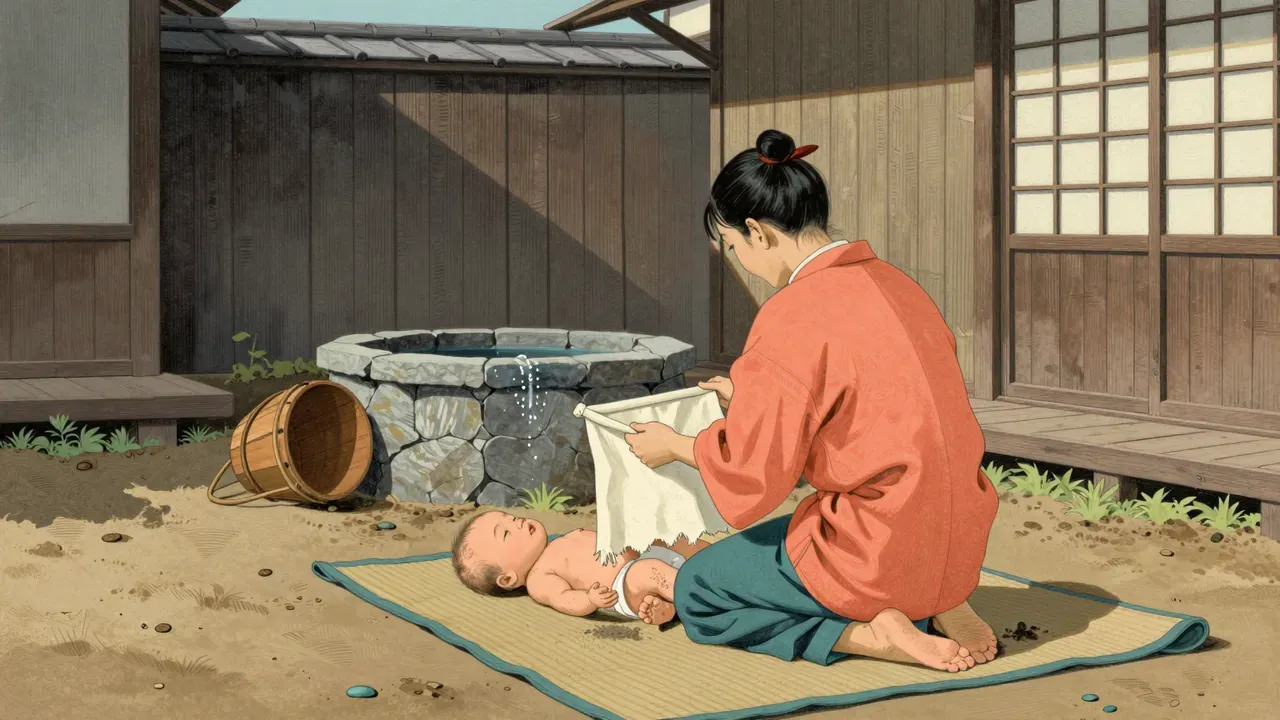
The eighth Zatoichi film follows the blind masseur as he carries a baby across sixty miles to its estranged father, pursued by assassins and accompanied by reluctant helpers. Built on repetition and restraint, it treats duty as a series of concrete actions — reading documents, changing diapers, rolling out fire — rather than abstract virtue. Directed by Kenji Misumi and starring Shintarō Katsu, it is a lean, unsentimental entry in the series, anchored by precise choreography and moral clarity.

13:00

Ghost Dog: The Way of the Samurai

Jim Jarmusch · 1999

Ghost Dog: The Way of the Samurai (1999) follows a Black hitman in New Jersey who lives by the samurai code of Hagakure while working for an Italian-American crime family. Directed by Jim Jarmusch and scored by RZA, it unfolds with deliberate stillness, using Robby Müller’s restrained cinematography and Forest Whitaker’s physically precise performance to sustain a world where ritual, silence, and cross-cultural synthesis are structural facts, not themes to be explained.

13:00

Gomorrah

Matteo Garrone · 2008

Matteo Garrone’s 2008 film adapts Roberto Saviano’s non-fiction book into a five-thread portrait of the Camorra’s reach across Naples and Caserta. It follows a timid middleman, a teenage recruit, a waste-management graduate, a tailor, and two deluded wannabes — none heroic, none redeemed. Shot with documentary restraint by Marco Onorato and edited without flourish by Marco Spoletini, it treats crime as infrastructure: logistical, banal, and woven into fashion, toxic dumping, and housing estates. It won the Cannes Grand Prix and seven David di Donatello awards.

13:00

Grisbi

Jacques Becker · 1954

Jacques Becker’s 1954 heist film follows ageing Parisian gangster Max le Menteur as his control over his crew, his lover, and his own stamina begins to slip. Shot in muted tones by Pierre Montazel and edited with deliberate calm by Marguerite Renoir, it treats crime as backdrop to a study in endurance, habit, and quiet decline. Jean Gabin’s performance is restrained, anchored in physical detail rather than declaration.

13:00

High Sierra

Raoul Walsh · 1941

High Sierra (1941), directed by Raoul Walsh and starring Humphrey Bogart and Ida Lupino, follows ageing gangster Roy Earle as he leads a jewel heist in California’s Sierra Nevada, then flees into the mountains. Adapted by John Huston and W. R. Burnett from Burnett’s novel, it uses location shooting, restrained performances, and unshowy craft to trace a quiet, physical descent — not toward redemption, but toward an ending already written in Roy’s body and the landscape.

13:00

Homicide

David Mamet · 1991

David Mamet’s 1991 crime drama follows a Jewish homicide detective pulled from a high-profile manhunt into the investigation of an elderly woman’s killing — a case that unravels his assumptions about identity, loyalty, and belonging. With Joe Mantegna, William H. Macy, and Ving Rhames, and shot by Roger Deakins, it trades procedural clarity for psychological precision, using police work as scaffolding for a stark, unsentimental study of assimilation, moral drift, and the cost of choosing between competing claims on the self.

13:00

House of Games

David Mamet · 1987

David Mamet’s 1987 directorial debut is a neo-noir thriller about a psychiatrist drawn into a world of confidence tricks. Lindsay Crouse plays Margaret Ford, whose clinical detachment unravels as she learns the grammar of deception from con man Mike Mancuso (Joe Mantegna). Structured like a series of escalating cons, the film traces her shift from observer to participant to perpetrator — culminating not in redemption but in quiet, irreversible moral collapse. Shot with tight framing and sparse scoring, it privileges precision over psychology, logic over catharsis.

13:00

Humanité

Bruno Dumont · 1999

Bruno Dumont’s 1999 Humanité follows a withdrawn French police lieutenant investigating the rape and murder of an eleven-year-old girl in rural Bailleul. Shot in natural light with minimal dialogue, it treats the case not as a puzzle but as a rupture in the fabric of daily life — observed with clinical patience, emotional restraint, and profound physical specificity. Emmanuel Schotté and Séverine Caneele deliver unadorned, deeply felt performances; Yves Cape’s cinematography grounds every moment in tangible reality. The film won the Grand Prix at Cannes and remains a defining work of late-20th-century arthouse realism.

13:00

I Am Waiting

Koreyoshi Kurahara · 1957

Directed by Koreyoshi Kurahara and released in 1957, I Am Waiting follows a disgraced boxer and a failing cabaret singer as they shelter together in a Tokyo restaurant, evading gangsters and their own pasts. Written by Shintarō Ishihara and starring Yūjirō Ishihara and Mie Kitahara, it is a tightly wound drama of quiet desperation, built on withheld information, atmospheric tension, and the weight of unspoken histories. Part of Nikkatsu’s early noir wave, it trades plot mechanics for psychological compression and visual restraint.

13:00

I Shot Jesse James

Samuel Fuller · 1949

Samuel Fuller’s 1949 directorial debut tells the story of Bob Ford, the man who murdered Jesse James—not as a folk villain but as a psychologically fraying opportunist. Shot cheaply and quickly, it uses stark black-and-white cinematography and tightly written scenes to trace Ford’s moral disintegration after the killing, his failed attempts at respectability, and his inevitable downfall. With John Ireland in a defining early role and Fuller’s signature moral directness, it remains a lean, unsentimental study of infamy, reputation, and the cost of self-deception.

13:00

Il bidone

Federico Fellini · 1955

Federico Fellini’s 1955 drama follows a trio of swindlers working rural Italy, whose cons on poor farmers gradually unravel their self-deception. Broderick Crawford plays Augusto, whose late moral crisis culminates in abandonment and death on a barren hillside. Shot by Otello Martelli, scored by Nino Rota, and anchored by Giulietta Masina’s restrained performance, the film treats conscience as physical decay rather than spiritual awakening.

13:00

In Cold Blood

Richard Brooks · 1967

Richard Brooks’ 1967 adaptation of Truman Capote’s nonfiction novel reconstructs the 1959 Clutter family murders with stark, black-and-white realism. Shot on location in Holcomb, Kansas—including inside the actual Clutter home—and starring relative unknowns Robert Blake and Scott Wilson, the film avoids psychological exposition in favour of procedural detail, ambient sound, and deliberate pacing. Conrad Hall’s cinematography and Quincy Jones’s bass-heavy score reinforce its documentary austerity. Though critically lauded and preserved in the National Film Registry, its fictional reporter subplot and omission of two surviving Clutter daughters introduce subtle fractures in its otherwise unwavering formal control.

13:00

In the Heat of the Night

Norman Jewison · 1967

Norman Jewison’s 1967 crime drama follows Philadelphia detective Virgil Tibbs (Sidney Poitier), detained in a Mississippi town and reluctantly drawn into a murder investigation alongside racist police chief Bill Gillespie (Rod Steiger). Haskell Wexler’s lighting, Hal Ashby’s editing, and Quincy Jones’ score serve a tightly wound procedural that exposes racial hierarchy as structural, not incidental. It won five Academy Awards, including Best Picture and Best Actor.

13:00

Infernal Affairs

Andrew Lau, Alan Mak · 2002

A Hong Kong police officer and a triad mole spend ten years living each other’s lives, bound by secrecy and surveillance. Directed by Andrew Lau and Alan Mak, the 2002 crime drama uses tight structure, restrained performances, and precise craft to explore identity as performance — not moral failure, but institutional inevitability.

13:00

Infernal Affairs II

Andrew Lau, Alan Mak · 2003

A 2003 Hong Kong crime thriller and prequel to Infernal Affairs, set between 1991 and 1997. It charts the rise of triad heir Ngai Wing-hau and the parallel infiltration of two moles—one in the police, one in the triad—against the backdrop of Hong Kong’s impending handover. Directed by Andrew Lau and Alan Mak, it expands the original’s moral universe into a generational study of power, loyalty and erasure.

13:00

Insomnia

Erik Skjoldbjærg · 1997

A Swedish detective investigating a teenage murder in Arctic Norway accidentally kills his partner, then covers it up. Haunted by insomnia under the midnight sun, he descends into paranoia and self-deception while trying to close the case — and avoid being exposed. Directed by Erik Skjoldbjærg, this 1997 Norwegian thriller is a tightly wound study in moral erosion, anchored by Stellan Skarsgård’s restrained performance and Erling Thurmann-Andersen’s desaturated cinematography.

13:00

Intimidation

Koreyoshi Kurahara · 1960

Directed by Koreyoshi Kurahara in 1960, Intimidation is a Japanese film noir starring Kō Nishimura, Nobuo Kaneko and Mari Shiraki. Set in Tokyo’s bureaucratic landscape, it follows a clerk drawn into a blackmail scheme after witnessing a murder. With minimal music, high-contrast monochrome cinematography and restrained performances, the film builds tension through spatial confinement, procedural detail and moral ambiguity. It reflects post-war Japan’s institutional anxieties without explicit commentary, favouring tone and structure over exposition or catharsis.

13:00

It's a Mad, Mad, Mad, Mad World

Stanley Kramer · 1963

Stanley Kramer’s 1963 epic comedy deploys Ultra Panavision 70 and an all-star cast to stage a non-stop, 161-minute chase for buried cash across Southern California. Built on stunts, not story, it privileges physical precision and wide-screen choreography over character or theme — succeeding as industrial spectacle, not narrative comedy.

13:00

Killers of the Flower Moon

Martin Scorsese · 2023

Killers of the Flower Moon (2023) is Martin Scorsese’s 206-minute crime drama adapting David Grann’s book on the 1920s Osage murders. Shifting focus from FBI investigation to the marriage of Ernest Burkhart and Mollie Kyle, it uses restrained craft — Rodrigo Prieto’s muted cinematography, Thelma Schoonmaker’s unhurried editing, Robbie Robertson’s sparse score — to situate colonial violence in domestic routine. Lily Gladstone’s performance grounds the film ethically and emotionally; Leonardo DiCaprio and Robert De Niro offer layered, unsettling turns. Though its length and ambiguity divide viewers, its commitment to Osage perspective and structural patience make it a singular, demanding work.

13:00

Kind Hearts and Coronets

Robert Hamer · 1949

Kind Hearts and Coronets (1949), directed by Robert Hamer for Ealing Studios, follows Louis Mazzini’s calm, calculated elimination of eight aristocratic relatives to claim a dukedom. Dennis Price narrates with detached elegance; Alec Guinness plays all eight victims with subtle, precise differentiation. Douglas Slocombe’s cinematography and Ernest Irving’s Mozart-infused score sustain a tone of immaculate, unsettling decorum. Loosely adapted from Roy Horniman’s Israel Rank, the film sharpens its source into a satire of class, legitimacy, and performative Englishness — dry, controlled, and morally unmoored.

13:00

Klute

Alan J. Pakula · 1971

A 1971 neo-noir thriller directed by Alan J. Pakula, Klute follows a Pennsylvania detective investigating a missing executive by surveilling a New York call girl. Jane Fonda’s Oscar-winning performance anchors a film defined by Gordon Willis’s shadow-drenched cinematography, Michael Small’s unsettling score, and a script that treats paranoia as atmosphere rather than plot. It is the first of Pakula’s informal 'paranoia trilogy', prioritising psychological realism over narrative closure.

13:00

La Chienne

Jean Renoir · 1931

Jean Renoir’s 1931 La Chienne adapts Georges de La Fouchardière’s story into a stark, unsentimental portrait of moral erosion. Michel Simon plays Maurice Legrand, a timid cashier whose infatuation with a prostitute (Janie Marèse) sets off a chain of theft, deception and murder — all rendered with clinical precision by Renoir and cinematographer Theodor Sparkuhl. The film’s power lies in its restraint: no music swells, no camera lingers, no character explains themselves. It is a study in how dignity dissolves not in catastrophe, but in the quiet transfer of a signature, a painting, a name.

13:00

La commare secca

Bernardo Bertolucci · 1962

La commare secca (1962) is Bernardo Bertolucci’s first feature, a formally rigorous Italian drama based on a Pier Paolo Pasolini story. Structured around seven contradictory police testimonies concerning the murder of a Rome prostitute, it uses repetition, weather and setting—not psychology or suspense—to expose class, gender and aspiration in post-war marginality. Shot by Giovanni Narzisi, edited by Nino Baragli and scored by Piero Piccioni, it is a debut marked by discipline, austerity and social observation.

13:00

La Poison

Sacha Guitry · 1951

Sacha Guitry’s 1951 French film follows a married couple in provincial France who independently decide to kill each other. Using black-and-white cinematography on colour-built sets, tight framing and uninflected performances — especially from Michel Simon and Germaine Reuver — the film treats homicide as a procedural puzzle, not a moral crisis. Written and directed by Guitry, with music by Louiguy and editing by Raymond Lamy, it unfolds with clockwork symmetry, offering irony without sentiment and structure without spectacle.

13:00

La Tête d'un homme

Julien Duvivier · 1933

Julien Duvivier’s 1933 adaptation of Simenon’s A Battle of Nerves follows Inspector Maigret (Harry Baur) as he untangles a murder set in motion by a gambler’s careless remark, a desperate burglar’s stumble, and a dying émigré’s bitter calculation. Shot in subdued tones by Thirard and Pierre, with a sparse score by Belasco and editing by Poncin, it trades thrills for psychological weight — building tension through silence, spatial constraint, and moral ambiguity. Its power lies in what it withholds: no grand confessions, no triumphant deductions, only the quiet, cumulative force of cause and effect in interwar Paris.

13:00

La Vie de Jésus

Bruno Dumont · 1997

Bruno Dumont’s 1997 debut, set in northern France, follows Freddy — an unemployed, epileptic teenager with learning difficulties — as he drifts through band rehearsals, hospital visits and a relationship with Marie. When his peer group commits rape and later murders a North African youth, the film refuses psychological exposition or moral framing. Shot with austere precision by Philippe Van Leeuw and performed by non-professionals, it treats provincial inertia as both setting and subject. Awarded European Discovery of the Year and a special mention at Cannes, it remains a demanding, uncompromising portrait of agency eroded by circumstance.

13:00

Lady Snowblood: Love Song of Vengeance

Toshiya Fujita · 1974

Lady Snowblood: Love Song of Vengeance (1974), directed by Toshiya Fujita, is the second film in the Lady Snowblood series — but a deliberate departure from its manga source and predecessor. Set in late-Meiji Japan, it follows Yuki Kashima (Meiko Kaji) as she infiltrates the household of anarchist Ransui Tokunaga (Jūzō Itami) under orders from the Secret Police. With restrained performances, muted cinematography by Tatsuo Suzuki and Masaki Tamura, and a script that favours implication over exposition, the film explores coercion, ideological uncertainty, and the quiet violence of bureaucratic control. Though structurally uneven and thematically opaque in places, it remains a precise, unsentimental study in moral suspension.

13:00

L'Argent

Robert Bresson · 1983

Robert Bresson’s 1983 drama L'Argent follows a forged 500-franc note as it passes through increasingly desperate hands, culminating in murder and confession. Shot with austere precision by Pasqualino De Santis and Emmanuel Machuel, edited by Jean-François Naudon, and scored with two diegetic Bach recordings, it is a rigorously unsentimental study of moral erosion — not as personal failure, but as systemic inevitability.

13:00

Le Cercle rouge

Jean-Pierre Melville · 1970

Jean-Pierre Melville’s 1970 heist film follows three men — a released convict, an escaped prisoner, and a disgraced marksman — whose paths converge to rob a Paris jeweller. Shot by Henri Decaë and scored sparsely by Éric Demarsan, it sustains tension through restraint: long takes, minimal dialogue, and a thirty-minute heist sequence that prioritises procedure over panic. Its themes — professionalism as ritual, silence as language, fate as convergence — are embedded in structure, not exposition.

13:00

Le Corbeau

Henri-Georges Clouzot · 1943

Henri-Georges Clouzot’s 1943 thriller Le Corbeau follows the disintegration of a provincial French town under a campaign of anonymous poison-pen letters. Produced by German-owned Continental Films during the Occupation, it was banned by both Vichy and post-war authorities for its unflinching portrayal of collective malice. With Pierre Fresnay and Ginette Leclerc, it uses stark cinematography and procedural pacing to examine how rumour corrodes trust — less a whodunnit than a study in moral contagion.

13:00

Le deuxième souffle

Jean-Pierre Melville · 1966

Jean-Pierre Melville’s 1966 crime film follows Gustave Minda, a respected gangster who escapes prison only to find his code of silence and loyalty increasingly incompatible with a world that no longer observes the same rules. Adapted from José Giovanni’s novel, it charts Gu’s final days with austere precision — from a botched extortion to a platinum heist, a police trap, and a fatal confrontation in a Paris stairwell. Lino Ventura anchors the film with restrained physicality; Marcel Combes’ flat, naturalistic cinematography and Bernard Gérard’s sparse score reinforce its unblinking tone.

13:00

Le Doulos

Jean-Pierre Melville · 1962

Jean-Pierre Melville’s 1962 crime film Le Doulos follows Maurice Faugel and Silien through a web of murder, deception, and mistaken identity. Adapted from Pierre Lesou’s novel, it uses stark cinematography, elliptical editing, and functional dialogue to construct a closed system of cause and effect — where truth is assigned, not revealed, and loyalty is procedural, not emotional.

13:00

Les Misérables

Raymond Bernard · 1933

Raymond Bernard’s 1933 French adaptation of Les Misérables runs 281 minutes across three parts. Starring Harry Baur as Jean Valjean and Charles Vanel as Javert, it treats Victor Hugo’s novel as a civic document rather than literary property — emphasising systemic injustice, material poverty and the slow, unglamorous work of moral repair. Shot on location in Biot and at Victorine Studios, with sets by Lucien Carré and Jean Perrier and music by Arthur Honegger, it sacrifices romantic shorthand for ethical density. Though faithful in spirit, it omits key episodes involving Cosette and the sewers, flattening some arcs. Restored by Pathé in 2013 and Criterion in 2007, it remains the most structurally ambitious screen version of the novel.

13:00

Little Odessa

James Gray · 1994

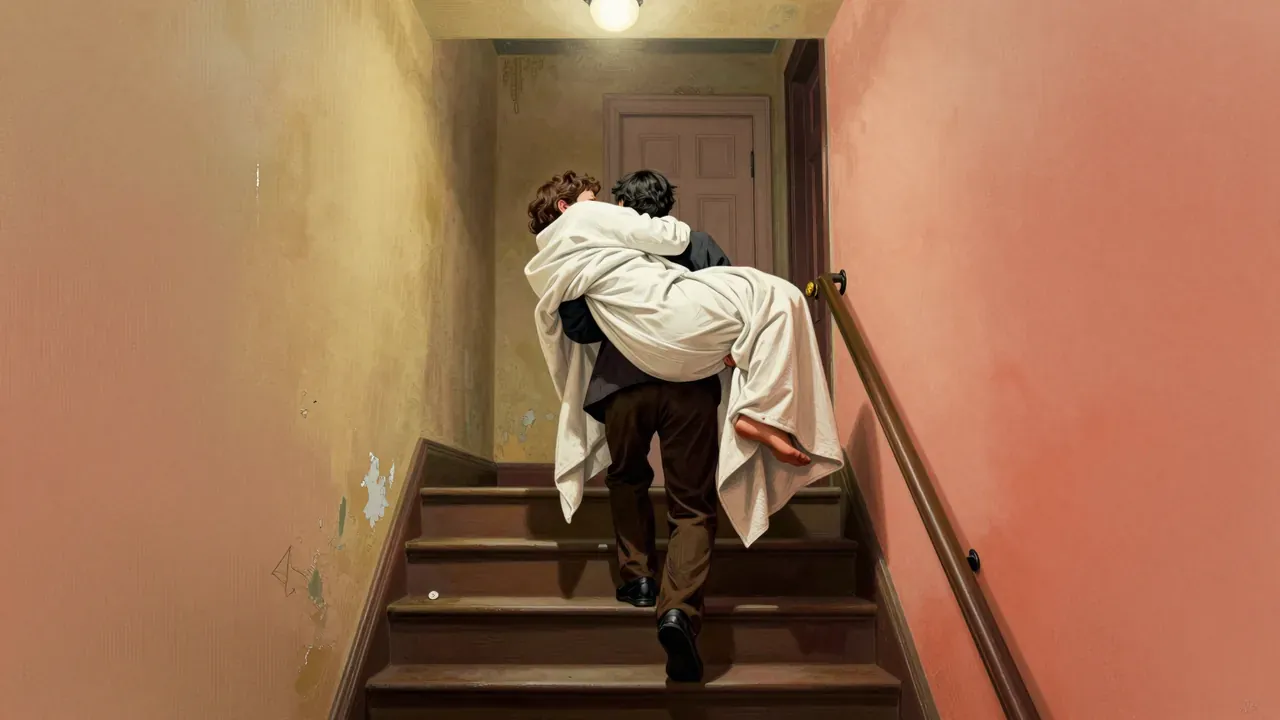
James Gray’s 1994 debut Little Odessa follows a Russian-Jewish hitman who returns to his estranged family in Brooklyn’s Brighton Beach — a neighbourhood nicknamed 'Little Odessa' for its Soviet immigrant population. Shot by Tom Richmond in muted, low-light tones, the film traces Joshua Shapira’s slow re-immersion in a world of inherited trauma, terminal illness, and unspoken loyalties. Its power lies not in action but in accumulation: glances held too long, doors left ajar, bodies carried in sheets. It is a film of restraint, where violence is routine and grief is domestic.

13:00

Lone Star

John Sayles · 1996

Set in a South Texas border town, Lone Star follows Sheriff Sam Deeds as he investigates the decades-old murder of his corrupt predecessor — and uncovers uncomfortable truths about his revered father, his estranged lover, and the town’s foundational myths. Written, directed and edited by John Sayles, the film layers past and present through seamless camera movements, treating crime not as genre but as entry point into questions of race, memory, and inherited guilt.

13:00

Love Is Colder Than Death

Rainer Werner Fassbinder · 1969

Rainer Werner Fassbinder’s 1969 debut is a stark, low-budget crime drama shot in Munich with his Anti-Theater ensemble. It follows a pimp, a sex worker, and a syndicate enforcer caught in a cycle of betrayal and violence. With flat cinematography by Dietrich Lohmann, sparse music by Peer Raben, and editing by Fassbinder himself, it prioritises structure over sentiment — a rigorous, unsentimental examination of transactional relationships in post-war West Germany.

13:00

M

Fritz Lang · 1931

Fritz Lang’s 1931 German thriller M follows the parallel manhunts for a child murderer by Berlin’s police and criminal underworld. Using sound innovatively — especially Edvard Grieg’s 'In the Hall of the Mountain King' as a leitmotif — and avoiding on-screen violence, it treats crime as a systemic rupture. Peter Lorre stars as Hans Beckert; Fritz Arno Wagner shot it for Nero-Film. Widely regarded as a landmark of procedural and sound cinema, it remains austere, precise, and morally unresolved.

13:00

Made in U.S.A

Jean-Luc Godard · 1966

Made in U.S.A (1966) is Jean-Luc Godard’s fractured, politically charged crime film starring Anna Karina as journalist Paula Nelson, investigating her ex-boyfriend’s death in a fictional French coastal town. Loosely adapted without permission from Richard Stark’s The Jugger, it deploys genre tropes—murder, conspiracy, double-cross—as scaffolding for linguistic play, political satire, and formal experimentation. Shot by Raoul Coutard and edited by Agnès Guillemot, it favours graphic colour, abrupt cuts, and disembodied voices over narrative coherence. Its themes pivot on naming, ideological exhaustion, and the impossibility of clean political action in a mediated world.

13:00

Mafioso

Alberto Lattuada · 1962

A Sicilian factory manager returns home to Sicily with his northern wife, only to be quietly recruited by the local don to carry out a hit in New York. He completes the task and resumes his life in Milan as if nothing happened. Directed by Alberto Lattuada in 1962, Mafioso uses deadpan realism and structural irony to examine complicity, continuity, and the banality of organised power.

13:00

Mean Streets

Martin Scorsese · 1973

Martin Scorsese’s 1973 breakthrough follows Charlie, a young Italian-American in New York’s Little Italy, torn between Catholic guilt, Mafia duty, and loyalty to his self-destructive friend Johnny Boy. Shot on a $500,000 budget with documentary grit and improvised intensity, it features defining early performances by Harvey Keitel and Robert De Niro. Its moral density, urban texture, and formal daring marked the arrival of a major American filmmaker — and reshaped decades of screen storytelling.

13:00

Menace II Society

Allen Hughes, Albert Hughes · 1993

Menace II Society follows Caine Lawson through adolescence in Watts, Los Angeles, as he moves from witness to participant in cycles of violence, grief, and survival. Directed by Allen and Albert Hughes in their debut, it avoids moral framing, instead tracing how environment, inheritance, and constrained choice shape a life. With Tyrin Turner, Larenz Tate, and Jada Pinkett Smith, and shot by Lisa Rinzler, it builds tension through restraint — in performance, editing, and score — culminating in a conclusion that feels inevitable, not sensational.

13:00

Mikey and Nicky

Elaine May · 1976

Elaine May’s 1976 film follows two Philadelphia men—a desperate mob associate and his loyal friend—over one fractured night. Built around John Cassavetes and Peter Falk’s physically exacting performances, it uses repetition, silence, and unvarnished realism to trace the erosion of intimacy under pressure. Shot over 110 nights and edited for nearly two years, it resists genre expectations to focus on gesture, memory, and the labour of sustaining a relationship neither man fully understands.

13:00

Misericordia

Alain Guiraudie · 2024

Alain Guiraudie’s Misericordia is a 2024 French arthouse crime drama set in rural Aveyron, where a man’s impulsive killing unravels into a web of quiet complicity, false alibis and unspoken bargains. Shot by Claire Mathon and starring Jacques Develay, Catherine Frot and Félix Kysyl, it treats violence, desire and concealment with unblinking restraint — no score, no close-ups, no moral punctuation. Premiered at Cannes, it won the Louis Delluc Prize and drew acclaim for its tonal control and understated dread.

13:00

Mona Lisa

Neil Jordan · 1986

Neil Jordan’s 1986 Mona Lisa follows ex-convict George (Bob Hoskins) as he becomes driver and reluctant protector to high-end call girl Simone (Cathy Tyson) in a rain-laced London underworld. Built on glances, silences, and unspoken class codes rather than plot turns, it’s a neo-noir that privileges psychological texture over thriller mechanics — elevated by Hoskins’ career-defining performance, undermined by its structural dependence on a male perspective that limits Simone’s interiority.

13:00

Monsieur Verdoux

Charlie Chaplin · 1947

Monsieur Verdoux (1947) is Charlie Chaplin’s black comedy drama about a former bank clerk who marries and murders wealthy widows to support his family — and to mirror the systemic violence of capitalism and war. Directed, written, and starred in by Chaplin — with Orson Welles credited for the original idea — it abandons his iconic Tramp persona for surgical moral provocation. Shot in flat, unadorned style by Roland Totheroh and Curt Courant, scored by Chaplin, and structured around economic cause and effect, it was controversial on release for its dark tone and political indictment. Though a box-office failure at the time, it is now regarded as a landmark of arthouse crime cinema.

13:00

Moonrise

Frank Borzage · 1948

Frank Borzage’s 1948 Moonrise adapts Theodore Strauss’s novel about Danny Hawkins, a man haunted by his father’s execution for murder. After killing a bully in self-defence, Danny wrestles with inherited shame before choosing surrender over evasion. Shot by John L. Russell with restrained noir-inflected lighting and scored sparsely by William Lava, it’s a psychologically dense, atmospherically precise drama about moral continuity, not catharsis.

13:00

New Tale of Zatoichi

Tokuzō Tanaka · 1963

New Tale of Zatoichi (1963), directed by Tokuzō Tanaka, is the third and first colour entry in Daiei Film’s Zatoichi series. Shintarō Katsu returns as the blind masseur and swordsman Ichi, who attempts to live by a vow of non-violence — only to face moral collapse in his old village, where his former master has allied with criminals and his childhood friend’s family lives in poverty. Structured around restraint rather than action, the film uses muted colour, sparse dialogue, and deliberate pacing to explore fidelity, quiet corruption, and the asymmetry of mercy. It ends not with resolution but with solitary departure at dawn.

13:00

Night and the City

Jules Dassin · 1950

Jules Dassin’s 1950 London-set noir follows American tout Harry Fabian as he schemes to corner the city’s wrestling trade, only to be undone by his own miscalculations, betrayals, and the implacable logic of the underworld he misunderstands. Shot on location and at Shepperton Studios, it features Richard Widmark in a tightly coiled performance, Mutz Greenbaum’s precise cinematography, and Franz Waxman’s urgent score. Unsentimental and structurally rigorous, it ends not with reflection but with finality.

13:00

Nightmare Alley

Edmund Goulding · 1947

Nightmare Alley (1947) follows carnival barker Stanton Carlisle as he masters deception, rises in Chicago society, and implodes under the weight of his own fabrications. Directed by Edmund Goulding from Jules Furthman’s adaptation of William Lindsay Gresham’s novel, it stars Tyrone Power in a career-defining turn away from romantic leads. Shot by Lee Garmes and edited by Barbara McLean, the film balances studio polish with unflinching thematic rigour — though its softened ending and underdeveloped urban milieu dilute its fatalism. It remains a landmark of psychological crime cinema, less for its shocks than for its sustained, unsentimental scrutiny of self-deception.

13:00

On the Waterfront

Elia Kazan · 1954

On the Waterfront (1954), directed by Elia Kazan and written by Budd Schulberg, follows ex-prizefighter Terry Malloy as he confronts his complicity in union violence on the Hoboken docks. Shot on location in black-and-white by Boris Kaufman, with a sparse score by Leonard Bernstein, it charts Terry’s slow, painful shift from silence to testimony. Marlon Brando’s performance redefined screen acting through physical restraint and vocal hesitation. Though anchored in 1950s labour politics, its concerns — loyalty, shame, dignity, and the bodily reality of conscience — remain immediate.

13:00

One False Move

Carl Franklin · 1992

One False Move (1992) is a tightly wound neo-noir crime film directed by Carl Franklin and written by Billy Bob Thornton. Three Los Angeles criminals flee to Star City, Arkansas, triggering a quiet, inevitable convergence with the town’s police chief — a man whose authority is rooted in local knowledge, not jurisdiction. Shot on location in Arkansas and California, the film avoids genre clichés in favour of psychological precision, restrained performances, and a morally complex portrait of place, race, and consequence.

13:00

Pale Flower

Masahiro Shinoda · 1964

Masahiro Shinoda’s 1964 yakuza drama follows Muraki, a hitman released from prison, drawn into a fatal attraction with Saeko, a thrill-seeking gambler. Set against Tokyo’s underground gambling dens and nocturnal streets, the film replaces plot with rhythm, silence with tension, and character psychology with physical precision. Tōru Takemitsu’s dissonant score and Shinsaku Himeda’s restrained cinematography deepen its mood of existential exhaustion. It is a foundational Japanese New Wave work — austere, hypnotic, and unrelenting in its formal control.

13:00

Panique

Julien Duvivier · 1946

Julien Duvivier’s 1946 Panique adapts Simenon to trace how a small French town turns a reclusive man into a scapegoat for a murder he did not commit. With Michel Simon as the doomed Monsieur Hire and Viviane Romance as the compromised Alice, the film uses precise staging, restrained performances, and a suffocatingly ordinary setting to dramatise the mechanics of collective suspicion—less a thriller than a forensic study of moral contagion in the immediate postwar years.

13:00

Paper Moon

Peter Bogdanovich · 1973

Paper Moon (1973), directed by Peter Bogdanovich, follows Moses Pray and Addie Loggins — a grifter and a sharp-witted orphan — as they travel across Depression-era Kansas and Missouri, running small scams to survive. Shot in black-and-white by László Kovács, it stars Ryan and Tatum O'Neal in performances defined by restraint and reciprocity. Adapted by Alvin Sargent from Joe David Brown’s novel, it avoids moral framing in favour of behavioural accuracy, treating fraud as labour and kinship as negotiation. Tatum O'Neal won the Academy Award for Best Supporting Actress at age ten.

13:00

Pépé le Moko

Julien Duvivier · 1937

Julien Duvivier’s 1937 French crime film follows Jean Gabin as Pépé le Moko, a celebrated thief holed up in Algiers’ Casbah, where he rules a labyrinthine enclave but cannot step beyond it. When a glamorous Parisian visitor arrives, his carefully maintained stasis unravels. Built on a studio set and defined by its moody, shadow-drenched cinematography, the film is a landmark of poetic realism — less a thriller than a slow, fatal meditation on exile, desire and the illusion of control.

13:00

Performance

Donald Cammell, Nicolas Roeg · 1970

A violent East London gang enforcer, on the run after killing a rival, hides in the Notting Hill home of a reclusive rock star. What follows is less a thriller than a psychological and formal investigation into performance, identity, and the porous line between role and self. Directed by Donald Cammell and Nicolas Roeg, and starring James Fox and Mick Jagger, the 1970 British film uses fractured editing, dissonant sound, and deliberate ambiguity to unsettle narrative expectation and challenge assumptions about masculinity, class, and authenticity.

13:00

Pigs and Battleships

Shohei Imamura · 1961

Shohei Imamura’s 1961 film Pigs and Battleships follows Kinta, a low-level yakuza operative in post-occupation Yokosuka, and Haruko, his girlfriend, as both are ground down by intersecting systems of crime, military presence, and poverty. Shot by Shinsaku Himeda and scored by Toshiro Mayuzumi, it uses satire not for laughter but for forensic clarity — tracking how pigs, corpses, yen, and bodies circulate under the same logic. Its climax releases hundreds of pigs into city streets during a gang confrontation, culminating in chaos that kills the syndicate but leaves Haruko to walk away, unaccompanied and unexplained, towards an uncertain future.

13:00

Point Blank

John Boorman · 1967

Point Blank (1967), directed by John Boorman and starring Lee Marvin, is a formally radical crime film adapted from Donald E. Westlake’s novel The Hunter. It follows Walker’s relentless, non-linear quest to reclaim $93,000 after being betrayed and left for dead on Alcatraz. Rejecting exposition and psychology, it builds tension through spatial rigour, elliptical editing, and Marvin’s physically commanding stillness. Shot in stark black-and-white with Johnny Mandel’s atonal score, it privileges structure over sentiment — a cold, coherent system of cause and effect. Preserved in the US National Film Registry, it remains a benchmark of arthouse crime cinema.

13:00

Purple Noon

René Clément · 1960

René Clément’s 1960 crime thriller adapts Patricia Highsmith’s The Talented Mr. Ripley with surgical precision: Alain Delon’s Tom Ripley murders and assumes the identity of wealthy playboy Philippe Greenleaf (Maurice Ronet) during a sun-drenched Italian summer. Shot by Henri Decaë and written by Clément and Paul Gégauff, the film treats identity as forgery, class as costume, and murder as logistics—not morality. Its power lies in restraint, rhythm, and the unnerving ease of its central deception.

13:00

Quai des Orfèvres

Henri-Georges Clouzot · 1947

Henri-Georges Clouzot’s 1947 Quai des Orfèvres follows Inspector Antoine’s investigation into the murder of a lecherous businessman, against the backdrop of a rationed, anxious Paris. Built on memory rather than fidelity to its source novel, it centres Jenny Lamour — an ambitious performer — and her jealous husband, weaving class, gender and institutional procedure into its procedural spine. With Louis Jouvet, Suzy Delair and Bernard Blier, it avoids noir theatrics in favour of psychological precision and social texture.

13:00

Read My Lips

Jacques Audiard · 2001

Read My Lips (2001), directed by Jacques Audiard, follows Carla Behm, a nearly deaf secretary in a Paris construction firm, and Paul Angeli, an ex-convict on parole, as they form an uneasy alliance that blurs professional, criminal, and personal boundaries. Shot with restraint by Mathieu Vadepied and scored sparsely by Alexandre Desplat, the film anchors its suspense in physical detail and acoustic limitation rather than plot mechanics. Emmanuelle Devos won the César for Best Actress for her understated, embodied performance.

13:00

Revanche

Götz Spielmann · 2008

A Viennese ex-convict and a Ukrainian sex worker plan a bank robbery that ends in tragedy. He retreats to his grandfather’s remote farm; a local policeman involved in the shooting unravels nearby. Their lives intersect quietly, without confrontation, across a landscape where guilt, grief and chance settle like dust. Directed by Götz Spielmann, Revanche is a restrained, morally complex Austrian arthouse film shot in the Waldviertel region.

13:00

Ride the Pink Horse

Robert Montgomery · 1947

Robert Montgomery’s 1947 adaptation of Dorothy B. Hughes’ novel relocates film noir from urban decay to the fiesta-drenched towns of northern New Mexico. A wounded veteran named Gagin arrives to blackmail a mobster for his friend’s death, but finds himself dependent on local people — Pancho, Pila, and others — whose loyalties and languages he does not share. Shot by Russell Metty and anchored by Thomas Gomez’s restrained performance, the film treats place as moral terrain and refuses easy resolution.

13:00

Rusty Knife

Toshio Masuda · 1958

A 1958 Nikkatsu crime drama starring Yūjirō Ishihara as an ex-convict resisting vengeance while a district attorney pursues the same syndicate. Directed by Toshio Masuda with tight, low-key noir aesthetics and a script by Shintarō Ishihara, it foregrounds moral exhaustion over action, ambiguity over catharsis.

13:00

Salvatore Giuliano

Francesco Rosi · 1962

Francesco Rosi’s 1962 docudrama reconstructs the life and death of Sicilian bandit Salvatore Giuliano not as myth or biography, but as a forensic inquiry into institutional complicity. Shot on location in Sicily with non-professional actors, it uses fragmented chronology, courtroom transcripts and contradictory testimony to expose how power operates across Mafia, carabinieri and judiciary. Giuliano appears only fleetingly — dead, distant, obscured — while figures like his betrayer Pisciotta and judges presiding over rigged trials occupy the frame. The film’s rigour lies in its refusal to narrativise, opting instead for procedural clarity and structural irony.

13:00

Samaritan Zatoichi

Kenji Misumi · 1968

Released in December 1968 and directed by Kenji Misumi, Samaritan Zatoichi is the twelfth instalment in Daiei’s long-running series. Starring Shintarō Katsu as the blind masseur-swordsman, it follows his intervention in a rural town exploited by a yakuza gang. Less concerned with action than with ethical presence, the film uses restraint — in pacing, performance and composition — to explore endurance, reciprocity and the weight of unspoken complicity. Cinematographer Kazuo Miyagawa frames scenes with quiet clarity, and the script avoids exposition in favour of implication. Though some character arcs remain underdeveloped, the film’s cumulative power resides in its unwavering commitment to stillness as moral grammar.

13:00

Sapphire

Basil Dearden · 1959

A 1959 British crime drama in which police investigate the murder of a light-skinned Black woman who passed as white, using the procedural format to expose everyday racism in post-war London. Directed by Basil Dearden from a script by Janet Green, it balances genre conventions with social observation, winning Best British Film at the 1960 BAFTAs and an Edgar Award for its screenplay.

13:00

Shaft

Gordon Parks · 1971

A 1971 crime thriller directed by Gordon Parks, Shaft stars Richard Roundtree as a Black private investigator navigating Harlem and Manhattan to rescue a mobster’s daughter from the Italian mafia. Built on Ernest Tidyman’s novel and shaped by Isaac Hayes’ Grammy-winning score, it uses lean plotting, location realism, and deliberate casting to assert Black agency within a Hollywood genre. Its significance lies less in thematic depth than in its structural intervention: who directs, scores, edits, and occupies the frame — and on what terms.

13:00

Shallow Grave

Danny Boyle · 1994

Danny Boyle’s 1994 debut follows three Edinburgh flatmates who conceal the death of a mysterious new tenant and keep his suitcase of cash — only to fracture under paranoia, betrayal and violence. Shot in Glasgow on a £1 million budget, it’s a tightly wound crime thriller built on escalating consequences, not character revelation.

13:00

Shoeshine

Vittorio De Sica · 1946

Shoeshine follows two Roman shoeshine boys drawn into a con, arrested, and sent to a juvenile reformatory where their friendship unravels under pressure. Directed by Vittorio De Sica in 1946, it uses non-professional actors, on-location shooting, and a spare, unsentimental script to depict how poverty and institutional failure corrode loyalty between children. Its power lies in restraint: no music swells, no speeches explain, no ending offers solace. It is a foundational work of Italian neorealism and the first film to win the Academy Award for Best International Feature Film.

13:00

Some Like It Hot

Billy Wilder · 1959

Some Like It Hot is a 1959 Prohibition-era romantic comedy about two musicians who dress as women to escape gangsters, join an all-female band, and fall for its lead singer. Directed by Billy Wilder and starring Marilyn Monroe, Tony Curtis and Jack Lemmon, it uses disguise as both plot device and thematic lens, sustaining laughter through precise timing, physical performance and escalating absurdity. Shot in black and white after colour tests failed, it balances crime, romance and farce without resolving their tensions — and remains effective not as nostalgia, but as engineered comedy.

13:00

Sword of the Beast

Hideo Gosha · 1965

Set in 1857 Japan, Sword of the Beast follows Gennosuke, a samurai fugitive manipulated into killing his clan’s counsellor. On the run, he joins a farmer poaching gold from the shōgun’s mountain, where he encounters another samurai and his wife — also stealing gold, also doomed by their clan. As loyalties fracture and betrayals mirror one another, Gennosuke chooses solidarity over survival, culminating in a terse, consequential battle. Directed by Hideo Gosha, the film is spare, morally exacting, and resolutely unromantic about honour, duty, or redemption.

13:00

Take Aim at the Police Van

Seijun Suzuki · 1960

Take Aim at the Police Van is a 1960 Japanese action thriller directed by Seijun Suzuki for Nikkatsu. Built around the ambush of a police van transporting a prisoner, it deploys tight framing, high-contrast monochrome cinematography by Kazuo Miyagawa, and a lean script by Shinichi Sekizawa to sustain relentless forward motion. Starring Michitaro Mizushima, Misako Watanabe, and Shinsuke Ashida, it exemplifies Nikkatsu’s ‘borderless’ studio strategy — genre stripped of local specificity, yet anchored in Tokyo’s post-war textures. Its strength lies in formal discipline, not character depth or thematic elaboration.
13:00

Targets

Peter Bogdanovich · 1968

Peter Bogdanovich’s 1968 debut Targets pairs Boris Karloff’s retiring horror icon Byron Orlok with Tim O’Kelly’s motiveless killer Bobby Thompson. Shot guerilla-style in Los Angeles on a shoestring budget, it uses stark cinematography, restrained editing, and deliberate juxtaposition to ask how fiction holds up against televised atrocity — all without recourse to psychology, exposition, or catharsis.

13:00

That Night's Wife

Yasujirō Ozu · 1930

That Night’s Wife (1930), Yasujirō Ozu’s early Shochiku silent, confines its entire action to a single night in a Tokyo apartment. A father robs a bank to pay for his daughter’s life-saving medicine; a detective tracks him home; the wife disarms the law, then helps her husband flee—only for him to return at dawn and surrender. Shot by Hideo Shigehara and co-written by Ozu and Kōgo Noda, it is a study in compressed ethics, where silence, stillness and domestic detail carry the full weight of choice.

13:00

The American Friend

Wim Wenders · 1977

Wim Wenders’ 1977 adaptation of Patricia Highsmith’s Ripley’s Game stars Bruno Ganz as a terminally ill picture framer drawn into murder by Dennis Hopper’s enigmatic American, Tom Ripley. Shot in Hamburg and Paris by Robby Müller, with a sparse score by Jürgen Knieper, the film treats the thriller form as a vessel for existential portraiture — prioritising texture, hesitation, and linguistic nuance over plot mechanics. Its power lies in accumulation, not revelation.

13:00

The American Soldier

Rainer Werner Fassbinder · 1970

Rainer Werner Fassbinder’s 1970 drama The American Soldier follows Ricky, a German-American Vietnam veteran turned contract killer working for renegade Munich police. Shot in stark, frontal compositions by Dietrich Lohmann and edited with metronomic restraint by Thea Eymèsz, the film strips away psychology and suspense to expose the administrative logic of violence. Its themes — complicity, procedural detachment, language as control — are enacted, not explained. A demanding, formally rigorous work from Fassbinder’s early arthouse period.

13:00

The Breaking Point

Michael Curtiz · 1950

Michael Curtiz’s 1950 adaptation of To Have and Have Not stars John Garfield as Harry Morgan, a struggling fishing-boat captain drawn into smuggling and armed robbery to save his family. Shot by Ted McCord in Newport Beach, the film strips away noir glamour to focus on economic pressure, moral compromise, and bodily consequence. Patricia Neal plays his wife Lucy; Phyllis Thaxter is Leona Charles. Ranald MacDougall’s script moves with procedural rigour, and Howard Jackson’s score remains subdued. It ends not with resolution but with Harry critically wounded, his fate left open.

13:00

The Crying Game

Neil Jordan · 1992

Neil Jordan’s 1992 drama follows an IRA volunteer who, after a killing he cannot undo, flees to London and falls for the lover of the man he failed to save. Its famous revelation reshapes everything that comes before—not as twist, but as recalibration. Shot with restraint by Ian Wilson and performed with quiet precision by Stephen Rea and Jaye Davidson, it remains a study in how ethics emerge from proximity, not principle.
13:00

The Friends of Eddie Coyle

Peter Yates · 1973

Peter Yates’s 1973 neo-noir adapts George V. Higgins’s novel with unsentimental rigour, following small-time Boston gunrunner Eddie Coyle (Robert Mitchum) as he navigates a web of informants, robbers, and indifferent lawmen. Shot on location across Greater Boston by Victor J. Kemper, with a muted Dave Grusin score and Paul Monash’s terse script, it privileges behavioural realism over plot mechanics. Though commercially unsuccessful on release, it is now regarded as a landmark of 1970s crime cinema — lean, credible, and morally flat.

13:00

The Grifters

Stephen Frears · 1990

Stephen Frears’ 1990 adaptation of Jim Thompson’s novel follows three grifters—Lilly, her son Roy, and his girlfriend Myra—as their competing deceptions collapse into mutual ruin. Anchored by Anjelica Huston, John Cusack, and Annette Bening, it trades noir stylisation for psychological austerity, rendering betrayal as routine and survival as hollow victory.

13:00

The Hit

Stephen Frears · 1984

Stephen Frears’ 1984 British crime film follows a retired informant, a world-weary hit man, and his volatile apprentice on a slow, sun-bleached drive across Spain toward an unseen reckoning. With Terence Stamp, John Hurt, and Tim Roth in career-defining roles, and Paco de Lucía’s flamenco-inflected score, it replaces thriller mechanics with existential weight — finding dread not in danger, but in duration.
13:00

The Hole

Jacques Becker · 1960

Jacques Becker’s 1960 film The Hole reconstructs a real 1947 escape attempt at Paris’s La Santé Prison with forensic calm. Five inmates — played largely by non-actors, including one actual participant — dig a tunnel beneath their cell floor using scavenged tools and stolen time. The film avoids drama in favour of procedure, silence over score, and group rhythm over individual arc. Its power lies in accumulated detail, moral ambiguity, and the quiet collapse of trust when freedom arrives — not as rescue, but as a choice no one can fully explain.

13:00

The Honeymoon Killers

Leonard Kastle · 1970

Leonard Kastle’s 1970 debut is a stark, black-and-white docudrama about Martha Beck and Raymond Fernandez, two real-life killers whose relationship curdles into murder. Made on a $200,000 budget with non-star actors, rough cinematography and Mahler on the soundtrack, it rejects glamour, psychology and historical fidelity in favour of sustained moral unease. Shirley Stoler’s performance as Martha remains one of cinema’s most unsettling studies in embodied desperation.
13:00

The Innocent

Louis Garrel · 2022

Louis Garrel’s 2022 comedy follows Abel, a timid aquarium guide whose mother Sylvie marries an ex-con, Michel. Suspicious and guilt-ridden, Abel agrees to help Michel steal caviar — not out of greed, but as a way to re-enter his mother’s orbit. What begins as surveillance becomes participation, then genuine connection, then consequence. Shot in Lyon with quiet precision, the film avoids moralising, favouring rhythm and restraint over revelation.
13:00

The Irishman

Martin Scorsese · 2019

Martin Scorsese’s 2019 crime drama follows Frank Sheeran (Robert De Niro), a truck driver turned alleged hitman, across five decades of mob and union entanglement. Adapted from Charles Brandt’s contested book, it uses de-ageing effects and deliberate pacing to explore memory, complicity, and the quiet dissolution of identity. With Al Pacino as Jimmy Hoffa and Joe Pesci as Russell Bufalino, it prioritises restraint over revelation—and duration over drama.

13:00

The Killing of a Chinese Bookie

John Cassavetes · 1976

John Cassavetes’s 1976 crime film follows strip club owner Cosmo Vittelli as he navigates a mob debt, a botched hit, and the slow collapse of his carefully curated persona. Shot by Al Ruban and scored by Bo Harwood, it privileges duration, physicality, and ambiguity over narrative payoff. The 108-minute 1978 re-edit is the standard version, though both cuts exist in Criterion’s box set. Ben Gazzara’s performance anchors a film less about crime than about the labour of sustaining identity under pressure.

13:00

The King of Marvin Gardens

Bob Rafelson · 1972

The King of Marvin Gardens (1972) follows depressive Philadelphia radio host David Staebler as he visits his charismatic, scheming brother Jason in a decaying Atlantic City. Against the backdrop of soon-to-be-demolished hotels, Jason pitches a Hawaiian casino venture while tensions mount among the four adults sharing his suite. László Kovács’ muted cinematography and Bob Rafelson’s unhurried direction treat delusion as routine, not crisis — making this a film less about plot than about the weight of unfulfilled promise, both personal and architectural.

13:00

The League of Gentlemen

Basil Dearden · 1960

Basil Dearden’s 1960 heist film assembles seven disgraced former army officers to rob a London bank. Built on Bryan Forbes’ script and anchored by Jack Hawkins, it prizes procedural precision over psychological depth, dry irony over moral judgement, and ensemble cohesion over individual revelation. Its strengths lie in tightly orchestrated set-pieces and consistent tone; its limits in underdeveloped characters and withheld emotional stakes.
13:00

The Long Good Friday

John Mackenzie · 1980

Set over one Easter weekend in 1980, The Long Good Friday follows London gangster Harold Shand as his plans to redevelop the Docklands and attract American investment unravel amid coordinated attacks. Directed by John Mackenzie and written by Barrie Keeffe, the film uses tight framing, restrained performances, and real London locations to chart the collapse of authority — not through violence, but through the sudden withdrawal of trust, information, and time.

13:00

The Mystic

Tod Browning · 1925

Tod Browning’s 1925 silent drama The Mystic follows a Hungarian carnival troupe recruited to run a fraudulent spiritualist act in New York. With Aileen Pringle and Conway Tearle, it explores belief as craft and deception as labour — avoiding horror tropes for moral ambiguity, slow pacing, and quiet performances. Shot by Ira H. Morgan and edited by Frank Sullivan, it sustains tension through restraint, not revelation. A surviving print was restored by Criterion in 2023 with a new score by Dean Hurley.
13:00

The Naked Kiss

Samuel Fuller · 1964

Samuel Fuller’s 1964 film follows Kelly, a former prostitute who seeks refuge in a small American town, becomes a nurse, and falls in love with its wealthiest man — only to discover his predatory abuse of children. When she kills him, she must fight to prove her account in a system that prefers silence to scandal. Shot by Stanley Cortez and starring Constance Towers, it is a lean, unsentimental examination of power, exposure, and the limits of social forgiveness.

13:00

The Tale of Zatoichi

Kenji Misumi · 1962

The 1962 Japanese jidaigeki film The Tale of Zatoichi introduces Shintarō Katsu as the blind masseur-swordsman Zatoichi, hired by warring yakuza factions. Directed by Kenji Misumi and written by Kan Shimozawa, it establishes a tone of quiet gravity, where honour is enacted in small refusals and violence resolved with minimal flourish. Its strength lies in the restrained performances, Akira Ifukube’s percussive score, and its refusal to romanticise either disability or bushidō. Though some supporting characters remain underdeveloped, the central relationship between Zatoichi and the dying ronin Hirate gives the film its enduring resonance.

13:00

The Thin Blue Line

Errol Morris · 1988

Errol Morris’s 1988 documentary reconstructs the wrongful conviction of Randall Dale Adams for the 1976 murder of Dallas police officer Robert Wood. Through stylised re-enactments, tightly framed interviews and Philip Glass’s score, it exposes inconsistencies in witness testimony and prosecutorial conduct. It helped overturn Adams’s sentence and redefined documentary form — not as observation but as active, cinematic intervention in questions of justice.

13:00

The Vanishing

George Sluizer · 1988

George Sluizer’s 1988 French-language thriller, co-written with Tim Krabbé, follows a Dutch man’s obsessive search for his vanished girlfriend — a quest that culminates not in rescue or revenge, but in a chilling confrontation with the kidnapper’s warped moral logic. Shot in Nîmes with austere precision, it trades procedural suspense for psychological immersion, anchored by Bernard-Pierre Donnadieu’s unnervingly calm performance as a man who sees evil as a test of virtue.

13:00

The Warped Ones

Koreyoshi Kurahara · 1960

Koreyoshi Kurahara’s 1960 film follows a group of Tokyo youths — Akira, Masaru and Yuki — whose criminality, sexual recklessness and jazz obsession unfold across tenements, beaches and jazz clubs. With a frenetic editing style, Toshiro Mayuzumi’s urgent jazz score, and performances stripped of psychology, the film presents its characters as environmental effects rather than agents. It avoids moral framing, resists narrative padding, and sustains a tone of controlled volatility across its 75-minute runtime. Though often compared to Breathless and Rebel Without a Cause, it diverges by refusing empathy, explanation or resolution — offering instead a tightly wound, formally audacious document of post-war dislocation.

13:00

The Wicked Lady

Leslie Arliss · 1945

The Wicked Lady (1945) is a Gainsborough Pictures swashbuckler starring Margaret Lockwood as a bored noblewoman who becomes a highway robber. Directed and written by Leslie Arliss, it adapts Magdalen King-Hall’s novel into a tightly paced moral fable, where transgression is glamorous, consequence inevitable, and redemption absent. Shot at Gainsborough Studios and Blickling Hall, it relies on Jack E. Cox’s high-contrast cinematography, Terence Fisher’s brisk editing, and Hans May’s ironic score. Though criticised for thin supporting characters and abrupt plot turns, its enduring power lies in Lockwood’s commanding, physically assured performance and its unwavering commitment to its own logic.

13:00

Thelma & Louise

Ridley Scott · 1991

Thelma & Louise (1991), directed by Ridley Scott and written by Callie Khouri, follows two friends whose weekend road trip unravels into a fugitive odyssey after a violent confrontation. Anchored by Susan Sarandon and Geena Davis, it uses precise craft and restrained performance to trace how systemic dismissal, economic dependence, and accumulated compromise narrow into irreversible choice. Its cultural resonance rests less on symbolism than on structural rigour: every beat follows from the last, making the final image not shocking but inevitable.

13:00

Thieves' Highway

Jules Dassin · 1949

A 1949 crime drama directed by Jules Dassin, Thieves’ Highway follows a returning WWII veteran who drives apples from Fresno to San Francisco to confront the produce dealer who crippled his father. Shot on location in Oakland and San Francisco, it uses the real rhythms of the fruit trade — loading docks, freight elevators, downhill truck crashes — to ground its moral conflict in material fact. Richard Conte, Lee J. Cobb, and Valentina Cortese anchor a tightly wound narrative written by A. I. Bezzerides, with cinematography by Norbert Brodine and music by Alfred Newman.

13:00

Traffic

Steven Soderbergh · 2000

Steven Soderbergh’s 2000 crime drama Traffic traces the US drug trade across four interwoven storylines — political, enforcement, consumer, and supplier — using distinct colour grading, multilingual dialogue (including unsubtitled English and fully subtitled Spanish), and a procedural rhythm. Written by Stephen Gaghan and shot by Soderbergh under a pseudonym, it won four Academy Awards including Best Director and Best Supporting Actor for Benicio del Toro. Its ambition lies in structural coherence, not emotional resolution.

13:00

Underworld

Josef von Sternberg · 1927

A 1927 Paramount silent directed by Josef von Sternberg, Underworld stars George Bancroft, Clive Brook and Evelyn Brent in a tightly wound crime story about patronage, betrayal and inescapable consequence. Based on a Ben Hecht story and shot by Bert Glennon, it established visual and thematic templates for the gangster genre — not through realism, but through mythic compression, deliberate pacing and a stark, shadowed aesthetic. It won the first Academy Award for Best Story.

13:00

Vengeance Is Mine

Shohei Imamura · 1979

Shohei Imamura’s 1979 film adapts Ryūzō Saki’s account of serial killer Akira Nishiguchi, renaming him Iwao Enokizu. Through fragmented flashbacks, it traces his crimes, deceptions and flight across post-war Japan, centring Ken Ogata’s restrained, physically precise performance. Shot by Shinsaku Himeda with unadorned naturalism and scored sparingly by Shinichiro Ikebe, the film avoids psychology and moral framing, instead mapping how Enokizu moves unchallenged through institutions — family, church, law, sex work — until his capture and execution. Its final image — ashes suspended mid-air — closes without resolution, leaving the viewer with the weight of unprocessed consequence.

13:00

Violence at Noon

Nagisa Ōshima · 1966

Violence at Noon (1966), directed by Nagisa Ōshima, follows Shino, a housemaid who survives a rape-murder only to confront the perpetrator — Eisuke — years later, alongside his wife Kura, a former schoolteacher who married him knowing his crimes. Through fractured flashbacks and over two thousand single shots, the film traces how violence reverberates across time, memory, and social silence. It refuses psychological explanation or legal closure, instead insisting on the entanglement of survival, testimony, and complicity in a rigidly hierarchical postwar Japan.

13:00

Wild at Heart

David Lynch · 1990

David Lynch’s 1990 Palme d’Or winner adapts Barry Gifford’s novel into a hyper-stylised Southern Gothic crime film starring Nicolas Cage and Laura Dern as a couple fleeing violence across the American South. Anchored by Elvis obsession, Wizard of Oz motifs and Angelo Badalamenti’s score, it trades psychological realism for emotional extremity — landing some sequences with unforgettable force, while others rely too heavily on shock. Its value lies in its unwavering commitment to a singular, dissonant vision.

13:00

Yojimbo

Akira Kurosawa · 1961

Akira Kurosawa’s 1961 jidaigeki follows a nameless rōnin who manipulates two warring yakuza factions into mutual ruin. Starring Toshirō Mifune, it uses stark composition, rhythmic editing and Masaru Sato’s jaunty, dissonant score to deliver a dry, structural satire of authority and competence. Made for Toho, it was Japan’s fourth-highest-grossing film of 1961 and later inspired Sergio Leone’s A Fistful of Dollars.

13:00

Youth of the Beast

Seijun Suzuki · 1963

Seijun Suzuki’s 1963 Nikkatsu crime film follows a disgraced detective infiltrating rival yakuza clans, but its real subject is the expressive potential of the genre’s surfaces: saturated colour, abrupt editing, and architectonic framing. It sacrifices psychological realism for formal rigour, treating loyalty, identity, and truth as tactical variables rather than moral absolutes. A pivotal work in Suzuki’s development, it rewards attention to craft over narrative closure.

13:00

Zatoichi and the Chess Expert

Kenji Misumi · 1965

The twelfth Zatoichi film follows the blind masseur as he travels with a shogi master, a grieving aunt, and her injured niece. Suspicion mounts as murders occur, each clue pointing toward the master—yet Zatoichi delays judgment, reading intent through games and gesture rather than proof. Directed by Kenji Misumi with austere control, it is a study in withheld certainty, where every pause and every move matters more than the final strike.

13:00

Zatoichi and the Doomed Man

Kazuo Mori · 1965

The eleventh Zatoichi film, released in 1965 and directed by Kazuo Mori, follows Shintarō Katsu’s blind masseur as he pledges to clear a wrongly jailed man’s name. Built on procedural restraint and moral economy, it delivers quiet intensity in its best moments but stumbles in narrative follow-through and character depth. Its strengths are cumulative, not climactic.

13:00

Zatoichi and the Fugitives

Kimiyoshi Yasuda · 1968

The eighteenth Zatoichi film finds Shintarō Katsu’s blind swordsman confronting a silk-weaving magnate who enforces debt bondage and shelters vicious fugitives. Directed by Kimiyoshi Yasuda with stark cinematography by Kazuo Miyagawa, it strips away mythic flourishes to focus on procedural cruelty and physical consequence — Zatoichi is wounded, outmatched, and morally unrelieved. The film’s rigour lies in its refusal to flinch, to explain, or to console.

13:00

Zatoichi's Conspiracy

Kimiyoshi Yasuda · 1973

Zatoichi’s Conspiracy (1973), directed by Kimiyoshi Yasuda, is the twenty-third entry in the long-running Japanese series. Shintarō Katsu reprises his iconic role as the blind swordsman drawn into a local conspiracy involving corrupt officials and seized land. With a lean 88-minute runtime, functional cinematography, and Akira Ifukube’s percussive score, the film relies on character consistency and physical storytelling rather than narrative innovation or psychological depth. It works best as a refinement — not a reinvention — of the series’ enduring ethics.

13:00

Zatoichi's Vengeance

Tokuzō Tanaka · 1966

The thirteenth Zatoichi film, released in 1966 by Daiei Film, follows the blind masseur as he carries a dying man’s burden into a yakuza-controlled town preparing for its thunder drum festival. Directed by Tokuzō Tanaka and starring Shintarō Katsu, it relies on Kazuo Miyagawa’s understated cinematography and Akira Ifukube’s percussive score to sustain its episodic, morally calibrated chambara rhythm.

13:00

A Better Tomorrow

John Woo · 1986

John Woo’s 1986 crime film redefined Hong Kong action cinema by fusing wuxia ethics with urban fatalism. Ti Lung, Leslie Cheung, and Chow Yun-fat play three men bound by blood, betrayal, and bullets. Its influence on 'heroic bloodshed' is foundational; its emotional logic remains uncompromising.

13:00

Bad Lieutenant

Abel Ferrara · 1992

Abel Ferrara’s 1992 Bad Lieutenant follows a New York police officer over a single day of spiralling addiction, abuse of power, and spiritual erosion. With Harvey Keitel in a physically uncompromising performance, the film rejects redemption arcs and procedural logic in favour of sustained, unsparing immersion in ethical collapse. Shot on gritty 16mm by Ken Kelsch and scored sparsely by Joe Delia, it treats Catholic iconography and police authority as hollowed-out symbols. Not a thriller, but a forensic study of vacancy wearing a badge.

13:00

Detour

Edgar G. Ulmer · 1945

A broke pianist hitchhikes west, accidentally kills a stranger, assumes his identity, and is then blackmailed by a woman who knew the dead man — all narrated in weary voiceover as if the outcome were settled before the first frame. Made in 1945 on a tight budget by Edgar G. Ulmer for PRC, it distils noir fatalism into stark, economical form: minimal sets, precise sound design, and performances that refuse empathy. Its power lies in repetition, inevitability, and the quiet horror of consequences that arrive not with fanfare but with the hum of a police siren.

13:00

Force of Evil

Abraham Polonsky · 1948

Abraham Polonsky’s 1948 Force of Evil follows lawyer Joe Morse as he helps gangster Ben Tucker rig the numbers racket in New York, only to confront the human cost when his brother Leo is drawn in. Shot by George Barnes and scored by David Raksin, it is a tightly wound, linguistically dense crime film that treats corruption as arithmetic and kinship as collateral. Preserved in the US National Film Registry, it remains a benchmark of film noir’s intellectual rigour.

13:00

Miami Vice

Michael Mann · 2006

Michael Mann’s 2006 Miami Vice is a digitally shot, atmospherically dense crime film starring Colin Farrell and Jamie Foxx as Miami-Dade detectives infiltrating a transnational drug operation. Shot on location across the Caribbean and South Florida, it trades the 1980s TV series’ stylisation for a muted, immersive realism — prioritising surveillance aesthetics, ambient sound, and moral ambiguity over exposition or catharsis. Though polarising on release, its reputation has grown for its formal rigour and sensory coherence.
13:00

Miller's Crossing

Ethan Coen, Joel Coen · 1990

A 1990 neo-noir gangster film directed by the Coen brothers, set in an unnamed Prohibition-era city. Gabriel Byrne stars as Tom Reagan, a strategist caught between rival mob bosses Albert Finney and Jon Polito. Built on Hammett’s The Glass Key, it prioritises formal rigour over emotional exposition — its dialogue elliptical, its violence understated, its moral universe amoral. Shot in New Orleans by Barry Sonnenfeld, with a restrained score by Carter Burwell, it is a study in control: of image, rhythm, and implication.
13:00

Nikita

Luc Besson · 1990

A convicted junkie is erased from official record and retrained as a government assassin. Under the supervision of a shadowy agency, she masters weapons, languages and deception — then begins a fragile relationship with a man who knows nothing of her past. When duty and desire collide, she must choose between two irreconcilable lives. Luc Besson’s 1990 French thriller is a study in control, performance and the cost of competence.

13:00

Rififi

Jules Dassin · 1955

Rififi (1955), directed by Jules Dassin, is a French crime film centred on a meticulously detailed, nearly silent jewellery heist in Paris. Made on a low budget after Dassin’s Hollywood blacklist, it strips away music, exposition, and glamour to focus on process, consequence, and the collapse of a thieves’ code. Its enduring power lies in its restraint: no score during the heist, no close-ups for emphasis, no redemption offered.

13:00

Touch of Evil

Orson Welles · 1958

Orson Welles’s 1958 *Touch of Evil*, shot by Russell Metty and scored by Henry Mancini, follows Mexican narcotics officer Miguel Vargas as he investigates a cross-border bombing amid institutional obstruction and moral decay. Though compromised by studio edits, its formal rigour, layered performances, and unsentimental treatment of power make it a cornerstone of American crime cinema.

13:00

True Romance

Tony Scott · 1993

Tony Scott’s 1993 True Romance, written by Quentin Tarantino, follows newlyweds Clarence and Alabama as they flee Detroit with stolen cocaine, pursued by the Mafia and compromised by police informants. Anchored by Christian Slater and Patricia Arquette’s intimate, physically committed performances, the film balances stylised violence, pop-cultural wit, and genuine romantic urgency. Jeffrey L. Kimball’s saturated cinematography and Hans Zimmer’s looping Orff-based score reinforce its fable-like intensity. Though structurally uneven — strongest in its Detroit origins, thinner in its LA climax — it sustains tone and emotional logic across 120 minutes. A cult favourite, it rewards viewers attuned to its specific blend of pulp sincerity and visual bravado.

13:00

A Bittersweet Life

Kim Ji-woon · 2005

Kim Ji-woon’s 2005 neo-noir follows Sun-woo, a high-ranking enforcer whose life unravels after he spares his boss’s mistress — not out of compassion, but from a failure of nerve. Shot with controlled austerity by Kim Ji-yong and scored with sparse, metallic textures by Dalpalan, the film charts Sun-woo’s descent not into chaos but into increasing clarity: that his obedience has hollowed him out, and his revenge is merely the final act of a man who has nothing left to lose. Lee Byung-hun anchors it with a performance built on restraint, not revelation.

13:00

A Prophet

Jacques Audiard · 2009

Jacques Audiard’s 2009 French prison drama follows Malik El Djebena, a young Maghrebi man who rises from illiterate inmate to de facto leader of the prison’s Maghrebi faction. Shot by Stéphane Fontaine and edited by Juliette Welfling, the film charts Malik’s calculated ascent through fluency, observation, and strategic violence — not redemption or revelation. Tahar Rahim’s restrained performance anchors a world defined by procedural realism, not symbolism.
13:00

Bande à part

Jean-Luc Godard · 1964

Jean-Luc Godard’s 1964 Bande à part follows three young people who plan a robbery but spend more time dancing in cafés and racing through the Louvre. Adapted from Dolores Hitchens’s novel, it foregrounds gesture over plot, mood over motive, and physical presence over psychological depth. Raoul Coutard’s cinematography and Michel Legrand’s score reinforce its light-footed melancholy. Though often called Godard’s most accessible film, its pleasures are formal and fleeting — a dance, a pause, a run — rather than dramatic or conclusive.

13:00

Blood Simple

Joel Coen, Ethan Coen · 1984

Blood Simple is the Coen brothers’ 1984 crime debut: a Texas bartender and his boss’s wife conspire, then unravel, under the scrutiny of a corrupt private detective. Shot in Austin on a $1.5 million budget, it uses precise cinematography, sparse music, and rigorous editing to trace how small mistakes compound into irreversible consequences. It won Sundance’s Grand Jury Prize and remains a landmark of neo-noir austerity.

13:00

Chicago

Rob Marshall · 2002

Rob Marshall’s 2002 musical adapts the Broadway hit into a sleek, satirical portrait of fame and justice in 1920s Chicago. Framing songs as Roxie Hart’s internal fantasies, it contrasts vaudeville stylisation with gritty realism to expose how spectacle displaces truth. Starring Renée Zellweger, Catherine Zeta-Jones, and Richard Gere, it won six Oscars including Best Picture—the first musical to do so since 1968.

13:00

Collateral

Michael Mann · 2004

Michael Mann’s 2004 thriller follows LA cab driver Max Durocher (Jamie Foxx) over one night as he shuttles contract killer Vincent (Tom Cruise) between hits. Shot digitally on the streets of Los Angeles, it uses tight framing, low-light cinematography, and precise editing to sustain tension without exposition. The film explores detachment, routine, and the quiet cost of competence—more interested in how its characters move through the city than in why they do.
13:00

Fargo

Joel Coen, Ethan Coen · 1996

Fargo (1996) is a black comedy crime film written and directed by Joel and Ethan Coen. Set in Minnesota during a harsh winter, it follows a bungled kidnapping scheme orchestrated by car salesman Jerry Lundegaard, and the subsequent investigation led by pregnant police chief Marge Gunderson. Shot by Roger Deakins and scored by Carter Burwell, the film balances deadpan humour with sudden violence, sustained by precise dialogue, regional dialect coaching and an unblinking visual style. Though framed as 'based on a true story', it is entirely fictional — a fable about incompetence, complicity and quiet integrity.

13:00

Gun Crazy

Joseph H. Lewis · 1950

A lean, unsentimental 1950 crime film tracing the steady collapse of moral choice in a young couple drawn into robbery and murder. Directed by Joseph H. Lewis with stark visual economy and anchored by Peggy Cummins and John Dall, it treats violence as consequence, not climax — and remains potent precisely because it refuses to explain itself.

13:00

High and Low

Akira Kurosawa · 1963

Akira Kurosawa’s 1963 film High and Low adapts Evan Hunter’s King’s Ransom into a stark, vertically structured drama about a businessman’s moral crisis after a kidnapping goes wrong. Shot in black and white by Asakazu Nakai and Takao Saito, it divides cleanly between Gondō’s elevated Yokohama home and the city’s slums, using space, lens, and editing to interrogate inequality, policing, and accountability. With Toshirō Mifune and Tsutomu Yamazaki in career-defining roles, it remains a benchmark of socially engaged genre filmmaking.

13:00

I Saw the Devil

Kim Ji-woon · 2010

Kim Ji-woon’s 2010 South Korean psychological thriller follows an NIS agent who hunts his fiancée’s murderer not to kill him, but to prolong his suffering. With surgical precision in writing, performance, and cinematography, it charts a descent where revenge becomes indistinguishable from dependency. Its power lies in restraint, not excess—and its conclusion offers no absolution, only exhaustion.

13:00

In the Cut

Jane Campion · 2003

Jane Campion’s 2003 adaptation of Susanna Moore’s novel is a psychologically dense, formally restless thriller set in Manhattan. Meg Ryan plays Frannie, an English professor drawn into a murder investigation—and into a volatile relationship with detective Mark Ruffalo. Shot by Dion Beebe and scored by Hilmar Örn Hilmarsson, the film prioritises sensory disorientation over narrative clarity, building tension through gaze, gesture, and urban texture. Though divisive on release, it has since been reassessed as a landmark feminist deconstruction of the erotic thriller.

13:00

Inherent Vice

Paul Thomas Anderson · 2014

Paul Thomas Anderson’s Inherent Vice (2014) adapts Thomas Pynchon’s labyrinthine 2009 novel into a sun-bleached, jazz-scored neo-noir set in 1970 Los Angeles. Joaquin Phoenix plays Doc Sportello, a stoner PI drawn into overlapping conspiracies involving real estate, organised crime, and institutional rot. Anchored by Phoenix’s understated performance and Robert Elswit’s hazy cinematography, the film favours mood and texture over narrative resolution — a deliberate, affectionate surrender to ambiguity.

13:00

Killer's Kiss

Stanley Kubrick · 1955

Stanley Kubrick’s 1955 second feature is a lean, black-and-white film noir shot on real New York streets — Penn Station, Times Square, SoHo lofts — with a shoestring budget and no studio oversight. It follows a fading boxer and a taxi dancer caught in the orbit of a violent dance-hall boss. Kubrick wrote, produced, directed, photographed and edited it himself, using post-dubbed sound and stark, high-contrast cinematography. Though structurally thin and acted with restraint rather than flourish, its physical authenticity, spatial intelligence and unblinking urban gaze make it a singular early document of a major filmmaker’s method.

13:00

Laura

Otto Preminger · 1944

A New York detective investigates the apparent murder of advertising executive Laura Hunt, only to discover she is alive — and that his obsession with her portrait has reshaped both the case and himself. Directed by Otto Preminger and shot by Joseph LaShelle, the 1944 crime drama uses stillness, sound, and surface to explore projection, class, and the fragility of identity.

13:00

Léon: The Professional

Luc Besson · 1994

Léon: The Professional is a 1994 French English-language crime thriller written and directed by Luc Besson. Jean Reno plays Léon, a solitary hitman in New York who shelters twelve-year-old Mathilda (Natalie Portman) after her family is murdered by a corrupt DEA agent (Gary Oldman). Their uneasy bond forms the core of a tightly constructed, visually controlled film that balances domestic intimacy with sudden violence. Shot largely in France and New York, it was produced by Patrice Ledoux for Gaumont, with cinematography by Thierry Arbogast and music by Éric Serra. Though commercially successful and critically divisive, its enduring interest lies in its formal discipline and the unresolved tension between its moral premise and its stylistic execution.

13:00

Man on Fire

Tony Scott · 2004

Tony Scott’s 2004 crime thriller relocates A. J. Quinnell’s novel to Mexico City, following a broken ex-agent (Denzel Washington) who hunts kidnappers after his charge (Dakota Fanning) is abducted. Anchored by restrained performances and Paul Cameron’s urgent cinematography, it sustains emotional intimacy amid escalating violence — less cathartic thriller than austere study in accountability, endurance, and institutional decay.

13:00

Manhunter

Michael Mann · 1986

Michael Mann’s 1986 adaptation of Thomas Harris’s Red Dragon stars William Petersen as FBI profiler Will Graham, drawn from retirement to hunt serial killer Francis Dollarhyde (Tom Noonan), with Brian Cox as the imprisoned Hannibal Lecktor. Shot by Dante Spinotti and scored by Michel Rubini, it uses stylised colour, ambient sound, and deliberate pacing to explore the psychological cost of seeing through a killer’s eyes. Though a box-office disappointment on release, it has since been reassessed as a landmark neo-noir thriller and foundational text in the forensic crime genre.

13:00

Murder, My Sweet

Edward Dmytryk · 1944

RKO’s 1944 adaptation of Raymond Chandler’s Farewell, My Lovely, directed by Edward Dmytryk, stars Dick Powell as private detective Philip Marlowe in his first screen appearance. Told as a flashback from Marlowe’s bandaged-eye interrogation, the film follows his search for a vanished singer, entanglement with two women named Grayle, and descent into a web of blackmail, murder, and deception. With Harry J. Wild’s chiaroscuro cinematography and Roy Webb’s brooding score, it helped define film noir’s visual and psychological grammar — less a whodunit than a study in compromised perception.

13:00

Out of the Past

Jacques Tourneur · 1947

A former private eye living quietly in rural California is drawn back into his violent past when a gambling kingpin summons him to Lake Tahoe. What follows is a tightly wound descent through memory, betrayal, and double-crosses, anchored by Robert Mitchum’s weary performance and Nicholas Musuraca’s shadow-drenched cinematography. Adapted from Daniel Mainwaring’s novel and directed by Jacques Tourneur, the film sustains a mood of inescapable consequence across its 97-minute runtime.

13:00

Pickpocket

Robert Bresson · 1959

Robert Bresson’s 1959 drama follows Michel, a Parisian who turns to pickpocketing not out of need but as an assertion of will. Shot with austere precision by Léonce-Henri Burel and performed with deliberate restraint by Martin LaSalle, the film treats theft as ritual, silence as substance, and moral choice as physical habit. Influenced by Dostoyevsky and shaped by real pickpocket Henri Kassagi, it builds tension through gesture and repetition rather than exposition or score. Its power lies in what it omits — psychology, motive, catharsis — and what it insists upon: attention, consequence, and the quiet persistence of human connection.

13:00

Pickup on South Street

Samuel Fuller · 1953

Samuel Fuller’s 1953 thriller follows a pickpocket who steals microfilm containing state secrets, dragging a disillusioned courier, a cynical informant, and weary detectives into a collision of Cold War paranoia and New York street logic. Shot with documentary restraint by Joseph MacDonald and driven by terse, unsentimental performances — especially Thelma Ritter’s Oscar-nominated turn — it treats ideology as incidental to survival, and patriotism as a negotiable commodity.

13:00

Public Enemies

Michael Mann · 2009

Michael Mann’s 2009 biographical crime film adapts Bryan Burrough’s non-fiction account of John Dillinger’s final year and the FBI’s pursuit under Melvin Purvis. Shot digitally on location across Wisconsin and Illinois, it prioritises procedural detail, institutional logic, and tactile authenticity over psychological exposition or romantic myth. With Johnny Depp, Christian Bale, and Marion Cotillard, it charts the convergence of Depression-era desperation, federal ambition, and emerging surveillance infrastructure.

13:00

Raising Arizona

Joel Coen, Ethan Coen · 1987

A 1987 Coen brothers comedy starring Nicolas Cage and Holly Hunter as an ex-con and ex-cop who kidnap a baby to start a family. Shot in Arizona with Barry Sonnenfeld’s vivid cinematography and Carter Burwell’s folk-inflected score, it balances surreal farce with emotional sincerity. Though divisive on release, it has since become a cult classic praised for its originality, dialogue, and tonal audacity.

13:00

Shoot the Piano Player

François Truffaut · 1960

François Truffaut’s 1960 second feature adapts David Goodis’s Down There into a grainy, kinetic neo-noir starring Charles Aznavour as a pianist hiding from fame and grief. Shot on location in Paris and the Alps by Raoul Coutard, edited with jarring cuts and voice-over digressions, and scored by Georges Delerue, it balances burlesque gangsters with quiet despair. Its themes — anonymity, misrecognition, love as shelter — unfold through mood and gesture more than plot. Though narratively loose, its emotional logic holds firm.

13:00

Something Wild

Jonathan Demme · 1986

Jonathan Demme’s 1986 film follows an uptight investment banker drawn into the chaotic orbit of a woman who shifts identities as easily as she shifts lanes. What begins as flirtation becomes a road trip, then a reckoning — with class, masculinity, and the quiet violence built into everyday American life. Anchored by Melanie Griffith’s layered performance and Jeff Daniels’ tightly wound transformation, it balances quirky charm with genuine unease, using genre not as container but as provocation.

13:00

The Asphalt Jungle

John Huston · 1950

John Huston’s 1950 heist film follows a meticulously planned jewel robbery and its unraveling, centred on professionals whose expertise is undone by physiology, chance and debt. Shot by Harold Rosson and scored by Miklós Rózsa, it favours procedural realism over noir stylisation, grounding its characters in economic necessity rather than moral ambiguity. Though commercially modest and initially resisted by MGM, it endures as a benchmark of structural discipline in American crime cinema.

13:00

The Big Heat

Fritz Lang · 1953

Fritz Lang’s 1953 crime film follows homicide detective Dave Bannion as he pursues the truth behind a fellow officer’s suicide, uncovering a web of police and syndicate collusion. After his wife is killed in a car bombing, Bannion operates outside the force, confronting mob enforcers and compromised officials. With stark cinematography, minimal score, and tightly wound performances — notably Gloria Grahame’s Debby Marsh and Lee Marvin’s Vince Stone — the film builds tension through repetition and consequence rather than exposition or psychology.

13:00

The Killers

Robert Siodmak · 1946

Robert Siodmak’s 1946 crime film expands Hemingway’s terse short story into a layered noir investigation, anchored by Burt Lancaster’s debut performance and Elwood Bredell’s atmospheric cinematography. It traces an insurance investigator’s dogged reconstruction of a doomed ex-boxer’s final years, using flashbacks to expose how betrayal, loyalty, and fatalism accumulate like sediment. Though structurally ambitious, its commitment to mood over momentum makes it demanding—and deeply rewarding—for viewers attuned to tone, texture, and the quiet gravity of inevitability.

13:00

The Killing

Stanley Kubrick · 1956

Stanley Kubrick’s 1956 heist film follows Johnny Clay’s meticulously planned racetrack robbery, told in fractured chronology and executed with clinical precision. Built on Jim Thompson’s dialogue and Lionel White’s novel, it privileges structure over psychology, showing how small, unscripted human actions — a drunken appearance, a dropped horseshoe, a burst suitcase — derail even the most rigorous plan. With Sterling Hayden, Marie Windsor, and Elisha Cook Jr., it delivers lean, unsentimental noir grounded in craft, not catharsis.

13:00

The Last Boy Scout

Tony Scott · 1991

Tony Scott’s 1991 crime film, written by Shane Black, pairs a disgraced ex-Secret Service agent and a sacked quarterback in a Los Angeles soaked in neon and cynicism. Built on rapid-fire dialogue, saturated visuals and a conspiracy that stays deliberately hazy, it prioritises rhythm and voice over narrative rigour. Its cult status rests on stylistic confidence, not structural soundness.

13:00

The Maltese Falcon

John Huston · 1941

John Huston’s 1941 debut adapts Dashiell Hammett’s novel with surgical fidelity: low-key lighting, unadorned dialogue, and performances that treat deception as craft. Humphrey Bogart’s Sam Spade operates by self-imposed rules, not ethics, and the pursuit of a jewel-encrusted falcon reveals not desire but the architecture of betrayal. Made for $300,000 on the Warner Bros. lot, it endures not as myth but as method — a blueprint for how to build tension without spectacle, and meaning without explanation.

13:00

The Man Who Wasn't There

Joel Coen · 2001

Set in 1949 California, The Man Who Wasn’t There follows barber Ed Crane as he stumbles into crime, not from greed or passion, but from a quiet, accumulating sense of irrelevance. Shot in black-and-white by Roger Deakins and narrated with detached precision by Billy Bob Thornton, the film reworks noir conventions into an existential parable about postwar uncertainty, determinism, and the illusion of control. Its themes — drawn from Camus, Heisenberg, and James M. Cain — land through restraint, not exposition.

13:00

The Thin Man

W. S. Van Dyke, Lesley Selander · 1934

The Thin Man (1934) is a Metro-Goldwyn-Mayer comedy-mystery starring William Powell and Myrna Loy as Nick and Nora Charles, a witty, well-heeled couple who stumble into a murder investigation during a Christmas trip to New York. Based on Dashiell Hammett’s novel and directed by W.S. Van Dyke, the film prioritises their effortless rapport over plot intricacy, using the detective framework to sustain banter, charm, and domestic ease. James Wong Howe’s cinematography and Van Dyke’s spontaneous direction reinforce its light, confident tone.

13:00

They Live by Night

Nicholas Ray · 1948

Nicholas Ray’s 1948 debut follows a young convict and a service-station attendant who marry and flee across Depression-era America. Shot with quiet intensity by George E. Diskant and performed with understated gravity by Farley Granger and Cathy O'Donnell, it treats love and lawlessness as inseparable states — not as rebellion, but as the only possible response to a world that denies them personhood.

13:00

Thief

Michael Mann · 1981

Michael Mann’s 1981 debut follows Frank, a meticulous safecracker released from Joliet, as he builds a legitimate front, pursues a relationship with Jessie, and accepts one last job for a Chicago Outfit boss — only to discover that autonomy, like a safe, can be opened from the outside. Shot on location in Chicago and LA, with Tangerine Dream’s electronic score and Donald E. Thorin’s precise, low-light cinematography, it treats criminality as vocation and freedom as illusion.

13:00

Blue Velvet

David Lynch · 1986

David Lynch followed the disaster of Dune with a $6m film he was left almost entirely alone to make, trading a pay cut for final cut. Kyle MacLachlan's amateur sleuth spies on Isabella Rossellini's abused nightclub singer and runs into Dennis Hopper's Frank Booth, and the American town around them turns out to hide as much as either of them.

13:00

Casino

Martin Scorsese · 1995

Martin Scorsese's 1995 film, adapted with Nicholas Pileggi from Pileggi's nonfiction book, follows Sam 'Ace' Rothstein, sent by the Chicago Outfit to run the fictional Tangiers casino, as his marriage to hustler Ginger McKenna and his friendship with volatile enforcer Nicky Santoro both collapse around him. Based closely on the real skimming operation run through Las Vegas's Stardust casino in the 1970s, and shot largely inside the actual Riviera casino rather than on built sets, the 178-minute film grossed $116 million against a $50 million budget and earned Sharon Stone an Academy Award nomination.

13:00

Dog Day Afternoon

Sidney Lumet · 1975

In August 1972, an amateur robbery of a Brooklyn bank branch turns into a fourteen-hour hostage standoff broadcast live to a crowd outside. Sidney Lumet's film, built from Frank Pierson's Oscar-winning script and Al Pacino's live-wire performance as Sonny Wortzik, treats the robbery as already lost from its first minute, following what happens to a small, desperate plan once it becomes public spectacle.

13:00

Drive

Nicolas Winding Refn · 2011

Ryan Gosling plays an unnamed Hollywood stuntman who moonlights as a wheelman, drawn toward his neighbour Irene and her young son right as her ex-convict husband's debts pull them all into a heist that goes wrong. Adapted by Hossein Amini from James Sallis's nonlinear novel and directed by Refn after Gosling handpicked him, the film pairs a stripped-down, near-silent lead performance with Cliff Martinez's synth score and long stretches where almost nothing is said out loud.

13:00

Goodfellas

Martin Scorsese · 1990

Martin Scorsese's 1990 account of Henry Hill's rise and fall inside the Lucchese crime family, adapted from Nicholas Pileggi's book Wiseguy. Told through overlapping narration and a compressed, accelerating style, it follows money, loyalty and violence as the daily business of a life Hill first found glamorous and eventually could not escape.

13:00

Heat

Michael Mann · 1995

Michael Mann's 1995 crime epic pairs Al Pacino's LAPD detective against Robert De Niro's professional thief across a Los Angeles built from real locations and a case Mann first wrote up as a 1989 television film. Its bank-heist shootout, drilled for months with a former SAS trainer, and the single diner scene bringing its two leads together for the first time on screen remain the reasons it is still watched, even at 171 unhurried minutes.

13:00

Le Samouraï

Jean-Pierre Melville · 1967

Alain Delon plays Jef Costello, a Parisian hitman whose meticulous alibi unravels after witnesses fail to identify him for a killing they saw him commit, forcing him to work out who hired him and who now wants him dead. Jean-Pierre Melville directs with almost no music and long stretches of silence, and the 1967 film's spare, controlled style went on to shape a generation of American and European crime cinema.

13:00

Lost Highway

David Lynch · 1997

David Lynch's first film after Twin Peaks follows Bill Pullman's jazz musician, arrested for a murder he cannot account for, who inexplicably becomes a different young man midway through. Written with novelist Barry Gifford and shot by Peter Deming in near-total darkness, it was a box-office failure on release that has since built a devoted following willing to sit with a story that refuses to resolve.

13:00

Memories of Murder

Bong Joon-ho · 2003

Bong Joon-ho's 2003 film follows two mismatched detectives investigating a string of rapes and murders in a small South Korean town in the late 1980s, one relying on coerced confessions and superstition, the other on procedure imported from Seoul that proves no more effective. Loosely based on Korea's real, then-unsolved hunt for a serial killer later identified in 2019 as Lee Choon-jae, and shot on a $2.8 million budget with Song Kang-ho in the lead, the film built a cult following before becoming regarded internationally as one of the finest crime films of the century.

13:00

No Country for Old Men

Ethan Coen, Joel Coen · 2007

No Country for Old Men follows a welder who finds two million dollars at a drug deal gone wrong, the hitman sent to retrieve it, and the ageing sheriff trailing both of them across 1980 West Texas. Joel and Ethan Coen adapt Cormac McCarthy's novel with unusual fidelity, keeping dialogue sparse and letting Roger Deakins's landscapes and Javier Bardem's performance as Anton Chigurh carry a story that deliberately withholds the confrontation genre habit expects.

13:00

Pulp Fiction

Quentin Tarantino · 1994

Quentin Tarantino's 1994 crime film interlaces three Los Angeles stories, a hitman duo, a boxer on the run, and a night that turns into a medical emergency, around a diner heist told from both ends. Built on scrambled chronology and extended, digressive dialogue, it became one of the most commercially and critically successful independent films ever made.

13:00

Reservoir Dogs

Quentin Tarantino · 1992

Quentin Tarantino's 1992 debut follows six career criminals, known to each other only by colour-coded aliases, after a jewellery heist collapses within minutes. Confined largely to one warehouse and told through flashbacks rather than the robbery itself, it built its reputation on tense dialogue, a single notorious torture scene, and its influence on the crime cinema that followed it.

13:00

The French Connection

William Friedkin · 1971

The French Connection follows two New York narcotics detectives, modelled on real officers Eddie Egan and Sonny Grosso, as they trail a heroin shipment tied to an actual 1962 seizure. Made for $1.8 million after seven actors turned down the lead, it won five Academy Awards including Best Picture and Best Actor for Gene Hackman, and its documentary-style handheld camera and an unscripted-feeling car chase set a template for the decade of American crime films that followed it.

13:00

The Silence of the Lambs

Jonathan Demme · 1991

Jonathan Demme's 1991 thriller sends FBI trainee Clarice Starling to interview imprisoned psychiatrist and cannibal Hannibal Lecter for insight into a serial killer skinning his victims. Adapted by Ted Tally from Thomas Harris's novel and shot by Tak Fujimoto, it swept the Academy Awards' top five categories, a feat achieved by only three films, and remains the only horror film to win Best Picture.

13:00

The Wolf of Wall Street

Martin Scorsese · 2013

The Wolf of Wall Street follows Jordan Belfort's rise from a junior broker to the head of Stratton Oakmont, a firm built on pump-and-dump stock schemes, told almost entirely through his own boastful narration. Martin Scorsese directs Leonardo DiCaprio, Jonah Hill and Margot Robbie in a three-hour account, adapted by Terence Winter from Belfort's memoir, that stages fraud as slapstick and addiction as spectacle without ever pulling back to show what any of it cost the people on the other end of the trades.

13:00

Wallace & Gromit: Vengeance Most Fowl

Nick Park, Merlin Crossingham · 2024

Vengeance Most Fowl brings back Feathers McGraw, the silent penguin villain from The Wrong Trousers, who hijacks Wallace's new robotic garden gnome to rebuild his criminal operation and settle an old score. Nick Park and Merlin Crossingham direct from Mark Burton's screenplay, with Ben Whitehead voicing Wallace in his first feature appearance following Peter Sallis's death. Made by Aardman Animations, the film holds a 100% Tomatometer score, won the inaugural BAFTA for Best Children's and Family Film, and became the BBC's most-watched scripted broadcast since 2002 after its Christmas Day airing.