filmbriefs
Fiction

Horror

85
briefs
13:00
average
1105 min
in total
71
people
All briefs85
13:00

Altered States

Ken Russell · 1980

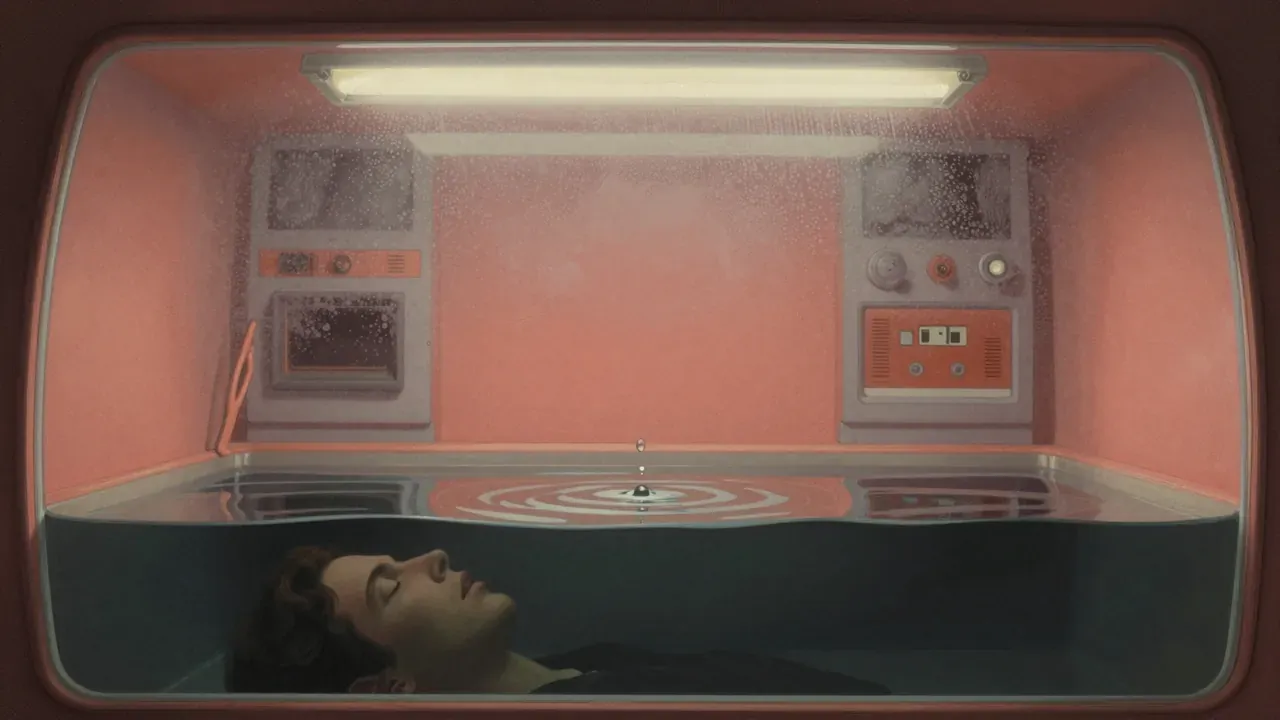
Altered States (1980), directed by Ken Russell from Paddy Chayefsky’s novel, follows a scientist whose experiments with sensory deprivation and psychoactive drugs trigger a terrifying biological regression. Anchored by William Hurt’s debut performance and Dick Smith’s groundbreaking makeup effects, it merges psychological horror with surrealist science fiction. Though marked by creative conflict between writer and director, the film endures as a formally audacious, physically immersive inquiry into consciousness, identity, and the fragility of the human form.
13:00

Benny's Video

Michael Haneke · 1992

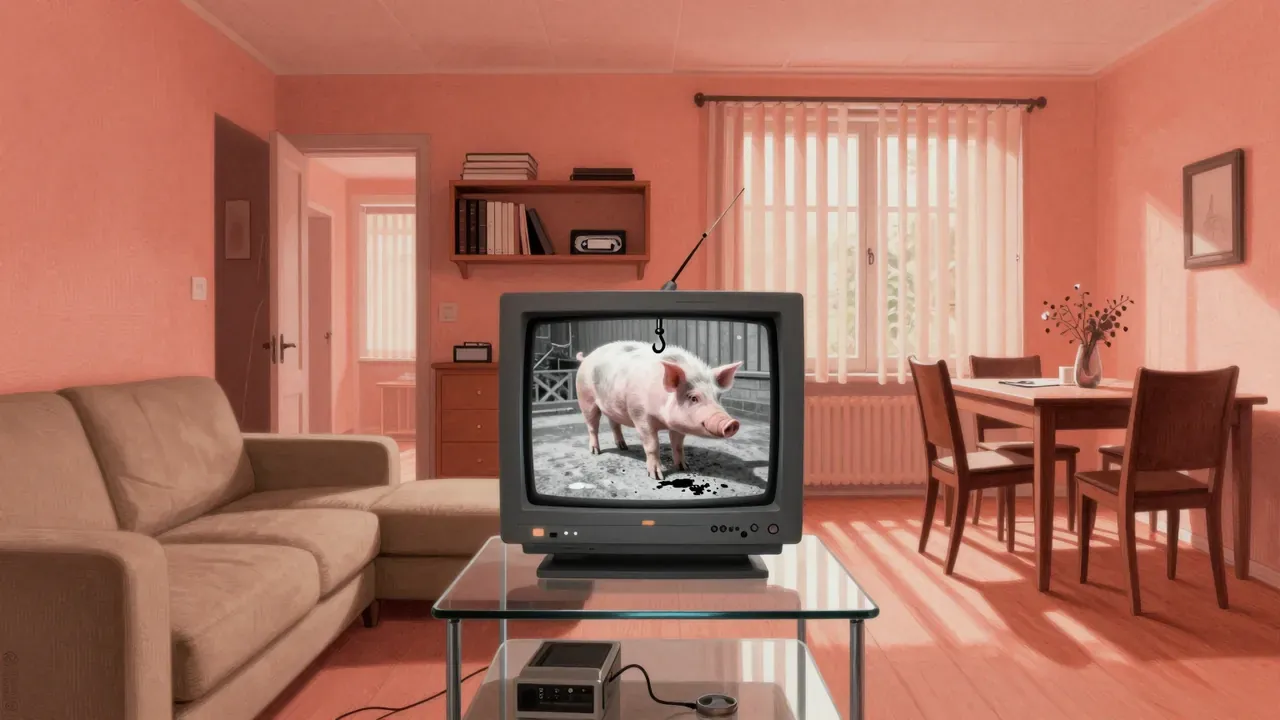
Michael Haneke’s 1992 Austrian horror film follows Benny, a Vienna teenager obsessed with video recording, whose emotionally detached parents enable his fixation. After filming a pig’s slaughter, he invites a girl to his home, kills her on camera, and proceeds with chilling normalcy — cleaning, socialising, travelling — while his parents dispose of the body. The film uses static camerawork, diegetic sound, and layered recordings to dissect how media saturation erodes moral response, treating violence not as rupture but as data.

13:00

Blood for Dracula

Paul Morrissey, Antonio Margheriti · 1974

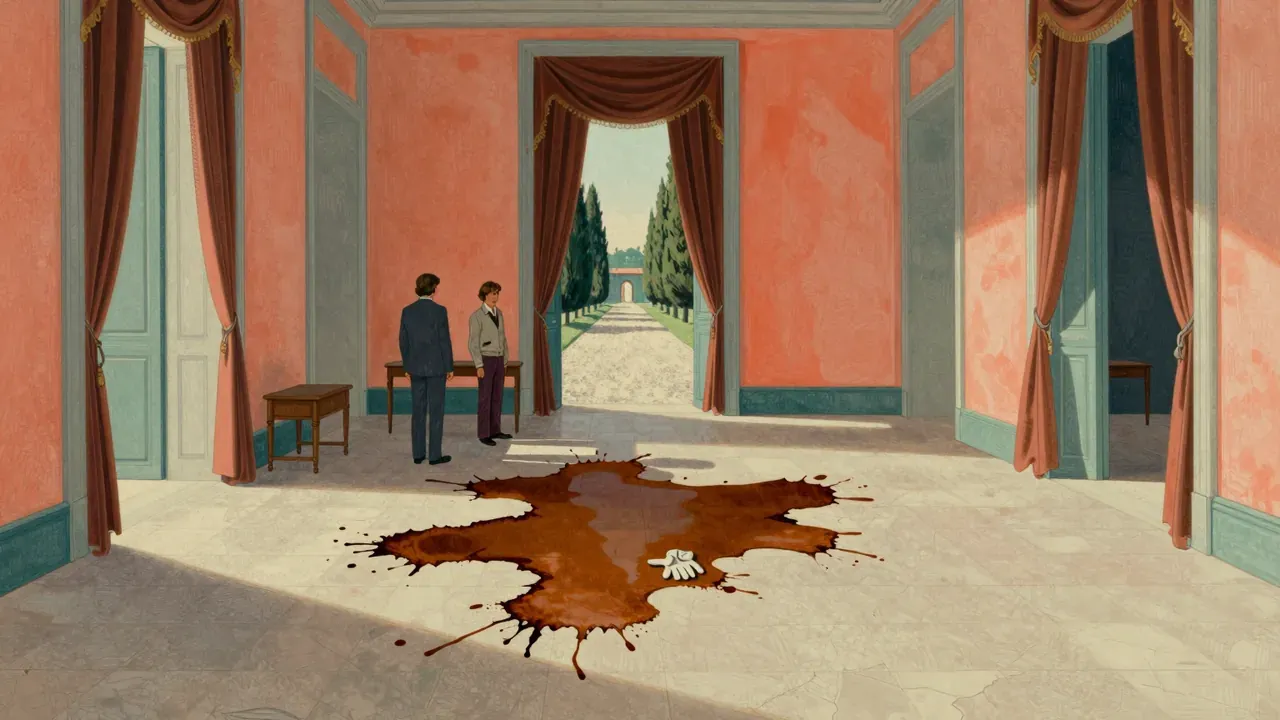
Blood for Dracula (1974) is a co-credited Paul Morrissey–Antonio Margheriti splatter film starring Udo Kier as a dying Count Dracula who travels to pre-Fascist Italy seeking virgin blood, only to find sexual candour, Marxist rhetoric, and aristocratic bankruptcy instead. Shot in France with an English-speaking cast, it uses gothic tropes to dissect legitimacy, scarcity, and ideological exhaustion. Luigi Kuveiller’s underlit cinematography and Claudio Gizzi’s sparse score reinforce its clinical tone. Though released as Andy Warhol’s Dracula, Warhol’s involvement was nominal. The film opened to mixed reviews and remains a singular artefact of 1970s arthouse-horror hybridity.

13:00

Carnival of Souls

Herk Harvey · 1962

Carnival of Souls (1962), directed by Herk Harvey, follows organist Mary Henry as her grip on reality loosens after a car accident. Shot on location in Kansas and Utah for $33,000, it uses stark black-and-white cinematography, Gene Moore’s eerie organ score, and deliberate pacing to build psychological unease. With no gore, few close-ups, and minimal dialogue, it relies on atmosphere, reflection, and liminal spaces — especially the derelict Saltair Pavilion — to evoke dislocation and ontological doubt. Though overlooked on release, it gained cult status for its formal rigour and sustained mood. The 84-minute director’s cut is considered definitive.

13:00

Cat People

Jacques Tourneur · 1942

Cat People (1942) is a low-budget RKO horror film directed by Jacques Tourneur and produced by Val Lewton. It follows Irena Dubrovna, a Serbian woman who fears she is descended from a tribe of cat-worshipping people who transform into panthers when aroused. Shot in stark black-and-white by Nicholas Musuraca, with a sparse, unsettling score by Roy Webb, the film builds dread through suggestion rather than spectacle. Its psychological depth, formal restraint and thematic rigour have secured its place as a landmark of atmospheric horror.

13:00

Corridors of Blood

Robert Day · 1958

Corridors of Blood (1958) is a British horror-drama starring Boris Karloff as Dr. Thomas Bolton, an 1840s surgeon whose pioneering work with anaesthetic gases leads to professional ruin, addiction, and entanglement with criminals. Directed by Robert Day and shot by Geoffrey Faithfull, it trades gothic excess for moral austerity, using tight framing, chiaroscuro lighting, and Karloff’s restrained performance to trace a downward spiral rooted in cause and effect. Though hampered by repetitive plotting and thin characterisation in places, it remains a coherent, atmospheric study of scientific vocation undone by human frailty.

13:00

Cronos

Guillermo del Toro · 1992

Guillermo del Toro’s 1992 debut follows an elderly antique dealer who discovers a 460-year-old alchemical device that reverses ageing at the cost of bloodlust and physical decay. As he grapples with renewed youth, moral compromise, and encroaching monstrosity, a dying industrialist and his violent nephew pursue the device. Shot in Mexico in Spanish, the film balances gothic horror with Catholic solemnity and familial tenderness — all without recourse to exposition or excess.

13:00

Cure

Kiyoshi Kurosawa · 1997

A Tokyo detective investigates a string of motiveless murders linked by an 'X' carved into victims and a mysterious man with apparent amnesia. As he traces each killer to the same enigmatic figure, his own grip on memory, motive, and agency begins to fray. Kiyoshi Kurosawa’s 1997 film treats hypnosis as ambient infection, building dread through repetition, restraint, and the slow erosion of certainty — not through gore or jump-scares, but through the unnerving plausibility of suggestion.

13:00

Don't Look Now

Nicolas Roeg · 1973

Don’t Look Now (1973), directed by Nicolas Roeg, follows a British couple in Venice after their daughter’s death. As John restores a church and Laura encounters clairvoyants, reality blurs: red coats recur, water rises, time folds. Shot by Roeg and Anthony B. Richmond, edited by Graeme Clifford, and scored by Pino Donaggio, it treats mourning as a perceptual disorder — not a story to resolve, but a condition to inhabit.

13:00

Epidemic

Lars von Trier · 1987

Lars von Trier’s 1987 metafictional horror Epidemic follows two screenwriters drafting a script about a plague while a real outbreak begins to mirror their fiction. Shot on 16mm, structured across five days, and starring von Trier and Niels Vørsel as themselves, it treats narrative as a vector and authorship as contagion — the second instalment of the Europa trilogy.

13:00

Eyes Without a Face

Georges Franju, Claude Sautet · 1960

Eyes Without a Face (1960) is a French arthouse horror film directed by Georges Franju, following a plastic surgeon who kidnaps women to graft their faces onto his disfigured daughter. Shot by Eugen Schüfftan and scored by Maurice Jarre, it sustains a tone of poetic anguish rather than visceral terror. Its restrained performances, deliberate pacing, and clinical visuals have earned it retrospective acclaim as a landmark of moral and aesthetic horror.

13:00

Fiend Without a Face

Arthur Crabtree · 1958

Fiend Without a Face (1958) is a British science fiction horror film directed by Arthur Crabtree, adapted from Amelia Reynolds Long’s short story 'The Thought Monster'. When a scientist’s experiments with thought projection intersect with nuclear-powered radar, invisible entities emerge — then materialise as flying brains with spinal cords and eyestalks. Made on a tight budget in England with stop-motion effects created in Munich, it builds slowly before delivering a memorably visceral climax. Though its first half drags and its setting feels generic, its commitment to anatomical horror and practical ingenuity has earned it enduring cult status.

13:00

First Man into Space

Robert Day · 1959

First Man into Space (1959) is a British science fiction-horror film directed by Robert Day, following a US Navy pilot who returns from extreme altitude encrusted in meteoric dust and transformed into a blood-dependent creature. Built on a tight budget and grounded in procedural realism, it prioritises physiological logic over myth or metaphor, using restrained performances, functional cinematography, and a lean narrative structure to sustain its central conceit. Though limited by its means, it delivers a coherent, atmospheric, and quietly tragic vision of spaceflight as irreversible bodily violation.

13:00

Flesh for Frankenstein

Paul Morrissey, Antonio Margheriti, Andy Warhol · 1973

Flesh for Frankenstein (1973) is a Paul Morrissey-directed body horror film shot in Rome, starring Udo Kier as a Serbian-obsessed Baron who constructs living specimens from corpses. Its deadpan satire targets eugenics, authoritarianism and sexual repression through grotesque, tactile set-pieces and stilted dialogue. Though credited to Warhol and Margheriti, Morrissey shaped its vision, aided by Luigi Kuveiller’s flat, theatrical cinematography and Claudio Gizzi’s jagged score. It is neither pure parody nor sincere horror, but a conceptual object that demands attention to texture, logic and failure.

13:00

Frankenstein

Guillermo del Toro · 2025

Guillermo del Toro’s 2025 Frankenstein reimagines Mary Shelley’s novel as a morally dense, visually austere drama centred on Victor Frankenstein (Oscar Isaac) and his Creature (Jacob Elordi). Shot by Dan Laustsen and scored by Alexandre Desplat, it trades genre thrills for theological gravity, emphasising responsibility, language, and embodied consequence. Though its pacing falters mid-film and some supporting roles lack depth, its production design, performances, and thematic coherence make it a singular, sombre achievement—less monster movie than sacred rite.

13:00

Freaks

Tod Browning · 1932

Tod Browning’s 1932 Freaks, cut from 90 to 64 minutes after hostile test screenings, tells of a trapeze artist who marries a dwarf performer to steal his inheritance — only to face the collective retribution of his carnival community. Starring real sideshow performers including Harry Earles, Daisy and Violet Hilton, Schlitzie, and Johnny Eck, it inverts horror’s moral grammar, treating disability not as spectacle but as social identity. Though compromised by studio edits and constrained by its era’s limits, its formal restraint and ethical clarity have secured its status as a landmark of compassionate, uncompromising cinema.

13:00

Genocide

Kazui Nihonmatsu · 1968

Genocide (1968), directed by Kazui Nihonmatsu for Shochiku, is a science fiction horror film set on a fictional Japanese archipelago where weaponised insects emerge in the wake of a crashed H-bomb. Blending Cold War paranoia, post-nuclear trauma, and ecological unease, it follows biologist Dr. Nagumo, islander Yukari, and American soldiers as they confront biological invasion, espionage, and the looming threat of nuclear cover-up. Shot by Shizuo Hirase with a sparse score by Shunsuke Kikuchi, it is austere in execution and ambitious in theme — Shochiku’s final horror release, and a singularly uneasy artefact of its time.

13:00

Godzilla

Ishirō Honda · 1954

Godzilla (1954) is Toho’s foundational kaiju film, directed by Ishirō Honda and conceived after the Daigo Fukuryū Maru incident. It follows scientists and officials responding to a prehistoric creature mutated by hydrogen bomb tests. Shot in black-and-white with pioneering suitmation effects, its tone is sober, almost documentary-like. The film avoids monster-movie tropes in favour of bureaucratic realism, scientific debate, and quiet devastation. Though its pacing and formal restraint challenge modern expectations, its thematic urgency — on nuclear consequence, institutional failure, and irreversible change — remains undimmed.

13:00

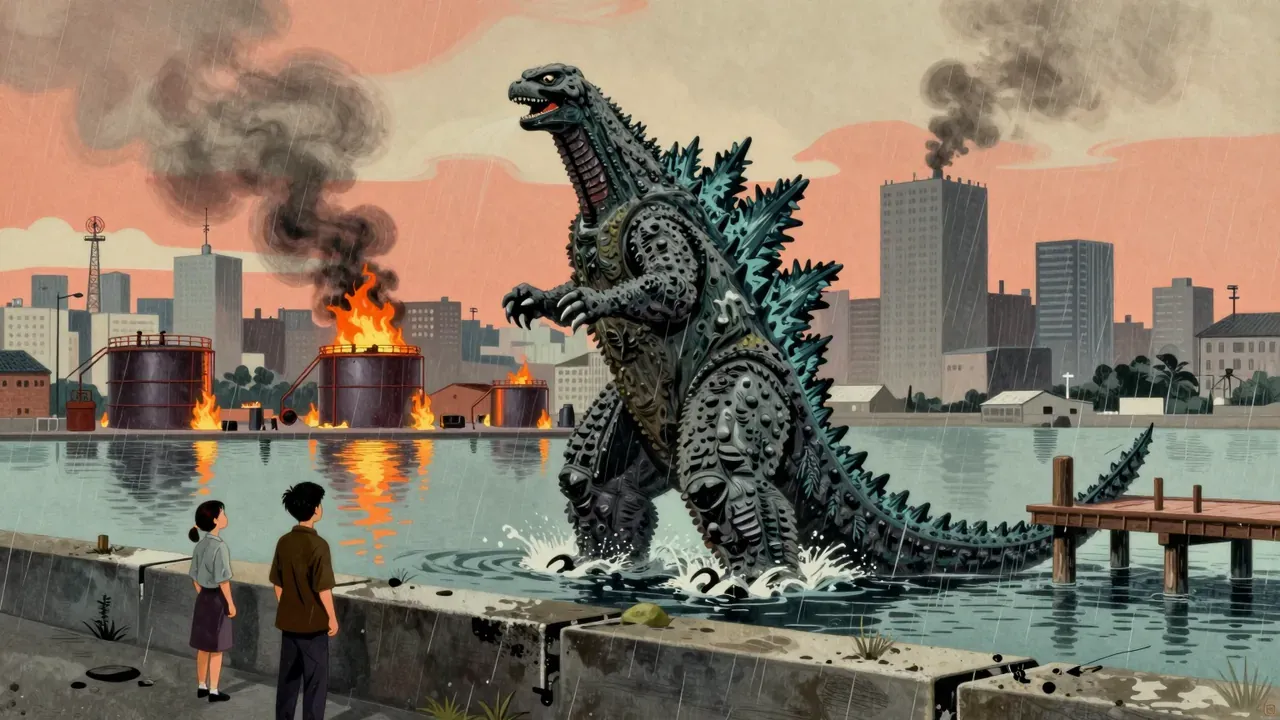
Godzilla Raids Again

Motoyoshi Oda · 1955

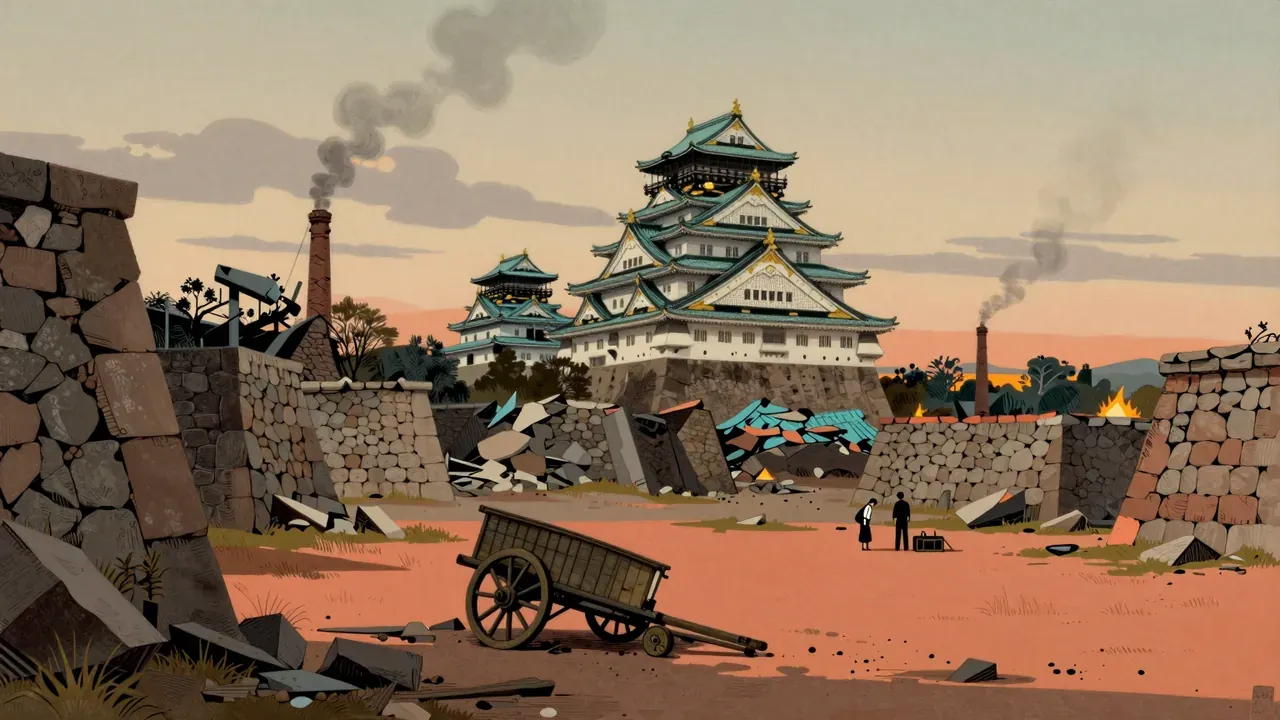
Toho’s 1955 follow-up to Godzilla is a lean, effects-driven kaiju film directed by Motoyoshi Oda under tight deadlines. It introduces Anguirus in a destructive Osaka showdown, prioritising spectacle and procedural urgency over the moral weight of its predecessor. With Haruo Nakajima in the Godzilla suit and Eiji Tsuburaya refining his special-effects techniques — including variable camera speeds and outdoor ice sets — the film functions as both a commercial necessity and a technical bridge to the franchise’s expansive future.

13:00

Goke, Body Snatcher from Hell

Hajime Satō · 1968

Goke, Body Snatcher from Hell (1968), directed by Hajime Satō, follows survivors of a plane crash on a deserted island who are hunted by a vampiric alien entity. With minimal exposition and stark visuals, it charts their rapid moral collapse under pressure — betrayals, sacrifices and self-preservation escalate until only two remain, walking across a dead world beneath an orbital fleet. Shunsuke Kikuchi’s score and practical effects reinforce its clinical, allegorical tone.

13:00

Häxan

Benjamin Christensen · 1922

A 1922 Swedish-Danish silent film directed by Benjamin Christensen, Häxan blends documentary exposition and dramatised medieval vignettes to argue that witch-hunts stemmed from misdiagnosed mental and neurological conditions. Shot in Denmark with meticulous period detail, it uses restrained cinematography, functional special effects, and a deliberate pace to trace a line from superstition to early psychiatry. Though censored on release for its depictions of torture and nudity, it endures as a landmark essay film — rigorous, unsettling, and structurally innovative.

13:00

Hour of the Wolf

Ingmar Bergman · 1968

Ingmar Bergman’s 1968 Hour of the Wolf is a psychological horror film starring Max von Sydow and Liv Ullmann as a painter and his wife isolated on a Swedish island. As his visions intensify and his sleep fails, the line between hallucination and reality dissolves. Shot by Sven Nykvist on Fårö and Hovs Hallar, it uses stark naturalism to frame surreal imagery, with Johann Sebastian Bach and Lars Johan Werle on the soundtrack. It explores artistic collapse, intimacy under strain, and the unreliability of perception — not as metaphor, but as lived condition.

13:00

House

Nobuhiko Obayashi · 1977

Nobuhiko Obayashi’s 1977 House is a Japanese comedy horror film about seven schoolgirls devoured one by one in a sentient, surreal country house. Made with handmade effects, a rock soundtrack by Godiego, and non-professional actors, it rejects narrative logic in favour of associative, childlike imagery rooted in Obayashi’s daughter’s fears and his own Hiroshima memories. Though dismissed on release, it has since gained cult status for its audacious form and emotional precision.

13:00

I Walked with a Zombie

Jacques Tourneur · 1943

I Walked with a Zombie (1943), directed by Jacques Tourneur and produced by Val Lewton, follows a Canadian nurse who travels to a Caribbean sugar plantation and becomes entangled in the mystery of her employer’s catatonic wife. Shot on a shoestring budget, it sustains dread through atmosphere, implication, and moral ambiguity rather than gore or spectacle. Drawing on Charlotte Brontë’s Jane Eyre and Inez Wallace’s article on Haitian 'zombies', it treats Vodou as a system of belief entwined with power and history — not exotic fantasy. Its strength lies in its restrained craft, evocative cinematography, and unflinching engagement with colonial legacy, though its narrative vagueness may frustrate some viewers.

13:00

Inland Empire

David Lynch · 2006

David Lynch’s 2006 film Inland Empire is a digitally shot, scriptless, three-hour descent into fractured identity, filmed largely by Lynch himself on a handheld Sony camcorder. Laura Dern stars as an actress whose immersion in a cursed film role unravels her sense of self, time, and reality. Shot across Los Angeles and Łódź, Poland, it rejects conventional storytelling in favour of sensory accumulation, repetition, and ontological unease. Though labelled a horror film, its terror is structural — rooted in the instability of perception, memory, and representation. It premiered at Venice, where Lynch received the Golden Lion for Lifetime Achievement, and remains his final feature.

13:00

Island of Lost Souls

Erle C. Kenton · 1932

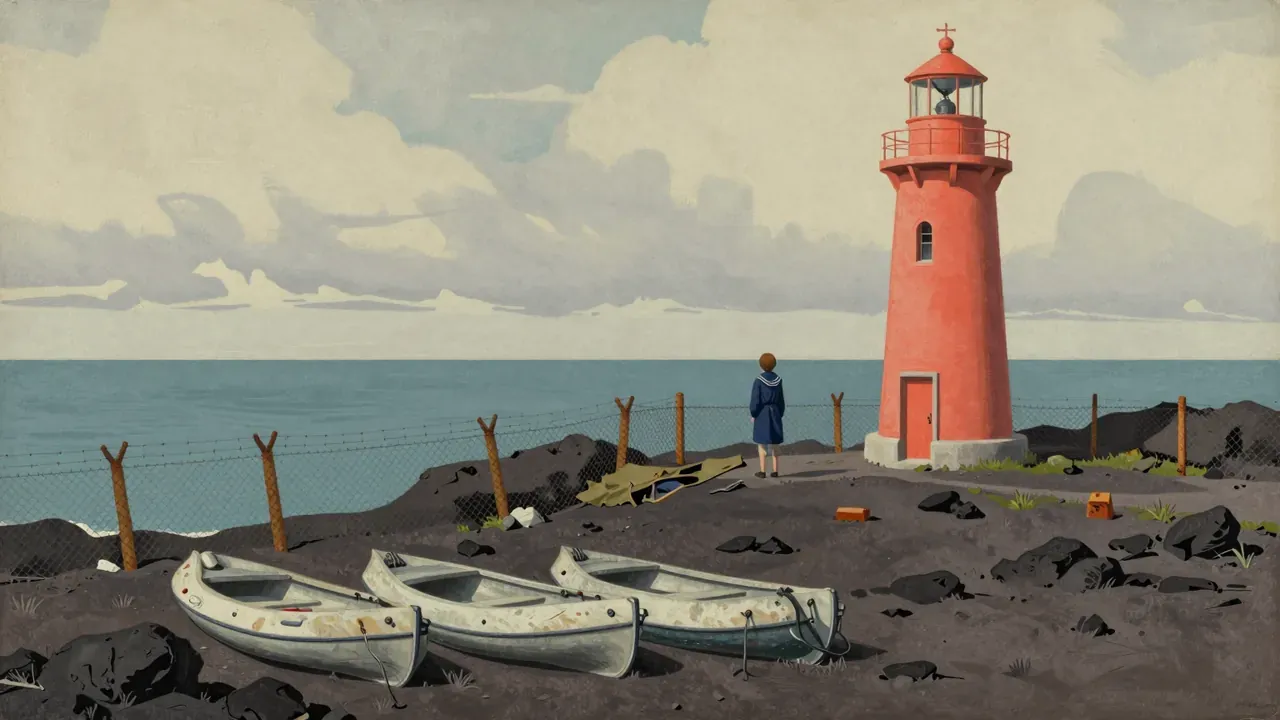
Island of Lost Souls (1932), directed by Erle C. Kenton and starring Charles Laughton as the tyrannical Dr. Moreau, adapts H. G. Wells’ novel into a stark, atmospheric horror about vivisection, control, and the instability of the human form. Shot by Karl Struss and written by Philip Wylie and Waldemar Young, it sustains dread through Laughton’s chillingly rational performance, the beast-men’s halting recitation of ‘The Law’, and a rigorous 70-minute structure. Though some elements feel dated or underdeveloped, its central inquiry—into power as pedagogy, language as coercion, and civilisation as performance—remains unnervingly precise.
13:00

Jigoku

Nobuo Nakagawa · 1960

Nobuo Nakagawa’s 1960 Jigoku is Shintōh’s final film: a stark, morally absolute horror that charts the descent of student Shirō Shimizu from hit-and-run guilt to eternal punishment in Hell. Rejecting folklore and ambiguity, it stages damnation as literal, repetitive, and socially contagious — sins committed in a retirement home ripple outward until every character is damned. Crude in execution but relentless in argument, it uses wide shots, sparse music, and a single dirt-covered soundstage to build a vision of consequence that admits no escape, no grace, and no pause.

13:00

Kuroneko

Kaneto Shindō · 1968

Kaneto Shindō’s 1968 Kuroneko is a black-and-white jidaigeki horror film about two women who return as vengeful spirits after being raped and murdered by samurai. Set in feudal Japan during civil war, it follows their spectral seductions and killings, and the tragic confrontation with the son-husband who must destroy them — even as he loves them. Stylised with Noh and kabuki techniques, shot by Kiyomi Kuroda, and scored by Hikaru Hayashi, it is a study in restraint, doubling, and irreversible consequence.
13:00

Kwaidan

Masaki Kobayashi · 1964

Masaki Kobayashi’s 1964 Kwaidan is a four-part Japanese horror anthology adapted from Lafcadio Hearn’s folktales. Shot on vast, artificially lit soundstages, it replaces narrative drive with painterly control of colour, silence, and surface. Yoshio Miyajima’s cinematography flattens space; Tōru Takemitsu’s score uses prepared piano and charged silence; Yōko Mizuki’s script preserves Hearn’s archaic cadence. The film treats spirits not as agents of vengeance but as forces of immutable consequence — indifferent, inevitable, aesthetic. Though commercially unsuccessful and financially ruinous for its production company, it won the Special Jury Prize at Cannes and is now regarded as a landmark of stylised cinema.

13:00

Nanny

Nikyatu Jusu · 2022

Nanny (2022), Nikyatu Jusu’s feature debut, follows Aisha, a Senegalese nanny in New York, as she navigates wage theft, racialised labour, and the anguish of separation from her son back home. Blending psychological realism with folk-horror inflection, the film renders her unraveling through drowning dreams, waking visions, and quiet ruptures in domestic routine. Anna Diop’s restrained, physically precise performance anchors Rina Yang’s muted cinematography and a soundscape built on absence. Winner of Sundance’s U.S. Dramatic Grand Jury Prize, it is a formally controlled, thematically rich exploration of migration, care, and inherited resilience.

13:00

Night of the Living Dead

George A. Romero · 1968

Night of the Living Dead (1968) is a black-and-white American horror film directed by George A. Romero, shot on 35mm with a $114,000 budget. Nine people take refuge in a rural Pennsylvania farmhouse as flesh-eating ghouls close in. Duane Jones stars as Ben, the de facto leader whose authority is tested by both the dead outside and the living within. The film avoids exposition, embraces technical limitation, and treats social breakdown as an observable process. It entered the public domain due to a missing copyright notice, enabling wide distribution and lasting influence. Preserved in the National Film Registry in 1999.

13:00

Onibaba

Kaneto Shindō · 1964

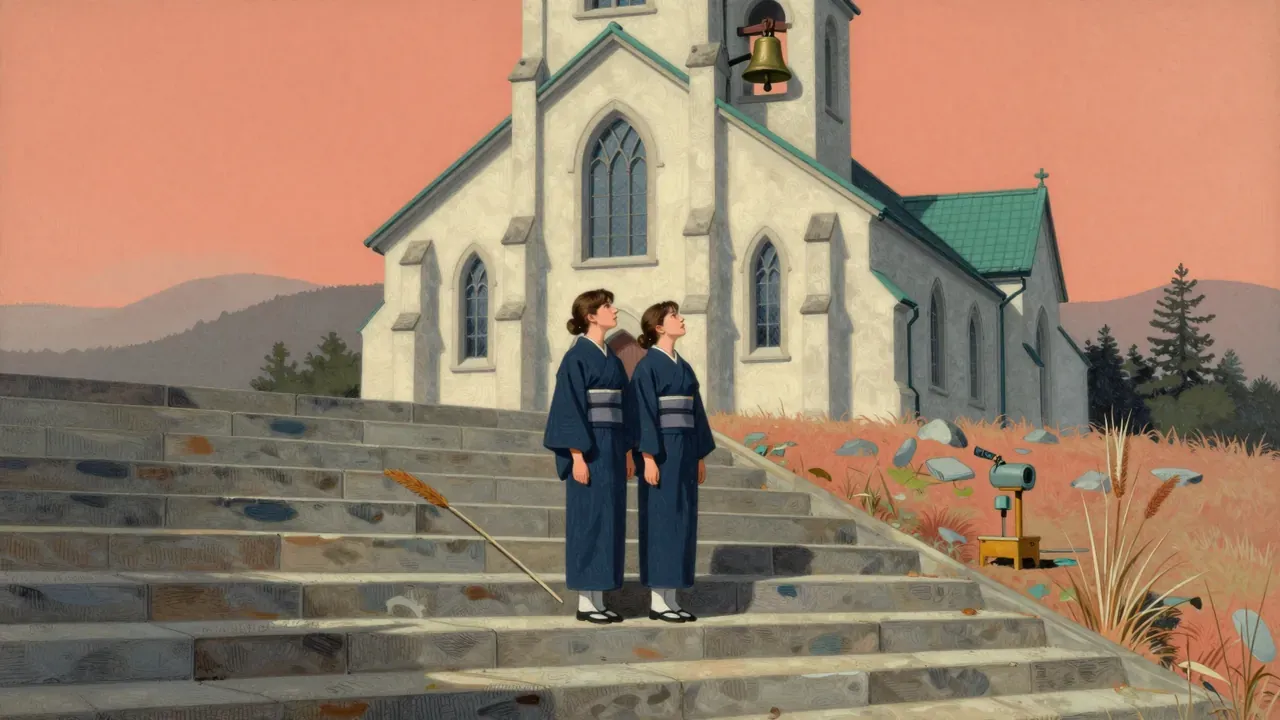
Set in 14th-century Japan amid civil war, Onibaba follows two unnamed women who kill stray soldiers in a vast reed field to trade armour for food. When a masked samurai dies in their pit, the older woman takes his hannya mask — and finds it will not come off. Kaneto Shindō’s 1964 film uses stark black-and-white cinematography, minimal dialogue, and physical performance to explore moral erosion, interdependence, and the bodily cost of fear.

13:00

Repulsion

Roman Polanski · 1965

Roman Polanski’s 1965 psychological horror follows Carol Ledoux, a withdrawn Belgian manicurist in London, as she descends into acute dissociation while left alone in her sister’s flat. Shot in black and white on a modest budget, the film uses tight framing, amplified diegetic sound, and meticulous pacing to replicate the texture of perceptual collapse — cracks in walls, hands emerging from plaster, time stretching and warping. Catherine Deneuve’s restrained performance anchors a film that refuses exposition, causality, or resolution. It is a study in claustrophobia, not of space alone, but of consciousness under pressure.

13:00

Rosemary's Baby

Roman Polanski · 1968

Roman Polanski’s 1968 adaptation of Ira Levin’s novel follows Mia Farrow as Rosemary Woodhouse, a young wife who suspects her neighbours and husband are conspiring over her pregnancy. Shot with clinical precision by William A. Fraker and edited with unobtrusive rigour, the film sustains tension through accumulation — not revelation. Its power lies in what remains unsaid, unconfirmed, and unchallenged: a portrait of gaslighting as architecture, paranoia as logic, and horror as domestic routine.

13:00

Sisters

Brian De Palma · 1972

Brian De Palma’s 1972 Sisters is a psychological horror film about a reporter who witnesses a murder committed by a woman with a hidden, violent twin. Shot on location in Staten Island and scored by Bernard Herrmann, it uses split screens, long takes and clinical framing to explore perception, media saturation and the erasure of women’s testimony. Margot Kidder plays dual roles with unsettling restraint; Jennifer Salt anchors the film as the increasingly isolated witness. Though low-budget, it is tightly constructed and thematically precise.

13:00

The Blob

Irvin Yeaworth · 1958

The Blob is a concise, location-bound science fiction horror film from 1958, directed by Irvin Yeaworth and starring Steve McQueen in his first leading role. It follows a gelatinous extraterrestrial organism that crashes to Earth near a Pennsylvania town, consumes people, grows larger, and is ultimately contained — not destroyed — by extreme cold. Made on a modest budget with practical effects and regional filming, it prioritises escalation, spatial logic, and collective response over psychology or allegory. Its enduring appeal lies in its structural rigour, tonal consistency, and refusal to over-explain.

13:00

The Brood

David Cronenberg · 1979

David Cronenberg’s 1979 body horror film follows a man investigating brutal murders tied to his ex-wife’s experimental therapy. Conceived amid Cronenberg’s own custody battle, it externalises psychological rupture as literal, parthenogenetic offspring — dwarf-like creatures born from suppressed rage. Shot in Toronto with clinical restraint, it privileges coherence over catharsis, using flat lighting, sparse scoring, and unadorned performances to sustain dread. Its power lies in its refusal to explain, reassure, or resolve.

13:00

The Cremator

Juraj Herz · 1969

Juraj Herz’s 1969 film follows Karel Kopfrkingl, a Prague cremator whose devotion to ritual, Tibetan Buddhism, and Nazi ideology converges into murderous certainty. Shot in stark black and white by Stanislav Milota, edited with jarring precision by Jaromír Janáček, and anchored by Rudolf Hrušínský’s unnervingly calm performance, it charts the banal mechanics of moral collapse. Banned after release, it resurfaced as a landmark of the Czechoslovak New Wave — less a thriller than a forensic study of how language, architecture, and routine conspire to normalise atrocity.

13:00

The Devil's Backbone

Guillermo del Toro · 2001

Set in a remote Spanish orphanage during the final months of the Civil War, The Devil's Backbone follows a newly arrived boy who encounters the ghost of a murdered peer. Directed by Guillermo del Toro and shot by Guillermo Navarro, the film uses gothic horror conventions to explore inheritance, trauma, and moral accountability. Its restrained performances, muted palette, and deliberate pacing build tension not through shocks but through accumulated silence and implication. Though some narrative devices feel functional rather than felt, its emotional and historical precision makes it a singular entry in both Spanish cinema and the ghost-story tradition.

13:00

The Haunted Strangler

Robert Day · 1958

The Haunted Strangler (1958) is a British horror film directed by Robert Day and starring Boris Karloff. Set in Victorian London, it follows novelist James Rankin as he re-examines the conviction of Edward Styles, the so-called Haymarket Strangler. His investigation leads him to uncover his own forgotten identity as Dr. Tennant, the real murderer — a revelation triggered by handling the Strangler’s knife. Shot at Walton Studios, with music by Buxton Orr and editing by Peter Mayhew, the film blends procedural detail with psychological horror, prioritising atmosphere and physical transformation over shock or gore.

13:00

The Housemaid

Kim Ki-young · 1960

Kim Ki-young’s 1960 The Housemaid is a tightly controlled psychological horror set in a Seoul two-storey house. When a piano teacher hires a factory cleaner as maid, her quiet observation and escalating demands expose fault lines in his marriage, class position and moral authority. The film builds dread through restraint — no score, minimal exposition, unflinching framing — and ends where it began, suggesting its tragedy is cyclical, not exceptional.

13:00

The Innocents

Jack Clayton · 1961

Jack Clayton’s 1961 adaptation of Henry James’s The Turn of the Screw sustains a rigorous ambiguity: are the ghosts real, or projections of the governess’s repressed psyche? Shot by Freddie Francis in stark CinemaScope, scored by Georges Auric with early electronic textures, and carried almost entirely by Deborah Kerr’s tightly coiled performance, the film refuses resolution. Its power lies in what it withholds — no confirmation, no diagnosis, no moral anchor — making it a landmark of psychological horror and arthouse restraint.

13:00

The Living Skeleton

Kōki Matsuno · 1968

The Living Skeleton (1968), directed by Kōki Matsuno for Shochiku, follows a woman haunted by her vanished twin and a submerged wreck off a coastal village. Shot in stark monochrome, it builds unease through underwater skeletons, fog-bound ships, and Catholic ritual — not gore or exposition. Its power lies in texture, repetition, and the sea as keeper of buried history.

13:00

The Lure

Agnieszka Smoczyńska · 2015

Agnieszka Smoczyńska’s 2015 debut is a Polish musical horror film set in a 1980s Warsaw nightclub, following two sirens who perform, love, and devour. Blending gothic metal, bodily realism, and Andersen’s fable, it literalises female adolescence, immigration, and assimilation — with tails removed, voices lost, and hearts consumed. Produced by Warsaw Documentary Film Studio, scored by Ballady i Romanse, and shot by Jakub Kijowski.

13:00

The Most Dangerous Game

Irving Pichel, Ernest B. Schoedsack · 1932

The Most Dangerous Game (1932) adapts Richard Connell’s short story with surgical fidelity: a shipwrecked hunter becomes prey to a Russian aristocrat who hunts humans for sport. Shot on the same jungle sets as King Kong, it uses tight pacing, Max Steiner’s leitmotif-driven score, and Leslie Banks’s chillingly controlled performance to sustain dread without gore or exposition. Its themes — predation, civilisation’s fragility, and the boredom of mastery — land through structure, not speech. At 63 minutes, it is lean, logical, and enduring.

13:00

The Others

Alejandro Amenábar · 2001

Set in 1945 Jersey, The Others follows Grace Stewart, a devout mother shielding her photosensitive children in a remote manor. When new servants arrive, strange occurrences mount — whispers, moving objects, unseen figures — until Grace uncovers a truth far more unsettling than ghosts. Directed and written by Alejandro Amenábar, it relies on atmosphere, performance and precise craft rather than shock or spectacle.

13:00

The Seventh Victim

Mark Robson · 1943

The Seventh Victim (1943) is a Val Lewton-produced RKO horror film directed by Mark Robson, following a young woman’s search for her missing sister in New York City, which leads her to a secretive Satanic cult called the Palladists. Shot in 24 days with restrained performances, Nicholas Musuraca’s shadow-heavy cinematography, and Roy Webb’s dissonant score, it sustains unease through implication and omission. Four scenes were cut in post-production, leaving narrative gaps that critics have long noted. Though commercially unsuccessful on release, it gained stature as a moody, morally ambiguous precursor to modern psychological horror.

13:00

The Shout

Jerzy Skolimowski · 1978

Jerzy Skolimowski’s 1978 adaptation of Robert Graves’s short story is a formally rigorous British horror film set on the North Devon coast. Alan Bates plays Crossley, a mysterious drifter who claims to wield a lethal 'terror shout'; John Hurt and Susannah York play the composer and wife whose secluded life he disrupts. Shot by Mike Molloy and scored by Tony Banks, it sustains psychological unease through precise sound design, muted natural light, and restrained performances — winning the Grand Prix at Cannes but dividing critics over its enigmatic conclusion.

13:00

The Shrouds

David Cronenberg · 2024

David Cronenberg’s 2024 film *The Shrouds* follows a widowed inventor who develops ‘GraveTech’, a technology that broadcasts live 3D images of decomposing corpses via modified shrouds. Set in Toronto and conceived as a response to the director’s own bereavement, the film explores grief as a physical, technological, and architectural condition — one that can be hacked, misrendered, and eroticised. With Vincent Cassel, Diane Kruger, and Guy Pearce, it sustains a tone of clinical unease, privileging conceptual rigour over narrative resolution.

13:00

The Uninvited

Lewis Allen · 1944

The Uninvited (1944), directed by Lewis Allen and written by Dodie Smith, follows siblings who purchase a Cornish seaside house only to encounter inexplicable phenomena rooted in grief and suppressed attachment. Shot by Charles Lang with deliberate restraint, it avoids horror tropes in favour of sustained atmosphere, ambiguous motivation, and psychological weight. Though uneven in performance and occasionally expositional, its influence on supernatural cinema is foundational — less about ghosts than about what haunts us long after we stop speaking their names.

13:00

The Unknown

Tod Browning · 1927

Tod Browning’s 1927 silent horror stars Lon Chaney as Alonzo, a carnival performer who hides his arms to win the affection of Nanon (Joan Crawford). When she develops a phobia of hands, his deception becomes essential — then unsustainable. He chooses amputation to preserve the illusion, only to discover too late that she has moved on. With stark cinematography by Merritt B. Gerstad and ruthless narrative economy, the film charts obsession as a series of irrevocable choices, not a spiral of madness.

13:00

The X from Outer Space

Kazui Nihonmatsu · 1967

The X from Outer Space (1967) is a Japanese kaiju film directed by Kazui Nihonmatsu, produced under governmental tax incentives to promote Japanese genre cinema abroad. It follows a Martian spore that mutates into Guilala — a jet-headed, feathered monster — which rampages through Tokyo before being neutralised with a fictional compound and launched into solar orbit. Made with shared effects resources and minimal narrative scaffolding, it prioritises momentum and tactile spectacle over coherence or character. Released theatrically in Japan and later on US television, it has endured as a touchstone of earnest, low-budget tokusatsu.

13:00

Twin Peaks: Fire Walk with Me

David Lynch · 1992

David Lynch’s 1992 prequel to Twin Peaks focuses on Laura Palmer’s final days, stripping away the TV series’ whimsy to confront trauma, abuse, and institutional failure with unflinching rigour. Sheryl Lee’s performance anchors a film defined by dissonant sound, claustrophobic framing, and narrative austerity. Though polarising on release, it has been re-evaluated as a major work of psychological horror and arthouse cinema.

13:00

Videodrome

David Cronenberg · 1983

David Cronenberg’s 1983 body horror film follows a Toronto TV executive who discovers a mysterious broadcast signal that induces violent hallucinations and physical mutations. Shot in Toronto with a $6m budget, it uses practical effects, analog video textures, and Howard Shore’s synth score to construct a world where media literally rewires the body. Though a box-office failure, it has endured as a cult touchstone for its fusion of psychosexual theory and visceral craft.

13:00

Antichrist

Lars von Trier · 2009

Lars von Trier’s 2009 film Antichrist stars Willem Dafoe and Charlotte Gainsbourg as a grieving couple who retreat to a forest cabin, only to confront psychological disintegration, theological dread, and nature’s indifference. Shot digitally in Germany with precise, unrelenting craft, it divides itself into symbolic chapters and refuses narrative or emotional release. Though polarising and widely debated for its imagery and themes, it remains a benchmark of arthouse extremity — technically controlled, thematically uncompromising, and ethically demanding.

13:00

The Exterminating Angel

Luis Buñuel · 1962

Luis Buñuel’s 1962 Mexican surrealist film follows eighteen wealthy guests trapped in a mansion after a dinner party, unable to cross the threshold despite no physical barrier. Shot in six weeks by Gabriel Figueroa, with a sparse score by Raúl Lavista and editing by Carlos Savage, it uses repetition, stillness, and behavioural precision to dissect ritual, class, and collective inertia. It premiered at Cannes, won the FIPRESCI Prize, and remains a cornerstone of arthouse and comic-horror traditions.

13:00

The Phantom Carriage

Victor Sjöström · 1921

Victor Sjöström’s 1921 adaptation of Selma Lagerlöf’s Körkarlen follows a dying drunkard forced by Death’s carriage to confront the damage he has wrought — on his wife, children, friends, and community. Shot by Julius Jaenzon with pioneering double exposures, it uses silence, shadow, and nested flashbacks to build a moral architecture where consequence is spatial, time is debt, and reform is earned in real time. Not horror in the genre sense, but in its unflinching gaze.

13:00

The Witch

Robert Eggers · 2015

Robert Eggers’s 2015 debut is a meticulously researched Puritan folktale set in 1630s New England. After a family is banished and settles near a forbidding forest, the disappearance of their infant son triggers theological panic, mutual suspicion and spiritual unraveling. Shot in natural light with Early Modern English dialogue, period-accurate costumes and a dissonant, instrumentally unconventional score, the film builds dread through restraint, silence and escalating ambiguity — culminating not in terror, but in a chilling, ecstatic surrender.

13:00

A Tale of Two Sisters

Kim Ji-woon · 2003

A teenage girl returns home from a mental institution to her father’s secluded country house, where her younger sister and new stepmother await. As tensions mount and strange events unfold, the line between haunting and hallucination blurs — until the film reveals that the horror resides not in the house, but in the mind’s desperate, self-preserving fictions.

13:00

Beetlejuice

Tim Burton · 1988

Beetlejuice (1988) is Tim Burton’s gothic comedy horror about a recently deceased couple who hire a chaotic bio-exorcist to scare away their home’s new occupants. With Michael Keaton, Alec Baldwin, Geena Davis, and Winona Ryder, it builds its world from deliberate artifice — stop-motion, saturated colour, Elfman’s calypso-infused score — and treats the afterlife as a malfunctioning bureaucracy. Its strength lies in tonal consistency and visual wit, not psychological realism or causal clarity.

13:00

Bride of Frankenstein

James Whale · 1935

James Whale’s 1935 Bride of Frankenstein refines the gothic horror of its predecessor into something stranger and more enduring: a stylised, ironic, deeply humane meditation on autonomy and complicity. With Boris Karloff, Elsa Lanchester and Ernest Thesiger at their most expressive, and John J. Mescall’s chiaroscuro cinematography and Franz Waxman’s unresolved score lending it formal rigour, the film sustains a unique tonal balance — part fable, part farce, part tragedy. Its reputation as a masterpiece rests not on scares, but on its precision, its patience and its refusal to resolve what it sets in motion.

13:00

Frankenweenie

Tim Burton · 2012

Tim Burton’s 2012 stop-motion Frankenweenie expands his 1984 short into a black-and-white feature about Victor Frankenstein, a lonely boy who reanimates his dead dog Sparky — then contends with chaos when classmates follow suit. Built with meticulous puppetry and Danny Elfman’s score, it balances gothic parody with emotional sincerity, landing most strongly in its tactile detail and restrained treatment of loss. Though some subplots feel schematic and its satire stays broad, its commitment to mood, materiality, and moral ambiguity makes it a distinctive, unhurried piece of animation.

13:00

Mother!

Darren Aronofsky · 2017

Darren Aronofsky’s Mother! is a psychological horror film structured as a closed-loop parable: a woman’s domestic peace unravels under successive invasions, culminating in annihilation and cyclical rebirth. Shot in tight proximity to Jennifer Lawrence’s performance, scored with near-total silence, and driven by escalating symbolic violation, it functions less as story than as sustained sensory provocation. Its themes—ecological violation, artistic narcissism, theological recursion—are delivered without irony or ambiguity. Critical reception was divided: many admired its formal rigour and intensity; others found its allegory reductive and its relentlessness exhausting. It grossed $44.5m on a $30m budget.

13:00

Near Dark

Kathryn Bigelow · 1987

Near Dark (1987) is Kathryn Bigelow’s solo directorial debut: a neo-Western horror film about a young Oklahoma man drawn into a nomadic family of vampires. Shot by Adam Greenberg and scored by Tangerine Dream, it fuses frontier iconography with bodily horror, treating vampirism as irreversible social adoption rather than supernatural affliction. Though it underperformed commercially, its atmospheric precision, committed performances — particularly from Lance Henriksen and Bill Paxton — and genre-blending ambition have secured its status as a cult landmark.

13:00

Nosferatu

F. W. Murnau · 1922

F. W. Murnau’s 1922 silent film is an unauthorized adaptation of Dracula, recast as a German Expressionist study in dread. Max Schreck plays Count Orlok, a rodent-like vampire whose arrival in the port town of Wisburg brings plague and paralysis. Shot across northern Germany and Slovakia, with sets and costumes designed by occultist Albin Grau, the film builds horror through composition, texture and pacing — not dialogue or psychology. Though its human drama is thin and its intertitles often compromised by translation, its visual logic remains uncompromising and deeply influential.

13:00

Peeping Tom

Michael Powell · 1960

Michael Powell’s 1960 Peeping Tom follows Mark Lewis, a shy focus puller and amateur filmmaker who murders women while recording their final expressions of terror. Written by cryptographer Leo Marks and shot by Otto Heller, it treats voyeurism as method, not motive — embedding the camera in the narrative as limb, lens, and legacy. Its clinical precision, psychological rigour, and formal restraint shocked contemporary critics but now mark it as a foundational work of British arthouse horror.

13:00

Sleepy Hollow

Tim Burton · 1999

Tim Burton’s 1999 Sleepy Hollow reimagines Washington Irving’s tale as a painterly, studio-crafted horror fable. Johnny Depp plays Ichabod Crane, a forensic-minded constable investigating decapitations in an insular Hudson Valley village. With Emmanuel Lubezki’s moody cinematography, Rick Heinrichs’ Oscar-winning production design, and Danny Elfman’s brooding score, the film builds dread through saturated colour, deliberate artifice and tactile detail — not plot mechanics or psychological realism. Its strengths are visual and atmospheric; its weaknesses lie in structural looseness and underdeveloped relationships. It rewards patience with mood over momentum.

13:00

Sweeney Todd: The Demon Barber of Fleet Street

Tim Burton · 2007

Tim Burton’s 2007 adaptation of Sweeney Todd condenses Stephen Sondheim’s stage musical into a tightly wound Gothic drama. Starring Johnny Depp and Helena Bonham Carter, it follows a vengeful barber and his pie-making accomplice in a blood-soaked, desaturated Victorian London. With Dariusz Wolski’s cinematography, Dante Ferretti’s production design, and a ruthlessly edited score, it sustains a tone of operatic despair — prioritising psychological intensity over narrative breadth or musical spectacle.

13:00

The Cabinet of Dr. Caligari

Robert Wiene · 1920

A 1920 German silent film directed by Robert Wiene, written by Hans Janowitz and Carl Mayer, and designed by Hermann Warm, Walter Reimann and Walter Röhrig. It tells of a hypnotist and his somnambulist through a fractured frame story, using radically distorted sets, high-contrast lighting and stylised performance to argue against irrational authority. Made at Babelsberg Studio, it remains foundational to expressionist cinema, horror and arthouse film.

13:00

The Golem

Paul Wegener, Henrik Galeen · 1915

The Golem (1915) is a partially lost German silent film co-directed by Paul Wegener and Henrik Galeen, adapting Jewish folklore into a proto-horror narrative about a clay creature reawakened in modern times. With only fragments surviving — held by Deutsche Kinemathek — its story, performances, and themes remain partly speculative. It establishes the golem as autonomous yet unstable, but lacks the psychological or visual cohesion of later Weimar horror. Its value lies in lineage, not completeness.

13:00

The Lighthouse

Robert Eggers · 2019

Robert Eggers’ 2019 black-and-white horror follows two lighthouse keepers—Willem Dafoe and Robert Pattinson—stranded together in isolation, their relationship fracturing under storm, duty, and buried desire. Shot in a near-square 1.19:1 aspect ratio on 35 mm film with custom optical filters, it uses period-accurate dialect, oppressive sound design, and unrelenting close-ups to render descent as sensory inevitability. Its themes orbit masculinity, hierarchy, myth, and the sea as unconscious force.

13:00

The Wailing

Na Hong-jin · 2016

Na Hong-jin’s 2016 Korean mystery-horror follows a rural policeman investigating inexplicable violence in his village. As explanations multiply — shamanic curse, demonic possession, epidemic, colonial panic — none cohere, and conviction becomes indistinguishable from delusion. With deliberate pacing, restrained performances, and Hong Kyung-pyo’s naturalistic cinematography, the film sustains dread through ambiguity rather than revelation. Its power lies in how thoroughly it models the exhaustion and danger of not knowing — and how easily certainty replaces it.

13:00

Thirst

Park Chan-wook · 2009

Park Chan-wook’s 2009 Thirst reworks Zola’s Thérèse Raquin as a Korean Catholic vampire tragedy. Song Kang-ho plays a priest turned vampire after a failed virus experiment; his descent into bloodlust entangles him with Kim Ok-vin’s restless, trapped wife. Shot by Chung Chung-Hoon and scored by Jo Yeong-wook, it trades gothic tropes for moral gravity and domestic claustrophobia. It won the Jury Prize at Cannes and the Best Actress award at Sitges.

13:00

Vampyr

Carl Theodor Dreyer · 1932

Carl Theodor Dreyer’s 1932 Vampyr is a Gothic horror film shot on location in France, starring amateur actor Nicolas de Gunzburg as Allan Gray, a student of the occult who enters a cursed village. With minimal dialogue, gauze-diffused cinematography by Rudolph Maté, and a sparse score by Wolfgang Zeller, it builds dread through atmosphere, not exposition. Adapted loosely from Sheridan Le Fanu, it treats vampirism as a perceptual condition — blurring boundaries between dream and wakefulness, self and other, presence and absence.

13:00

What We Do in the Shadows

Taika Waititi, Jemaine Clement · 2014

What We Do in the Shadows is a 2014 New Zealand mockumentary co-written and co-directed by Taika Waititi and Jemaine Clement. It follows four centuries-old vampires sharing a flat in Wellington, navigating mundane cohabitation — rent, chores, dating, tech support — while trying to maintain their supernatural identities. Shot on a $1.6m budget, it premiered at Sundance and earned $5.9m globally. Its comedy emerges from rigorous adherence to documentary realism and the quiet absurdity of immortal beings negotiating modern life.

13:00

Alien

Ridley Scott · 1979

A commercial towing crew, woken early by what they believe is a distress signal, boards a derelict ship and returns with something that starts killing them one by one. Ridley Scott's first science-fiction film builds the genre's most enduring monster movie almost entirely out of dread, sound design and H.R. Giger's biomechanical creature, on a budget that a science-fiction boom had only just made possible.

13:00

Coraline

Henry Selick · 2009

A girl finds a door to an alternate version of her home where everything, including her parents, is more attentive and colourful, until she learns the price. Henry Selick's 2009 stop-motion film, based on Neil Gaiman's novella, builds dread through craft rather than jump scares.

13:00

Eraserhead

David Lynch · 1977

David Lynch spent roughly five years shooting his AFI student project in disused stables and a soundproofed studio he built himself, financed along the way by donations from friends including Sissy Spacek. The result follows Henry Spencer, left to care for a grotesquely deformed baby in an industrial wasteland, shot in stark black and white with sound design as unsettling as anything on screen. It became a midnight-movie staple and launched Lynch's career from almost nothing.

13:00

Get Out

Jordan Peele · 2017

A young Black photographer visits his white girlfriend's family for a weekend that curdles from awkward hospitality into captivity, in Jordan Peele's directorial debut and Oscar-winning screenplay.

13:00

Jaws

Steven Spielberg · 1975

Steven Spielberg's 1975 thriller sends police chief Martin Brody, a marine biologist and a professional shark hunter after a great white attacking swimmers off a New England resort town. Adapted from Peter Benchley's novel and shot on location at Martha's Vineyard, it went over budget and schedule when its mechanical sharks repeatedly failed, forcing Spielberg toward a suggestive, Hitchcock-influenced style built around John Williams's two-note theme. It became the highest-grossing film in history at the time and established the modern summer blockbuster model.

13:00

Lost Highway

David Lynch · 1997

David Lynch's first film after Twin Peaks follows Bill Pullman's jazz musician, arrested for a murder he cannot account for, who inexplicably becomes a different young man midway through. Written with novelist Barry Gifford and shot by Peter Deming in near-total darkness, it was a box-office failure on release that has since built a devoted following willing to sit with a story that refuses to resolve.

13:00

Psycho

Alfred Hitchcock · 1960

Hitchcock financed Psycho himself after Paramount balked at the material, shooting it fast, cheap and in black and white with his television crew. Anthony Perkins's Norman Bates, Bernard Herrmann's string score and a mid-film murder that removes the film's ostensible heroine turned a low-budget genre picture into the template for the modern horror thriller.

13:00

The Shining

Stanley Kubrick · 1980

Stanley Kubrick's 1980 adaptation of Stephen King's novel follows a recovering alcoholic, his wife and their clairvoyant son through a winter at an isolated hotel, shot entirely on constructed sets in England on a $19 million budget, built around Jack Nicholson's escalating performance, John Alcott's Steadicam corridors and Wendy Carlos's electronic score.

13:00

The Silence of the Lambs

Jonathan Demme · 1991

Jonathan Demme's 1991 thriller sends FBI trainee Clarice Starling to interview imprisoned psychiatrist and cannibal Hannibal Lecter for insight into a serial killer skinning his victims. Adapted by Ted Tally from Thomas Harris's novel and shot by Tak Fujimoto, it swept the Academy Awards' top five categories, a feat achieved by only three films, and remains the only horror film to win Best Picture.

13:00

The Thing

John Carpenter · 1982

A helicopter pilot and a research crew at a remote Antarctic base find a shape-shifting alien freed from a Norwegian camp, and John Carpenter turns the ensuing hunt for the impostor into a study of paranoia as much as a monster film. Poorly received and a box-office loss on release, it has since been reassessed as one of the strongest science-fiction horror films made.