A fraud told entirely by the fraudster
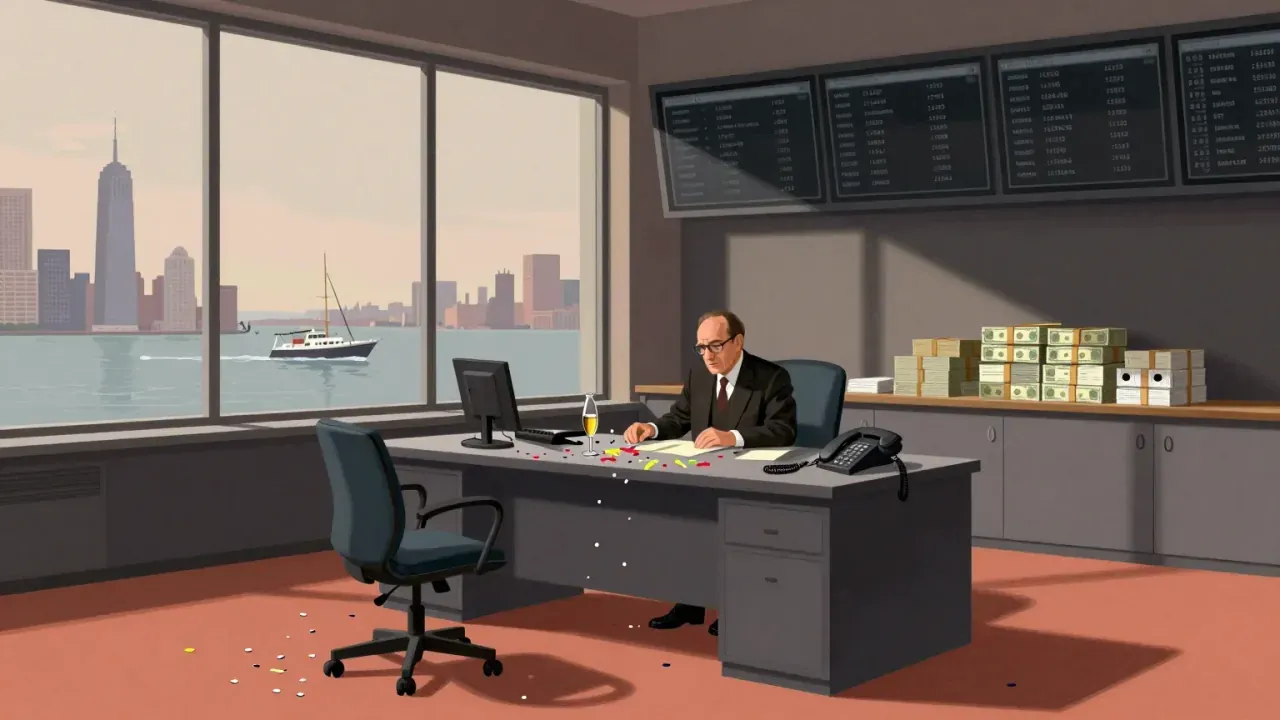
The Wolf of Wall Street follows Jordan Belfort from a nervous new hire on Wall Street in 1987 to the founder of Stratton Oakmont, a brokerage that made its money running pump-and-dump schemes on penny stocks sold to ordinary investors. Martin Scorsese directs a script by Terence Winter, adapted from Belfort’s own memoir, and Leonardo DiCaprio plays Belfort with direct-to-camera narration that frames the entire film as his version of events, boasts and self-justifications included. The film’s stated aim, per Scorsese and DiCaprio’s public comments, was to make the audience complicit in Belfort’s appeal before confronting them with what that appeal actually cost, though how successfully it manages that second half is where most of the film’s controversy sits.
DiCaprio, Hill and three hours of momentum
At three hours, the film relies on speed to keep its structure from becoming numbing before its final act. Thelma Schoonmaker’s editing keeps scenes moving at a pace that mirrors the cocaine-and-Quaalude rhythm of Stratton Oakmont’s trading floor, and Rodrigo Prieto’s cinematography favours handheld immediacy over the more controlled compositions of Scorsese’s earlier work. Jonah Hill, as Belfort’s partner Donnie Azoff, plays a heightened, near-cartoonish version of the same greed Belfort has, which gives DiCaprio someone to escalate against rather than perform alone. Margot Robbie, in her breakout role as Belfort’s second wife Naomi, brings more presence to the part than the script’s fairly thin characterisation of her actually supplies.
The physical comedy of total collapse
The film’s most controlled sequence is also its most purely comic: a stretch in which Belfort, having taken expired Quaaludes, must physically drag himself to his car and drive home while barely able to operate his own limbs, intercut with Donnie choking on food back at the house. It’s an extended, almost silent-film piece of physical comedy that DiCaprio commits to entirely, and it demonstrates Scorsese’s control of tone even at the film’s most chaotic. Elsewhere, the film’s re-creation of Stratton Oakmont’s trading floor as a kind of frat-house religious revival, complete with chest-beating chants, captures something real about how financial fraud can function as spectacle and community for the people inside it.
Where the film’s point of view becomes a liability
The film was criticised on release, and has continued to be, for staging fraud almost entirely as the fraudster’s private carnival, with the ordinary investors Stratton Oakmont defrauded appearing in only glancing detail across the entire runtime. Kyle Chandler’s FBI agent exists mainly as a device to remind the audience that consequences are theoretically coming, rather than as a counterweight with real screen time. Scorsese and DiCaprio have both argued the film’s satire is legible in Belfort’s hollow ending and the audience he addresses in the final scene, but the sheer volume of drugs, sex and cash on screen, played almost entirely for pleasure rather than horror, makes that argument a harder sell than in Scorsese’s more clearly punitive gangster films.
Excess as the actual subject
What the film is actually about is addiction in a broader sense than the literal drug use on screen: money, status, sex and chemical highs are treated as interchangeable fuel for the same compulsion, one that never resolves into satisfaction no matter how much Belfort accumulates. Power here is inseparable from performance, seen most clearly in Belfort’s motivational speeches to his sales floor, which are indistinguishable in style from a cult leader’s. The film has comparatively little interest in the mechanics of the fraud itself, penny stocks and IPO manipulation are gestured at rather than explained, because its real subject is the psychology of a man who cannot stop escalating even when he has already won.
Who should sign up for this one
This suits viewers who can sit with sustained excess played for comedy without needing the film to constantly signal disapproval, and anyone interested in DiCaprio and Hill’s physical commitment to broad, almost slapstick performance. It rewards patience with a three-hour runtime that front-loads its most purely entertaining stretches. It’s a poor fit for anyone who needs a film about financial crime to centre its victims, or for viewers sensitive to extended, graphic depictions of drug use, sex and profanity, the film holds the Guinness World Record for uses of a single expletive in a major theatrical release, at nearly three per minute throughout.
Three hours that mostly justify their length
At 180 minutes, the film’s stamina is genuinely part of its design, mimicking the exhausting, unsustainable pace of the life it depicts, and for most of its length that design works. Its final half hour, after Belfort’s fall becomes inevitable, has less to actually show once the party stops, and some of the momentum built by DiCaprio and Hill’s performances starts to feel like it’s running past the point the film has already made. Still, as a study of charisma weaponised for fraud, it holds attention across its full length, and the discomfort it leaves you with, laughing at Belfort right up until you remember what he actually did, is arguably the point rather than a flaw.