The shape of the argument
3 Idiots is a Hindi-language comedy-drama set across two timelines — one following three engineering students at the Imperial College of Engineering in the early 2000s, the other tracking their reunion a decade later. It attempts a satirical critique of rote learning, institutional pressure, and parental expectation within India’s elite technical education system. The film adapts Chetan Bhagat’s novel Five Point Someone but reshapes its tone and structure: the narrative leans into warmth and uplift rather than irony or despair, framing its critique through friendship, resilience, and individuality. Rajkumar Hirani and Abhijat Joshi aim not for exposé but for recalibration — asking what success means when measured against curiosity, ethics, and emotional honesty rather than rank or salary. The satire is tempered, never abrasive; the reformist impulse is embedded in character arcs, not polemic. It treats the IIT milieu not as exotic backdrop but as lived terrain, drawing on research visits to campuses and personal recollection. Its ambition is structural as well as thematic: to make systemic critique feel intimate, humane, and generically unthreatening — a challenge it meets by anchoring abstraction in Aamir Khan’s Rancho, whose quiet confidence becomes the film’s moral compass. (158 words)
The weight of the performances
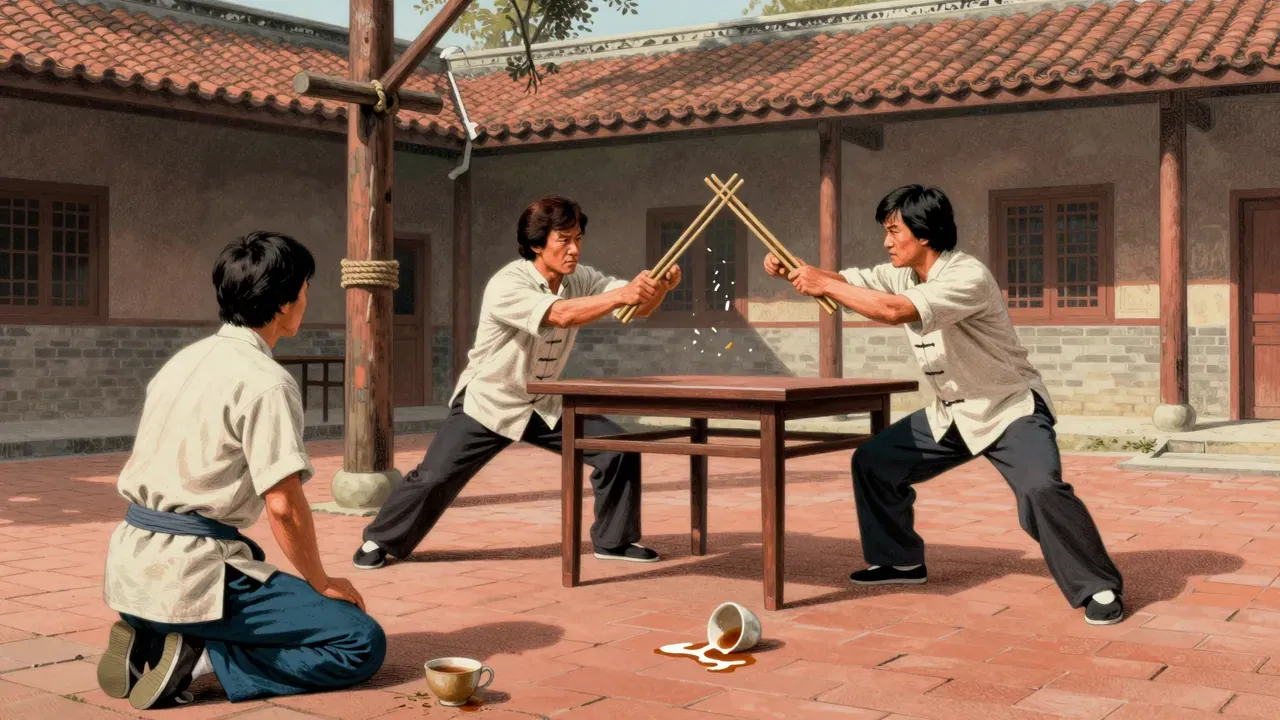
The story unfolds via a road trip framing device that triggers flashbacks, allowing Hirani to intercut past and present without exposition. Performances are grounded: Aamir Khan avoids caricature in Rancho’s effortless brilliance, R. Madhavan brings quiet gravitas to Farhan’s artistic yearning, and Sharman Joshi renders Raju’s anxiety with physical specificity — trembling hands, hesitant speech, a posture that seems to fold in on itself. Boman Irani’s Viru Sahastrabuddhe is precise in its parody: clipped diction, stiff posture, cheap fabric suits, and a lisp that signals authority rather than mockery. Shantanu Moitra’s score uses acoustic guitar and light percussion to sustain rhythm without sentimentality. Editing by Hirani himself maintains pace across 164 minutes — long, but rarely slack. The cinematography avoids flourish: steady compositions, natural light in classrooms, handheld intimacy during dorm scenes. Dialogue is functional, not lyrical; jokes land through timing and contrast, not wordplay. The film’s craft serves clarity over artifice — every cut, note, and line calibrated to reinforce the central tension between conformity and self-determination. There are no visual metaphors; the satire works through behaviour, not symbolism. (159 words)
What stays after the credits
What lands most firmly is the film’s emotional architecture: the bond between the three leads feels earned, not imposed. Their shared vulnerability — Raju’s fear of failure, Farhan’s stifled creativity, Rancho’s quiet rebellion — accumulates weight across time rather than exposition. The classroom sequences, particularly those involving peer pressure and public shaming, register with uncomfortable familiarity. The satire of credentialism hits cleanly: the obsession with rank, the fetishisation of ‘IIT’ as brand, the reduction of learning to exam performance. Even minor characters — the anxious father who sells his land for tuition, the hostel warden who quotes Shakespeare while enforcing silence — carry thematic heft without caricature. The film’s warmth is consistent, never saccharine: humour arises from situation and character, not punchlines. The final reveal of Rancho’s identity lands because the groundwork is laid in small, repeated gestures — his habit of fixing things, his indifference to status markers, his patience with others’ panic. The ending does not resolve systemic problems but affirms agency: each man chooses a path aligned with his values, not his parents’ scripts. That modest affirmation, sustained across three arcs, is what sticks. (157 words)
Where the edges soften
What does not land is the film’s handling of structural consequence. Though it names pressures — debt, unemployment, suicide — it offers no sustained engagement with their material roots. The college is presented as an isolated pressure chamber, not a node in wider economic or caste-based hierarchies. Female characters remain peripheral: Kareena Kapoor’s Pia functions primarily as romantic counterpoint and narrative catalyst, her own ambitions flattened into supportive concern. The film’s resolution relies on individual escape — Rancho founding a school in Ladakh — rather than collective action or institutional change. This softens the critique: the system persists, but the protagonists opt out, not reform. Some viewers will find the tone too forgiving — Viru Sahastrabuddhe is humanised but not held accountable, and no faculty member faces consequences for fostering toxic competition. The satire stops short of implicating the broader ecosystem: parents, employers, media, policy. The film’s length also works against it in stretches: the road-trip frame occasionally drags, and certain comic set-pieces — notably the ‘virus’ impersonation — overstay their welcome. Its refusal to name caste, class, or regional disparity limits its social reach, even as it speaks broadly to student anxiety. (159 words)
The question behind the questions
The themes that matter are education as performance versus education as inquiry, the cost of inherited ambition, and the quiet violence of comparison. It treats learning not as accumulation but as orientation — how one sees the world, not how much one can recall. The film’s central argument is that systems which measure human worth by output alone corrode integrity, curiosity, and care. It links academic pressure to familial duty, showing how parental aspiration becomes internalised coercion. The recurring motif of the ‘one right answer’ — in exams, in career paths, in definitions of success — is challenged not with alternative dogma but with pluralism: Farhan’s photography, Raju’s electronics repair, Rancho’s pedagogy. The theme of authenticity emerges not as self-expression but as fidelity to one’s capacities and conscience. It avoids prescribing solutions, instead modelling alternatives through practice: Rancho teaches by doing, not lecturing; he fixes machines, mentors peers, questions syllabi. The film’s moral gravity lies in its insistence that dignity resides in process, not outcome — a stance that resonates beyond engineering colleges, into workplaces, families, and classrooms across Asia. (155 words)
Who it meets where they are
This film is for viewers who value character-driven storytelling with clear ethical stakes and who accept that social critique can be delivered with generosity rather than grievance. It suits audiences familiar with Indian middle-class aspirations, but its emotional logic travels widely — anyone who has felt trapped by external definitions of success will recognise its rhythms. It is less suited to viewers seeking formal innovation, political sharpness, or psychological complexity: the antagonists lack interiority, the romance is perfunctory, and structural analysis is deliberately muted. Those who expect satire to unsettle rather than reassure may find its resolutions too tidy. Critics who prioritise aesthetic risk or dialectical rigour — say, fans of Satyajit Ray’s austerity or Anurag Kashyap’s fragmentation — will likely see 3 Idiots as tonally conventional. Its appeal rests on emotional accessibility, not intellectual provocation. A viewer who demands that films name power explicitly — by caste, capital, or colonial legacy — will find its critique under-specified. But for those willing to meet it on its terms — as a humane, patient, mainstream fable — it delivers cumulative force. (158 words)
The time it takes to believe
Yes, it is worth your evening — provided you approach it as a crafted, unhurried fable rather than a documentary or manifesto. Its 164 minutes unfold with deliberate pacing, but the investment pays in emotional resonance and thematic clarity. The film earns its runtime by deepening relationships across time, not padding scenes. It rewards attention to gesture and silence as much as dialogue. Those who dislike long films, prefer ambiguity over affirmation, or seek stylistic boldness may find it overly familiar. But its endurance lies in consistency: every performance, edit, and musical cue reinforces the same core idea — that learning begins when fear stops dictating thought. It is not profound in the way of Bergman or Ozu, but it is sincere in a way few mainstream Indian films are. Its cultural longevity — remakes in Tamil, Spanish, and Korean contexts — testifies to its functional universality. To dismiss it as ‘just’ popular entertainment is to miss how precisely it calibrates accessibility and principle. If you have ninety minutes and want something warm, thoughtful, and quietly subversive, this remains a strong choice. (159 words)