What it is trying to do
La Cage aux Folles is a French-Italian farce adapted from Jean Poiret’s 1973 stage play, aiming to transpose its theatrical energy into cinema while testing social tolerance through comic inversion: a gay couple in Saint-Tropez must impersonate heteronormative respectability to appease ultraconservative in-laws. It does not seek realism or psychological depth but operates as a tightly wound mechanism of mistaken identity, timing, and visual exaggeration — a genre piece rooted in boulevard comedy, where stakes are social rather than existential. The film assumes familiarity with mid-century European political satire, particularly the caricature of France’s post-1968 moral panic, and leans on the contrast between flamboyant authenticity and brittle convention. Its ambition is structural: to sustain laughter through escalating absurdity without collapsing into cruelty or condescension. It treats homosexuality not as pathology or tragedy but as temperament — a matter of costume, rhythm, and household management. That framing was politically consequential in 1978, though the film never declares its intent; it simply proceeds as if the premise requires no justification.
How it works
The story moves by clockwork logic: Laurent’s engagement triggers a chain of concealments that compound until nothing can be hidden — at which point revelation becomes the only viable exit. Ugo Tognazzi plays Renato with grounded exasperation, his physicality anchored and his reactions calibrated to the millisecond. Michel Serrault’s Albin is more volatile, all tremulous dignity and sudden, unguarded tenderness; his performance sustains the film’s emotional spine without sentimentality. Armando Nannuzzi’s cinematography favours medium shots and shallow focus, keeping faces legible amid cluttered interiors — the apartment’s wallpaper, props and lighting feel deliberately overfurnished, as if décor itself is complicit in the charade. Ennio Morricone’s score avoids pastiche; its strings and woodwinds pulse with wry, slightly melancholic momentum. Editing by Monique and Robert Isnardon maintains brisk pacing without sacrificing pauses for reaction — crucial in farce, where silence often precedes the next misstep. The drag sequences are shot frontally, with minimal cutting, letting performance and presence hold the frame.
What lands
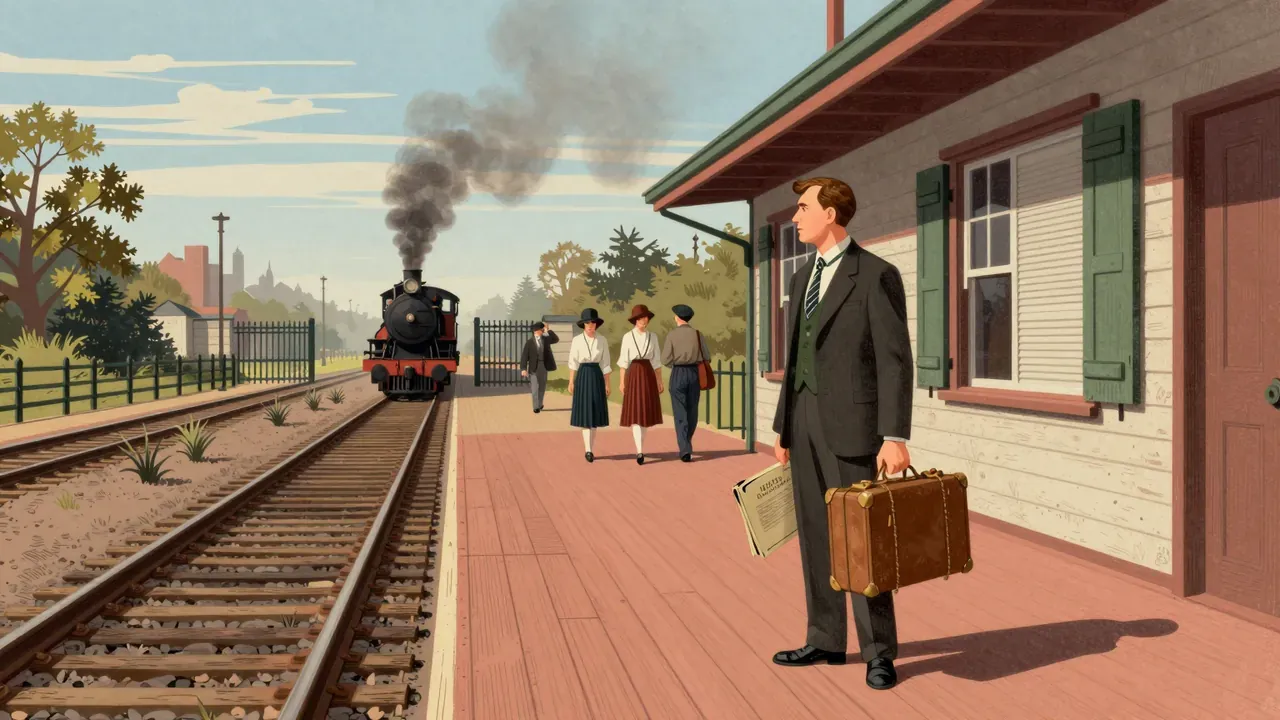
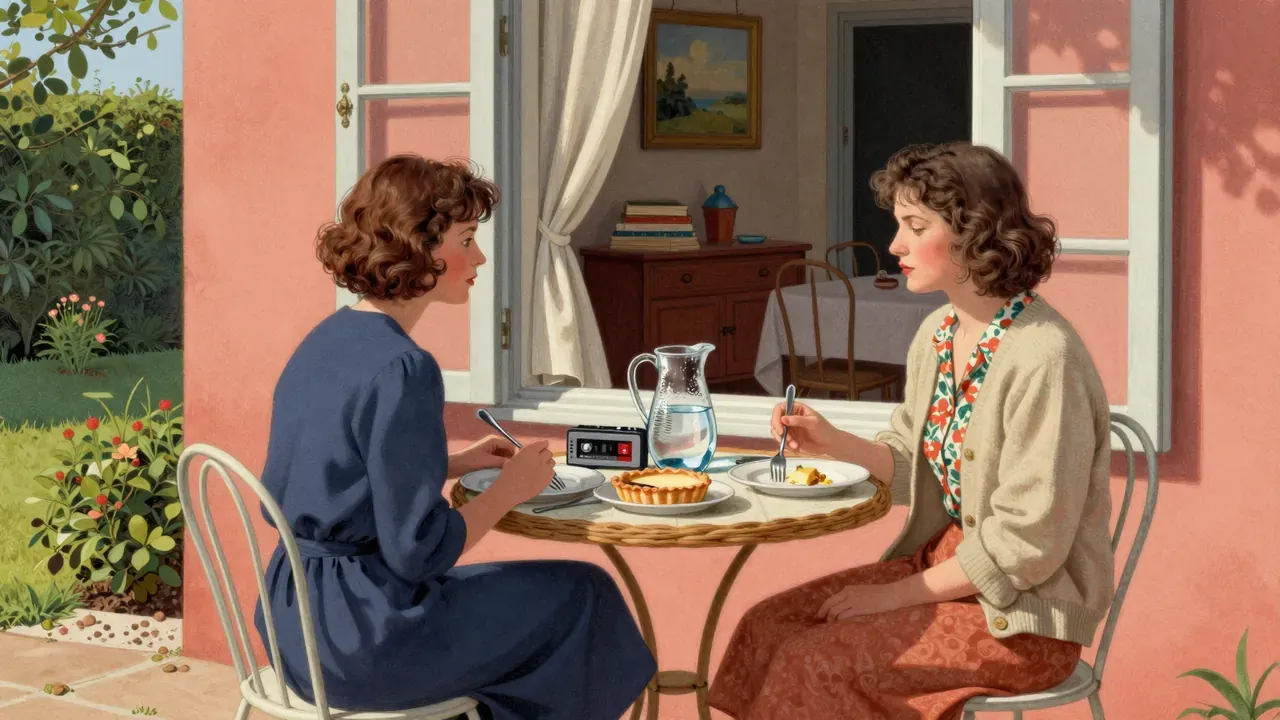
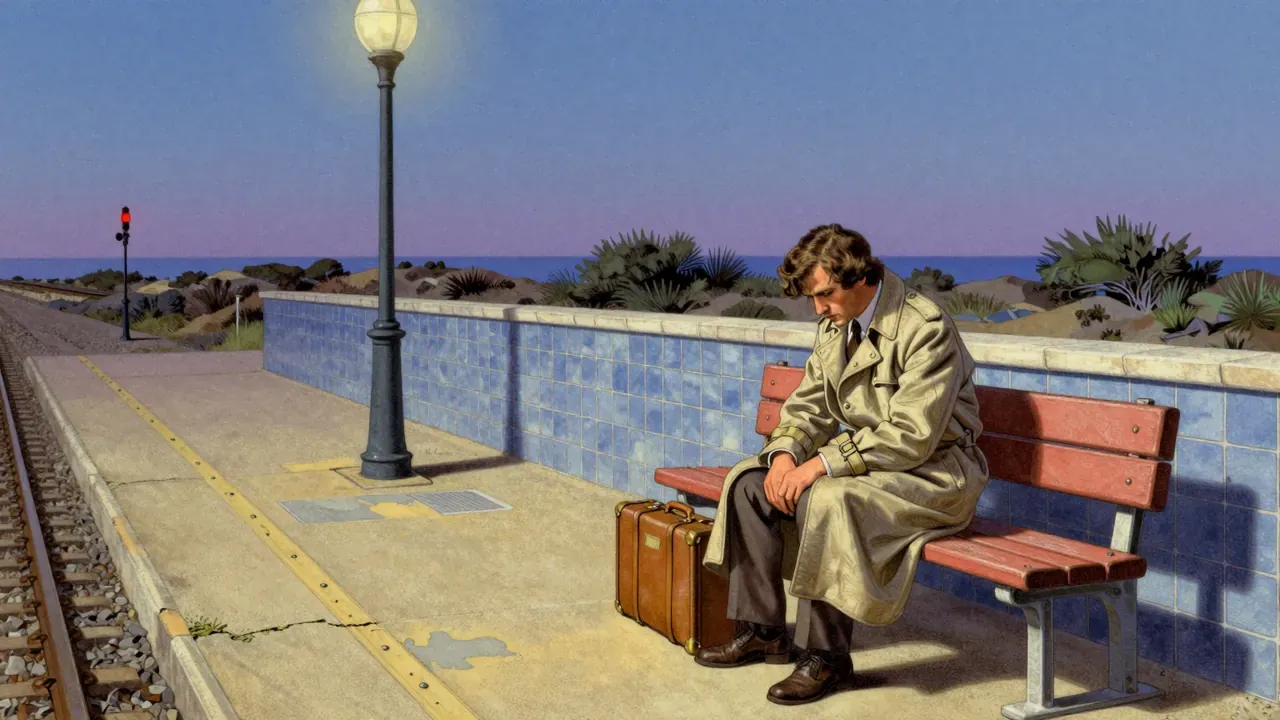
What lands most consistently is the precision of the ensemble’s timing — not just in dialogue delivery but in spatial awareness, in how characters enter and exit rooms, how objects are handled, how glances are deferred or withheld. The dinner scene works because every character occupies a distinct comic register: Simon’s rigid propriety, Louise’s weary compliance, Andréa’s quiet collusion, Laurent’s nervous improvisation, and Albin’s slow-burn transformation from wounded partner to tactical impresario. The train station sequence — Renato finding Albin at the station — lands with unexpected weight because it interrupts the farce with a moment of unvarnished vulnerability, played without music or embellishment. The final drag rescue — Albin costuming Simon — succeeds not as spectacle but as logical culmination: the very artifice the Charriers fear becomes their salvation. Even the minor roles land: Carmen Scarpitta’s Louise registers disapproval through posture alone; Michel Galabru’s Simon tightens his jaw before every line, as if holding back a sneeze. These are performances built on economy, not flourish.
What does not
What does not land is the film’s reliance on period-specific political shorthand — the ‘Union for Moral Order’ feels less like satire than a prop, its ideology reduced to stiff collars and clipped vowels. The subplot involving Simone, Renato’s estranged ex, adds emotional clutter without thematic payoff; her re-entry feels narratively convenient rather than earned, and the brief romantic rekindling undermines the stability of Renato and Albin’s relationship without deepening either character. Some gags depend on dated stereotypes — the exaggerated limp wrist, the shrieking chorus — which now read less as subversion than as residue of the stage play’s original context. The film’s visual language also falters in the studio interiors: Cinecittà sets lack the lived-in texture of the Saint-Tropez exteriors, making the apartment feel like a stage set even when it should feel like a home. There is no attempt to integrate the Italian-language soundtrack with the French setting beyond lip-sync; the disjunction remains audible, not atmospheric. The film never quite resolves whether it wants to celebrate camp or critique it — it does both, uneasily.
The themes that matter
The themes that matter are not about sexuality per se but about performance as survival, and about the labour involved in passing — not just for gay men in 1970s France, but for anyone required to edit themselves for legitimacy. The film treats domesticity as craft: Renato manages the club, Albin curates Zaza Napoli, Laurent negotiates filial duty, Simone performs maternal grace. Each is an artisan of persona. The central tension is between maintenance and mutability — how long can a façade hold before it becomes a second skin? The film also explores intergenerational negotiation: Laurent is neither ashamed nor fully fluent in his parents’ world; he mediates between eras without resolving them. There is no grand statement on liberation, only a quiet insistence on continuity — the anniversary party at the end is not a victory lap but a return to routine, with the same people, same songs, same rhythms. The politics are embedded in repetition, not rupture. What endures is not progress but persistence: two men who have built something together, and will keep building it, even when the world demands they pretend otherwise.
Who should watch it, and who should not
This film is for viewers who value choreographed farce over psychological realism, who enjoy watching skilled actors navigate escalating constraints, and who can sit with 1970s European humour without requiring contemporary framing. It suits those familiar with Poiret’s theatrical idiom or with Morricone’s lighter work, and those who find pleasure in the mechanics of comedy — the dropped wig, the mistimed entrance, the held breath before a lie unravels. It is not for viewers seeking nuanced representation of queer life beyond the bounds of farce, nor for those who find stereotype inherently alienating regardless of intent. Those who expect satire to dissect power rather than lampoon its symptoms may find the film’s conservatism of form at odds with its subject. A viewer who values narrative cohesion over comic rhythm will likely grow impatient with the Simone subplot. The verdict would change if the film were approached as period artefact rather than living text — but it remains watchable precisely because its craftsmanship outlives its assumptions.
Is it worth your evening
Yes, it is worth your evening — provided you accept its terms. At 100 minutes, it moves briskly, rarely overstaying a beat, and its pleasures are cumulative: the satisfaction of a well-timed cut, the warmth of Serrault’s smile after a particularly disastrous lie, the way Nannuzzi holds on Tognazzi’s face during a silent pause. It does not ask for empathy so much as recognition — of how we all perform, daily, for employers, parents, partners, strangers. Its limitations are real, but they do not undermine its coherence as a piece of craft. A viewer who dislikes farce will not be converted; a viewer allergic to Morricone’s melodic wit may find the score cloying. But for those open to its mode, it delivers sustained, intelligent laughter — not broad, not cynical, but precise. It is not profound, but it is never shallow. It earns its runtime not through revelation but through repetition — each return to the apartment, each re-dressing of the same lie, each recalibration of tone, deepens the sense of shared, slightly absurd endurance.